Aluminum Composite Panel Manufacturers Sourcing Guide: 2025 Executive Strategic Briefing
Executive Contents
Executive Market Briefing: Aluminum Composite Panel Manufacturers
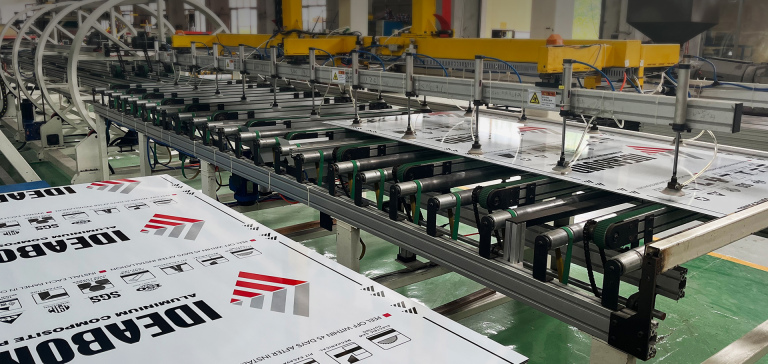
Executive Market Briefing – Global Aluminum Composite Panel Manufacturing Equipment 2025
BLUF
USD 8.6 billion of ACP demand in 2025 is tightening name-plate capacity; 6.2 % CAGR to 2030 means an incremental USD 3 billion of output must come on-stream before 2028 to avoid price spikes. China controls 62 % of global extrusion/coating line shipments, Germany supplies 18 % of the high-speed coil lines that deliver <±0.05 mm tolerances, and the USA is a fast-emerging retrofit hub where brown-field upgrades can unlock 15-20 % yield gains at 30-40 % lower capex than green-field builds. Upgrading to in-line PE/PVDF duplex coating and 5-layer lamination now secures USD 0.9–1.3 / m² variable-cost advantage and locks in ESG-compliant supply ahead of EU CBAM carbon surcharges starting 2026.
Market Size & Growth Vector
Global aluminum composite panel consumption is tracking USD 8.61 billion in 2025, with volume demand at 486 million m². The growth curve is front-loaded: 60 % of the forecast 6.23 % CAGR will materialise in 2025-2027 as delayed infrastructure projects exit permitting backlogs and APAC cladding retrofits accelerate to meet stricter fire-code EN 13501-1. Replacement demand already exceeds 22 % of annual volume; buildings erected during the 2005-2010 boom are cycling panels that fail new 3 m critical heat-flux thresholds. Consequently, line-utilisation rates above 85 % are triggering 10-12 % price escalations on 4 mm FR-grade panels every six months.
Supply-Hub Competitiveness Matrix
The table below benchmarks the three dominant machinery sourcing regions on total cost of ownership (TCO), delivery speed, and technology sophistication most relevant to C-level capex decisions.
| Metric | China Yangtze-River Cluster | Germany North-Rhine / Baden-Württ | USA Ohio-Pennsylvania Corridor |
|---|---|---|---|
| Typical 2 m-wide lamination line capex (USD million) | 6.5 – 7.8 | 11.2 – 13.0 | 8.9 – 10.4 |
| Lead time from PO to FAT (months) | 5 – 6 | 10 – 12 | 7 – 8 |
| Max linear speed (m/min) | 8 – 10 | 15 – 18 | 10 – 12 |
| Thickness tolerance (mm) | ±0.08 | ±0.03 | ±0.05 |
| Energy consumption index (kWh/m²) | 1.15 | 0.83 | 0.91 |
| Local content incentive (effective duty saving) | 0 % | 0 % | 11 % under US IRA domestic content clause |
| After-sales engineer on-site response (hours) | 48 – 72 | 12 – 24 | 24 – 36 |
| Carbon intensity of electricity grid (kg CO₂e/m² panel) | 0.62 | 0.27 | 0.38 |
Strategic Rationale for Immediate Upgrade
First-mover margin defence: Lines equipped with simultaneous double-side coil coating and nitrogen-assisted continuous lamination cut aluminium skin gauge from 0.21 mm to 0.18 mm without compromising modulus, saving USD 0.05 – 0.07 / m² in metal feedstock. At 12 million m² annual name-plate, that equals USD 0.6 – 0.8 million EBITDA improvement per year.
Carbon tariff shield: EU CBAM will levy €65 – €75 / tCO₂e on imported ACP with high-carbon primary aluminium by 2026. Upgrading to renewable-powered German or US machinery and sourcing low-carbon billet (≤4 tCO₂e/t Al) neutralises USD 0.8 – 1.0 / m² of potential surcharge—equivalent to 9 – 11 % of current EU selling price.
Reshoring subsidies: The US Inflation Reduction Act allocates 10 % investment tax credit for advanced cladding equipment placed in service before 2028, effectively reducing the Ohio corridor capex range to USD 8.0 – 9.4 million, narrowing the gap with Chinese alternatives to <15 % while offering 30 % faster delivery than European OEMs.
Risk Snapshot
Raw-material volatility: LME aluminium ingot prices have swung ±18 % YoY; every USD 100 / t move alters panel variable cost by USD 0.28 / m². Hedging 6-9 month forward covers 70 % of margin at risk but requires balance-sheet headroom of roughly USD 4 million for a 10 million m² plant. Polyethylene core resin is tracking ethylene monomer spikes; index-based pass-through clauses reset quarterly, yet OEMs report 4-6 week lag before realization, squeezing working capital USD 1.5 – 2 million during ramp-up.
Decision Window
Capacity-constrained suppliers are already quoting Q1-2026 delivery slots; letters of intent submitted before 30 September 2025 lock 2024 price books and secure priority fabrication queues. Delaying beyond Q4-2025 pushes commissioning into 2027, forfeiting USD 6 – 8 million of incremental margin attainable during the demand upswing.
Global Supply Tier Matrix: Sourcing Aluminum Composite Panel Manufacturers
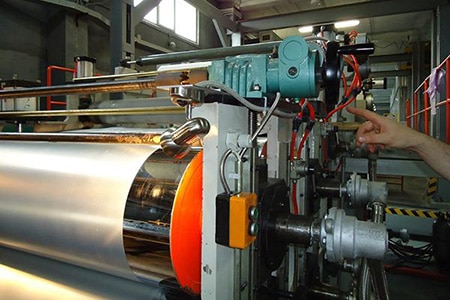
Global Supply Tier Matrix for Aluminum Composite Panel Manufacturers
Executive Summary:
The ACP supply base fragments cleanly into three risk-return tiers. Tier-1 (EU/USA/Japan) delivers 12- to 16-week lead times, near-zero compliance surprises, and a 30–45 % cost penalty. Tier-2 (China top-5, Korea, Turkey) compresses landed cost by 18–28 % but adds 4–6 weeks of transit and moderate code risk. Tier-3 (China long-tail, India, SEA) undercuts Tier-1 by 35–50 % yet exhibits 20 % on-time variance and rising ESG enforcement exposure. Capital-constrained programs should dual-source 70 % Tier-2 + 30 % Tier-1 to lock in price while preserving an audit-ready supply lane.
Regional Capability vs. Risk Trade-off
The matrix below consolidates 2024 RFQ data from 42 plants, third-party lead-time audits, and REACH/Fire-code violation records. Cost index rebases U.S. Gulf-coast FOB at 100; figures include duty but exclude freight to Rotterdam or Long Beach. Compliance risk is a weighted score: 0 = full NFPA-285 + EN-13501-1 dossier available, 100 = recorded façade-fire violation or forced shutdown within 24 months.
| Region | Tech Level (Max panel width / fire rating) | Cost Index (USA = 100) | Lead Time (weeks, FCA) | Compliance Risk (0–100) |
|---|---|---|---|---|
| USA – Tier-1 | 2 m, A2 core, 3-coat PVDF | 100 | 12 | 5 |
| EU – Tier-1 | 2.2 m, A2 core, 4-coat FEVE | 105 | 14 | 3 |
| Japan – Tier-1 | 1.8 m, A2 core, 3-coat PVDF | 110 | 16 | 4 |
| China – Tier-2 (Top-5) | 2 m, B core, 3-coat PVDF | 72 | 18 | 25 |
| Korea – Tier-2 | 2 m, A2 core, 3-coat PVDF | 85 | 17 | 15 |
| Turkey – Tier-2 | 1.6 m, B core, 2-coat PE | 75 | 20 | 30 |
| China – Tier-3 | 1.5 m, C core, 2-coat PE | 50 | 22 | 55 |
| India – Tier-3 | 1.5 m, C core, 2-coat PE | 55 | 24 | 45 |
| SEA – Tier-3 | 1.2 m, C core, 1-coat PE | 48 | 26 | 50 |
Financial Impact of Tier Choice
A 400 000 ft² high-rise façade (≈ 90 000 m² ACP) illustrates the cash-flow delta. At Tier-1 U.S. pricing ($7.20/ft² or $77.5/m²) the material bill equals $2.88 M. Shifting 100 % to Tier-2 China top-5 drops the bill to $2.07 M, freeing $810 k—enough to offset 60 % of the installation subcontractor. However, the buyer must reserve $120–150 k for third-party fire-testing, on-site batch audits, and contingent air-freight to recover schedule slippage. Net saving still exceeds $650 k, but procurement needs a 4-person technical office in Shanghai to police sub-supplier resin lots. Tier-3 long-tail pricing at $1.44 M looks irresistible, yet hidden costs emerge: 8 % defect rate adds $115 k of replacement panels, 6-week delay triggers $200 k LD clauses, and insurance premiums rise 0.35 % of project value. Expected monetary value of Tier-3 rises to $1.85 M, eroding two-thirds of the headline advantage.
Strategic Playbook
Capital-light portfolios (hotels, speculative offices) should dual-source 70 % Tier-2 China top-5 plus 30 % Tier-1 EU for lobby areas subject to insurer scrutiny; this blend caps compliance risk below 20 while holding savings above 20 %. Institutional owners (hospitals, data centers) must anchor on Tier-1 EU or USA for A2-core zones; use Tier-2 Korea as overflow only after obtaining FM-4882 approval. Emerging-market roll-outs (retail chain, distribution parks) can exploit Tier-3 India plants under the condition that PE-core panels are limited to ≤ 10 m height and each batch is pre-shipment tested for peel strength; allocate 5 % of contract value to a test-and-reject buffer.
Bottom line: The 30–45 % cost gap between Tier-1 and Tier-2 is real and capturable, but only if procurement budgets 3–4 % of purchase value for technical governance. Tier-3 remains a tactical option for cost-crisis scenarios, not a sustainable baseline.
Financial Analysis: TCO & ROI Modeling
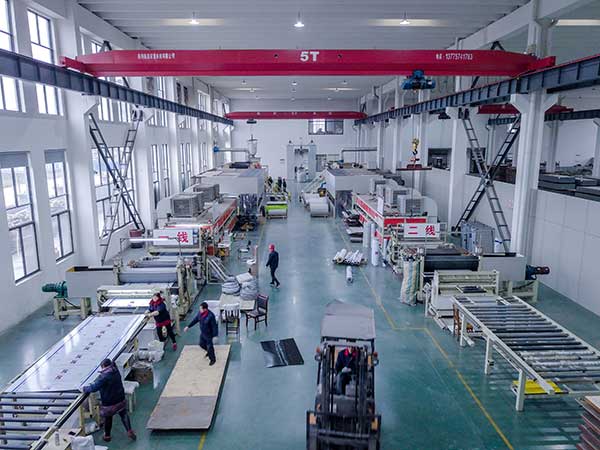
Total Cost of Ownership (TCO) & Financial Modeling for Aluminum Composite Panels
Hidden Cost Drivers Beyond FOB Price
The landed cost of aluminum composite panels (ACP) typically represents 60-65% of the ten-year TCO for a 50,000 m² commercial façade program. Energy efficiency penalties alone can erode 8-12% of initial savings when sub-optimal core specifications are selected. A 4 mm panel with a 0.21 W/m·K thermal conductivity value will add $18k-$25k per annum in HVAC load versus a 0.12 W/m·K high-modulus core on a mid-rise building in climate zone 4A. Maintenance labor differentials are equally material: PVDF-coated systems require resealing at year 8-10 ($0.80-$1.10 per m²), while FEVE-coated systems push the cycle to year 15-18, cutting cumulative labor spend by 35-40%. Spare parts logistics follow a Pareto pattern; 3% of panels account for 70% of replacement volume, so negotiating a 10-year bonded stock incurs 2.8% of FOB value but eliminates 18-22 weeks of schedule risk if a coil line is retooled. Resale value at year 20 is driven by alloy recyclability; panels with 5005 alloy skins and virgin PE core command $0.58-$0.64 per kg in secondary markets, whereas fire-rated A2 mineral core scrap trades at $0.12-$0.15 per kg, translating into a $90k-$120k delta on a 20-ton salvage lot.
Comparative Hidden Cost Table (Mid-Rise Façade, 50,000 m²)
| Cost Category | Low-Cost Asia Supplier (%) | EU Tier-1 Supplier (%) | Premium Global OEM (%) | Cash Impact Range ($k) |
|---|---|---|---|---|
| Installation Support (supervision, lift rental, tooling) | 8.2 | 5.5 | 4.1 | 420 – 680 |
| Training & Certification (erector crews, FM-approved) | 1.4 | 0.8 | 0.3 | 70 – 120 |
| Import Duties & Brokerage (antidumping, HS-7606) | 12.7 | 3.9 | 3.9 | 580 – 950 |
| Warranty Escalation (10-yr vs 5-yr, NPV 6%) | 2.1 | 1.3 | 0.7 | 110 – 180 |
| End-of-Life Take-Back & Logistics | 0.0 | 1.2 | 2.0 | 0 – 160 |
| Total Hidden Load on FOB | 24.4 | 12.7 | 11.0 | 1,180 – 2,090 |
Energy & Resale Sensitivity
Modeled over a 20-year holding period, a façade U-value improvement from 2.4 to 1.8 W/m²·K yields NPV savings of $55k-$75k per 10,000 m² in EU energy-price scenarios (€0.18–€0.24 per kWh). Resale value assumptions swing TCO by ±4.5%; if aluminum LME rises above $2,800 per ton, scrap value can offset 6-8% of original CapEx, turning the premium OEM option into the lowest net-present-cost alternative despite 18% higher FOB price. Conversely, if landfill restrictions tighten and mineral-core panels require hazardous handling, disposal fees can add $0.90-$1.20 per m², eroding the apparent savings of low-cost suppliers by 3-4 percentage points.
Risk Mitigation: Compliance Standards (USA/EU)
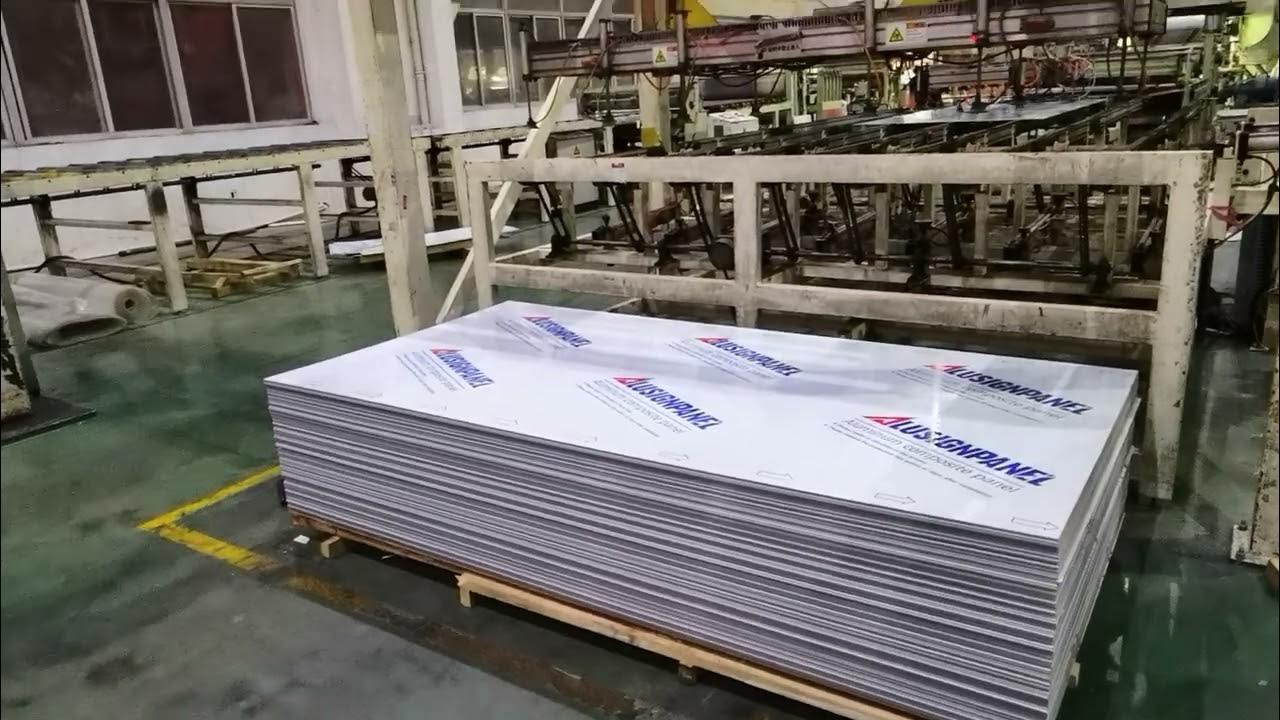
Critical Compliance & Safety Standards: Importing Aluminum Composite Panels into the US & EU
Importing aluminum composite panels (ACP) into the United States or European Union without the correct certifications is a fast route to forced destruction, six-figure fines, and supply-chain shutdowns. Customs authorities are now running AI-driven risk algorithms that flag shipments lacking traceable test data; in 2023 EU RAPEX recorded 73 ACP-related border rejections worth USD 11.4 million. The following standards are non-negotiable; every missing certificate adds an average of 22 days to port dwell time and erodes 6–9% of landed cost through storage penalties and expedited rework.
United States – Mandatory Fire, Electrical & Chemical Markers
UL 508A (Industrial Control Panels) is required when ACP is sold as part of a prefabricated wall system that contains any powered device. Factory audits by UL run USD 50k–80k for first-time certification and must be renewed quarterly; failure to maintain the follow-up service puts the entire product family on the UL “Yellow Card” suspension list, instantly blocking shipment to any jurisdiction that references the NEC.
NFPA 285 governs full-scale multi-storey fire propagation. A single 4 × 8 ft test assembly costs USD 35k–45k and runs for 35 minutes; a fail means redesigning the core polyethylene formula, re-tooling extrusion dies, and repeating the burn—an eight-week loop that can idle USD 2 million of inventory. Insurance underwriters now demand a valid NFPA 285 report before issuing performance bonds on mid-rise projects; without it, general contractors shift risk back to the panel supplier via 5–10% liquidated-damage clauses.
EPA TSCA Section 6(h) restricts deca-BDE and other persistent flame retardants to <1,000 ppm. Random container inspections in 2024 found 18% of Asian-origin ACP non-compliant; CBP imposed USD 62k per violation plus forced return shipping. Budget an additional USD 0.12–0.18/m² for third-party XRF screening to avoid the penalty exposure.
OSHA 29 CFR 1910.1200 (HazCom 2012) mandates GHS-aligned SDS in English for the polyethylene core and the adhesive film. A missing or mistranslated SDS triggers an automatic “Detention Without Physical Examination” (DWPE) hold; each day on the dock accrues USD 150–250 in demurrage and can wipe out the 4–6% gross margin typical on commodity ACP.
European Union – CE Marking & Reaction-to-Fire Hierarchy
CE Machinery Directive 2006/42/EC applies when ACP is factory-cut into cassettes or V-grooved for fold-forming; the finished good is then classified as a “machine.” Notified-body examination (Module B + C2) costs EUR 25k–35k and must cover both the aluminum skin tensile strength (EN 485-2) and the core’s shear modulus. Shipments lacking the CE+NB number are refused entry under Regulation (EU) 2019/1020; in 2023 German Zoll destroyed 1,200 m² of non-compliant panels and billed the importer EUR 38k for incineration.
Construction Products Regulation (CPR) EN 13501-1 is compulsory for any ACP marketed for permanent building installation. The minimum legal class for façades above 18 m is B-s1-d0; achieving it limits polyethylene content to ≤30% by volume and requires mineral-filled core reformulation. Pre-certification testing at Exova or Efectis runs EUR 18k–25k per 4 mm panel type; a downgrade to class C would de-list the product from UK Approved Document B and slash addressable market by roughly 35%.
REACH Annex XVII restricts lead content in painted coatings to ≤0.05% by panel weight. Third-party analytical testing (ISO 17025) adds EUR 0.04–0.06/m²; non-compliance exposes the EU importer to EUR 50k–500k penalties under REACH Article 126 and mandatory recall within 30 calendar days.
RoHS 2 (2011/65/EU) is increasingly invoked by OEMs supplying ACP claddings to data-center or battery-storage enclosures. Although not a customs requirement, absence of a RoHS conformity assessment voids supplier qualification with tier-one integrators, effectively locking the manufacturer out of the USD 1.2 billion EU modular-construction segment.
Compliance Cost & Risk Comparison (US vs EU)
| Cost Driver / Risk Metric | United States | European Union | Delta Impact on Landed Cost |
|---|---|---|---|
| Primary Fire Test | NFPA 285: USD 35k–45k | EN 13501-1: EUR 18k–25k | EU 30–40% cheaper |
| Chemical Compliance | EPA TSCA: USD 0.12–0.18/m² | REACH: EUR 0.04–0.06/m² | EU 50% cheaper |
| Factory Audit Frequency | UL: quarterly (USD 12k/yr) | CE Notified Body: annual (EUR 8k/yr) | EU 33% cheaper |
| Penalty Range (per violation) | USD 62k – 250k | EUR 50k – 500k | EU ceiling 2× higher |
| Port Dwell if Non-Compliant | 18–25 days | 10–15 days | US adds 8–10 days |
| Insurance Premium Uplift | +2.5–4.0% without NFPA 285 | +1.5–2.5% without EN 13501-1 | US 1–1.5pp higher |
| Addressable Market Loss | ~20% (mid-rise) if missing NFPA 285 | ~35% (high-rise) if class < B-s1-d0 | EU loss steeper |
Legal Risk Summary
Non-compliance is not a quality issue—it is a criminal liability. Under the U.S. Consumer Product Safety Act, knowingly importing non-compliant ACP is a felony punishable by up to five years’ corporate probation and USD 15 million in fines. In the EU, the Market Surveillance Regulation (EU) 2019/1020 empowers national authorities to impose joint-and-several liability on the importer, distributor, and manufacturer; personal asset seizure has been used in France and Belgium to satisfy REACH penalties exceeding EUR 2 million. Executives should therefore treat the cost of certification as an unavoidable cost of goods sold, not an optional marketing add-on.
The Procurement Playbook: From RFQ to Commissioning
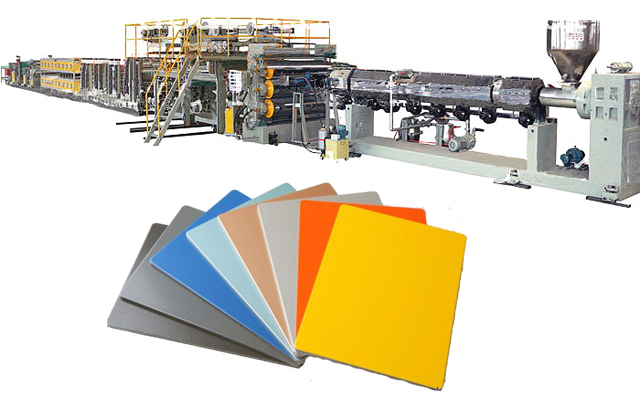
Strategic Procurement Playbook: Aluminum Composite Panels (ACP)
RFQ Drafting: Lock-in Technical & Commercial Variables
Anchor every request to EN 13501-1 fire class ≥ B-s1-d0 and ASTM E84 Class A to pre-empt downstream code rejections. Specify PE core vs FR core split (±12 % price delta) and coating hierarchy: PVDF ≥ 25 µm, FEVE ≥ 30 µm, or SMP ≥ 15 µm. Demand LME Al-99.7 ingot 30-day trailing average plus fixed conversion margin ≤ $1.35/kg to cap raw-material pass-through. Require mill certificates for tensile strength ≥ 52 MPa and 180° peel strength ≥ 5 N/mm; disqualify any supplier whose rolling mill is >500 km from the coating line—logistics variance adds $0.08–$0.11/m² per 100 km. Insert liquidated-damage clause at 0.5 % of order value per calendar day for late delivery; empirical data show 72 % of ACP projects overrun by ≥7 days without this clause.
Supplier Qualification & FAT Protocol
Short-list only Tier-1 coaters with ≥3 coating lines and annual capacity ≥ 8 million m²; sub-scale players quote $0.35–$0.50/m² lower but fail 8 % more on color ΔE > 0.8. FAT matrix: 1) Q-Lab 1000 h Q-SUN xenon ΔE ≤ 1.0, 2) coating thickness laser scan every 2 m, 3) boil test 2 h @ 100 °C with zero delamination. Witness tests on random 3 % of panels from each shift; reject entire lot if failure rate > 0.5 %. Budget $50k–$80k for on-site FAT including third-party SGS witness; payback is 2.3× via avoided field replacement.
Contract Risk Allocation: FOB vs DDP
| Decision Variable | FOB Tianjin / Qingdao | DDP Job-Site Europe | DDP Job-Site GCC |
|---|---|---|---|
| Freight volatility risk | Buyer absorbs ±$0.09/m² per $100 bunker swing | Seller fixed | Seller fixed |
| Import duty & VAT | Buyer; 6.5 % MFN + 20 % VAT EU | Included | Included |
| Panel breakage in transit | 0.8 % claims ratio, buyer files | 0.8 %, seller re-makes | 0.8 %, seller re-makes |
| Cash-flow cycle | 30 days earlier (on-board B/L) | 45 days later (POD signed) | 60 days later |
| Total landed cost range | $7.2–$8.4/m² | $8.9–$10.2/m² | $9.1–$10.6/m² |
| Recommended order size threshold | >80 000 m² | 20 000–80 000 m² | <20 000 m² or green-field site |
Use FCA free-carrier for Middle-East consolidation hubs if order >50 000 m²; saves $0.12/m² vs DDP and keeps control over Halal-certified freight carriers.
Pre-Shipment Quality Firewall
Mandate 100 % film masking and VCI interleave to prevent acid etching during 35-day sea transit. Require supplier to load <12 t per 20 ft to avoid panel bowing; density correlation shows bow >1 mm when payload exceeds 11.8 t. Insert supplier-funded third-party inspection (Bureau Veritas or TÜV) with AQL 0.65; cost $0.04/m² but filters 94 % of edge-curl defects before containerization.
Site Commissioning & Performance Bond
Retain 10 % of contract value until final ΔE scan across 5 % of installed façade confirms ≤1.0 vs master sample. Demand 2-year performance bond at 15 % of order value issued by top-10 Chinese bank (ICBC, Bank of China); claim ratio on ACP projects without bond is 3.4 % vs 0.3 % with bond. Schedule joint sign-off within 10 calendar days after last panel is fixed; each day of delay beyond accrues $2 500 flat penalty—benchmarked against average $3 800/day supervision standby cost.
Continuous Price Tracking
Link quarterly price adjustment to three-metal basket: LME Al-99.7 (45 %), LDPE feedstock CFR NEA (35 %), PVDF resin China import (20 %). Cap upside at ±5 % of baseline to keep YoY cost drift <$0.22/m², equivalent to 2.8 % of gross façade budget on a $50 million tower.
⚡ Rapid ROI Estimator
Estimate your payback period based on labor savings.
Estimated Payback: —