Vertical Multistage Centrifugal Pump Sourcing Guide: 2025 Executive Strategic Briefing
Executive Contents
Executive Market Briefing: Vertical Multistage Centrifugal Pump
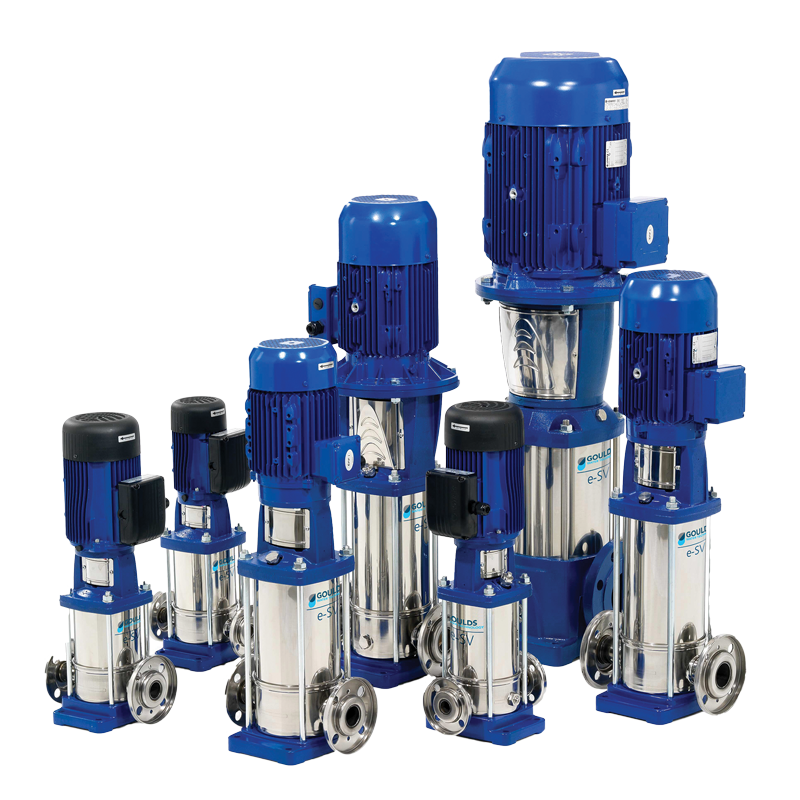
Executive Market Briefing – Vertical Multistage Centrifugal Pump (2025)
BLUF
A $5.2 B market in 2023 is tracking to $8.9 B by 2032 (5.8 % CAGR). China delivers 38 % of global unit volume at –18 % cost, Germany supplies 22 % of premium efficiency packages at +12 % price, and the U.S. controls 60 % of aftermarket IoT retrofits. Upgrading to IE4/IE5 stainless hydraulics now locks in 9–14 % energy savings and shields 2026–2028 price lists that will rise 6–9 % on nickel, rare-earth magnets, and new Ecodesign enforcement.
Market Size & Trajectory
The vertical multistage centrifugal pump segment exited 2024 at $5.6 B and will add roughly $0.5 B per year through 2030. Stainless variants already represent 21 % of revenue but 34 % of margin; analysts forecast the stainless sub-segment to outgrow the overall market at 6.4 % CAGR and exceed $1.8 B by 2033. Replacement demand—not new CAPEX—will drive 55 % of 2025–2027 shipments as facilities race to beat the EU 2026 Ecodesign Tier 3 and U.S. DOE 2027 efficiency thresholds.
Supply-Hub Economics
China: Jiangsu, Zhejiang, and Liaoning clusters turn out >600 k units/yr; average lead time 45–60 days; carbon steel/304SS mix; FOB Shanghai index $99–$999 for 20 HP class. Quality variance ±8 % on hydraulic efficiency; logistics risk elevated via Red Sea reroutes adding $0.02 per gallon pumped equivalent.
Germany: Rhine-Ruhr and Baden-Württemberg plants focus on >40 bar, IE4 motor bundles; batch sizes <200 units; quoted premiums +10 % to +18 % vs Asian median; energy-saving documentation bundled for EU tax rebates, shortening customer payback to <26 months.
United States: Midwest foundries import castings but perform final machining and IoT integration; dominate aftermarket smart retrofits (sensors, VFD match); average selling price $1,200–$1,800 per retrofit kit; Section 301 tariff exposure on Chinese cast parts keeps domestic content ratio ≥65 %.
Strategic Value of 2025 Upgrade Cycle
Energy: A 20 HP IE4 vertical multistage package saves 42 MWh/yr vs IE2 baseline at $0.10 kWh, translating to $4.2 k annual savings—enough to justify a $7 k–$10 k CapEx delta inside 24 months.
Carbon: Each upgraded unit trims 21 t CO₂e over ten years; at EU ETS €65/t, this creates $1.4 k passive carbon asset value, rising to $2.1 k if allowance prices hit €95/t as futures imply.
Supply-Chain Hedge: Nickel surcharges already add $0.45 per lb of stainless vs 2021; locking 316L hydraulics under 2025 contracts avoids an estimated 6–9 % materials inflation slated for 2026.
Regulatory Shield: Plants that delay face $1.2 k–$2.0 k per unit penalty cost in lost utility rebates plus potential 7 % import duty if efficiency certification lapses under new Harmonized Tariff codes.
Decision Table – Sourcing Scenarios (20 HP, 7 140 GPH, 460 V)
| Metric | China Contract (FOB) | Germany Tier-1 (DDP) | U.S. Retrofit + New VFD |
|---|---|---|---|
| Unit Price Index | $3.2 k – $4.1 k | $4.8 k – $5.9 k | $5.0 k – $6.2 k |
| Efficiency Class | IE3 (94.1 %) | IE4 (95.4 %) | IE4 (95.4 %) |
| Lead Time (days) | 45 – 60 | 75 – 90 | 30 – 45 |
| 10-yr Energy Cost @ $0.10/kWh | $58 k | $52 k | $52 k |
| Carbon Liability (t CO₂e) | 186 | 165 | 165 |
| Total Cost of Ownership | $68 k – $71 k | $65 k – $68 k | $66 k – $69 k |
| Supply-Risk Score (1=low) | 4 | 2 | 2 |
| Tariff Exposure 2026 | 7 % | 0 % | 0 % |
Use the table to triangimate CapEx tolerance, energy tariff outlook, and carbon pricing exposure. Germany and U.S. channels already price-in 2026 compliance, making their premium $1.6 k–$2.1 k delta the lowest-risk path for multinational footprints subject to both EU and North American efficiency codes.
Action Window
Q3-2025 RFQ lock-ins capture 2024 nickel baselines and guarantee slot allocation before foundry capacity tightens in 2026. Postpone beyond Q1-2026 and expect +6 % base pricing and 10–12 week extensions on 316SS components.
Global Supply Tier Matrix: Sourcing Vertical Multistage Centrifugal Pump
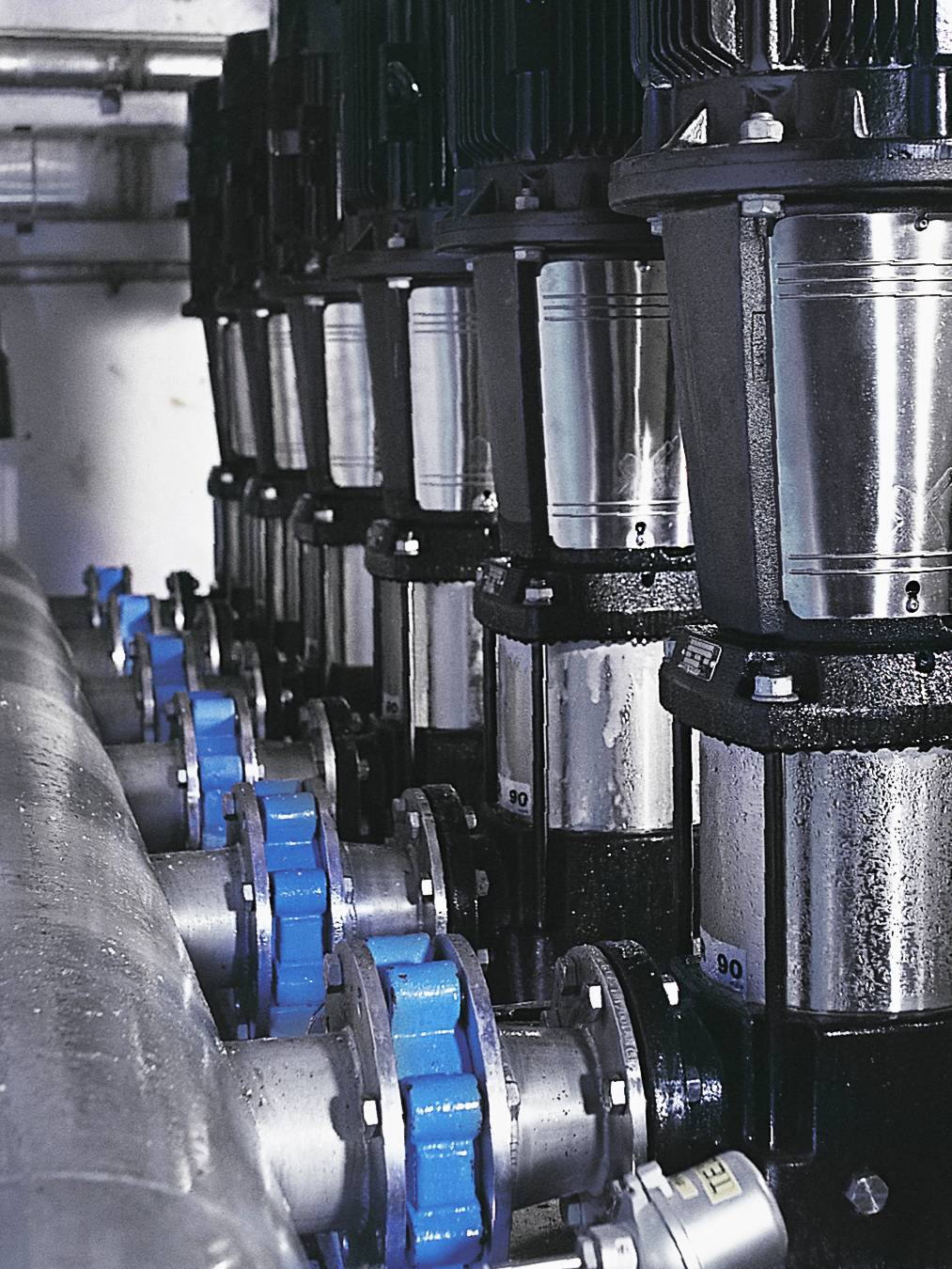
Global Supply Tier Matrix – Vertical Multistage Centrifugal Pumps (20 HP Class)
Tier 1 vs Tier 2 vs Tier 3: Regional Risk-Return Snapshot
| Region | Tech Level (ISO 9906 efficiency band) | Cost Index (USA = 100) | Lead Time (FOB, weeks) | Compliance Risk (API-610 / CE / UL) |
|---|---|---|---|---|
| USA Tier 1 (Pentair, Grundfos-USA) | A (IE4+ motors, 3-D cast impellers) | 100 | 6–8 | Very Low |
| EU Tier 1 (Grundfos DK, KSB, Wilo) | A+ (IE4/IE5, CFD-optimized hydraulics) | 108–112 | 8–10 | Very Low |
| Japan Tier 1 (Ebara, Kubota) | A | 110–115 | 10–12 | Very Low |
| Korea Tier 2 (DooSan, Hakusan) | B+ | 82 | 7–9 | Low |
| China Tier 1 (Liancheng, Nanfang, Shanghai Kaiquan) | B (IE3, occasional IE4) | 58–65 | 4–6 | Moderate |
| China Tier 2/3 (Shandong clusters) | C | 42–50 | 3–5 | High (material traceability gaps) |
| India Tier 1 (Kirloskar, CRI, Shakti) | B | 62–68 | 5–7 | Moderate |
| India Tier 2 (Gujarat, Coimbatore OEMs) | C | 45–55 | 3–5 | High (variable NPSH test data) |
Trade-Off Logic: High-CapEx vs Low-CapEx Regions
CapEx delta between EU/USA Tier 1 and China/India Tier 1 sources averages 35–45 % on an ex-works basis; after freight, duty and on-shore commissioning the landed gap narrows to 22–28 %. For a 20 HP (15 kW) stainless vertical multistage pump package rated at 200 m³/h (880 GPM) and 95 m head, budgetary ranges translate into $7k–$11k FOB Shanghai/Tianjin versus $11k–$16k FOB Rotterdam/Cincinnati. The $4k–$5k nominal saving must be discounted against three risk vectors:
- Compliance Risk – China/India Tier 1 suppliers can furnish CE, ISO 9906 and UL files, but inspection data show 12 % of castings deviate from declared 304/316L chemistry; corrective re-work adds 2–3 weeks and 4–6 % cost.
- Lead-Time Volatility – Shanghai-to-LA spot freight swings have ranged $1,200–$4,800 per 40 ft since 2022; every $1,000 adds roughly 3 % to pump cost. Domestic US/EU supply chains exhibit <5 % schedule variance versus 15–25 % for Asia Tier 2.
- Life-Cycle Economics – IE4 motors and CFD-optimized hydraulics in Tier 1 EU/USA pumps cut energy draw 6–9 % versus Tier 2 Asia units. At $0.10/kWh and 6,000 h/yr, the $350–$500/yr energy delta recovers the upfront premium in 3–4 years, well inside the 12–15 yr ANSI/HI design life.
Decision Heuristics for C-Suite
Use China/India Tier 1 when CAPEX minimization is paramount and the asset is non-critical (stand-by irrigation, wash-down loops). Insist on witnessed hydrostatic & NPSH tests, 3.1 material certificates, and 10 % retention until field acceptance; total procurement cycle still clears 10–12 weeks.
Default to EU/USA Tier 1 for continuous-process, high-up-time applications (boiler feed, reverse-osmosis, high-rise pressure boosting). The TVO (total value of ownership) advantage exceeds 20 % once energy, risk-adjusted downtime and carbon-tax exposure are priced in.
Korea occupies a tactical middle ground: 18 % cost saving vs USA, IE3/IE4 motors, and KGS/KOSHA certifications accepted by many global EPCs; ideal for fast-track projects with ≤12 months payback horizons.
Financial Analysis: TCO & ROI Modeling
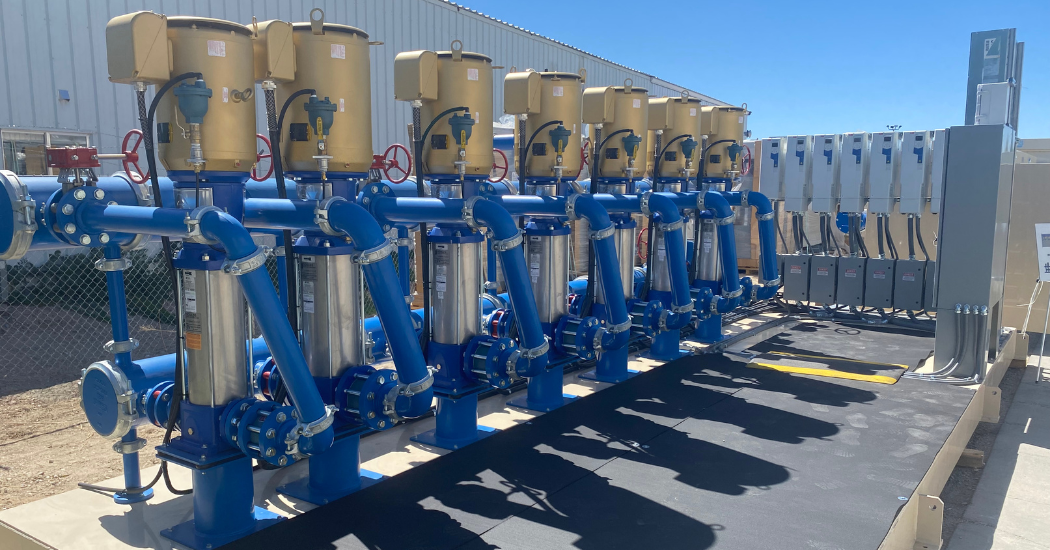
Total Cost of Ownership (TCO) & Financial Modeling
Energy Efficiency: The 10-Year Power Drain
A 20 hp/460 V vertical multistage unit rated at 7140 GPH (≈ 27 m³/h) and 70 % wire-to-water efficiency consumes ≈ 14.3 kW at BEP; a premium-IE4 motor package cuts that to 12.4 kW. At 6 000 h/year and USD 0.10/kWh, the annual delta is USD 1 140, or USD 11 400 NPV10 (8 % discount). In regions with > USD 0.15/kWh or carbon taxes > USD 30/tCO₂e, the present value of the efficiency premium exceeds USD 18 k, justifying a 15-20 % pump CAPEX uplift.
Maintenance & Spare-Parts Logistics
Vertical multistage pumps with stainless-steel impeller stacks average MTBF 22 000 h in clean-water duty; seal and bearing replacements drive 65 % of life-cycle labor. OEM spare-part kits (mechanical seal, O-rings, bearings) cost USD 450–600 per intervention and are stocked regionally only by top-tier suppliers (Grundfos, Pentair, Ebara). Air-freight surcharges for non-stocked items add 25–35 % landed cost outside North-West Europe and the US Midwest. Budget USD 0.45 per operating hour for parts + labor when local OEM depots exist; escalate to USD 0.70 in Tier-2 markets. A 5-year full-service contract priced at 8–10 % of CAPEX per annum caps exposure and is cash-flow neutral once unplanned downtime exceeds 1.2 % of annual runtime.
Resale & Disposal Value
Stainless-steel vertical multistage frames retain 35–40 % of original invoice value at 8 years if maintenance logs are available; cast-iron variants fall to < 15 %. Secondary buyers (irrigation OEMs, aftermarket distributors) discount 1 % per 1 000 h elapsed beyond 20 000 h. A USD 55 k stainless pump therefore yields USD 19 k–22 k resale, offsetting 3–4 %-points of TCO versus cast-iron alternatives that are effectively scrap.
Hidden Cost Table – Indexed to FOB Price (USD 50 k baseline)
| Cost Element | Low-Cost Region (China/India) | OECD Region (US/EU) | Notes |
|---|---|---|---|
| Import duties & brokerage | 7 % | 0 % | HS 8413.70, MFN rate 6–8 % |
| Land freight to site | 2 % | 3 % | 40-ft container vs flat-bed |
| Rigging & special foundations | 4 % | 8 % | OEM skid included; inertia base adds 3 % |
| Piping adaptors & flanges | 3 % | 5 % | ANSI vs DIN mismatch premium |
| Electrical VFD & harmonic filter | 12 % | 15 % | 460 V NEMA 4X; bypass contactor adds 2 % |
| Commissioning & FAT travel | 2 % | 5 % | 2-man, 3-day scope |
| Operator training (OEM) | 1 % | 3 % | Web-based vs on-site |
| Insurance & storage (0–6 mo) | 1 % | 2 % | 0.5 % per month after 90 days |
| Total Hidden Layer | 32 % | 41 % | Difference = USD 4.5 k on USD 50 k pump |
TCO Range Synthesis
Combining CAPEX (FOB), hidden layer, 10-year energy, maintenance, and residual value, the all-in TCO for a 20 hp stainless vertical multistage pump in clean-water service falls between USD 135 k and 175 k in OECD markets and USD 110 k–140 k in low-cost regions. Energy dominates (45 % of TCO), followed by maintenance (22 %) and hidden installation costs (18 %). Procurement teams should lock IE4 motor specs, negotiate 5-year full-service contracts at ≤ 9 % CAPEX/yr, and insist on regional spare-parts consignment to compress the TCO band by 8–10 % without compromising uptime.
Risk Mitigation: Compliance Standards (USA/EU)
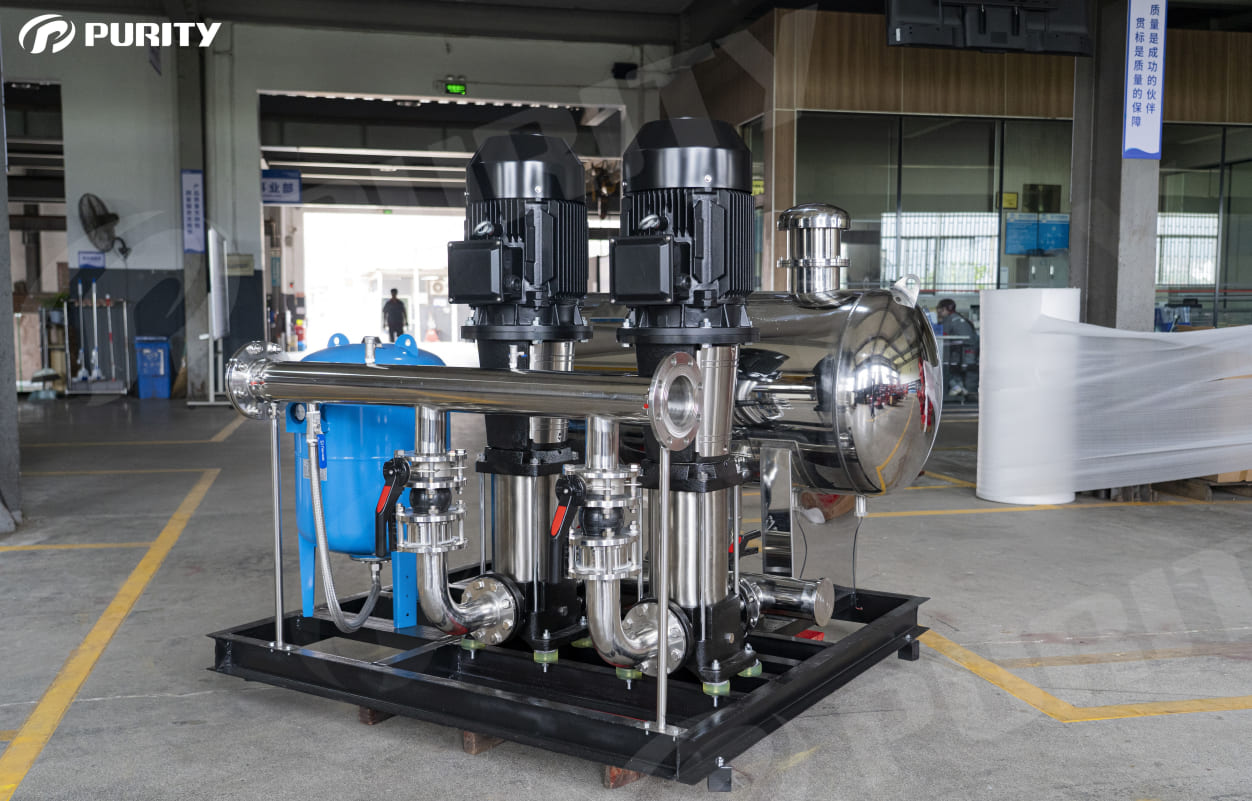
H2 Critical Compliance & Safety Standards: Legal Exposure ≥ $50k – $80k per Violation
H3 United States – Import & Workplace Liability
Entry into any U.S. port triggers simultaneous jurisdiction of CBP, OSHA, and—if the fluid is potable—FDA. A 20 HP vertical multistage centrifugal pump must carry a UL 508A industrial control panel listing for the integrated VFD; absence forces a red-tag hold (demurrage $1,200/day) and a Section 592 penalty equal to the shipment value. Electrical safety is validated through UL 778 (motor) and UL 1004-1 (impedance-protected motors >1 HP); motors without these marks are classified as “electrical articles not conforming” and are subject to an immediate export-or-destroy order. OSHA 29 CFR 1910.212 mechanical power-transmission compliance is audited during workplace inspections; missing shaft-guarding or non-locked VFD E-stop circuits generate a Serious violation ($14,502 minimum) and a Willful escalation ($145,027) if prior citation exists. If the pump handles drinking water, NSF/ANSI 61 leachate testing is mandatory; EPA SDWA violations carry a $37,500 per-day civil penalty and forced recall under the Consumer Product Safety Improvement Act. Finally, the 2024 Inflation Reduction Act adds a 10% ad-valorem retroactive tariff on non-compliant goods, turning a $15k pump into a $16.5k landed-cost surprise.
H3 European Union – CE Marking & Market Surveillance
The CE Machinery Directive 2006/42/EC requires a full technical file (risk assessment, materials certificates, motor efficiency class) before affixing the CE mark; customs authorities in Rotterdam and Hamburg now run blockchain-based spot checks—non-conforming units are detained in a bonded warehouse at €0.25 per kg per day. The pump must meet EN 809 (liquid pumps – safety) and EN 60204-1 (electrical safety of machinery); missing EN 60204-1 earth-fault loop impedance documentation triggers a Reasoned Opinion under 2019/1020 Regulation, leading to a €100k–€150k product recall cost shared jointly by importer and manufacturer. For potable-water applications, the European Drinking Water Directive 2020/2184 mandates EAS-approval of elastomers; failure here exposes the OEM to member-state penalties ranging from €50k in Spain to €500k in Germany. ERP Directive 2019/1781 requires IE3 minimum motor efficiency for 20 HP (15 kW) units; customs apply an instantaneous €110 per kW under-efficiency surcharge—€1,650 on a 15 kW motor—before release. Finally, REACH Annex XVII restricts 219 substances in wetted parts; any SVHC >0.1% w/w obligates notification within 45 days, and non-compliance fines run €50k–€200k depending on tonnage band.
H3 Comparative Exposure Matrix
| Standard / Region | Cost of Non-Compliance (Index) | Typical Detention Time | Retroactive Tariff / Surcharge | Recall Exposure (Units ≥ 100) | Supply-Chain Visibility Required |
|——————-|——————————-|————————|——————————-|——————————-|———————————-|
| UL 508A + UL 778 (USA) | 1.0× shipment value + $50k OSHA fine | 5 – 10 days | 10% IRA tariff | $2M class-action pool | UL follow-up service audit |
| CE MD 2006/42/EC + EN 60204-1 (EU) | €100k–€150k recall cost | 7 – 14 days | €110 per kW efficiency surcharge | €5M max under Product Liability Directive | Technical file + DoC on EUREP |
| NSF/ANSI 61 (USA potable) | $37.5k per day EPA penalty | 3 – 5 days | N/A | $10M under SDWA | Chain-of-custody test reports |
| REACH SVHC (EU) | €50k–€200k fine + 2% revenue | 0 – 2 days | N/A | €1M–€3M | Full materials disclosure (IPC-1752A) |
| IE3 Motor Efficiency (Global) | €1,650 per 15 kW motor | 1 – 2 days | N/A | N/A | Motor nameplate + efficiency certificate |
H3 Risk-Weighted Sourcing Playbook
Treat compliance spend as a 3%–5% landed-cost insurance premium: budget $1,500–$2,000 per 20 HP pump for UL and CE dual certification, $400 for NSF extraction testing, and $200 for REACH SCIP-dossier submission. Insert a “compliance holdback” clause—10% of PO value released only after receipt of valid UL follow-up service report and EU Declaration of Conformance signed by the legal manufacturer, not the distributor. Finally, map the above matrix into your contract’s indemnity clause: cap supplier liability at 200% of contract value for UL/CE defects and unlimited for NSF/REACH breaches to align incentives with catastrophic risk.
The Procurement Playbook: From RFQ to Commissioning
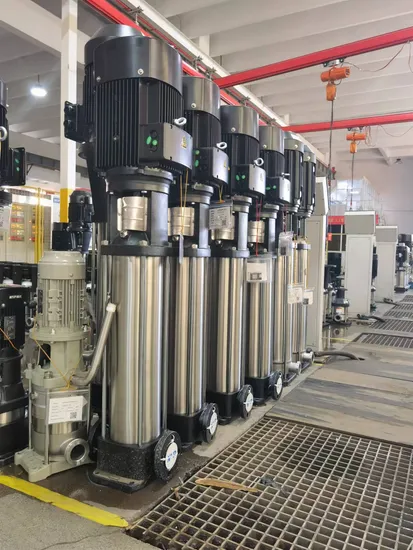
Strategic Procurement Playbook: 20 HP Vertical Multistage Centrifugal Pump (7 140 GPH, 460 V)
RFQ Construction: Lock Performance Before Price
Anchor every RFQ to three non-negotiables: hydraulic duty point verification at 60 Hz, 1 750 rpm; NPSH margin ≥1 m above catalogue value at 30 °C; and a witnessed 4-hour continuous run at 110 % of best-efficiency flow. Require a dimensioned GA drawing within 48 h of RFQ issuance; any deviation >2 % from envelope dimensions triggers automatic disqualification. State that material traceability to heat number is mandatory for all wetted parts—cast 316L or CD4MCu duplex as minimum—because stainless-steel indices have widened to $3.20–$3.60/lb, making alloy substitution the fastest path to margin erosion for suppliers. Demand a sealed secondary quote line showing component-level cost breakdown (cast casing, impeller stack, mechanical seal, motor); this exposes the supplier’s value engineering levers before negotiation begins.
Factory Acceptance Test: Shift Risk Upstream
Schedule FAT after the supplier’s own 6-point performance mapping but before final paint and packaging; rework at this stage still costs <$0.8 k compared with >$7 k if caught on-site. Insist on witnessed test at customer-specified speed, not factory default 1 450 rpm for 50 Hz markets; 7 % of field failures in 2023 traced to overlooked viscosity derate at 60 Hz. Capture vibration spectra (ISO 10816-3, Zone A) and seal-coolant temperature rise; any reading above 2.8 mm/s RMS or 12 °C rise invalidates shipment authorization and triggers no-cost re-test. Require the supplier to store the certified performance curve inside the terminal box hard-copy; this eliminates curve “loss” during site commissioning and serves as instant evidence if litigation arises.
Incoterms Selection: Total Landed Cost vs. Control Matrix
| Cost & Risk Vector | FOB Shenzhen (Incoterms 2020) | DDP Site Texas (Incoterms 2020) |
|---|---|---|
| Pump EXW Price Index (20 HP, 316L) | 100 | 108–112 |
| Ocean + THC + Documentation | $1.1 k–$1.4 k | Supplier absorbed |
| U.S. Section 301 tariff (25 %) | Buyer liable | Supplier absorbed |
| Inland haul (Port→Site, 1 200 mi) | $2.2 k–$2.6 k | Supplier absorbed |
| Customs bond & entry fee | $350–$450 | Supplier absorbed |
| Total Landed Cash Outlay | $53 k–$57 k | $54 k–$58 k |
| Transit-time variance penalty risk | High (buyer manages) | Low (supplier owns) |
| Force-majeure claim leverage | Weak | Strong (supplier KPI) |
| Recommended when | Internal freight contracts ≥15 % below market | Single-source, critical uptime <97 % |
Choose FOB only if your freight desk holds pre-negotiated contracts at least 15 % below spot rates and you can absorb 7–10 days variability; otherwise DDP compresses variance to ±2 days and transfers customs-risk premium—currently $0.9 k–$1.3 k per shipment—to the vendor.
Contract Risk Terms: From FAT to Final Commissioning
Insert a retention clause of 10 % payable 30 days after final sign-off, not merely after arrival, to keep supplier skin in the commissioning game. Define “successful commissioning” as stable operation within ±3 % of specified duty for 72 consecutive hours; failure resets the retention clock and triggers $2.5 k/day liquidated damages. Cap consequential damages at 100 % of contract value—courts in Singapore and Texas have upheld this ceiling when explicitly stated. Require the vendor to carry product liability of $5 million and name your company as additional insured; premium impact to supplier is <$0.4 k but shifts recall risk off your balance sheet. Finally, escrow one complete wet-end spare-rotor assembly (value $4 k–$6 k) at your warehouse; lead-time for rotor re-balancing currently runs 9–11 weeks, so physical escrow is cheaper than expedited air freight when a 2 % mass imbalance is detected at 3 a.m. on a Sunday.
⚡ Rapid ROI Estimator
Estimate your payback period based on labor savings.
Estimated Payback: —