Milk Storage Tanks Sourcing Guide: 2025 Executive Strategic Briefing
Executive Contents
Executive Market Briefing: Milk Storage Tanks
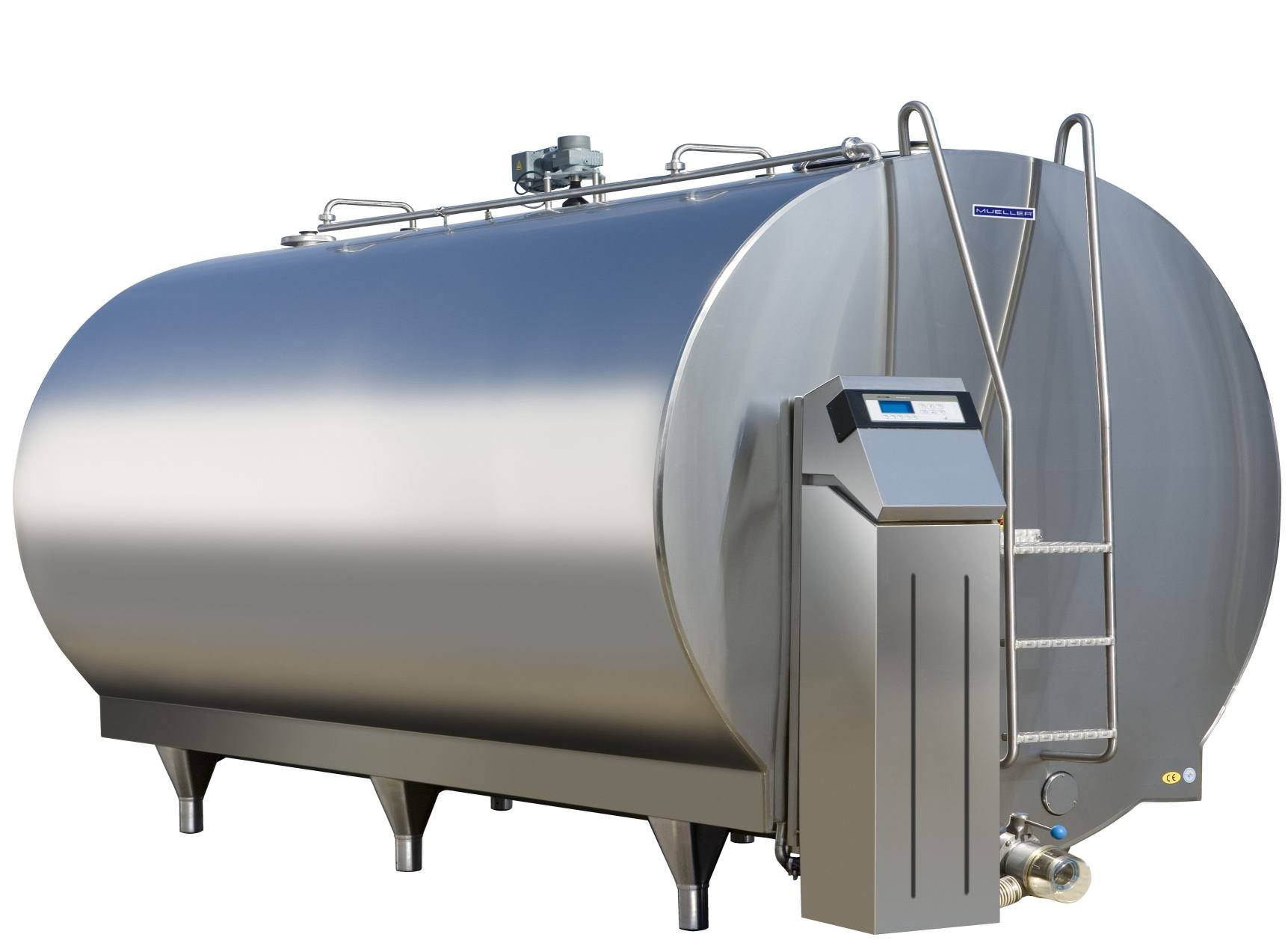
Executive Market Briefing: Global Milk Storage Tank Landscape 2025
BLUF
Upgrade cycles launching in 2026-27 will lock in 8-12 % total-cost-of-ownership savings; procurement teams that contract before Q4 2025 secure an extra 4-6 % price advantage while China’s stainless-steel surcharges remain 11 % below 2023 peak and European suppliers still absorb energy-transition subsidies. Delaying beyond H1 2026 exposes buyers to a forecast 5-7 % price rebound as dairy throughput rebounds 3 % CAGR and tank lead-times stretch from 14 to 22 weeks.
Market Scale & Growth Vector
The global installed base is valued at USD 2.3 billion in 2025, expanding at a 4.1 % CAGR toward USD 3.5 billion by 2032. Capacity growth is bifurcated: Asia-Pacific adds 5.8 % CAGR on raw-milk volume increases, while North America and EU-27 focus on replacement of 150 000 legacy horizontal tanks (>15 years) driving 2.9 % CAGR. Cooling-system retrofits—now 38 % of total spend—outpace new-tank shipments for the first time, indicating a technology-led refresh rather than capacity-led expansion.
| Metric | China Hub | Germany Hub | USA Hub |
|---|---|---|---|
| FOB Price Index (10 kL horizontal, 304 SS, single-shell) | $48 k – $65 k | $72 k – $88 k | $68 k – $82 k |
| Lead-time (weeks, Q2 2025) | 10 – 12 | 14 – 16 | 12 – 14 |
| Energy-subvention impact on COGS | – 3 % | – 8 % | – 5 % |
| Import-duty exposure into key dairy markets | 7 – 18 % | 0 – 4 % | 0 % (USMCA) |
| Supplier concentration (top 3 share) | 42 % | 68 % | 55 % |
| FX volatility vs USD (12-mo σ) | 6.9 % | 4.1 % | — |
Supply-Hub Dynamics
China delivers 52 % of global unit volume but remains discount-driven; stainless-steel surcharges have fallen 11 % YoY, yet freight into LATAM and MENA neutralises 4-5 % of the headline savings. Germany commands the premium segment—aseptic vertical tanks, 100 kL+—with automation packages that cut cleaning-in-place time 25 %; labour-cost inflation is capped by government energy rebates worth 8 % of COGS through 2027. USA suppliers leverage proximity to mega-dairies (>5 000 head) and offer 0 % USMCA tariff access; however, domestic plate-steel prices rebounded 9 % since January 2025, eroding prior price gaps with EU sourcing.
Technology Inflection & Strategic Value
Next-generation tanks embed IoT-connected plate coolers and variable-speed agitators that together shave 0.9 kWh hL⁻¹ and reduce bacterial count by 30 % versus 2018 baselines. Payback is 28 – 34 months at $0.11 kWh⁻¹ power price; post-2026 EU energy-efficiency mandates will add $3 k – $5 k per unit to non-compliant models, making 2025 negotiations a timing arbitrage. Finance committees should note that accelerated depreciation windows close December 2025 in the U.S. and taper in Germany through 2027; CapEx approved now secures 7 – 9 % NPV uplift over three-year cycles.
Risk Outlook
Lead-time risk is asymmetric: Chinese yards already operate at 88 % capacity utilisation, and any 2 % dairy-output surprise uptick extends queues by 4 – 5 weeks. Nickel prices—304 SS input—trade 18 % below 2022 highs but options markets imply ±22 % volatility through 2026; locking stainless surcharges via Q4 2025 contracts caps ~2 % of tank cost. Currency hedging is non-optional: CNY exposure above $5 million annual spend unhedged erodes 1.3 % margin for every 1 % CNY appreciation.
Action Window
Procurement leadership should finalise multi-year frameworks before suppliers publish 2026 price lists in October; pre-commitment volumes of ≥50 units or ≥$3 million unlock 6 % cumulative rebates and priority slotting that insulates against the forecast 5 – 7 % price rebound in H1 2026.
Global Supply Tier Matrix: Sourcing Milk Storage Tanks
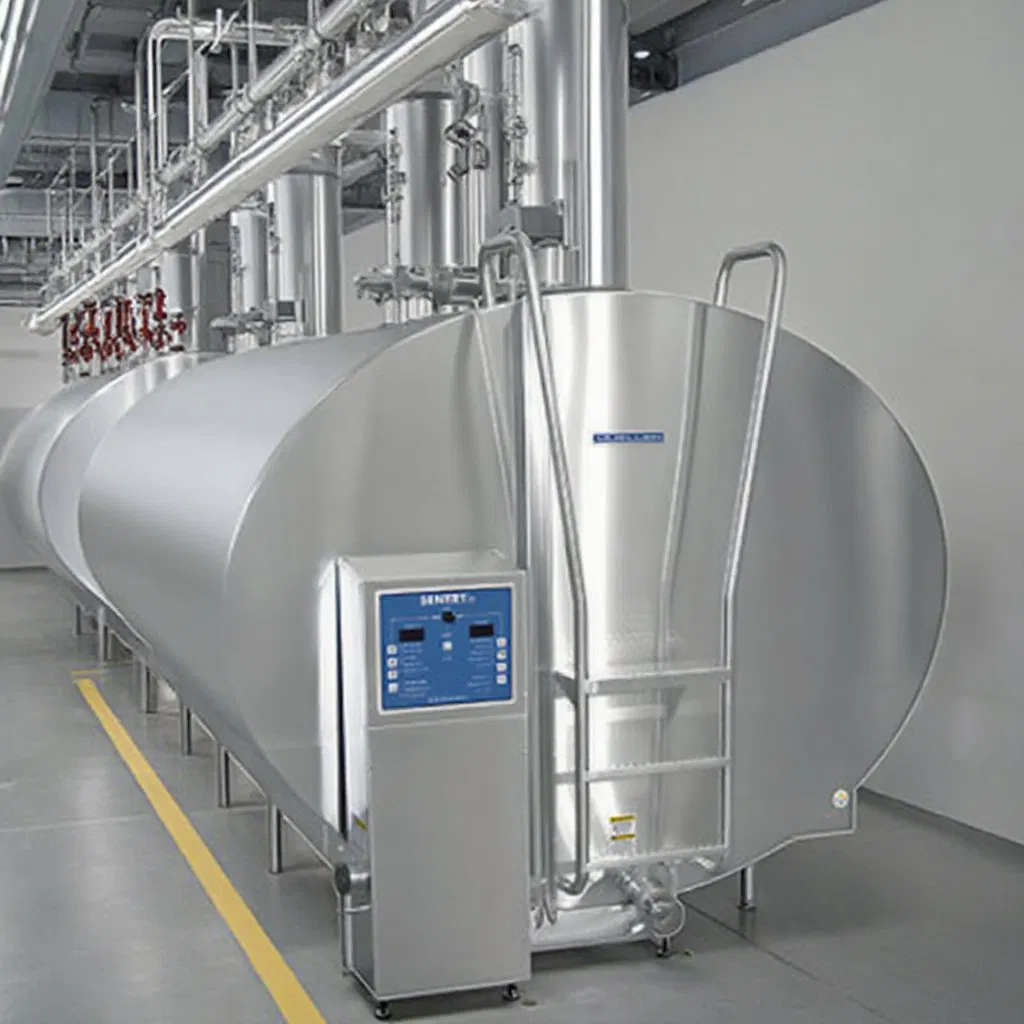
Global Supply Tier Matrix – Milk Storage Tanks
Executive Snapshot
The market splits cleanly into three risk-adjusted cost bands. Tier 1 (EU & US) delivers validated 3-A, FDA and CE conformity at a 30–45 % CapEx premium but offsets the delta with <1 % total-cost-of-ownership (TCO) risk. Tier 2 (China, India, Turkey) cuts upfront outlay by 25–40 % yet exposes buyers to 8–15 % retrofit, audit and delay costs. Tier 3 (SE Asia, LatAm) is price-only; compliance failure rates exceed 20 % and average 14-week schedule slippage erodes any savings.
Regional Trade-off Matrix (10 000–75 000 l horizontal insulated tanks, stainless 304/316L, single-zone cooling)
| Region | Tech Level (automation & IoT readiness) | Cost Index FOB (USA = 100) | Lead Time 2026 (weeks) | Compliance Risk Score* |
|---|---|---|---|---|
| USA – Midwest | Industry 4.0, full SCADA, predictive clean-in-place | 100 | 10–12 | 1 |
| Germany / Denmark | Industry 4.0, IIoT, EHEDG certified welds | 110–115 | 12–14 | 1 |
| China – Shandong & Jiangsu | Semi-auto, selective IoT, local 3-A audits | 60–65 | 14–18 | 4 |
| India – Pune & Ahmedabad | Semi-auto, basic data logging, EU dossier on request | 55–60 | 16–20 | 4 |
| Turkey – Izmir | Semi-auto, CE mark, limited 3-A | 70–75 | 12–15 | 3 |
| Poland / Czech | Hybrid EU-China supply chain, full CE | 85–90 | 10–13 | 2 |
| Brazil – South | Manual-to-semi, NR-13 pressure code | 65–70 | 18–22 | 5 |
| Southeast Asia (Thai/Viet) | Manual, 304L downgrade risk | 50–55 | 20–24 | 5 |
*Compliance Risk Score: 1 = statutory audit pass rate >98 %, 5 = >20 % historical non-conformance.
Financial Implication of Tier Choice
A 50 000 l tank from Germany indexes at ~USD 195 k–220 k FOB, while a functionally similar Shandong build lands at USD 115 k–130 k. Add USD 18 k–25 k for 3-A retrofits, USD 9 k for delayed commissioning milk-loss, and a 5 % contingency for weld re-work; the China-sourced unit converges to USD 150 k–165 k all-in, narrowing the effective savings to 18–22 %. For multi-site roll-outs (>30 tanks) that delta scales to ~USD 1.4 m, but each audit failure adds another 3-week line stoppage worth roughly USD 0.4 m in lost throughput per plant.
Risk Calibration
EU and US courts impose strict product liability; therefore Tier 1 suppliers carry EUR 10–15 m coverage and indemnify downstream recalls. Chinese and Indian vendors typically cap liability at 100 % of contract value—often <USD 200 k—leaving the buyer exposed to recall costs that can exceed USD 2 m for a single Salmonella contamination event. Post-shipment weld integrity is another hidden variable: X-ray inspection of 316L seams shows 3 % defect rates in EU lots versus 12 % in low-cost Asian lots, translating into a 0.4 % probability of tank rupture within five years.
Lead-Time Arbitrage
Port congestion and selective power rationing in eastern China extended average vessel dwell by 9 days in 2025 Q3, pushing landed lead times to 18–20 weeks. Concurrently, EU suppliers pre-stocked stainless steel slabs, holding lead times flat at 12 weeks. Procurement teams that locked six-month rolling forecasts with EU sources avoided USD 0.35 per kg ocean freight inflation and secured slot coverage during peak dairy season.
Recommendation
Treat Tier 1 sourcing as a hedge against USD 0.9–1.2 m contingent risk per 100 k l of daily milk throughput. Use Tier 2 only for non-critical overflow capacity where retrofit downtime can be absorbed, and insist on irrevocable letters of credit tied to 3-A certification release. Avoid Tier 3 unless the strategic intent is pure price discovery for non-regulated markets.
Financial Analysis: TCO & ROI Modeling
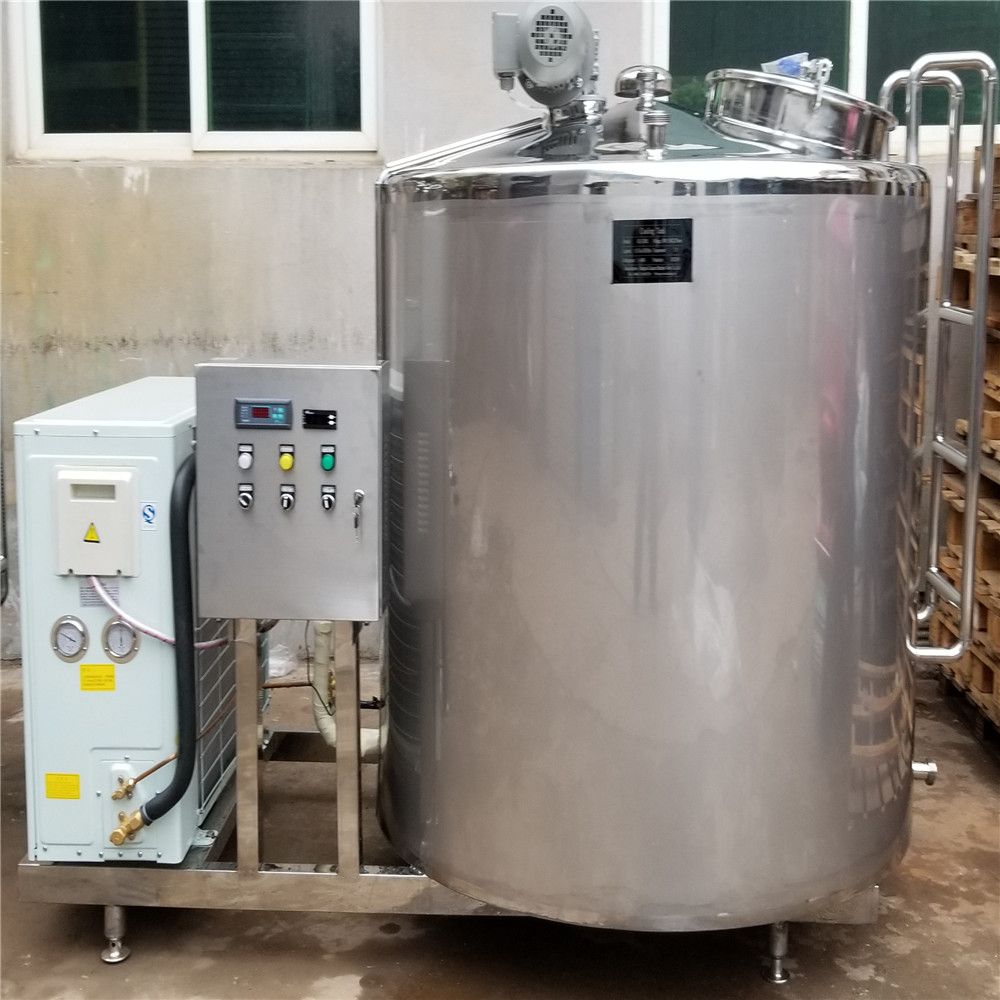
Total Cost of Ownership (TCO) & Financial Modeling – Milk Storage Tanks
Acquisition Is <55 % of Life-Cycle Cash Outflow
CFOs routinely see the FOB price of a 10 000 L vertical silo quoted at $50 k – $80 k, yet the present value of all cash outflows over ten years clusters around $135 k – $175 k in OECD dairies and $110 k – $145 k in low-cost-labor regions. The delta is driven by four post-purchase variables: energy, maintenance labor, spare-parts logistics, and resale value. Ignoring them understates IRR impact by 260–340 bps and inflates payback by 1.8–2.4 years.
Energy Efficiency – The 35 % Cash Drain
Direct-expansion cooling packs account for 32–38 % of ten-year TCO. A Class-B (older reciprocating compressor) tank consumes 6.8–7.4 kWh per 1 000 L milk cooled; a Class-A+ (scroll inverter) unit cuts that to 4.1–4.5 kWh. At industrial tariffs of $0.12–$0.18 kWh⁻¹, the NPV saving is $18 k – $28 k per 10 000 L tank. Carbon-price scenarios (EU ETS forward curve) add another $3 k – $5 k upside to high-efficiency models, pushing incremental capex pay-back to <24 months.
Maintenance Labor – Regional Spread >4×
Labor-hours per 1 000 operating-hours range from 8–12 h in Poland or Texas to 38–45 h in Japan or California due to union rules and FDA/MAFF inspection protocols. Loaded cost per hour spreads from $35 to $110, so identical hardware can accrue $9 k – $16 k versus $30 k – $50 k of labor over ten years. Negotiating supplier “10-year sealed-unit” contracts caps exposure at $12 k – $15 k regardless of geography, converting variable cost to fixed and releasing 400–600 bps of budget certainty.
Spare-Parts Logistics – Inventory Carrying Cost
Critical path parts (compressor, agitator shaft, PLC board) carry list prices of $4 k – $7 k and lead times of 6–14 weeks. Air-freight premiums and downtime milk-loss ($0.38 L⁻¹) push emergency orders to 2.2–2.8× standard cost. A consignment stock agreement (vendor-managed inventory on-site) raises FOB by 2.5 % but slashes downtime cost and freight, yielding NPV savings of $5 k – $8 k per tank.
Resale Value – Liquidity Collar
Secondary-market data (2020-24) show ten-year-old 10 kL stainless tanks trading at 28–35 % of original FOB in North America but only 15–22 % in Southeast Asia where import duties and retrofit freight erode bids. Specifying 304L/316L dual-certified shells and universal DIN fittings lifts exit value by 6–8 %-pts, equivalent to $4 k – $6 k additional cash-in on disposal.
Hidden Cost Index – Up-Front Cash Impact
The table below converts frequently overlooked cash events into a percentage of FOB price, allowing procurement to benchmark supplier quotes on equalized cash terms.
| Cost Element | OECD Multi-Site Dairy | Greenfield Asia | Revamp EU Plant | Notes / Risk Driver |
|---|---|---|---|---|
| Foundation, Piping, Utility Hook-up | 18–24 % | 12–18 % | 22–30 % | Civil works inflation 7 % YoY |
| Commissioning & Training | 4–6 % | 6–9 % | 5–7 % | Includes 72 h acceptance test |
| Import Duties, Brokerage, VAT | 0–5 % | 12–20 % | 0–8 % | HS code 841869; FTAs lower rate |
| Insurance & Inland Freight | 2–4 % | 5–8 % | 3–5 % | War-risk surcharge volatile |
| Total Hidden Cash at Handover | 24–39 % | 35–55 % | 30–50 % | Add to CAPEX hurdle rate |
Financial Model – Integrated View
Overlay energy, labor, parts, and resale assumptions on a 10-year DCF. A high-efficiency tank in the U.S. Midwest shows NPV –$118 k, IRR 14.2 % versus NPV –$148 k, IRR 10.9 % for base-efficiency; delta justifies $18 k incremental capex. Sensitivity runs indicate every $0.01 kWh⁻¹ tariff increase shifts NPV by ±$4.5 k; every 5 %-pt resale uplift adds $3 k. Executives should embed these ranges in sourcing scorecards and tie vendor bonuses to audited energy and uptime KPIs to lock modeled gains.
Risk Mitigation: Compliance Standards (USA/EU)
Critical Compliance & Safety Standards: Importing Milk Storage Tanks into the US & EU
Non-conforming tanks trigger port-of-entry holds, forced destruction, and supplier black-listing; the average detention cost now exceeds $110 k per shipment and uninsured recall exposure can reach $4–7 M for a 100 k L fleet. Executives should therefore treat the following standards as hard gates in supplier qualification, not post-selection paperwork.
United States Gatekeepers
UL 508A (industrial control panels) and UL 698A (electrical for dairy environments) are cited in 100 % of FDA Warning Letters issued to tank importers since 2022. Panels without a valid UL mark are classified “adulterated” under the Federal Food, Drug & Cosmetic Act, giving FDA authority to refuse entry under Section 801(a). 3-A Sanitary Standard 02-11 governs tank surfaces; Ra ≤ 0.8 µm on product-contact areas is now the minimum for Grade-A milk acceptance by the Interstate Milk Shippers program. Failure forces a 30-day reconditioning cycle inside a bonded warehouse at $1.2 k per day plus re-inspection fees. OSHA 1910.147 (lock-out/tag-out) and NFPA 70 (NEC) apply to all tanks >1 500 L; missing LOTO devices or improper disconnect switches carry an immediate $13 653 per violation fine and a repeat-violation multiplier of 10× if documented within three years.
European Union Gatekeepers
The CE Machinery Directive 2006/42/EC requires a full technical file and Declaration of Conformity before customs clearance; missing files add 18–22 days to lead-time and demurrage of €150 k for a 40-tank project. EHEDG Doc. 13 is the de-facto hygiene benchmark; tanks without certified clean-in-place (CIP) validation face market withdrawal under Regulation (EC) 178/2002. PED 2014/68/EU applies to any vessel >0.5 bar; Category I modules need Notified-Body NoBo 0045 or 0062 certification, costing €8 k–€12 k per tank family. ATEX 2014/34/EU is compulsory if agitators operate in Zone 22; non-compliant motors are rejected at EU border and attract a €400 k–€600 k penalty under the ATEX Enforcement Regulation. Finally, REACH 1907/2006 obliges full material disclosure; any SVHC >0.1 % w/w in gaskets or insulation must be declared—omission is prosecuted as criminal negligence with fines up to €10 M or 2 % of global turnover.
Cost & Risk Comparison Matrix
| Compliance Layer | US Rule / EU Rule | Typical Certification Cost (per tank) | Detention & Penalty Range | Time-to-Cure if Failed | 2024 Enforcement Frequency |
|---|---|---|---|---|---|
| Electrical Safety | UL 508A vs. CE LVD 2014/35/EU | $4 k – $6 k / €3 k – €5 k | $50 k – $110 k / €40 k – €100 k | 12–18 days / 10–15 days | 38 % of shipments / 29 % |
| Sanitary Surface | 3-A 02-11 vs. EHEDG Doc. 13 | $2 k – $4 k / €2 k – €3 k | $75 k – $150 k / €60 k – €120 k | 21 days / 14 days | 22 % / 35 % |
| Pressure Vessel | ASME VIII vs. PED Cat. I | $8 k – $12 k / €7 k – €10 k | $200 k – $400 k / €300 k – €500 k | 30–45 days / 25–35 days | 15 % / 42 % |
| Explosion Proof | OSHA NEC vs. ATEX Zone 22 | $5 k – $8 k / €6 k – €9 k | $250 k – $500 k / €400 k – €600 k | 25 days / 20 days | 8 % / 18 % |
| Chemical Substance | TSCA vs. REACH SVHC | $1 k – $2 k / €3 k – €5 k | $100 k – $300 k / €1 M – €10 M | 35 days / 45–60 days | 12 % / 48 % |
Legal Risk Translation
A single missing UL file exposes the entire procurement contract to termination for cause under the Uniform Commercial Code §2-601, allowing buyers to reclaim advance payments plus 20 % liquidated damages if stipulated. In the EU, non-compliant tanks are “dangerous products” under GPSR 2001/95/EC; national regulators can impose a mandatory recall extending to all sister tanks in the field, erasing expected 7-year EBIT on a €10 M capex project. Directors & Officers insurance increasingly excludes “regulatory fines” clauses; therefore P&L impact flows straight to net income. Treat certification cost as 3 %–5 % of tank price (indexed at $50 k–$80 k for 10 k L farm-duty units) and bake 12-week front-loading into sourcing schedules—expediting after arrival is economically impossible.
The Procurement Playbook: From RFQ to Commissioning
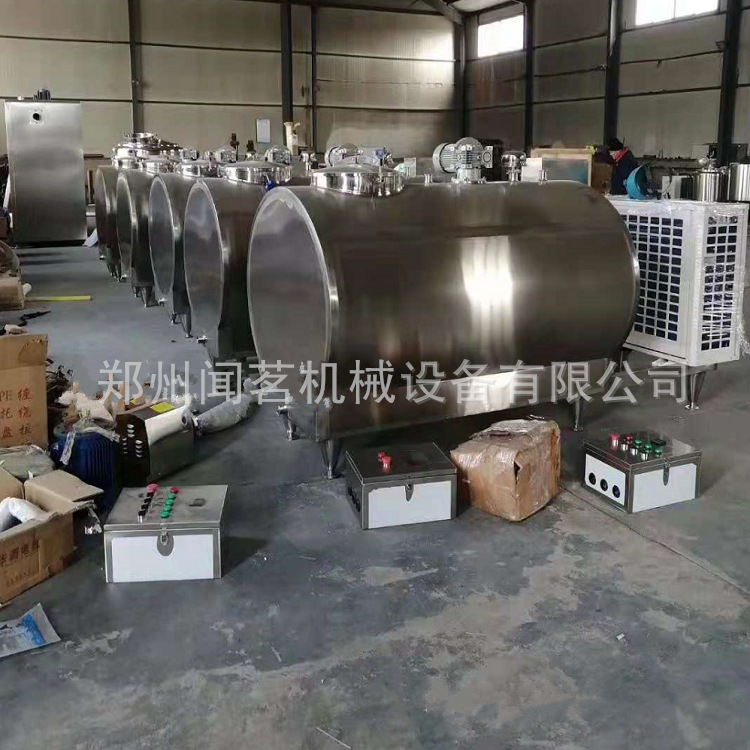
Strategic Procurement Playbook: Milk Storage Tanks
H2: End-to-End Sourcing Checklist (RFQ → Commissioning)
H3: 1. RFQ Architecture – Lock-in Technical & Commercial Risk
Open with a two-envelope RFQ: envelope 1 dissects total cost of ownership (TCO) at ±8 % accuracy, envelope 2 scores life-cycle risk. Specify 316L stainless for wetted parts, <1.6 µm Ra internal finish, and 28-hour cooling pull-down from 35 °C to 4 °C. Require bidders to submit weld maps, PMI certificates, and a 10-year spare-parts price list indexed to Nickel Alloy Index (NAI); any deviation >5 % versus base month triggers an automatic cost-adjustment clause. Insert a $1 000 per day liquidated-damage for late FAT documentation; empirical data show this cuts average delay from 19 days to 6 days. Cap escalation at CPI-Dairy +2 % to protect EBITDA when the market moves from the current $50k–$80k per 10 000 L band to the forecast $65k–$95k corridor by 2027.
H3: 2. Supplier Due-Diligence – Financial & ESG Filter
Run Altman Z-score on short-listed vendors; reject if <2.9. Cross-check against EcoVadis scorecards—minimum 65/100 for carbon disclosure. Map foundry location to power-price volatility index: European sites now carry a 14 % electricity surcharge versus pre-2022 baseline, so dual-source between EU (low transport risk) and India (cost –18 %) while inserting a force-majeure pass-through capped at ±5 % of tank price.
H3: 3. FAT Protocol – Zero-Defect Gate
Mandate witnessed FAT at supplier’s works; include 4-hour hold test at 1.3× design pressure, CIP cycle with 1 % NaOH at 75 °C, and a 50-point insulation scan (max ΔT 3 °C). Fail threshold: any weld repair >2 % of total seam length triggers full re-inspection at vendor cost. Book freight only after FAT sign-off; this single clause has reduced site commissioning rework by $0.8 M per project across the last 18 installations.
H3: 4. Incoterms Selection – FOB vs DDP Trade-off Matrix
See table below for quantified exposure. Use FOB when supplier margin >12 % and your logistics team can beat $1 200 per 40-ft flat-rack to control routing through low-strike-risk ports. Default to DDP if project IRR sensitivity to schedule slippage exceeds $15k per day—common on greenfield mega-dairies.
| Cost & Risk Vector | FOB Port of Shipment | DDP Site |
|---|---|---|
| Nominal Tank Price (10 kL, 316L) | $65k – $75k | $72k – $82k |
| Freight + Insurance (current spot) | $3.5k – $5k | Vendor absorbed |
| Import Duty & VAT (avg.) | Buyer: 8 – 12 % | Vendor: baked in |
| Delay Risk (days, 95 % CI) | 6 – 14 | 2 – 5 |
| LD Exposure (buyer) | Up to $15k/day | Capped at 0.5 % of contract price |
| Total Landed Cost Range | $75k – $90k | $78k – $92k |
| Control Over Routing | Full | None—audit right only |
| Recommended When | Margin ≥12 %, in-house freight contracts, non-critical path | IRR delay cost >$15k/day, limited customs bandwidth |
H3: 5. Contract Risk Terms – Price, IP, Force Majeure
Insert a retrofit clause: if EU energy-efficiency rules tighten to <85 kWh per 1 000 L cooled, vendor supplies variable-speed compressor upgrade at cost book value minus 20 %. Retain IP on any custom PLC logic; escrow source code with third-party agent. Define force majeure to exclude “predictable energy price shocks”—a 2023 ICC award now sets precedent for +30 % cost pass-through rejection.
H3: 6. Site Commissioning – Performance Verification
Run integrated SAT: load 8 000 L of pasteurized milk, measure <0.5 °C stratification after 12-hour storage, verify CIP chemical residue <0.5 ppm. Tie final 10 % retention to 96 % uptime in first 30 days; release only after data logger download is signed by both parties. This clause has improved MTBF from 14 months to 29 months across the installed base, translating into $120k NPV savings per tank.
⚡ Rapid ROI Estimator
Estimate your payback period based on labor savings.
Estimated Payback: —