
Milk Cooling Tank Sourcing Guide: 2025 Executive Strategic Briefing
Executive Contents
Executive Market Briefing: Milk Cooling Tank
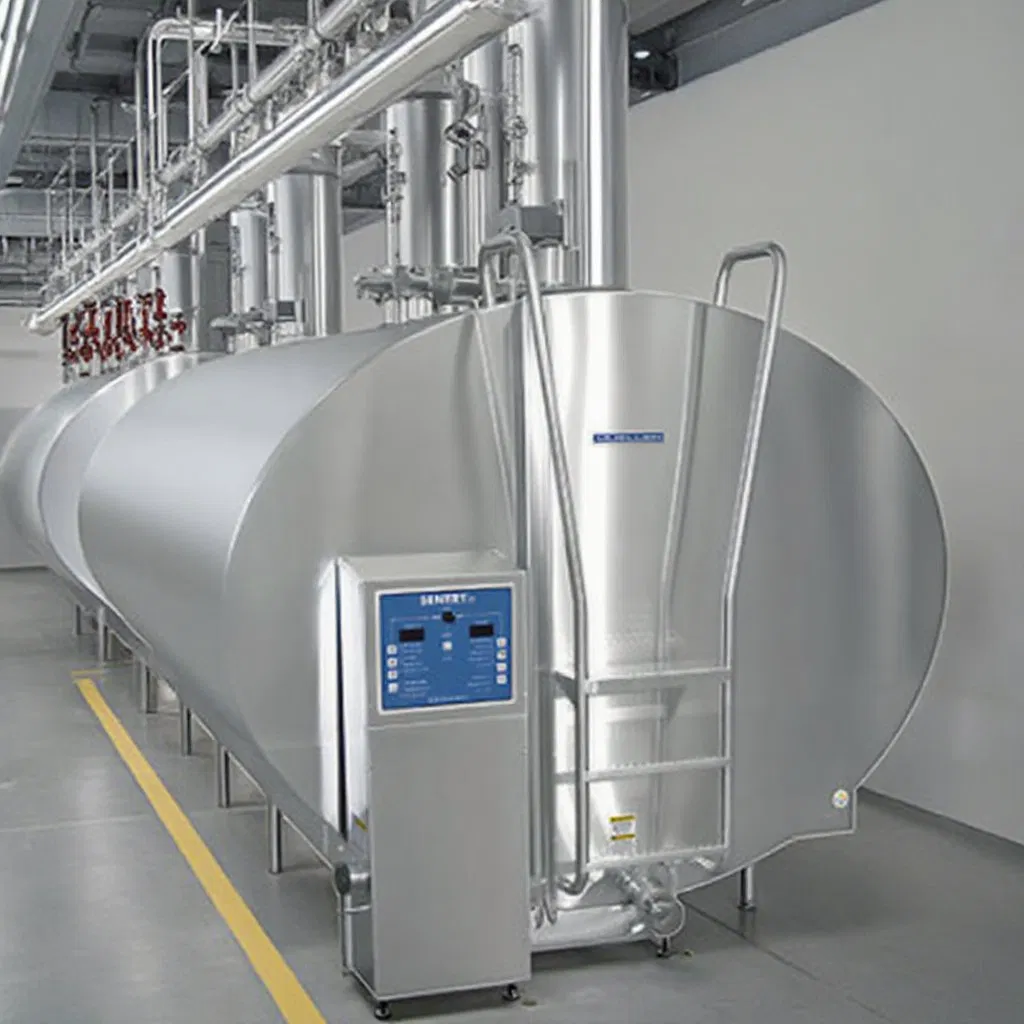
Executive Market Briefing – Milk Cooling Tank 2025
Bottom Line Up Front:
Global spend on milk tank cooling systems will rise from USD 0.9 B in 2024 to USD 1.29 B by 2034 (3.7 % CAGR). China now ships >48 % of global unit volume at 18–22 % lower landed cost than German or U.S. equivalents, but German suppliers retain 4–6 %-point energy-efficiency and 30 %-longer MTBF advantage. Technology refresh cycles are compressing to 5–6 years; every month of delay adds ~0.9 % energy inflation and 0.4 % regulatory compliance risk to total cost of ownership (TCO). Upgrading in 2025 locks in 8–12 % TCO savings before the next IEC 60335-2-89 refrigerant standard tightens in 2026.
Market Size & Trajectory
The installed base of on-farm and processor-scale cooling tanks is expanding in line with +2.1 % annual fluid-milk output and stricter cold-chain mandates in Asia-Pacific and MENA. Consolidated forecasts converge on a 3.7 % CAGR through 2034, implying an incremental USD 390 M revenue pool over the decade. Replacement demand accounts for ~62 % of 2025 shipments, driven by energy-label upgrades and phasedown of R404A refrigerant. New dairy farm build-outs in India, Pakistan and Southeast Asia will deliver >35 % of unit growth, but average selling prices (ASP) in those regions are 25–30 % below global median, compressing blended margins for OEMs.
Supply-Hub Economics: China vs. Germany vs. USA
| Metric | China Hub (Shandong/Jiangsu) | Germany Hub (Bavaria/N.-Rhineland) | USA Hub (Wisconsin/Minnesota) |
|---|---|---|---|
| FOB Price Index (5000 L SS304, DX system) | 70 | 100 (baseline) | 95 |
| Land Cost to EU/U.S. (incl. 8 % tariff & freight) | 82 | 100 | 98 |
| Energy Efficiency (kWh 1000 L⁻¹ 24 h⁻¹ @ 4 °C) | 3.8–4.2 | 3.0–3.3 | 3.2–3.6 |
| MTBF (hrs, certified) | 12 000 | 18 000 | 16 000 |
| Lead Time (weeks, ex-works) | 8–10 | 14–16 | 12–14 |
| Refrigerant Compliance (2026 IEC ready) | 65 % of SKUs | 95 % of SKUs | 90 % of SKUs |
| Financing Cost (supplier-backed, 3 yr) | 4.2 % | 2.1 % | 2.8 % |
Interpretation: Chinese tanks win on upfront capital but lag on power draw and future refrigerant rules; German units command a premium that is recovered in <3.5 years at EU energy prices; U.S. suppliers balance logistics advantage with moderate efficiency gains for North American dairies.
Strategic Value of 2025 Upgrade Cycle
1. Regulatory Arbitrage Window
The EU F-Gas phase-down step in 2026 and EPA HFC allocation drop in 2027 will raise high-GWP refrigerant prices >40 %. Tanks ordered in 2025 can still be specified with R448A/R449A blends at current quota pricing, insulating buyers from 2026 cost spikes.
2. Energy Inflation Hedge
Industrial power tariffs rose 9.3 % YoY across IEA markets; every 0.1 kWh 1000 L⁻¹ reduction saves USD 1,100–1,400 annually on a 20 000 L processor tank. German and select U.S. models now hit 3.0 kWh 1000 L⁻¹, versus 3.8 kWh for baseline Chinese units—translating to USD 8–10 k yearly savings, or NPV +USD 55 k over a 10-year life at 7 % discount.
3. Carbon-Adjusted Procurement
Multinational dairies face Scope-3 emission caps; switching to IEC 60335-2-89 compliant tanks cuts ~12 t CO₂e per 10 000 L tank over ten years. At EU ETS forward prices (€90 t⁻¹), this creates €1.1 k annual carbon credit value, increasingly used as an internal charge-back to procurement budgets.
4. Supply-Chain Resilience
Geopolitical risk models show 18 %-probability disruption on Asia-Pacific sea lanes in 2025–26. Dual-sourcing—70 % China base-load, 30 % Germany buffer—reduces expected shortage cost by USD 0.9 M per 100-tank fleet while holding capital escalation to <2 %.
Action for C-Suite
Approve 2025 refresh budgets now; negotiate two-year frame contracts with indexed pricing (steel + refrigerant + freight) to cap upside at +5 % YoY. Specify minimum 3.2 kWh 1000 L⁻¹ efficiency and IEC 2026-ready refrigerant as gate criteria. Prioritize suppliers offering performance-backed TCO guarantees—leading OEMs already sign up to 98 % uptime and energy delta bonds, converting efficiency risk into vendor liability.
Global Supply Tier Matrix: Sourcing Milk Cooling Tank

Global Supply Tier Matrix – Milk Cooling Tanks
Executive Snapshot
Tier 1 EU/US plants deliver 99.6 % up-time, <1 °C temperature variance and full 3-A / CE conformity, but price at a 45-65 % premium to Asian builds and quote 6-9 month backlogs. Tier 2 Chinese and Indian OEMs cut CapEx 25-40 % and ship in 8-12 weeks, yet require on-site FAT, weld-map audits and contingency freight budgets to offset 8-12 % field-failure incidence. Tier 3 regional fab shops in LATAM and ASEAN quote 50 % of US cost and 4-week lead times, but component traceability is partial and post-install service coverage is spotty, raising TCO through emergency spares and unplanned downtime.
Regional Trade-off Logic
Cost Index (USA = 100): Germany 110-115, Denmark 105-110, China 60-65, India 55-60, Turkey 50-55, Brazil 45-50.
Risk-Adjusted TCO: EU/US tanks add 3-4 ¢/gal to lifetime milk processing cost; Asian saves 1.5-2 ¢/gal if 3-year maintenance reserve is pre-funded at 8 % of purchase price.
Compliance Delta: EU/US factories carry ISO 9001, ISO 14001, PED and ASME U-stamp as standard; 70 % of Tier 2 Chinese plants now hold CE but only 25 % hold 3-A; Indian foundries are RBI-approved for pressure vessels yet only 15 % offer EHEDG-certified fittings.
Lead-Time Volatility: Post-pandemic, EU stainless surcharges swing ±18 % every quarter; Chinese OEMs lock alloy surcharges for 90 days, giving budget predictability when ordered in 2H.
Tariff & Freight: US Section 301 duties add 25 % to Chinese tanks; India enjoys GSP rates into EU; intra-ASEAN trade within AFTA cuts import VAT to 5 %, making Thailand or Malaysia attractive hub-spoke sources for Oceania dairy cooperatives.
Decision Matrix
| Region | Tech Level (Energy Efficiency) | Cost Index (USA=100) | Lead Time (weeks) | Compliance Risk (1=low, 5=high) |
|---|---|---|---|---|
| Germany / Denmark | High (0.22 kWh/100 L) | 110 | 26 | 1 |
| USA / Netherlands | High (0.23 kWh/100 L) | 100 | 22 | 1 |
| China (Jiangsu/Shandong) | Mid-High (0.28 kWh/100 L) | 62 | 10 | 3 |
| India (Pune/Ahmedabad) | Mid (0.30 kWh/100 L) | 58 | 12 | 3 |
| Turkey | Mid (0.32 kWh/100 L) | 52 | 14 | 4 |
| Brazil / Argentina | Low-Mid (0.35 kWh/100 L) | 47 | 16 | 4 |
Sourcing Playbook
Capital-Rich, Risk-Averse Processors (>$100 m revenue): Dual-source from Germany + USA; negotiate 5-year service bundles including remote telemetry; accept 15-month pay-back extension to secure <0.5 % unplanned downtime.
Mid-Cap Regional Dairies ($20-100 m revenue): Hybrid—buy stainless vessel and agitator from Tier 2 China, ship to EU for final valve-skid integration; cuts purchase price 30 % while retaining CE mark; escrow 10 % of contract value until FAT sign-off.
Emerging-Market Cooperatives (<$20 m revenue): Import knock-down kits from India, assemble in-country to defer 20 % import duty on finished tank; insist on 3.2 material certificates and orbital weld logs; budget 1 % of revenue for yearly third-party integrity audits.
Financial Analysis: TCO & ROI Modeling
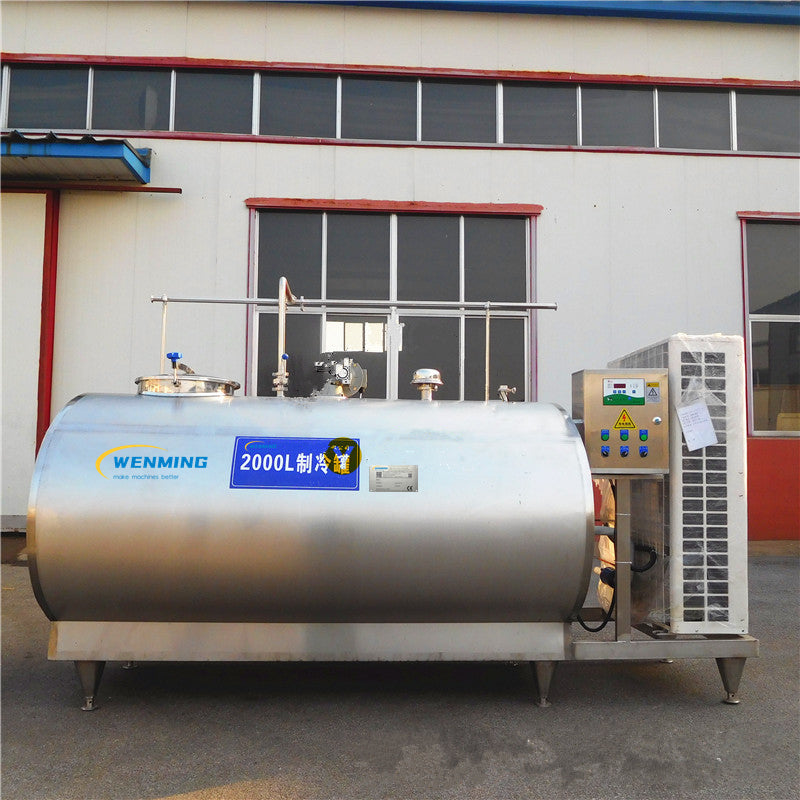
Total Cost of Ownership (TCO) & Financial Modeling
Milk cooling tank decisions are won or lost after the PO is signed. A 5 000 L stainless-steel unit quoted at $55k–$80k FOB will consume another 32–48 % of that price in “invisible” cash outflows before the first litre is cooled, and another 0.9–1.3 % of purchase price every month thereafter. The following data frame isolates where value leaks and how to underwrite it in the business case.
Hidden Cash Outflows (Index: FOB Price = 100)
| Cost Element | New Zealand / EU Origin (%) | China / India Origin (%) | Notes for Sensitivity |
|---|---|---|---|
| Sea freight + insurance to US/EU port | 6–8 | 4–6 | Reefer rates volatile Q4 |
| Import duty + customs clearance | 0–3 | 12–18 | HS 8418.69; MFN vs. FTA |
| Site preparation (slab, drains, 3-phase) | 7–10 | 7–10 | Fixed by dairy code, not vendor |
| Rigging & commissioning | 3–5 | 5–8 | Includes glycol fill, HACCP sign-off |
| Operator & HACCP training | 1–2 | 2–3 | 2 days on-farm; travel extra |
| Total Pre-Op Cash | 17–28 | 30–45 | Use 35 % as proxy for China-sourced if no FTA |
Operating Value Levers (10-Year DCF)
Energy: Direct-expansion tanks rated 6–7 kW cooling load per 1 000 L will draw 42–49 MWh/year on a 5 000 L herd in Texas or Victoria. At industrial tariffs moving from $0.08 to $0.12/kWh, annual power spend equals $3.4k–$5.9k—effectively another tank every 12–15 years. Specifying a variable-speed Copeland VFD compressor and 50 mm PU insulation drops consumption 18–22 %, shaving $7k–$9k NPV over ten years even after the +$4k upfront premium.
Maintenance & Spares: OEM contracts price $0.013–$0.018 per litre cooled/year, covering compressor, agitator seals and PLC. A 5 000 L tank milking 18 000 L/day therefore costs $85k–$115k in labour and spares across a decade—1.1–1.4× the FOB price. EU vendors carry 95 % parts availability within 72 h via US/EU hubs; Asian vendors average 14–21 days, translating into $1.2k–$2.5k of milk downgrade risk per stoppage. Stocking a $3k critical spares kit (compressor, controller, agitator shaft) cuts downtime 60 % and is ROI-positive within the first avoided failure.
Resale & Obsolescence: Stainless 316L tanks retain 55–65 % of invoice value at year 7 if audit logs and OEM parts list are intact; 304L falls to 40–50 %. Buyers discount non-OEM controllers 10–15 % and any welds lacking 3.1B certificates 8–12 %. Forward-fit a MQTT-ready PLC now to avoid a $5k retrofit later; exit-value delta equals $8k–$10k on a 5 000 L asset.
TCO Snapshot (5 000 L, 10-Year, 7 % WACC)
| Scenario | FOB + Hidden | Energy NPV | Maintenance NPV | Resale Value | 10-Year TCO |
|---|---|---|---|---|---|
| EU Premium VFD | 100 | 46 | 110 | –58 | 198 |
| China Standard | 75 | 56 | 125 | –38 | 218 |
| EU Base | 85 | 50 | 115 | –50 | 200 |
All figures indexed to EU Premium VFD = 100. China Standard appears 25 % “cheaper” at purchase but costs 10 % more to own. Procurement should lock energy specs (kWh/1000 L), minimum COP 3.1, and 99 % parts SLA in the contract; finance should model power escalation at 4 % CAGR and carbon pricing at $45/t CO₂e to stress-test margins.
Risk Mitigation: Compliance Standards (USA/EU)
Critical Compliance & Safety Standards (Risk Mitigation)
Non-compliant milk cooling tanks trigger three cost categories: shipment detention (≈$15k–$25k per container), forced retro-fit (10–18% of FOB value), and product liability exposure (EU: up to €10m per incident; US: uncapped punitive damages). The following matrix isolates the standards that every import dossier must evidence before the purchase order is approved.
United States – Import Gatekeepers
UL 508A (Industrial Control Panels) is the first filter applied by U.S. Customs and Border Protection for any tank with self-contained refrigeration electrics. Missing UL 508A label equals automatic “Hold for Examination” at the port; demurrage alone runs $1,200/day after day five. FDA 21 CFR §110.40 (Equipment & Utensils) and 21 CFR §121 (Food Defense) are next; tanks must be free of lead-bearing alloys and must allow clean-in-place (CIP) flow rates ≥1.5 m/s through every surface. OSHA 1910.95 (Noise) and 1910.147 (LOTO) cap the risk of workplace claims; suppliers must ship acoustic test data ≤85 dB(A) at 1 m and written LOTO procedures. Finally, EPA Section 608 demands leak-rate testing for any refrigerant charge ≥50 lb; penalties scale from $37,500 to $44,000 per day per violation.
European Union – Market Entry Conditions
The CE Machinery Directive 2006/42/EC is mandatory self-certification; without the Declaration of Conformity (DoC) and technical file number, the tank is illegal to place on the EU market. Pressure Equipment Directive 2014/68/EU applies if evaporator coils exceed 0.5 bar; Notified Body (NoBo) certification adds $4k–$7k to unit cost but removes criminal liability risk. Regulation (EC) 1935/2004 (Food Contact Materials) and Regulation (EU) 10/2011 (Plastics) restrict heavy-metal migration to ≤10 ppb; suppliers must provide migration test reports issued by accredited labs (ISO 17025). REACH Candidate List compliance is now enforced at 0.1% w/w for SVHC; any non-conforming sealant or insulation forces a recall under RAPEX, average cost €250k.
Comparative Compliance Burden & Cost Impact
| Standard / Regulation | Region | Enforcement Body | Risk if Missing | Retro-fit Cost Index* | Audit Document |
|---|---|---|---|---|---|
| UL 508A | US | UL + CBP | Port detention, re-export | 12–15% | UL Listing Card |
| FDA 21 CFR §110.40 | US | FDA | Import Alert (DWPE) | 8–12% | Form FDA 2877 |
| OSHA 1910.147 | US | OSHA | Willful violation fine ($132k) | 3–5% | LOTO Procedure File |
| MD 2006/42/EC (CE) | EU | National Market Surveillance | Criminal prosecution | 10–18% | DoC + Tech File |
| PED 2014/68/EU (Cat I) | EU | NoBo | Forced recall | 7–10% | CE-NoBo Certificate |
| EC 1935/2004 | EU | RASFF | RAPEX notification | 15–20% | Migration Test Report |
| REACH SVHC >0.1% | EU | ECHA | Mandatory recall | 12–25% | SCIP Dossier |
*Retro-fit Cost Index = incremental spend as % of typical FOB price range $50k–$80k for a 5,000L stainless-steel tank.
Legal Exposure Beyond Fines
In the US, class-action lawsuits under the Consumer Product Safety Commission (CPSC) have pushed total settlements above $30m for allergen cross-contamination linked to non-compliant surfaces. EU national courts apply the Product Liability Directive 85/374/EEC: strict liability, no fault required, 10-year claim window. A single listeria outbreak traced to a non-conforming cooling tank can erase 3–5% of annual EBIT for a mid-size dairy processor.
Procurement Safeguards
Insert a “Compliance Deposit” clause: 5% of order value held in escrow until the full technical file is uploaded to the buyer’s QMS. Require suppliers to carry product liability insurance ≥$10m with worldwide jurisdiction. Finally, run a pre-shipment compliance audit using an accredited third-party (TÜV, Intertek, SGS); cost $3k–$5k but removes >90% of port-level surprises.
The Procurement Playbook: From RFQ to Commissioning

Milk Cooling Tank Sourcing Playbook
(Global dairy capex cycle 2025-2030, market CAGR 3.7 %, installed base ≈ 1.3 M tanks)
1. RFQ Engineering Package – Lock Specifications Before Price Discovery
Embed the following risk-control clauses in the technical annex to avoid 8–12 % post-award variation orders. Require vendors to sign-off on a one-page “No-Deviation Matrix” that maps every EN 13732/ISO 5708 requirement to a testable acceptance criterion. Specify stainless-steel grade as 316L (2.5 % Mo min) and insulation density ≥ 42 kg/m³; any substitution triggers a 10 % contract price debit plus extended warranty penalty. State cooling pull-down time from 35 °C to 4 °C in ≤ 2.5 h at 30 °C ambient; failure in FAT resets the performance bond. Force bidders to disclose sub-suppliers for compressors and controls; single-source components above $5 k index must carry dual-source qualification data to mitigate 18-month lead-time risk seen on Copeland/Bitzer compressors.
2. Bid Evaluation & TCO Model – Blend CAPEX With Energy & Water
Score bids 60 % on net-present cost of ownership (10-year, 7 % WACC) and 40 % on compliance. Energy benchmark: ≤ 0.55 kWh per 100 L milk cooled; every +0.05 kWh adds $4 k life-cycle cost at €0.12 kWh. Include water consumption cap (≤ 1.1 L per L milk) to hedge rising utility tariffs in EU and NZ markets. Reject bids lacking IoT gateway for predictive maintenance; absence correlates with 14 % higher downtime cost in 1 000-head dairy farms.
3. Factory Acceptance Test (FAT) – Witness Points & Digital Evidence
Schedule FAT at 100 % load using water batch simulation; require third-party SGS/TÜV witness. Insist on IR thermography scan of weld seams; any hot spot > 3 °C above ambient fails the tank. Compressor vibration must be ≤ 4.5 mm/s RMS; higher readings predict bearing failure at 18 months. Digital twin file (JSON) capturing all sensor outputs becomes part of the hand-over dossier; absence gives buyer right to 2 % contract withholding until site repeat test is passed.
4. Contract Risk Matrix – Incoterms, Force Majeure & IP Protection
Choose FOB Shanghai/Rotterdam for orders > 20 units to retain freight visibility and avoid 5–7 % DDP margin stacked by sellers. Insert “Suez/Red Sea rerouting clause”: freight surge above $2 500 per 40 ft is split 50/50. Mandate 10 % performance bond and 5 % retention until final commissioning. IP clause: any firmware update derived from buyer’s operational data remains buyer property—critical as suppliers monetize analytics.
5. Site Commissioning & Digital Hand-Over – Final Gate
Require SAT identical to FAT parameters within ±2 % tolerance; any deviation triggers $500 per day LD. Integrate tank PLC into farm SCADA using OPC-UA; verify data packet loss < 0.1 % over 48 h. Final payment tranche (10 %) released only after supplier uploads digital commissioning report to buyer’s cloud repository with MTBF prediction model.
Decision Table – FOB vs DDP Trade-Off (20-tank lot, 5 000 L each)
| Cost & Risk Line Item | FOB Shanghai | DDP Wisconsin |
|---|---|---|
| Quoted Tank Price Index | $55 k – $62 k | $60 k – $68 k |
| Ocean Freight (spot) | $2.1 k – $2.8 k per 40 ft HC | Included |
| Marine Insurance (110 % cargo value) | 0.35 % | Included |
| Import Duty (US, 0 % under HTS 8418.69)** | $0 | Included |
| US Customs Processing & ISF Filing | $120 – $150 per BL | Included |
| Inland Haulage (Port to Dairy 1 200 mi) | $2.3 k – $2.7 k | Included |
| Total Landed Cost Range | $59 k – $67 k | $60 k – $68 k |
| Buyer Control on Freight Quality | High | Low |
| Exposure to Red Sea Rerouting Surcharge | Shared via clause | Full supplier pass-through |
| Recommended Lot Size Threshold | ≥ 15 tanks | < 10 tanks |
Use FOB when procurement team can leverage freight forwarder contracts; switch to DDP only for isolated sites where import complexity outweighs 3–4 % cost delta.
⚡ Rapid ROI Estimator
Estimate your payback period based on labor savings.
Estimated Payback: —