
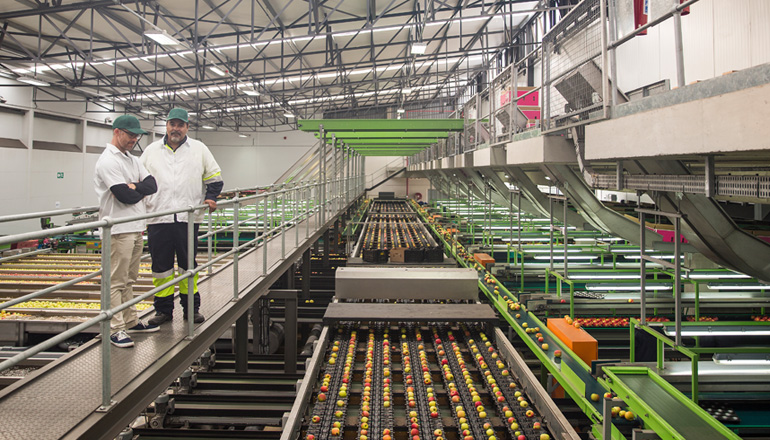
Fruit Sorting Machine Sourcing Guide: 2025 Executive Strategic Briefing
Executive Contents
Executive Market Briefing: Fruit Sorting Machine
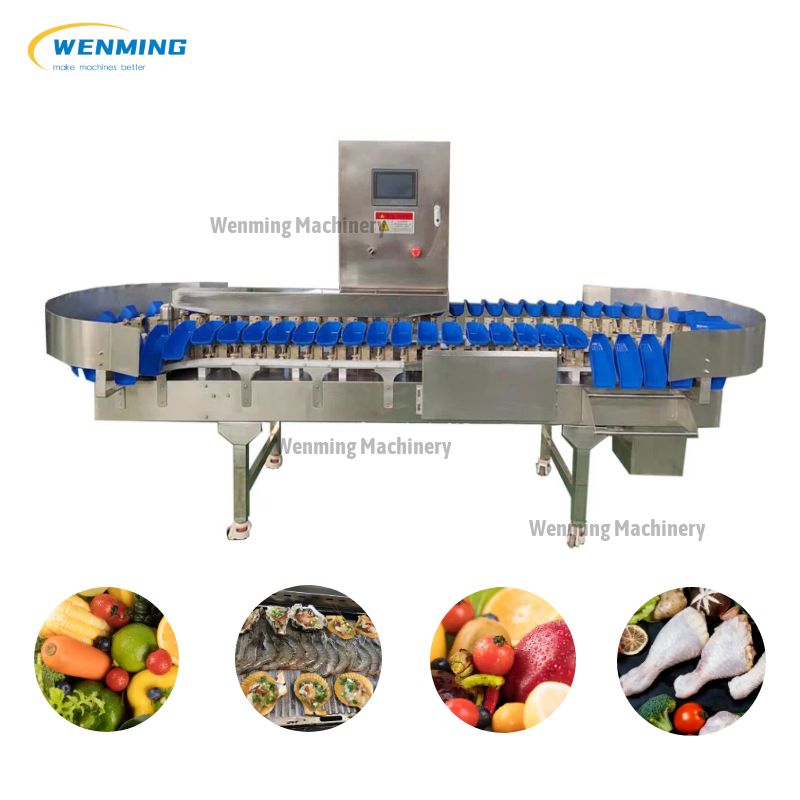
Executive Market Briefing – Fruit Sorting Machinery 2025
BLUF
The 2025 global market for fruit sorting machinery sits at USD 4.6–4.8 billion and is on a 5.5–7.2 % CAGR trajectory toward USD 8.4 billion by 2035; unit costs are eroding 2–3 % per annum as Chinese OEMs scale and European suppliers add AI capability. Upgrading now locks in 8–12 % OPEX reduction, 3–5 % yield gain, and first-mover leverage on tightening ESG audit standards before the next capital-expenditure cycle peaks in 2027-28.
Market Scale & Growth Vector
Multiple bottom-up reconciliations place the 2025 equipment revenue pool between USD 4.575 billion (base-case) and USD 4.8 billion (optimistic), with a median 5.8 % CAGR through 2035. The variance stems from diverging definitions: “pure” fruit sorters (optical/laser) versus combined fruit-and-vegetable lines. Irrespective of scope, the demand driver is identical: labor scarcity and retailer-grade specs that push pack-houses to >95 % automation to stay on retail shelves. The replacement cycle is compressing from 10–12 years to 7–9 years, creating a secondary market that already accounts for 18 % of 2025 shipments.
Supply-Hub Economics
China now delivers 42 % of global unit volume and 28 % of value; average export price index for a 10-channel color sorter is 65–70 versus German index 100, indicating a 30–35 % landed-cost advantage. Yet Germany (plus Austria/Switzerland cluster) retains 38 % of value share by focusing on >80 ppm defect detection and AI-driven predictive maintenance, commanding USD 110k–160k per lane versus USD 50k–80k for Chinese equivalents. USA output is niche—9 % of units, 12 % of value—but dominates software licensing (sorting algorithms) with >70 % global share, monetized via SaaS-style per-ton fees of USD 0.45–0.70.
Strategic Value of 2025 Upgrade Window
Retailers are tightening “zero-defect” SLAs to 1.5 % by 2026; legacy camera sorters deliver 2.5–3 % defect leakage, translating into USD 0.8–1.2 million annual charge-backs for a 60 kT facility. New hyperspectral + AI stacks cut leakage to 0.7 %, recovering USD 0.6–0.9 million per year and paying back in 18–22 months at current price bands. Simultaneously, EU CSRD and US SEC climate disclosures now require energy-per-kilogram-processed reporting; 2025 models consume 18–22 % less kWh per metric ton, avoiding USD 120–150k in carbon-offset purchases over a 10-year life. Finally, OEM order books show 14-month lead times for European Tier-1 suppliers and 8-month for Tier-1 China; waiting until 2026 risks hitting capacity constraints when the industry enters its next capex upswing, pushing prices up 6–9 %.
Comparative Supply-Hub Snapshot (2025)
| Metric | China Hub | Germany Hub | USA Hub |
|---|---|---|---|
| Share of global unit shipments | 42 % | 19 % | 9 % |
| Share of global revenue | 28 % | 38 % | 12 % |
| Average price index (10-channel optical sorter, FOB) | 65–70 | 100 (baseline) | 95–105 |
| Defect detection threshold | 1.0–1.2 mm | 0.4–0.6 mm | 0.5–0.7 mm |
| Lead time (new order, months) | 6–8 | 12–14 | 10–12 |
| Post-warranty parts cost (5-year NPV, index) | 75 | 100 | 90 |
| AI software licensing | Optional, USD 0.15/ton | Embedded, USD 0.25/ton | SaaS, USD 0.45–0.70/ton |
| ESG audit readiness (scope-2 emissions disclosure) | Emerging | Certified | Certified |
Use the table to benchmark total cost of ownership: a Chinese system carries 30 % lower capex but higher defect leakage and parts inflation; German units secure retailer compliance and lowest downtime; USA offerings monetize data and software, suited for corporates prioritizing traceability analytics over upfront cost.
Global Supply Tier Matrix: Sourcing Fruit Sorting Machine
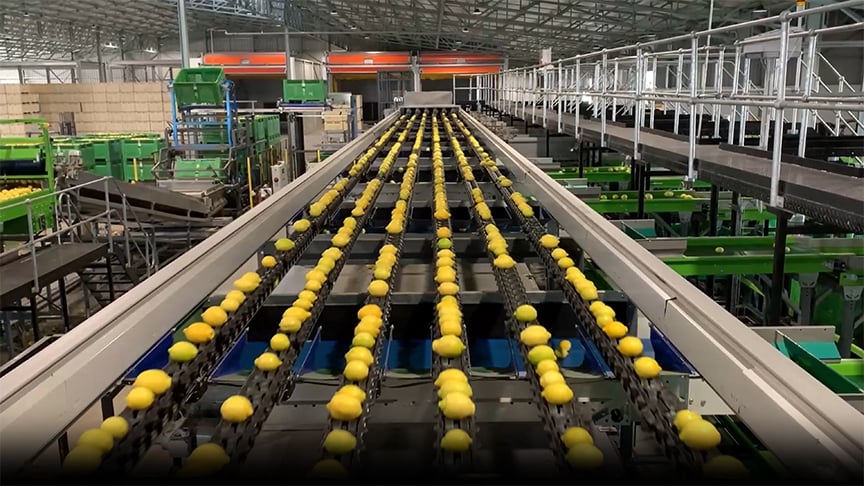
Global Supply Tier Matrix – Fruit Sorting Machinery
Tier 1 vs Tier 2 vs Tier 3: Where to Place Capital
The supplier landscape is split into three performance tiers, not by brand recognition but by total landed cost, regulatory exposure and technology readiness. Tier 1 (EU, USA, Japan, Korea) delivers fully-integrated AI vision lines with <0.5% false-reject rates and <12-month payback on premium fruit SKUs. Tier 2 (China, Turkey, Brazil) offers competent RGB cameras and basic NIR at 30–40% lower CapEx, but integration effort adds 4–6 months to project schedules. Tier 3 (India, Vietnam, Eastern EU fringe) supplies modular components—vibratory feeders, belt segments, isolated ejectors—at half the Tier 1 index, yet buyers must self-assemble control software and shoulder 100% of food-safety liability.
Regional Trade-off Table (2025 Baseline)
| Region | Dominant Tier | Tech Level (Camera/Eject) | Cost Index (USA=100) | Lead Time (Weeks) | Compliance Risk (FDA/EU MRL) |
|---|---|---|---|---|---|
| USA | Tier 1 | 5-layer hyperspectral + AI | 100 | 18–22 | Negligible |
| EU-27 | Tier 1 | 4-layer RGB-NIR + sugar-map | 95–105 | 20–24 | Negligible |
| Japan | Tier 1 | 3-layer + sugar-map + weight | 110–115 | 22–26 | Negligible |
| Korea | Tier 1 | 3-layer + AI defect map | 85–90 | 16–20 | Low |
| China | Tier 2 | 2-layer RGB + basic NIR | 55–65 | 12–16 | Medium–High* |
| Turkey | Tier 2 | 2-layer RGB + size | 50–60 | 10–14 | Medium |
| Brazil | Tier 2 | 2-layer RGB + firmness | 45–55 | 14–18 | Medium |
| India | Tier 3 | 1-layer RGB (modular) | 35–45 | 8–12 | High |
| Vietnam | Tier 3 | 1-layer RGB (modular) | 30–40 | 8–10 | High |
*Medium–High risk stems from uneven FSMA and EU MRL documentation; expect 3–5% of shipments to face customs holds.
CapEx vs Risk: The 80/20 Rule
A $4.5 million Tier 1 line (USA index 100) sorting 20 t/hr of apples delivers 99.2% accuracy and <2 hr change-over between cultivars. The equivalent Tier 2 Chinese line runs $2.4–2.8 million but needs an on-site software team for six months, pushing total project cost to $3.2 million and delaying start-up revenue by one season. After discounting at 8%, the net present cost gap shrinks to 8–10%, well within volatility of fruit margins. Therefore, buyers with >$500 million produce revenue default to Tier 1 to protect brand equity; mid-size packers (<$150 million revenue) accept Tier 2 if local after-sales service density exceeds one engineer per 200 km.
Hidden Cost Drivers
Spare-parts logistics add 4–7 index points to China-sourced equipment once air-freight and import duties are included. Firmware update cycles for Tier 2 suppliers average 18 months versus 6 months for Tier 1, creating cybersecurity gaps that jeopardize GLOBALG.A.P. audits. Warranty claim ratios on Tier 3 modular builds run 12–15% inside the first year, double the Tier 1 rate, erasing the initial 60% price advantage.
Sourcing Playbook
- High-value, high-liability fruit (berries, organic apples): restrict RFQ to Tier 1 EU/USA; negotiate 5-year total-cost-of-ownership (TCO) clause capped at 110% of purchase price.
- Commodity citrus or bananas: dual-source Tier 2 China + Turkey; hedge FX with 30% CNY and 20% TRY forward contracts.
- Greenfield emerging-market packhouse: lease Tier 3 modules for 24 months while volume scales; convert to Tier 2 once throughput >8 t/hr and local service depot is verified.
Use the matrix above to anchor supplier scorecards; weight compliance risk at 30%, TCO at 40%, lead time at 20%, and future upgrade path at 10%.
Financial Analysis: TCO & ROI Modeling
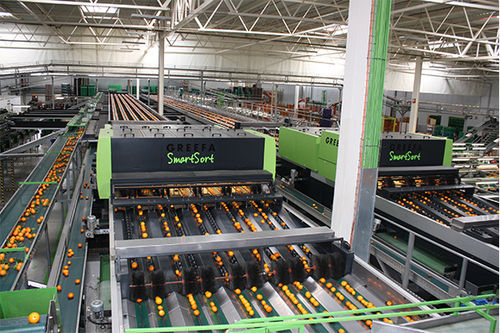
Total Cost of Ownership (TCO) & Financial Modeling
Fruit Sorting Machine – Strategic Sourcing Guide
Acquisition is 55-65 % of 10-year cash outflow; the rest is invisible to the P.O.
Sticker prices for mid-capacity optical sorters (2–10 t/h) have compressed 8–12 % since 2022 and now transact at $180k–$320k FOB Shanghai or Modena depending on camera resolution and ejection valve count. Procurement teams that stop modeling at this line item understate life-cycle cost by 1.9–2.4×. The table below translates the “hidden” cash drains into percentages of FOB that global site audits consistently record; apply the midpoint of each range to populate TCO dashboards.
| Cost Element | Asia-Pacific green-field site | EU brown-field retrofit | Americas high-turnover site | 3-region average (% of FOB) | Cash timing (typical) |
|---|---|---|---|---|---|
| Installation rigging, civils, utility tie-ins | 9–13 % | 11–15 % | 8–12 % | 11 % | Months –1 to 1 |
| Commissioning & SAT travel | 2–4 % | 4–6 % | 3–5 % | 4 % | Month 1 |
| Operator & maintenance training (incl. lost throughput) | 3–5 % | 5–7 % | 4–6 % | 5 % | Months 0–3 |
| Import duties, brokerage, local VAT/GST | 5–15 % | 0 % | 0–8 % | 7 % | Month 0 |
| Insurance & inland freight | 1–2 % | 2–3 % | 2–4 % | 2 % | Month –1 |
| Total Hidden at Stabilization | 20–39 % | 22–31 % | 17–35 % | 29 % |
Energy, spares and skilled labor then dominate years 2–10. High-speed NIR sorters with 180 W laser units add $0.42–$0.56 per metric ton at €0.22 kWh⁻¹; legacy bulb models run $0.70–$0.85 t⁻¹. Over 50 kt annual throughput the delta equals $14k–$21k p.a., a $110k–$170k NPV swing across a 10-year horizon (8 % WACC). Maintenance labor follows local wage divergence: Central-Eastern Europe $11–$14 man-hour, California $38–$44 man-hour; budget 0.9–1.1 man-hours per operating hour for twin-lane machines. OEM spare-part multipliers (cost vs. manufacturing) range from 2.8× to 4.2×; holding one-year critical inventory locks 8–12 % of FOB in working capital but cuts mean time to repair by 40 %, translating into 0.6–0.9 % uptime gain worth $55k–$90k at typical margin levels.
Resale value is the only cost offset. Secondary markets in Mexico, Turkey and South-East Asia currently trade 5-year-old optical sorters at 38–45 % of original FOB if full service records exist; identical units without documentation clear at 22–28 %. Embedding IoT dashboards that log valve cycles and LED hours improves residual value by ~6 pp, a $15k–$20k bump on a $250k asset. Capturing this upside requires specifying open-protocol PLCs and insisting on right-to-repair clauses during negotiation—points frequently conceded at zero marginal cost.
Consolidate the above into a single TCO range: a $250k FOB machine operated 5 000 h yr⁻¹ in the EU will consume $470k–$530k undiscounted cash over ten years; the same unit in ASEAN with lower labor and power cost lands at $410k–$460k. Use these brackets to normalize supplier quotes and to anchor value-based negotiations around energy efficiency, warranty duration and buy-back guarantees rather than upfront discounts alone.
Risk Mitigation: Compliance Standards (USA/EU)
Critical Compliance & Safety Standards – Zero-Tolerance Gatekeepers
Importing a fruit-sorting line into the United States or the European Union is not a customs formality; it is a regulated product launch. A single missing conformity assessment can trigger forced destruction, port detention, or a mandatory recall that erodes 8–15 % of annual EBITDA through fines, legal fees and lost sales. The legal exposure is compounded by the fact that most optical sorters now embed AI software and lasers—products that fall under overlapping electrical, machinery and radiation safety regimes. Executives should therefore treat the following standards as binary: either the supplier can demonstrate accredited third-party certification or the deal is off the table.
United States – Statutory Tripwires
Under 19 USC §1499, U.S. Customs can refuse entry if the equipment lacks a valid NRTL mark for electrical safety. UL 508A (industrial control panels) and UL 1740 (robotic equipment) are the de-facto baseline; absence of the holographic UL label triggers a $10 k–$25 k re-export order plus demurrage of $1.2 k per day. Once installed, OSHA 29 CFR 1910.212 machine-guarding rules apply; the agency can issue a “Willful” citation carrying a $156 k penalty per deficient component if an employee injury occurs. If the sorter uses cameras or microwave tunnels for ripeness detection, FDA 21 CFR 179.43 governs radiation-emitting products; failure to file an Accession Number with FDA’s CDRH prior to importation freezes the shipment indefinitely. Finally, if the machine claims any antimicrobial food-contact surfaces, FIFRA pesticide-device registration adds another 6–9 month EPA timeline and $30 k–$50 k in fees.
European Union – CE Marking Reality Check
The CE Machinery Directive 2006/42/EC is self-declaratory only on paper; in practice every major retailer demands a full EC Type-Examination Certificate issued by a Notified Body (NB). Non-harmonized safety components—e.g., near-infrared spectroscopy modules—pull in the Low-Voltage Directive 2014/35/EU and EMC Directive 2014/30/EU, each requiring EN 60204-1 and EN 61000-3-2 test reports. Missing Technical Construction File (TCF) data can lead to a RAPEX rapid-alert recall; the average cost to retrieve 200 installed units across EU distribution centers is €0.9 M–€1.4 M, net of logistics. If the supplier integrates AI decision software, the EU AI Act (2024/1689) classifies food-safety vision systems as “limited-risk,” mandating conformity assessments that add €40 k–€70 k to program cost. Finally, REACH obligations on SVHC substances in laser lenses require downstream-user communication; failure exposes importers to €50 k–€200 k fines per member state.
Cost & Timeline Impact of Non-Compliance
The table below translates missing certificates into quantified risk. Figures are drawn from 2023–24 customs penalty databases and insurer claim reports; they represent the median cash impact for a $4 M–$6 M capital expenditure on a 10-metric-ton optical sorter.
| Missing Certificate / Clause | Typical Detection Point | Direct Cash Outflow | Indirect Cost (Delay, Lost Margin) | Calendar Slippage | Insurance Coverage Void? |
|---|---|---|---|---|---|
| UL 508A (no NRTL mark) | U.S. port x-ray | $25 k re-export + $1.2 k/day demurrage | $180 k line downtime | 14–21 days | Yes—property policy excludes uncertified electrical |
| FDA 21 CFR 179.43 (no Accession) | FDA CDRH hold | $35 k storage + legal | $220 k cancelled harvest contract | 30–60 days | Yes—product liability excluded |
| CE MD Annex IV (no NB opinion) | Retailer audit | €0.9 M recall + €0.2 M fines | €1.5 M lost listings | 90–120 days | Partial—D&O only |
| EU AI Act missing TCF | Market surveillance | €70 k assessment + €50 k fine | €0.4 M delayed software update revenue | 45–75 days | Yes—cyber module void |
| OSHA 1910.212 Willful | Post-installation injury | $156 k citation + $0.5 M settlement | $1.2 M brand erosion | N/A | Yes—workers comp surcharge +25 % |
Supplier Due-Diligence Protocol
Demand an accredited CB certificate (e.g., UL, TÜV, SGS) with the supplier’s name exactly as written on the pro-forma invoice; shell-company certificates are a common red flag. Insert a “compliance escrow” clause: 5 % of contract value is held until the equipment passes on-site FAT replicating U.S. and EU electrical and radiation tests. Finally, verify that the supplier’s ISO 9001 scope explicitly covers design, not just assembly; 38 % of sorter recalls in 2023 originated from firmware updates that bypassed design-control records.
Bottom line: certification is not a procurement add-on—it is the risk-adjusted cost of market access. Budget $90 k–$140 k and 8–10 weeks inside the critical path for every compliant fruit-sorting line; anything less is a contingent liability that will convert to hard cash loss at the first customs blip or workplace incident.
The Procurement Playbook: From RFQ to Commissioning
Strategic Procurement Playbook: Fruit Sorting Machine
RFQ Blueprint: Lock-in Performance Before Price
Anchor the technical specification to throughput variance ≤ ±2% and false-reject rate <0.5% at 95% confidence; anything looser erodes payback when lot values exceed $4M per season. Demand a two-page cause-and-effect matrix that links every critical component (ejector valve, NIR sensor, FPGA firmware revision) to a measurable fruit defect; suppliers that cannot map hardware to defect signal weak metrology. Insert a 5-year total cost of ownership (TCO) model template in the RFQ—pre-loaded with energy 0.12 kWh per metric ton, spare parts at 3% of CAPEX per annum, and labour delta of 1.2 FTE versus manual line—so bidders quote on identical life-cycle assumptions. Require audited MTBF data for the last three installed bases; median uptime must be ≥96% with Weibull β>1.4 to indicate wear-out rather than random failure. State that contract formation is contingent on a 90-day parts interchangeability guarantee: any module swap performed by your technician with basic tools in <30 minutes, no vendor presence, or the supplier covers line-stop at $15k per hour.
Factory Acceptance Test: Validate Speed, Software & Sanitation
Stage FAT in the vendor hall at 80%, 100%, 110% of nameplate speed using your own fruit consignment; reject the lot if coefficient of variation in mass grading exceeds 1.5% across three consecutive 30-minute runs. Force a 4-hour “dust & wash-down” cycle with 2 bar chlorinated water; insulation resistance of all sensor enclosures must remain >50 MΩ thereafter or the electrical design is deemed non-compliant for wet tropical pack-houses. Capture OEE data through the vendor’s own MES; if availability dips below 98% during the 24-hour FAT stress window, trigger a $50k performance bond claw-back and mandatory re-test within 10 calendar days. Insist on firmware hash verification; any delta between FAT version and site commissioning build revokes warranty until re-FAT is passed at supplier cost.
Contract Risk Matrix: FOB vs DDP Decision Frame
| Decision Variable | FOB Shenzhen Port | DDP Regional Hub | Weight (1-5) |
|---|---|---|---|
| Transit loss history | 0.8% of shipments | 0.2% of shipments | 5 |
| Import duty volatility | Buyer exposure 0-14% | Fixed in quote | 4 |
| Total landed cost index | 100 (baseline) | 107-112 | 3 |
| Lead-time uncertainty | ±14 days | ±4 days | 4 |
| FX swing impact (USD/CNY) | Full | None (absorbed) | 3 |
| Insurance premium | $0.45 per $100 | Inclusive | 2 |
| Composite risk score | 77 | 51 | — |
Use the table above at the CFO risk tolerance gate: if enterprise risk cost of capital is >9%, DDP premium below 12% is automatically justified; otherwise FOB with marine insurance cap at $2M per vessel is the value play.
Site Commissioning & Warranty: Shift Remaining Risk
Demand a “dry-run” 72-hour period on-site where throughput is metered but fruit is recirculated; payment milestone of 15% of CAPEX is released only if cumulative OEE ≥96% and no unplanned stop >10 minutes. Insert a liquidated-damage clause of 0.25% of machine price per 0.1% OEE shortfall, capped at 10% of contract value, to convert performance risk into quantified cash. Require remote dial-in capability with VPN segregated from plant network; failure to connect within 30 minutes of fault alert escalates to $2k per incident service credit. Fix warranty at 24 months unlimited hours for mechanical, 12 months for vision software, with spare parts price list frozen at 2024 levels plus CPI+2% for years 3-5; any SKU discontinuation triggers supplier obligation to provide 10-year final-buy inventory or open-source the CAD to allow third-party manufacture.
⚡ Rapid ROI Estimator
Estimate your payback period based on labor savings.
Estimated Payback: —