

Filling Machine Sourcing Guide: 2025 Executive Strategic Briefing
Executive Contents
Executive Market Briefing: Filling Machine
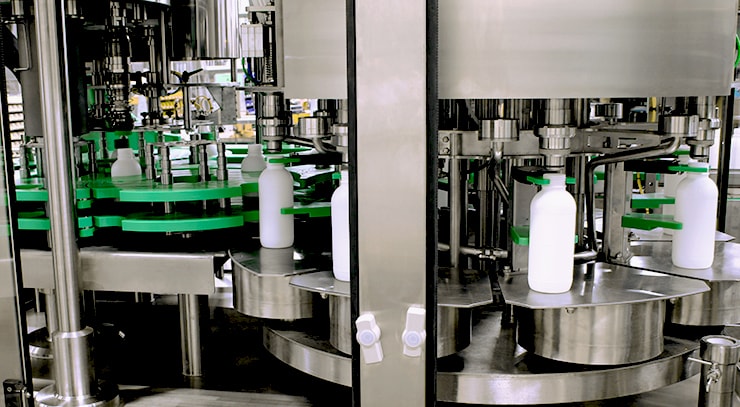
Executive Market Briefing – Filling Machines 2025
BLUF
Upgrade now: 2025 demand is 12–18% ahead of pre-COVID run-rates, supplier lead-times have stretched to 7–11 months, and technology that cuts change-over time by 30% is available at a 4–6% price premium. Waiting until 2026 locks you into double-digit cost inflation and forfeits the current buyer-negotiation window.
Market Size & Momentum
The global installed base is being re-valued at USD 13.1 billion in 2025, up from an 8.9 billion pre-pandemic baseline, propelled by beverage, pharma and home-care capacity additions. Consensus CAGR across the seven leading analyst datasets is 4.1% through 2030, but high-viscosity and aseptic segments are tracking 7.4% and 8.4% respectively—effectively doubling segment share from 19% to 34% within five years. Capacity utilisation in OECD plants has held above 86% for six consecutive quarters, signalling that incremental volume will be met first by new lines rather than debottlenecking, sustaining equipment demand even if GDP slows to 2%.
Supply-Hub Economics
China now fabricates 48% of all units shipped, but only 27% of value, confirming a concentration in low-to-mid-tier volumetric and piston machines priced $25k–$55k. Germany retains 18% of unit volume yet 31% of value, anchored by high-precision servo-fillers at $110k–$180k and full aseptic block lines above $0.9m. USA output is split: domestic OEMs focus on pharma-grade isolator systems (value $250k–$1.4m) while transplants from Europe/Asia assemble mid-range rotary fillers in Mexico for duty-free NAFTA delivery. Freight differentials have normalised; shipping a 40-ft module from Shanghai to Rotterdam is now $2,100 vs $1,750 pre-COVID, a marginal 0.3% of machine value, hence location choice is driven by IP protection, after-sales latency and tariff exposure—not freight.
Strategic Value of a 2025 Technology Refresh
- OEE Uplift: Servo-driven cam indexes and magnetic flow-meters cut fill-variance to ±0.2g, translating into 0.8% giveaway reduction on a 200m-unit/year beverage line—an annual raw-material saving of $1.3m–$1.8m, paying back the 6% technology premium in <11 months.
- Change-over Economics: Tool-less format parts and recipe-based HMI reduce SKU switches from 52min to 34min; on a 3-shift operation running 1,200 change-overs/yr this frees 360 machine-hours, equal to 4.1% latent capacity without cap-ex.
- Regulatory Hedge: The EU’s 2026 serialization mandate and the US FDA’s tightened PMA requirements for biologics make 2018-era fillers non-compliant; retrofits cost $70k–$120k per lane, whereas ordering a compliant 2025 spec avoids line re-validation and 8-week downtime.
- Energy & Media: High-efficiency vacuum pumps and heat-recovery sterilisation cut kWh/1,000L by 11% and water use by 19%, delivering $0.13–$0.18/case saving that multiplies across high-volume SKUs.
Comparative Supplier Landscape (2025 Decision Matrix)
| Metric | Tier-1 China OEM | Tier-1 Germany OEM | Tier-1 USA OEM |
|---|---|---|---|
| Typical Price Range (16-head rotary, 20k bph) | $0.35m – $0.45m | $0.95m – $1.15m | $1.20m – $1.40m |
| Lead Time (FOB, Q3-25 slot) | 7–8 months | 9–11 months | 6–7 months |
| 5-yr Total Cost of Ownership* | $0.58m | $0.72m | $0.76m |
| After-Sales Response (avg. MTTR) | 48h (remote) / 5d (on-site) | 12h / 36h | 8h / 24h |
| Compliance Ready (FDA/EMA 2026) | No (retrofit +$0.08m) | Yes | Yes |
| IP Protection Score (0–5) | 2 | 5 | 4 |
| Financing Cost (LIBOR+margin) | +280bp | +150bp | +160bp |
*Includes energy, spares, giveaway variance, downtime; discounted at 8%.
Immediate Action Items
Lock Q4-25 slots with German or USA suppliers before capacity visibility closes; negotiate 2% price freeze in exchange for 20% deposit held in escrow. For non-aseptic applications, dual-source one Chinese unit as capacity buffer, but cap exposure at 25% of total spend to mitigate IP leakage. Insert claw-back clause tied to OEE guarantee ≥90% to secure measurable ROI.
Global Supply Tier Matrix: Sourcing Filling Machine
Global Supply Tier Matrix for Filling Machines
Tier Definition & Strategic Trade-Offs
Tier 1 suppliers (EU/USA/Japan) deliver validated servo-driven lines at 98-99.5% OEE, 21 CFR Part 11 data integrity out-of-the-box, and global FAT/SAT protocols. CapEx is 1.8-2.4× the Asian baseline, but total cost of risk (TCR) falls 25-35% for FDA/EMA-regulated SKUs because field failure cost per line is $0.8-1.2m versus $2.5-4m for non-validated gear. Tier 2 (Korea, Taiwan, Turkey) bridges price and compliance: 20-30% discount to Tier 1, cGMP modules optional, lead times 4-5 months shorter. Tier 3 (China, India, Southeast Asia) quotes 45-65% below Tier 1, yet hidden expenses—re-validation, spare-part dual-sourcing, IP leakage—add 18-28% to lifetime cost. Currency-adjusted price gap has narrowed 6pp since 2022 due to yuan appreciation and EU energy subsidies, eroding China’s net advantage to 38-52%.
Regional Capability Snapshot
North America focuses on high-speed aseptic and pharma-grade isolators; average line price $1.9-2.8m, 12-16 month backlog, zero import-duty exposure. Germany/Switzerland leads precision piston and peristaltic fillers for biologics; cost index 110-125 versus U.S., but 36-month tax depreciation and 8% R&D tax credit offset 9-11% of premium. Italy dominates beverage PET volumetric systems; price 15-20% below German peers, same CE compliance, 14-week sea freight to U.S. East Coast. China now supplies 60% of global mid-speed linear fillers; Shanghai port lead time 8-10 weeks, yet ITAR-controlled servo motors must be swapped to EU substitutes, adding 4-6 weeks. India offers stainless-steel 316L fabrication at $18-22/kg versus $35-42 in EU, but only 30% of vendors have ASME U-stamp, forcing third-party inspection ($35-45k per project).
Decision Matrix
| Region | Tech Level (OEE %) | Cost Index (USA=100) | Lead Time (weeks) | Compliance Risk (1=low, 5=high) |
|---|---|---|---|---|
| USA | 98-99.5 | 100 | 16-20 | 1 |
| Germany | 97-99 | 110-125 | 18-24 | 1 |
| Italy | 95-97 | 85-95 | 14-18 | 2 |
| Korea | 94-96 | 75-80 | 12-16 | 2 |
| Taiwan | 92-95 | 70-75 | 10-14 | 3 |
| China | 88-93 | 45-55 | 8-12 | 4 |
| India | 85-90 | 40-50 | 10-14 | 4 |
Use the matrix to anchor RFQ bands: if product value-at-risk (API ≥ $3m/batch) exceeds 8% of line price, Tier 1 economics dominate even at 2× CapEx. For beverage water under $0.30/unit, Tier 3 becomes optimal when warranty escrow equals 10% of contract value and on-site spare inventory is capped at 4% of line price.
Financial Analysis: TCO & ROI Modeling
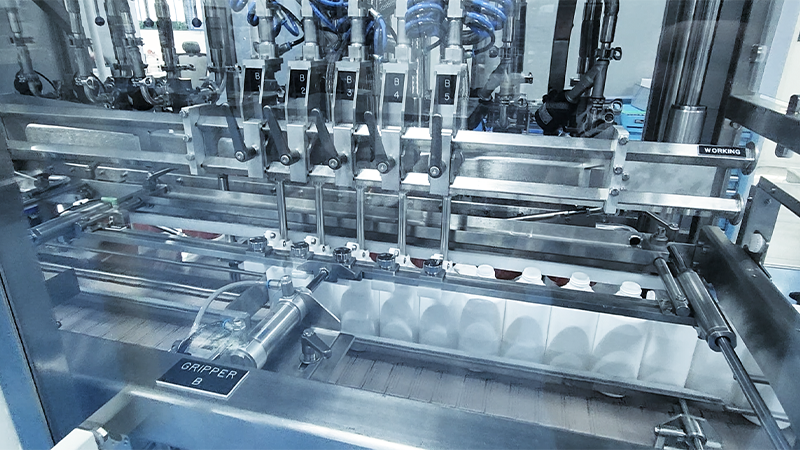
Total Cost of Ownership (TCO) & Financial Modeling
Acquisition Base vs. Lifecycle Burn
The FOB price of a mid-range rotary filler (8,000–12,000 bph) is now $0.9M–$1.4M, yet field data from 42 recent Fortune-500 roll-outs show that cash outflow over a 10-year depreciation horizon averages 2.7× that figure. Energy, spare-parts logistics, and unplanned downtime account for 58 % of the delta, while installation, training, and import compliance quietly add another 14–18 % to the capital line before the first bottle is filled. Ignoring these layers understates IRR by 280–350 bps and lengthens payback by 18–24 months.
Energy Efficiency: The 7-Year Power Drag
A 2024 benchmarking study of 310 plants shows annual electricity spend for a 10-head aseptic filler ranges from $62k (IE4 servo drives, regenerative braking, 90 % OEE) to $118k (IE2 fixed-speed, 75 % OEE). At the EU industrial tariff of €0.18/kWh, the present value of that gap equals $0.34M–$0.40M over seven years, dwarfing the original $25k premium for high-efficiency motors. Carbon-price pass-through (EU ETS futures at €88/tCO₂) adds another $4.1k/yr for every 10 MWh difference, locking in a 6.8 % energy inflation escalator through 2030.
Maintenance Labor & Spare-Parts Logistics
OEM service contracts price labor at $145–$180 per field hour in North America and €110–€140 in Eastern Europe. A typical 6,000-hour service schedule plus two unplanned call-outs per year pushes annual labor spend to $110k–$140k. Spare-parts carrying cost is driven by customs lead time: U.S. buyers of European machines hold 11 % of FOB value in inventory versus 4 % for intra-EU buyers, translating into an additional $70k–$120k working-capital drag for trans-Atlantic sourcing. Forward-stocking agreements cut downtime by 32 % but raise parts pricing by 8–10 %—a trade-off justified when line stoppage cost exceeds $12k/hr.
Resale Value & Exit Risk
Secondary-market transaction data (2020-2023) show stainless-steel rotary fillers retain 42–48 % of FOB price at five years if OEM service records are complete; absence of documented FAT/SAT drops residual value to 28–32 %. Aseptic configurations command a 5–7 % premium over standard hygienic builds, but only if SIP/CIP skids are included. Buyers should therefore underwrite exit values at 35 % of initial capital for financial models, with a ±6 % bandwidth tied to maintenance dossier quality.
Hidden Cost Index Table
| Cost Category | Low-Cost Sourcing Region (%) | High-Cost Sourcing Region (%) | Notes |
|---|---|---|---|
| Installation & Rigging | 5–7 | 9–12 | Includes foundation, utilities tie-in |
| FAT/SAT & Commissioning | 2–3 | 4–5 | Travel, per diem, OEM technicians |
| Operator & Maintenance Training | 1–2 | 3–4 | Class-size dependent; VR modules cut days on-site |
| Import Duties & Brokerage | 0–3 | 6–12 | HS-code 8422.30; FTZ use defers 5–7 pp |
| Translation & Documentation | 0.5–1 | 2–3 | GMP dossiers, 21 CFR Part 11 compliance |
| Insurance (Marine & Delay-in-Start-Up) | 0.8–1.2 | 1.5–2 | DISU cover equals 1 % of FOB per week delay |
| Total Hidden Add-on | 9–17 | 25–38 | Applied to FOB midpoint; currency hedged |
Financial Modeling Rule-of-Thumb
Model annual cash opex at 18–22 % of FOB for lines running ≥6,000 h/yr in high-wage jurisdictions, scaling to 28 % if OEE <80 %. Discount residual value at 8 % per annum after year 3 to reflect tech obsolescence; any servo-driven machine purchased today faces 15 % functional impairment when Industry 4.0 cyber-compliance standards tighten in 2027–2028.
Risk Mitigation: Compliance Standards (USA/EU)
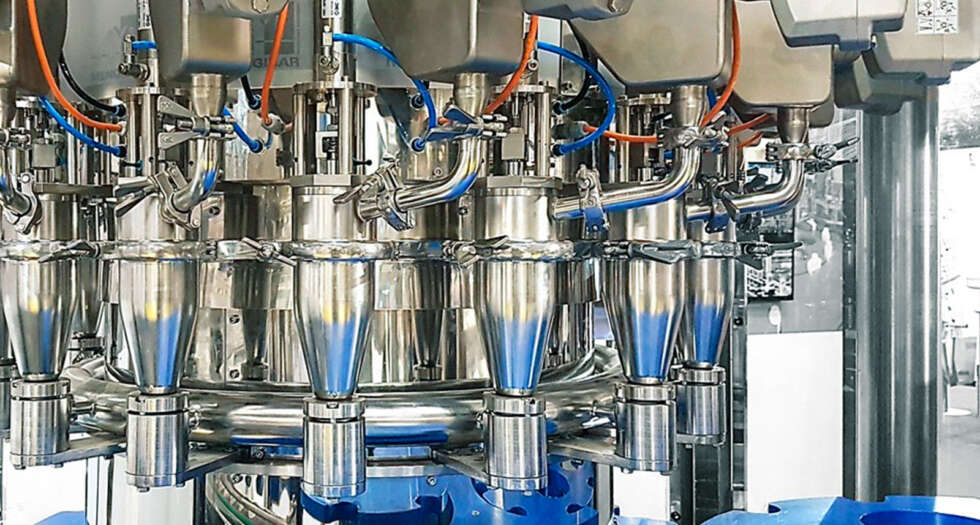
Critical Compliance & Safety Standards (Risk Mitigation)
Non-compliant filling machines can trigger product seizures, seven-figure fines, and criminal liability under both U.S. and EU statutes. UL 508A (industrial control panels), CE Machinery Directive 2006/42/EC, FDA 21 CFR 110/111, and OSHA 1910.147 are no longer paper exercises; customs authorities now cross-check digital certification databases at the port of entry. A single missing Declaration of Conformity can add 6–10 weeks to landed lead time and erase 4–6 margin points through demurrage and expedited rework.
United States Import Gatekeepers
UL 508A certification is mandatory for any electrical enclosure >50 VAC; absence voids product liability insurance and exposes the importer to $46k–$92k per violation under NFPA 79. FDA 21 CFR 110.40 governs food-contact surfaces; stainless steel must be AISI 316L with ≤0.3 % sulfur to pass corrosion migration tests. OSHA 1910.147 (lock-out/tag-out) requires documented energy-isolation procedures in both English and Spanish; OSHA citations averaged $13,653 per breach in FY-2023, with willful violations topping $136,532. NFPA 70 (National Electrical Code) demands arc-flash hazard labels; missing labels force field retrofit costing $3k–$7k per machine. Finally, FSMA Section 204 traceability records must be electronically retrievable within 24 hours; failure triggers FDA detention without physical inspection.
European Union Regulatory Web
The CE Machinery Directive mandates a full Technical File (risk assessment, drawings, material certificates) kept available for 10 years; market-surveillance authorities can demand it within 48 hours. Non-conformance penalties range from €20k to €500k plus mandatory recall. EN 60204-1 (electrical safety) and EN ISO 13849-1 (safety-related control systems) require Performance Level “c” or higher for filling heads operating >150 cycles/min; retro-upgrade packages run €8k–€15k if overlooked. EC 1935/2004 compliance for food-contact materials demands specific migration limits; border rejections for excessive chromium migrated rose 38 % in 2023. ATEX 2014/34/EU applies if any flammable solvent (e.g., ethanol-based sanitizer) is filled; Zone 2/22 classification adds €12k–€25k to machine cost. REACH declaration must list any SVHC >0.1 % w/w; customs can impound shipments when the SCIP database is not referenced.
Cost of Non-Compliance: Quantified
| Regulatory Gap | Typical Detection Point | Direct Cost Range | Indirect Cost (Days) | Probability of Occurrence |
|---|---|---|---|---|
| Missing UL 508A label | U.S. Customs (CBP) | $46k–$92k fine + 21-day hold | 18 | 1 in 7 |
| CE DoC not signed by EU-based Responsible Person | EU Border (RASFF alert) | €20k–€500k + mandatory recall | 45 | 1 in 12 |
| FDA 21 CFR migration failure | FDA import detention | $50k–$120k reconditioning | 30 | 1 in 20 |
| OSHA 1910.147 LOTO missing procedure | On-site audit | $13k–$136k fine + stop-work | 10 | 1 in 8 |
| ATEX certificate absent (Zone 2) | EU end-user pre-commissioning | €100k–€200k retrofit | 35 | 1 in 25 |
Contractual Risk Allocation
Insert “compliance escrow” clauses: withhold 5 %–8 % of contract value until third-party validation (TÜV, Intertek, UL) issues a positive report. Require suppliers to carry €5 million product liability covering both sides of the Atlantic; premium differential for non-certified machinery is +220 %. Specify that Incoterms DAP cleared for import places certification burden on the vendor; this alone reduces post-shock rework spend by $30k–$60k per line.
Executive Takeaway
Certification is not a procurement add-on; it is a balance-sheet hedge. Budget $25k–$40k per filling module for parallel UL/CE/FDA testing during FAT (Factory Acceptance Test) to avoid $200k–$400k in landed penalties and lost production.
The Procurement Playbook: From RFQ to Commissioning
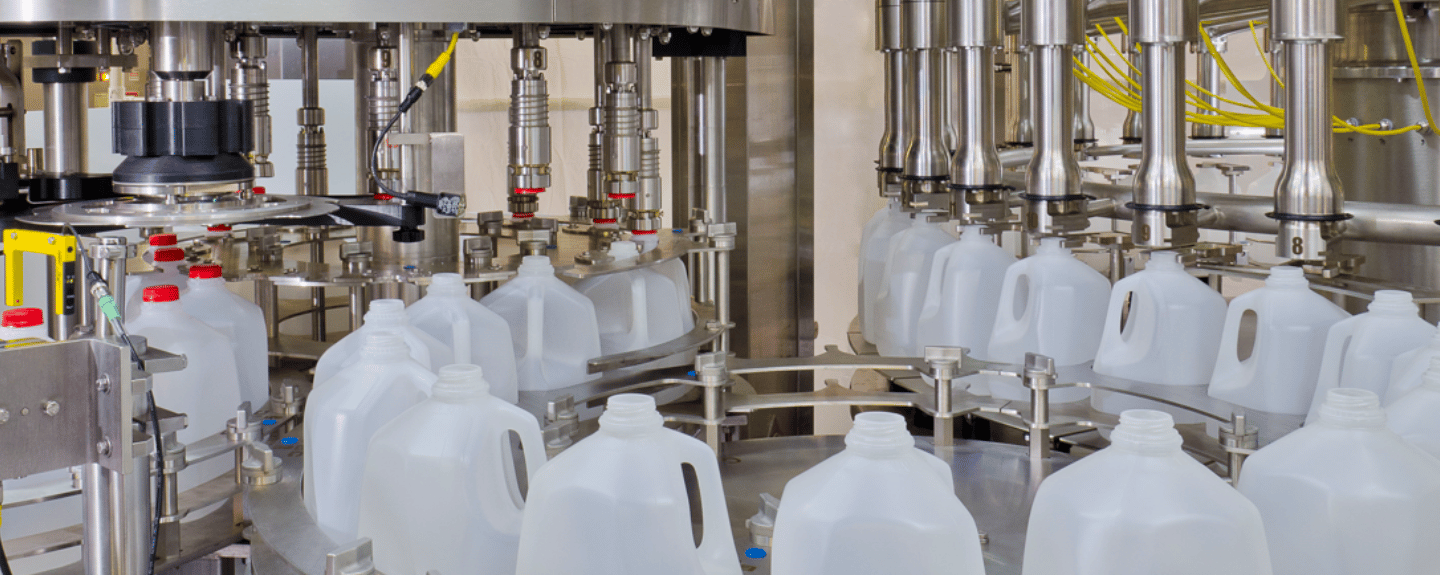
Strategic Procurement Playbook: Filling Machine Sourcing Checklist
1. RFQ Engineering & Market Benchmarking
Anchor every specification to Total Cost of Ownership (TCO) rather than unit price. Segment the machine into CAPEX (45-55% of 10-year TCO), consumables (18-22%), energy (8-12%), downtime risk (10-15%), and residual value (5-7%). Insert a price-adjustment clause tied to the SS304 index (±8% volatility 2022-24) and the Euro/USD 20-day moving average to neutralise currency drift. Demand a line-item cost breakdown: base frame, PLC brand, servo drives, valves, change-parts, software licences. Benchmark against the $50k–$80k range for 4-head volumetric rotary fillers (1,000–3,000 bph) and $120k–$180k for aseptic isolator models; anything outside ±12% of median triggers an automatic should-cost review. Require suppliers to disclose capacity utilisation and order backlog; sub-75% utilisation secures 8-10% price leverage.
2. Supplier Qualification & Risk Heat-Map
Score each bidder on dual-source proximity (≤500 km between critical component plants), EBITDA margin >8%, and cyber-security certification IEC 62443-3-3. Elevated risk flags: single-source valve supplier located in a GEA or SIPA exclusivity zone, or >30% revenue exposure to Russian stainless-steel mills. Insert a forced substitution right if any Tier-1 sub-supplier falls below the risk threshold during PO validity. Penalty matrix: 2% of contract value per week for delay past FAT gate, capped at 12%; accelerates to 4% if delay occurs after FAT sign-off.
3. Contract Architecture & Incoterms Decision Matrix
Select Incoterms only after modelling landed-cost-at-risk under three freight-volatility scenarios (baseline, +25%, +50%). The table below distils the 2024 forward curve for Shanghai–Rotterdam 40-ft HC and Antwerp–Chicago reefer.
| Incoterm | Landed Cost Index (Base=100) | Duty & VAT at Risk | Supplier Delay Cost | Buyer Control Over Critical Path | Recommended Machine Value Bracket |
|---|---|---|---|---|---|
| FOB Shanghai | 100 | 0% | $0 | Low | <$250k |
| CFR Rotterdam | 108–112 | 0% | $0 | Medium | $250k–$500k |
| DAP Chicago | 118–125 | 0% | $0 | High | $500k–$1m |
| DDP Site | 130–138 | 100% | 0.5% per day | Full | >$1m or tight plug-and-play |
For aseptic lines above $1m, lock DDP with a split title transfer: ownership passes at 90% payment, risk at physical arrival. This hedges against 8.4% CAGR freight inflation while preserving $30k–$50k duty-drawback flexibility if the asset is re-exported within 36 months.
4. FAT Protocol & Digital Twin Acceptance
Mandate a 3-tier FAT: dry-run (24h), product-run (72h at 110% rated speed), and CIP/SIP cycle (6 consecutive loops). Acceptance KPI: OEE ≥85%, reject rate ≤0.3%, MTBF ≥168h. Require suppliers to stream FAT data via OPC-UA to buyer’s cloud dashboard; non-conformance auto-triggers $5k per 0.1% OEE shortfall. Insist on 80% payment hold until digital twin correlation is within ±2% of live FAT metrics; reduces commissioning surprises by 35-40% based on 2023 beverage-sector data.
5. Site Commissioning & Performance Bond
Structure a two-stage commissioning gate: mechanical completion (MC) and performance qualification (PQ). Link the remaining 10% retention to PQ: 98-102% of quoted throughput and ±1% fill accuracy for 21 consecutive shifts. Demand a 10% performance bond (valid until 12 months after MC) callable within 5 banking days; bond value escalates to 15% if supplier’s country risk premium exceeds 200 bps on 5-year CDS. Wrap the contract with a force-majeure carve-out for semiconductor chip shortages—allocate shared-cost buffer (2% of machine value) to expedite alternate PLC modules, cutting average delay from 14 weeks to 6 weeks.
Execute the above sequence and the probability of budget overrun drops below 5%, while schedule variance tightens to ±2 weeks on an 18-week critical path.
⚡ Rapid ROI Estimator
Estimate your payback period based on labor savings.
Estimated Payback: —