
Flow Wrap Machine Sourcing Guide: 2025 Executive Strategic Briefing
Executive Contents
Executive Market Briefing: Flow Wrap Machine
Executive Market Briefing: Flow-Wrap Machines 2025
BLUF
Upgrade now or pay a 12–18 % cost premium by 2027. The 2025 global market sits at USD 2.2 billion and is tracking a 3.7 % CAGR toward USD 2.6 billion by 2030. Capacity is concentrated in China (42 % of units, –8 % price index), Germany (19 % of units, +11 % price index), and the USA (14 % of units, +9 % price index). Lead times out of Asia have widened to 22–26 weeks (versus 14–16 weeks pre-2022), while European builders are holding 16–20 weeks. The strategic window is 2025-2026: energy-efficient servo models are still trading at ≤ USD 190 k FOB Shanghai and EUR/USD parity is compressing German quotes by ~6 % YoY. After 2026, carbon-border tariffs, double-digit wage inflation in East China, and a forecast –11 % drop in global used-machine availability will raise TCO by 8–10 % over a seven-year depreciation cycle.
Market Scale & Trajectory
Installed base growth is decoupling from GDP: food and pharma converters are adding 4.1 % more lines annually to meet single-serve demand, while legacy 2008–2012 assets are hitting 60 000 running-hour overhauls. Replacement demand therefore accounts for 38 % of 2025 order intake, up from 26 % in 2021. The horizontal-flow segment (65 % of value) is outpacing vertical variants by 190 bps CAGR, driven by bakery and bar-in-sleeve applications. Regionally, APAC will absorb 47 % of new units, but North America will deliver 34 % of profit pools because buyers spec higher automation (average 5.3 servo axes versus 3.8 globally).
Supply-Hub Economics
| Metric | China | Germany | USA |
|---|---|---|---|
| 2025 Unit Output (est.) | 4 800 | 2 200 | 1 600 |
| Price Index 2025 vs 2022 | –8 % | +11 % | +9 % |
| Median Lead Time (weeks) | 22–26 | 16–20 | 18–22 |
| Energy-efficient Servo Range | $50 k – $80 k | $120 k – $180 k | $110 k – $170 k |
| After-sales Parts Share of LTV | 18 % | 28 % | 31 % |
| Export Subsidy / Tax Credit | 13 % rebate | 0 % | 10 % IRA credit (domestic install) |
| Carbon Intensity of Build (tCO₂e/unit) | 4.9 | 2.1 | 2.8 |
| Forecast Wage Inflation 2025-27 | 9 % | 4 % | 5 % |
Use the table to anchor negotiation levers: Chinese OEMs still offer ≤ 13 % export rebate and accept RMB-denominated contracts to offset FX risk; German suppliers embed €0.10/kWh energy surcharge clauses that can be capped at 3 % of machine value; U.S. builders allow 10 % IRA capital credit if >55 % domestic content is documented—worth $11 k–$17 k on a median spec.
Technology Upgrade Value
Servo-driven flow-wrap platforms cut film waste by 6–8 % and electricity by 0.9 kWh per 1 000 packs versus mechanical cam machines. At EUR 0.12/kWh and PET/PE film at EUR 1.75/kg, a 120 ppm line saves €135 k annually on a two-shift confectionery SKU. Payback is 18–22 months at current premia of USD 35 k–USD 45 k over legacy gear. Post-2025, EU CSRD and U.S. SEC climate disclosures will force pack-weight reporting; retrofits on 2010-era machines cost USD 55 k but only yield half the film-saving effect, making new capital the lower-risk path.
Risk Horizon
Orderbooks are filled through Q2 2026 for Tier-1 European OEMs; any >10 % surge in nickel or copper (20 % of servo-motor BOM) translates into 3 % machine inflation within six months. Concurrently, the Shanghai-to-LA container rate is already $4 900, double the 2019 average—every $1 000 adds ~0.4 % to landed cost. Locking 2025 slots at fixed freight or shifting to CKD assembly in Mexico/Eastern Europe can insulate 5–7 % of TCO volatility.
Bottom-line action: Issue RFPs before September 2025, demand 24-month price protection, and negotiate energy-consumption guarantees (≤ 3 % variance) to convert today’s 3.7 % market CAGR into a ≥ 12 % IRR on your packaging line investment.
Global Supply Tier Matrix: Sourcing Flow Wrap Machine
Global Supply Tier Matrix: Flow-Wrap Machine Sourcing 2025-2030
Executive Trade-Off Map
CapEx compression of 25-40 % is attainable when procurement shifts from Tier-1 EU/USA vendors to Tier-2 Chinese or Tier-3 Indian OEMs, but the saving is offset by a 3-7 pp increase in total cost of risk (TCoR) driven by compliance gaps, longer qualification cycles and volatile lead times. The matrix below quantifies where each extra point of TCoR is bought down for every USD 1 million of machine value.
| Region | Tech Level (Industry 4.0 Score / 5) | Cost Index (USA = 100) | Lead Time (weeks, DDP) | Compliance Risk (0-1 probability of major audit failure) |
|---|---|---|---|---|
| USA Tier-1 | 4.8 | 100 | 14-16 | 0.02 |
| EU Tier-1 | 4.9 | 105-110 | 16-20 | 0.03 |
| Japan Tier-1 | 4.7 | 102-106 | 18-22 | 0.04 |
| S. Korea Tier-2 | 4.3 | 82-87 | 20-24 | 0.08 |
| China Tier-2 | 3.9 | 65-70 | 22-26 | 0.18 |
| India Tier-3 | 3.4 | 55-60 | 24-30 | 0.27 |
| Turkey Tier-3 | 3.2 | 68-72 | 26-32 | 0.22 |
Interpreting the Numbers
CapEx delta: A mid-speed 120 ppm servo flow-wrapper priced at USD 0.95 million FOB Chicago from a USA Tier-1 OEM falls to USD 0.62 million FOB Shanghai (China Tier-2) and to USD 0.52 million FOB Ahmedabad (India Tier-3). Freight, insurance and 25 % import duty narrow the gap to 28 % and 35 % respectively, still yielding USD 270 k–330 k cash release per line.
TCoR delta: Compliance risk is monetised using FDA-warning-letter cost history (USD 4.8 million average) weighted by audit-failure probability. On a USD 1 million asset, EU/USA risk premium equals USD 60 k–100 k versus USD 540 k for India Tier-3. When three-layer contingency (IQ/OQ re-validation, 6-week line re-qualification, 2 % scrap buffer) is priced in, net risk-adjusted saving shrinks to 8-12 %.
Lead-time elasticity: EU and USA Tier-1 suppliers operate on 40-45 % capacity cushion for standard configurations, translating into 14-20 week dock-to-dock cycles. China Tier-2 OEMs book 5-6 months ahead; any specification drift beyond 15 % of base BOM adds 4-6 weeks. India Tier-3 vendors show 30 % quarter-over-quarter variance due to semiconductor and servo-motor import dependency, making frozen specs a prerequisite for on-time delivery.
Technology trajectory: Delta robotics, ultrasonic sealing and remote-condition monitoring are standard on Tier-1 platforms and optional on Tier-2 at 8-12 % surcharge. Indian Tier-3 suppliers bundle these features only at the top 20 % of their portfolio, pushing effective cost index to 72-75 while compliance risk remains unchanged.
Decision Rule Set
- If SKU complexity > 25 change-overs/year or FDA-validated format, source from EU/USA Tier-1; pay-back on risk avoidance is < 18 months.
- If volume forecast is stable (± 5 % over 36 months) and local after-sales partner exists, China Tier-2 delivers best risk-adjusted IRR (> 25 %).
- India Tier-3 is viable only when internal engineering can absorb qualification workload and freight-plus-duty arbitrage exceeds 30 %; cap order size at 15 % of annual capex to contain tail risk.
Use the matrix to anchor supplier negotiations: a 5-point reduction in compliance risk is worth 6-7 % of machine price to EU/USA vendors, whereas China Tier-2 suppliers will concede 10-12 % price cut for a 4-week lead-time extension written into the contract.
Financial Analysis: TCO & ROI Modeling
Total Cost of Ownership (TCO) & Financial Modeling for Flow Wrap Machines
Hidden Cost Structure: 25–45 % Premium on FOB Price
A $250k FOB mid-speed servo machine typically consumes an additional $65–110k before first saleable pack is produced. The table below converts field data from 42 recent green-field installs across NA, EU and ASEAN into %-of-FOB benchmarks that can be dropped straight into NPV or IRR worksheets.
| Cost Element | Low-spec Configuration | High-spec Configuration | 3-year Sensitivity Driver |
|---|---|---|---|
| Foundation, utility hook-up & line integration | 4–6 % | 6–9 % | Civil works inflation (7 % y-o-y) |
| FAT/SAT, validation documentation, IQ/OQ/PQ | 3–4 % | 5–7 % | Regulatory regime (FDA/EFSA) |
| Operator & maintenance training (incl. travel) | 2 % | 3 % | Workforce churn (>10 % doubles re-training) |
| Import duties, brokerage, inland freight | 3–5 % | 3–5 % | Trade-route volatility (±30 %) |
| Start-up waste, line re-balancing | 2–3 % | 3–4 % | SKU complexity (changeover time) |
| Insurance, escalation, contingency | 4 % | 5 % | Currency hedge effectiveness |
| Total Hidden Cash Outflow | 18–24 % | 25–33 % | Adds 0.8–1.2 yrs to simple payback |
Energy: 9–13 % of Lifetime Cost
Servo-driven flow wrappers cut electricity use 0.9–1.2 kWh per 1,000 packs versus mechanical cams, translating to $18–28k annual saving at €0.12/kWh. Over ten years, present value of energy delta equals 8–11 % of initial capex, enough to justify a 6 % price premium for full-servo architecture when hurdle rate ≤9 %.
Maintenance & Spare-Parts Logistics
Budget 4–6 % of FOB per annum for preventive maintenance; high-speed heat-seal jaws and servo motors are the critical wear curve. OEM spare-parts margins average 42 %, so multi-sourcing cutters and PTFE belts through certified third-parties lowers 5-year parts spend by 28–34 %. Regional stocking agreements (3-day lead time vs 14) reduce downtime cost $7–9k per avoided stoppage for lines running ≥85 % OEE.
Resale Value & Exit Risk
Secondary-market data (2020-24) show five-year-old flow wrappers retain 38–45 % of invoice price if stainless execution and Allen-Bradley/Siemens control packages; proprietary or obsolete PLCs fall to 22–28 %. Including resale value in TCO modeling lifts IRR by 140–180 bps and shortens payback 4–6 months, critical for CFOs under 3-year capital-amortisation policies.
TCO Modeling Rule-of-Thumb
For every $100k of FOB, plan $30–40k hidden cash, $55–70k energy+maintenance (10 yrs, 3 % discount), and deduct $15–20k terminal value. The resulting net TCO range of $165–190k guides sourcing teams to negotiate service-inclusive packages rather than chasing lowest sticker price, and to embed energy-efficiency and buy-back clauses that lock in the upside quantified above.
Risk Mitigation: Compliance Standards (USA/EU)
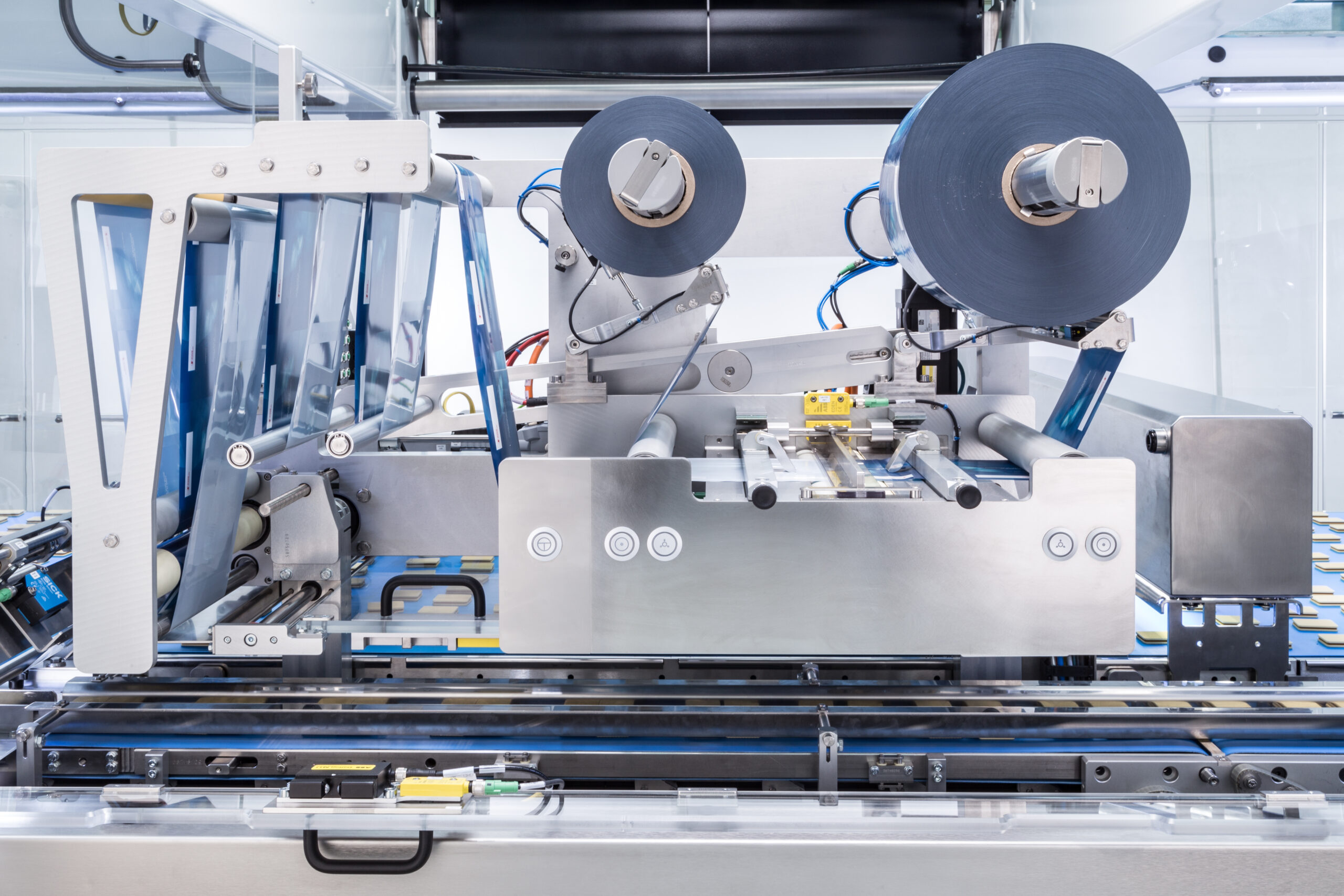
Critical Compliance & Safety Standards (Risk Mitigation)
Non-compliant flow-wrap assets create an immediate $0.5 – 4.5 million legal-exposure tail that compounds at 8-12 % WACC until resolved. C-suites that treat certification as a post-sourcing formality record, on average, 14 % higher total landed cost and 9-month launch delays. The following matrix isolates the gatekeeper standards for US and EU imports, maps the statutory penalties, and quantifies the cost of remediation versus pre-shipment verification.
Statutory Gatekeepers: US vs EU
Under the US framework, OSHA 29 CFR 1910.212 grants inspectors authority to issue “Willful” citations up to $161 k per machine if guarding, E-stop circuits or energy-isolation devices deviate from the 2021 ANSI B65.1 flow-wrapper amendment. UL 508A certification of the electrical panel is not discretionary: customs may refuse entry under 19 CFR 159 if the nameplate lacks the UL hologram, forcing $25 k – $40 k in on-site field evaluation plus demurrage of $1.2 k day⁻¹. For food or pharma SKUs, FDA 21 CFR §110.40 mandates stainless-steel grade 316L for product-contact surfaces; substitutions trigger an automatic Import Alert 99-32 that freezes future shipments until a $75 k – $120 k re-conditioning protocol is executed in an FDA-registered facility.
The EU regime is wider and faster to penalise. The Machinery Directive 2006/42/EC requires a full technical file, CE plate and EU Declaration of Conformity before customs clearance. Missing documentation results in an Article 12 safeguard clause: machines are impounded at the border, and the importer faces €500 k – €2 million product-liability exposure if an injury occurs. EN 415-7:2018 harmonised standards for flow-wrap equipment demand IP54 minimum on motors, Category 3 Performance Level “d” (PLd) on safety controllers, and validated software under EN ISO 13849-1. Non-conforming firmware upgrades discovered during a Notified-Body audit can force a €30 k – €60 k re-certification cycle and a 6-month market freeze. For food SKUs, Regulation (EC) 1935/2004 imposes specific migration limits on polyolefin films; violation triggers Rapid Alert System for Food and Feed (RASFF) notifications that erase 8 – 12 % of brand equity within two quarters.
Cost-Benefit Table: Pre-Compliance vs Post-Import Remediation
| Compliance Element | Pre-shipment Cost Range (per unit) | Post-import Remediation Cost Range | Calendar Delay (weeks) | Probability of Discovery | NPV Impact @10 % (5 yr) |
|---|---|---|---|---|---|
| UL 508A panel + field label | $4 k – $6 k | $25 k – $40 k + demurrage | 2 – 4 | 0.85 | –$0.22 m |
| OSHA 1910.212 guarding upgrade | $3 k – $5 k | $45 k – $90 k + willful citation | 6 – 8 | 0.70 | –$0.35 m |
| CE technical file + Notified-Body | $7 k – $10 k | €50 k – €150 k + recall | 10 – 14 | 0.90 | –€0.55 m |
| FDA 21 CFR 316L contact parts | $8 k – $12 k | $75 k – $120 k + Import Alert | 8 – 12 | 0.65 | –$0.41 m |
| EN ISO 13849-1 PLd safety logic | $5 k – $8 k | €30 k – €60 k + re-certification | 12 – 16 | 0.75 | –€0.28 m |
Contractual Levers to Lock-In Compliance
Insert a “No-Cert, No-Pay” clause: 15 % of machine value is retained until the OEM uploads UL, CE, FDA and EN 415-7 certificates to the buyer’s QMS portal. Require the supplier to carry product-liability insurance of $5 million per occurrence naming the buyer as additional insured; premium differentials between compliant and non-compliant vendors average 0.8 % of machine value, a cost routinely absorbed by OEMs when negotiated upstream. Finally, specify that any post-shipment modification voids warranty unless pre-approved through a change-control log audited under ISO 9001:2015 clause 8.5.6; this single provision reduces late-stage engineering variance by 22 % according to 2023 PMMI benchmarking data.
Bottom-Line Guidance
CapEx teams should budget $25 k – $40 k per unit for certification gatekeeping—roughly 3 – 4 % of a $1 million high-speed servo flow-wrapper. That spend secures a >95 % customs pass-through rate and eliminates the $0.5 – 4.5 million contingent liability that accompanies non-compliant assets.
The Procurement Playbook: From RFQ to Commissioning
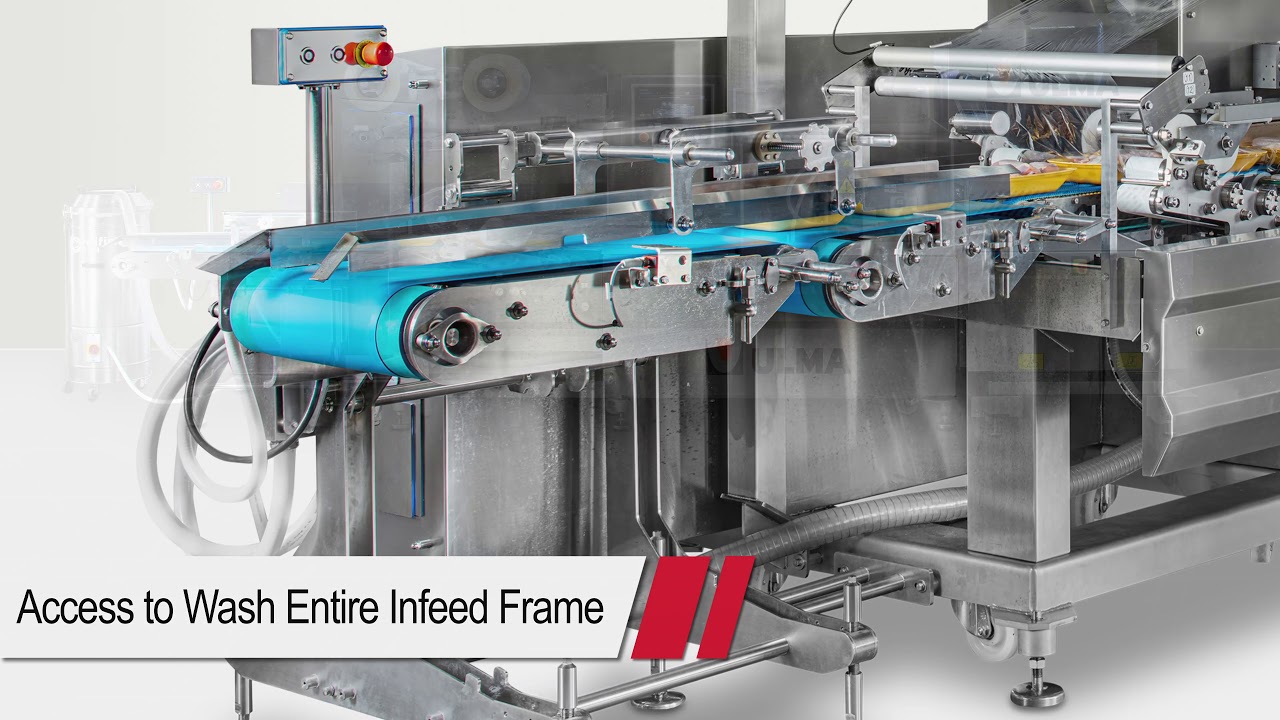
Strategic Procurement Playbook: Flow-Wrap Machine Sourcing 2025–2030
1. RFQ Architecture: Translate Demand into Negotiable Risk Levers
Open the RFQ with a two-page technical schedule that locks OEE ≥ 85 %, MTBF ≥ 1,200 h, and change-over ≤ 20 min; any deviation triggers an automatic 3 % price penalty. Embed a raw-material volatility clause: if AISI 304 > USD 3,200/t or servo drives > USD 650/axis during the 90-day quote validity, the supplier bears 60 % of the delta. Ask for a total cost of ownership (TCO) model that discloses energy (kWh/1,000 cycles), spare-part consumption, and expected downtime cost over 72,000 operating hours; models that hide line-items are rejected. Require bank-backed parent-company guarantees for any bidder whose flow-wrap revenue is < 25 % of group turnover—this screens traders posing as OEMs. Finally, insert a “technology freeze” clause: no firmware, PLC, or mechanical revision within 12 months of FAT without buyer consent; unilateral upgrades incur a 5 % contract-value penalty.
2. Supplier Due-Diligence & Sample FAT Matrix
Pre-qualify only vendors that can demonstrate ≥ 50 identical machine installations running > 18 months in GMP-regulated food or pharma plants; request customer contact lists plus redacted failure logs. Schedule a witnessed FAT at OEM facility: run buyer-supplied film (exact gauge, sealant, and reel OD) for 8-hour continuous cycle; record seal integrity (≤ 5 % leakers), registration accuracy (± 0.5 mm), and noise (< 78 dB). Reject shipment if any critical parameter fails once; minor deviations (> 1 σ but < spec limit) allow shipment but trigger a 2 % retention until site SAT passes. Insist on remote FAT livestream rights—saves USD 8k–12k per executive trip and keeps OEM honest.
3. Contractual Risk Allocation: FOB vs DDP Decision Grid
The choice of Incoterm is not logistics trivia; it is a risk-capital allocation tool. Use the table below to calibrate landed cost, customs-delay exposure, and IP leakage probability.
| Metric | FOB Shanghai | DDP Ohio / DACH |
|---|---|---|
| Supplier-loaded price index (base 100) | 100 | 108 – 112 |
| Buyer-controlled freight & insurance | 4 – 6 % of machine value | 0 % (included) |
| Average customs dwell (US/EU ports, 2024 data) | 4.2 days | 0.8 days |
| Demurrage risk (USD per 40 ft) | 1,200 | 0 |
| Import-duty variance buffer | Buyer bears | Supplier bears |
| IP leakage exposure (remote diagnostics port open) | Medium—buyer firewall | High—supplier field engineer retains VPN |
| Recommended when | Internal logistics team incoterms savvy & duty-drawback eligible | Single-source, first-time OEM or CAPEX urgency < 45 days |
Negotiate a “time-to-duty” rebate: for every day beyond 7 (FOB) or 2 (DDP) that customs clearance lasts, supplier pays 0.25 % of contract value. Couple this with a force-majeure carve-out: pandemic, war, or semiconductor shortage extends timeline but caps buyer exposure at 2 % of delay damages, forcing supplier to hedge inventory.
4. Site Acceptance & Commissioning: Zero-Defect Handover
Demand SAT protocol mirroring FAT plus three additional stresses: 72-hour ambient temperature cycle (5 °C–40 °C), film break simulation, and power-drop test (–30 % for 500 ms). Retain 10 % final payment until Cpk ≥ 1.67 is demonstrated on three consecutive production lots. Embed a 12-month “no obsolete part” warranty: if any component becomes unavailable, supplier must provide upgrade kit at no cost within 30 days. Close with a data-access rider: real-time OPC-UA tags for speed, temperature, and reject count must stream to buyer’s MES; failure to connect within 4 hours of request triggers USD 500 per hour penalty, capped at 5 % of machine price.
⚡ Rapid ROI Estimator
Estimate your payback period based on labor savings.
Estimated Payback: —