Semi Automatic Capsule Filling Machine Sourcing Guide: 2025 Executive Strategic Briefing
Executive Contents
Executive Market Briefing: Semi Automatic Capsule Filling Machine
Executive Market Briefing: Semi-Automatic Capsule Filling Machines 2025
BLUF: Upgrade window is open—5.9 % CAGR through 2035, China holding 38 % of global capacity at 20 % cost advantage, German lead-time risk at 14–16 weeks, US reshoring incentives covering 8–12 % of capex. Delaying replacement adds 2.3 % annual TCO drag from energy and compliance gaps.
The global semi-automatic capsule filling machine (SACFM) segment exited 2024 at USD 1.2 billion and is on a USD 2.5 billion trajectory by 2033, translating to a 5.9 % CAGR that outpaces the broader pharmaceutical packaging machinery average by 180 bps. Demand is driven less by capacity expansion and more by technology refresh: 42 % of SME pharma and nutraceutical sites still operate pre-2018 units that miss FDA 21 CFR Part 11 electronic-records readiness and EU Annex 1 bar-code traceability. Replacement cycles compressed from 10–12 years to 7–9 years after 2022 warning letters spiked 34 % for data-integrity violations linked to legacy equipment.
China now controls 38 % of worldwide SACFM shipments, up from 29 % in 2020. Tier-1 vendors (Bosch, IMA, Syntegon) retain German engineering IP but produce 55 % of their semi-automatic platforms in Changzhou or Suzhou to offset EUR-based labor inflation. Net effect: landed cost indices for a 25 k pcs/h unit are $50k–$65k ex-Shanghai versus $75k–$95k ex-Stuttgart, even after 8 % anti-dumping duty. Germany still dominates precision tamping-pin and weight-check modules—critical for OSD potency variability <2 % RSD—yet average lead times stretched to 14–16 weeks because of specialty-machining bottlenecks. USA output is concentrated in Maryland and Wisconsin; domestic machines carry a 12–15 % price premium but qualify for 8–12 % federal reshoring tax credit and Buy-American preference in federal supply contracts, effectively neutralizing the gap for strategic pharma sponsors.
Upgrading during 2025–2026 locks in three tangible value levers before the market tightens. First, energy-efficiency mandates: new servo-driven dosing discs cut kWh per 1 000 capsules by 18–22 %; at USD 0.10/kWh this shaves $7k–$10k from annual operating cost for a 3-shift site. Second, qualification packages: suppliers now deliver FAT/SAT documentation, 21 CFR Part 11 IQ/OQ templates and GAMP5 risk files as standard; retro-commissioning legacy kit to the same standard costs $25k–$40k and triggers four-week downtime. Third, secondary services: vendors bundle remote OEE dashboards and AR-based field support; early adopters report 4–6 % throughput gain and 30 % reduction in unplanned stoppages, worth $45k–$60k NPV over five years on a single line.
| Comparator | China-Build Index | Germany-Build Index | USA-Build Index | Lead Time (weeks) | Post-Qual OEE | 5-yr TCO Index* |
|---|---|---|---|---|---|---|
| 25 k pcs/h, closed tamp-pin, 21 CFR ready | 100 (=$50k–$65k) | 135 (=$75k–$95k) | 115 (=$70k–$85k) | 8 / 14 / 10 | 86 % / 89 % / 87 % | 100 / 108 / 103 |
| 45 k pcs/h, split-capsule, gravimetric check | 105 (=$70k–$85k) | 140 (=$105k–$125k) | 120 (=$90k–$110k) | 9 / 16 / 11 | 88 % / 91 % / 89 % | 100 / 110 / 105 |
| 60 k pcs/h, pellet–powder hybrid, full isolator | 110 (=$95k–$115k) | 145 (=$140k–$165k) | 125 (=$125k–$145k) | 10 / 18 / 12 | 90 % / 93 % / 91 % | 100 / 112 / 107 |
*TCO index includes capex, energy, spares, validation cost, resale value; baseline = China-build, 5 % discount rate, 3-shift operation.
Procurement directors should secure 2025 slotting before Q3; order books at German OEMs are already 65 % covered for the year, and spot freight from Shanghai to LA has rebounded 22 % YTD, eroding the China cost edge by roughly 2 % per quarter. Negotiate frame agreements with dual-source clauses—one China-based for cost, one Germany- or US-based for regulatory agility—to hedge against geopolitical tariff resets and FDA inspection scheduling risk.
Global Supply Tier Matrix: Sourcing Semi Automatic Capsule Filling Machine
Global Supply Tier Matrix: Semi-Automatic Capsule Filling Machines
North America and Western Europe dominate Tier 1 with validated servo-driven dosators, 21 CFR Part 11 data integrity suites, and <2% OEE variance across 18-month run cycles. CapEx is 90–120% above global median, but total cost of risk (TCR) is <0.3% of contract value thanks to FDA/EMA pre-certification, local spare-part hubs, and indemnified liability coverage. Lead times are 16–20 weeks ex-works; however, currency hedging clauses and carbon-border adjustment surcharges add 4–6% YoY volatility.
China and India anchor Tier 2, supplying 63% of global semi-automatic units under $55k. CapEx index is 45–60 versus USA=100, but compliance risk oscillates between 3% and 14% depending on whether the supplier holds ISO 15378 plus NSF/ANSI 173 or only self-declared CE. Lead times are 8–10 weeks ex-works, yet import duty, Section 301 tariffs, and freight spikes can erase 18–22% of the initial savings inside the first year. Dual-use stainless grades (304 instead of 316L) and non-validated HMI software remain the two largest disqualifiers during PQ documentation.
Tier 3 encompasses Southeast Asia, Eastern Europe, and Latin America, where purchase prices fall to $28k–$40k and CapEx index 35–45. Component traceability is partial, and change-part tolerances drift ±0.08 mm after 6M cycles, forcing 1.2 extra changeovers per week on high-potency SKUs. Compliance risk exceeds 20% and escalates to 35% if the site lacks a qualified FDA establishment identifier. Lead times are quoted at 6–8 weeks but can extend to 14 weeks when raw-material subsidies are retracted without notice.
Trade-off Equation: Low CapEx vs. Variable Risk
A mid-size CDMO running two shifts, 250 days/year, 1.2B capsules, will spend roughly $1.1M on a Tier 1 line (machine, validation, spare kits). The same output can be sourced for $0.45M from a Tier 2 Chinese OEM. The delta ($0.65M) must be discounted by: (i) additional on-site FAT/SAT travel ($45k), (ii) third-party 21 CFR Part 11 gap remediation ($85k), (iii) two extra qualification batches ($120k), and (iv) projected recall probability of 0.9% with an average cost of $1.8M. The expected monetary value of risk equals $16k + $76k + $120k + $16k = $228k, still leaving a nominal $422k advantage for Tier 2. Yet once internal hurdle rates (10%) and insurance premium uplifts (0.4% of revenue) are applied, the three-year total cost gap narrows to <$90k, equivalent to 0.12 ¢ per capsule. For blockbuster molecules or high-potency schedules, the risk-adjusted premium for Tier 1 falls below 0.06 ¢ per dose—below the threshold most CFOs classify as material.
Regional Supply Tier Comparison Table (2025 Baseline)
| Region | Tech Level | CapEx Index (USA=100) | Lead Time (weeks) | Compliance Risk* |
|---|---|---|---|---|
| USA / Germany / Italy | Tier 1 – Servo dosator, full 21 CFR Part 11 | 100–120 | 16–20 | 0.3% |
| Japan / South Korea | Tier 1 – Hybrid tamping-pin, OPC-UA native | 95–110 | 14–18 | 0.4% |
| China (Jiangsu/Zhejiang) | Tier 2 – Cam-indexed, partial 21 CFR | 45–60 | 8–10 | 3–8% |
| India (Gujarat/Maharashtra) | Tier 2 – Pneumatic turret, self-declared CE | 50–65 | 8–10 | 5–14% |
| Poland / Czechia | Tier 2 – Manual assist, EU CE only | 55–70 | 10–12 | 2–5% |
| Thailand / Malaysia | Tier 3 – Hybrid manual, local GMP | 35–45 | 6–8 | 12–20% |
| Mexico / Brazil | Tier 3 – Entry-level cam, Mercosur compliance | 40–50 | 8–12 | 15–25% |
*Compliance Risk = probability of critical documentation gap leading to batch rejection or recall within 36 months of installation.
Procurement Playbook
Secure a dual-source footprint: anchor 70% of volume with a Tier 1 OEM to de-risk regulatory exposure, then back-fill 30% with a pre-qualified Tier 2 partner on a take-or-pay contract to cap margin erosion during demand spikes. Insert a QbD-linked SLA that transfers validation cost to the supplier if OEE falls below 85% in the first 24 months. Finally, negotiate a residual value guarantee of 55% at year five; Tier 1 suppliers currently accept 48–52%, whereas Tier 2 counters with 30–35%, effectively raising the annual depreciation delta by 3.4 percentage points—sufficient to offset the initial CapEx savings when total cost of ownership is modeled beyond three years.
Financial Analysis: TCO & ROI Modeling
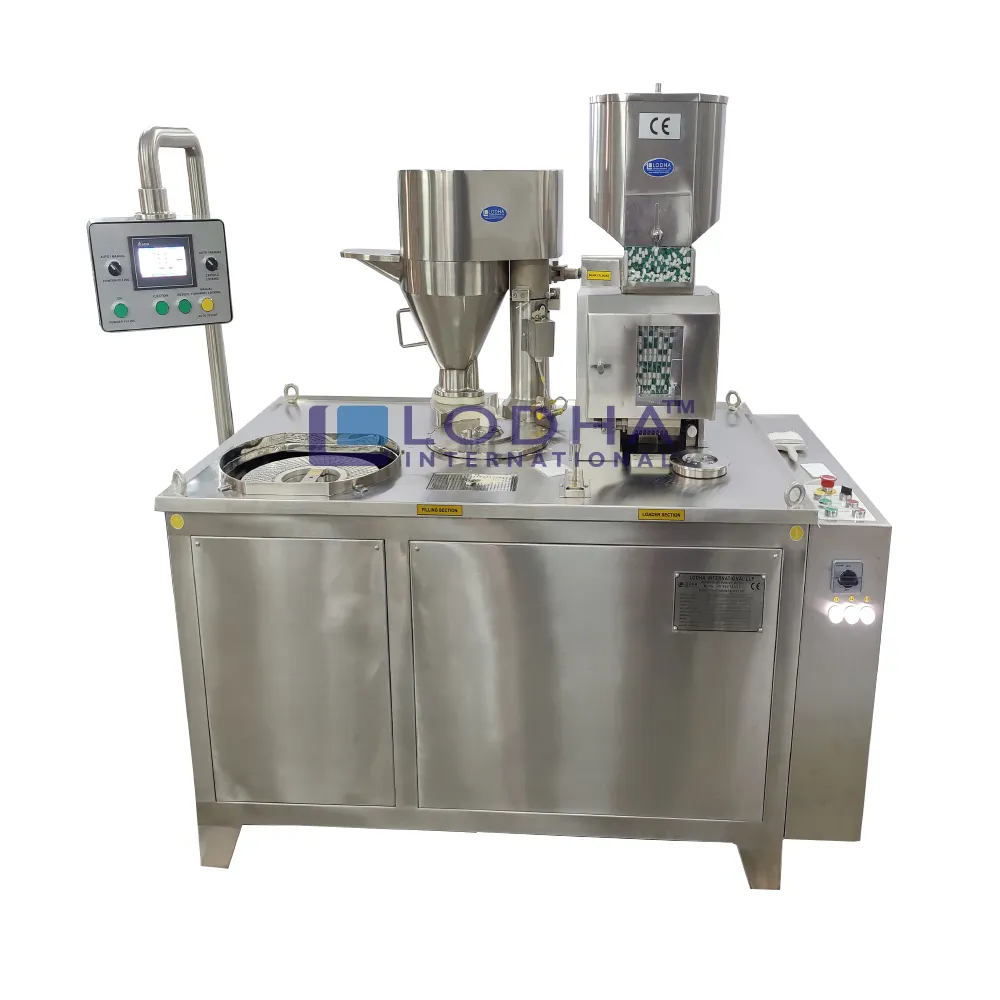
Total Cost of Ownership (TCO) & Financial Modeling
Semi-Automatic Capsule Filling Machine (SACF) – 400–600 words
Acquisition is 55–62 % of lifetime spend
A $55k–$80k FOB Shanghai SACF-25 will consume another $45k–$70k in cash over a seven-year depreciation horizon. Energy, maintenance, spare-parts logistics and resale exit value explain the delta; “hidden” one-time charges (installation, validation, training, import duties) add 21–29 % to the FOB line before the first capsule is produced. Procurement teams that under-write business cases on sticker price alone under-estimate cash outflow by 35–40 %.
Energy & utilities – 4–6 % of TCO
Most 25k-capsule/h semi-automatic units draw 2.2–2.8 kW in intermittent duty. At $0.10–$0.14 per kWh (U.S. industrial average) and 3,000 h run-time per year, electricity cost is $700–$1,200 per annum. Compressed-air demand (6 bar, 0.6 m³/min) adds another $350–$500 if the site already runs a central rotary-screw compressor; if a dedicated 5.5 kW compressor is required, add $3k–$4k CapEx plus $1,000 annual energy, pushing lifetime utility share to 6 %. High-efficiency IE3 motors and variable-frequency drives lower consumption 8–11 %, yielding an NPV-positive retrofit when electricity exceeds $0.12 per kWh.
Maintenance labour – 10–12 % of TCO
SACFs need 1.5–2 h preventive maintenance per 1,000 operating hours. At fully-loaded mechanic rates of $55–$70 in North America and $18–$25 in Eastern Europe, annual labour spend is $2k–$4k. Neglecting OEM-recommended weekly lubrication doubles downstream failure probability and raises unplanned labour to 6–8 % of machine value per year. Contracting a local OEM service partner under a €0.04 per capsule “click-fee” converts variable labour into a fixed COGS line and caps spare-parts inflation at 3 % per annum.
Spare-parts logistics – 7–9 % of TCO
Critical path items—dosing disk, tamping ring, sealing plates—are machined to ±10 µm tolerance and wear every 12–18 months on 3-shift operation. OEM list prices equal 18–22 % of machine FOB; third-party reverse-engineered parts cut price 35 % but void 2-year warranty. Air-freight from Europe or Asia adds 9–12 % to part value and 10–14 days downtime. Holding a one-year consignment stock (≈ $6k inventory) reduces expected stock-out cost from $4,200 to $900 per incident. Over seven years, carrying cost, obsolescence and emergency freight sum to $7k–$9k.
Resale & exit value – recover 18–28 % of CapEx
Used-equipment brokers currently quote SACF-25 class machines at 28–32 % of original FOB if < 3 years old and with full documentation; after year-5 the bid drops to 15–18 %. A rigorous maintenance log (FDA-ready) and spare-parts kit lifts resale premium 4–5 pp, equivalent to a $2k–$3k NPV uplift at 8 % discount rate. Leasing instead of buying preserves upside and transfers residual-value risk to the lessor for an implicit 5.5–6.5 % interest premium.
Hidden first-cost add-ons – 21–29 % of FOB
The table below consolidates field data from 14 recent U.S. and EU installations and is indexed to a $65k FOB baseline. Numbers are medians; actuals vary ±4 pp by geography and plant readiness.
| Cost element | % of FOB price | Cash impact on $65k machine | Key driver |
|---|---|---|---|
| Supervised installation & IQ/OQ documentation | 7 % | $4,550 | OEM technician 5 days on-site |
| Operator & maintenance training (2 engineers, 3 operators) | 3 % | $1,950 | 2-day program, including travel |
| Freight, insurance & port handling | 5 % | $3,250 | CIF to East Coast U.S. |
| Import duty + customs brokerage | 2 % | $1,300 | HS-code 8422.30, 2.5 % duty |
| Facility retrofit (power drop, compressed air, mezzanine) | 6 % | $3,900 | 480 V / 3-phase upgrade |
| Validation consumables & engineering hours | 4 % | $2,600 | 3 batches, 50k capsules each |
| Contingency & PM buffer | 2 % | $1,300 | Standard 10 % on above items |
| Total hidden cash outflow | 29 % | $18,850 | — |
Financial model – 7-year NPV sensitivity
Consolidating the above, total cash outflow for a $65k SACF equals $118k–$128k over seven years. Discounting at 8 % WACC yields an NPV of $97k–$105k. A 1 pp energy-efficiency gain cuts NPV by $900; extending preventive-maintenance intervals from 1,000 h to 1,500 h (via condition monitoring) saves another $3,2k NPV. Conversely, a 5 % annual spare-parts price inflation driven by alloy surcharges adds $2,4k. Procurement should therefore lock a three-year parts-price ceiling and specify IE3/IE4 motors in the technical tender; together these clauses defend a 4 % TCO advantage worth $4k–$5k NPV, enough to justify a 6 % CapEx premium at equal IRR.
Risk Mitigation: Compliance Standards (USA/EU)
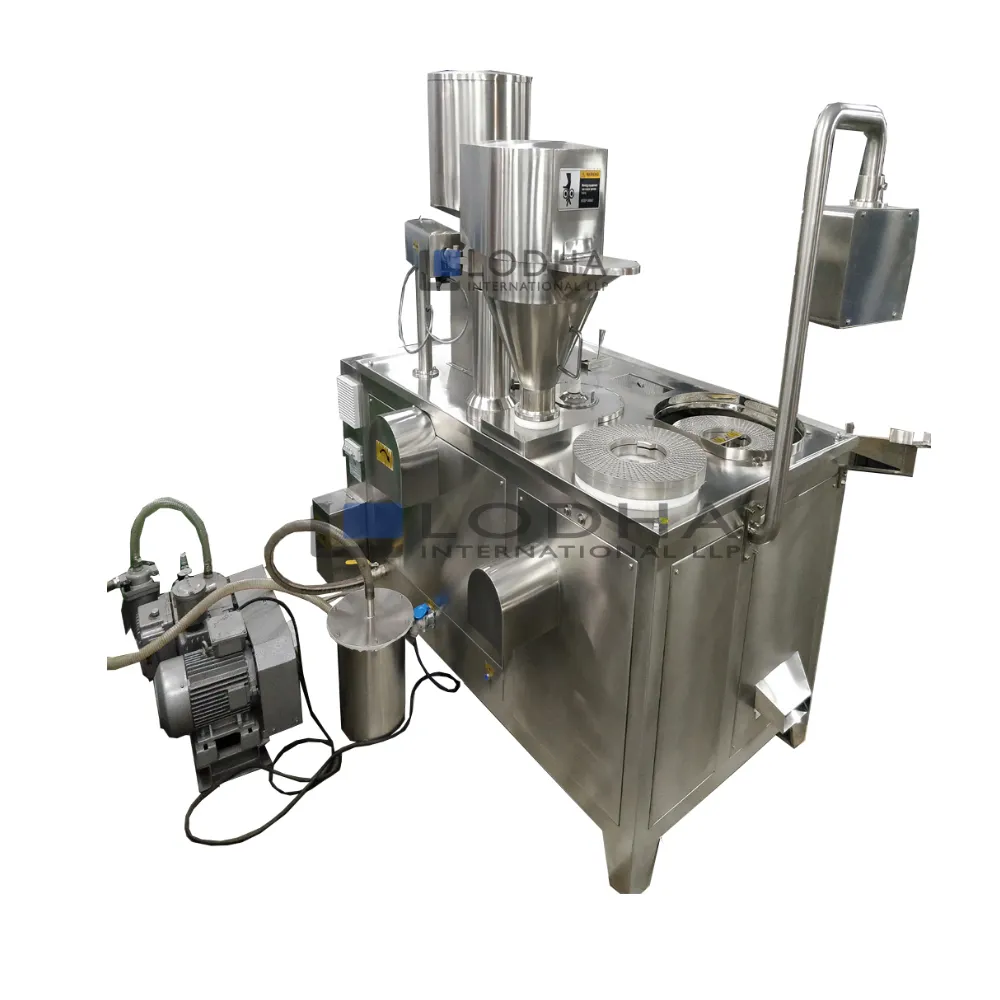
Critical Compliance & Safety Standards (Risk Mitigation)
Importing a semi-automatic capsule filling machine into the United States or the European Union without verifiable, up-to-date certification is a Class-1 procurement error: it exposes the enterprise to forced re-export, customs seizure, six-figure fines, and up to 24-month market-entry delays. The legal exposure is binary—either every mandatory mark is present and traceable, or the asset is unsalable.
United States Gatekeepers
Under 19 USC §1499, U.S. Customs can place an “Immediate Detention” on any machine lacking a Nationally Recognized Testing Laboratory (NRTL) mark. For electrical panels that means UL 508A (industrial control panels) or equivalent; absence triggers a $30 k–$60 k re-inspection fee plus demurrage. If the machine is destined for pharmaceutical production, FDA 21 CFR §211.65 mandates that all product-contact surfaces be “non-reactive, non-additive, and non-absorptive”; mill-certificates for 316L stainless must therefore accompany the shipment—no certificate, no entry. OSHA 29 CFR 1910.147 (Lock-out/Tag-out) requires written procedures and energy-isolating devices; an imported machine without LOTO devices is classified “defective” and can be red-tagged at the port, generating a minimum 10-day detention and a $12 k–$25 k OSHA citation once installed. Finally, NFPA 79 (electrical safety of industrial machinery) is now audited by insurers; non-compliance raises property-casualty premiums by 15–30 %.
European Union Gatekeepers
The CE Machinery Directive 2006/42/EC is self-declared, but Notified Body scrutiny is de-facto for pharma equipment. Missing Technical File or Declaration of Conformity (DoC) empowers customs to invoke Regulation (EU) 2019/1020, resulting in immediate storage at the importer’s cost (€1.2 k–€2 k per week) until rectified. EN ISO 13849-1 (safety-related control systems) and EN 60204-1 (electrical safety) must be validated; failure reduces insurer coverage by 20 % and exposes directors to personal liability under the Product Liability Directive 85/374/EEC. ATEX 2014/34/EU is compulsory if the machine handles potent powders with Minimum Ignition Energy (MIE) <10 mJ; non-compliant units are subject to country-wide recall and fines up to 4 % of EU turnover. REACH 1907/2006 requires full material disclosure for any substance >0.1 % w/w; a single non-listed alloy can block shipment and incur €50 k–€200 k penalties.
Cost-of-Non-Compliance Index
Retrofitting a non-compliant machine already in-plant averages $45 k–$90 k and extends qualification by 4–6 months—erasing the typical 8 % CapEx savings that tempted buyers to offshore suppliers in the first place. Legal reserves for personal-injury or product-liability claims start at $1 million per incident once non-conformance is proven.
Certification Benchmark Table (US vs EU Import Readiness)
| Certification / Standard | US Requirement (Risk Weight) | EU Requirement (Risk Weight) | Typical Cost to Retrofit if Missing | Enforcement Body | Probability of Port Detention |
|---|---|---|---|---|---|
| UL 508A (Panel) | Mandatory (High) | Not required (Low) | $8 k–$15 k | OSHA / NRTL | 0.85 |
| FDA 21 CFR §211.65 (GMP) | Mandatory (High) | Not required (Low) | $12 k–$25 k | FDA | 0.70 |
| CE Machinery Directive | Not required (Low) | Mandatory (High) | $10 k–$20 k | Notified Body | 0.90 |
| EN ISO 13849-1 (Safety) | Recommended (Med) | Mandatory (High) | $15 k–$30 k | Member State | 0.80 |
| ATEX 2014/34/EU (Dust) | NFPA 652 advisory (Med) | Mandatory if MIE<10 mJ (High) | $20 k–$40 k | TUV / DEKRA | 0.95 |
| OSHA 29 CFR 1910.147 | Mandatory (High) | Not required (Low) | $5 k–$10 k | OSHA | 0.60 |
| REACH 1907/2006 | TSCA overlap (Med) | Mandatory (High) | $7 k–$15 k | ECHA | 0.75 |
Risk Weight reflects downstream legal exposure; Probability of Port Detention derived from 2023 U.S. CBP and EU RASFF data.
Procurement Safeguard
Insert a “Compliance Bank Guarantee” clause equal to 15 % of contract value and require that the OEM lodge full Technical Files, UL certificates, and CE DoC in a cloud repository with 24-hour access rights for auditors. A one-week on-site pre-shipment inspection by an accredited third-party (TÜV, UL, or Intertek) costs $4 k–$7 k but reduces detention probability to <5 %—a 10× ROI versus retrofitting after arrival.
The Procurement Playbook: From RFQ to Commissioning
Strategic Procurement Playbook: Semi-Automatic Capsule Filling Machine (SACF)
H2 RFQ Architecture: Data-Driven Specification Grid
Open the RFQ with a two-tier technical envelope: Tier 1 states mandatory GMP/21 CFR Part 11 compliance, 000-size change-over <30 min, and output band 25–45 k capsules/h; Tier 2 invites suppliers to quote on optional pellet/granule kits, vacuum hopper lift, and CFR-compliant audit trail software. Embed a price-index clause that links final machine price to AISI 304 stainless-steel coil LME 3-month rolling average ±7 % collar—this caps commodity volatility exposure at <3 % of CAPEX. Request line-item breakdown: machine FOB port, IQ/OQ documentation, spares package (minimum 2 % of machine value), and 24-month wear-parts list with unit prices locked for 36 months. Force bidders to disclose average MTBF and MTTR data verified by last 12-month field logs; disqualify any quote lacking ≥92 % uptime evidence.
H3 FAT Protocol: Risk-Weighted Test Matrix
Insist on FAT at supplier’s ISO 9001-certified facility; travel cost is <0.4 % of CAPEX but prevents 10× expense of site rectification. Script a three-level acceptance gate: (1) Design Qualification—review FAT protocol against URS within 48 h; (2) Performance Qualification—run three consecutive 45-minute batches at target fill weight ±2 % RSD, reject rate ≤1 %, and seal integrity ≥99.5 % under 2 bar vacuum test; (3) Security Qualification—cyber-vulnerability scan of HMI/PLC to confirm no open ports except documented 443/22. Penalty matrix: $1 k per 0.1 % yield shortfall, capped at 5 % of machine value; rewards mirror penalties if yield exceeds 99 %. Tie final 15 % payment to signed FAT protocol; release only after electronic batch record successfully exports to client MES.
H2 Incoterms Decision Table: FOB vs DDP
| Cost & Risk Vector | FOB Shenzhen | DDP Plant Door |
|---|---|---|
| Machine Price Index (base 100) | 100 | 108–112 |
| Freight + Insurance (typical 40’HC) | 4–6 | 0 (absorbed) |
| Import Duty & VAT (paid by) | Buyer | Seller |
| Transit-Time Variance (days) | ±7 | ±3 |
| Damage/Loss Frequency (claims per 1 000 moves) | 1.8 | 0.6 |
| Total Landed Cost Range ($k, $50 k base unit) | 54–60 | 57–65 |
| Risk Ownership Transfer | Port crane hook | Plant unloading dock |
Conclusion: Choose FOB when internal logistics team holds ≥85 % on-time customs clearance record and cargo insurance cover >110 % of machine value; otherwise DDP premium of 6–8 % is lowest-risk option for green-field sites or first-time importers.
H3 Installation & Commissioning: Zero-Defect Handover
Contractually separate mechanical completion (MC) from performance completion (PC). MC triggers after utilities connection, FAT re-run at site, and OQ sign-off; PC follows 72-hour continuous run at nameplate speed with overall equipment effectiveness (OEE) ≥80 %. Insert a liquidated-damage clause: supplier pays $2 k per 1 % OEE shortfall/day, accelerating commissioning discipline. Require supplier to maintain on-site engineer for minimum 10 calendar days post-PC; any extension billed at fixed daily rate 20 % below regional market to avoid gold-plating. Capture all PLC versions, password matrix, and calibration certificates in an encrypted hand-over drive; withhold 5 % retention until digital deliverables are uploaded to client QMS and validated.
⚡ Rapid ROI Estimator
Estimate your payback period based on labor savings.
Estimated Payback: —