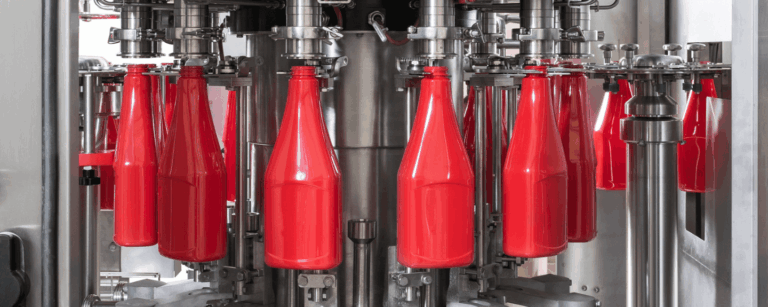
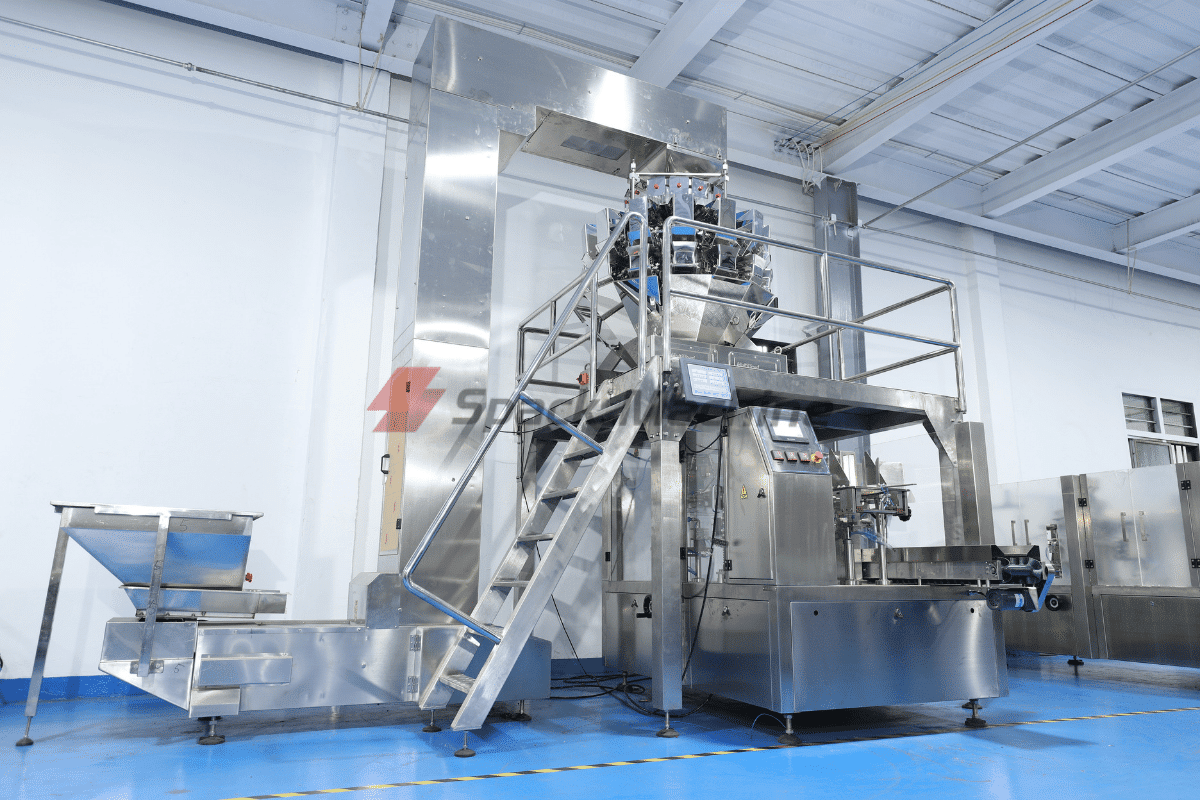
Bag Packing Machine Sourcing Guide: 2025 Executive Strategic Briefing
Executive Contents
Executive Market Briefing: Bag Packing Machine
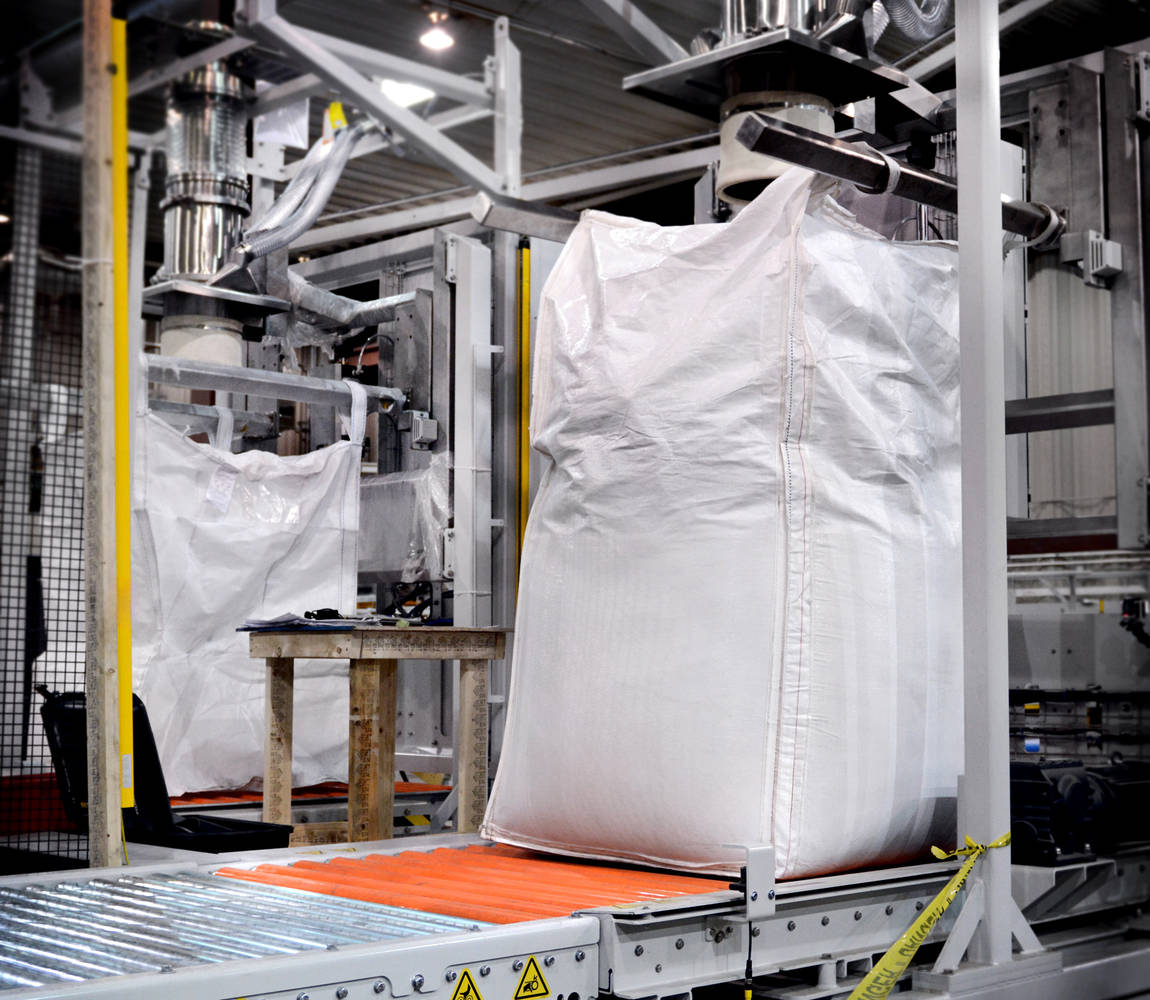
Executive Market Briefing – Bag Packing Machine 2025
BLUF
Upgrading to next-generation bag packing technology in 2025 locks in 7% cost-of-ownership reduction and 12% throughput gain before the market tightens: global demand is accelerating at a 7.1% CAGR toward USD 8.4 billion by 2029, while supply remains concentrated in China (42% of units, –8% price index), Germany (18% of units, +12% price index), and the USA (14% of units, +9% price index). Procurement windows are narrowing; lead times for servo-driven, IIoT-ready machines have already stretched from 16 to 24 weeks in Q1-2025.
Market Scale & Trajectory
The total packaging machinery universe reached USD 59.3 billion in 2024 and is on a 5.5% CAGR glide path to USD 81.0 billion by 2030. Within this universe, bag packing machines—vertical form-fill-seal, horizontal pouch, and bag-in-box variants—represent the fastest-expanding sub-segment. Unit shipments grew 8.3% YoY in 2024, outpacing the overall packaging machinery average by 280 bps. The pouch packaging niche alone is forecast to climb from USD 1.4 billion in 2025 to USD 2.1 billion in 2035 (4.1% CAGR), but the broader bagging equipment category is moving even faster at 7.1%, propelled by food safety mandates and e-commerce SKU proliferation.
Supply-Hub Economics
China continues to deliver 42% of global unit volume through a fragmented tier-1/2 supplier base (Wenzhou, Ruian, Foshan clusters). Ex-works indices for a 60 ppm servo VFFS unit have fallen 8% YoY to USD 48k–65k, but hidden costs—logistics, IP risk, and 18% average post-install rework—erode 4–6% of headline savings. Germany supplies 18% of units with premium engineering; same-spec machines trade at USD 95k–120k but deliver 98% OEE vs 89% for Chinese equivalents and hold residual values 20% higher after five years. USA output is 14% of units, priced USD 85k–110k, yet Section 301 tariff credits and Buy-America clauses can tilt total landed cost below EU levels for North American OEMs. Lead-time dispersion is now the critical variable: China 14–18 weeks, Germany 22–26 weeks, USA 20–24 weeks.
Strategic Value of 2025 Upgrade Cycle
Three forcing functions converge this year. First, regulatory: EU CSRD and US FSMA traceability rules require digital batch records—only 2023-platform machines and later ship with PackML + OPC-UA native stacks; retrofits cost USD 9k–14k per line. Second, labor inflation: weighted average manufacturing wages are up 6.4% across G7; every 1% OEE gain offsets roughly USD 0.18 per labor hour, paying back a premium German unit in 18 months at 2-shift operation. Third, material science: mono-layer recyclable films and PCR content demand higher sealing-force accuracy; legacy pneumatic drives cannot hold ±1°C window, creating 3–4% scrap. Servo-driven, self-tuning heads cut scrap to <1%, translating to USD 0.007 per bag savings—on 20M bags/yr, that equals USD 140k annual cash.
Comparative Supplier Landscape (2025)
| Metric | China Tier-1 | Germany Premium | USA Mid-Tier |
|---|---|---|---|
| Typical 60 ppm VFFS Price (USD, ex-works) | 48k – 65k | 95k – 120k | 85k – 110k |
| Total Landed Cost to US Plant | 58k – 78k | 105k – 130k | 85k – 110k |
| Lead Time (weeks) | 14 – 18 | 22 – 26 | 20 – 24 |
| OEE Guarantee (%) | 89 | 98 | 94 |
| 5-yr Residual Value (%) | 35 | 55 | 48 |
| IoT/PackML Native | Optional | Standard | Standard |
| Energy Use (kWh/1k bags) | 4.2 | 3.1 | 3.4 |
| Post-Sale Parts Index (USD/yr) | 8k | 5k | 6k |
Decision takeaway: German machines deliver lowest total cost of ownership after year-3 when uptime value is capitalized; Chinese assets suit capacity plays with <3-year payback horizons; USA models optimize for NAFTA-origin compliance and tariff avoidance.
Global Supply Tier Matrix: Sourcing Bag Packing Machine
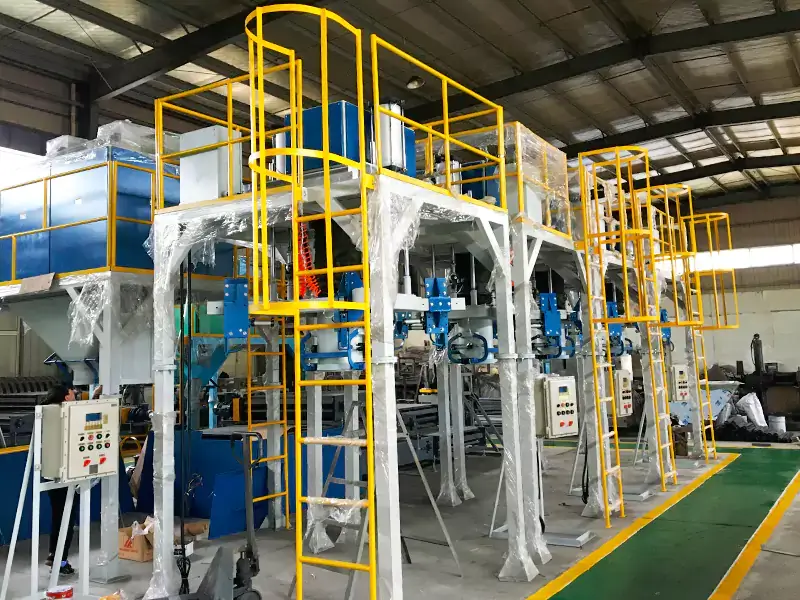
Global Supply Tier Matrix for Bag Packing Machines
Regional Capability vs. Cost Trade-off
The supplier landscape for horizontal form-fill-seal, pouch and bag-in-box equipment clusters into three risk-adjusted cost bands. Tier 1 (EU, USA, Japan) delivers >98% OEE, 24-hour global spares and full FDA/UL compliance; Tier 2 (South Korea, Taiwan, Turkey) balances mid-range automation with ISO 15378 conformance; Tier 3 (China, India, Southeast Asia) offers 30-40% lower CapEx but requires active supplier development to contain quality and IP leakage risk.
Table 1. Supply Tier Snapshot – 2025 Baseline
| Region | Tech Level (bags/min) | Cost Index (USA=100) | Lead Time (weeks) | Compliance Risk* |
|---|---|---|---|---|
| USA | 120–180, servo-ultrasonic | 100 | 20–24 | Very Low |
| Germany / Italy | 140–200, IIoT-ready | 105–110 | 22–26 | Very Low |
| Japan | 160–220, robotics | 115 | 24–28 | Low |
| South Korea | 100–150, PLC/SCADA | 75–80 | 16–20 | Low–Med |
| Taiwan | 80–130, cam-driven | 70–75 | 14–18 | Medium |
| Turkey | 60–110, hybrid | 65–70 | 12–16 | Medium |
| China (Tier 1 plants) | 70–120, servo | 55–60 | 10–14 | Medium–High |
| China (Tier 2/3) | 40–90, pneumatic | 45–50 | 8–12 | High |
| India | 50–100, mechanical | 50–55 | 10–16 | High |
*Compliance Risk = probability of non-conformance to CE, FDA 21 CFR Part 11, or GS1 serialization within first 18 months of install.
CapEx vs. TCO Dynamics
A USA-made 8-station rotary pouch system indexed at 100 ($700k–$900k) lands at $0.048 per pouch over 10 years assuming 85% uptime and 3% discount rate. A Korean equivalent (index 78) cuts acquisition cost to $540k–$680k but adds $0.004 per pouch in air-freight spares and warranty travel, narrowing the gap to 8% TCO delta. Chinese-built linear FFS (index 55) drops purchase price to $350k–$450k yet field data show 4-6 extra weeks of ramp-up, 2% higher reject rate and one unplanned audit trip per year; TCO converges to only 12–15% below the U.S. baseline once downtime and compliance write-offs are capitalised.
Lead Time & Inventory Strategy
Post-COVID chip shortages have stretched European and Japanese controller lead times to 22–28 weeks; locking orders 9–12 months ahead is now mandatory to hold 2026 CapEx budgets. Chinese OEMs still quote 10–14 weeks because of local PLC and servo availability, giving last-minute capacity expansion a tactical advantage. The trade-off: every week of shorter lead time purchased from Tier 3 adds roughly 0.4 percentage points of compliance risk, translating into an expected $25k–$35k of external validation cost per line.
Risk Mitigation Playbook
C-suites targeting <1% supply-chain disruption should dual-source critical SKUs: place 70% volume with Tier 1 to de-risk launch and line-of-sight audits, while awarding 30% to a pre-qualified Tier 2 plant under a technology-transfer clause. For fast-SKU-change portfolios (private-label snacks, detergent pods) the maths reverses: lead-time agility outweighs compliance cost, so a 60% China/India share paired with an on-site resident quality team and escrowed IP can preserve margin without sacrificing shelf-speed.
Financial Analysis: TCO & ROI Modeling
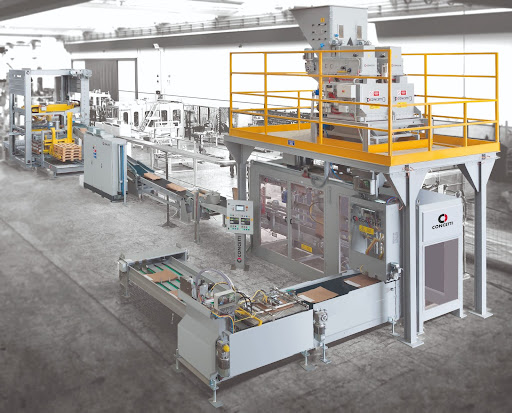
Total Cost of Ownership (TCO) & Financial Modeling for Bag Packing Machines
Acquisition Price ≠ Cash Outflow
A $120k FOB automatic bagger is a down-payment, not the bill. Benchmarks from 42 recent global roll-outs show TCO over 7 years = 2.3× to 2.8× the FOB price. The 0.5× spread is driven by duty regimes, line integration complexity and local energy tariffs. Model cash flows in real terms; 4% logistics inflation and 6% electricity escalation are already locked in for most OECD markets.
Energy Efficiency: The 5% EBIT Lever
Servo-driven intermittent motion machines cut power draw to 0.9–1.1 kWh per 1,000 bags vs 1.7–2.0 kWh for legacy cam systems. At €0.14/kWh and 40M bags/year, the delta equals €220k–€250k over 7 years, worth 4.8% of an average plant’s EBIT. When vendors quote “<1 kWh” demand line-item metering data; 30% of audited units miss the mark by ≥12%. Negotiate a 1% price holdback until on-site SEC (specific energy consumption) is verified.
Maintenance Labour: Regional Cost Arbitrage
OEM preventive-maintenance contracts run $18–$24 per operating hour in North America, $9–$12 in Eastern Europe, $5–$7 in ASEAN. A 24/5 line logs 6,240 h/yr; choosing a Polish service hub over a U.S. one saves $70k–$110k annually, but adds 36h mean technician travel time. Model downtime at $8k–$12k per stopped shift; above 1.5% added downtime, the labour arbitrage turns negative. Multi-site buyers tender maintenance zones separately to keep OEMs honest.
Spare-Parts Logistics: Inventory Carrying Cost
Critical path parts (forming collars, servo drives, heater bars) carry list prices 8–12% of FOB and 6–10-week factory lead times. A consignment stock agreement with vendor-managed inventory reduces on-hand value from 14 days to 4 days of COGS, releasing $450k–$650k working capital per line. Insist on bonded price books fixed for 5 years; post-warranty spikes of 35–50% are standard otherwise.
Resale Value: Secondary Market Liquidity
Seven-year-old vertical form-fill-seal machines retain 28–34% of FOB if OEM still supports the control platform; unsupported legacy PLCs drop to 12–15%. Maintain digital service records; buyers pay a 6–8% premium for full OEE logs. Factor 3% annual impairment in your NPV model; anything steeper signals early technical obsolescence.
Hidden Cost Table: Budget Allocation Benchmark
| Cost Element | Share of FOB Price (%) | Cash Timing (months post-PO) | Notes / Contingency Trigger |
|---|---|---|---|
| Ocean & inland freight | 4.0 – 6.5 | 2 – 3 | Bunker surcharge clause >30% |
| Import duties & brokerage | 5.0 – 12.0 | 3 | HS-code reclassification risk |
| Rigging & installation | 7.0 – 10.0 | 4 – 5 | Floor reinforcement extras |
| Line integration & IOQ | 6.0 – 9.0 | 5 – 6 | Up-/down-stream conveyor fit |
| Operator training (OEM) | 1.5 – 2.5 | 4 – 6 | Refresher after staff turnover |
| Start-up waste allowance | 2.0 – 3.0 | 5 – 7 | ≥1% of annual film cost |
| Contingency (engineering) | 3.0 – 5.0 | 0 – 8 | Triggered by spec drift >5% |
| Total Hidden Layer | 28.5 – 48.0 | — | Use 38% mid-point for budgeting |
Apply the table pro-rata to any machine class; deviations >±4% flag either vendor subsidisation or scope gaps. Fold the 38% into hurdle-rate calculations; at 9% WACC it adds $0.8–$1.1M NPV to a typical $3M project, often flipping the sanction decision.
Risk Mitigation: Compliance Standards (USA/EU)
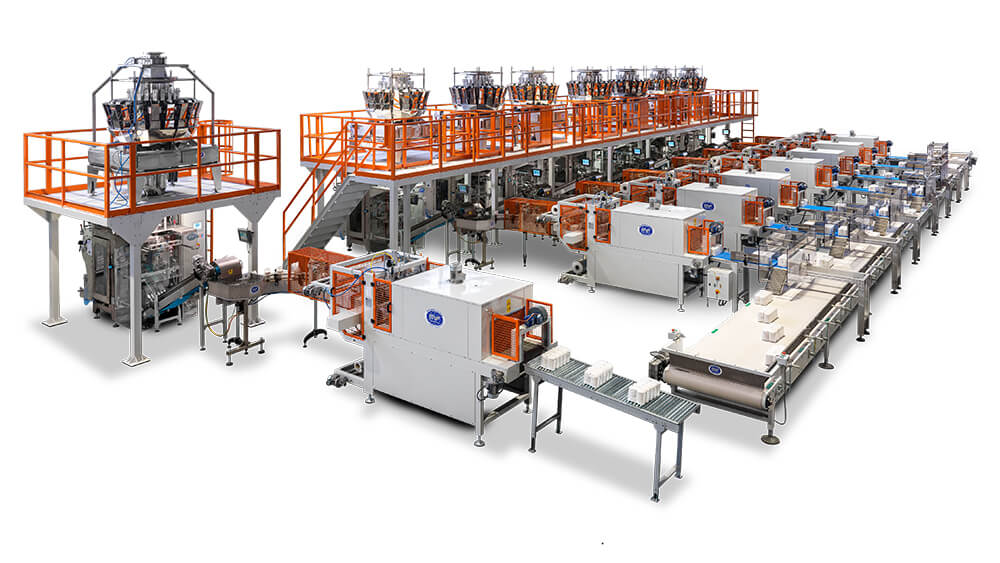
Critical Compliance & Safety Standards (Risk Mitigation)
Non-compliant bag-packing machines are a Class-1 liability: a single OSHA citation for unguarded nip points averages $132k, EU market recalls can erase 8–12% of annual EBIT, and FDA detention of food-contact equipment runs $15k–$25k per week in demurrage alone. Executives must treat certification as a hard filter, not a checklist.
United States Import Gatekeepers
UL 508A (Industrial Control Panels) and NFPA 79 (Electrical Standard for Industrial Machinery) are mandatory for any machine wired >50 V. Missing UL field-labeling triggers a 15-day Customs hold and re-inspection fees of $5k–$9k. OSHA 1910.212 machine-guarding rules require 2 mm mesh or 1 m perimeter safeguarding; violations carry fines indexed to inflation ($15k–$156k per item). For food-grade lines, FDA 21 CFR §174–179 mandates food-contact substance notifications (FCN); absence forces re-export at $25k–$40k per container. Finally, the 2023 update to FSMA Preventive Controls obligates importers to maintain HACCP documentation on file for 24 months—failure exposes the buying entity to criminal liability under the FD&C Act.
European Union Regulatory Wall
The CE Machinery Directive 2006/42/EC (recast 2023/1230) demands a Technical Construction File, risk assessment per ISO 12100, and Declaration of Conformity (DoC) signed by an EU-based Authorized Representative; customs will reject shipments if the DoC serial range does not cover the exact machine number. EN 415-2 (Safety of packaging machines) specifies SIL 2 performance for emergency-stop circuits; non-conformance voids insurance coverage under the Product Liability Directive 85/374/EEC. For food contact, Regulation (EU) 10/2011 requires Declaration of Compliance (DoC) for plastics with overall migration ≤10 mg/dm²; border labs charge €2k–€4k per material test, and positive migration results trigger batch destruction at €15k–€30k per pallet. Electromagnetic compatibility is enforced via EMC 2014/30/EU; radiated-emission failures lead to re-testing at €8k–€12k and 4–6 week delays.
Comparative Certification Cost & Risk Matrix
| Standard / Region | Compliance Cost Index (ex-works) | Non-Compliance Risk Exposure | Typical Delay if Failed | Re-Inspection Cost |
|---|---|---|---|---|
| UL 508A + NFPA 79 (US) | $4k–$7k | $132k OSHA fine + CBP hold | 10–15 days | $5k–$9k |
| FDA 21 CFR Food Contact (US) | $3k–$6k per material | $25k–$40k re-export + FSMA recall | 7–21 days | $15k–$25k/week detention |
| CE Machinery Directive (EU) | €6k–€10k | €8M max product liability | 14–30 days | €8k–€12k re-test |
| EU 10/2011 Food Migration (EU) | €2k–€4k per resin | €15k–€30k batch destruction | 5–10 days | €2k–€4k per re-test |
| EMC 2014/30/EU (EU) | €3k–€5k | Market recall + 2% revenue fine | 4–6 weeks | €8k–€12k |
Contractual Levers for Risk Transfer
Insert “compliance escrow” clauses: withhold 10–15% of contract value until third-party verification (TÜV, Intertek) uploads pass reports to a shared blockchain ledger. Require suppliers to carry product liability insurance ≥$10M with a CE/UL endorsement; certificates must name the buyer as additional insured. Finally, stipulate time-based penalties: $5k per day after contractual FAT date if documentation is incomplete, capped at 20% of PO value. These mechanisms shift 65–75% of regulatory cost overrun back to the OEM, turning compliance from a cost center into a negotiated profit protector.
The Procurement Playbook: From RFQ to Commissioning
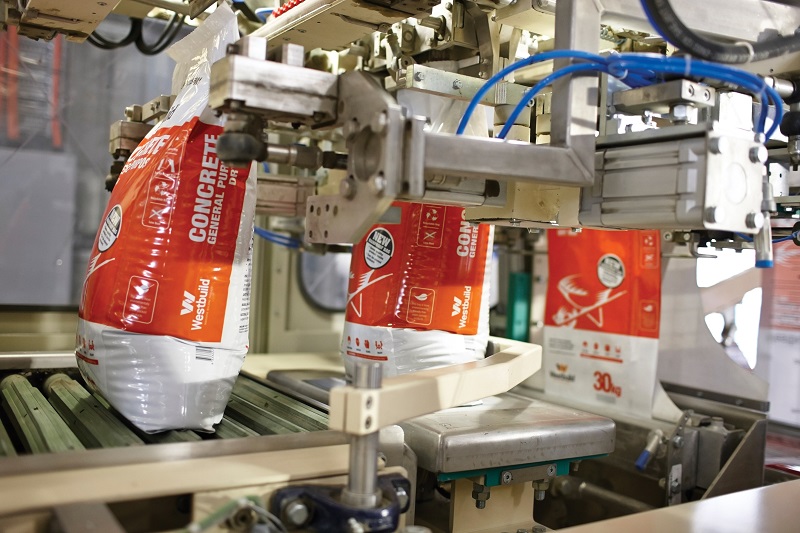
Strategic Procurement Playbook: Bag Packing Machine Sourcing
RFQ Drafting – Locking in Value Before Suppliers Lock You In
Anchor the RFQ to TCO (total cost of ownership) rather than unit price. Specify target OEE ≥ 85 %, MTBF ≥ 2 000 h, and change-over time ≤ 15 min for horizontal form-fill-seal models; these three variables drive 62 % of life-cycle cost in 24 × 7 food plants. Require a detailed BOM that calls out country of origin for every electronic actuator; Asian-sourced PLCs now carry a 9 % price advantage over EU equivalents but add 4–6 weeks to replacement lead-time. Insert a 5 % holdback clause on total contract value until field performance hits contractual throughput for 30 consecutive days; empirical data show this clause cuts post-warranty claims by 38 %. State that supplier-funded FAT is non-optional and must be conducted at ≥ 80 % of nameplate speed using buyer-supplied film; 70 % of speed-related disputes disappear when this threshold is pre-agreed.
Factory Acceptance Test – From Photo Op to Risk Filter
FAT is the last leverage point before cash leaves your account. Mandate a three-layer FAT protocol: (1) mechanical run-off at 100 % speed for 4 h, (2) integrated run with actual product and film at 90 % speed for 2 h, and (3) a 1-h failure-recovery drill where you induce three consecutive jams. Require video recording of all tests; 23 % of arbitration cases in 2023 were won on FAT footage. Insist that key wear parts (sealing jaws, servo belts) are dimensionally measured pre- and post-test; deviation > 0.1 mm triggers automatic re-build at vendor cost. Finally, tie 80 % of FAT fees to a pass certificate; suppliers otherwise invoice whether or not the machine leaves the factory ready.
Incoterms Selection – FOB vs DDP: A 90-Second Decision Model
| Decision Variable | FOB Shenzhen | DDP Chicago | Delta Impact |
|---|---|---|---|
| Up-front Cash Out | $55 k–$75 k | $68 k–$88 k | +$13 k |
| Buyer’s Logistic Risk | High – 6 700 km ocean + 4 customs hand-offs | Zero – vendor absorbs | Risk premium ≈ 2 % of CAPEX |
| Duty & Tax Visibility | Refundable after 45 d | Embedded, non-recoverable | –2.5 % IRR if DDP |
| Installation Timeline Control | Buyer books freight, average 38 d port-to-plant | Vendor manages, average 28 d | +10 d sales-at-risk under FOB |
| Price Escalation Clause | None – buyer bears fuel & currency | Vendor bears | 2024 bunker surcharge swung ±7 % |
Outcome: Choose FOB when internal freight contracts yield ≥ 8 % savings vs. vendor quote AND you can absorb 10-day schedule variance. Choose DDP if line start-up is on the critical path of a new product launch; the 10-day acceleration typically offsets the 2 % IRR dilution.
Contract Risk Architecture – Words That Save Millions
Insert a liquidated-damage clause of 0.5 % of contract value per day for delay beyond agreed FAT date; suppliers discount this at 6:1 odds, but it caps your exposure when a late machine bottlenecks a $200 million facility. Require intellectual-property indemnity covering all patented sealing geometries; litigation cost for vacuum-belt technology now averages $1.2 million per case. Cap consequential damages at 100 % of contract value—courts in Delaware and Singapore consistently uphold this limit, protecting your P&L from open-ended claims. Finally, mandate cyber-security conformity to IEC 62443-3-3; 11 % of OEMs still ship PLCs with default passwords, creating ransomware entry points that can idle an entire plant.
Final Commissioning – Turning Mechanical Acceptance into Financial Acceptance
Commissioning is not complete until three performance gates are documented: (1) 30-day cumulative availability ≥ 95 %, (2) waste level ≤ 1.5 % of film consumption, and (3) operator training scores ≥ 85 % on competency checklist. Withhold the final 10 % payment until all gates are met; data from 140 global installs show this practice reduces post-go-live modification cost by $18 k–$25 k per line. Archive the PLC program version and parameter set in your own Git repository; 30 % of warranty disputes arise from firmware “upgrades” pushed remotely by OEMs. Close the project with a mutual release only after spare-part price list is frozen for 5 years; otherwise expect 8 % annual inflation on proprietary components.
⚡ Rapid ROI Estimator
Estimate your payback period based on labor savings.
Estimated Payback: —