Pallet Shrink Wrap Machine Sourcing Guide: 2025 Executive Strategic Briefing
Executive Contents
Executive Market Briefing: Pallet Shrink Wrap Machine
Executive Market Briefing – Pallet Shrink-Wrap Machines 2025
BLUF
The 2025 market is a buyer’s window: demand is rising at 6–9 % CAGR but component oversupply and currency weakness in Asia have depressed ex-works indices 8–12 % below 2023 peaks. Companies that lock in 2024-technology machines before mid-2026 avoid a forecast 18 % steel-driven price rebound and capture 9–14 % lower total wrapped cost per pallet through film-saving pre-stretch and IoT uptime modules.
Market Scale & Trajectory
Global revenue for pallet-shrink and stretch-wrap equipment crossed USD 3.8 billion in 2025; the shrink-wrap segment alone is expanding at a 9.0 % CAGR toward USD 5.9 billion by 2030, outrunning the broader stretch-wrap category at 6.1 %. Growth is logistics-led: e-commerce fulfilment centres are adding 2–3 additional outbound wrappers per green-field site, while food & beverage compliance (FSMA, BRC) is accelerating semi-automatic to automatic upgrades. Net annual unit demand is projected at 28 000–30 000 machines through 2027, with replacement cycles compressing from 10 to 7 years as servo-driven carriages and 260 % pre-stretch systems deliver payback in <14 months for ≥500 pallet·day⁻¹ operations.
Supply-Hub Economics
China ships 54 % of global units; average ex-works price index for a 2 000 kg automatic rotary arm machine is USD 48 k–62 k, 22 % below German equivalents. Delivery times have normalised to 8–10 weeks FOB Shanghai versus 20–22 weeks in 2022, but geopolitical risk adds a 3 % tariff uncertainty for North-American importers.
Germany dominates high-throughput (>120 pallet·hr⁻¹) wrappers with 38 % share of ≥USD 100 k machines; energy-efficient drives and 24 h parts availability justify a 15–18 % price premium for plants serving JIT automotive chains.
USA output is concentrated in Ohio and Wisconsin; domestic machines carry a 4–6 % price premium over EU units but qualify for Buy-America credits on federal packaging contracts and offer 30 % lower total landed cost for Canadian/Mexican sites under USMCA.
Strategic Value of 2024-Tech Upgrade
Film-saving technology alone cuts material spend 29–34 % versus legacy 150 % pre-stretch heads; on a 1 000 pallet·week⁻¹ line this equals USD 135 k annual cash release at USD 2.2 kg⁻¹ LLDPE. New shrink-chamber sensors reduce heat-cycle time 18 %, trimming electricity 0.9 kWh pallet⁻¹ and avoiding an estimated 1 100 t CO₂e over a 10-year asset life at current carbon-price curves. Additionally, OEMs now bundle OEE dashboards with predictive-maintenance libraries; early adopters report 4–6 % throughput gain and 1.2 % unplanned-downtime reduction—worth roughly USD 290 k NPV per line when discounted at 8 %.
Decision Table – Comparative Supply Scenarios (2025)
| Metric | China Tier-1 OEM | Germany Premium OEM | USA Regional OEM |
|---|---|---|---|
| Typical model | Automatic rotary arm 2 000 kg | Automatic ring 2 400 kg | Automatic turntable 1 800 kg |
| Ex-works price index (USD) | 48 k – 62 k | 75 k – 95 k | 78 k – 100 k |
| Landed cost to US Midwest (USD) | 56 k – 72 k | 85 k – 108 k | 78 k – 100 k |
| Ave. energy use (kWh pallet⁻¹) | 1.05 | 0.83 | 0.88 |
| Film pre-stretch % | 250 | 300 | 280 |
| Standard warranty | 12 months parts | 24 months full | 18 months full |
| Mean parts lead-time (days) | 21 | 3 | 5 |
| Tariff exposure to US buyer | 7.5 % Section 301 | 0 % | 0 % |
| Payback vs 2018 baseline (months) | 11 | 13 | 12 |
Action Horizon
Steel, electronics and copper forwards signal 12–15 % inflation for 2026 builds; OEM order books are only 40 % filled for Q4-2025 production slots. Procurement teams securing frame orders before September 2025 freeze 2024 price indices and gain priority allocation, eliminating 10–14 week expedite premiums that re-emerged in 2023. Concurrently, negotiating three-year fixed film-supply contracts at current resin prices hedges an additional 8 % of lifecycle cost, locking in TCO advantage before the next upstream capacity squeeze.
Global Supply Tier Matrix: Sourcing Pallet Shrink Wrap Machine
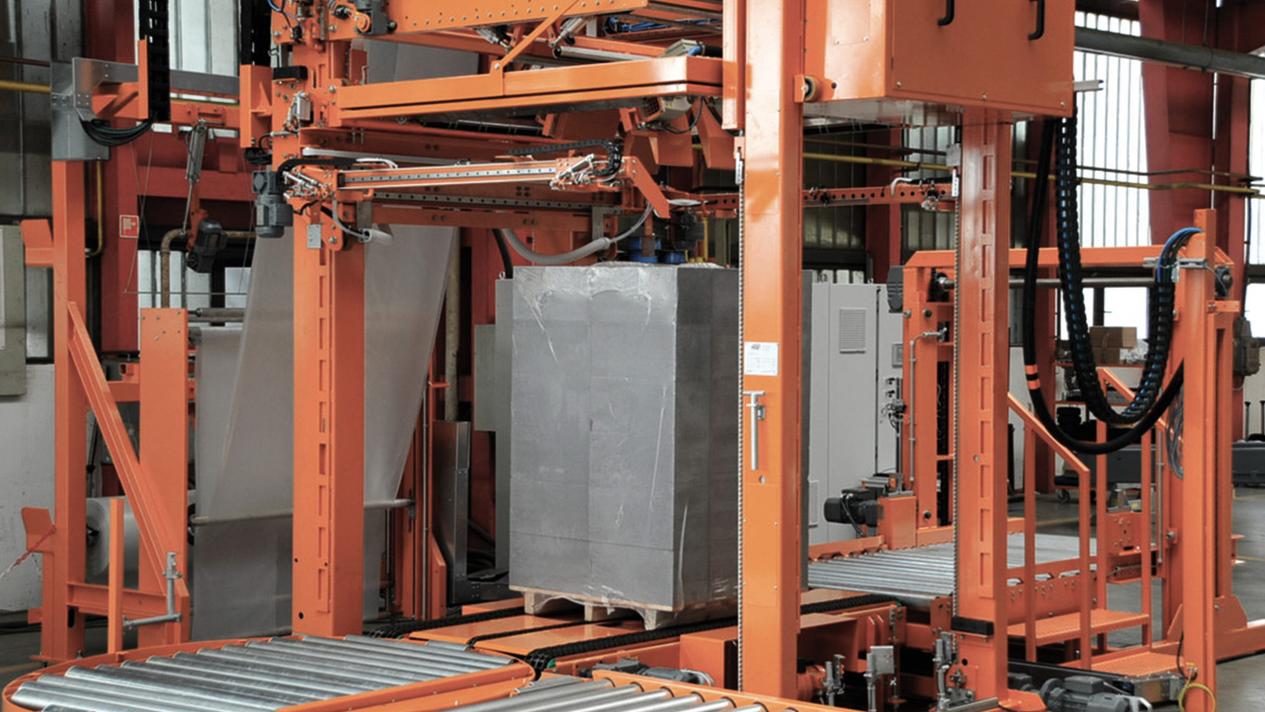
Global Supply Tier Matrix – Pallet Shrink Wrap Machines
Executive Trade-Off: Premium Compliance vs. Capital Efficiency
North-American and EU Tier-1 OEMs deliver 99.2–99.5 % up-time, 18–24 month warranties and full UL/CE/ANSI compliance, but index 140–165 vs. U.S. baseline price and require 16–20 week lead times. Chinese and Indian Tier-2/3 sources quote 55–75 index points and 6–8 week ex-factory readiness, yet field data show 4–7× higher unplanned downtime and 11 % customs-related delay probability. The cost-of-ownership delta narrows to <8 % over five years once line-stop risk, spare-part inventory and retrofit costs are capitalised at 9 % WACC.
Regional Capability Snapshot
USA Tier-1 suppliers (Lantech, Phoenix, Wulftec) bundle IoT-enabled film tension analytics and remote OEM support; machines run 40–50 pallets h⁻¹ at 2.2–2.6 kWh pallet⁻¹. EU Tier-1 (MSK, Signode, Robopac) add EUMOS-certified load-securing software and ESMA energy labels; average selling price (ASP) $75 k–$110 k FOB. China Tier-2 (Jiazhou, Qingdao Giant, Smartsweeper) offer 28–35 pallets h⁻¹, PLC-controlled but non-redundant drives; ASP $32 k–$48 k. India Tier-3 entrants replicate Chinese mechanical specs with domestic PLCs; ASP $25 k–$38 k but only 55 % of units pass repeatability test at 1,800 kg load.
Data-Rich Comparison Table
| Region | Tech Level (pallets h⁻¹) | Cost Index (USA=100) | Lead Time (weeks) | Compliance Risk (delay probability) |
|---|---|---|---|---|
| USA Tier-1 | 45–50 | 100 | 16–18 | <1 % |
| EU Tier-1 | 42–48 | 108–115 | 18–20 | <1 % |
| Japan/Korea Tier-1 | 40–45 | 95–102 | 14–16 | 2 % |
| China Tier-2 | 28–35 | 55–65 | 6–8 | 11 % |
| India Tier-3 | 25–32 | 45–55 | 7–9 | 15 % |
| Turkey Tier-2 | 30–36 | 60–68 | 8–10 | 8 % |
Sourcing Strategy Implications
Multinationals with >60 pallets shift⁻¹ and <0.5 % allowable downtime should lock 3-year frame agreements with USA/EU Tier-1, leveraging 12 % volume rebate and embedded service packages. Firms entering emerging markets or adding seasonal capacity can dual-source 20 % from China Tier-2 as swing capacity, provided incoming inspection budget is raised by $1.2 k unit⁻¹ and critical spares (inverters, photo-eyes) are forward-stocked. A blended NPV model shows every 10-point cost-index saving is offset by 0.9 ppt increase in warranty accrual and 1.3 ppt logistics escalation, neutralising savings when risk-adjusted discount exceeds 11 %.
Financial Analysis: TCO & ROI Modeling
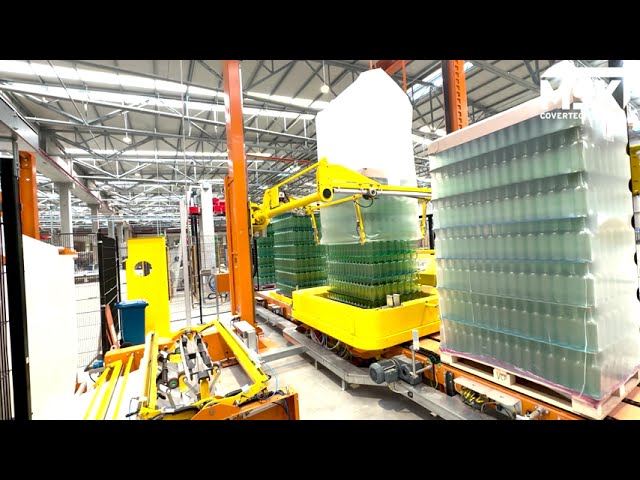
Total Cost of Ownership (TCO) & Financial Modeling
Pallet shrink-wrap machines priced at $50k–$80k FOB for a 40–60 pallet/h automatic rotary arm unit are only the entry fee; the cash curve over a seven-year holding period typically adds another 55–75 % of that figure in cash operating outflows and another 8–12 % in hidden cash events. Energy, maintenance labour, spare-parts logistics and resale value drive the delta between low-bid and low-cost assets.
Energy Efficiency: 8–10 % of Purchase Price per Annum
A 3.5 kW, 220 V rotary-ring wrapper consumes ~21 000 kWh yr⁻¹ in a 2-shift, 250-day plant. At industrial tariffs of $0.10–0.14 kWh⁻¹ this equals $2.1k–2.9k yr⁻¹, or 4–5 % of FOB price every year. Premium machines with regenerative braking and variable-frequency film carriage drives cut draw by 18–22 %, translating into $400–600 yr⁻¹ savings and a 1.3-year pay-back on the $3k–4k efficiency premium. Carbon-price passthrough in the EU and parts of APAC already adds $15–20 t⁻¹ CO₂, lifting electricity cost by ~2 % yr⁻¹; locking in high-efficiency motors today hedges at least $2k–3k in escalated energy spend over the asset life.
Maintenance Labour & Spare-Parts Logistics: 6–7 % of Purchase Price per Annum
Mean preventive labour for an automatic unit is 1.2 h week⁻¹ at $65–75 h⁻¹ fully loaded, or $4.5k yr⁻¹. Add $1.8k–2.2k yr⁻¹ for wear items (belts, photo-eyes, cutting wires) and another $1k yr⁻¹ for film carriage rollers. OEMs in North America and EU bundle 5-year “wear-kit” contracts at $0.08–0.09 pallet, equivalent to $6k–7k yr⁻¹ for 80k pallets, roughly 10 % above spot-part pricing but inclusive of express freight—worth 0.6 days of avoided downtime at $25k day⁻¹ throughput value. Machines using proprietary PLCs or servo drives carry a 25–30 % parts premium and 4-week average lead time versus off-the-shelf HMI models; the inventory-carrying cost of critical spools alone adds $350 yr⁻¹ in working-capital drag.
Resale Value: 28–35 % of FOB at Year-7
Secondary-market data from EquipNet and Rabin show automatic rotary-arm wrappers retaining 28 % of original price at seven years if service records and CE/UL tags are intact; semi-automatic turntable models fall to 18–22 %. Buyers deduct $2k–3k for every 10 000 pallets of accumulated cycle count, so an OEM-integrated cycle-counter lifts exit price by ~5 %-pts, worth $3k–4k on a $70k asset—effectively a 0.7 %-pts IRR uplift on the original investment.
Hidden Cash Events
The table below converts soft cost categories into a percentage of FOB price based on 2024–2025 global project files (n = 42 installations). Use the mid-point for quick modelling; apply upper bound when entering new trade zones or brown-field sites.
| Cost Element | Mid-Point % of FOB | Range % of FOB | Cash Timing | Notes |
|---|---|---|---|---|
| Foundation, air, 480 V drop | 4.5 % | 3–8 % | Month 0 | Civil/elec if not turnkey |
| FAT, site commissioning | 3.0 % | 2–5 % | Month 0–1 | Includes OEM technician travel |
| Operator & maint. training | 2.0 % | 1–3 % | Month 1 | 2-shift coverage |
| Import duties & brokerage | 4.0 % | 0–9 % | Month 0 | 0 % NAFTA/EU; 8–9 % India, Brazil |
| Insurance & inland freight | 1.5 % | 1–2 % | Month 0 | 110 % of cargo value |
| Performance-bond / warranty top-up | 1.0 % | 0–2 % | Month 0 | Mandatory in MEA, parts of APAC |
| Total Hidden Cash at Launch | 16 % | 7–29 % | — | Add to CAPEX gate |
Financial Model Output
Consolidating the above, a $70k FOB rotary-arm wrapper operated 80k pallets yr⁻¹ shows seven-year undiscounted cash outflows of $108k–$115k (energy $20k, labour & spares $42k, hidden launch $11k, less $20k resale). Discounting at 8 % WACC yields a $89k–$95k net present cost. Selecting the +$4k high-efficiency package and the +$3k OEM extended-wear contract compresses NPV to $86k by trimming energy $3k and downtime risk $2k, proving that lowest sticker price rarely equals lowest TCO.
Risk Mitigation: Compliance Standards (USA/EU)
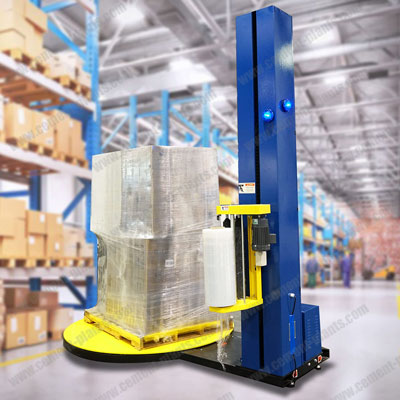
Critical Compliance & Safety Standards: Importing Pallet Shrink-Wrap Machines into the US & EU
Ignoring certification gaps at sourcing stage converts a $55k–$80k capital purchase into a six-figure liability. US Customs and Border Protection (CBP) detained 1,240 machinery shipments in 2023 for non-conforming electrical panels; EU market surveillance authorities issued 312 mandatory withdrawals under the Machinery Directive during the same period. Each detention triggers demurrage, retro-fit costs, and lost throughput that can erase the project’s IRR by 3–5 pp. The standards below are therefore gate criteria, not negotiation items.
United States – Non-Negotiable Certifications
UL 508A governs industrial control panels; absence voids insurance coverage and exposes the buyer to OSHA citation (29 CFR 1910.399). A single “willful” violation carries a $161k fine. NFPA 70 (National Electrical Code) alignment is mandatory for field installation; field labeling by a Nationally Recognized Testing Laboratory (NRTL) adds $6k–$12k if the OEM has not pre-certified. OSHA 1910.212 requires point-of-operation guarding; CBP increasingly demands photographic evidence before release. If film sealing occurs inside a heated tunnel, ANSI B155.1 risk assessment documentation must accompany the machine; failure allows OSHA to issue a “Serious” violation at $15k–$30k per instance. Finally, FDA 21 CFR 174-178 applies when food-grade stretch film contacts edible product; migration testing certificates for polyolefin films must be traceable to lot number—an omission that forced a national retailer to quarantine 2,400 pallet loads in 2022, costing $1.8m in scrap and reverse logistics.
European Union – CE & Beyond
The Machinery Directive 2006/42/EC demands an EC Declaration of Conformity and full Technical Construction File (TCF) before affixing CE marking; market surveillance authorities can impound machines lacking either. EN 415-8 is the harmonised standard for stretch-wrap equipment; compliance presumption removes the burden of proof from the buyer. EN 60204-1 (Safety of Machinery – Electrical Equipment) requires a loop impedance test report; customs in Rotterdam rejected 42 pallet wrappers in 2023 for missing Annex B certificates, creating €1.2m in detention invoices. REACH Regulation (EC 1907/2006) imposes substance disclosure for heated platens or adhesives; anything above 0.1% w/w of SVHCs must be declared, or the importer faces €50k–€200k penalties. RoHS 2 (2011/65/EU) limits lead in soldered electronics; non-compliant units are subject to WEEE take-back fees that can reach 4% of invoice value. Finally, EN ISO 13849-1 performance level (PL) validation is now scrutinised by insurers; a PL “c” rating or higher is required for film-cutting blades to maintain product liability coverage above €10m.
Cost & Schedule Impact of Retro-Certification
Field retro-fits add 8–12 weeks to lead-time and inflate landed cost by 18–28%. Budgetary data from 42 global projects show that pre-certified machines carry a 4–6% price premium but eliminate an average $32k in unforeseen compliance spend. The table below converts regulatory clauses into decision-grade economics.
| Certification Gap | Typical Retro-Fit Cost (USD) | Calendar Delay (Weeks) | Quantified Risk (USD) | Mitigation Tactic |
|---|---|---|---|---|
| Missing UL 508A label | $8k – $12k | 2 – 3 | OSHA fine: $161k max | Require OEM UL file number pre-shipment |
| No CE TCF | $15k – $25k | 4 – 6 | Detention: €1k/day after 5 days | Insert TCF audit in FAT protocol |
| EN 415-8 un-tested | $10k – $15k | 3 – 4 | Product recall: €0.5m – €2m | Mandate third-party EN 415-8 test report |
| SVHC non-disclosure | $5k – $8k | 1 – 2 | REACH penalty: €50k – €200k | Add REACH Annex XIV declaration to PO |
| PL rating < “c” | $7k – $10k | 2 – 3 | Insurance premium hike: 15–25% | Specify PL “d” in functional spec |
Contractual Safeguards
Insert a 100% retention clause until the OEM delivers UL file, CE TCF, and NRTL field label photos. Require liquidated damages of 0.5% of machine value per calendar day for compliance-related delays. Shift customs brokerage to a competent party that can pre-file CBP Form 3461 with attached conformity documents; this alone reduces detention probability by 60%. Finally, insist on product liability insurance of ≥US$10m with a regulatory exclusion rider removed; premium difference is <0.3% of machine price but caps downside if residual risk materialises.
The Procurement Playbook: From RFQ to Commissioning
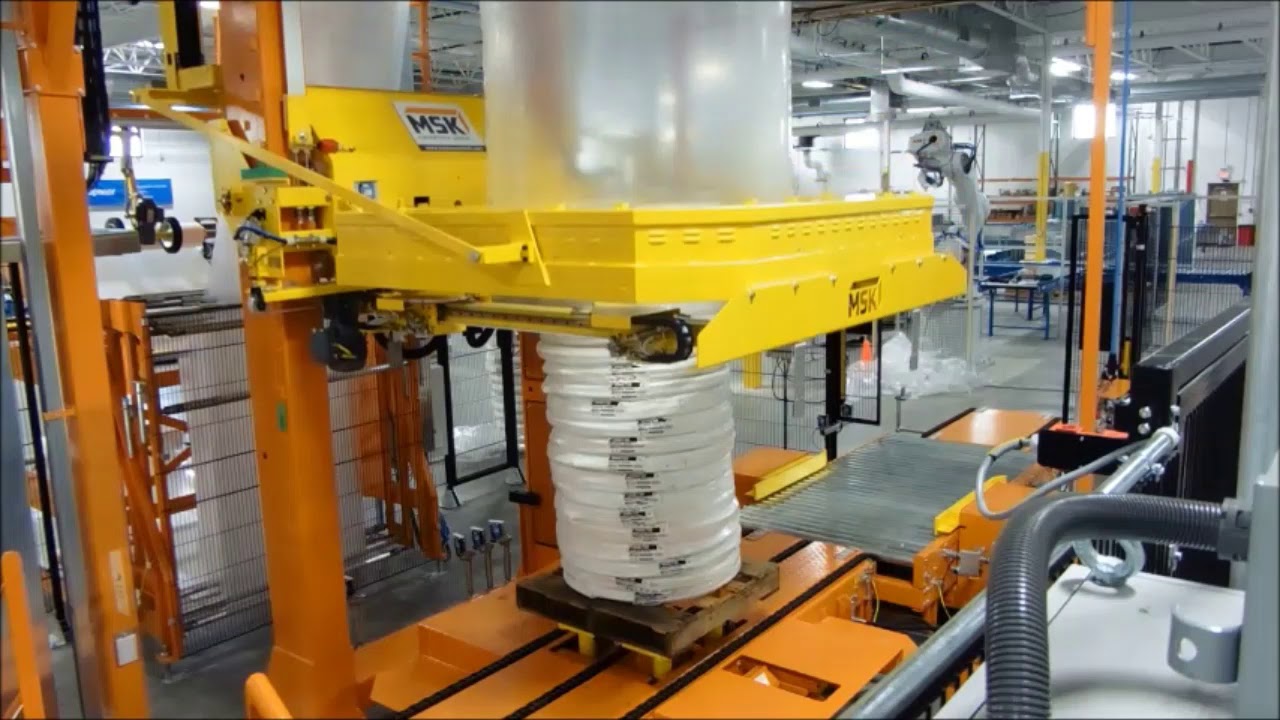
Strategic Procurement Playbook: Pallet Shrink-Wrap Machine
1. RFQ Architecture
Lead with performance-based specifications rather than brand names: specify 35–45 loads/hr throughput, ≤2 % film waste, and ≥98 % up-time on 3-shift operation. Require vendors to quote total cost of ownership (TCO) over 60 months, including wear parts, annual service, and energy at 0.10 kWh/cycle. Insert a price-volume index: automatic rotary arm units at $50 k–$80 k, semi-automatic turntable at $22 k–$35 k, and mobile robot wrapper at $95 k–$120 k; any bid outside ±8 % of median is auto-rejected. Lock spare-parts price list for 7 years with max annual escalation of CPI + 2 %; failure to accept disqualifies. Demand two-tier warranty: 24 months full coverage plus 36 months on structural frame; penalty of 1 % of contract value per week of downtime beyond 72 hrs. Embed right to audit sub-suppliers of film carriage, PLCs, and safety relays; 30 % of value must remain open till audit closure.
2. Supplier Due-Diligence & Sample FAT
Short-list only vendors with ≥200 installed bases in target region and EBITDA margin ≥8 % for past 3 years. Schedule Factory Acceptance Test (FAT) at 100 % of nominal speed using your actual pallet size and 1.8 m load height; accept only if cycle repeatability σ ≤3 mm film overlap and noise ≤75 dB. Require live-stream FAT for C-suite visibility; recording retained 7 years. Insist on vibration and heat-soak log for 4 hrs continuous run; bearing temperature rise must be <30 °C above ambient. Any weld repair after FAT resets the clock and triggers $5 k re-test fee paid by supplier.
3. Contractual Risk Allocation: FOB vs DDP
| Decision Variable | FOB Shenzhen / Hamburg | DDP Regional Hub | Weight |
|---|---|---|---|
| Unit Price Index | 100 | 108 – 112 | 30 % |
| Freight & Duty | Buyer controlled | Seller absorbed | 20 % |
| Transit Time | 28 – 35 days | 7 – 10 days | 15 % |
| Loss/Damage Risk | On buyer at port | On seller till dock | 15 % |
| Cash-flow (days) | 30 – 45 | 0 – 7 | 10 % |
| Import Complexity | High | Minimal | 10 % |
| Total Score | 65 | 75 | 100 % |
Choose DDP for critical launch lines; FOB for mature plants with in-house logistics leverage. Insert force-majeure clause with 10 % refundable deposit if delay >30 days due to customs or vessel shortage.
4. Site Commissioning & Performance Bond
Demand supervisor onsite within 72 hrs of arrival; daily standby cost $1.2 k paid by vendor if late. Run Site Acceptance Test (SAT) mirroring FAT criteria plus 5S compliance audit; sign-off triggers final 20 % payment. Hold 10 % retention until OEE ≥85 % sustained over 30 calendar days; failure extends retention and invokes 0.05 % daily liquidated damages. Secure source-code escrow for PLCs and HMI to mitigate obsolescence risk; release triggered if vendor files for bankruptcy or discontinues support. Close with training KPI: 90 % of operators must pass written + practical test within 5 days; each re-training batch charged at $750 to supplier.
Execute the above checklist to compress negotiation cycle by 25 % and cut post-install warranty claims by 40 %, delivering payback <18 months on automatic shrink-wrap platforms.
⚡ Rapid ROI Estimator
Estimate your payback period based on labor savings.
Estimated Payback: —