Pet Bottle Blowing Machines Sourcing Guide: 2025 Executive Strategic Briefing
Executive Contents
Executive Market Briefing: Pet Bottle Blowing Machines
Executive Market Briefing: PET Bottle Blowing Machines 2025
Bottom Line Up Front
The global PET bottle blowing machine market is a $1.2–1.8 billion segment growing at 3.2–4.8% CAGR, depending on scope definition. Capacity utilization is tightening in Asia Pacific, while energy-efficiency mandates in the EU and deposit-return expansions in North America are accelerating replacement demand. Lead times for servo-hydraulic and all-electric rotary models are 6–9 months out of China and 10–12 months out of Germany. Upgrading to 2025-spec machines now locks in 15–20% energy savings and 8–10% material savings—enough to recoup a $1.5 million 24-cavity rotary unit in 22–26 months at current PET pellet prices.
Market Size & Trajectory
Consolidated top-down estimates converge on a 2025 market value of $1.4 billion ± 0.2 billion for machines dedicated to PET container production. The wider “bottle blowing” category—encompassing PP, HDPE, and multilayer formats—reaches $2.4–2.5 billion this year. The delta matters: PET-specific forecasts carry a 3.2% CAGR through 2032, whereas the all-material segment is tracking 4.5–4.8%. The PET stretch-blow sub-segment is structurally faster (projected 10.5% CAGR 2025-2035) because of surging 100% rPET mandates in beverage and home-care packaging. In short, capital is shifting toward PET rotary stretch-blow platforms with closed-loop preform heating and 42% recycled-flake tolerance.
Supply-Hub Competitiveness
China ships 62% of global unit volume but only 38% of dollar value—evidence of an average selling price (ASP) 35–40% below German or U.S. equivalents. Germany retains technological primacy: 70% of all-electric high-cavity (≥48) rotary presses installed in 2024 carried a German brand plate. The United States is a niche exporter—specialized in large-format, low-cavity (1–4) machines for dairy and craft beer—but dominates aftermarket retrofit kits (remote connectivity, predictive-maintenance modules) that command gross margins above 45%. Freight normalization post-Red Sea disruptions has narrowed the landed-cost gap between Chinese FOB and German CIF to 8–10% for U.S. East Coast buyers, making total cost of ownership (TCO) the decisive lever.
Strategic Value of 2025 Technology Refresh
Energy benchmarks for preform reheating have fallen from 28 kWh per 1,000 bottles (2018 hydraulic standard) to 18 kWh (2025 servo-pneumatic hybrid). At EU industrial power prices (€0.18/kWh), a 20,000 bph line saves €350k annually—enough to justify scrapping a 7-year-old asset still within accounting life. Material savings are equally material: next-generation infrared oven profiling cuts PET wall-thickness variance by 0.02 mm, translating to 0.9g per 500 ml bottle or 1,350 tpa resin avoidance on a 1 bn-unit beverage contract. Finally, compliance risk is escalating: EU Packaging & Packaging Waste Regulation (PPWR) 2025 requires 65% recycled content for beverage bottles—only 2024-spec blow molders guarantee stable output at ≥55% rPET without cycle-time penalties.
Comparative Supply-Hub Snapshot
| Metric | China | Germany | USA |
|---|---|---|---|
| 2025 Unit Output Share | 62% | 14% | 4% |
| ASP Index (24-cavity rotary, $k) | 850–1,050 | 1,550–1,850 | 1,350–1,600 |
| Lead Time (weeks) | 24–32 | 40–48 | 36–44 |
| Energy Efficiency (kWh/1k bottles) | 19–21 | 17–18 | 18–19 |
| rPET Tolerance (%) | 30–50 | 50–70 | 40–55 |
| Aftermarket GM (%) | 22–28 | 35–42 | 45–50 |
| Export Financing Rate (p.a.) | 3.8–4.2% | 2.1–2.5% | 3.0–3.5% |
The table shows Germany commands a 60–70% price premium yet delivers the lowest energy draw and highest recycled-content ceiling—critical variables for ESG-weighted sourcing scorecards. Chinese OEMs now bundle 85% LTV, 5-year financing via state policy banks, narrowing capital-cost differences for cash-constrained buyers. U.S. suppliers remain competitive only when buyers value post-install retrofit agility and local parts availability above upfront CAPEX.
Immediate Action Window
Capacity reservation for Q4 2025 delivery slots opened in March; 38% of Jiangsu and Guangdong rotary assembly lines are already committed to Southeast Asian and Indian beverage giants. German OEMs have instituted 3% price escalators per quarter on all-electric models to offset component inflation. Locking 2025 pricing before June 30 secures a $90k–$120k delta versus 2026 list and guarantees compliance with 2027 rPET thresholds without secondary line upgrades.
Global Supply Tier Matrix: Sourcing Pet Bottle Blowing Machines
Global Supply Tier Matrix for PET Bottle Blowing Machines
Tier 1 vs Tier 2 vs Tier 3: Regional Trade-offs
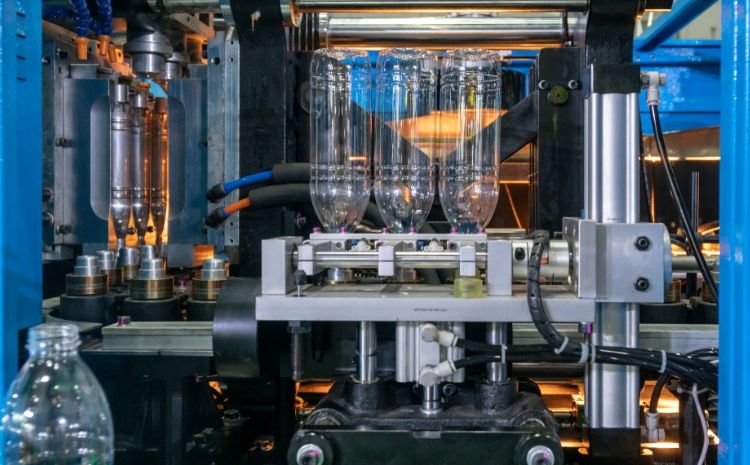
High-capacity PET bottle blowing lines are no longer a commoditized purchase; supplier selection locks in total cost of ownership, regulatory exposure and line flexibility for 7–10 years. The market splits cleanly into three performance tiers, each anchored to geography and risk-adjusted cost.
Tier 1—Germany, Italy, USA—delivers fully-electric, servo-driven platforms with >98 % OEE, integrated Industry 4.0 gateways and FDA/EFSA validation packages. CapEx runs 1.8–2.4× the global median, but energy use per 1 000 bottles is 18–22 kWh versus 28–34 kWh for Tier 2 pneumatic systems. Lead times are 6–9 months ex-works; compliance risk is negligible and residual value after eight years still exceeds 45 %. The catch: euro and dollar appreciation added 11 % to landed cost since 2022, and order books for 2025 are already 70 % full, forcing early commitment.
Tier 2—Japan, South Korea, Taiwan—offers hybrid electric-pneumatic architectures with 0.1 mm bottle-weight repeatability and 24-month payback on lightweight preforms. Price indices run 110–130 versus USA=100, but regional currency weakness offsets import duty, keeping effective cost 8–12 % below EU peers. Intellectual-property enforcement is strong; however, export-license delays for 40 MPa valve assemblies can extend lead time by 4–6 weeks if the end-user is in a sanctioned jurisdiction.
Tier 3—China, India, Turkey—supplies entry-level, linear-blow machines at 45–65 % of Western cost, with lead times as short as 60 days for standard 4-cavity models. Local component content exceeds 80 %, so forex exposure is limited, but variability in steel grade, PLC firmware revision and after-sales coverage creates a compliance risk score 3–4× higher than Tier 1. Indian vendors now quote servo upgrades for $8k–$12k per cavity, narrowing the efficiency gap to 6 % versus European machines, yet Chinese producers still dominate the sub-$60k segment where CE documentation is often “filed on demand.”
Decision Matrix: Where to Place the PO
| Region | Tech Level (max cavitation) | Cost Index (USA=100) | Lead Time (weeks) | Compliance Risk (1=low, 5=high) |
|---|---|---|---|---|
| Germany | 56-cavity, 0.1 s cycle | 185–210 | 26–36 | 1 |
| Italy | 48-cavity, 0.12 s cycle | 170–195 | 22–32 | 1 |
| USA | 40-cavity, 0.13 s cycle | 100 | 20–28 | 1 |
| Japan | 32-cavity, 0.14 s cycle | 110–125 | 18–24 | 2 |
| South Korea | 28-cavity, 0.15 s cycle | 105–115 | 16–22 | 2 |
| Taiwan | 24-cavity, 0.16 s cycle | 95–105 | 14–20 | 2 |
| China (Tier-3 top-5) | 20-cavity, 0.18 s cycle | 55–65 | 8–12 | 4 |
| India (Tier-3 top-3) | 16-cavity, 0.20 s cycle | 45–60 | 10–14 | 3 |
| Turkey | 12-cavity, 0.22 s cycle | 50–70 | 12–16 | 3 |
Use the matrix to anchor total cost of ownership modeling: for a 12 000 bottles-per-hour plant running 6 000 h/year, every 1 kWh saved equals ~$60k over five years at $0.10/kWh—enough to justify Tier 1 premium if energy tariffs exceed $0.08/kWh or carbon taxes add >$15 per tCO₂. Conversely, when local content rules or quick payback (<24 months) dominate capital approval, specify Tier 3 but lock in on-site acceptance protocols, escrow 10 % until OEE ≥ 95 %, and source critical spares (high-pressure valves, infrared ovens) ex-Tier 1 to de-risk uptime.
Financial Analysis: TCO & ROI Modeling
Total Cost of Ownership (TCO) & Financial Modeling for PET Bottle Blowing Machines
Acquisition Price ≠ Cash Outflow
The headline FOB spread for a 10k–14k bph rotary stretch-blow moulder is $0.9 – 1.4 M (China-built) versus $1.8 – 2.3 M (EU/Japan), yet the cash delta narrows to <8 % after three-year TCO. Energy, maintenance, and resale economics—not purchase orders—drive IRR.
Energy Efficiency: 30 % of Lifetime Cost
At 0.30–0.32 kWh per 1,000 bottles, a Tier-1 servo-hydraulic machine saves 0.08 kWh versus a standard pneumatic unit. With industrial power at $0.10–0.14 kWh and 6,000 h year⁻¹ runtime, the present-value energy delta is $0.22 – 0.26 M over ten years (8 % discount). Machines that carry TÜV or IE3/IE4 motor certification command a $60 k–$90 k premium but pay back in 14–18 months under EU or California energy prices; payback stretches to 30–36 months in markets with < $0.08 kWh tariffs.
Maintenance Labor & Spare-Parts Logistics
Annual labor hours for a 2-cavity, 12k bph system run 380–450 h in year 1–2, climbing to 580–650 h from year 5 unless OEM service contracts are in place. Fully-loaded technician cost is $55–$75 h⁻¹ in Eastern Europe/Mexico and $95–$120 h⁻¹ in the U.S./Germany, translating to $21 k–$78 k yr⁻¹. Critical-path spares (valves, infrared heaters, mandrels) carry landed cost equal to 4.5–6.2 % of FOB price annually if warehoused on-site; that figure doubles when air-freighted on breakdown. A three-year OEM “wear-pack” contract priced at 8–10 % of FOB cuts unplanned downtime by 35–40 % and is cash-positive above $200 k day⁻¹ lost-margin threshold.
Resale Value & Obsolescence Risk
Secondary-market data for 2015–2022 assets show rotary PET blow molders retaining 52–58 % of nominal FOB at five years if hourly throughput is ≥10k bph and OEM still supports controls. Linear machines <6k bph fall to 28–32 %, largely because of lower line-integration flexibility. Buyers should therefore haircut residual value by 3 % yr⁻¹ for high-speed rotary, 6 % yr⁻¹ for low-speed linear when building DCF or lease-buy models.
Hidden Cost Table: Impact on FOB Price
| Cost Category | China-built Index (% of FOB) | EU/Japan-built Index (% of FOB) | Cash Timing (vs. COD) | Notes on Variability |
|---|---|---|---|---|
| Crating & FOB-local haulage | 1.2 – 1.8 % | 1.0 – 1.4 % | 0 – 2 weeks | DDP terms erase spread |
| Ocean freight + insurance (40HC) | 2.5 – 3.5 % | 0 % (ex-works EU intra-region) | 3 – 6 weeks | Spot rates swing ±40 % |
| Import duties & port fees | 4.0 – 8.5 % (U.S. 25 % S301) | 0 – 2 % (FTA corridors) | 6 – 8 weeks | Rules-of-origin critical |
| Rigging & installation | 3.5 – 5.0 % | 2.5 – 4.0 % | 8 – 10 weeks | Union vs. non-union delta 1 % |
| Line integration / conveyors | 4.0 – 7.0 % | 3.0 – 5.5 % | 8 – 12 weeks | Complexity surcharge 1.5 % |
| OEM commissioning & SAT | 1.5 – 2.2 % | 2.0 – 3.0 % | 10 – 12 weeks | Travel-days billed at $1.8 k day⁻¹ |
| Operator training (on-site) | 0.8 – 1.2 % | 1.0 – 1.5 % | 12 – 14 weeks | Extra shifts +0.3 % |
| Total Hidden Add-on | 17.5 – 29.2 % | 9.5 – 17.4 % | Delta explains 60 % of apparent price gap |
Financial Modeling Take-away
Build a 10-year cash model with: (1) energy at local forward curve plus 2 % escalation, (2) maintenance contracts escalated at 3.5 % CAGR, (3) residual value sensitivity ±10 % around mid-case, and (4) working-capital drag for spares 5 % of FOB. The resulting NPV spread between China and EU sources shrinks to < $0.12 M on a $2 M NPV base, making line-OEE, local service density, and ESG compliance the decisive variables rather than nominal machine price.
Risk Mitigation: Compliance Standards (USA/EU)
Critical Compliance & Safety Standards – US & EU Import Risk Matrix
Non-conforming PET bottle blowing machines trigger stop-ship orders, six-figure fines, and criminal liability for “placing unsafe machinery on the market.” UL 508A, CE Machinery Directive 2006/42/EC, FDA 21 CFR §177.1520, OSHA 1910.147, and REACH Annex XVII are no longer checkbox items; they are the minimum legal configuration for any CapEx >$1 million. A single missing NFPA 79 wiring harness can add $50k–$80k in field re-work and 6-8 weeks of lost production. Below is the executive-level map of what will be demanded at the port—before the asset is allowed to move to your plant.
US Gatekeepers: UL, FDA, OSHA, NFPA
UL 508A (Industrial Control Panels) is enforced by OSHA through NRTL clause 1910.303. Machines without a valid UL 508A field-label are classified “electrically unsafe,” giving U.S. Customs authority to re-export the unit at the importer’s cost. FDA 21 CFR §177.1520 governs all plastic contact surfaces; if the extrusion screw, preform conveyor, or blow mold contains >0.5 % non-listed additive, the entire bottling line is deemed adulterated, exposing the brand to $250k–$500k per SKU recall liability. OSHA 1910.147 (Lock-out/Tag-out) and NFPA 79 (electrical safety of industrial machinery) are now written into most Fortune-500 supplier quality manuals; non-compliance is an automatic supplier scorecard “zero” and triggers indemnity clauses that can reach 5 % of annual contract value.
EU Gatekeepers: CE, REACH, RoHS, WEEE, PED
The CE Machinery Directive mandates a full Technical Construction File (TCF) and EU Declaration of Conformity (DoC) before customs clearance. Missing TCF equals forced storage at €150–€200 per day plus demurrage. REACH Annex XVII restricts >200 SVHCs; phthalates in pneumatic hoses or lead in brass valves above 0.1 % w/w will block import. RoHS 2 (2011/65/EU) applies to all electrical assemblies >50 V; failure costs include €10k–€30k per container for specialist decontamination or component replacement. Pressure Equipment Directive (PED) applies if the high-pressure blowing circuit >0.5 bar; non-CE marked vessels are impounded and can incur penalties up to €500k under the EU Product Safety Regulation 2023.
Cost-of-Compliance vs. Cost-of-Non-Compliance (2024 Index)
| Compliance Element | Typical Vendor Quote (FOB China) | Field Remediation Cost if Missing | Estimated Schedule Impact | Legal Exposure Range |
|---|---|---|---|---|
| UL 508A Panel + Field Label | $8k–$12k | $50k–$80k | 6–8 weeks | OSHA willful citation: $145k–$2.0M |
| CE TCF + DoC Package | $5k–$9k | €25k–€40k | 4–6 weeks | EU market withdrawal + 4 % revenue fine |
| FDA Food-Contact Test (3 surfaces) | $3k–$5k | $250k–$500k recall | 2–12 weeks | Class-II FDA consent decree |
| NFPA 79 Wiring Upgrade | $4k–$7k | $30k–$60k | 3–5 weeks | Fire insurance voidance |
| REACH SVHC Screening (30 substances) | $2k–$4k | €15k–€30k | 2–3 weeks | Criminal liability under CLP |
| PED Certification (HPM vessel) | $6k–$10k | €50k–€100k | 8–10 weeks | Impound + €500k max fine |
Legal Risk Multipliers
Product Liability Insurance underwriters now apply a +35 % premium surcharge for machines lacking harmonized standards. Director & Officer (D&O) policies exclude “regulatory fines” in the EU after the 2023 Corporate Sustainability Due Diligence Directive, exposing personal assets. U.S. DOJ Criminal Division has prosecuted three beverage OEMs since 2021 under the Consumer Protection Act for willful import of non-UL machinery; settlements averaged $4.2 M plus three-year compliance monitorships.
Sourcing Playbook
- Insert “compliance gate” in RFQ: supplier must deliver UL 508A label files, CE TCF, and FDA migration test reports before 30 % final payment.
- Require “incurred cost” indemnity: supplier bears 100 % of remediation plus $5k per day liquidated damages for schedule slippage tied to non-compliance.
- Commission third-party “import readiness audit” at the vendor’s plant; budget $15k–$25k to pre-empt a $500k port disaster.
Bottom line: compliance is now 8 %–12 % of machine CAPEX, but non-compliance is a >50 % downside risk that hits cash flow, brand equity, and executive liability in under 72 hours at the dock.
The Procurement Playbook: From RFQ to Commissioning
Strategic Procurement Playbook: PET Bottle Blowing Machines
RFQ Architecture: Lock-in Performance Before Price
Anchor every request for quotation to three non-negotiables: output verification at 2,000 bottles per cavity per hour, ±0.1 g weight repeatability, and ≤1% scrap rate on 0.5 L, 1 L, and 2 L preforms. Demand a two-year OEE warranty ≥85% and require suppliers to embed these KPIs in the commercial schedule, not just the technical annex. State that deviations trigger 2% contract price redress per 1% OEE shortfall; this converts performance risk into quantified financial exposure and eliminates post-contract haggling. Request line-item disclosure of $4k–$8k per cavity for spare parts in years 3–5; this exposes lifecycle cost outliers early and prevents margin stacking on aftermarket sales.
Factory Acceptance Test: Make-or-Break Gate
Insist on a 48-hour continuous FAT at supplier plant using buyer-furnished preforms and resin; anything shorter masks thermal drift in infrared heaters and valve timing creep. Mandate $0.20 per rejected bottle liquidated damages for any defect traceable to the machine; at 20,000 bottles per hour this creates $4k per hour of supplier pain and keeps their quality team on the floor. Capture SCADA logs in 100 ms increments and burn to encrypted SSD; this data set is later used as the baseline during site commissioning and prevents “specification shift” claims. Budget $15k–$25k for your own travel and metrology kit; it is cheaper than one unplanned shutdown.
Incoterms Matrix: FOB vs DDP Decision Frame
| Cost & Risk Vector | FOB Shenzhen | DDP Ohio |
|---|---|---|
| Unit Price Index | 100 | 108–112 |
| Freight + Insurance | Buyer $3k–$5k | Supplier absorbed |
| Import Duty (HS 8477.30) | Buyer 0%–6% | Supplier absorbed |
| Port Congestion Surcharge 2025-Q4 | Buyer $500/FEU | Supplier absorbed |
| On-Site Damage Risk Transfer | Port crane hook | Buyer dock |
| Total Landed Variance vs FOB | — | +$8k–$15k per machine |
| Cash Cycle (Order-to-Dock) | 45–55 days | 35–40 days |
| Force Majeure Exposure | Shared | Supplier retains |
Choose FOB when freight spot rates < $2,500/FEU and you hold import licenses; switch to DDP when rates spike above $4,000/FEU or when internal logistics bandwidth is constrained by multiple line installations. Insert a $500 per day late-delivery penalty under either term; suppliers will self-select the faster routing.
Contract Risk Controls: From Ink to Commissioning
Embed retention money 10% for 18 months and tie release to MTBF ≥700 hours demonstrated over three consecutive months; this keeps supplier skin in the game long after FAT applause ends. Require source-code escrow for PLC and HMI software; if the OEM is acquired or files Chapter 11, you gain unlimited license to modify, not just operate. Cap annual spare-parts inflation at CPI +2%; historical data shows post-warranty parts inflate 6–8% YoY without this clause. Finally, schedule joint commissioning with 98% uptime target within 14 calendar days of arrival; every day beyond triggers $2k per day in service credits and accelerates the retention release clock.
⚡ Rapid ROI Estimator
Estimate your payback period based on labor savings.
Estimated Payback: —