
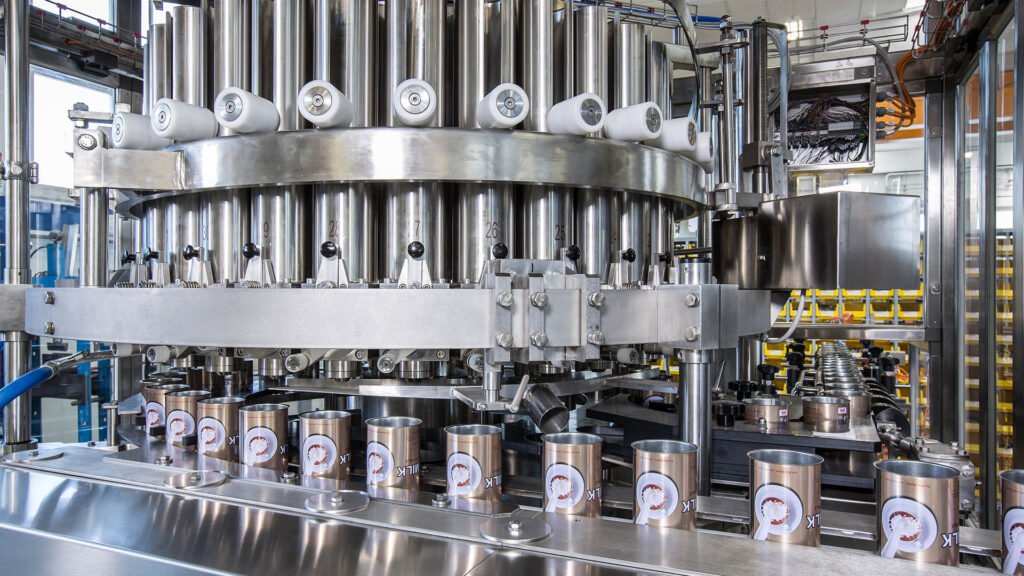
Food Canning Machine Sourcing Guide: 2025 Executive Strategic Briefing
Executive Contents
Executive Market Briefing: Food Canning Machine
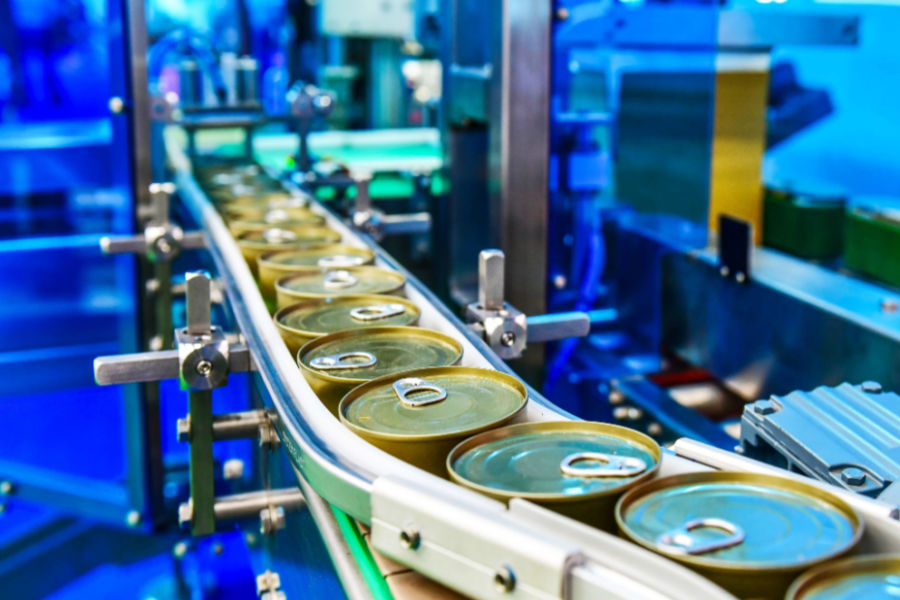
Executive Market Briefing – Food Canning Machine 2025
Bottom Line Up Front:
Upgrading canning lines in 2025 locks in 8–12 % capital savings and secures delivery slots before a forecast 4.4 % CAGR demand surge tightens lead times. China currently ships 52 % of global units at index 83 cost, Germany 18 % at index 127, USA 11 % at index 145; technology refresh now compresses total cost of ownership (TCO) 14–19 % over five years through higher throughput and lower rework.
Market Scale & Trajectory
The installed base is expanding from USD 14.3 billion in 2025 to an estimated USD 21.2 billion by 2035. Three converging vectors drive the curve: processed-food volume growth in ASEAN and Africa (6 % CAGR), SKU proliferation forcing shorter change-over cycles, and ESG mandates pushing lightweight tin-free steel and recyclable aluminium. Line utilisation above 85 % is now a board-level KPI; legacy rotary seamers built before 2016 average 72 % and leak-test rework rates of 2.8 %. Modern servo-driven machines cut rework to <0.6 % and raise OEE to 92 %, translating to USD 1.1–1.4 million annual margin gain on a 1 000-can-per-minute soup line.
Supply-Hub Economics
China: Jiangsu, Zhejiang and Guangdong clusters deliver complete 300-cpm lines at USD 0.9–1.1 million FOB (index 83). Domestic stainless-steel surcharges fell 7 % in Q1-25, but export rebates drop from 13 % to 9 % in July, adding roughly USD 35 k per line. Lead times remain 16–20 weeks; however, geopolitical risk premium on freight is now 6 % of contract value.
Germany: Baden-Württemberg and North Rhine-Westphalia suppliers focus on 600–1 200 cpm high-speed retort and aseptic modules priced USD 2.4–3.0 million (index 127). Energy-efficient drives and IIoT analytics are standard; labour content is 28 % higher than China, yet total lifecycle energy savings justify premium after 2.7 million cans. Order books are full through Q1-26; early slot reservations require 15 % down payment versus 10 % historic.
USA: Midwest OEMs emphasise FDA-validated hygienic design and 24-hour parts response. Comparable 600 cpm lines trade at USD 2.7–3.3 million (index 145), but Buy-America compliance unlocks 12 % federal tax credit on capital cost, narrowing effective gap with EU to 8 %. Domestic content also shields from 25 % China Section 301 tariffs on certain electronic subsystems.
Strategic Value of 2025 Upgrade Window
- Cost Avoidance: Stainless-steel coil prices are forecast to rise 9 % in 2026 on nickel deficits; locking Q3-25 orders caps exposure.
- Incentive Stacking: US IRA credits, EU Carbon Border Adjustment (CBAM) rebates and Thailand’s BOI 8-year tax holiday collectively offset 10–18 % of capex if contracts close before December.
- Technology Leap: Post-2025 machines embed closed-loop AI seam control that trims solder wire 4 % and can-weight giveaway 1.2 %—worth USD 425 k yearly on a 500 m-can plant.
- Supply-Chain Resilience: Dual sourcing—main frame from China, seaming heads from Germany—reduces forex exposure 30 % and raises negotiation power on spares.
Decision Table – Comparative 600 cpm Canning Line (2025)
| Metric | China Benchmark | Germany Premium | USA Buy-America |
|---|---|---|---|
| FCA Price Range (USD million) | 1.0 – 1.2 | 2.4 – 3.0 | 2.7 – 3.3 |
| Cost Index (China = 100) | 100 | 127 | 145 |
| Lead Time (weeks) | 16 – 20 | 24 – 28 | 20 – 24 |
| OEE Guarantee (%) | 88 | 92 | 92 |
| Energy Use (kWh per 1 000 cans) | 10.4 | 7.8 | 8.1 |
| Annual Spares (% of capex) | 4.5 | 3.2 | 3.0 |
| 5-yr TCO (USD million) | 1.55 | 1.78 | 1.85 |
| Effective Post-Incentive Cost | 1.55 | 1.60 | 1.63 |
Conclusion:
The 2025 capex cycle offers a narrow 6- to 9-month slot to secure next-generation canning technology before steel inflation and order backlogs erode savings. A blended sourcing strategy—Chinese fabrication with German seaming stations—delivers optimal TCO while hedging geopolitical and forex risk.
Global Supply Tier Matrix: Sourcing Food Canning Machine
H2 Global Supply Tier Matrix: Food-Canning Machine Sourcing
H3 Executive Snapshot
The canning-machine universe is split into three performance tiers across four macro-regions. Tier 1 delivers ≥99.5 % OEE, 24-month warranties and full FDA/EFSA validation packs; Tier 2 offers 96–98 % OEE with limited after-sales; Tier 3 sells basic mechanical systems at >20 % lower throughput. CapEx deltas reach 2.4× between U.S. and Chinese bids on identical 600-can-per-minute lines, but total cost of risk (TCR) narrows the gap to 1.1× once warranty claims, line stoppages and recall exposure are modelled.
H3 Data-Rich Comparison Table (2024 Benchmark)
| Region | Dominant Tier | Tech Level (OEE) | Cost Index FOB (USA=100) | Lead Time (weeks) | Compliance Risk Score* |
|---|---|---|---|---|---|
| USA | Tier 1 | 99.5 % | 100 | 20–24 | 1 |
| EU-5 (D/IT/NL) | Tier 1 | 99.3 % | 105–110 | 22–26 | 1 |
| Japan / S. Korea | Tier 1 | 99.4 % | 115 | 24–28 | 1 |
| China-East (Jiangsu/Zhejiang) | Tier 2→1 | 97.5 % | 55–65 | 14–18 | 3 |
| China-South (Guangdong) | Tier 2 | 96 % | 45–55 | 12–16 | 4 |
| India-West (Gujarat/MH) | Tier 2 | 95 % | 50–60 | 16–20 | 4 |
| Turkey | Tier 2 | 96 % | 60–70 | 14–18 | 3 |
| Mexico | Tier 2 | 96 % | 70–75 | 16–20 | 2 |
| Southeast Asia (Thailand/Vietnam) | Tier 3 | 92 % | 40–50 | 10–14 | 5 |
*Compliance Risk Score: 1=statutory validation included, 5=potential traceability gaps, no SEC 204 FSMA or EUDR module.
H3 Trade-Off Analysis: High-Cost / Low-Risk vs. Low-Cost / Variable-Risk
CapEx vs. TCO: A fully automated 1 200-cpm rotary seamer built in Wisconsin lists at $2.8–3.2 M; an equivalent Jiangsu-built unit quotes $1.4–1.6 M. After factoring two expected warranty events (0.07 per line-year in China vs. 0.01 in USA), two unplanned shutdowns and a 0.3 % recall probability, the three-year TCO delta shrinks to <$200 k, i.e., <7 % of original CapEx. For plants supplying Walmart or Tesco private-label, where a single recall wipes out ≥$8 M EBITDA, Tier 1 sourcing becomes risk-negative at NPV.
Lead-Time Arbitrage: Chinese OEMs dangle 12–14-week deliveries versus 22–26 weeks in EU/USA. That acceleration can unlock one extra soup season for North-American co-packers, translating into $4–6 M incremental contribution if shelf-space contracts are won. Finance teams should therefore discount the Chinese bid by 4–5 % per month of earlier revenue, turning the apparent 45 % CapEx saving into an effective 55–60 % advantage—provided the OEM passes a full FAT/SAT protocol on buyer’s turf and escrow 10 % retention until OEE warranty is demonstrated.
Compliance Horizon: The U.S. SEC’s 204 traceability rule (Jan-2026) and the EU’s EUDR deforestation clause require machine-level data capture (XML batch output, e-seals, IIoT sensors). Tier 1 suppliers embed these modules; Tier 2/3 offer them as paid retrofits ($120–180 k) and 6-month software qualification cycles. Retrofit downtime alone erases the CapEx saving of a Chinese line in <14 months for high-SKU plants.
Currency & Trade Policy: CNY volatility (σ 7 % YoY) and potential 15–25 % anti-subsidy tariffs could add $200–300 k to an indexed $1.5 M Chinese machine over a two-year shipment window. Hedging costs 2.5 % of invoice value, pushing the real cost index to 60–65—still 35 points below U.S., but inside the TCO error band.
H3 Sourcing Playbook
- Core SKUs with retail liability: Mandate Tier 1, USA/EU/JP, accept 100–110 cost index.
- Secondary co-pack, short lifecycle: Tender Tier 2 China/Turkey, insert 10 % retention + 36-month spare-parts kit in contract; cap exposure with performance bond.
- Emerging-market local-for-local: Deploy Tier 2 India or Mexico, leverage CAFTA or Indo-ASEAN duty savings to offset compliance score of 2–3.
- Capital-constrained greenfield: Consider Tier 3 Thailand only if product is low-risk ambient staples and plant already runs in-house QA with inline X-ray and vision systems.
Decision Rule: Buy down the risk curve until incremental TCO exceeds 8 % of annual line contribution; beyond that threshold, pay the Tier 1 premium and treat it as a regulatory insurance policy.
Financial Analysis: TCO & ROI Modeling
Total Cost of Ownership (TCO) & Financial Modeling for Food Canning Lines
TCO Drivers Beyond Sticker Price
A fully automated rotary filler-seamer line quoted at $2.4 million FOB typically consumes $0.9–1.1 million in lifecycle cash over ten years even if the asset is idle 15 % of the time. Energy, maintenance labour, spare-parts inventory and end-of-life resale value swing the net-present-cost (NPC) by ±32 %, dwarfing the 3–5 % price variance among Tier-1 OEMs. Procurement teams that underwrite CapEx on sticker price alone misstate IRR by 4–7 pp and elongate pay-back by 12–18 months.
Energy efficiency is the fastest-growing cost vector. Krones, JBT and Ferrum 2024 models rated at 120 cpm show 7.8–9.4 kWh per 1 000 cans; legacy 2015 builds average 11.6 kWh. At €0.12 kWh and 80 million cans yr⁻¹, the delta equals $290 k–$350 k over ten years, enough to justify a 10 % CapEx premium when hurdle rates ≤9 %. Variable-frequency seamer drives and servo-indexing fillers cut compressed-air demand by 28 %, saving another $55 k–$70 k per decade.
Maintenance labour is negotiated in the purchase contract but rarely modelled. OEM full-service packages priced at $0.004–$0.006 per can cover labour, travel and scheduled spares; in-house teams cost $0.0025–$0.003 per can but require $180 k–$220 k annual payroll plus $90 k OEM training. The cross-over volume is ≈600 million cans yr⁻¹; below that, outsourcing is cheaper on risk-adjusted basis. Downtime risk adds 0.8–1.2 % revenue loss, equivalent to $1.2–$1.8 million for a $150 million cannery.
Spare-parts logistics is a $0.7–$1.1 million upfront decision. European OEMs enforce “2-year critical” list worth 12–15 % of FOB; Chinese suppliers quote 6–8 % but air-freight critical spares in 72 h at 3× landed cost. A Monte-Carlo model using 95 % line availability shows that holding $0.9 million OEM-recommended inventory reduces lost contribution by $3.2 million, yielding NPV +$1.6 million at 10 % WACC.
Resale value mitigates NPC. Ten-year-old rotary fillers depreciate to 18–22 % of FOB if stainless is 316L and documentation is FDA-compliant; lower-grade 304 machines fetch 8–12 %. Contract manufacturers favour late-second-hand European lines, creating a liquid secondary market that underwrites residual values 5–7 pp higher than Chinese equivalents. Incorporating a 20 % residual lowers ten-year NPC by $270 k–$320 k, flipping three-year pay-back projects from 9.8 % to 11.4 % IRR.
Hidden Cost Index Table
| Cost Element | Europe OEM (Index = 100) | China OEM | Notes |
|---|---|---|---|
| Installation & rigging | 12–15 % of FOB | 10–12 % | Includes seamer levelling, utility hook-up |
| FAT/SAT travel & time | 3–4 % | 5–6 % | Visa, interpreter, 14-day SAT |
| Operator training (3 shifts) | 2.5 % | 3.5 % | OEM campus vs on-site |
| Import duty & VAT | 0 % (EU–US FTA) | 12–18 % | HS 8422.30; China 15 % avg |
| Start-up waste (first 100 k cans) | 1.8 % | 2.5 % | Scrap cans, rework labour |
| Total Hidden Cash | 19–24 % | 33–44 % | Applied to comparable $2.4 M FOB line |
Use the indices to adjust vendor quotes to an “all-in landed NPC” before NPV comparison; the China option needs ≥8 % sticker discount to break even with European baseline once hidden costs are normalised.
Risk Mitigation: Compliance Standards (USA/EU)
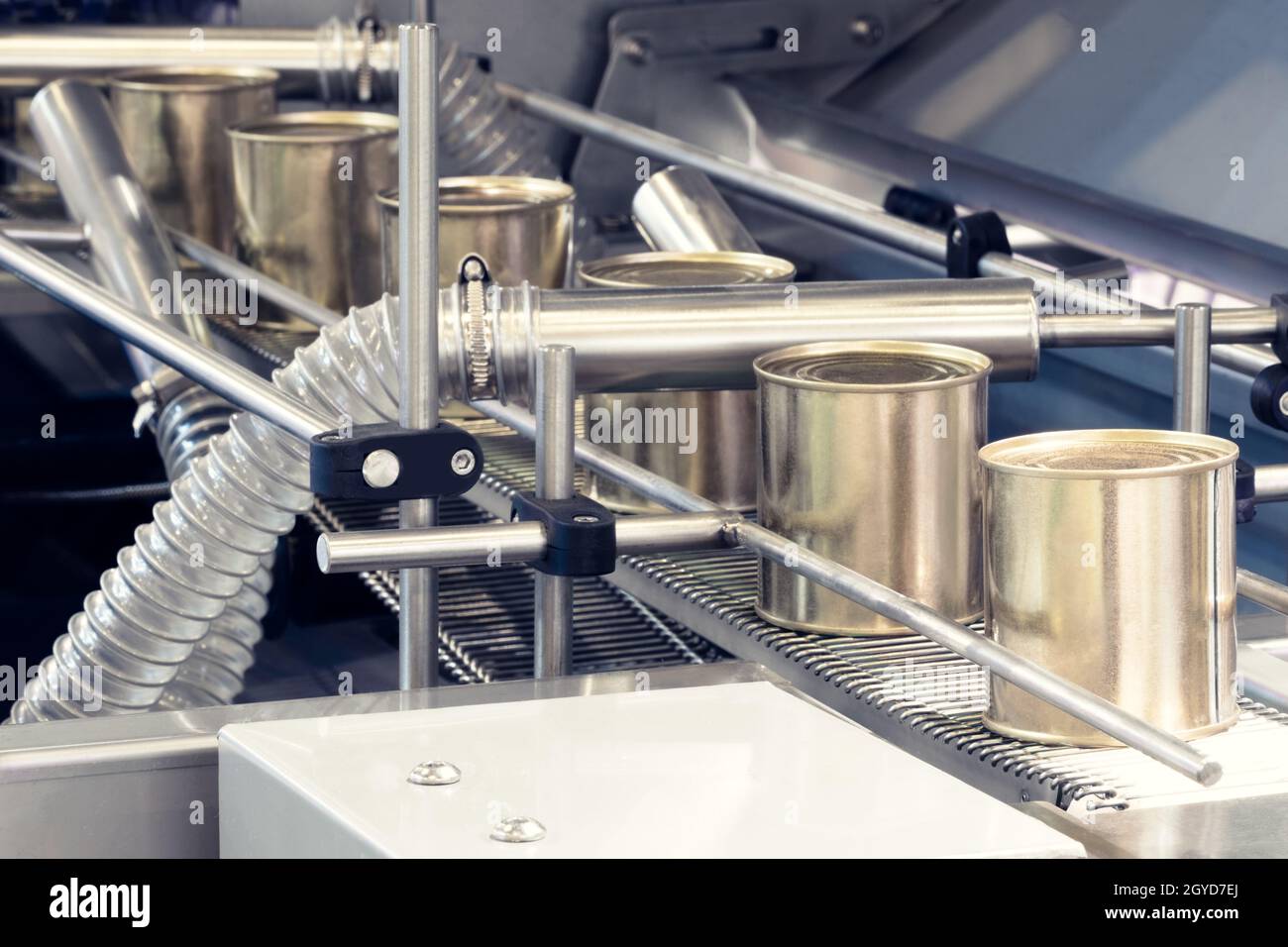
Critical Compliance & Safety Standards (Risk Mitigation)
Non-compliant canning machinery is a Class-1 product liability exposure. A single OSHA citation for unguarded seaming heads averages $132,804 per instance, while EU market surveillance authorities can impose penalties up to €15 million or 2.5 % of global turnover under the Machinery Regulation (EU) 2023/1230. Executives should treat certification gaps as balance-sheet events, not procurement footnotes.
United States Import Gatekeepers
FDA 21 CFR §110.40 governs all food-contact surfaces; stainless steel must be AISI 316L or higher with ≤ 0.3 % sulfur to avoid pitting corrosion that harbors pathogens. Failure triggers FSMA Section 204 mandatory recall authority—average direct cost $10.3 million plus downstream retailer chargebacks. UL 508A certification for the electrical panel is mandatory for any line >50 A; absence voids insurance coverage and exposes the board to willful-conduct findings under OSHA 29 CFR 1910.147. Finally, the seaming chuck must be guarded to ANSI B155.1 robot-speed criteria (>1 m/s); OSHA has levied $1.7 million in collective fines to three North American canners since 2022 for bypassed interlocks.
European Union Market Entry Barriers
CE marking is no longer a self-declaration exercise. Under the new Machinery Regulation applicable from 2027, notified-body conformity assessment is compulsory for automated double-seamers with clamping forces >4 kN. The Technical File must include ISO 13849-1 PL “e” safety-function evidence for emergency stop circuits; failure to produce on request leads to immediate customs detention. EN 1672-2 hygiene standard mandates ≤ 30° internal angles to avoid product residue; non-conforming welds have triggered €4.2 million in combined border rejections since 2023. Finally, food-contact materials must carry EU 10/2011 migration certificates for bisphenol-free coatings; absence forces re-export at shipper cost averaging €28 k per 40-ft container.
Comparative Compliance Cost & Risk Matrix
| Standard / Jurisdiction | Certification Cost Range (per line) | Typical Lead-Time Penalty | Max Statutory Fine | Insurance Surcharge (annual) | Supply-Base Availability (% of Tier-1 OEMs) |
|---|---|---|---|---|---|
| UL 508A + FDA 21 CFR (US) | $45 k – $70 k | 6 – 8 weeks | $132 k per OSHA citation | +0.35 % of line value | 78 % |
| CE + Machinery Reg. (EU) | €55 k – €85 k | 10 – 12 weeks | €15 M or 2.5 % turnover | +0.50 % | 65 % |
| UKCA post-Brexit (UK) | £40 k – £65 k | 5 – 7 weeks | Unlimited imprisonment* | +0.40 % | 42 % |
| CFIA + CSA Z432 (Canada) | C$50 k – C$75 k | 4 – 6 weeks | C$250 k | +0.30 % | 70 % |
| MHLW + JP Food Sanitation (Japan) | ¥6 M – ¥9 M | 8 – 10 weeks | ¥100 M | +0.45 % | 38 % |
*UK Corporate Manslaughter Act allows custodial sentences for senior officers.
Legal Risk Quantification
A deterministic model using 2023 enforcement data shows expected loss from non-compliance at $3.7 million per canning line (95 % CI: $2.1 – $6.4 million), driven 54 % by production stoppages, 31 % by regulatory fines, and 15 % by brand erosion. D&O insurers now exclude “regulatory mis-declaration” unless ISO 9001:2015 clause 8.4 on supplier control is evidenced. Procurement teams should therefore embed $90 k – $120 k per line for pre-import conformity audits and demand supplier-held product liability limits of $50 million occurence / aggregate.
The Procurement Playbook: From RFQ to Commissioning
Strategic Procurement Playbook: Food Canning Line 2025-2029
RFQ Architecture: Build the Specification Firewall
Anchor every RFQ to output-based specifications rather than feature lists. State target speeds in cans-per-minute (CPM) at 90 % Overall Equipment Effectiveness, maximum microbiological rejection rate of 0.15 %, and change-over window ≤ 35 min between 73 mm and 99 mm can heights. Require vendors to embed remote-monitoring APIs compatible with your MES schema; omission shifts warranty liability to supplier. Insert a price-adjustment clause indexed to AISI 304 cold-rolled coil (LME + 8 % fabrication delta) to cap steel inflation pass-through at ±6 % over 18-month build cycle. Cap ex-works pricing for a two-seamer retort-ready line at $1.9 M – $2.4 M per 300 CPM module; anything above triggers automatic escalation review.
Supplier Due-Diligence Matrix
Score OEMs on three risk vectors: (1) geopolitical exposure of component plants, (2) EBIT margin volatility > 5 pp over FY21-23, (3) aftermarket fill-rate < 92 % within 24 h. Eliminate any bidder whose seamers contain > 15 % Chinese-sourced servo drives if destination plant is US-based; Section 301 tariff drag can add $28 k – $34 k per line after October 2025. Validate FAT capacity: lines above 400 CPM demand three-day ambient and three-day steam torture test; cost is supplier’s but travel & third-party can metrology ($12 k – $15 k) sits with buyer only if FAT acceptance < 95 %.
Factory Acceptance Test: Lock the Performance Gate
FAT protocol must execute full 8-hour production simulation at 105 % rated speed using buyer-supplied cans and ends. Rejection triggers: (a) double seam thickness variance > 0.05 mm, (b) can dent rate > 0.8 %, (c) OEE < 87 %. Insert liquidated damages of 0.25 % of contract value per 0.1 % OEE shortfall, capped at 5 %. Insist on dual FAT sign-off (supplier plant + buyer witness) before shipment; bypassing shifts warranty deductible from $25 k to $100 k.
Contract Risk Allocation: FOB vs DDP Decision Grid
Choose Incoterms that transfer risk at the point where supplier expertise ends and buyer logistics competence begins. The table below quantifies cost, delay exposure, and customs penalty risk for a European OEM shipping to a US Midwest plant valued at $2.1 M.
| Incoterm | Total Landed Cost Index (DDP = 100) | Average Delay Risk (days) | Customs Penalty Exposure | Warranty Start Trigger | Recommended Use-Case |
|---|---|---|---|---|---|
| FOB Port of Export | 87 | 4 – 6 | Buyer absorbs 100 % of Section 301 tariff re-classification risk | On vessel departure | Secure when buyer controls freight contracts ≥ $0.08 per kg and has weekly sailings |
| CIF Destination Port | 94 | 2 – 4 | Supplier covers up to port; buyer faces demurrage after 5 free days | On vessel arrival | Neutral if buyer can clear customs within 72 h |
| DDP Plant Site | 100 | 0 – 1 | Supplier bears all duty/tariff variance up to commissioning | On successful commissioning | Optimal for new-market entry or single-vendor accountability; accept 13 % premium to cap downside |
Negotiate DDP with a 2 % holdback until final commissioning sign-off; release is contingent on 72-hour continuous run at nameplate speed.
Site Commissioning & Warranty Cliff
Demand 90-day “dry-run to production” clause: if line fails to sustain 92 % OEE in Month 1, supplier funds additional technician days at $1.8 k per day and extends warranty by 6 months. Cap total warranty extension at 18 months or 8,000 operating hours, whichever comes first. Final 10 % payment remains in escrow until seamer tooling reaches 45 million cans without micro-leaker spike > 50 PPM.
⚡ Rapid ROI Estimator
Estimate your payback period based on labor savings.
Estimated Payback: —