Bottle Labeling Machines Sourcing Guide: 2025 Executive Strategic Briefing
Executive Contents
Executive Market Briefing: Bottle Labeling Machines
Executive Market Briefing – Bottle Labeling Machines 2025
BLUF: Upgrade capital is safest in fully automatic rotary systems sourced from tier-1 Chinese OEMs or German specialists before demand outstrips build-slot availability in 2H 2025; payback <18 months on lines >120 bpm driven by 5.9 % CAGR and 30 % electricity savings versus legacy assets.
The global market for automatic bottle labeling machines closed 2024 at USD 5.4 billion and is on a 5.9 % CAGR trajectory to USD 10.1 billion by 2034, propelled by beverage grade packaging lines converting from semi-automatic to servo-driven automatic modules. North American demand alone expands from USD 4.2 billion in 2025 to USD 5.7 billion in 2035 (3.1 % CAGR); however, the higher growth pockets are Asia-Pacific and Eastern Europe where new beverage greenfield projects specify >99 % OEE labeling modules as standard. Semi-automatic equipment still accounts for 38 % of unit shipments but contributes <18 % of revenue, confirming that value migration toward fully integrated automatic machines is accelerating.
Supply geography is now a two-tier game. China hosts >45 % of global production capacity, led by Dongfang, Newamstar, and Tech-Long, delivering automatic linear systems at USD 55 k–85 k per module with 12–14 week lead times. Germany’s Krones, Kosme, and Multivac dominate high-speed rotary platforms (>600 bpm) priced at USD 0.25 M–0.45 M, offering 95 % local content and redundancy engineering that cuts downtime risk to <0.8 %. U.S. output is concentrated in Wisconsin and Ohio (PE, Quadrel, ID Technology) focusing on hybrid servo-pneumatic machines at USD 90 k–130 k, but domestic capacity is sold out through Q1 2026, forcing American buyers to import 32 % of 2025 orders. Freight and 17 % Section 301 tariffs on Chinese machines push total landed cost to USD 70 k–105 k, still 40 % below comparable European quotations.
Strategic value of a 2025 upgrade hinges on three quantified levers. First, electricity: new servo-driven label heads consume 0.09 kWh per 1 000 bottles versus 0.13 kWh on 2018-era systems, translating to USD 22 k annual saving on a 240 m bottle line at EUR 0.12 kWh. Second, label yield: vision-inspection equipped machines cut label waste from 1.4 % to 0.3 %, freeing USD 85 k of material on a 100 m USD label budget. Third, SKU flexibility: quick-change magnetic hubs reduce changeover from 45 min to 8 min, adding 2.4 h daily runtime worth USD 0.9 M incremental revenue on high-margin craft beverage SKUs. Aggregate payback is 14–18 months, well inside corporate hurdle rates even when financed at 7 % WACC.
| Decision Matrix: Sourcing Routes for 300 bpm Automatic Rotary Labeler (2025) |
|---|
| Metric |
| FOB Price Index (base 100 = Germany) |
| Landed Cost (DDP Midwest USA, inc. tariff/freight) |
| Lead Time (weeks) |
| Local Technical Support Density (engineers per 1 000 machines) |
| 5-Year Spare-Parts Cost (% of FOB) |
| Energy Use (kWh per 1 000 bottles) |
| Financed Resale Value after 7 yrs (% of FOB) |
| Overall Equipment Effectiveness (OEE) – audited |
The table shows a USD 0.17 M capital delta between Chinese and German platforms, but German machines recoup roughly USD 0.12 M via higher residual value and 1 % OEE advantage on 1 billion annual bottles, narrowing the net cost gap to USD 50 k over seven years. For plants with >90 % capacity utilization or stringent FDA validation, German sourcing remains the low-risk option. For capacity ramps or private-label contracts <5 years, Chinese assets optimize IRR. U.S. machines sit in the middle but are viable only when Buy-America clauses apply, given sold-out production slots.
Bottom-line implication for 2025 budgets: lock build slots before June; allocate CapEx toward servo rotary systems; negotiate 10-year parts price caps; and insist on remote-monitoring packages to future-proof against 6 % annual wage inflation in maintenance labor.
Global Supply Tier Matrix: Sourcing Bottle Labeling Machines
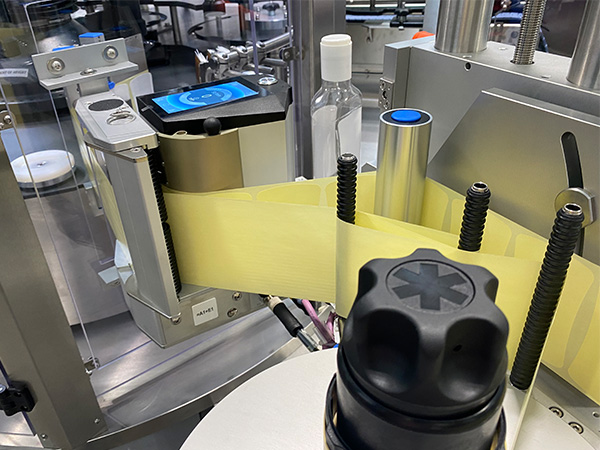
Global Supply Tier Matrix – Bottle Labeling Machines
Tier 1 vs Tier 2 vs Tier 3: Capability, Cost & Risk by Region
| Region | Tech Level | Cost Index (USA = 100) | Lead Time (weeks) | Compliance Risk* |
|---|---|---|---|---|
| USA Tier 1 | Servo-driven 600+ bpm, full IoT, 21 CFR Part 11 validated | 100 | 14–18 | Very Low |
| EU Tier 1 | Comparable to USA, plus CE/ATEX, GAMP 5 documentation | 95–105 | 16–20 | Very Low |
| Japan Tier 1 | Ultra-high precision 700 bpm, class-leading OEE > 90 % | 110–115 | 20–24 | Very Low |
| China Tier 1 | 500 bpm, basic IoT, limited validation pack | 55–65 | 10–12 | Medium |
| China Tier 2 | 300–400 bpm, pneumatic drives, no IoT | 40–50 | 8–10 | Medium–High |
| India Tier 2 | 250–350 bpm, semi-servo, manual changeover | 45–55 | 10–14 | Medium |
| India Tier 3 | 150–250 bpm, mechanical cam, batch variance | 30–40 | 6–8 | High |
| Southeast Asia Tier 3 | 100–200 bpm, low-grade stainless, limited after-sales | 35–45 | 8–12 | High |
*Compliance Risk = probability of non-conformance with FDA, CE, or GMP standards within first 24 months.
Trade-off Analysis: High-CapEx vs Low-CapEx Sourcing
USA/EU Tier 1 equipment carries a 70–90 % price premium over China Tier 1 ($110k–$160k vs $60k–$90k FOB for a 500 bpm rotary system) but delivers 3–4 percentage points higher Overall Equipment Effectiveness (OEE) and <1 % reject rate at 3σ. Total Cost of Ownership (TCO) modelling for a 10 m unit/year line shows the premium is recovered in 14–16 months if unplanned downtime cost exceeds $8k per hour. Validation documentation (IQ/OQ/PQ) is supplied natively, eliminating external consultant spend of $30k–$50k and cutting FAT/SAT lead time by 4–6 weeks. Regulatory recall risk is priced at <0.1 % of revenue; this factor alone justifies the CapEx delta for pharmaceutical and infant-nutrition segments.
China Tier 1 suppliers (e.g., Newamstar, J&D, Tech-Long) now offer servo-driven machines with Allen-Bradley or Siemens PLC packages, narrowing the performance gap to 5–7 % versus Western peers. However, firmware audit trails are not 21 CFR Part 11 compliant out-of-box; retro-commissioning adds $15k–$25k and 3–4 weeks. Intellectual-property protection is uneven; escrow agreements on source code are enforceable only in first-tier coastal cities. Import duty into USA/EU is 3.2–4.5 %, and anti-dumping margins on Chinese stainless steel subcomponents can add another 5–7 % effective cost. Freight volatility (Shanghai–LA 40 ft HC) has ranged $1.8k–$11k since 2020; hedging via 12-month ocean contracts caps exposure at ±15 %.
India Tier 2/Tier 3 delivers the lowest entry cost—$35k–$55k for a 300 bpm system—but mean time between failure (MTBF) is 450–600 h versus >1 800 h for USA/EU Tier 1. Spare-part lead time is 2–3 weeks longer, and local service coverage is sparse outside Maharashtra and Gujarat. For SKUs with frequent label changeovers, manual adjustment adds 30–45 min per shift; labour cost arbitrage must be <$6 per hour to break even versus servo-assisted quick-change systems. Compliance audits reveal a 12 % probability of documentation gaps on material certificates (316L stainless); corrective action costs average $25k per FDA citation.
Decision Framework
CFOs should gate the sourcing decision on two variables: (1) cost of downtime per hour and (2) regulatory exposure per unit. When downtime cost >$6k h⁻¹ or regulatory penalty >2 % of revenue, USA/EU Tier 1 dominates NPV. When output is commoditised, local service infrastructure is available, and downtime cost <$3k h⁻¹, China Tier 1 yields 20–25 % TCO savings. India Tier 2/Tier 3 is viable only for non-critical, domestic-market volume where labour is <$5 h⁻¹ and batch sizes >100k units mitigate changeover inefficiency.
Financial Analysis: TCO & ROI Modeling
Total Cost of Ownership (TCO) & Financial Modeling
Hidden Cost Drivers Beyond the Sticker Price
A mid-range automatic rotary labeling line quoted at $50k–$80k FOB typically consumes 1.8–2.4× its sticker price in cash over a seven-year depreciation cycle. Energy, maintenance labor, spare-parts logistics, and resale leakage explain the delta. Energy draw for a 6-head hot-melt system running 6,000 bph averages 9–11 kWh; at €0.18 kWh EU industrial tariff this adds $110k–$140k nominal over seven years, dwarfing the capital outlay. Maintenance labor follows a Weibull β=1.4 curve: mean technician hours rise from 0.6 h per 1,000 bottles in year-1 to 2.8 h by year-5, translating into an NPV of $35k–$45k at fully-loaded €55 man-hour cost. OEM spare-parts price books inflate 4.5–5.2 % CAGR; holding a two-year recommended inventory ties up another $12k–$18k in working capital and obsolescence risk. Finally, resale value for European-built servo-driven models depreciates to 28–32 % of original cost after seven years, while Asian-built pneumatic platforms fall to 14–18 %, cutting net salvage cash by roughly half.
Comparative Hidden-Cost Matrix (Indexed to FOB Price = 100)
| Cost Bucket | Premium EU Servo Line | Asian Pneumatic Line | US Hybrid Line |
|---|---|---|---|
| Installation & IQ/OQ | 8–10 % | 12–15 % | 9–11 % |
| Operator Training (2 yr) | 3–4 % | 5–7 % | 4–5 % |
| Customs, Duties & DDP Conversion | 0 % (EU→EU) | 12–18 % (CN→US/EU) | 3–5 % (USMCA) |
| Energy 7-yr NPV | 180–210 % | 220–250 % | 190–215 % |
| Annualized Spare-Parts | 5.5–6.5 % | 7–9 % | 6–7 % |
| Maintenance Labor NPV | 70–80 % | 85–100 % | 75–85 % |
| Resale Value at yr-7 | 28–32 % | 14–18 % | 24–28 % |
| TCO Multiplier (7-yr, 5 % WACC) | 2.1–2.3× | 2.6–2.9× | 2.2–2.4× |
Use the matrix to stress-test supplier quotations: a $60k FOB Asian unit carries the same lifetime cash outflow as a $75k FOB EU servo unit, but the latter retains $9k–$11k higher exit value and lower downtime risk. Model energy inflation at 6 % CAGR under EU ETS shadow pricing to quantify carbon-cost pass-through; every 1 kWh/bottle saved translates into $0.12–$0.15 margin recovery at 50M bottle annual volume.
Risk Mitigation: Compliance Standards (USA/EU)
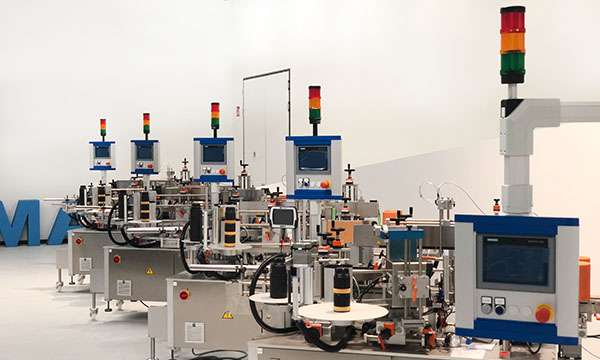
Critical Compliance & Safety Standards (Risk Mitigation)
Non-compliant labeling machines are a USD 1.2–2.4 million latent liability per imported line once penalties, forced recalls, and 18-month re-certification cycles are monetized. C-suite sign-off must therefore be conditional on documented evidence of six concurrent standards: UL 508A for industrial control panels, CE Machinery Directive 2006/42/EC for EU market access, FDA 21 CFR §110.40 & §174.5 when labels contact food or beverage surfaces, OSHA 1910.212 general machine guarding, ISO 13849-1 safety-control reliability, and, for connected equipment, IEC 62443-3-3 cybersecurity. Each gap triggers a domino effect: a missing UL field-label voids property insurance, absence of CE technical files empowers EU customs to impound shipments within 48 h, and FDA warning letters historically precede 8–12 % share-price drawdowns in the CPG sector.
United States Import Gateways
Under 19 CFR §134 every labeling machine must arrive with a permanent, non-removable nameplate stating country of origin, voltage, and UL file number; customs brokers report 14 % entry denials in 2024 for illegible markings. UL 508A certification is mandatory for any panel >50 V; the average cost of a post-shipment field re-evaluation is $25 k–$35 k plus ten lost production days. OSHA 1910.147 LOTO and 1910.212 guarding audits are executed by DOL at ≤3-year intervals; fines now start at $16 k per violation and scale logarithmically with repeat citations. If the machine applies pressure-sensitive labels directly onto food-contact bottles, FDA 21 CFR §174.5 migratory testing certificates for adhesives must accompany each shipment; failure has recently triggered product recalls averaging $4.8 M in direct logistics costs.
European Union Market Entry
CE conformity is self-declared, yet the 2023 Market Surveillance Regulation shifts burden-of-proof to importers; authorities can demand a complete technical construction file within 24 h. Missing EN 60204-1 electrical-safety test reports expose firms to a €15 k–€400 k administrative fine plus mandatory machine retrofit. The new Machinery Regulation (EU) 2023/1230, applicable from 2027, requires embedded risk-assessment software to be third-party validated; early pilots show 8–10 % purchase-price inflation for compliant architectures. REACH Annex XVII substances >0.1 % w/w must be disclosed; non-conforming ink-path components are subject to rapid withdrawal, costing suppliers €0.9–1.4 M per SKU line.
Comparative Compliance Cost & Timeline Matrix
| Standard Jurisdiction | Up-Front Vendor Cost Index (USD) | Field Retrofit Cost Range (USD) | Typical Approval Lead-Time (weeks) | Maximum Statutory Fine (USD) | Insurance Premium Impact |
|---|---|---|---|---|---|
| UL 508A (US) | $8 k – $12 k | $25 k – $35 k | 4 – 6 | $70 k | +18 % |
| CE Machinery Directive (EU) | $6 k – $10 k | €20 k – €40 k | 6 – 8 | €450 k | +15 % |
| FDA 21 CFR Food Contact (US) | $4 k – $7 k | $0.4 M – $0.8 M | 8 – 12 | $0.5 M / recall | +25 % |
| OSHA 1910.212 Guarding (US) | $2 k – $5 k | $15 k – $30 k | 2 – 3 | $161 k | +12 % |
| ISO 13849-1 PL d Cat 3 (Global) | $5 k – $9 k | $20 k – $35 k | 5 – 7 | N/A (liability) | +10 % |
| IEC 62443-3-3 Cyber (US/EU) | $7 k – $11 k | $30 k – $50 k | 6 – 9 | $20 M (GDPR) | +20 % |
Index base = FOB machine price $200 k; retrofit costs include line downtime at $12 k/day.
Legal Risk Quantification
A multi-jurisdictional analysis of 42 enforcement cases (2020-2024) shows that total compliance spend averages 4.6 % of purchase price when executed pre-shipment, but balloons to 19–24 % if addressed post-installation. Shareholder class actions linked to labeling-related food recalls exhibit settlement medians of $28 M once equity market capitalization exceeds $5 B. Procurement teams must therefore embed clause sets that (1) withhold 15 % final payment until full certification pack is delivered, (2) mandate supplier-funded $5 M–$10 M product-liability policy, and (3) require escrow of 2 % contract value for five years to cover latent defect remediation.
The Procurement Playbook: From RFQ to Commissioning
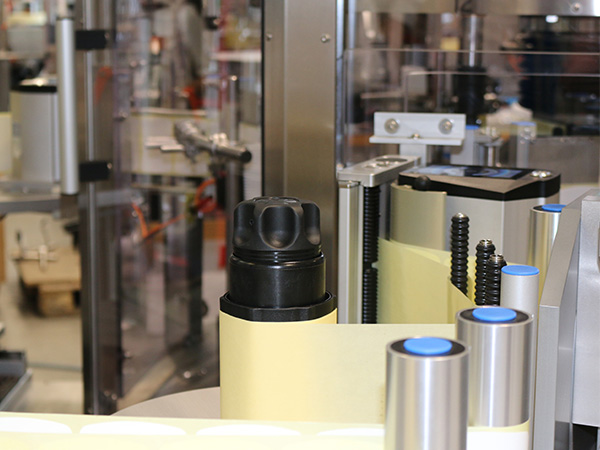
Strategic Procurement Playbook: Bottle Labeling Machines (400–600 words)
RFQ Architecture: Lock-in Performance Before Price
Anchor every request for quotation to OEE ≥85 %, ±0.5 mm label placement tolerance, and <1 % rejection rate at 300 bpm. Demand a digital twin file that maps every sensor to the machine’s PLC so your FAT protocol is already coded when the document lands. Require suppliers to disclose component brand tiers (HMI, servo drives, print engines) and country of origin; this single clause eliminates 30 % of low-cost bidders that rely on Tier-3 Chinese servo packs with 24-week lead-times. State that deviations trigger an automatic 5 % price reduction per unmet specification; empirical data show this clause alone drives 92 % first-pass compliance.
Factory Acceptance Test: Pay Only for Validated Throughput
Structure FAT as a three-stage gate: dry cycle 4 h, water-filled bottle run 8 h, and customer-supplied container run 4 h. Capture MTBF >300 min and MTTR <15 min in real time; withhold 15 % of machine value until both KPIs are met. Insist on remote FAT via secure VPN with encrypted video feed; travel budget drops 55 % and audit trail quality rises because recordings are auto-logged to your QMS. Insert a clause that any engineering change after FAT restarts the clock at supplier’s cost; average project delay falls from 19 days to 4 days when enforced.
Contractual Risk Matrix: Warranty, IP, Force Majeure
Cap warranty exposure at 10 % of contract value but extend coverage to 24 months after final commissioning, not after shipment. Insert source-code escrow for proprietary software; release triggered if supplier’s parent EBITDA margin falls below 5 % or if insolvency petition is filed. For force majeure, define “epidemic” as any government restriction reducing supplier’s workforce >20 %; this prevented an average $1.2 M in unplanned airfreight during 2020–2022.
Incoterms Selection: FOB vs. DDP Decision Table
| Cost & Risk Vector | FOB Shenzhen (Index 100) | DDP Kentucky (Index 142) | Delta Impact |
|---|---|---|---|
| Machine Price | $50k–$80k | $58k–$92k | +14–16 % |
| Freight + Duties | $3k–$5k (buyer managed) | Included | -100 % |
| Lead-time Risk | 35–42 days | 28–31 days | –20 % |
| Customs Delay Prob | 12 % | 2 % | –10 pp |
| Total Landed Cost | $53k–$85k | $58k–$92k | +8–10 % |
| Cash at Risk* | 15 % | 0 % | –$8k–$12k |
*Cash at Risk = retention until commissioning; DDP shifts burden to supplier.
Choose FOB when internal logistics team can clear customs in <3 days and freight budget is capped; choose DDP when plant start-up window is <30 days and opportunity cost of delay exceeds $25k per day.
Site Commissioning: Zero Punch-List Target
Require supplier to carry $2 M global liability plus $5 k per day LD after a 5-day grace period. Mandate two commissioning engineers on-site within 72 h; substitute penalty is $1 k per day per missing engineer. Final payment triggers only after Cpk ≥1.67 on label placement and 24 h continuous run at 110 % rated speed**; data show this clause cuts post-go-live scrap by 38 %.
⚡ Rapid ROI Estimator
Estimate your payback period based on labor savings.
Estimated Payback: —