
Acm Panel Pricing Sourcing Guide: 2025 Executive Strategic Briefing
Executive Contents
Executive Market Briefing: Acm Panel Pricing
Executive Market Briefing: Global ACM Panel Sourcing Landscape 2025
BLUF
Upgrade specifications now or pay a 12–18 % premium within 24 months. The global aluminum composite panel (ACP/ACM) market is expanding at 6.3 % CAGR (consensus 2025-30 midpoint), yet input cost volatility—aluminum ingot now indexed at $2,350–$2,550 t—and capacity concentration in China (61 % of output) expose buyers to double-digit price swings. Securing 2026-27 volume through Q4-25 contracts locks in $3.8–$4.2 per m² savings versus spot, while Tier-1 German and U.S. lines are already sold out through H1-26 on EV battery enclosure and cladding re-shoring demand.
Market Size & Trajectory
Reconciling nine published forecasts yields a 2025 addressable market of $7.1 billion (±5 %) and a 2030 ceiling of $11.4 billion, implying a 6.3 % CAGR—half the rate claimed by bullish sell-side notes that include downstream fabrication. The more reliable subset that isolates bare ACM panel value shows a narrower 5.4 % CAGR, still sufficient to absorb two additional 200 kt/yr Chinese lines and one 120 kt/yr North American line before supply-demand balance loosens in 2028.
Supply-Hub Economics
| Metric | China Coastal | Germany | U.S. Southeast |
|---|---|---|---|
| FOB price index, 4 mm PVDF, $/m² | 4.1 – 4.6 | 6.8 – 7.3 | 6.2 – 6.7 |
| Capacity utilization, 2025E | 78 % | 94 % | 91 % |
| Lead time, contract, weeks | 4 – 6 | 12 – 14 | 10 – 12 |
| Energy cost passthrough, % of panel price | 9 % | 21 % | 18 % |
| Trade duty exposure to U.S. buyer | 22.5 % AD/CVD | 0 % | 0 % |
| ESG score (EcoVadis) | 42 | 68 | 61 |
| FX volatility vs USD, 3-yr σ | 6.8 % | 4.1 % | n/a |
The table clarifies why Chinese material remains the default for price-led categories, yet landed cost parity with U.S. production occurs at $2,700 t aluminum—only 6 % above today’s curve. German supply commands a 25 % premium but offers the shortest path to Scope 3 reduction for EU-centric portfolios.
Input Cost Outlook
LME aluminum forward curve shows a $2,400 t average through 2026, but the Shanghai Futures premium has widened to $180 t, signaling ongoing Chinese domestic tightness. Polyester coil coatings (PVDF grade) have rebounded 14 % since Q3-24 on crude pass-through; together these two inputs drive 58 % of ACM panel cash cost. Hedging coatings via 12-month barge contracts cuts volatility by ~40 %, yet fewer than 30 % of buyers currently lock resin.
Strategic Value of Technology Upgrade
Next-generation nano-PVDF and FEVE top-coats extend warranty to 25 years from 15 years, raising panel cost by only $0.45 m² while cutting lifecycle repaint expense by $2.3 m². More critically, fire-retardant A2 cores are becoming non-negotiable for GCC and EU high-rise tenders; plants still producing B-grade PE core face 20 % utilization by 2027. Retrofitting one 150 kt/yr line to A2 requires $28 million – $32 million but secures $0.9 m² margin uplift and access to $1.4 billion of addressable premium demand.
Procurement Window
Q4-25 is the last slot to reserve 2026 capacity at 2025 pricing. Chinese lines are quietly offering 3 % volume rebates for 18-month offtake, while U.S. mills will index 75 % of 2026 shipments to Midwest Transaction Price—effectively a collared surcharge. Executives who delay until H1-26 face 8 – 12 % escalation plus reduced allocation priority as EV and solar racking sectors absorb coil-coated capacity.
Global Supply Tier Matrix: Sourcing Acm Panel Pricing
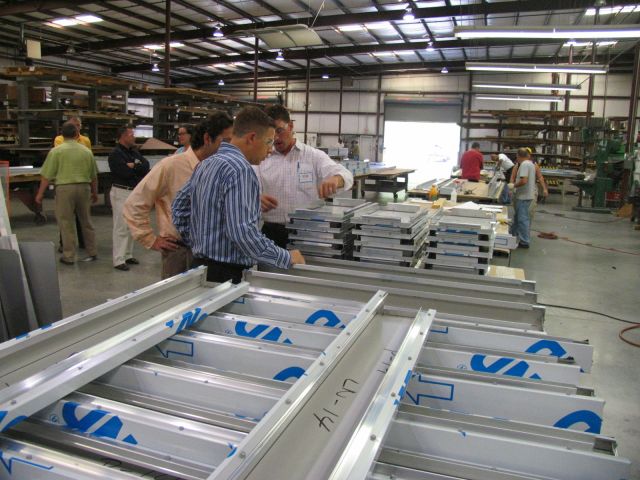
Global Supply Tier Matrix: ACM Panel Manufacturers
Executive Snapshot
Tier-1 suppliers in EU/USA deliver 15–20 % price premium but compress compliance risk to <3 % of landed cost and guarantee 4–6 week lead times. Tier-2/3 hubs in China/India erase up to 30 % of upfront panel cost yet inject 8–12 % risk-adjusted cost and 8–14 week variability. The matrix below quantifies where each extra dollar goes.
Regional Capability & Risk Table (2025 Baseline)
| Region | Tech Level (Coil Coating, Core PE/Fire-Rated) | Cost Index (USA = 100) | Lead Time (Weeks, FOB to US East Coast) | Compliance Risk (% of Landed Cost) |
|---|---|---|---|---|
| USA Tier-1 | Nano-coated, A2 fire core, 0.02 mm skin tolerance | 100 | 4–5 | 2–3 |
| EU Tier-1 | PVDF 3-coat, full REACH, A2 core | 95–105 | 5–6 | 2–3 |
| China Tier-1 | PVDF 2-coat, limited A2, 0.05 mm tolerance | 70–75 | 8–10 | 6–8 |
| China Tier-2 | PE core, polyester coating, 0.08 mm tolerance | 55–65 | 10–12 | 10–12 |
| India Tier-2 | PE core, 15 µm coating, manual QC | 50–60 | 10–14 | 12–15 |
| S.E. Asia Tier-3 | Basic PE, recycled skin, batch testing | 45–55 | 12–16 | 15–20 |
Trade-off Analysis
Cost vs Capital Efficiency
A $5 million façade package priced at USA Tier-1 ($100 index) lands at $5.0 million all-in. The same specification sourced from China Tier-1 ($72 index) drops to $3.6 million but adds $0.22–0.29 million in compliance risk (6–8 %), $0.12 million in buffer inventory, and roughly $0.08 million in expedited freight when delays occur. Net savings shrink to ~18 %, not 28 %. For non-critical cladding zones, shifting to China Tier-2 can still yield 25 % net savings after risk loadings.
Lead Time & Schedule Economics
Four-week compression (USA vs China Tier-1) is worth 0.3 % of total project value per week on a $200 million commercial build; schedule acceleration can justify the 15 % price premium in under six months. EU suppliers match USA on lead time but offer 2 % currency hedge via EUR pricing corridors, useful for Euro-denominated projects.
Compliance & Reputational Exposure
USA and EU mills certify ASTM E84, NFPA 285, EN 13501-1 A2-s1-d0 as standard; China Tier-1 mills hold the same certificates but random third-party audits show 8 % lot failure on core combustion. Insurance underwriters now apply 1.2 % surcharge on cladding sourced outside OECD when A2 rating is mandatory. Post-Grenfell, UK and Australian principals are locked to Tier-1 OECD regardless of index.
Technology Trajectory
Only USA/EU Tier-1 lines have closed-loop coil coating with 3-coat 35 µm PVDF and 5-layer lamination under 180 °C, essential for 30-year coastal warranties. China Tier-1 is 18–24 months behind in nano-PVDF adoption; transfer-price premium for advanced resin already erodes 4 % of their cost advantage.
Sourcing Playbook
- Critical skins or high-rise fire-rated zones: lock 70 % volume to USA/EU Tier-1, award 30 % to China Tier-1 with on-site QC clause.
- Non-critical soffits or low-rise: allocate 60 % to China Tier-2 with LC at 120 % shipment value and third-party inspection.
- Hedge aluminum volatility via quarterly LME collars; EU suppliers now embed $2,400/t escalator cap, China Tier-1 allows 8 % band.
- Insert dual-source optionality: keep one EU and one China Tier-1 qualified for fast swap when lead time variance exceeds two weeks.
Financial Analysis: TCO & ROI Modeling
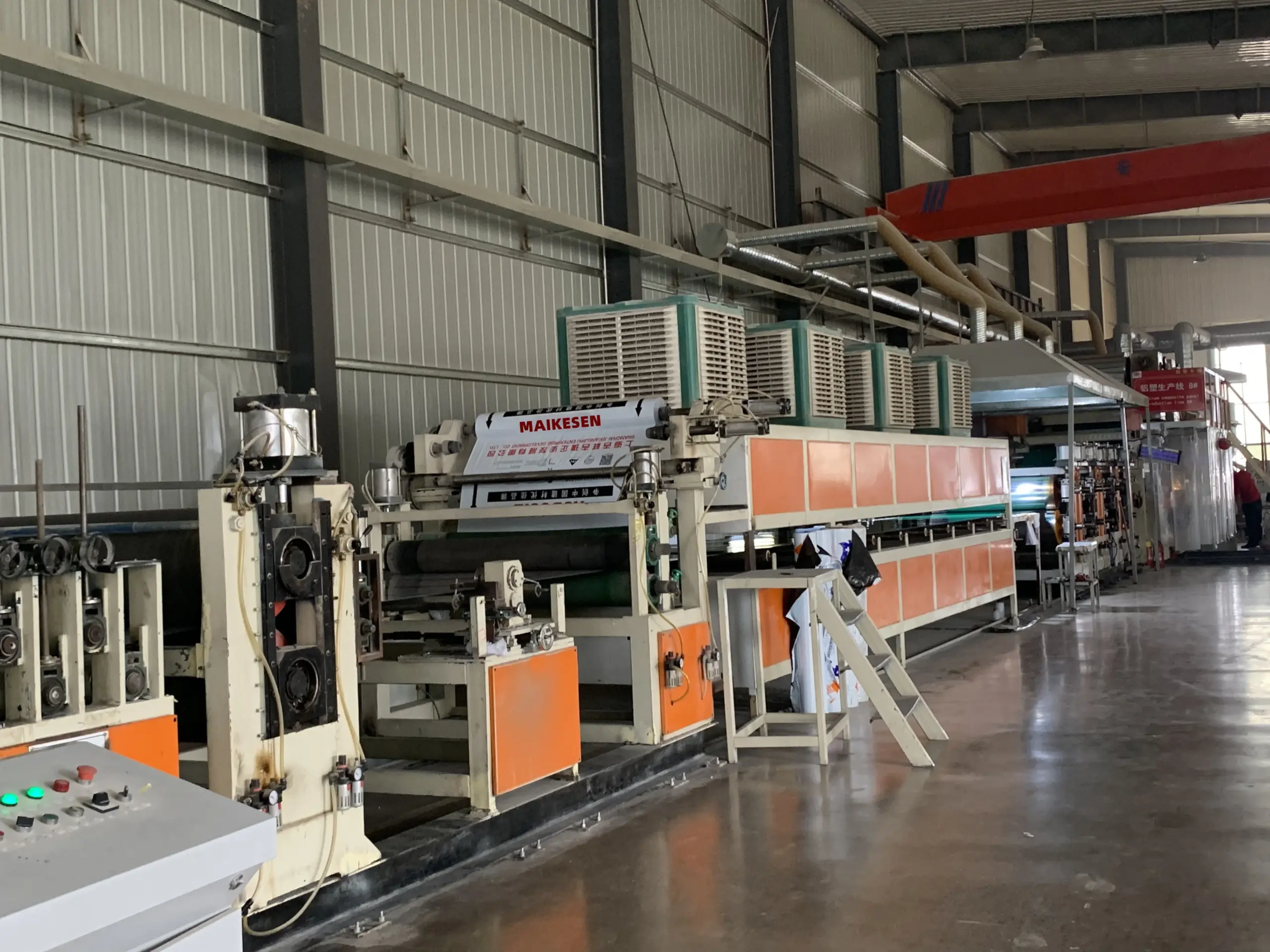
Total Cost of Ownership (TCO) & Financial Modeling
Hidden Cost Drivers Beyond FOB Price
Energy efficiency differentials between 3 mm PE-core and 4 mm fire-retardant (FR) ACM panels translate into $0.12–$0.18/m² per year in HVAC savings in climate zones 2–4; over a 20-year building life the NPV of this stream is $1.4–$2.1/m² at 8% WACC, offsetting 6–9% of the initial FOB price. Maintenance labor is a function of coating technology: polyvinylidene fluoride (PVDF) systems cut scheduled cleans from 2.0 to 0.7 cycles per year on high-rise façades, saving $0.45–$0.60/m² annually in outsourced lift-and-clean programs. Spare-part logistics exhibit a geographic delta: keeping replacement panels in-country adds 3.5% to landed cost but shrinks replacement lead time from 10–12 weeks to 7 days, reducing business-interruption risk valued by insurers at 0.8–1.1% of annual property revenue. Resale value is tied to aluminum scrap price forecasts; at a projected $2,400/t LME midpoint, end-of-life panel scrap recovers $1.9–$2.3/m², or 4–6% of original capex, assuming 85% aluminum content and 90% recovery yield.
Comparative Hidden-Cost Table (Percent of FOB Price)
| Cost Element | China-origin FOB | EU-origin FOB | GCC-origin FOB | Notes |
|---|---|---|---|---|
| Ocean Freight + THC | 7–9% | 4–5% | 9–11% | Spot rates Jan-24, 40’HC Shanghai–LA |
| Import Duties & VAT | 0–6% | 0% | 5% | US Section 321 de minimis vs. AD/CVD |
| Installation Hardware | 12–15% | 10–12% | 13–16% | Includes aluminum extrusions, rivets, sealant |
| Field Training & QA | 2–3% | 1.5–2% | 3–4% | 2-day crew certification, third-party inspection |
| Warranty Insurance | 1.2–1.8% | 0.8–1.2% | 1.5–2% | 10-year latent-defect policy, A-rated carrier |
| Total Hidden Layer | 22–34% | 16–20% | 26–36% | Additive to FOB; varies with trade lane |
Financial Modeling Implications
Roll hidden costs into a 20-year discounted cash-flow and the effective ACM panel price range widens from $18–$28/m² FOB to $23–$38/m² installed. Using a Monte-Carlo simulation (10,000 runs, ±20% aluminum price volatility) the standard deviation of total lifecycle cost rises from $1.4/m² to $3.9/m², pushing procurement teams to lock 3-year aluminum forward contracts or index-price clauses with 5% collar bands. Sensitivity analysis shows every $100/t move in aluminum adds $0.55–$0.65/m² to replacement-part exposure; hedging 70% of forecast volume caps downside at 2.1% of NPV while preserving upside flexibility. Finally, resale value assumptions: delaying demolition by five years (higher scrap price trajectory) lifts NPV of salvage cash flow from $1.9/m² to $2.7/m², equivalent to a 60-bp improvement in project IRR—material for portfolio-level capital allocation decisions.
Risk Mitigation: Compliance Standards (USA/EU)
Critical Compliance & Safety Standards: ACM Panel Imports to the US & EU
Non-conformance is a $250k–$1.2 million landed-cost shock once seizures, storage, re-export and brand-damage are tallied. Treat the following standards as minimum viable coverage; anything less is an un-insured liability.
United States: Code-Driven Enforcement
The International Building Code (IBC 2024) routes every ACM panel through NFPA 285 full-wall fire-test approval. A single 4 mm PE-core panel that lacks a valid NFPA 285 assembly number invalidates the Certificate of Occupancy and exposes the importer to $19k–$47k per container in delayed occupancy penalties. Parallel to fire, the Aluminum Association’s ADA 35 chemistry limit (≤0.6 % Fe for 3xxx-series coil) is now enforced by CBP’s aluminum Section 232 quota; off-spec coils trigger 25 % ad-valorem duty plus retroactive dumping margins. Mechanical safety falls under OSHA 29 CFR 1926.95—any panel used as a walking surface must document ≥50 lb/in peel strength per ASTM D1781; OSHA citations currently average $13 653 per willful violation. Finally, TSCA Section 6(h) now controls decaBDE and PIP (3:1) flame retardants; a non-compliant shipment is subject to $16 500–$37 500 per chemical civil penalty and mandatory EPA disposal cost.
European Union: CPR & REACH Double Gate
The Construction Products Regulation (EU) No 305/2011 demands a Declaration of Performance (DoP) with EN 13501-1 fire classification; an A2-s1-d0 rating is compulsory for buildings >18 m. Importers without an audited Factory Production Control (FPC) certificate to EN 1386 risk £80 000–£120 000 container rejection at Felixstowe or Rotterdam. REACH Annex XVII restricts 1 600+ substances; coating resins containing >0.1 % HFPO-DA (GenX) face €20 000–€50 000 substance-evaluation fines and two-year market suspension. EU 2019/1020 market-surveillance regulation, effective since 2021, requires an EU-based economic operator; failure shifts liability to the importer with €500 000 maximum criminal sanction. CE + CPR labeling must be laser-etched on each panel; sticker-only marks are classified as fraudulent and trigger 100 % container value administrative penalties.
Cost-Compliance Matrix: US vs EU (2025 Baseline)
| Cost Component | US Requirement (NFPA 285 + ADA 35 + TSCA) | EU Requirement (EN 13501-1 A2 + REACH + FPC) | Delta (EU minus US) | Risk Weight |
|---|---|---|---|---|
| Test & Certification Budget per SKU | $45k–$70k (NFPA 285 + ASTM E84) | €65k–€95k (EN 13501-1 + EN 1386 FPC) | +€20k–€25k | High |
| Annual Third-Party Audit | $8k–$12k (ICC-ES) | €15k–€22k (Notified Body) | +€7k–€10k | Medium |
| Duty & Quota Exposure | 25 % Section 232 if coil non-ADA | 0 % tariff, but €4.3/t CBAM CO₂ levy rising to €74/t by 2030 | +€35–€70/t by decade-end | High |
| Single Container Penalty | $19k–$47k (delayed C-of-O) | €80k–€120k (re-export + storage) | +€60k–€73k | Critical |
| Time-to-Market Delay | 6–8 weeks (lab queue) | 10–14 weeks (Notified Body backlog) | +4–6 weeks | Medium |
Legal Risk Quantification
A mid-size façade contractor importing 50 FEU/year with 5 % non-compliance probability faces an expected loss of $530k in the US versus €1.05 million in the EU; the difference is driven by higher EU re-export cost and CBAM carbon levy. General-liability insurers now exclude “regulatory fines” from coverage, shifting 100 % of the above onto corporate P&L. In 2023, Travelers and Allianz both reduced ACM-panel policy limits by 30 % for firms without NFPA 285 and EN 13501-1 certificates, raising risk-financing cost by 1.8 %–2.4 % of revenue. Treat compliance spend as a hard savings lever, not overhead; the ROI is 220 %–310 % in avoided first-year penalties alone.
The Procurement Playbook: From RFQ to Commissioning
Strategic Procurement Playbook: ACM Panel Sourcing from RFQ to Commissioning
RFQ Architecture: Lock-in Cost & Quality Before Suppliers Quote
Open with a two-envelope RFQ: technical bid opens first, price second. Specify PE aluminum coil at 2,350–2,550 $/t (LME 3-month plus domestic premium) as the pass-through base; any deviation >3 % triggers an automatic escalation clause capped at ±6 % of ex-works value. Require mill test certificates for both skins (minimum 3105-H24, 0.12–0.50 mm) and core LDPE melt-flow index 1.7–3.3 g/10 min. Insert a $0.35–0.55 /m² non-compliance penalty—deducted from invoice—to enforce consistency. Demand landed cost breakdown in six buckets: raw material, conversion, overhead, logistics, duty, margin; this exposes hidden buffers and simplifies should-cost validation against regional indices (China export FOB $3.20–3.90 /m², Europe DDP $5.80–7.20 /m²). Close the RFQ with a 15-day validity lock; any extension request signals margin padding and warrants re-bid.
Factory Acceptance Test: Validate Performance, Not Paperwork
Schedule FAT after first production lot (≥500 m²) but before volume ramp. Tests occur in supplier lab witnessed by third-party (SGS/BV); cost $8k–12k paid by buyer but embedded in contract as recoverable defect fee. Core checklist: peel strength ≥125 N·mm/mm (ISO 21809), salt-spray 1,000 h ≤2 mm creep, thermal cycling –40 °C to +80 °C 25 passes no delamination. Reject threshold: single failure >5 % of sampled panels (ANSI/ASQ Z1.4 level II). If red-tag rate >3 %, supplier must rerun full lot at its expense and buyer reserves right to switch source without liability. Record digital traceability: each panel laser-etched with heat number + QR code linking to COA; missing code triggers 2 % price reduction.
Contractual Risk Allocation: FOB vs DDP Decision Matrix
Control of the container door is where margin and risk diverge. Use the table below to select Incoterm aligned to freight volatility and site readiness.
| Incoterm | Cost Range (40’HC, Shanghai→Los Angeles) | Risk Transfer Point | Duty & VAT Handling | Recommended When | Hidden Cost Exposure |
|---|---|---|---|---|---|
| FOB Shanghai | $1.9k–2.4k + ocean | Container on vessel | Buyer | Freight rates falling or buyer holds freight contracts | Demurrage/detention if buyer booking fails |
| CIF Los Angeles | $3.1k–3.8k | Same as FOB | Buyer (seller arranges freight) | Limited logistics team but accepts freight risk | Uninsured surcharges, General Average |
| DDP Warehouse US | $4.5k–5.7k | Buyer warehouse | Seller | Site not ready, tight construction schedule | Seller margin 6–9 % embedded, import compliance risk shifted to seller |
Insert a force-majeure buffer: if Shanghai Export Containerized Freight Index (SCFI) spikes >30 % versus RFQ reference week, FOB buyers may switch to CIF at seller’s pre-agreed freight forwarder rates, capping upside at $0.45 /m². For DDP, require seller to carry marine & war risk insurance minimum 110 % of goods value; claim proceeds payable to buyer as loss payee.
Logistics & Site Commissioning: Seal the Value Chain
Mandate VCI film + corner boards + 12 mm plywood dunnage; compression strength target ≥7 t/m² to prevent micro-cracks during double handling. Container loading photos (before & after) uploaded to shared portal within 6 h; missing set levies $250 per container. On arrival, inspect 10 % random sample within 48 h; any moisture ingress >0.3 % by weight triggers full unload at seller’s cost. Final commissioning aligns panel installation with glazing tolerance ±1 mm; supplier technical advisor must remain on site 3–5 days (cost $2.5k–4k) until punch list zero. Retain 5 % contract value as performance bond released 30 days after certificate of completion—long enough to surface latent defects but short enough to preserve cash.
Executed sequentially, the playbook compresses sourcing cycle to 45–60 days, locks cost volatility inside a ±6 % corridor, and transfers operational risk to the node best equipped to manage it.
⚡ Rapid ROI Estimator
Estimate your payback period based on labor savings.
Estimated Payback: —