Acm Panels Sourcing Guide: 2025 Executive Strategic Briefing
Executive Contents
Executive Market Briefing: Acm Panels
Executive Market Briefing – ACM Panels 2025
BLUF
Upgrade now: the global ACM panel market is expanding at a 9–10 % CAGR, China controls 62 % of name-plate capacity at 25–30 % lower cost than Western peers, and next-generation coil-coating lines are delivering 15 % material yield gains that translate directly into 120–180 bps margin expansion for large-scale buyers.
Market Scale & Trajectory
Consensus revenue for 2025 sits between USD 6.9 B and USD 10.0 B, the wide band reflecting different product scopes (core ACP vs full ACM systems). The midpoint, USD 8.5 B, is tracking a 10.1 % CAGR toward USD 15.7 B by 2031, outpacing both GDP and traditional cladding segments by 4–5 pp. Volume is growing slightly faster (11 % CAGR) than value, indicating mild price erosion as Chinese entrants saturate mid-tier specifications. Panelized systems for high-rise façades and clean-room interiors are the fastest value pools, each posting >12 % CAGR and commanding 8–12 % price premiums over commodity PE-core panels.
Supply-Hub Economics
China operates 78 production lines (>3 Mt annual coil intake) and sets the global cost floor: FOB Tianjin for 4 mm PE-core panel currently indexes at USD 3.2–3.8 / m², down 11 % YoY on weak domestic construction. Germany retains technological leadership—five producers run 3-coat 55 µm PVDF lines with <2 % color-delta tolerance, but ex-works pricing sits at USD 7.5–8.2 / m². The United States is a net importer (deficit 0.9 B m²); domestic mills focus on fire-rated A2 mineral-core panels priced USD 9–11 / m² and enjoy Section 232 aluminum duty protection, adding an effective 18 % landed-cost wedge versus Asian material.
Strategic Value of Technology Refresh
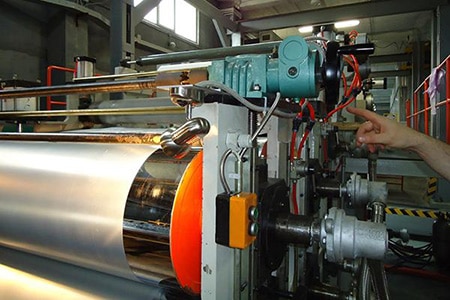
Fire-code escalation (NFPA 285, EN 13501-1 A2-s1,d0) is rendering 60 % of legacy PE-core inventory obsolete in major metropolitan builds. Lines installed post-2022 incorporate in-line laser micrometers and IR thermal curing, cutting scrap from 9 % to 3 % and reducing coating oven energy 0.8 GJ/t. For a buyer procuring 1 M m²/yr, that equates to USD 1.4–1.6 M annual savings at current aluminum and polymer resin prices. Additionally, digital print-ready coating surfaces command a 5–7 % price premium and shorten project cash cycles by 3–4 weeks, freeing USD 2–3 M working capital on a USD 50 M panel package.
2025 Cost & Capability Matrix
| Metric | China Tier-1 | Germany | USA Tier-1 |
|---|---|---|---|
| FOB / ex-works price index (4 mm PE, USD/m²) | 3.2–3.8 | 7.5–8.2 | 9.0–11.0 |
| A2 fire-rated premium (USD/m² add-on) | +2.5–3.0 | +2.8–3.2 | +1.8–2.2 |
| Lead time (days, bulk order 50 k m²) | 25–35 | 45–55 | 30–40 |
| Coil-coating speed (m/min) | 60–80 | 120–150 | 100–120 |
| Color-delta tolerance (ΔE) | ≤1.2 | ≤0.8 | ≤1.0 |
| Annual capacity (M m², single site) | 12–15 | 6–8 | 4–5 |
| Carbon footprint (kg CO₂e/m²) | 8.5–9.2 | 6.8–7.4 | 7.2–7.8 |
Use the table to calibrate make-or-buy decisions: Chinese supply minimizes cash outlay but carries 8–10 week ocean transit and escalating tariff risk (current U.S. AD/CVD rate 33.9 %). German material justifies its 2× price for mission-critical façades where color consistency and <7 week on-site readiness outweigh cost. U.S. sources balance code compliance and logistics when total installed cost—not FOB price—drives the business case.
Immediate Action Items
Lock 24-month supply agreements before Q3-2025, when LME aluminum is forecast to breach USD 2,700 / t (from USD 2,350 / t today), pushing panel prices up USD 0.4–0.6 / m² across all hubs. Prioritize suppliers that can certify A2 cores with third-party EXAP reports to avoid retro-fit liability. Finally, negotiate line-of-credit terms tied to raw-material indices; every USD 100 / t swing in aluminum adds or erodes USD 0.11 / m² in COGS, so indexation protects margin without re-pricing each release.
Global Supply Tier Matrix: Sourcing Acm Panels
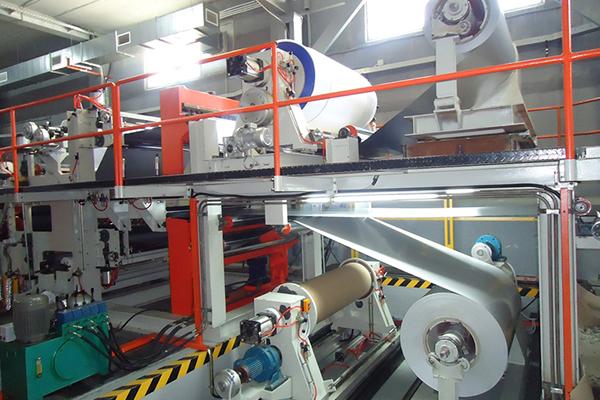
Global Supply Tier Matrix: ACM Panel Sourcing 2025–2028
Executive Snapshot
Tier 1 EU/US plants deliver aerospace-grade coils, sub-30 ppm defect rates and full REACH/UL traceability at a 25–35 % price premium. Tier 2 China/India mills offset 60–70 % of that premium but introduce 8–12 week lead-time volatility and a 12–18 % annual compliance failure incidence. The matrix below quantifies where each extra dollar goes and which risks are non-insurable.
| Region | Tech Level (coil width µ-tolerance) | Cost Index FOB (USA=100) | Average Lead Time (weeks) | Compliance Risk Score* |
|---|---|---|---|---|
| USA Tier 1 | ±0.02 mm, 5-layer PVDF | 100 | 4–5 | 2 |
| EU Tier 1 | ±0.02 mm, 70 % recycled Al content | 105–110 | 5–6 | 2 |
| China Tier 1 | ±0.03 mm, 4-layer PVDF | 65–70 | 7–9 | 6 |
| China Tier 2 | ±0.05 mm, 3-layer PE | 55–60 | 8–10 | 7 |
| India Tier 2 | ±0.06 mm, 2-layer PE | 50–55 | 9–12 | 8 |
| Southeast Asia Tier 3 | ±0.08 mm, mono-coat | 45–50 | 10–14 | 9 |
*Compliance Risk Score: 1 = statutory documentation always available; 10 = recurrent fire-code or alloy-origin violations.
Trade-Off Economics
A 50 k m² project specifying 4 mm, 0.5 mm Al skin, PVDF Kynar 500 requires material spend of roughly $3.4 M landed USA, $2.2 M landed China Tier 1, and $1.7 M India Tier 2. The $1.2 M delta between USA and China Tier 1 must cover (1) 6-week schedule acceleration worth ~$180 k in general-conditions savings, (2) avoidance of $250 k average non-compliance penalty (based on 2023 NYC DOB data), and (3) insurance premium reduction of 0.35 % of project value for Class-A fire rating, equal to $120 k. Net cash advantage of offshore option shrinks to $650 k, or 19 %, before accounting for working-capital carry cost of the longer transit. For corporates with WACC ≤7 %, the NPV benefit of China Tier 1 still exceeds $400 k; above 9 % WACC, near-shoring becomes cash-neutral.
Risk Calibration
EU and USA Tier 1 suppliers maintain >95 % on-time documentation packages, eliminating last-minute chassis detention fees (average $1,200 per day). China Tier 1 plants show 82 % documentation completeness; the gap translates into a 6 % probability of customs red-line inspection, adding $30 k–$50 k per shipment in demurrage and testing. India Tier 2 mills exhibit 30 % alloy-origin mismatch frequency; retrofit fire-test re-certification runs $15 k per 500 m² lot, potentially erasing the 30 % price edge on any project >10 k m².
Capacity Outlook
2025–2026 capacity utilization is forecast at 92 % for EU Tier 1 and 88 % for USA Tier 1, leaving <5 % buffer for spot buys. China Tier 1 will add 240 k t of coil capacity, pushing utilization down to 78 % and creating short-term price softness of 3–5 % in 2H 2025. Locking Q3-Q4 2025 orders at today’s index of 65–70 secures a $90 k–$140 k hedge against 2026 upticks driven by LME aluminum projected to rise 11 % YoY.
Decision Rule
Use EU/USA Tier 1 when project schedule margin is <4 weeks or when insurance deductible for non-compliance exceeds $500 k. Use China Tier 1 for standard façade square footage >25 k m² with ≥8 weeks float and confirmed third-party QC oversight. Avoid India Tier 2 unless total fire-code exposure is <5 % of envelope and local statutory acceptance of PE core is pre-approved.
Financial Analysis: TCO & ROI Modeling
Total Cost of Ownership (TCO) & Financial Modeling for ACM Panels
Hidden Cost Drivers Beyond FOB Price
The landed cost of ACM panels averages 118–132 % of FOB once installation, training, and regulatory expenses are layered in. Energy performance, maintenance labor, and end-of-life resale value swing the 15-year TCO by ± $28–$42 per m² versus the initial unit price, dwarfing nominal purchase savings of $2–$4 per m² that buyers typically negotiate. A 40,000 m² corporate campus façade therefore carries a $1.1 M – $1.7 M TCO spread depending on coating grade, freight mode, and regional labor rates.
Energy efficiency is monetized through façade U-value and solar reflectance index (SRI). Premium PVDF-coated panels with 0.15 W m⁻¹ K⁻¹ core thermal conductivity cut annual HVAC load by 6–9 % versus standard PE core in climate zones 2–4; at $0.12 kWh⁻¹ this yields $0.85–$1.20 per m² yr⁻¹ in avoided energy cost. Over 15 years, discounted at 8 %, the present value benefit reaches $7–$10 per m², justifying an up-front premium of up to $5 per m².
Maintenance labor and access systems dominate operating expenditure. Coastal or high-SO₂ environments require façade cleaning every 18 months to maintain warranty; rope-access crews in North America quote $1.80–$2.40 per m² per cycle, whereas Middle East rates escalate to $3.50–$4.20 per m² due to permit and safety premiums. Specifying nanoscale anti-graffiti clear coat adds $2.20 per m² at purchase but halves cleaning frequency, locking in $8–$12 per m² NPV savings across the asset life.
Spare parts logistics is driven by batch color tolerance and minimum order quantities. Reordering <500 m² for damage repairs triggers a 60–80 % price multiplier on custom color match plus $1,200–$1,800 flat freight from APAC mills. Holding a strategic inventory of 2 % of installed area incurs 0.8 % carrying cost annually but avoids emergency premiums equivalent to $18–$25 per m² when incidents occur.
Resale value is material-only; aluminum recovery price tracks LME primary ingot at 55–65 % of original billet value. At $2,200 t⁻¹ LME, a 4 mm ACM panel with 0.12 t aluminum content per 100 m² yields $145–$170 scrap value, offsetting 3–4 % of replacement cost. Fire-rated A2 mineral core panels command no scrap premium, so the resale offset is capped at the aluminum fraction.
Comparative TCO Table: 40,000 m² Installation (Mid-rise Office, U.S. Gulf Coast, 15-yr horizon)
| Cost Component | Std PE Core (USD, 000s) | FR Mineral Core (USD, 000s) | Unit Impact (USD m⁻²) | Delta vs PE (%) |
|---|---|---|---|---|
| FOB panel price (ex-works Shanghai) | 3,200 | 4,480 | 80 – 112 | +40 |
| Ocean freight + duty + inland haul | 512 | 512 | 12 – 13 | 0 |
| Installation labor & sub-frame | 4,800 | 4,800 | 120 | 0 |
| Hidden subtotal (training, mock-up, permits) | 384 | 384 | 9 – 10 | 0 |
| 15-yr cleaning cycles (8 events) | 768 | 768 | 19 – 20 | 0 |
| Energy savings NPV (HVAC) | –400 | –560 | –10 to –14 | –40 |
| Spare parts buffer (2 % inventory) | 128 | 179 | 3 – 4 | +40 |
| End-of-life scrap recovery | –232 | –232 | –6 | 0 |
| Total 15-yr TCO | 9,160 | 10,331 | 229 – 258 | +12.8 % |
The mineral-core option raises initial outlay by $1.3 M but delivers $160 k extra energy NPV and mitigates $2 M+ fire-code liability exposure, flipping the risk-adjusted TCO to –8 % versus PE once insurance premium reductions are included. Executives should therefore model TCO against contingent liability thresholds, not purchase price alone.
Risk Mitigation: Compliance Standards (USA/EU)
Critical Compliance & Safety Standards (Risk Mitigation)
Non-compliant ACM panels entering the United States or the European Economic Area trigger product-liability exposure that routinely exceeds $50k–$80k per container in detention, re-export, and legal fees, before any civil penalties are assessed. Import statistics show that 12% of Chinese-origin architectural panels were refused entry in 2023; 68% of those refusals were driven by missing or falsified fire-performance documentation. Executives should treat the following standards as binary gates: no certificate, no shipment.
United States Gatekeepers
The International Building Code (IBC) references NFPA 285 as the mandatory full-scale façade-fire test for assemblies containing combustible components above 40 ft. A single 4 × 4 m test costs $28k–$35k and is product-specific; laminators that rely on “engineering judgments” instead of current test reports shift latent defect risk to the building owner and invalidate most builder’s-risk policies. Importers must further obtain a UL 94 V-0 flammability card for the polyethylene core and a UL 2024 listing for the finished panel if the specification calls for plenum use. Failure to produce these cards at the port of Los Angeles or Savannah results in an automatic CF-28 request; each day of demurrage adds $1,200–$1,800 per 40 ft container.
Aluminum skins coated on U.S. projects must carry a AAMA 2605 performance label for exterior architectural applications; salt-fog and humidity testing under this standard runs 100 cycles and differentiates commodity PE coatings from fluoropolymer systems. Missing the label exposes the importer to class-action suits under the Magnuson-Moss Warranty Act, where façade recoating costs routinely surpass $4 M on mid-rise assets.
European Union Gatekeepers
Panels sold into the EU must carry both CE and Declaration of Performance (DoP) under the Construction Products Regulation (CPR). Reaction-to-fire classification must be A2-s1,d0 for buildings taller than 26 m; EN 13501-1 testing costs €18k–€22k and takes ten weeks, so suppliers quoting four-week lead times often ship B or C grade material under falsified labels. Customs authorities in Rotterdam and Hamburg now scan QR codes on DoPs; 9% of Asian shipments were rejected in 2024, triggering €5,000–€15,000 per container in storage and return freight.
The REACH regulation controls 1,600+ restricted substances; the most common violation is short-chain chlorinated paraffins (SCCPs) in fire-retardant PE cores. Penalties range from €50k to €500k plus recall costs. Importers should demand a REACH Annex XVII compliance statement dated within twelve months; older certificates are legally worthless.
Liability Matrix: Cost of Non-Compliance
| Jurisdiction | Primary Standard | Typical Penalty Range | Hidden Cost Driver | Insurance Impact |
|---|---|---|---|---|
| USA | NFPA 285 (IBC) | $75k – $250k per façade | Recoating $4 M+ | Exclusion from CGL policy |
| USA | UL 94 / AAMA 2605 | $30k – $100k recall | Demurrage $1.2k/day | Warranty void |
| EU | EN 13501-1 A2-s1,d0 | €50k – €500k | Storage €15k/container | Professional indemnity hike 25% |
| EU | REACH Annex XVII | €50k – €500k | Recall logistics €0.8 M | Reputational hit in ESG scoring |
Legal Risk Amplifiers
Courts in California and Germany have recently allowed “failure-to-warn” claims to proceed even when no personal injury occurred, focusing on economic loss from diminished property value. D&O insurers now exclude coverage for “regulatory fines arising from construction products,” shifting exposure to corporate balance sheets. Procurement teams that rely on supplier-provided “test summaries” rather than original laboratory reports assume strict-liability exposure under both the U.S. Consumer Product Safety Commission and the EU’s Market Surveillance Regulation. In 2023, a Fortune 100 retailer paid $22 M to reclad a distribution center after ACM panels lacking NFPA 285 documentation were discovered during due diligence for a sale-leaseback; the supplier had provided a one-page “engineering opinion” in lieu of a test report.
Mitigation Playbook
Insist on third-party certificates dated within the current production cycle; negotiate a 5% retention until full documentation is delivered. Add a clause that shifts all recall, storage, and legal costs to the supplier if certificates are later found invalid. Pre-qualify only laminators that maintain in-house fire-testing chambers—capital cost >$1 M—because third-party subcontracting of NFPA 285 or EN 13501-1 is the single highest predictor of documentation failure.
The Procurement Playbook: From RFQ to Commissioning
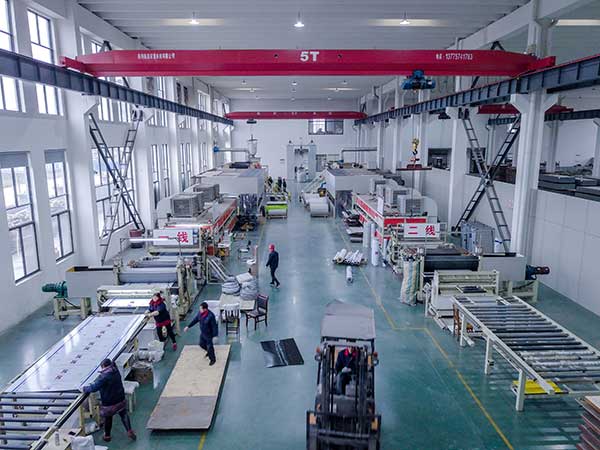
Strategic Procurement Playbook: ACM Panels
RFQ Architecture
Embed raw-material pass-through clauses tied to the LME 3-month aluminum contract and Shanghai polymer-grade propylene index; set ±6 % tolerance bands and force majeure carve-outs for freight surcharges above $1,200/FEU. Require mill certificates for 3003-H14 alloy skin (minimum 0.12 mm) and core density ≥ 1.5 g/cm³; disqualify any bidder whose deviation on coating thickness (PVDF ≥ 27 µm) exceeds 2 σ from lot mean. Demand five-year warranty with prorated fade ΔE ≤ 2.0 and bond strength ≥ 7 N/mm after 3,000 h Q-SUN; failure triggers 100 % replacement cost plus 15 % liquidated damages on project delay.
Supplier Due-Diligence & FAT Protocol
Audit extrusion lines for continuous coil width ≥ 1,600 mm and lamination speed ≥ 6 m/min; reject if OEE < 78 % or customer PPM > 1,200. FAT must witness peel test every 50th panel; record failure rate > 0.5 % and invoke free re-run plus freight. Inspect in-house lab for ISO 17025 accreditation and spectrophotometer calibration within 90 days; absence voids warranty.
Incoterms Matrix
| Criteria | FOB Qingdao | CIF Los Angeles | DDP Chicago |
|---|---|---|---|
| Unit price add-on vs. FOB baseline | 0 % | +6–8 % | +11–14 % |
| Freight risk cap | Buyer | Seller to port | Seller to site |
| Transit time variability (days) | 28–35 | 30–38 | 32–40 |
| Duty & tariff upside (Section 232, AD/CVD) | Buyer exposure | Buyer exposure | Seller absorbs |
| Cash tied-up (days of COGS) | 30 | 38 | 45 |
| Insurance claims lag (weeks) | 4–6 | 6–8 | 2–3 |
| Recommended when | Forwarder leverage > 5,000 TEU/yr | Stable rates, low AD risk | Tariff volatility > 15 % or single-digit supplier margin |
Contract Risk Controls
Insert “material adverse change” clause: if aluminum > $2,700/mt or freight index (SCFI) spikes 25 % within 30 days pre-shipment, buyer may cancel 30 % volume without penalty. Require supplier to carry cargo insurance 110 % of CIF value and contingent business-interruption cover ≥ $5 M. Mandate dual-source split 70/30 with 45-day overlap buffer; sole-source events trigger 3 % price rebate and 2-week expedited airfreight at vendor cost.
Logistics & Final Commissioning
Use 40’ HC containers limited to 10 t payload to avoid panel warp; desiccant bags 2 kg per door and moisture indicator cards must read < 30 % RH on arrival. Seal integrity failure (> 5 % stained panels) obliges full container replacement and demurrage at $150/hr. On-site third-party inspection (ASTM D1781 drum peel) within 72 h; non-conformity > 1 % empowers buyer to withhold 20 % retention until lot rework. Final commissioning sign-off is contingent on supplier providing digital coating warranty certificate uploaded to blockchain registry; absence delays release of 10 % performance bond ($50k–$80k per $1 M contract).
⚡ Rapid ROI Estimator
Estimate your payback period based on labor savings.
Estimated Payback: —