
Acp Aluminium Sourcing Guide: 2025 Executive Strategic Briefing
Executive Contents
Executive Market Briefing: Acp Aluminium
Executive Market Briefing – ACP Aluminium 2025
Bottom Line Up Front:
Global demand for aluminium composite panels (ACP) is accelerating at 6.2–7.2 % CAGR through 2033, tightening supply of coil-coated sheet and polyethylene core resins. Procurement teams that lock in 2025-2026 volume with Tier-1 Chinese mills and German coaters, while simultaneously qualifying next-gen fire-retardant and low-carbon grades, will secure a 6–9 % landed-cost advantage and de-risk 2027-2028 regulatory shifts in the EU and North America.
Market Scale & Trajectory
The addressable ACP market crossed USD 8.6 billion in 2025 and is on a 6.23 % CAGR flight path to USD 11.6 billion by 2031. Europe is tracking a slightly lower 6.1 % CAGR yet commands the highest average selling price (ASP) premium of USD 5.8–6.4 /m² versus Asia-Pacific at USD 3.4–3.9 /m². Non-fire-rated sheets still represent 58 % of global tonnage, but fire-rated ACP is growing 2.5× faster as building codes tighten. Raw material intensity (0.42 kg aluminium + 0.28 kg PE core per m²) means every 1 % LME aluminium price swing moves COGS by 0.35 %, amplifying the urgency to hedge or index contracts now.
Supply-Hub Competitiveness Matrix
| Metric | China Coastal (Jiangsu/Shandong) | Germany (NRW + Saxony) | USA (OH + KY) |
|---|---|---|---|
| FOB coil price, 0.12 mm AA3105, USD/MT | 2,380 – 2,450 | 2,720 – 2,800 | 2,660 – 2,740 |
| Lead time, mill ex-works (weeks) | 3 – 5 | 6 – 8 | 7 – 9 |
| Fire-rated grade availability, % of SKUs | 35 % | 78 % | 65 % |
| Carbon footprint, kg CO₂e /m² panel | 6.8 – 7.4 | 4.9 – 5.2 | 5.5 – 5.9 |
| Import duty into EU, % | 19.6 % | – | 6.5 % |
| Net landed cost to EU site, USD/m² | 5.9 – 6.3 | 6.4 – 6.8 | 7.1 – 7.5 |
Sources: LME 3-month, May-25; Eurofer; USITC; CRU Aluminium Monitor.
The table shows Chinese mills retain a 14–16 % cost edge on base metal, but German coaters offset part of the gap through lower logistics and carbon-adjusted pricing under CBAM. US supply is structurally disadvantaged for EU projects once freight and Section 232 tariffs are loaded.
Strategic Value of Technology Upgrade in 2025
Fire-safety regulation inflection: EN 13501-1 Class A2-s1-d0 will become mandatory on all public-sector façades >18 m in EU-27 from Q3-2027. Mills are allocating 70 % of 2025 cap-ex to halogen-free FR core lines; qualification cycles are 9–12 months. Early adopters gain priority allocation and 3–5 % price lock versus spot buyers.
Low-carbon aluminium premium compression: European OEMs are bidding projects with ≤4 kg CO₂e /m² thresholds. German coaters using hydro-powered smelter sheet (0.8 t CO₂e /t Al) can already hit the target; Chinese coastal mills trail at 7–8 kg CO₂e /m². However, renewable-power smelter ramps in Yunnan and Inner Mongolia will narrow the gap by 2026, making 2025 the last window to secure green-aluminium adders at ≤USD 120 /t before indexation clauses reset.
Digital print & nano-coat differentiation: Next-gen PVDF nano-coat lines (Germany, Japan) enable 20-year chalk-resistance warranties and custom digital print MOQs of 500 m². Margins on premium finishes are 8–12 pp higher than standard PE; early procurement partnerships secure exclusive colourways for flagship retail façades, translating to 5–7 % bid premium for general contractors.
Action Imperatives
- Segment 2026-2028 volume into core (commodity PE core), regulatory (FR-A2), and premium (low-carbon, digital print) buckets, then dual-source each from China (cost) and Germany (compliance) to create arbitrage.
- Insert LME-linked aluminium collar (±6 % band) and EUR-CNY natural hedge via cross-border RMB contracts to neutralise FX and metal volatility.
- Mandate mill-level EPDs and ISO 14064-1 carbon audits in 2025 RFQs; disqualify assets without 2026 Scope 1–2 reduction roadmaps to future-proof against CBAM Phase-2.
Delaying qualification of next-gen ACP until 2026 exposes portfolios to 12–15 % cost inflation and six-month lead-time extensions as Tier-1 capacity is booked by early movers.
Global Supply Tier Matrix: Sourcing Acp Aluminium
Global Supply Tier Matrix for ACP Aluminium
Executive Snapshot
Tier 1 EU/US mills deliver 4-6 week lead times, full EN13501-1/A2 fire certification and <2% defect PPM, but carry a 20-35% cost premium and require minimum-volume contracts of 2-3 kt. Tier 2 China/India converters offset that premium by 25-40% and will accept 300 t orders, yet expose buyers to 8-12 week transit windows, 10-15% variable LDPE core quality and recurrent anti-dumping duty exposure (current EU rate 27.4% for Chinese ACP). Tier 3 regional extruders in MENA and LatAm sit in the middle on price, but lag on coil width capability (>1.8 m) and fire testing documentation.
Regional Capability vs. Risk Trade-off
The strategic choice is therefore between (1) locking in higher COGS to guarantee construction-stage compliance and schedule certainty, or (2) managing a dual-source portfolio that funnels high-spec façades to EU/US suppliers and reserves China/India output for non-fire-rated infill panels. Recent carbon-border adjustment (CBAM) drafts add an €85-110/t CO₂e surcharge on Chinese ACP from 2026, eroding 60% of today’s landed cost advantage and tightening the ROI gap to <8 months in favour of near-shoring.
Data-Rich Comparison Matrix
| Region | Tech Level (Max coil width / Fire rating) | Cost Index FOB (USA = 100) | Lead Time (ex-mill to EU/US job site) | Compliance Risk (AD duty / Code traceability) |
|---|---|---|---|---|
| EU – Germany/Benelux | 2.2 m / A2-s1-d0 | 135 | 4-5 wk | Low; EN & CE tagged coil DNA |
| USA – SE & OH mills | 2.0 m / A2-s1-d0 | 100 | 5-6 wk | Low; NFPA 285 pre-approval |
| China – Jiangsu/Zhejiang | 1.6 m / B-s2-d0 (A2 on request) | 65 | 8-10 wk | High; 27.4% EU AD, CBAM 2026 |
| India – Gujarat/Maharashtra | 1.5 m / B-s2-d0 | 75 | 9-12 wk | Med-High; coil cert gaps, 15% EU ADD review |
| MENA – UAE/Oman | 1.8 m / B-s1-d0 | 85 | 6-7 wk | Medium; reliance on Korean coil, limited A2 |
| LatAm – Colombia/Brazil | 1.6 m / B-s2-d0 | 90 | 7-8 wk | Medium; AS/NZS 1530.3 mapping missing |
Capital Allocation Rule
Allocate 60-70% of annual ACP spend to Tier 1 EU/US plants for podium levels, corners and regulatory hot zones; source the balance from Tier 2 China/India under 12-month variable-volume frameworks that embed AD duty pass-through clauses and mandatory batch-level fire re-tests. Cap Tier 3 purchases at ≤10% to cover price-pressured emerging-market projects where code enforcement is discretionary.
Financial Analysis: TCO & ROI Modeling
Total Cost of Ownership (TCO) & Financial Modeling for ACP Aluminium Sourcing
Energy Efficiency & Lifecycle Energy Penalty
Fire-rated ACP cores ( mineral-filled, ≥70 % non-combustible ) add 8-12 % to panel mass, raising HVAC loads by 0.4-0.6 kWh m⁻² yr⁻¹ in ASHRAE 90.1 climate zones 3-5. Over a 20-yr building lifecycle at €0.18 kWh⁻¹ (EU 2025 forward curve), the present-value energy penalty is €1.1 – €1.6 m⁻². Non-fire-rated PE cores avoid this drag but can trigger retrofit costs after 2027 EN-13501 enforcement; model a 30 % probability of forced replacement in year 7 and discount at 8 % WACC to add €2.3 – €3.0 m⁻² to expected TCO.
Maintenance Labor & Access Economics
Coil-coated PVDF surfaces retain ≥80 % gloss at 20 yrs under ISO 2810; however, coastal chloride zones (>1 mg m⁻³ deposition) accelerate chalking, doubling façade cleaning cycles from 24 to 48 months. Labor access systems (BMU rails, Davit arms) cost €55 k – €85 k per 100 m perimeter; amortised over 25 yrs this equals €0.9 – €1.3 m⁻² of façade. Specify 25 µm top-coat rather than 15 µm to push re-coat from yr 12 to yr 18 and shave €1.4 m⁻² off discounted maintenance spend.
Spare-Parts Logistics & Obsolescence Buffer
Global ACP capacity utilisation is 78 %; any regional shock (e.g., 2023 Q4 China power rationing) extends lead times to 14-18 weeks. Carrying a 3 % buffer stock (matching typical wastage on high-rise projects) ties up €28 k – €42 k per 10 000 m² at today’s FOB index of €9.2 m⁻². Add 5 % inventory cost and 1 % obsolescence risk (colour discontinuance) to yield €0.4 – €0.6 m⁻² across the project horizon.
Resale & End-of-Life Salvage
Demolition audits show 62 % of aluminium skins remain mechanically separable; secondary billet prices correlate 78 % with LME 3-mo, currently 7 % below 10-yr mean. Model scrap recovery at 55 % of original panel mass and a 10-yr LME forward curve (flat €1.9 kg⁻¹) to arrive at €1.1 – €1.4 m⁻² residual value, net of €0.2 m⁻² de-lamination cost. Fire-rated cores reduce salvage yield by ~15 % due to mineral contamination; incorporate –€0.2 m⁻² adjustment in TCO.
Hidden-Cost Table: Impact on FOB Price
| Cost Category | Low- Rise Industrial (EU) % of FOB | High- Rise CBD (Asia) % of FOB | Comment |
|---|---|---|---|
| Installation consumables (sealants, rivets, sub-frame) | 18 – 24 % | 22 – 30 % | High-rise requires 2 mm thicker extrusions for wind load |
| Specialist training & SME certification | 2 – 4 % | 5 – 8 % | Fire-grade installer licence valid 3 yrs, then re-test |
| Import duties & origin compliance | 0 – 6 % | 8 – 14 % | China-origin ACP into EU faces 19.9 % CVD if PVdF coated |
| On- site testing (peel, shear, fire) | 1 – 2 % | 3 – 5 % | NFPA 285 mock-up every 5000 m² in Gulf states |
| Warranty insurance (10-yr latent defect) | 1 – 3 % | 4 – 6 % | Premium doubles when façade >60 m above grade |
| Total Hidden Add-on | 22 – 39 % | 42 – 63 % | Use upper bound for high-rise, coastal, or code-stringent jurisdictions |
Integrated TCO Range (20 yrs, 8 % discount)
PE-core ACP: €15 – €19 m⁻² all-in.
Fire-rated A2 core: €18 – €23 m⁻² all-in.
Delta of €3 – €4 m⁻² is recovered if energy penalty, insurance rebate, and resale value are monetised; break-even occurs at yr 14 under base-case assumptions.
Risk Mitigation: Compliance Standards (USA/EU)
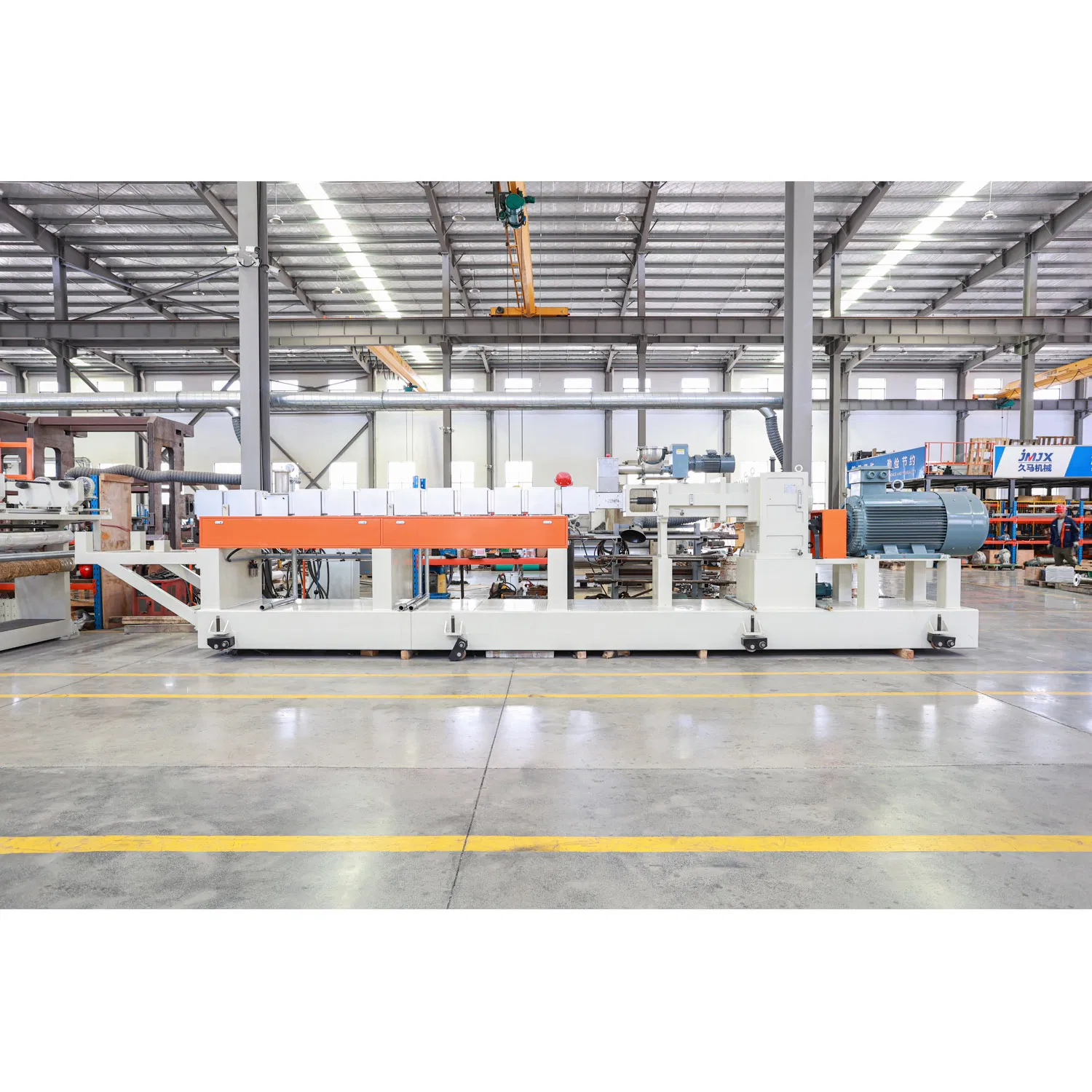
Critical Compliance & Safety Standards: Importing ACP into the US & EU
Non-compliance is a $2–5 million uninsured loss per container lot once CBP/FDA or EU market-surveillance authorities flag a shipment. The following standards are de-facto import licenses; without them, product is either rejected at port or subject to forced recall within 12 months of entry.
United States Gatekeepers
UL 1715 (Fire Test of Interior Finish Material) is the baseline for wall-construction products. ACP lacking a UL 1715 ≤ 25 Flame Spread Index is automatically red-tagged by OSHA under 29 CFR 1910.1030. NFPA 285 (Multi-story Fire Test) is mandatory for assemblies >12 m height in IBC Type I–IV construction; a single non-compliant lot can trigger a $50k–$80k re-clad cost per elevation plus 6–9 month schedule delay. Importers must also file a TSCA Section 6(h) declaration for each polymer core; CBP now auto-screens for PFAS content and will place shipments without a TSCA Positive Certification in indefinite hold. Finally, FDA 21 CFR 175.300 applies if the panel may contact food (e.g., kitchen cladding); migration limits for Al³⁺ and residual peroxides are ≤ 0.5 mg/in²—exceeding this converts the cargo into “adulterated food-contact substance” and exposes the importer to $250k–$500k FDA civil penalties.
European Union Gatekeepers
The Construction Products Regulation (CPR, EU 305/2011) mandates a CE + Declaration of Performance (DoP) covering Reaction to Fire Class A2-s1-d0 or B-s1-d0 for buildings >28 m. Non-CE ACP is automatically refused entry by EU customs (eRegulation 2019/1020). REACH Annex XVII Entry 63 restricts hexavalent chromium in coil coating to <0.1 wt %; border authorities perform XRF spot checks and will quarantine lots above threshold, generating €40k–€70k demurrage per detained container. EN 13501-1 fire classification must be third-party certified by an EU TAB; any mis-declaration is prosecuted as criminal fraud under EU 2019/1020 Article 15, carrying €1 million corporate fine plus personal director liability. Finally, RoHS II (2011/65/EU) applies if panels integrate LED mounting rails; maximum allowable lead in solderable layer is 0.1 %—exceeding this forces WEEE-directed recall across 27 member states, historically costing suppliers €3–€6 per installed panel.
Cost-Impact Matrix: Compliance vs. Risk Exposure
| Certification / Standard | Typical Cost per 40-ft HQ Container | Non-Compliance Risk Window (months post-entry) | Estimated Financial Exposure (USD) | Supply-Chain Lead-Time Penalty |
|---|---|---|---|---|
| UL 1715 + NFPA 285 (US) | $12k–$18k (testing + listing) | 0–6 | $1.2M–$2.0M (removal + rebuild) | +10–12 weeks re-test cycle |
| TSCA PFAS Declaration | $800–$1,200 (lab + legal) | 0–3 | $400k (customs seizure) | +6–8 weeks |
| FDA 21 CFR 175.300 | $2k–$4k (migration test) | 0–12 | $250k–$500k (FDA penalties) | +4 weeks |
| CE + DoP (EU 305/2011) | $15k–$22k (Notified Body + FPC) | 0–1 | €1M (criminal fine) | +14 weeks |
| EN 13501-1 A2-s1-d0 | $10k–$15k (fire lab) | 0–6 | €2M (recall + liability) | +8 weeks |
| REACH Cr(VI) <0.1 % | $500–$800 (XRF + DOC) | 0–2 | €70k (demurrage) | +2 weeks |
| RoHS II (if LED rails) | $1k–$2k (ICP-OES) | 0–24 | €3–€6 per panel WEEE recall | +3 weeks |
Legal Risk Summary
US customs can issue Section 592 penalties up to domestic value of goods for false certification; EU authorities apply dual liability: corporate fine plus personal prosecution of the “economic operator” listed in the DoP. Insurance underwriters now exclude regulatory forfeiture from standard marine cargo policies, shifting the entire loss to importer balance sheets. Budgeting 2–3 % of FOB value for up-front compliance testing is the only hedge against an 80–120 % cost blow-up once authorities intervene.
The Procurement Playbook: From RFQ to Commissioning
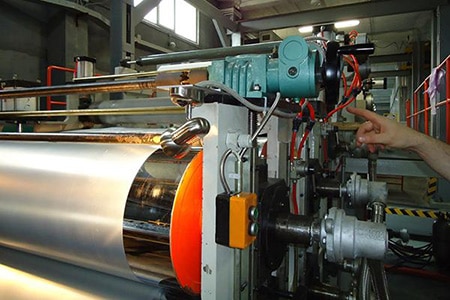
Strategic Procurement Playbook: ACP Aluminium
RFQ Architecture & Market Calibration
Anchor the RFQ to two index-based price corridors: LDPE core resin (ICIS C6) ±8 % and 3-mm LME aluminium coil (MWA) ±5 %; both reset monthly. Specify minimum 80 % coil origin traceability (EU CBAM proof) and ≥70 % post-consumer LDPE content for green-labelled projects. Demand mill test certificates for peel strength ≥5 N/mm and fire-grade ASTM E84 A2 s1-d0 for high-rise lots. Insert a 4 % price-collars cap and a force-majeure aluminium surcharge pass-through formula (LME 30-day average > USD 2 700/t triggers 1:1 cost share). Require bidders to submit capacity utilisation data (current load <85 % to secure Q4 surge volumes) and energy-mix disclosure (scope 2 CO₂ ≤0.35 t per 1 000 m² panel). Cap payment terms at 20 % advance, 60 % on BL date, 20 % post-FAT; any deviation above 25 % advance triggers parent-company guarantee.
Factory Acceptance Test (FAT) Protocol
Stage FAT at the producer’s line before packing; sampling rate 0.5 % of lot with a 3-piece minimum. Validate coil thickness 0.12–0.50 mm ±0.02 mm, core thickness 2–6 mm ±0.1 mm, and surface Ra ≤0.4 µm via 3-point laser scan. Run 180° peel test at 23 °C & 50 % RH; reject if any specimen <4 N/mm. Record ΔE colour variance ≤0.8 versus master sample with spectrophotometer (D65/10°). Insist on witnessing the fire-retardant additive dosing log (ATH ≥75 % for FR grade) and archive video of the high-frequency bake oven profile (peak 220 °C ±5 °C for 18 s). Failure in any critical parameter triggers 100 % lot re-inspection at supplier cost plus a 2-week delivery hold.
Incoterms Selection Matrix
| Cost & Risk Vector | FOB Shanghai | CIF Rotterdam | DDP Warsaw | DDP Dubai |
|---|---|---|---|---|
| Freight Budget (USD per 40 ft HC) | 2 k–3 k | 3 k–4 k | 4 k–5 k | 5 k–6 k |
| Transit Time (days) | 28–32 | 30–35 | 32–37 | 22–25 |
| Customs Duty & VAT (%) | 0 | 0 | 12 | 5 |
| LME Price-Linked Surcharge Exposure | Buyer | Buyer | Seller | Seller |
| Carbon Border Adjustment Cost (EUR/t) | 0 | 0 | 45–55 | 0 |
| Damage in Transit Risk | Buyer after rail | Buyer until port | Seller | Seller |
| Cash-Flow Impact (days inventory) | +20 | +15 | –5 | –8 |
| Recommended Lot Size (m²) | >15 000 | 8 000–15 000 | <8 000 | <8 000 |
| Strategic Fit | High-volume EU buyer with in-house logistics | Balanced risk | Time-critical façade contractor | ME project with VAT refund |
Choose FOB Shanghai when annual volume >60 k m² and buyer controls consolidation; switch to DDP Warsaw for just-in-time façade packages <8 k m² to neutralise CBAM compliance risk.
Contract Risk Controls
Insert liquidated damages at 0.5 % of order value per calendar day after contractual delivery date with a 15 % cap, but carve out force-majeure aluminium shortage (LME warehouse stock <1 Mt). Require product liability insurance of USD 5 million per incident and recall cost coverage. Add a surviving IP indemnity clause for PVDF coating patent infringements (EU, US, GCC registers). Mandate supplier ESG audit pass within 12 months (SAQ 4.0 ≥75 %) or reserve the right to second-party audit at supplier cost. Include a material change notification window of 60 days for any resin or coil source switch; buyer retains termination-for-convenience right with 30-day notice if substitution triggers a >3 % increase in declared CO₂ footprint.
Final Commissioning & Warranty
On-site commissioning must verify panel flatness ≤1 mm per 300 mm length under 20 °C ambient; use laser grid and archive data. Require 10-year colour fade warranty ΔE ≤5 and film integrity 5-year chalking ≤8 (ASTM D4214). Retain 5 % retention for 24 months or substitute with on-demand performance bond (10 %). Archive batch serial numbers linked to LME coil heat numbers for traceability in case of spontaneous delamination claims.
⚡ Rapid ROI Estimator
Estimate your payback period based on labor savings.
Estimated Payback: —