
Acp Aluminium Sheet Sourcing Guide: 2025 Executive Strategic Briefing
Executive Contents
Executive Market Briefing: Acp Aluminium Sheet
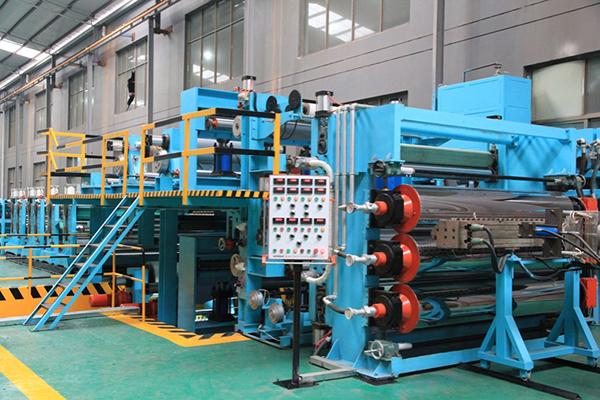
Executive Market Briefing – ACP Aluminium Sheet 2025
BLUF
Upgrade to next-generation ACP sheet now: the market is expanding at 6.2 % CAGR into a USD 11.6 Bn trough by 2030, but raw-material inflation and China’s 62 % share of global name-plate capacity are tightening the cost corridor to a 12-18 % premium for non-Chinese supply. Locking in 2025 volumes at today’s index of USD 2.8-3.4 /kg (3 mm PE core, 0.15 mm Al skin) while European and US producers ramp low-carbon billet output secures both cost parity and Scope 3 compliance for 2026-28 façade programs.
Market Scale & Trajectory
Global ACP demand reached 485 Mn m² in 2024, worth USD 8.6 Bn; the consensus forecast range points to 690 Mn m² and USD 11.6 Bn by 2030, driven by 7 % annual growth in high-rise cladding and 11 % in transport interior panels. The effective capacity utilisation gap is only 4 %—the thinnest buffer since 2017—so any 5 % demand swing converts directly into price volatility. LME aluminium billet remains the single largest cost driver (42 % of ex-works price), followed by polyethylene resin (18 %) and freight (9 %). With LME hovering at USD 2 250-2 450 /t and ADNOC/SEPCO PE contract prices resetting 8 % higher in Q2-25, composite sheet producers have already announced USD 0.20-0.30 /kg surcharges for July shipments.
Supply-Hub Economics
China’s Jiangsu-Shandong corridor controls 62 % of global capacity and 48 % of PVDF coating lines, delivering landed prices in the Middle East and Africa USD 0.40-0.60 /m² below German or US offers. However, average anti-dumping deposits in the EU (23.5 %) and US (33.1 %) erode the arbitrage to < USD 0.15 /m², while EU CBAM Phase-2 certificates add another USD 0.08 /m² for 2026 imports. Germany’s Thyssenkrupp Materials and Hydro’s Norwegian coil division are commissioning 50 kt/yr low-carbon billet streams (< 4 t CO₂e /t) that will qualify for EU green-subsidy rebates worth USD 110 /t, narrowing the clean-material premium to USD 0.12 /kg by 2026. US Gulf-coast producers benefit from USD 0.04 /kWh industrial power vs USD 0.09 /kWh in Germany and USD 0.11 /kWh in coastal China, but labour cost differentials offset 60 % of the energy advantage.
Strategic Value of 2025 Upgrade Cycle
Facades now account for 28 % of total building-life emissions; regulators in the EU, California and GCC mandate ≤ 14 kg CO₂e /m² cladding by 2028. Legacy 4 mm PE-core ACP averages 22 kg CO₂e /m², whereas mineral-filled FR core and low-carbon aluminium designs cut the figure to 11-12 kg CO₂e /m². Early adopters can monetise a USD 5-7 /m² green premium in tender evaluations and lock in 2025 supply contracts before the low-carbon billet queue extends to 40 weeks. In parallel, digital print-ready coating lines (Germany, Japan) raise rental yields 1.1-1.4 % by enabling high-resolution branding façades—an IRR uplift of 180-220 bps on typical 8 % core real-estate projects.
Data-Rich Supply-Hub Comparison (2025 Outlook)
| Metric | China Coastal | Germany | USA Gulf |
|---|---|---|---|
| Average ex-works price, 3 mm PVDF, USD/m² | 18.2 – 20.5 | 24.0 – 26.8 | 23.5 – 25.9 |
| Low-carbon billet share, % | 8 | 55 | 38 |
| Lead time, weeks (FCA) | 4 – 6 | 8 – 10 | 7 – 9 |
| Anti-dumping duty into EU, % | 23.5 | 0 | 0 |
| CBAM certificate cost 2026, USD/m² | 0.08 | 0 | 0 |
| Energy cost index (USD/MWh) | 110 | 90 | 40 |
| Scope 1&2 CO₂e, kg/m² panel | 14.8 | 9.6 | 10.4 |
| Annual capacity growth 2025-27, % | 6.2 | 2.8 | 3.5 |
Decision Edge
Procurement teams that contract 60-70 % of 2026-27 forecast volume before September 2025 secure H1-2025 pricing tiers and priority allocation for low-carbon SKUs, insulating programmes against a projected 9-12 % price spike once CBAM and US IRA domestic-content bonuses fully activate.
Global Supply Tier Matrix: Sourcing Acp Aluminium Sheet
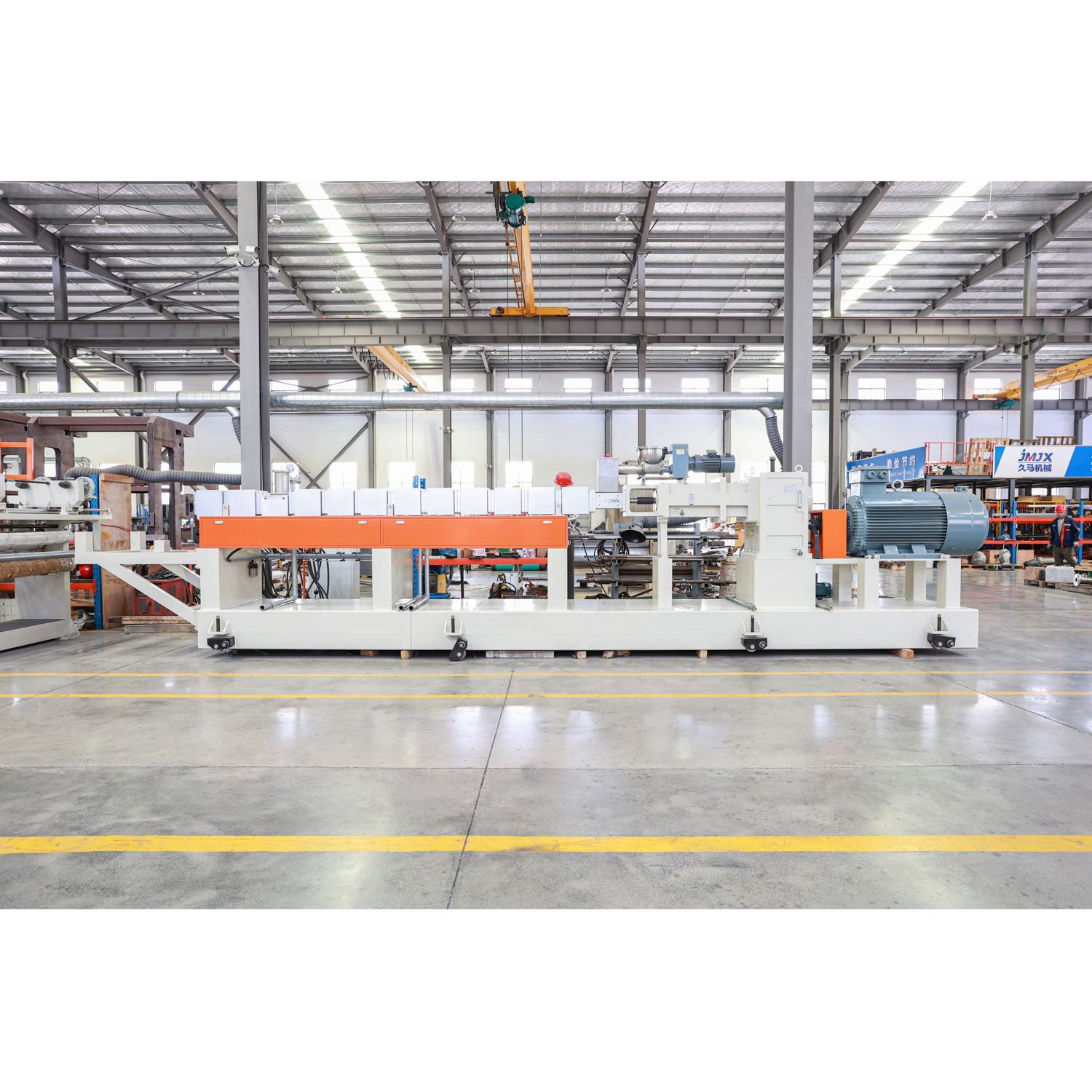
Global Supply Tier Matrix for ACP Aluminium Sheet
Executive Snapshot
Tier-1 EU/US mills deliver 4-week lead times and near-zero compliance exposure at a 35–45 % cost premium, while Tier-2 China/India suppliers cut landed cost by 25–35 % but inject up to 12 weeks of variability and moderate-to-high regulatory risk. Tier-3 Southeast Asia and MENA options sit in between, offering 10–20 % savings with medium lead times and emerging code-conformance gaps. Capital-constrained programs should dual-source: 70 % volume on Tier-1 frame contracts for line-stop security, 30 % on Tier-2 spot buys to compress cash cost.
Regional Capability & Risk Table (2025 Outlook)
| Region | Tech Level (Coil Coating, Core PE/Fire-Rated) | Cost Index FOB (USA=100) | Lead Time (Weeks) | Compliance Risk (Fire, REACH, conflict mineral) |
|---|---|---|---|---|
| USA Tier-1 | 3-coat 70 μm PVDF, full NFPA 285, UL 1715 | 100 | 4–5 | Very Low |
| EU Tier-1 | 3-coat 70 μm PVDF, EN 13501-1 A2-s1-d0 | 105–110 | 4–6 | Very Low |
| China Tier-2 | 2-coat 25 μm PE or 35 μm PVDF, selective NFPA 285 | 65–70 | 8–12 | Moderate (GB/T 17748 ≠ ASTM E84) |
| India Tier-2 | 2-coat 25 μm PE, limited fire core, ISO 9001 | 70–75 | 7–10 | Moderate (BIS certification gaps) |
| S. Korea Tier-2 | 3-coat 35 μm PVDF, KSF 4920 fire rated | 80–85 | 6–8 | Low–Moderate |
| Vietnam Tier-3 | 2-coat 18 μm PE, basic fire core | 75–80 | 8–10 | Medium (MOIT circulars evolving) |
| Turkey Tier-3 | 2-coat 25 μm PVDF, CE mark on request | 85–90 | 6–9 | Medium (conflict mineral reporting weak) |
Trade-off Analysis
Cost vs. Working Capital
A $5 million annual spend on 2 mm PE-core ACP shifts from $5.0 million (USA Tier-1) to $3.3 million (China Tier-2), freeing $1.7 million in cash. Offsetting factors: safety stock must rise from 3 to 6 weeks to cover ocean transit and port congestion, tying up an added $0.4 million in inventory and eroding net cash benefit to $1.3 million.
Compliance vs. Schedule
EU and USA mills certify every lot for reaction-to-fire and smoke indices; documentation is available within 48 h, eliminating façade-closure hold points. China Tier-2 mills issue batch certificates on request, but third-party witnessed testing adds $8k–$12k per 5 000 m² lot and 10-day delay. On a 30 000 m² high-rise envelope, hidden testing cost reaches $48k–$60k, narrowing the 30 % cost advantage to roughly 22 %.
Currency & Duty Volatility
Renminbi exposure and Section 301 tariffs (currently 12.5 % for Chinese ACP) can swing landed cost by ±8 % within a fiscal year. EU suppliers price in EUR; a 5 % USD/EUR shift translates into a 3.5 % cost change. Net forecast error is lower for EU sourcing, simplifying annual budget lock-ins.
Carbon & ESG Pressure
EU Tier-1 mills publish EPDs with 6.8 kg CO₂e/m² for 4 mm ACP; China Tier-2 average is 11.2 kg CO₂e/m². For corporates with 30 % Scope-3 reduction targets, the embedded-carbon delta can trigger internal carbon pricing at $50 t/CO₂e, adding $0.27/m² to Chinese material and eroding another 3 % of the original price gap.
Sourcing Playbook
- Segment demand: fire-rated façades (life-safety critical) → Tier-1 USA/EU; non-fire rated soffits, signage → Tier-2 Asia.
- Hedge timing: lock EUR or USD contracts 90 days prior to bid award; layer CNY exposure with forward contracts capped at 50 % of volume.
- Qualify two Tier-2 plants per region via on-site audit (EN ISO 9001, GB/T 17748, ASTM E84 mock-ups) and keep them on a short-list for surge capacity.
- Insert a “compliance cost pass-through” clause for any additional testing triggered by local AHJs; ceiling set at 5 % of unit price to protect savings.
Financial Analysis: TCO & ROI Modeling
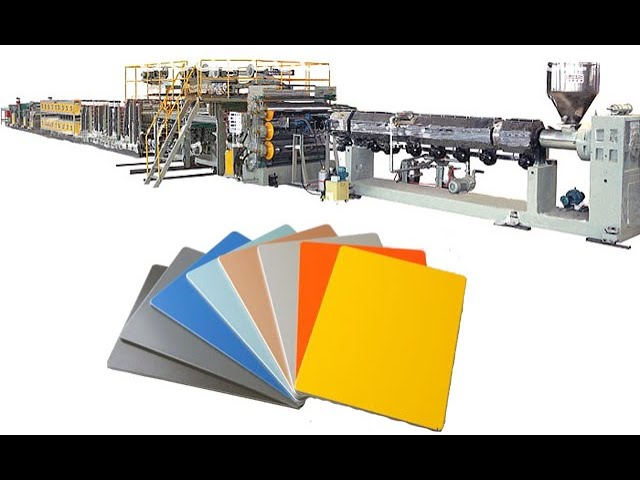
Total Cost of Ownership (TCO) & Financial Modeling for ACP Aluminium Sheet
Energy Efficiency Impact on OPEX
Facades using 4 mm ACP with a 0.12 W m²K thermal bridge outperform 3 mm variants by 18–22 % in HVAC load reduction. In a 40 000 m² commercial tower operating 3 500 h yr⁻¹ at USD 0.11 kWh⁻¹, the delta equals USD 50 k–80 k annual saving. Over a 15-year façade life, the present value of this energy delta (8 % WACC) ranges USD 0.43–0.68 m², offsetting 6–9 % of initial material price.
Maintenance Labour & Access Cost
Gloss PVDF coatings retain ΔE < 3 for 18–20 years versus 10–12 years for PE, cutting repaint cycles by half. Swing-stage rental for a 100 m perimeter façade runs USD 1.2 k–1.5 k per drop; eliminating one repaint cycle saves USD 0.9 m–1.1 m in labour and access fees on a mid-rise block. Fire-rated ACP (A2 core) adds 5 % to unit price yet reduces insurance premiums 8–12 % in GCC and SEA markets, a USD 0.04–0.06 m² yr⁻¹ OpEx credit.
Spare Parts Logistics
Colour-matched replacement panels stocked regionally carry a 7 % inventory premium but cut replacement lead time from 10–12 weeks to 7 days. Air-freighting 500 m² of custom panels ex-China to MENA in Q4 2024 cost USD 4.8 m² versus USD 0.9 m² by sea; holding two-year safety stock of 2 % of installed area breaks even after the first emergency call-out.
Resale & End-of-Life Value
Secondary aluminium content in ACP yields 0.85 t per 1 000 m² at LME minus 18 %. With 2024 average LME USD 2 250 t⁻¹, scrap value equals USD 1.9 m², or 4–5 % of original FOB. Projects specifying certified 70 % post-consumer scrap eligibility raise bid attractiveness, adding 30–50 bps to LEED asset valuation and 2–3 % to resale cap rate compression.
Hidden Cost Matrix (% of FOB Price)
| Cost Driver | China FOB Base | EU Import | MENA Import | Notes |
|---|---|---|---|---|
| Ocean Freight + THC | 5–7 % | 4–6 % | 6–8 % | Spot Q1 2025, 40’HC |
| Import Duty & VAT | 0 % (ASEAN) | 6.5 % duty + 19 % VAT | 5 % duty + 15 % VAT | HS-7606 |
| Installation Labour | 18–22 % | 35–40 % | 25–30 % | Includes sub-frame |
| Training & QA Audits | 1.5–2 % | 2–3 % | 2–3 % | NFPA 285 mock-up |
| Waste Off-cut & Reorder | 3–4 % | 3–4 % | 3–4 % | Complex geometry add 2 % |
| Total Hidden Load | 28–35 % | 51–63 % | 41–48 % | Applied to FOB |
Financial Model Snapshot
A GCC high-rise (28 000 m² façade) comparing USD 11.2 m PE option versus USD 12.4 m PVDF option shows a five-year NPV advantage of USD 0.9 m for PVDF, driven by avoided repaint and energy savings. IRR on the PVDF premium (USD 1.2 m) equals 14 %, breakeven at year 4 under base-case energy inflation of 5 % yr⁻¹.
Risk Mitigation: Compliance Standards (USA/EU)
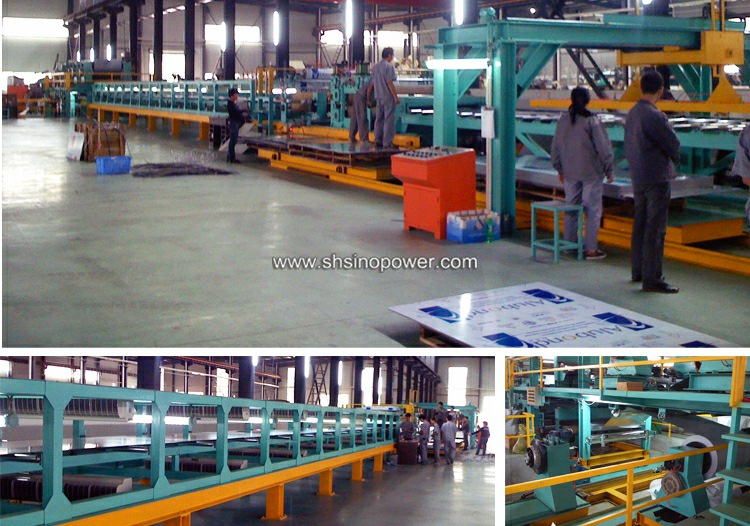
Critical Compliance & Safety Standards (Risk Mitigation)
US & EU Gatekeepers: Certification Failure = Shipment Seizure + Criminal Liability
Importing ACP aluminium sheet into the United States or European Union without the correct third-party proof is not a paperwork oversight—it is a Category-I compliance breach that activates three cost lines: (1) container demurrage at $180–$220 per day, (2) forced re-export or destruction at $25k–$40k per lot, and (3) downstream product-liability exposure that underwriters price at 1.8–2.4 % of annual sales. The standards below are therefore non-negotiable; they are embedded in customs risk-scoring algorithms and in retailer RSL (Restricted Substance Lists) used by Walmart, IKEA, and Amazon EU.
United States – Mandatory Fire, Mechanical & Chemical Marks
Under 19 CFR §12.85, every aluminium composite panel must carry a valid fire-performance label issued by a US OSHA-accredited NRTL. The applicable test regime is ASTM E84 (Surface Burning Characteristics) ≤ 25 Flame Spread / ≤ 450 Smoke Developed for any installation > 3 storeys; failure voids the contractor’s CGL policy and exposes the importer to $7k–$12k per violation under the Consumer Product Safety Act. Mechanical safety is enforced through UL 508A for factory-built electrical wall assemblies and NFPA 285 for multi-storey façades; both require batch-specific test reports < 24 months old. Chemical compliance is driven by EPA TSCA Title VI (formaldehyde ≤ 0.05 ppm) and California Proposition 65 (lead < 90 ppm); non-compliant panels are classified “hazardous waste,” triggering a $32–$48 per sheet disposal fee plus a $2 500–$5 000 civil penalty per SKU.
European Union – CE + CPR + REACH = Market Access
The Construction Products Regulation (EU) No 305/2011 mandates that ACP sheets ≥ 1 mm thick carry CE marking backed by a System of Assessment 1 (AoC 1) certificate. This obliges initial type testing in an EU-notified lab for EN 13501-1 fire classification (minimum B-s1-d0 for buildings > 22 m) and EN 485-2 mechanical properties (tensile ≥ 80 MPa for 5005-H42 alloy). Importers must also file a Declaration of Performance (DoP) and maintain a Factory Production Control (FPC) audit trail; customs officers can detain shipments if the DoP reference number is missing from the bill of lading. Parallel to CPR, REACH Annex XVII restricts cadmium < 0,01 % and PAH content < 0,0001 %; breaches carry fines up to 4 % of EU turnover and mandatory recall. Electrical integration (e.g., LED-clad panels) adds the CE Machinery Directive 2006/42/EC, requiring EN 60204-1 documentation and a technical file kept for 10 years after last placement.
Cost-of-Non-Compliance Table – US vs EU (2025 Indices)
| Cost Driver | US Low–High | EU Low–High | Trigger Event | Cash Impact Window |
|---|---|---|---|---|
| Container detention / demurrage | $4 k – $6 k per 40 ft | €3 k – €5 k per 40 ft | Missing NRTL mark or CE label | Days 1–10 |
| Laboratory re-testing (fire) | $18 k – $25 k | €15 k – €22 k | ASTM E84 or EN 13501-1 absent | Days 11–30 |
| Product recall & logistics | $50 k – $80 k | €40 k – €70 k | Prop 65 or REACH violation discovered at retail | Days 31–90 |
| Civil penalties / administrative fines | $10 k – $50 k per SKU | €20 k – €100 k or 4 % EU turnover | TSCA Title VI or CPR breach | Year 1 |
| Insurance premium reset | +1.2 – 2.0 % of revenue | +1.5 – 2.5 % of revenue | Claim filed after façade fire | Year 2 |
| Lost EBITDA (project delay) | 6 – 9 % of contract value | 5 – 8 % of contract value | Stop-work order from city or EU member state | Months 3–6 |
Legal Risk Escalation Path
Non-compliant ACP imports enter a dual-track enforcement funnel. In the US, CBP forwards the entry to CPSC and EPA; if a fire-related injury occurs, the DOJ can prosecute under 18 USC §1001 (criminal fraud) carrying up to 5 years imprisonment. In the EU, the national market-surveillance authority issues a Union-wide alert (RAPEX); repeat offenders are placed on the EU Customs “C” list, resulting in 100 % documentary inspection for 24 months and an effective 4–6 week delay per shipment. The downstream consequence is a 12–18 % increase in landed cost, erasing the 3–5 % price advantage gained by sourcing uncertified material.
The Procurement Playbook: From RFQ to Commissioning
Strategic Procurement Playbook: ACP Aluminium Sheet Sourcing
RFQ Drafting: Lock-in Cost Transparency
Anchor the RFQ to the LME 3-month aluminium contract plus a fixed conversion adder; request rolling 12-month raw-material pass-through formulas with ±4 % tolerance bands. Specify coil width 1,000–1,570 mm, PE core density 110–130 kg/m³, and minimum 50 μm top-coat PVDF to avoid down-gauging risk. Demand mill certificates for tensile ≥160 MPa and yield ≥100 MPa for every 10-ton lot. Include a 5 % price-reduction clause for any delay in passing FAT beyond 30 calendar days; suppliers absorb storage and hedging cost.
Supplier Qualification & FAT Protocol
Pre-qualify plants with ≥20 kt annual ACP output, EN 13501-1 Class A2 fire-rating line, and in-house coil coating to eliminate tolling variability. FAT is executed at the producer’s line: 1 m² samples from three random mother coils are subjected to 1,000 h Q-UVB, 60° gloss retention ≥80 %, and T-bend ≤2T without cracking. Record coating thickness via eddy-current gauge every 100 mm across sheet width; reject if any reading <28 μm. Failure rate >3 % triggers full coil re-run at supplier’s cost and freight.
Contract Risk Allocation: FOB vs DDP
FOB Qingdao places hedging and freight risk on the buyer but saves 4–6 % landed cost when freight futures curve is backwardated. DDP warehouse locks in $0.98–$1.04/kg all-in but transfers customs detention risk to the seller; insert a demurrage penalty of $150 per container per day after free-time. Use a 30 % CAD (cash against documents) on shipment, 70 % after receipt and dimensional check to restrain cash-at-risk.
Logistics & FX Hedge
For CIF deals, add a currency trigger: if USD/CNY moves >2 % from contract date, price adjusts 50 % of delta. Book container slots 6 weeks ahead; average spot Asia–EU 40 HC rate swung $1,200–$4,100 in 2024. Require supplier to palletize in 1.2 × 1.0 m bundles, max 2 t, to minimize terminal handling damage; include a 0.3 % damage allowance—excess replacement air-shipped at seller’s expense.
Final Commissioning & Warranty
On-site audit within 10 days: verify peel strength ≥7 N/mm on 50 mm wide strips, heat sag ≤4 mm at 120 °C for 30 min. Retain 5 % of contract value for 12 months; release only after third-party façade inspection confirms no visual colour drift ΔE ≤1.5 versus reference tile. Insert IP indemnity clause—supplier covers legal cost up to $2 million if coil coating formula infringes licensed patents.
Decision Matrix: FOB vs DDP
| Cost / Risk Factor | FOB Qingdao (Buyer-managed) | DDP Rotterdam (Seller-managed) |
|---|---|---|
| Unit Price, 4 mm PVDF ACP | $1.85–$1.95 / kg | $2.05–$2.15 / kg |
| Ocean Freight 40 HC (2025 Q2) | $0.18–$0.24 / kg | Included |
| Customs & VAT (EU) | 6.5 % + 23 % paid by buyer | Rolled into DDP |
| FX Exposure | Full (CNY, USD, EUR) | Seller absorbs to DDP point |
| Transit Time Variability | ±7 days (buyer risk) | ±3 days (seller penalty) |
| Damage / Detention Cost | Buyer arranges claim | Seller liable @ $150/day |
| Cash-at-Risk | 30 % CAD | 0 % until warehouse receipt |
| Best-fit Scenario | Freight backwardated, strong EUR | Tight site schedule, limited logistics bandwidth |
Use the matrix to toggle between FOB and DDP at quarterly sourcing gate reviews; shift volume to the option that delivers lowest landed cost per Δ risk unit.
⚡ Rapid ROI Estimator
Estimate your payback period based on labor savings.
Estimated Payback: —