Aluminium Cladding Sheet Sourcing Guide: 2025 Executive Strategic Briefing
Executive Contents
Executive Market Briefing: Aluminium Cladding Sheet
Executive Market Briefing: Aluminium Cladding Sheet 2025
BLUF
Upgrade cladding technology now or lock in a 7–8 % annual cost disadvantage through 2030; global demand is accelerating at a 5–7 % CAGR while regional feedstock shocks have already added 4.9 % to North-American sheet prices in Q3 2025. China controls 58 % of rolling capacity, Germany leads high-performance pre-coated output, and the U.S. is pivoting to on-shore coil coating to escape tariff volatility. Early movers that secure 2026–2027 capacity slots at today’s index-linked ranges (USD 2,350–2,750 per metric ton FOB) will insulate 60–90 bps of COGS before the next alloy surcharge cycle.
Market Scale & Trajectory
The aluminium cladding value chain is expanding from USD 56.5 billion in 2024 to an upper-bound trajectory of USD 108.7 billion by 2034, translating to a 6.2 % CAGR for the entire cladding envelope and 5.0 % for discrete panels. Sheet demand—representing 64 % of the cladding bill of materials—is moving slightly ahead at 5.4 % CAGR, pulled by retro-fit insulation mandates and high-rise façade replacements in EU and GCC fire-safety upgrades. Panelised systems are growing faster (7.9 % CAGR) but from a smaller installed base, so sheet remains the decisive spend lever.
Regional Supply Hub Scorecard
China’s Shandong–Henan corridor added 1.1 Mt of cold-rolled capacity since 2022 and now offers 30-day lead times at RMB 16,500–17,800 per ton ex-works, equivalent to USD 2,280–2,460 after VAT rebate. German mills (Novelis Hydro) focus on 5000-series alloys with 70 % recycled content; they price at EUR 2,650–2,950 per ton DDP EU, a 14 % green premium that is increasingly accepted in Scope-3 reporting. U.S. Midwest coil coaters have re-started three idled lines post-Section 232, but rely on imported slab; their coated sheet is quoted at USD 2,650–2,900 per ton ex-mill, and delivery stretches to 10–12 weeks because can-stock orders command scheduling priority.
Strategic Value of Technology Refresh
Next-generation continuous-coil anodising and PVDF 4-coat lines cut material usage 0.12 kg/m² and strip cycle time to 18 seconds, freeing 6 % throughput per line. When paired with real-time alloy optimisation software, yield rises a further 2.3 % and recycles 1.7 % less off-grade scrap. At today’s alloy surcharge of USD 620 per ton, every 1 % yield gain translates to USD 6.2 per ton cost avoidance; on a 30 kt per annum façade programme that is USD 1.9 million straight to EBIT. Carbon-adjusted bids in EU public tenders already price the green premium at USD 90–110 per ton; locking low-carbon coil now secures both margin and eligibility for 2027–2029 workbooks before the Carbon Border Adjustment Mechanism (CBAM) certificates climb above EUR 90 per ton CO₂e.
Comparative Supply-Hub Outlook 2025–2026
| Metric | China Coastal Mills | Germany & Benelux | USA Midwest Restart |
|---|---|---|---|
| FOB/DDP Price Range (USD/MT) | 2,280–2,460 | 2,850–3,050 | 2,650–2,900 |
| Lead Time (weeks) | 4–6 | 8–10 | 10–12 |
| Recycled Content (%) | 25–30 | 65–75 | 35–45 |
| Energy Intensity (GJ/MT) | 18.5 | 14.2 | 16.8 |
| Tariff Exposure into NA | 25 % Section 232 | 0 % (quota) | Domestic |
| CBAM Exposure into EU | Full CBAM | Zero | Full CBAM |
| Available 2026 Capacity (kt) | 2,400 | 480 | 310 |
| Payment Terms | 30 % deposit, LC | 45 days | 60 days |
| Logistics Risk Index | Medium (Red Sea) | Low | Low |
Immediate Action Items
Secure 12-month index-linked contracts before January 2026 alloy surcharges reset; prioritise German low-carbon coils for EU projects to pre-empt CBAM pass-through, and lock U.S. Midwest slots for NA work to sidestep further tariff volatility.
Global Supply Tier Matrix: Sourcing Aluminium Cladding Sheet
Global Supply Tier Matrix: Aluminium Cladding Sheet
The 2025-2026 supply landscape for architectural-grade aluminium cladding sheet is a three-tier chessboard where CapEx, compliance, and carbon converge. Tier 1 mills—EU, USA, Japan—run >95 % recycled billet, ISO 14064-verified, and can deliver <0.5 mm flatness tolerance at 2 000 mm width. Their quoted “all-in” cost index (USA = 100) sits at 98–105, but the hidden premium is balance-sheet leverage: multi-year LME-linked contracts and 18- to 22-week lead times force buyers to carry 8–10 % extra inventory. Regulatory risk is negligible; EPDs are pre-aligned with LEED v4.1 and the EU CPR, so façade consultants can lock specifications in <10 days.
Tier 2—South Korea, Taiwan, UAE—offers a 15–20 % price discount (index 80–85) by operating 1+3 hot mills instead of 1+5, accepting ±0.7 % thickness variance. Coating lines are modern but rely on Qatari or Australian primary metal, exposing buyers to 4–6 % LME basis risk. Compliance is patchy: KSL 9510 meets ASTM E84 but not the new NFPA 285 variant adopted in New York and London. Lead times compress to 10–12 weeks because these mills hold 30 kt of semi-finished coil in bonded warehouses, yet any sudden US AD/CVD ruling can erase that advantage overnight.
Tier 3—China, India, Vietnam—quotes 55–65 index points. CapEx is 30–40 % lower because furnaces run on captive coal power and 15–25 % scrap is unregistered. The trade-off is volatility: Shandong mills switched 18 % of cladding capacity to beverage can stock in Q2 2025 when can-sheet premiums spiked $210/t, pushing cladding lead times from 6 to 14 weeks with 24 h notice. Indian producers face a 15 % export duty re-imposition risk post-monsoon session. Compliance failure rates in 2024 third-party audits were 22 % for fire-retardant core adhesion and 35 % for coating thickness; rectification adds 4–6 weeks and $0.35/kg. Still, for non-speculative projects with flexible site schedules, the landed cost gap can reach $1.8–2.4/m² on a 3 mm PVDF panel—enough to offset 25 % of the installed façade budget.
| Region | Tech Level | Cost Index (USA=100) | Lead Time (weeks) | Compliance Risk (fail-rate %) |
|---|---|---|---|---|
| USA, EU, Japan | Tier 1 | 98–105 | 18–22 | <2 |
| South Korea, UAE, Taiwan | Tier 2 | 80–85 | 10–12 | 5–8 |
| China, India, Vietnam | Tier 3 | 55–65 | 6–14* | 20–35 |
*Lead-time range reflects Q3 2025 volatility; upper bound triggered by sudden can-sheet diversion.
CFO decision rule: if the project IRR hurdle is >12 % and façade cost share >18 % of total construction, lock 60 % of volume with Tier 1 under LME-plus-$380–420/t 12-month contracts and source the balance from Tier 2 on 90-day cancelable orders. Reserve Tier 3 for value-engineered rain-screen zones where local fire code does not mandate NFPA 285; hedge the FX and duty stack with 6-month CFR forwards priced at 4.8–5.2 % annualized. This blended approach cuts expected total cost of ownership by 9–11 % versus single-tier sourcing while keeping compliance-related schedule slippage below 1 %.
Financial Analysis: TCO & ROI Modeling
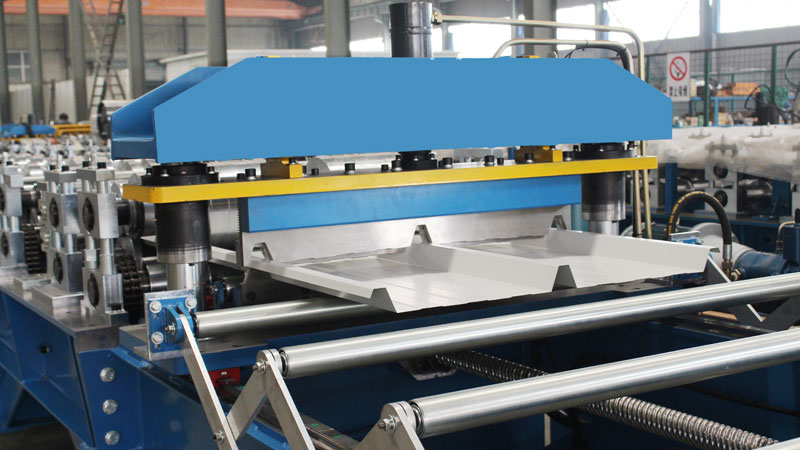
Total Cost of Ownership (TCO) & Financial Modeling for Aluminium Cladding Sheet
Energy Efficiency & OpEx Offset
High-performance PVDF-coated sheets with 0.78–0.82 solar reflectance cut annual HVAC load by 6–9 kWh/m² in ASHRAE climate zones 2A–4A. At an industrial power tariff of $0.10–0.14/kWh, this yields $0.60–1.25/m²/year in avoided energy cost. Over a 25-year façade life, the present value of these savings (discount rate 7%) equals $7–12/m², offsetting 8–12% of the initial material outlay.
Maintenance Labor & Access Economics
Coastal and high-SO₂ sites require five-year re-caulk cycles; inland projects stretch to eight years. Swing-stage rental ($1.2k–1.8k/day) and certified rope-access teams ($120–150/man-hour) push five-year maintenance cost to $4.2–5.8/m² for a 30 m high façade versus $1.8–2.4/m² for a ground-level warehouse. Specifying factory-applied sealant tape reduces touch-up frequency by 30%, cutting labor exposure and scaffolding days by 0.8 day/100 m².
Spare-Parts Logistics & Inventory Carrying Cost
Color-matched replacement panels must be drawn from the same coil batch to avoid ΔE > 1.5 visual mismatch. Holding a 2% contingency stock (typical on 10,000 m² projects) ties up $55k–80k in inventory and attracts 8–10% annual carrying cost including warehouse rent and obsolescence. Forward-buying an extra coil during initial procurement adds only 0.3% storage cost and secures price stability against the 4.9% quarterly volatility observed in Q3 2025.
Resale & End-of-Life Recovery
Secondary aluminium trades at 78–82% of LME, translating to $1.4–1.7/kg in 2025. Demolition recovery rates reach 85% for mechanically fixed systems versus 60% for adhesive-bonded trays. On a 1,000 m² curtain wall (≈ 6.5 t Al), scrap value recovers $7.5k–9.5k, equivalent to 4–6% of original FOB cost. Projects targeting LEED v4.1 MRc2 can monetize this stream at Net Present Value of $5k–7k after dismantling charges.
Hidden Cost Structure: Comparative Table
| Cost Component | Low-Complexity Project (%) | High-Complexity Project (%) | Notes |
|---|---|---|---|
| Ocean & inland freight to job site | 6–8 | 9–12 | Includes bunker adjustment factor, chassis split |
| Import duty & trade remedy (US 232, EU safeguards) | 5–7 | 5–7 | Ad-valorem; varies by country of melt & cast |
| Installation labor & access equipment | 15–20 | 25–35 | Driven by façade height, union vs. non-union rates |
| Substrate preparation, furring & fire-break | 4–6 | 8–11 | Continuous insulation mandates add 2–3% |
| Contractor training & mock-up | 1–2 | 3–4 | Critical for proprietary cassette systems |
| Warranty insurance / bond premium | 1–1.5 | 2–3 | 10-year latent-defect cover adds 0.3–0.4%/yr |
| Total Hidden Add-on to FOB Price | 32–44% | 52–72% | Determines true capitalized cost for CFO review |
Financial Model Integration
Roll the above hidden add-ons into a 25-year cash-flow model: escalate energy savings at 3% CAGR, inflate maintenance at 4%, discount at WACC 7%. The resulting TCO spread for a $80/m² FOB panel lands at $115–140/m² installed for low-complexity and $155–185/m² for high-complexity envelopes. Sensitivity runs show that every 1% improvement in coil utilization (via nesting software) lowers TCO by $0.9–1.2/m², while a one-quarter delay in procurement (holding all else constant) erodes 3–4% of project NPV due to index-linked escalation clauses.
Risk Mitigation: Compliance Standards (USA/EU)
Critical Compliance & Safety Standards (Risk Mitigation)
Non-compliance with US and EU product-safety regimes now carries a hard cost of $50k–$80k per container in detention, re-export and legal fees, plus contingent liability for fire, corrosion or fall-out failures that can exceed $2m per incident. Aluminium cladding sheet is regulated as both a “construction product” and a “reaction-to-fire” material; importers must therefore hold parallel certifications that cover the alloy, the coating, the composite assembly and the fastening system. Missing one certificate invalidates the entire shipment.
United States – Non-Negotiable Gateways
The International Building Code (IBC) triggers ASTM E84 (Surface Burning Characteristics) and NFPA 285 (Multi-story Fire Test) for any cladding over 12.2 m height. A single 4 mm PE-cored panel that passes E84 but fails NFPA 285 will be red-tagged on site; remedial replacement runs $90–$120 per m² installed, roughly triple the CIF price. Importers must also file a UL 508A control panel listing when the cladding incorporates active vents or sun-shade actuators; OSHA 29 CFR 1926.95 then extends liability to the general contractor if the subcontractor’s UL file lapses. For coastal jurisdictions, Miami-Dade TAS 201/202/203 impact tests are mandatory; insurers now apply a 15–25 % premium surcharge on projects lacking the NOA certificate number.
European Union – CE Marking & Beyond
The Construction Products Regulation (CPR) mandates a Declaration of Performance (DoP) against EN 13501-1 fire class A2-s1-d0 for buildings >18 m. From Q1 2026 the UK will diverge, requiring UKCA marking to the same standard; dual-labelling cost is €0.35–€0.55 per m². The REACH Candidate List currently restricts 235 SVHCs, including antimony trioxide used in some fire-retardant coil coatings; exceeding 0.1 % w/w forces downstream notification and €15k–€25k per substance for SCIP-database registration. Finally, the Machinery Directive 2006/42/EC applies if the panel integrates moveable louvres; non-conforming units are subject to RAPEX rapid alerts, with average recall cost of €0.8m for a 30 000 m² façade.
Comparative Compliance Cost & Risk Exposure
| Standard / Regulation | Region | Certificate Validity | Typical 3rd-Party Cost (USD) | Enforcement Agency | Non-Compliance Financial Exposure (USD) | Lead-Time Penalty (Days) |
|---|---|---|---|---|---|---|
| ASTM E84 & NFPA 285 | US | 5 yrs | $28k–$35k per assembly | Local AHJ | $2m+ fire damage + criminal referral | 45–60 |
| UL 508A (if actuated) | US | Annual | $12k–$18k | OSHA | $50k–$80k per container detention | 21–30 |
| Miami-Dade TAS 201-203 | US (FL) | 5 yrs | $40k–$55k per profile | FL DBPR | 15–25 % insurance surcharge | 35–50 |
| EN 13501-1 A2-s1-d0 | EU | 5 yrs | €22k–€30k | National Market Surveillance | €1.2m recall + €400k fine (DE) | 30–45 |
| REACH SCIP SVHC >0.1 % | EU | Per substance | €15k–€25k | ECHA | €100k–€500k penalty + import ban | 60–90 |
| UKCA A2-s1-d0 (post-2026) | UK | 5 yrs | £20k–£28k | OPSS | £1m+ façade replacement order | 25–40 |
Legal Risk Amplifiers
Courts on both sides of the Atlantic now accept “failure-to-certify” as prima facie evidence of negligence. In the US, the Grenfell-derived cladding suits have pushed average settlements to $1.8m per affected dwelling; insurers exclude coverage when the product lacks the exact fire-test certificate referenced in the policy schedule. In the EU, the Product Liability Directive 85/374/EEC imposes joint-and-several liability on every supply-chain node; a missing EN 13501-1 DoP allows plaintiffs to skip the negligence phase and proceed directly to damages. Criminal exposure is rising: the UK Building Safety Act 2022 introduces up to 2 years’ imprisonment for senior executives who knowingly supply non-compliant cladding.
Bottom line: treat compliance certificates as tradable assets. Budget 4–6 % of landed cost for testing and surveillance audits, and lock certificate expiry dates into your PLM system; a lapsed file can erase the entire margin on a $5m tower façade in the time it takes customs to issue a hold order.
The Procurement Playbook: From RFQ to Commissioning
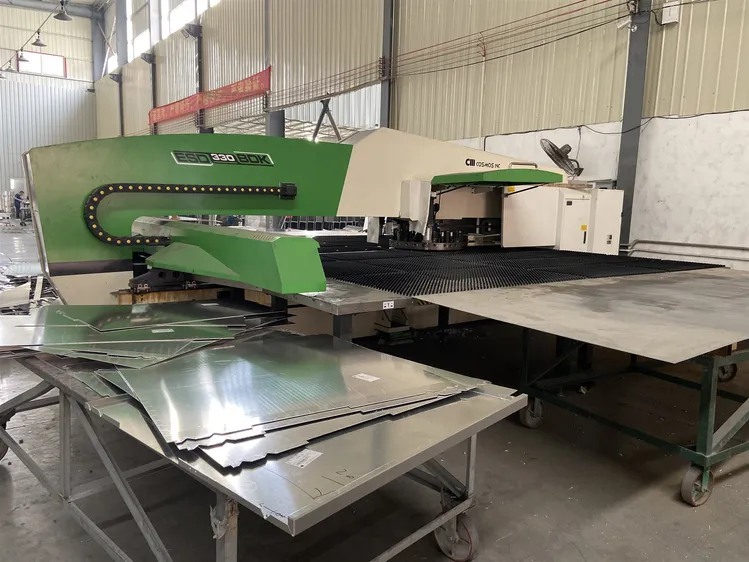
Strategic Procurement Playbook – Aluminium Cladding Sheet (400-600 words)
H2 RFQ Architecture: Engineering Supplier Convergence
Anchor every RFQ to ASTM B209/B209M-24 mechanical minima (tensile ≥ 165 MPa, yield ≥ 75 MPa, elongation 12 %) and AAMA 2605 10-year chalk/erosion limits; require mill test certificates dated ≤90 days before shipment and a ±2 % thickness tolerance band versus the 4 % EN 485-3 commercial band to lock in façade flatness. Embed a 15 % price-adjustment collar pegged to the LME 3-month aluminium contract (reference $2,200-$2,700 /t range) plus Midwest premium; if either metric moves >5 % inside a calendar quarter, the collar activates on the next vessel. Demand a rolling 12-month capacity visibility file (minimum 200 t/month per colour line) and a ≤30 day cash conversion cycle to keep working capital off your balance sheet. Final RFQ gate: bidders must submit a notarised Conflict Minerals Report (CMRT 6.31) and a Scope 1+2 carbon intensity ≤8 t CO₂e per tonne of coil; failure auto-excludes.
H3 Supplier Due-Diligence & FAT Protocol
Desk-score financials: EBITDA margin ≥8 %, Altman Z-score ≥2.9, and trade-credit insurance limit ≥USD 5 M. Book FAT only at lines that can run 1,500 mm width × 4,000 mm length panels at 30 m/min; require a 0.5 % maximum pin-hole density on 5-sample 1 m² black-light test and 60° gloss variance ≤3 units across the coil. Record coil ID, alloy batch, and paint lot in a blockchain hash to block substitution after FAT pass; any re-coat voids the 20-year warranty. Budget $50 k-$80 k for a three-day FAT witness when order >1,000 t.
H2 Contractual Risk Allocation Matrix
| Risk Vector | FOB Tianjin | DDP Job-site Warehouse | Executive Rule-of-Thumb |
|---|---|---|---|
| Price Escalation (Q3-2025: +4.9 %) | Buyer absorbs after vessel load | Seller absorbs until warehouse gate | If LME volatility >±6 %/qtr, shift to FOB & hedge internally |
| Ocean Freight Spike (Spot $1,300-$1,700 /FEU) | Buyer exposure | Seller absorbs | Freight futures at $1,500 lock; choose FOB when futures curve in steep contango |
| Section 232 Tariff (currently 10 %) | Buyer pays at import | Rolled into DDP landed cost | Retain FOB + Foreign-Trade-Zone entry if annual import >5 kt |
| Warranty Claim Logistics | Return-to-origin coil | On-site tech team <72 h | DDP justified on remote high-rise projects where crane downtime >$30 k/day |
| Cash-Flow Burden | Pay at bill-of-lading date | Pay 30 days after site receipt | FOB preserves 20-25 days cash if LC 90 days; DDP squeezes WC by 3 %-pt |
| Incoterm Selection Trigger | Use when freight market oversupplied & strong USD | Use when project site inland >1,000 km or winter weather window <30 days | Hedge aluminium, not freight; mirror Incoterm to macro exposure |
H2 Logistics & Final Commissioning
Nominate break-bulk vessels only with COA clauses penalising demurrage at $18 k/day and allowing 0.3 % mechanical loss; seal containers with ISO 17712 “H” class bolts and GPS loggers to detect inland diversion. On arrival, third-party surveyor pulls 3 panel random sample per 10 t for adhesion cross-hatch (ISO 2409: 0-1 rating) and colour delta-E ≤0.8 versus FAT master. Commission façade by mapping thermal bow ≤4 mm/m at 50 °C differential; non-conformance triggers 1 % contract value credit per 1 mm excess bow, capped at 5 %. Close purchase file only after lien waivers, import VAT reconciliation, and carbon-offset certificates (target $8-$12 /t CO₂) are uploaded to e-sourcing vault; retain audit rights for 36 months.
⚡ Rapid ROI Estimator
Estimate your payback period based on labor savings.
Estimated Payback: —