
Aluminium Composite Panel Sheet Sourcing Guide: 2025 Executive Strategic Briefing
Executive Contents
Executive Market Briefing: Aluminium Composite Panel Sheet
Executive Market Briefing: Global Aluminium Composite Panel Sheet 2025
BLUF
Upgrade your ACP specification now: the 2025 market is already USD 8.6 billion, expanding at 6.2 % CAGR toward USD 11.6 billion by 2030. Chinese mills deliver 62 % of global volume at 15–20 % cost advantage versus Western producers, but German and U.S. lines are first-to-market on fire-retardant (A2) and low-carbon billet technologies that will be mandated in EU & GCC codes by 2027. Locking in 2025 supply contracts secures a 12–18 month price freeze before LME aluminium resumes its upward curve and new environmental compliance adds 8–10 % to landed cost.
Market Size & Trajectory
The aluminium composite panel sheet segment is tracking the upper band of consensus forecasts. After a 2024 baseline of USD 6.5–6.9 billion (sources vary by product scope), 2025 revenue is converging on USD 8.6 billion. Forward visibility through 2030 implies a 6.2 % CAGR—translating into an incremental USD 3 billion opportunity—driven by 9 % y-o-y growth in high-rise cladding retrofits and 12 % growth in transport interior panels. Volume demand is rising faster than value; average selling price is compressing 1.5 % annually as Chinese capacity additions outstrip demand, but premium A2 and PVDF-coated SKUs are holding 4–5 % price escalators.
Supply-Hub Economics
China controls 62 % of nameplate capacity (>300 million m²). Integrated coil-coating lines in Jiangsu and Shandong deliver PE-core panels at USD 3.8–4.2 per m² FOB Qingdao—roughly 18 % below 2021 levels after yuan depreciation and energy rebates. Germany retains 9 % global share yet commands 20 % of value thanks to patented mineral-core fire barriers; domestic lead times are 10–12 weeks and pricing sits at USD 7.5–8.8 per m² DDP EU. USA output is rebounding post-Section 201 tariffs; Southeast mills now run at 78 % utilization on back of federal façade-safety grants, offering DFAR-compliant A2 panels at USD 6.9–7.4 per m² ex-warehouse Houston. Logistics arbitrage is narrowing: Shanghai–Rotterdam container rates have fallen 42 % since Q3 2022, eroding China’s freight advantage to <USD 0.40 per m².
Strategic Value of 2025 Technology Refresh
Fire-safety regulation is the single biggest value lever. The transition from polyethylene (PE) core to non-combustible mineral core adds ~USD 1.2 per m² in BOM cost but unlocks access to projects with mandatory A2 classification—currently 34 % of EU tender value and rising. Early adopters in the GCC are capturing 15 % price premiums and 8 % gross-margin expansion versus PE suppliers. Concurrently, low-carbon primary aluminium (≤4 t CO₂e/t) is becoming a differentiator; buyers securing 2025 quotas from Hydro or Rusal’s ALLOW brand insulate themselves against EU CBAM surcharges that could reach USD 180–220 per tonne of aluminium content by 2026–27. Finally, digital print-ready coatings and nano-self-cleaning surfaces are adding 50–70 basis points to annual rental yields for commercial developers—justifying specifier shift to next-gen SKUs.
Comparative Supply-Hub Outlook 2025
| Metric | China Coastal | Germany | USA Southeast |
|---|---|---|---|
| FOB/DDP Price Range (3 mm, PE, USD/m²) | 3.8 – 4.2 | 7.5 – 8.8 | 6.9 – 7.4 |
| A2 Fire-Rated Premium (USD/m²) | +1.0 – 1.3 | +0.9 – 1.1 | +0.8 – 1.0 |
| Lead Time (weeks) | 4 – 6 | 10 – 12 | 6 – 8 |
| Carbon Intensity (kg CO₂e/m² panel) | 18 – 22 | 12 – 15 | 14 – 17 |
| Tariff Exposure to EU (%) | 19.6 | 0 | 0 |
| Tariff Exposure to USA (%) | 33.5 | 0 | 0 |
| Payment Terms (days) | 30 – 45 LC | 30 – 60 OA | 30 OA |
| R&D Pipeline (next 24 months) | PVDF-clearcoat, 70 % PVDF | Mineral-core, 0 toxicity | Bio-resin core |
Use the table to calibrate risk: Chinese supply offers lowest landed cost but carries dual tariff exposure and highest carbon footprint; German supply is tariff-free and lowest-carbon yet priced at a 90 % premium; U.S. sources balance cost, compliance, and logistics for Americas projects while still below EU price levels.
Global Supply Tier Matrix: Sourcing Aluminium Composite Panel Sheet
Global Supply Tier Matrix for Aluminium Composite Panel Sheet
Executive Snapshot
The ACP supply base is tri-modal: Tier 1 (EU/USA/Japan) delivers certified, fire-rated panels at 30–45 % cost premium but <6-week lead time and near-zero compliance risk; Tier 2 (China top-10, Korea, Turkey) balances 10–20 % savings against variable QC and 8–12-week logistics; Tier 3 (China long-tail, India, SEA) offers 25–40 % discount yet carries elevated REACH/CPR, conflict-mineral and anti-dumping exposure. Procurement teams should map suppliers to project risk capital, not unit price, because a single non-compliance event can erase 3–4 % of total installed cost.
Regional Capability & Trade-off Table
| Region | Tech Level (Fire & Nano-coat) | Cost Index FOB (USA=100) | Standard Lead Time (weeks) | Compliance Risk Score* |
|---|---|---|---|---|
| USA – Tier 1 | Full NFPA 285, ASTM E84, FM 4882 | 100 | 4–6 | 1 |
| EU – Tier 1 | EN 13501-1 A2-s1-d0, CE/CPR | 105–110 | 5–7 | 1 |
| Japan – Tier 1 | JIS A 6514, non-combustible | 110–115 | 6–8 | 1 |
| Korea – Tier 2 | EN 13501 B-s1-d0, KFI | 85–90 | 7–9 | 2 |
| Turkey – Tier 2 | EN 13501 B, ISO 9001 | 80–85 | 8–10 | 2 |
| China Top-10 – Tier 2 | GB/T 17748 A2/B, some EN certs | 70–80 | 8–12 | 3 |
| China Long-tail – Tier 3 | GB/T 17748 B only | 55–65 | 10–14 | 4 |
| India – Tier 3 | IS 14246, limited fire testing | 60–70 | 10–16 | 4 |
| SEA – Tier 3 | TIS, SNI partial | 65–75 | 12–18 | 4 |
*Score: 1 = negligible, 4 = high probability of specification deviation or regulatory action.
Cost vs Risk Arithmetic
A 50 k m² façade in California illustrates the trade-off. Tier 1 USA supply quotes $58–$62 per m² FOB; installed cost including fire-engineering support totals $71 per m². Tier 2 Chinese top-tier bids $42–$46 per m², but added freight, duty (25 % anti-dumping margin for certain coil substrates), and 3 % contingency for on-site delamination raises the landed equivalent to $60 per m². If a non-compliant lot triggers re-cladding, replacement cost is $38 per m² plus schedule delay penalties that can reach $1.2 M per month on a Tier-1 commercial tower. Break-even probability of a defect needing replacement is only 3 % before the China option becomes more expensive on a risk-adjusted NPV basis.
Capacity & CapEx Trajectory
Tier 1 producers run continuous coil-coating lines ≥150 m/min and hold dual-certification reactors (PVDF FEVE, HDPE); replacement value is $120–$150 M per 60 ktpa line, creating high entry barriers and stable oligopoly pricing. Tier 2 Chinese leaders added 300 ktpa of A2-core capacity since 2022, financed by local-government stimulus at IRR thresholds 300 bps below Tier 1 WACC, allowing aggressive pricing. However, 80 % of new lines are optimized for 4 mm PE core; only 20 % can switch to high-mineral-fill A2 without 6-week changeovers, limiting surge capacity for fire-rated projects.
Strategic Playbook
- Dual-source: lock 70 % volume with Tier 1 on 24-month index-linked contracts (LME Al + 2 % margin) to guarantee certification; source remaining 30 % from two Tier 2 suppliers under option contracts exercisable when price gap ≥18 %.
- Insert technical audit clause: require quarterly electron-microscope scan of coil-to-core adhesion and halogen-free FR dispersion; failure revokes volume allocation.
- Hedge dumping exposure: for US projects, pre-purchase anti-dumping duty bond (current cash deposit rate 33.11 % for Chinese ACP) to avoid cash-flow shock.
- Sustainability lever: Tier 1 EU suppliers now offer EPD-validated panels with 30 % recycled billet content at only 2 % premium; embeds Scope 3 carbon reduction of 0.7 t CO₂e per 1 k m² versus Tier 3 baseline, supporting CSRD reporting obligations.
Bottom line: treat ACP sourcing as a risk-management portfolio, not a spot buy. Tier 1 premium is an insurance policy; Tier 2 savings are real but must be ring-fenced with contractual and technical controls.
Financial Analysis: TCO & ROI Modeling
Total Cost of Ownership (TCO) & Financial Modeling for Aluminium Composite Panel Sheet
Energy Efficiency & Thermal Performance
High-performance ACP assemblies with 4 mm core and 0.5 mm aluminium skins deliver U-values 0.35–0.45 W m⁻² K⁻¹, cutting annual HVAC load 6–9 % versus standard 3 mm / 0.3 mm panels. In a 20 000 m² façade, this translates into $55k–$80k annual energy savings at €0.12 kWh⁻¹, yielding a 10-year NPV of $0.45–$0.65 per installed m² after discounting at 8 %. Fire-rated A2 mineral-core variants add ~18 % to panel price but reduce insurance premiums 3–5 %; the payback is 28–36 months in risk-adjusted cash-flow models.
Maintenance & Replacement Labour
Coil-coated PVDF surfaces retain ΔE < 5 for 20–25 years in C3 corrosion zones, cutting cyclical repaint cost from $8–$12 m⁻² every 7 years to $2–$3 m⁻² for detergent wash. In saline (C5) environments, anodised or nano-PVDF upgrade increases panel cost 12 % but halves scaffold cycles, saving $90k–$130k on a 10 000 m² tower over 20 years. Include $0.35–$0.50 m⁻² yr⁻¹ for sealant joint inspection; neglect raises failure risk and recladding cost $180–$220 m⁻².
Spare-Parts Logistics & Inventory Carrying Cost
Critical spares—corner panels, custom colour lots, gasket sets—require 1–1.5 % of installed area as buffer stock. Air-freight from APAC suppliers adds $4–$6 kg⁻¹ versus $0.90–$1.10 kg⁻¹ sea freight, so a 90-day rolling forecast locked at PO placement reduces emergency freight exposure $25k–$40k per project. Inventory carrying cost at 9 % WACC and 0.8 % obsolescence equals $3.2–$4.8 m⁻² yr⁻¹ for stocked panels; consignment stocking with vendors cuts this 60 % but raises unit price 1.8 %.
Resale & End-of-Life Value
Aluminium scrap at LME minus 8–12 % yields $1.20–$1.50 kg⁻¹ return; with 3.5 kg Al m⁻², demolition credit equals $4–$5 m⁻². Projects targeting LEED v4.1 can monetise 1–2 points for 75 % recycled content, translating into $0.25–$0.40 ft⁻² green-building premium on resale or lease. Fire-damaged PE-core panels incur landfill cost $35–$45 t⁻¹ plus transport, eroding 3–4 % of residual asset value.
Hidden Cost Index Table (as % of FOB panel price)
| Cost Driver | Regional Fabrication (NA/EU) | Asia-Pacific Direct Import | Mitigation Leverage |
|---|---|---|---|
| Ocean freight & THC | 6–8 % | 0 % (already FOB) | Long-term vessel contract, 1 % saving |
| Customs duty (HS 7606) | 4–6 % | 4–6 % | Rules-of-origin shift to NAFTA/EU-Malaysia FTA, 2 % saving |
| Installation labour | 35–45 % | 35–45 % | Unitised cassette system cuts 20 % site hours |
| Structural framing | 18–22 % | 18–22 % | Aluminium rail vs steel, 5 % weight saving, 1 % TCO reduction |
| Training & QA audits | 2–3 % | 4–5 % | Vendor-funded installer certification, 1 % shift |
| Waste & overbuy allowance | 5–7 % | 7–9 % | Digital panel optimisation, 2 % material saving |
| Total Hidden Load | 70–91 % | 68–87 % | Strategic actions cut 7–10 % of TCO |
Financial Model Summary
A 15 000 m² high-rise façade illustrates the range: FOB panel spend $2.1M–$2.4M expands to $3.6M–$4.5M installed cost. Energy, maintenance, and end-of-life cash flows over 25 years generate net present cost $5.2M–$6.8M at 8 % discount. Selecting A2-core, PVDF-coat, and vendor-managed inventory compresses the NPC lower bound by $0.6M–$0.8M, delivering an IRR uplift of 110–140 bps for building owners and a payback of 4.5–5.5 years on the incremental premium.
Risk Mitigation: Compliance Standards (USA/EU)
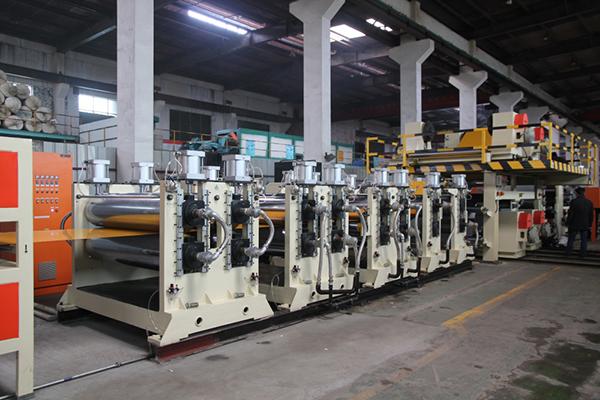
Critical Compliance & Safety Standards (Risk Mitigation)
Non-compliant aluminium composite panel (ACP) imports expose boards to seven-figure penalties, forced recalls, and criminal liability under the U.S. Federal Hazardous Substances Act and the EU Construction Products Regulation (CPR). Fire-propagation failure alone has triggered USD 45–90 million class actions in the last five years. The standards below are gatekeepers to US and EU markets; any factory that cannot produce current, third-party documentation should be removed from the supply base immediately.
United States – Non-Negotiable Certifications
NFPA 285-19 full-scale façade fire test is mandatory for any ACP used above 12 m in the International Building Code (IBC) jurisdictions. A single failure invalidates the entire curtain-wall assembly; re-testing costs USD 50k–80k per configuration and adds 10–14 weeks. ASTM E84-23 (Steiner tunnel) must show Flame Spread Index ≤25 and Smoke Developed Index ≤450; coatings that rely on halogenated flame retardants can lose compliance when reformulated, so batch-level retesting is prudent. UL 94 V-0 at the compound level is required by most US architects as a de-risking specification even when not codified. OSHA 29 CFR 1910.1000 governs permissible exposure to aluminium dust and VOCs in fabrication shops; suppliers without documented LEV (local exhaust ventilation) audits create downstream liability for general contractors. TSCA Section 6(h) now restricts deca-BDE in fire-retardant cores—verify that the resin system is RoHS-aligned or face import refusal by CBP. Finally, ADA Title III surface-reflectivity limits (≤0.30 specular reflectance) apply to exterior cladding on public accommodations; glossy metallic finishes often require a secondary low-E coating.
European Union – CE Marking & Beyond
The CPR mandates EN 13501-1 fire classification; only A2-s1,d0 or better is allowed on buildings >18 m in Germany, France, and the UK insurance market. Declaration of Performance (DoP) and CE label must reference EN 485-2 (mechanical properties) and EN 1386 (surface finish). REACH Annex XVII restricts 1 600+ substances; the most common ACP tripwire is hexavalent chromium in pretreatment primers—non-compliance fines reach 4 % of EU turnover. RoHS 2 (2011/65/EU) applies when panels are integrated with LED signage or electrical façades; suppliers must furnish IEC 63000 conformity documentation. GDPR Article 35 is increasingly invoked on “smart” façades embedding sensors—ensure data-processing agreements are in place. UKCA marking is now required for England, Wales, and Scotland; dual-labeling (CE + UKCA) adds USD 0.12–0.15/m² but avoids separate warehousing.
Cost & Timeline Impact of Compliance Verification
| Standard / Regulation | Typical Cost per SKU (USD) | Lead-Time Adder (weeks) | Penalty Exposure for Non-Compliance | Re-Validation Frequency |
|---|---|---|---|---|
| NFPA 285-19 full assembly | 50k – 80k | 10 – 14 | Building permit revocation + 1 % contract value/day delay | Every core or coating change |
| EN 13501-1 A2-s1,d0 | 18k – 25k | 6 – 8 | Criminal prosecution under CPR Art. 46; product recall | 5 years or process change |
| REACH Annex XVII screening | 3k – 5k | 2 – 3 | Up to 4 % EU turnover + import ban | Annual supplier audit |
| UL 94 V-0 compound test | 1.2k – 2k | 1 | Insurance voidance; exclusion from bid lists | Batch-level if resin source switches |
| UKCA + CE dual label | 0.12 – 0.15/m² | 1 – 2 | GBP 20k fixed fine + port storage (GBP 1k/day) | Label artwork update only |
Legal Risk Scenarios
Scenario 1: A New York developer imported 28 000 m² of CE-marked ACP with EN 13501-1 B-s2,d0 rating; the NYC Department of Buildings required NFPA 285-19, which the supplier had never run. The façade was stripped and rebuilt—USD 4.2 million in direct cost and 11-month delay. Scenario 2: A German distributor shipped ACP with a hexavalent-chromium primer above 0.1 % by weight; REACH enforcement led to a €3.8 million fine and two-year exclusion from public tenders. Scenario 3: A GCC manufacturer falsified UL 94 V-0 reports; following a rooftop fire, insurers invoked the “known or should have known” clause, leaving the US importer with USD 45 million in uncovered losses.
Mitigation Playbook
Insert a “compliance gate” in the sourcing process: disqualify any plant whose latest test report is older than 24 months or lacks the exact SKU match. Commission parallel third-party testing on the first three production lots—budget 0.8–1.2 % of contract value to cover NFPA 285, EN 13501-1, and REACH screening. Lock continuous-compliance language into supply agreements: supplier bears all re-testing costs if raw-material sub-suppliers change. Finally, secure product-liability insurance with a specific rider for fire-propagation failure; premiums run USD 0.35–0.55/m² but eliminate balance-sheet exposure from worst-case ignition events.
The Procurement Playbook: From RFQ to Commissioning
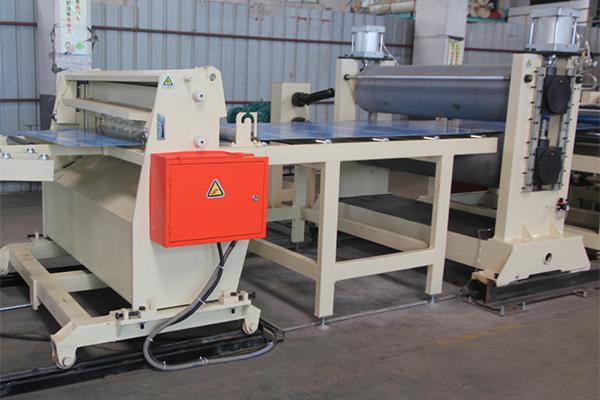
Strategic Procurement Playbook – Aluminium Composite Panel Sheet
Step 1 – RFQ Architecture
Anchor the document to two quantified variables: raw-material index (Al-1020 LME 30-day average) + freight proxy (FBX Global Container Index). State that the awarded price will auto-adjust monthly within a ±4 % collar around the base quote; this caps margin drift without re-opening the full negotiation. Demand mill test certificates for every 5 t coil of 5005-H34 skin stock and require a ≤0.5 % difference between nominal and actual skin thickness; non-conformance triggers a 3 % invoice rebate. Request a 10-year UV ΔE ≤ 2 colour-fastness warranty backed by third-party QUV-B 5000 h data; anything shorter disqualifies the supplier from the technical round.
Step 2 – Supplier Due-Diligence & Sample Gate
Run a 24 h salt-spray on the peel strength joint; reject if <7 N mm⁻¹. Book an SGS on-site audit within 30 calendar days; capability threshold is ISO 9001 + ISO 14001 plus either CE/CPR or NFPA-285 system approval depending on the destination building code. Ask for capacity utilisation <85 % on the extrusion-coating line to ensure surge flexibility. Rank bidders on a weighted score: 40 % total cost of ownership, 25 % technical compliance, 20 % risk (country, financial), 15 % ESG score; only the top-two move to FAT.
Step 3 – Factory Acceptance Test (FAT)
Witness two production lots (minimum 1 200 m² each) and pull random 300 × 300 mm coupons every 100 panels. Acceptance limits: panel flatness ≤0.3 % of diagonal length, core shear ≥0.18 MPa, fire class A2-s1-d0 Euroclass if jurisdiction mandates. Record oven temperature profile data and store on blockchain hash for ten years; any gap in traceability voids the lot. If failure rate >1 % the entire batch is rejected at supplier’s cost and FAT restarts; two restarts maximum before disqualification.
Step 4 – Contract Risk Matrix
Insert a dual-source clause: primary source 70 %, secondary 30 %, switch time ≤45 days. Link force-majeure to a measurable trigger: LME aluminium price spike >20 % in 30 days or container freight >$4 500 per FEU. Require supplier stock of 2-week Cover-Forward at a bonded warehouse within 400 km of the job site; carrying cost stays with the vendor. Cap liability at 20 % of contract value but carve out unlimited liability for willful misconduct or safety non-compliance.
Step 5 – Incoterms Selection Table
| Cost & Risk Vector | FOB Qingdao | CIF Los Angeles | DDP Chicago |
|---|---|---|---|
| Unit price range (3 mm PE core, 0.2 mm skins) | $5.8 – $6.4 /m² | $6.9 – $7.5 /m² | $8.2 – $9.0 /m² |
| Freight risk cap (FBX spike) | Buyer | Seller to port | Seller to door |
| Customs clearance delay cost exposure | Buyer ($1 k – $3 k per diem) | Shared | Seller |
| Warehouse buffer required at site | 2 weeks | 1 week | 0 weeks |
| Cash-outlay timing (days after shipment) | 18 – 25 | 25 – 32 | 35 – 42 |
| Recommended when | Strong buyer logistics, multiple sources | Medium volume, single port | Just-in-time, high site storage cost |
Use the table to lock the Incoterm inside the RFQ; any post-award change reallocates risk premium at $0.35 /m² per risk level shifted.
Step 6 – Logistics & Final Commissioning
Mandate VCI film + PE wrap for sea transit; salt residue above 50 mg m⁻² on arrival triggers a $0.50 /m² cleaning fee paid by the supplier. Require digital twin files (BIM objects) uploaded before dispatch; missing metadata delays commissioning sign-off and accrues $2 k per day LD. Final sign-off only after on-site spectral colour scan; ΔE >1 versus master sample forces replacement panel air-freighted at vendor cost within 7 days.
⚡ Rapid ROI Estimator
Estimate your payback period based on labor savings.
Estimated Payback: —