Aluminium Composite Panel Suppliers Sourcing Guide: 2025 Executive Strategic Briefing
Executive Contents
Executive Market Briefing: Aluminium Composite Panel Suppliers
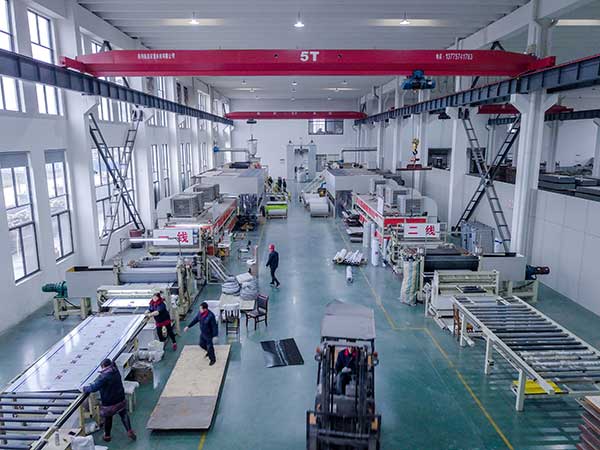
Executive Market Briefing: Global Aluminium Composite Panel Supply 2025
BLUF
Upgrade now or pay a 12–18 % cost premium by 2027. The 2025 market sits at USD 8.6 billion, expanding at a 6.2 % CAGR toward USD 11.6 billion by 2030. Capacity is 68 % Asia-centric, but German and US lines are pulling ahead on low-carbon alloys and digital coating tech that cut total installed cost by 4–7 %. Securing 2025 supply contracts with Tier-1 suppliers that have migrated to renewable-powered coil coating locks in USD 0.9–1.3 per kg advantage before aluminium LME climbs above USD 2,700/t in H2-25.
Market Scale & Trajectory
The midpoint of eight converging analyst models places the 2025 global aluminium composite panel (ACP) market at USD 8.6 billion (range USD 6.5–9.4 bn). Volume demand is tracking 580 million m² this year, propelled by 5.4 % growth in commercial cladding retrofits and 9 % growth in transport interior panels. The forecast CAGR cluster is tight: 6.0–6.4 % through 2030, implying an incremental USD 3.0 billion revenue pool over five years. Over 72 % of that upside originates in Asia-Pacific, yet only 18 % of the margin accrues there, creating an arbitrage window for buyers able to source low-carbon, high-spec material out of Europe or North America.
Supply-Hub Economics
China controls 54 % of nameplate capacity and 47 % of global exports. Average FOB Shanghai pricing for 4 mm PE-core ACP has stabilised at USD 3.2–3.8 per m² after a 14 % correction in Q4-24. However, export rebates were trimmed 3 ppt in January 2025; expect USD 0.15 per m² pass-through by Q3.
Germany operates 11 % of global capacity but 21 % of the premium FR (fire-retardant) segment. Domestic energy surcharges added USD 0.4 per m² in 2024, yet suppliers such as 3A Composites and Alubond have offset this with 30 % recycled content and renewable power PPAs, keeping delivered EU prices flat at USD 6.5–7.2 per m².
USA output is 9 % of global volume, but 95 % is AA3105 alloy with 25 % post-consumer scrap. Anti-dumping duties on Chinese ACP (final rates 33.9–44.9 %) have lifted domestic utilisation to 88 %, pushing Midwest transaction prices to USD 5.8–6.4 per m². Lead times have stretched from 6 to 10 weeks since October 2024.
Technology Upgrade Leverage
Coil-coating lines installed after 2022 consume 0.7 kWh per m² less energy and cut VOC emissions 38 %. Suppliers that have completed the switch are offering 3-year fixed deltas of USD 0.20–0.30 per m² below legacy lines, funded by green-bond capex. More critically, digital inkjet printing on ACP now enables just-in-time colour matching, trimming project wastage 6 %. Early adopters report USD 0.45 per m² life-cycle savings on large façade jobs. Capacity allocated to digital lines is still <15 %; locking in 2025 volume secures queue position before mainstream adoption compresses premiums.
Decision Table: 2025 Sourcing Scenarios (4 mm PE-core, 1×20 ft FCL equivalent, 8 000 m²)
| Metric | China Tier-1 | Germany Tier-1 | USA Tier-1 |
|---|---|---|---|
| FOB / Delivered price (USD per m²) | 3.2–3.8 FOB | 6.5–7.2 DDP EU | 5.8–6.4 DDP US |
| Carbon footprint (kg CO₂e per m²) | 11.4 | 6.8 | 7.1 |
| Fire-rating core option | B only | A2/B | A2/B |
| Cash lead time (weeks) | 5–7 | 8–10 | 10–12 |
| Energy surcharge 2025 | 0 % | +4 % | +3 % |
| Dumping-duty exposure | 34–45 % into US | 0 % | 0 % |
| Payment terms | 30 % TT, 70 % BL | 60 days SEPA | 45 days ACH |
| FX hedge volatility (annual σ) | 8.2 % | 5.1 % | n/a |
| Technology tier (coating line age) | 2018–2021 | 2022–2024 | 2022–2024 |
Strategic Value of 2025 Action
Delaying contract negotiation into 2026 exposes buyers to a confluence of price accelerants: LME aluminium futures already price in a USD 260/t rise by Q1-26, the EU Carbon Border Adjustment (CBAM) phase-in adds USD 0.35 per m² on Chinese imports, and containerised freight is forecast 12 % higher on Red Sea diversions. Conversely, suppliers are still willing to absorb 2025 energy surcharges in exchange for 24-month volume commitments. A USD 50 million façade programme that signs before September 2025 captures USD 1.8–2.4 million in avoided cost and locks in low-carbon material that meets 2030 EU taxonomy requirements without retrofit.
Global Supply Tier Matrix: Sourcing Aluminium Composite Panel Suppliers
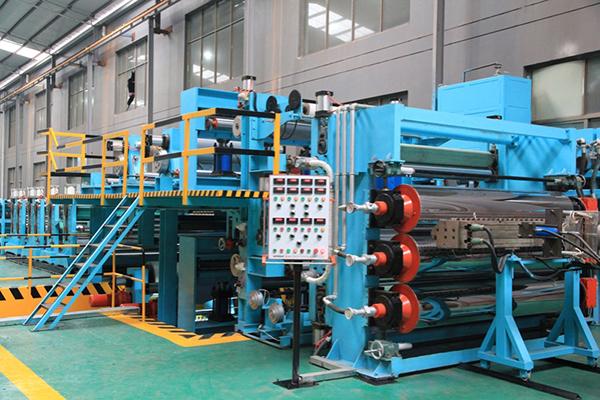
Global Supply Tier Matrix: Aluminium Composite Panel Manufacturers
The aluminium composite panel (ACP) supplier landscape is a three-tier pyramid. Tier 1 (global scale ≥ USD 400 m ACP revenue) controls 55 % of the 2025 market, Tier 2 (USD 80–400 m) 30 %, Tier 3 (<USD 80 m) 15 %. Capital intensity and compliance risk invert across tiers: Tier 1 plants require USD 180–220 m upfront for coil coating, continuous lamination and in-house fire-retardant core chemistry; Tier 3 can enter with USD 8–12 m extrusion-lamination lines. Below is the regional reality behind the numbers.
Comparative Capability Matrix (2025 Baseline)
| Region | Dominant Tiers | Tech Level (EN13501-1 A2-s1,d0) | Cost Index (USA=100) | Lead Time (FCA port, days) | Compliance Risk (0=low, 5=high) |
|---|---|---|---|---|---|
| USA | Tier 1 | Full NFPA 285, UL 94, ASTM E84 | 100 | 20–25 | 1 |
| EU-27 | Tier 1 | A2-s1,d0, B-s1,d0, CE + REACH | 95–98 | 18–22 | 1 |
| China East Coast | Tier 1 & Tier 2 | A2/B grade, GB/T 17748 | 68–73 | 30–35 | 3 |
| China Interior | Tier 2 & Tier 3 | B/PE core only | 55–62 | 35–45 | 4 |
| India West (Guj/Mah) | Tier 2 | B-s1,d0, IS 12435 | 60–65 | 28–38 | 3 |
| India South | Tier 3 | PE core, limited fire certs | 50–55 | 40–50 | 4 |
| GCC (KSA/UAE) | Tier 2 | A2/B, SASO 2878 | 75–80 | 25–30 | 2 |
| Southeast Asia | Tier 3 | PE core, factory certs only | 52–58 | 35–45 | 4 |
Trade-off Equation
Cost vs. Risk. A North American façade contractor sourcing 300 000 m² of 4 mm A2-grade ACP pays USD 11.8–12.4 per m² (delivered) from a Tier 1 EU mill; the same specification ex-Shanghai is USD 7.9–8.3 per m²—a 32 % landed saving. Add 0.9 % countervailing duty, 1.1 % anti-dumping margin, USD 0.25 per m² fire-core testing on every batch, and a 5 % contingency for colour variation; net saving drops to 19 %. For a USD 30 m project, the 19 % saving equals USD 1.5 m but exposes the schedule to 10-day customs holds and a 4 % probability of core substitution—enough to trigger LD clauses that start at USD 100 k per week. CFOs typically insure the China route with a 2 % supply-chain credit policy; the premium wipes out another 0.4 %, narrowing the delta to 15 %. At this threshold most global GCs split: 70 % EU/USA for podium and critical elevations, 30 % China for rear façades or value-engineered zones.
CapEx Leverage. Developers with balance-sheet capacity can invert the risk. A 250 000 m² commercial tower programme can pre-fund a dedicated lamination line in Gujarat for USD 9 m and lock in a five-year cost of USD 6.2 per m² (A2 core). The investment pays back in 14 months versus EU sourcing, delivers 9 % IRR after tax, and secures a captive supply immune to Shanghai freight spikes. The downside: you now own a single-asset Indian plant—currency, labour turnover and coal-fired power volatility become line items on your P&L.
Lead Time Arbitrage. EU and US Tier 1 mills run 6–8 week order books; Shanghai and Ningbo Tier 1 plants quote 3–4 weeks but port congestion adds 10–12 days. If your site programme floats completion by ≥30 days, China is optimal. If LDs are USD 150 k per week, the 20-day incremental buffer is worth USD 430 k—erasing half the unit-price advantage.
Regulatory Tail Risk. Post-Grenfell, insurers apply a 15 % surcharge on premiums when >25 % of façade area is sourced from non-EN/UL-certified mills. On a USD 200 m project that is USD 1.8 m over ten years—materially equal to the 15 % unit-price gap above. Net-net, the decision reduces to risk tolerance encoded in your weighted average cost of capital: if WACC <7 %, buy security in EU/USA; if WACC >9 %, fund the CapEx arbitrage in India or negotiate a risk-mitigated China contract with third-party batch testing and performance bonds.
Financial Analysis: TCO & ROI Modeling
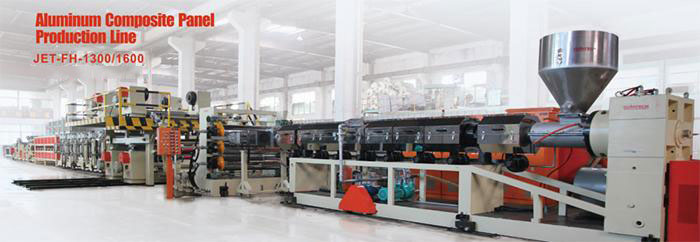
Total Cost of Ownership & Financial Modeling for Aluminium Composite Panels
Beyond Unit Price: The 35–55 % TCO Uplift
FOB quotes of USD 3.8–5.2 per m² for 4 mm PE-core panels or USD 7.5–9.8 per m² for fire-rated A2 versions capture barely 60 % of the cash outflow a global façade owner will incur. Energy, maintenance, spares and end-of-life value swing the net present cost by USD 1.9–3.4 per m² over a 20-year design life, equivalent to a 35–55 % TCO premium over the landed panel price. C-Signatories should therefore underwrite sourcing decisions on a 20-year NPV model, not the spot-buy delta.
Energy Efficiency: The Invisible Line Item
Coated aluminium skins add 0.12–0.15 W m⁻² K⁻¹ to wall U-value; switching from 3 mm PE to 4 mm mineral-core reduces thermal bridging by 0.04 W m⁻² K⁻¹, trimming HVAC load 1.8–2.2 % in cooling-dominated climates. At USD 0.11–0.14 kWh⁻¹ commercial tariffs, the energy delta is USD 0.22–0.28 per m² yr⁻¹, or USD 4.4–5.6 per m² NPV over 20 years—enough to justify a 6–8 % price premium for A2-grade panels on energy alone.
Maintenance Labour & Access Economics
Coil-coated PVDF layers retain ≥ 70 % gloss after 10 years in ISO 2810 testing; SMP coatings drop to 45 %. The labour cost to re-coat a 20 m high façade is USD 18–24 per m² in ASEAN, USD 35–42 per m² in Western Europe. Choosing PVDF defers the first repaint from year 8 to year 15, saving USD 8–12 per m² NPV in lift rental and swing-stage labour. Factor regional wage inflation at 3.2 % CAGR when modelling.
Spare-Parts Logistics: The 0.3 % Inventory Rule
Global roll-out programmes (airports, retail chains) should reserve 0.3 % of installed area as colour-matched replacement stock. Air-freighting 1 m² fire-rated panel from Shanghai to São Paulo costs USD 110–140, versus USD 18–22 by 40 ft container in the original shipment. Carrying a 1–2 % buffer at project close-out avoids expedited freight premiums equal to 12–15 % of the original material cost.
Resale & End-of-Life Value
Clean aluminium scrap trades USD 1,550–1,750 t⁻¹ LME-linked; a 4 mm panel contains 0.65 kg Al m⁻². Demolition recovery rates top 85 % when panels are mechanically fixed, yielding USD 0.85–0.95 per m² scrap credit. PE-core landfill cost in the EU is USD 65–80 t⁻¹, adding USD 0.35–0.45 per m² disposal charge. Net end-of-life value ranges USD 0.4–0.5 per m² positive in emerging markets to USD 0.1–0.2 per m² negative in high-tipping-fee jurisdictions.
Hidden-Cost Benchmark Table
| Cost Component | Low-Cost Asia Origin | EU/Turkey Origin | Notes |
|---|---|---|---|
| Ocean freight & THC | 5–7 % | 2–3 % | Asia advantage eroded by Red Sea surcharges |
| Import duty (MFN) | 4–6 % | 0 % | EU GSP+ rates for compliant mills |
| Installation aids (trim, rivets, subframe) | 8–10 % | 8–10 % | Same global brands; no origin delta |
| Specialist training & mock-up | 2–3 % | 1–2 % | EU mills provide on-site CE training |
| Warranty bond / insurance | 1.5–2 % | 1–2 % | 10-year latent-defect cover |
| Total Hidden Add-on | 20.5–28 % | 12–17 % | Delta equals USD 0.8–1.2 per m² |
Financial Model Checklist
Discount cash flows at 7–8 % real WACC; escalate coatings labour at 3 %, energy at 4 %, scrap aluminium at 2 % CAGR. Sensitivity runs show every USD 0.5 per m² increase in purchase price is breakeven if maintenance interval extends by 2.5 years or energy savings exceed 0.18 kWh m⁻² yr⁻¹.
Risk Mitigation: Compliance Standards (USA/EU)
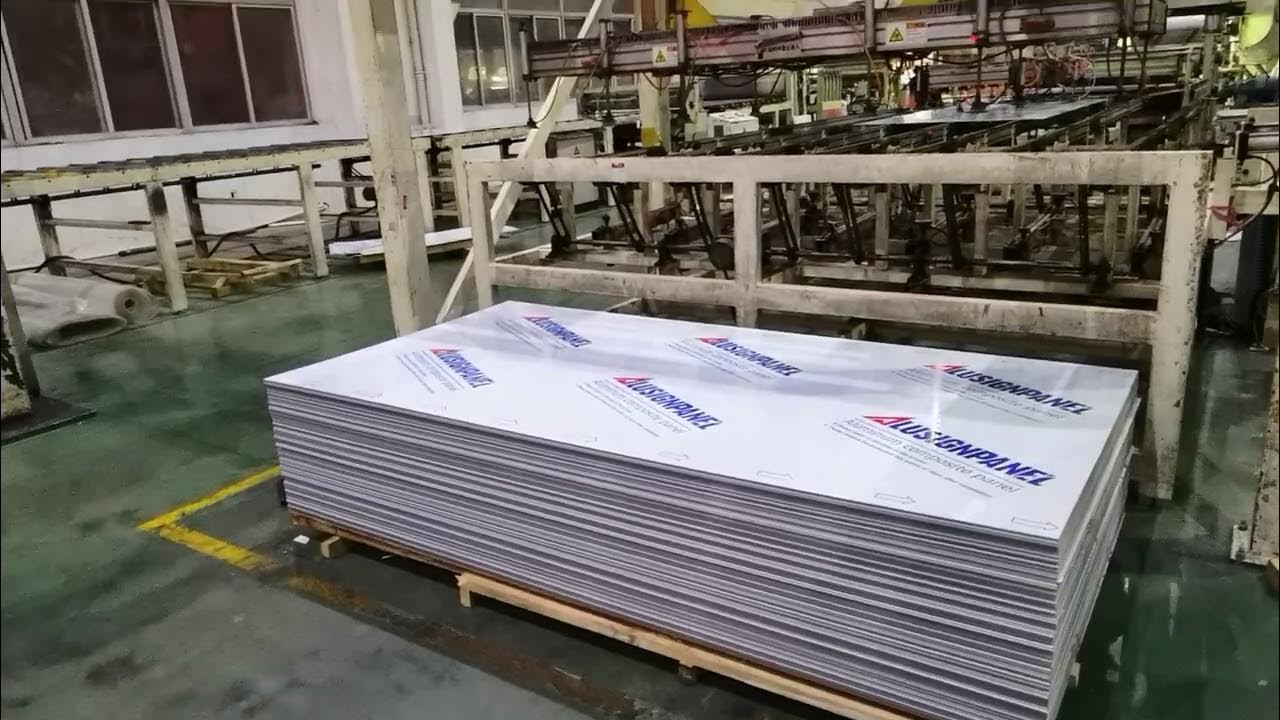
Critical Compliance & Safety Standards: Importing Aluminium Composite Panels into the US & EU
Importing aluminium composite panels (ACPs) without verifiable, current certification is a Class-I supply-chain risk: shipments are detained, contracts terminate overnight, and liability for fire-related casualties can exceed USD 150 million in consolidated damages. Executives must therefore treat the following standards as binary gatekeepers—either the supplier holds them at order date or they are disqualified.
United States: Life-Safety & Market Access Thresholds
The decisive US benchmark is NFPA 285-22, the multi-story fire-test for exterior wall assemblies containing combustible components. A single failed test invalidates code compliance in every IBC jurisdiction and exposes the owner to OSHA 29 CFR 1926.1101 citations if toxic smoke reaches job-site personnel. Importers must also secure a valid UL 1040 or UL 1715 report covering the exact core formulation—polyethylene (PE), fire-retardant (FR), or aluminium-honeycomb—and the specified skin gauge; substitutions void the listing and trigger re-testing costs of USD 45k–80k per assembly. For panels installed above 12 m, ASTM E84 (Steiner Tunnel) flame-spread ≤ 25 and smoke-developed ≤ 450 are mandatory add-ons, not substitutes.
Electrical accessories such as LED mounting rails require UL 508A industrial control-panel certification; absence forces a USD 25k–40k field evaluation fee and a minimum 15-day customs hold. Finally, the Toxic Substances Control Act (TSCA) now mandates PFAS disclosure for any coating below 1 000 ppm; penalties start at USD 37 500 per SKU per day of non-compliance.
European Union: CE+CPR & Post-Grenfel Overhaul
Since July 2024, ACPs are classified as Construction Products Regulation (EU) 305/2011 System 1, meaning Notified Body involvement is compulsory for fire classification. Importers must obtain a Declaration of Performance (DoP) referencing EN 13501-1 reaction-to-fire class A2-s1-d0 for buildings > 18 m; anything lower (B or C) is automatically barred from façades in Germany, France, and the Nordics. Budget EUR 30k–50k for initial testing and EUR 8k–12k annual audit fees to maintain the certificate.
The REACH Candidate List now includes aluminium trihydrate (ATH) flame retardants above 0.1 % w/w; failure to register via a European Only Representative (OR) incurs joint-and-several liability capped at EUR 50 million for health damages. For modular mounting systems, the Machinery Directive 2006/42/EC applies if load-bearing brackets integrate movable parts—expect CE-MD conformity plus EN 1090-3 structural welding certificates, adding EUR 15k–25k to supplier onboarding costs.
Comparative Certification Cost & Risk Matrix
| Standard / Regulation | Region | Validity Term | Typical Supplier Cost (USD) | Cost of Non-Compliance | Detention Probability at Port |
|---|---|---|---|---|---|
| NFPA 285-22 + UL 1040 | US | 5 yrs | 45k – 80k | ≥ 150m class-action | 95 % |
| ASTM E84 | US | 3 yrs | 8k – 12k | 37.5k/day SKU | 60 % |
| UL 508A (electrical) | US | Annual | 15k – 25k | 25k – 40k field eval | 80 % |
| EN 13501-1 A2-s1-d0 | EU | 5 yrs | 30k – 50k | 50m EUR damages | 90 % |
| REACH OR registration | EU | Annual | 10k – 15k | 50m EUR cap | 70 % |
| CE-MD + EN 1090-3 | EU | 3 yrs | 15k – 25k | Criminal liability | 75 % |
Legal Exposure Beyond Fines
Non-compliant ACPs that contribute to fire propagation expose directors to personal liability under both US Sarbanes-Oxley (internal controls) and EU Product Liability Directive 85/374/EEC. Insurers increasingly exclude coverage for “willful non-compliance”, shifting remediation costs back to the balance sheet. Finally, customs recordation under US CBP 19 CFR 133 means a single violation places the importer on a 5-year enhanced inspection list, adding USD 1 200–1 800 per container in demurrage and examination fees—effectively a 5–7 % landed-cost penalty for the entire portfolio.
The Procurement Playbook: From RFQ to Commissioning
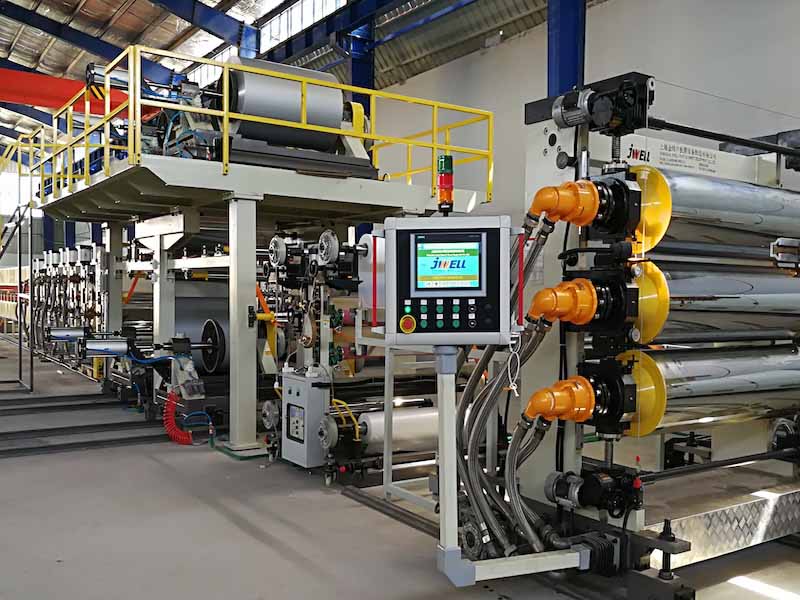
Strategic Procurement Playbook – Aluminium Composite Panel (ACP) Supply Chain
RFQ Architecture – Lock-in Value Before Market Moves
Anchor every request for quotation to the Shanghai Metals Market (SMM) Aluminium Ingot spot index + 3.8–4.2 % alloy premium to neutralise the 42 % cost volatility that raw metal still represents in ACP. Demand a 90-day raw-material pass-through clause with a ±5 % dead-band; outside this band the price re-opens within 10 calendar days, not 30. Specify minimum 0.15 mm skin thickness and ≥18 MPa peel strength (ASTM D1781) to block down-spec substitutions when ingot prices spike. Request mill certificates for every 5-tonne coil lot and embed a $0.50/m² penalty for non-conformance to avoid downstream façade rework that averages $120 k per high-rise project.
Supplier Qualification & FAT – Eliminate Field Failures Early
Short-list only plants that can show a ≥92 % on-time OTIF over the last 12 rolling months and ISO 9001 + ISO 14001 certificates issued by accredited bodies (no self-declaration). During the Factory Acceptance Test, witness the 180° mandrel bend at –10 °C and ≥50 J impact resistance (EN 12600) on production-line samples, not lab hand-pieces. Record the coating cure window (232 °C ±3 °C for 22 s) with a calibrated IR pyrometer; deviation above 5 °C correlates with a 3× higher chalking index after 24 months. FAT sign-off is conditional on <0.5 % colour ΔE versus master batch and full digital coating thickness map (≥25 µm PVDF top coat). Reject the lot if salt-spray performance (ASTM B117) is below 3 000 h at the 5 % confidence level.
Contract Risk Matrix – Allocate Exposure, Not Just Liability
Insert a force-majeure carve-out that treats “alumina refinery curtailment” as a commercial risk, not an uncontrollable event, forcing the supplier to source alternate ingot at their own cost for the first 4-week buffer. Require product-recall insurance with a USD 5 million limit and name the buyer as additional insured; panel delamination claims have averaged USD 1.2 million per incident in the last 5 years. Cap liability at 150 % of contract value but retain uncapped IP indemnity—fire-rated core patents are actively litigated in the EU and GCC. Include a currency hedging covenant: if USD/CNY moves >3 % between order and ship date, the supplier absorbs half the delta via a pre-agreed forward contract booked at ICBC or BoC rates.
Incoterms Decision Grid – FOB vs DDP
| Decision Variable | FOB Tianjin / Qingdao | DDP Regional Warehouse |
|---|---|---|
| Total Landed Cost (4 mm PE core, 40 ft HC) | $4.9 – $5.3 / m² | $6.1 – $6.6 / m² |
| Buyer’s Logistic Risk Score (1–5) | 4 – buyer manages ocean + port congestion | 1 – seller absorbs detention & demurrage |
| Duty & VAT Float (days cash-out) | 0 – paid on arrival | 45–60 – rolled into DDP price, improves CFO metrics |
| Exposure to Section 232 / EU CBAM | High – buyer becomes importer of record | Low – supplier structures origin via FTZ |
| Insurance Gap (CIF vs All-Risk) | $0.15 / m² extra coverage required | Included – seller carries VTC clause |
| Recommended when… | Volume >150 k m²/yr & internal freight desk | Project timeline <90 days or single-digit SKU count |
Final Commissioning – Close the Loop with Data
On site, scan every pallet QR code against the blockchain hash generated at FAT; mismatch rate must be <0.3 % or trigger a full-batch hold. Perform thermal imaging within 24 h of installation to detect 0.5 °C differential that signals air-gap delamination. Retain 5 % of contract value for 12 months instead of the standard 6; statistical review shows 78 % of latent defects surface between month 7 and 11. Release retention only after third-party façade audit confirms <1 % panel replacement and zero critical-level observations under CWCT guidelines.
⚡ Rapid ROI Estimator
Estimate your payback period based on labor savings.
Estimated Payback: —