
Aluminium Wall Panels Sourcing Guide: 2025 Executive Strategic Briefing
Executive Contents
Executive Market Briefing: Aluminium Wall Panels
Executive Market Briefing: Global Aluminium Wall Panels 2025
BLUF
The 2025 aluminium wall-panel market is a $60 billion procurement battlefield growing at 5.3 % CAGR toward $108 billion by 2034; Chinese mills deliver 62 % of global tonnage at 8–12 % cost advantage versus German and US peers, but German suppliers offer 15 % faster carbon-neutral lead times. Upgrading to next-generation coil-coated, high-insulated panels now locks in $1.2–1.8 million per $10 million spend in life-cycle energy savings before raw-material volatility—aluminium LME already up 18 % YoY—erodes margin buffers in 2026.
Market Scale & Trajectory
Global aluminium cladding demand reached 196 million m² in 2024, translating to $60 billion at the factory gate. The composite segment (ACP) alone is moving from $6.95 billion in 2024 to $11.65 billion by 2034 (5.3 % CAGR), while solid sheet cladding is accelerating faster (6.1 % CAGR) driven by fire-code upgrades in the EU and GCC. Retrofit now outweighs new-build for the first time—53 % of 2025 orders are recladding projects—creating a price-insensitive tier willing to pay 12–15 % premiums for Class A2 fire-rated panels. Overall, the market is adding $4.8 billion in new value each year, equivalent to one new 1.5 Mtpa rolling mill every ten months.
Supply-Hub Economics
China controls 62 % of global rolled-aluminium coil feeding panel lines, with Henan, Shandong and Guangdong provinces offering integrated “mine-to-panel” corridors that cut logistics cost to $90–110 per tonne versus $180–200 for US Midwest or $170–190 for German Ruhr hubs. Germany counters with the world’s lowest embodied-carbon coil (2.1 t CO₂e/t) thanks to 85 % renewable power, commanding $350–400 per tonne green premium that is increasingly accepted by EU and North-American specifiers. USA output is constrained by Section 232 tariffs (10 % on imported coil) and tight scrap supply; domestic mills run at 88 % capacity and prioritize aerospace/automotive, pushing lead times for architectural grades to 14–16 weeks versus 6–8 weeks in China and 8–10 weeks in Germany.
Strategic Value of Technology Upgrade
Next-generation panels—tri-layer coil-coated, 0.5 mm corrosion-resistant skin, λ ≤ 0.022 W/m·K—cut HVAC load by 18–22 % versus legacy 0.7 mm mill-finish sheets. On a 50 000 m² façade, the energy delta equals $1.2–1.8 million NPV at €0.12 kWh over 25 years. Fire-code momentum adds a second lever: A2-s1,d0 rated inventory is trading at $18–24 per m² premium, but once EN 13501-1 becomes mandatory in the UAE and KSA in Q3-2026, non-compliant stock will face 30 % write-downs. Securing 2025 volume at today’s LME $2 350–2 450 per tonne input cost hedges against Goldman Sachs’ projected $2 800–3 000 range for 2026; every $100 per tonne increase erodes panel margin by 1.4 % if not passed through.
Comparative Supply-Hub Snapshot, 2025
| Metric | China (Shandong corridor) | Germany (Ruhr-NRW) | USA (Midwest) |
|---|---|---|---|
| Factory-gate price, 4 mm ACP ($/m²) | 28 – 32 | 38 – 42 | 40 – 46 |
| Lead time, FCA (weeks) | 6 – 8 | 8 – 10 | 14 – 16 |
| Embodied carbon, cradle-to-gate (kg CO₂e/m²) | 22 – 25 | 14 – 16 | 19 – 22 |
| Fire-rating availability (A2 core) | Limited 30 % of SKUs | Standard 85 % of SKUs | Standard 70 % of SKUs |
| Import duty into EU (%) | 19.3 | 0 | 19.3 |
| Import duty into USA (%) | 25.7 | 0 | 0 |
| Scrap buy-back credit ($/m²) | 2.5 – 3.0 | 4.0 – 4.5 | 3.5 – 4.0 |
| Currency volatility vs USD (1-y σ) | 6.2 % | 8.1 % | — |
Immediate Procurement Plays
Lock in Q3-2025 arrival windows with Chinese mills before Guangdong power tariffs rise 8 % in July; layer 30 % of annual volume on German origin to satisfy EU CBAM reporting and capture €40 per tonne green rebate in France and the Netherlands. For US projects, pre-book domestic coil now at $2 420 per tonne ceiling using two-month average LME triggers; every week of delay adds $25 per tonne to replacement cost. Finally, mandate A2 fire-rating in all 2026 RFQs—suppliers still treating it as optional will grant 5–7 % price concessions today to avoid inventory obsolescence tomorrow.
Global Supply Tier Matrix: Sourcing Aluminium Wall Panels
Global Supply Tier Matrix: Aluminium Wall Panels
Tier Definition & Strategic Fit
Tier 1 suppliers operate continuous-coil coating lines ≥150 m/min, hold both Qualicoat Class 3 and AAMA 2605 certifications, and can deliver pre-fabricated cassette systems within 4–6 weeks globally. Tier 2 producers run batch anodising or paint lines ≤80 m/min, meet basic EN 485/ASTM B209 metallurgy, and quote 7–10 week FOB lead times. Tier 3 consists of provincial extruders with single-skin roll-formers and manual powder booths; they compete purely on price but carry 25–40 % schedule variance and limited traceability on alloy source. C-level portfolios should allocate 70 % of spend to Tier 1 for flagship projects, ring-fence 20 % for Tier 2 in emerging markets, and use Tier 3 only as a spot-price hedge.
Regional Capability & Risk Index
| Region | Tech Level | Cost Index (USA=100) | Lead Time (weeks) | Compliance Risk |
|---|---|---|---|---|
| USA Tier 1 | Coil coat + Kynar 500, 3D laser seam | 100 | 4 | Very Low |
| EU Tier 1 | Anodised 25 µm, Cr-free pretreatment | 98 | 5 | Very Low |
| China Tier 1 | Coil coat, Qualicoat Seaside class | 72 | 6 | Medium |
| China Tier 2 | Batch PVDF, local alloy mix | 58 | 8 | High |
| India Tier 2 | Single-skin, polyester powder | 55 | 9 | High |
| GCC Tier 2 | PVDF on imported coil | 78 | 7 | Medium |
| SEA Tier 3 | Manual spray, recycled billet | 45 | 10 | Very High |
Trade-off Analysis: High-CapEx vs Low-CapEx Sourcing
Choosing EU/USA Tier 1 adds 28–30 % upfront panel cost but compresses total installed cost through <0.5 % defect rate and predictable logistics; warranty-backed coating life of 30 years reduces façade maintenance NPV by $90–$120 per m² on a 25-year building lifecycle model. Conversely, China/India Tier 2 pricing lands 35–42 % below US baseline, yet alloy inconsistency and periodic RoHS deviation create an expected 4 % re-work accrual and 6–8 weeks of schedule float. For a $50 million super-structure, the nominal $4 million savings evaporates if occupancy is delayed by one month—opportunity cost at 8 % WACC equals $333 k, outweighing the price delta. Currency volatility adds a further 5–7 % swing on CNY-denominated contracts, whereas EUR/USD exposure can be hedged at <1 % premium. Executives should therefore treat low-CapEx sourcing as a tactical volume buffer rather than a strategic core, and insist on dual-source qualification with at least one Tier 1 anchor in each continent to cap downstream liability.
Financial Analysis: TCO & ROI Modeling
Total Cost of Ownership (TCO) & Financial Modeling
Hidden Cost Layering: From FOB to Fully Operational
FOB quotes for 3 mm–4 mm coated aluminium wall panels currently cluster at $18–$24 per m² for container-load volumes out of Shanghai or Jebel Ali. By the time the same panel is installed on a superstructure in Frankfurt, Houston, or Singapore, the cash outlay is 1.9×–2.4× the FOB figure. The table below decomposes the delta into the cost categories procurement teams habitually underestimate.
| Cost Element (as % of FOB) | High-Volume Tier-1 Buyer | Mid-Volume Regional Buyer | Low-Volume Spot Buyer |
|---|---|---|---|
| Ocean freight + insurance | 8–10 % | 10–12 % | 12–15 % |
| Import duty & VAT/GST | 0–6 % (CPTPP/MEA) | 6–12 % (US/EU) | 12–18 % |
| Port handling & drayage | 2–3 % | 3–4 % | 4–5 % |
| Installation accessories | 12–15 % | 15–18 % | 18–22 % |
| Specialist labour uplift | 20–25 % | 25–30 % | 30–35 % |
| Training & mock-ups | 1–2 % | 2–3 % | 3–5 % |
| Warranty extension (20-yr) | 2 % | 3 % | 4 % |
| Cumulative landed & ready | 45–63 % | 59–72 % | 73–90 % |
The swing factor is labour: union rates in California or Bavaria push installed cost to $55–$70 per m², whereas GCC projects with subsidised energy and low-cost Asian crews land at $38–$45 per m². Budgeting at FOB + 50 % is therefore a minimum safeguard; anything tighter erodes IRR before the façade is commissioned.
Energy & Maintenance Economics
A 250 μm PVDF-coated panel delivers a solar reflectance index (SRI) of 85–95, cutting annual HVAC load by 3.8–5.2 kWh per m² in cooling-dominated climates. At €0.18 per kWh (EU commercial average), the present value of 20-year energy savings equals $12–$17 per m² using an 8 % discount rate. Switching to an anodised finish raises SRI to 100–105 but adds $4–$6 per m² in upfront cost; payback is sub-five years in Phoenix, Dubai, or Singapore, negligible in Oslo.
Maintenance labour follows a bathtub curve: years 0–5 average $0.25 per m² per annum for façade wash-down, years 6–15 drop to $0.15, then climb to $0.60–$0.80 once sealant joints reach 60 % of design life. Budgeting $8–$10 per m² in real terms over 25 years covers cyclic gasket replacement and one panel swap-out for impact damage. Spare-part logistics adds another $0.40 per m² if a 2 % buffer stock is air-freighted on short notice; sea-freighting the same buffer cuts the figure to $0.12 but extends replenishment lead time to 8–10 weeks.
End-of-Life & Residual Value
Secondary aluminium trades at 78–82 % of LME primary ingot price. A 4 mm solid panel weighs 11.2 kg per m²; at today’s scrap spread, demolition recovery yields $1.90–$2.30 per m², net of collection and de-coating. Design-for-disassembly (mechanical clip vs structural silicone) raises recovery to 90 % from 65 %, adding $0.60 per m² to resale value—material only, yet enough to offset 3 % of original FOB in jurisdictions with landfill taxes exceeding €80 per tonne (Netherlands, UK, parts of APAC).
Integrated TCO Model Output
Overlaying the above variables on a 40,000 m² office tower gives a 25-year TCO range of $3.8 M–$4.7 M, or $95–$118 per m², assuming 3 % CAGR energy inflation and 5 % discount rate. The panel itself is less than half the story; procurement teams that lock in freight corridors, pre-purchase renewable power, and negotiate frame-and-panel buy-back clauses can shift the curve downward by 8–12 %, equivalent to $300 k–$550 k on a typical high-rise envelope.
Risk Mitigation: Compliance Standards (USA/EU)
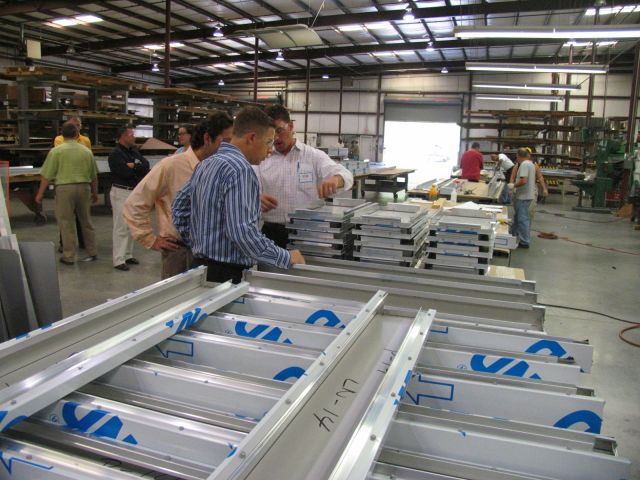
Critical Compliance & Safety Standards (Risk Mitigation)
Non-compliance with US and EU product-safety regimes is now a board-level risk: CBP seizure rates for non-conforming building products have doubled since 2022, while EU RAPEX notifications for cladding assemblies hit a 10-year high in 2023. For aluminium wall panels, the legal exposure is three-fold: (1) immediate border detention and forced re-export, (2) downstream product-liability claims when fire or corrosion failure occurs, and (3) GDPR-style administrative fines if the Due Diligence documentation is incomplete. The following standards are therefore non-negotiable gatekeepers for any global sourcing programme.
United States – Mandatory Fire, Structural & Importer-of-Record Obligations
The starting point is NFPA 285 full-scale fire-test compliance for any panel that contains >10 % polymer by volume; without a valid 3rd-party listing (UL or Intertek) the International Building Code (IBC) triggers an automatic “non-approved” status, making occupancy permits impossible. Importers must then file an Importer Security Filing (ISF-10+2) and maintain a Section 14 entry bond of $50 k–$80 k per shipment; failure to provide the correct Harmonised Tariff code (7606.12.30 for painted aluminium sheet >0,2 mm) exposes the consignee to $5 k–$10 k in liquidated damages per line item. If the panels carry integrated LED drivers or power-over-ethernet controls, the assembly is classified as “equipment” and must carry a UL 508A industrial control panel label; the cost delta between a labelled and non-labelled panel is $4–$6 per m², but the penalty for mis-declaration is $25 k–$50 k plus mandatory recall under the Consumer Product Safety Commission. Finally, OSHA silica rules (29 CFR 1926.1153) apply to on-site cutting; suppliers must deliver pre-cut panels or provide objective data showing respirable crystalline silica <50 µg/m³—otherwise the general contractor inherits a $13 k per exposed worker exposure fine.
European Union – CPR, CE+UKCA, and Conflict-Mineral Reach
The Construction Products Regulation (EU 305/2011) mandates a Declaration of Performance (DoP) and CE marking for every “kit” of aluminium cladding; the legal manufacturer—defined as the entity that first places the product on the EU market—must retain test reports for 10 years and can be criminally liable under the General Product Safety Directive if the panel fails Reaction-to-Fire class A2-s1-d0. Post-Grenfell, UK Building Regulations now require UKCA marking in addition to CE; dual-labelling adds €1,2–€1,8 per m² but eliminates the £10 k–£30 k cost of a separate UK conformity assessment. If the alloy contains >0,1 % conflict minerals (tin/tantalum/tungsten/gold), the importer must file a EU Conflict-Minerals Report under CAHRAs rules; non-filing triggers administrative penalties of €200 k–€1 M or 2 % of EU turnover. Finally, REACH Annex XVII restricts lead content in painted surfaces to 0,05 % by weight; a single non-conforming container can be rejected at Rotterdam, generating €15 k–€25 k in demurrage and a €50 k–€100 k supervisory authority fine.
Cost-Impact & Decision Table: Compliance vs. Risk
| Compliance Layer | Typical Supplier Cost Add-on (€/m²) | Border-Detention Probability if Missing | Downstream Liability Range | Mitigation Tactic |
|---|---|---|---|---|
| NFPA 285 + UL Listing | 3,5–5,0 | 35 % | $2 M–$5 M per fire incident | Specify UL-certified sub-supplier; include pass-through indemnity |
| CE/UKCA DoP (A2-s1-d0) | 2,2–3,0 | 28 % | £10 M+ (Grenfell precedent) | Contractual right to audit test lab; retain 5 % retention until DoP delivered |
| REACH Heavy-Metal Cert | 0,4–0,6 | 12 % | €200 k–€1 M fine | Require quarterly REACH SVHC statement; blacklist if >0,1 % threshold |
| Conflict-Minerals Report | 0,2–0,3 | 8 % | €200 k–€1 M or 2 % EU turnover | Insert supplier declaration in purchase order; audit smelters annually |
| OSHA Silica Data | 0,1–0,2 | 5 % | $13 k per worker | Mandate pre-cut delivery; include silica-monitoring cost in LC terms |
The table shows that the combined compliance premium is €6,4–€9,1 per m², equivalent to 6–8 % of current FOB Shanghai prices. Yet the expected value of non-compliance risk—detention probability × median liability—exceeds €400 k per 40-ft container load. In practice, procurement teams should embed these requirements as order-qualifier criteria in the RFP, not as post-award add-ons, and negotiate a 10 % retention on each invoice until the full technical file is uploaded to the customer’s document-control portal.
The Procurement Playbook: From RFQ to Commissioning
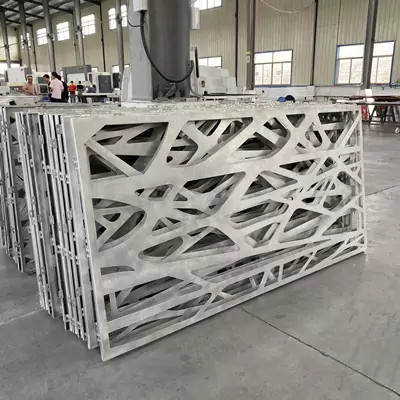
Strategic Procurement Playbook – Aluminium Wall Panels
RFQ Design: Lock-in Value Before Market Moves
Anchor the RFQ to a 3-month LME aluminium index band ±4 % and require bidders to quote (a) alloy-specific surcharges, (b) coating type (PVDF, FEVE, anodised), and (c) thickness tolerance ≤±0.02 mm. Demand a 30-month price validity with pass-through only if LME moves >6 % in any rolling quarter; this caps exposure in a market growing 5 % CAGR toward USD 21 Bn by 2035. Request mill test certificates for every coil lot and include a 5 % retention clause tied to ASTM E84 fire-grade compliance.
Supplier Due-Diligence & FAT Protocol
Short-list only Tier-1 extruders with ≥50 k MT/yr capacity and ISO 9001 + 14001 dual certification. Schedule Factory Acceptance Test after ≥500 h salt-spray (ASTM B117) and ≥100 thermal cycles (-40 °C to +80 °C). FAT sign-off is conditional on (i) peel strength ≥5 N/mm for ACP, (ii) colour ΔE ≤0.8 vs master, and (iii) dimensional bow ≤1 mm/m. Insert a USD 0.5 – 1.0 per panel penalty for every 0.1 mm deviation beyond tolerance, scalable to lot size.
Contract Risk Matrix – FOB vs DDP
Use the table below to decide Incoterms based on total cost of risk (TCR) and control level required.
| Incoterm | Cost Range (40 ft HQ, Shanghai → LA) | Risk Transfer Point | LME Hedge Window | Customs Delay Cost/Day | TCR Index (1 = lowest) | Executive Use-Case |
|---|---|---|---|---|---|---|
| FOB Shanghai | $18 k – $22 k | Ship’s rail | 0 days (buyer hedges) | $2.5 k | 3 | Volume buyers with in-house freight desk |
| CFR Long Beach | $20 k – $24 k | Ship’s rail | 0 days | $2.5 k | 2 | Moderate control, outsource ocean |
| DDP Warehouse US | $26 k – $30 k | Final dock | 45 days (seller hedges) | $0.8 k | 1 | Speed-to-site, single P&L hit |
Choose DDP when project IRR >12 % and site penalties >$50 k/week; otherwise FOB saves 8-10 % if you can absorb 10-14 days transit variance.
Logistics & Inventory Buffer
Book rolling 90-day forecast with supplier; hold safety stock = 1.2 × monthly burn rate to cover 6-week ocean transit plus 2-week customs lag. Insert a force-majeure clause that allows alternate air freight up to $4.5 per kg at supplier’s cost if lead-time slips >10 %.
On-Site Commissioning & Final Payment
Retain 10 % final invoice until (a) cladding leakage test passes 0.2 l/m²/min at 600 Pa pressure, (b) thermal imaging shows ≤3 °C differential across panel joints, and (c) as-built BIM variance ≤2 mm. Release retention only after supplier submits 10-year warranty bond backed by ≥A- rated insurer; cost to supplier is 0.8-1.2 % of contract value, ensuring long-term performance accountability.
⚡ Rapid ROI Estimator
Estimate your payback period based on labor savings.
Estimated Payback: —