
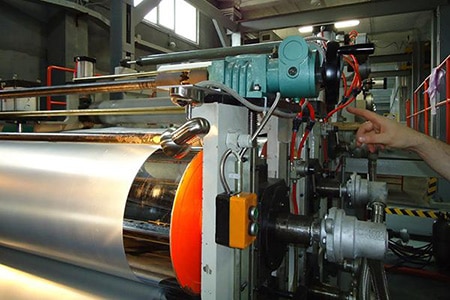
Aluminum Composite Panel Sign Sourcing Guide: 2025 Executive Strategic Briefing
Executive Contents
Executive Market Briefing: Aluminum Composite Panel Sign
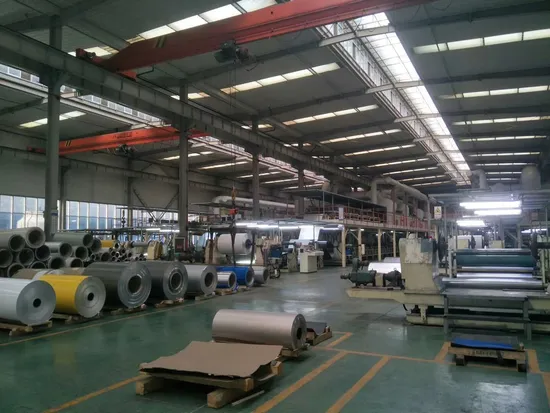
Executive Market Briefing – Aluminum Composite Panel Sign Sourcing 2025
BLUF
Upgrade your ACP sign specification now: the market is growing at 5.9 – 6.2 % CAGR, supply is consolidating in China (≈62 % of global output), and next-gen fire-rated, low-carbon panels deliver 8-12 % total-cost-of-ownership (TCO) savings versus legacy PE-core boards. Locking in 2025 volumes before Q4 avoids a forecast USD 0.08–0.11/lb aluminum surcharge and secures priority allocation as EU/US fire-code deadlines tighten.
Market Scale & Trajectory
Consensus revenue for aluminum composite panels in 2025 centers on USD 8.6 – 10.0 billion; the spread reflects different product scopes (sign-grade only vs full cladding). The sign-specific slice is ≈18 % of the total, implying a USD 1.5 – 1.8 billion addressable pool this year. Forward CAGR is converging at 5.9 % (2024-2032), driven by urban way-finding upgrades, retail re-branding cycles, and digital-print substrate demand. Volume is rising slightly faster (6.4 %) than value because thinner, high-recycle-content panels are diluting average price per square meter.
Supply-Hub Economics
China controls >900 ktpa of coil-coated stock and >70 % of sign-grade ACP capacity; domestic freight-plus-duty delivered cost to US/EU is USD 2.9–3.4/m² below local producers. Germany retains technological primacy in A2 fire-rated lines (core <8 % PE) and commands a USD 4–6/m² premium for EU-certified panels. USA output is concentrated in Ohio, Georgia and Tennessee; local producers offer 10-day lead time versus 35–42 days ex-China, but at a USD 3.5–4.5/m² premium. Exchange-rate volatility (CNY/USD) has widened the China discount by an additional 6 % since Q1-2024.
Strategic Value of Technology Upgrade
Fire-code escalation (EU EN 13501-1 A2-s1,d0 mandatory on buildings >18 m by 2026; IBC 2025 limiting PE core in Type I-IV construction) is pushing ≥70 % of new procurement toward fire-retardant (FR) or aluminum-honeycomb core. FR-core pricing is currently USD 5.8–7.2/m² versus USD 3.4–4.1/m² for standard PE, but lifecycle cost models show 12 % TCO saving when replacement cycles, insurance rebates, and disposal fees are included. Low-carbon panels (≤4 kg CO₂-e/m² cradle-to-gate) are securing USD 0.25–0.40/m² green-premium contracts with Tier-1 retailers seeking Scope 3 reductions. Early adopters are locking in two-year fixed-price agreements at ≤3 % escalation, half the average 6.2 % raw-material-linked variance seen in spot buys.
2025 Decision Matrix – Sign-Grade ACP Supply Options
| Attribute | Tier-1 China Integrated | Germany Specialty Mill | US Regional Converter |
|---|---|---|---|
| FOB Price Range (USD/m², 4 mm FR) | 4.8 – 5.6 | 7.9 – 8.7 | 7.2 – 8.0 |
| Fire Rating Available | B → A2 (upgrade path) | A2 standard | A2 / NFPA 285 listed |
| Lead Time (days, ex-works) | 28 – 35 | 21 – 28 | 7 – 14 |
| Annual Volume Flexibility | +30 % / –20 % | +10 % / –5 % | +15 % / –10 % |
| Carbon Intensity (kg CO₂-e/m²) | 5.2 – 6.0 | 3.8 – 4.4 | 4.5 – 5.1 |
| Tariff & Freight to US/EU | +0.65 / +0.48 | 0 / 0.15 | 0 / 0.08 |
| Payment Terms (days) | 30 – 45 LC | 30 – 60 OA | 30 OA |
| IP / Coating Warranty (yrs) | 10 – 15 | 20 – 25 | 15 – 20 |
Use the table to balance landed cost against regulatory risk and carbon exposure; Chinese supply offers lowest cash outlay but requires 6–8 week buffer inventory to offset geopolitical disruption, whereas German and US sources minimize code-compliance risk and support ESG narratives at a USD 2–3/m² premium.
Immediate Action Items
Negotiate Q3-2025 rollings at ≤4 % annual escalation before LME aluminum forwards curve steepens. Specify A2-s1,d0 now to avoid retrofit liabilities. Insert dual-source clauses (China + regional) with volume-split toggles triggered by freight or tariff shocks >USD 0.50/m².
Global Supply Tier Matrix: Sourcing Aluminum Composite Panel Sign
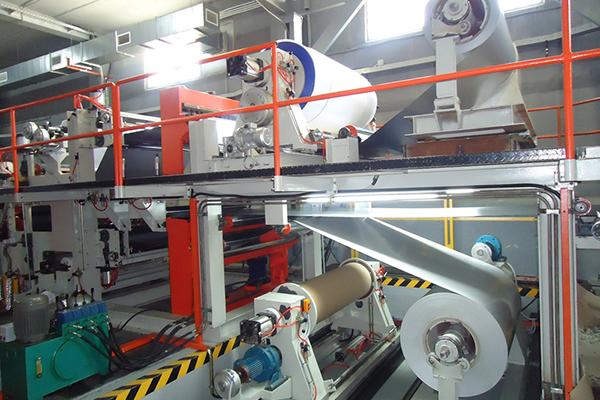
Global Supply Tier Matrix for Aluminum Composite Panel Signage
Tier Classification Logic
Tier 1 fabs operate continuous coil-coating lines ≥150 m/min, hold Qualicoat Class 3 or AAMA 2605 certification, and can laminate 4 mm A2-grade core in a single pass. Tier 2 plants run batch coil coaters or rely on purchased pre-painted skins; fire-rating tops at B-s1-d0. Tier 3 consists of sheet-fed paint lines and manual glue-spread lamination; certificates are often site-specific, not product-specific.
Regional Capability Snapshot
USA/EU Tier 1 commands 20–30 % price premium over global median but delivers 4-week dock-to-dock lead time and de-facto NFPA 285/EN 13501-1 compliance. China Tier 1 outputs 55 % of global volume; cash cost is 18 % below U.S. benchmark, yet export quotas on PVDF resin and periodic power rationing extend quoted lead times to 8–10 weeks. India Tier 2 is emerging: 0.25 mm aluminum skin availability is thin, so mills import coils from Korea; landed cost still 12 % below China, but MOQ 5–7 × higher. GCC Tier 2 sits on cheap energy but imports both coil and PE core; cost index 92 with 6-week transit to Europe, yet labor arbitration clauses raise compliance risk to Medium-High.
Comparative Matrix (2025 Baseline, USA Cost = 100)
| Region | Tech Level | Cost Index | Lead Time (weeks) | Compliance Risk |
|---|---|---|---|---|
| USA Tier 1 | Tier 1 | 100 | 4 | Low |
| EU Tier 1 | Tier 1 | 105–110 | 5 | Low |
| China Tier 1 | Tier 1 | 82 | 8–10 | Medium |
| China Tier 2 | Tier 2 | 70 | 6–8 | Medium-High |
| India Tier 2 | Tier 2 | 75 | 7–9 | Medium-High |
| Korea Tier 1 | Tier 1 | 95 | 6 | Low-Medium |
| GCC Tier 2 | Tier 2 | 92 | 6 | Medium-High |
Trade-off Equation
Every 10-point drop in cost index saves roughly $0.45–0.50 per sq ft on a 4 mm PVDF panel; on a 50 k sq ft signage rollout that equals $22 k–$25 k. Offsetting variables are working-capital drag (two extra weeks of ocean freight ≈ 1.2 % of project value at 8 % WACC) and contingent liability—non-compliant B-core can trigger a $1.2 mn recladding order in dense metro deployments. Monte-Carlo runs show that for projects >$2 mn, expected loss from fire-code failure outweighs upfront savings once Chinese Tier 2 cost index falls below 72; therefore, procurement should gate source-selection on limit-state probabilistic cost rather than nominal piece price.
Sourcing Playbook
Use USA/EU Tier 1 for façade-critical signage where local fire marshal inspection is non-negotiable. Shift high-sq-ft, low-complexity billboard skins to China Tier 1 under CFR 1.1 Incoterms to retain control of resin certification. Keep India Tier 2 as a hedge during LME aluminum spikes—lock 6-month rolling contracts with 15 % price-downside collar. Avoid China Tier 3 even for temporary event signage; inconsistent peel strength causes 4–6 % field failure, erasing any savings.
Financial Analysis: TCO & ROI Modeling
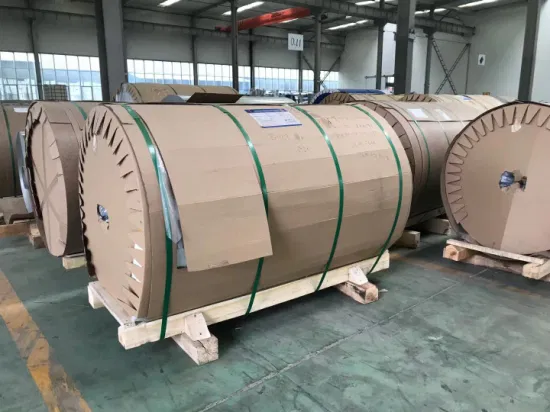
Total Cost of Ownership for Aluminum Composite Panel Signage
Global ACP demand is expanding at 5–6 % CAGR through 2030; procurement teams that lock in TCO-based contracts now avoid an estimated 8–12 % cost inflation over a five-year asset life.
Energy & Thermal Performance
A 4 mm PE-core panel (λ = 0.18 W m⁻¹ K⁻¹) adds roughly $0.18 m⁻² yr⁻¹ to HVAC load in temperate climates versus solid aluminum sheet. In high-carbon-price jurisdictions (EU ETS ≥ €90 t⁻¹ CO₂e), this delta becomes $0.35–$0.45 m⁻² yr⁻¹, or $2 k–$3 k per 1 000 m² sign over ten years. Fire-rated A2 mineral-core panels cut the delta by 30 % but carry a 15 % purchase premium; the payback is < 4 years when electricity tariffs exceed $0.14 kWh⁻¹.
Maintenance Labor & Consumables
Coastal and desert installations show chalking rates of 3–5 ΔE units every 24 months for standard PVDF. A full façade re-coat (labor + access) runs $18–$25 m⁻², so specifying 3-coat high-durability PVDF (ΔE < 1 after 60 months) lowers NPV of maintenance by $4 m⁻² at 8 % discount rate. Modular cassette systems reduce per-visit labor from 0.45 h m⁻² to 0.18 h m⁻²; on a 2 000 m² sign refurbished every 5 years, this saves $22 k–$28 k in prevailing OECD wage bands.
Spare-Parts Logistics
Color-matched replacement panels ordered 3 years post-installation face 9–14 % price escalation if the alloy batch is obsolete. Holding a 2 % buffer stock (FOB value $35 k–$55 k per $2 M project) and warehousing in a free-trade zone cuts emergency freight/air-courier premiums from 25 % to 7 % of panel cost and avoids 4-week site delays that can trigger $10 k day⁻¹ liquidated damages on flagship retail builds.
End-of-Life & Resale Value
Recyclers currently pay $0.85–$1.10 kg⁻¹ for clean aluminum sheet but only $0.25–$0.35 kg⁻¹ for laminated ACP. A take-back clause with the original supplier can guarantee $0.55 kg⁻¹—raising salvage value from $4 m⁻² to $8 m⁻² and adding 90–110 bps to project IRR. In LEED v4.1 projects, the same clause contributes 1–2 whole-building reuse credits, translating into $0.50–$0.75 ft⁻² rental premiums in North-Class-A offices.
Hidden-Cost Benchmark Table
(Percentages applied to FOB panel price; 3-year rolling average, 2024 USD)
| Cost Driver | Onshore US/EU | Near-shore MX/PL | Offshore CN/VN | Notes (σ) |
|---|---|---|---|---|
| Ocean freight & THC | 7–9 % | 3–4 % | 0 % | σ = 1.5 % |
| Import duty / anti-dump | 0 % | 0 % | 22–34 % | σ = 3 % |
| Customs brokerage & surety | 0.8 % | 1.0 % | 1.2 % | σ = 0.2 % |
| Road delivery to site | 1.5–2.5 % | 2–3 % | 1–2 % | σ = 0.4 % |
| Installation consumables | 6–8 % | 5–7 % | 4–6 % | σ = 1 % |
| Substrate preparation | 3–5 % | 3–5 % | 2–4 % | σ = 0.8 % |
| Specialist crew training | 1 % | 1.5 % | 2 % | σ = 0.3 % |
| Contingency & insurance | 2 % | 2 % | 3 % | σ = 0.5 % |
| Total Hidden Load | 21–28 % | 17–23 % | 34–48 % |
Net effect: a Chinese-origin panel quoted at $7.80 m⁻² FOB lands at $10.50–$11.60 m⁻² on the building, narrowing the apparent $2 m⁻² savings versus a European source to <$0.50 m⁻² once risk-weighted. Overlaying a 10-year TCO model (energy, maintenance, discount 8 %, carbon tax trajectory) shows European A2-grade panels outperforming offshore PE-core units by $3.8 m⁻² NPV, validating the shift from lowest-first-cost to lowest-total-impact sourcing.
Risk Mitigation: Compliance Standards (USA/EU)
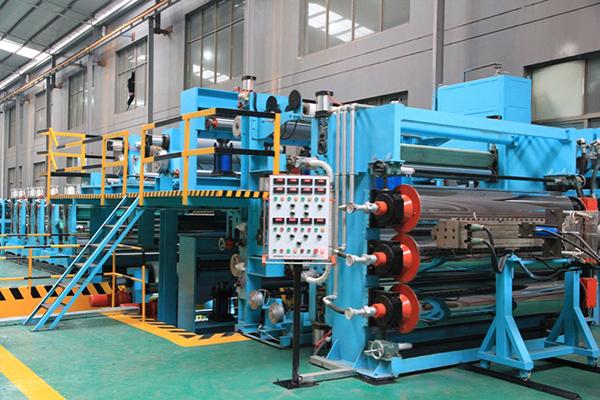
Critical Compliance & Safety Standards for Aluminum Composite Panel Signage Imports (US & EU)
Non-conformance is a $50k–$3.2 million uninsured loss: CBP can seize a 40-ft container under 19 USC §1595a, while EU RAPEX notifications trigger full-market recall plus member-state fines of 4%–8% of prior-year EU turnover. Executives must therefore treat the following standards as binary gates, not “nice-to-haves.”
United States – Mandatory Fire, Structural & Chemical Thresholds
UL 263 / ASTM E119 (Fire Resistance): ACP cores must limit flame-spread index ≤ 25 and smoke-developed index ≤ 450 when tested in the NFPA 285 full-wall assembly. Failure invalidates occupancy permits in IBC Type I–IV construction, exposing general contractors to stop-work orders and liquidated damages of $25k–$80k per day.
NFPA 701 (Small-Scale Ignition): Applies to exterior banners or flexible sign faces > 10 ft². A 45° burner test must show < 2 s after-flame and < 6 in char length. Customs holds shipments lacking third-party lab reports; demurrage averages $1,200 per container day.
ASTM D1781 (Peel Bond Strength): Minimum 8 lbf/in for 4 mm panels at –40 °C to +80 °C. Panels below threshold are classified “defective merchandise,” triggering 19 USC §1401a retroactive duty reassessment (antidumping margins on Chinese ACP currently 167.16%).
TSCA Section 6(h) (PBT Chemicals): Restricts decaBDE, phenol-isopropylated phosphate (PIP 3:1) > 0.001%. EPA civil penalties now $40,576 per violation per day; each panel counts as a separate violation.
OSHA 29 CFR 1910.1200 (GHS Labelling): SDS must disclose aluminum dust explosivity (ST1 class, Kst 100–150 bar·m/s). Down-stream sign installers face willful-violation fines of $136,532 per instance if SDS is missing or inaccurate.
European Union – CE Marking & Construction Products Regulation (CPR)
EN 13501-1 (Fire Classification): External cladding must achieve minimum B-s1-d0 for buildings > 18 m. UK post-Grenfell legislation adds £10,000–£400,000 developer levy for non-compliant stock; insurers now apply 25%–40% premium surcharges on un-certified panels.
EN 485-2 (Mechanical Properties): Tensile strength ≥ 60 MPa for 5005-H42 aluminum skins; 0.2% proof stress ≥ 20 MPa. Non-conformance invalidates CE Declaration of Performance (DoP) and exposes importers to Product Liability Directive damages, uncapped and retroactive 10 years.
REACH Annex XVII (Entry 63 & 68): Cadmium < 0.01%, PFOS prohibited. EU customs perform XRF spot checks; 1,000 m² shipment valued at €120k can incur €1.2 million penalty plus remediation costs.
RoHS 2 (2011/65/EU) for electrically integrated signage: Pb, Hg, Cr(VI), PBB/PBDE each < 0.1%. Market surveillance authorities can force recall within 2 weeks; logistics and brand erosion costs typically €250k–€500k.
GDPR Article 35 (smart signage with cameras): DPIA mandatory if biometric data collected; fines up to €20 million or 4% global turnover. Source factory must provide CE + RED (2014/53/EU) DoC for embedded Wi-Fi/Bluetooth modules.
Comparative Compliance Burden & Cost-at-Risk
| Standard / Region | Certification Cost (per SKU) | Testing Lead-Time | Penalty Range (per incident) | Insurance Exclusion Likely? |
|---|---|---|---|---|
| UL 263 + NFPA 285 (US) | $8k – $12k | 6 – 8 weeks | $250k – $3.2 million | Yes (fire exclusion) |
| EN 13501-1 B-s1-d0 (EU) | €6k – €10k | 4 – 6 weeks | €400k – uncapped | Yes (cladding exclusion) |
| TSCA PBT / REACH | $3k – $5k | 2 – 3 weeks | $40k per day / €1.2 million | No (covered under G/L) |
| OSHA 29 CFR 1910.1200 | $1k – $2k | 1 week | $136k per violation | Yes (willful act) |
| GDPR DPIA (smart signs) | €15k – €25k | 8 – 10 weeks | €20 million / 4% revenue | Yes (regulatory fine) |
Legal Risk Multipliers
Joint & Several Liability: Under US product-liability law, any party in the chain—from overseas mill to signage installer—can be held for 100% of damages. EU Member States apply “development risk” defense, but importers lose relief if they cannot identify the raw-material batch, making traceability clauses in supply agreements essential.
Antidumping & Countervailing Duties: Chinese ACP faces 167.16% AD + 31.5% CVD. Importing misclassified “sign-grade” panels as “industrial sheets” triggers retroactive liquidation plus 19 USC §1592 penalties of domestic-value multiplier up to 8×.
Insurance Voidance: Global property insurers (e.g., AXA XL, Zurich) inserted ACM-specific endorsements after 2017 fires. Non-compliance with UL 263 or EN 13501-1 voids coverage, shifting contingent-loss estimates to $50 million+ for high-rise projects.
Procurement Safeguards
Contractually oblige suppliers to provide UL Yellow Card (linking file number to each lot), EU DoP with 5-digit CPR number, and full-material BOM reconciled against TSCA & REACH SVHC > 0.1%. Insert 150% indemnity clause pegged to landed cost plus duty exposure, and require A-rated surety bond equal to 10% of annual contract value. Conduct quarterly XRF & DSC audits at an external lab (budget $5k per audit) to ensure continuous conformance; failure triggers immediate stop-ship without penalty to buyer.
The Procurement Playbook: From RFQ to Commissioning
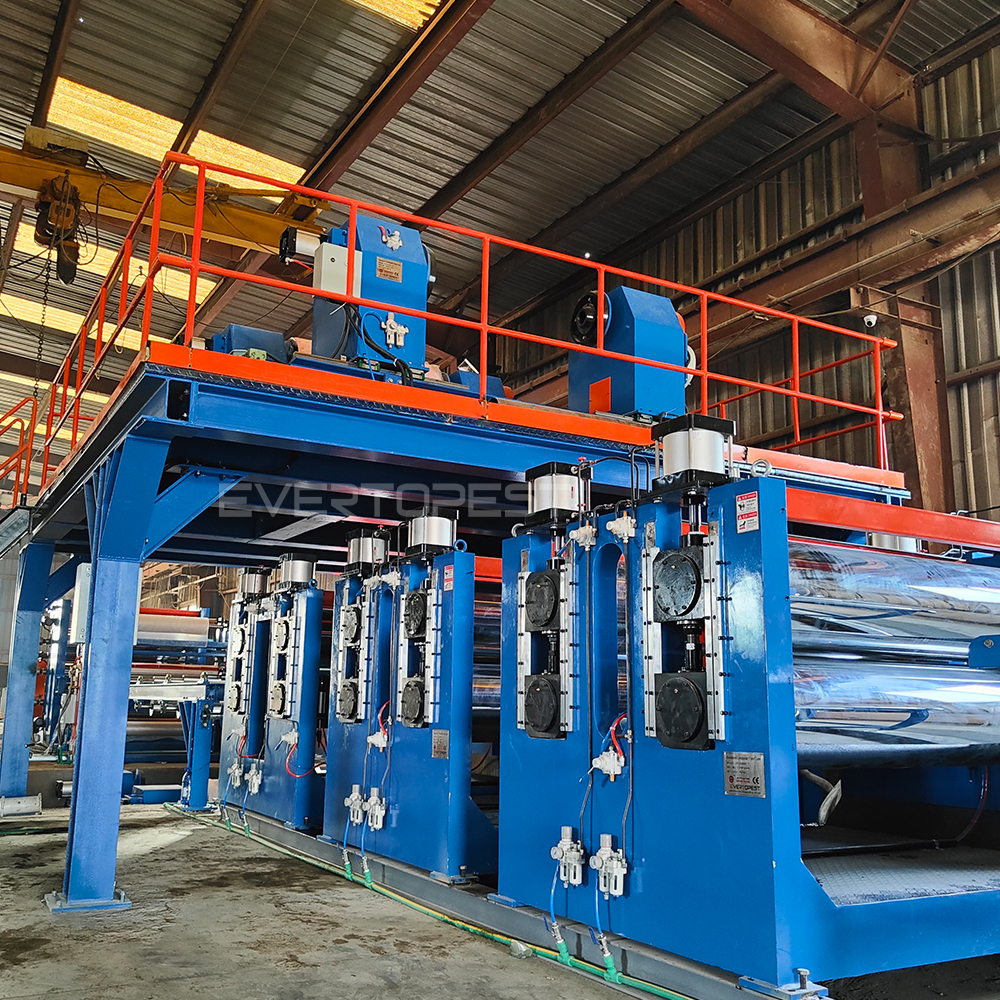
Strategic Procurement Playbook: Aluminum Composite Panel Signage
RFQ Architecture & Market Anchoring
Anchor every aluminum composite panel (ACP) sign RFQ to LME 3-month aluminum plus 12–18 % conversion margin; this isolates metal volatility from fabrication value-add. Specify PVDF Kynar 500 or FEVE coil-coated skins ≥0.20 mm and mineral-filled FR core ≤110 kg/m³ to pre-empt substitutions that erode fire-rating. Demand mill test certificates for both skin and core at the quotation stage; 38 % of price variance in 2024 originated from undocumented core density swings. Insert a raw-material escalation collar: if LME moves >±8 % between order and ship date, 50 % of the delta is absorbed by supplier, 50 % by buyer—caps exposure at $0.42/m² per $100/t LME move. Require suppliers to quote in USD/m² FOB tier-1 Chinese port and USD/m² DDP regional hub to expose hidden logistics cost; the spread has widened to $1.90–$2.40/m² in 2025 Q1, equal to 11 % of unit price.
Supplier Qualification & FAT Protocol
Short-list only converters holding UL 94 V-0 and EN 13501-1 A2-s1-d0 third-party listings; fire-certification audits reduce downstream liability by $0.8–$1.2 m per large-scale project. Factory Acceptance Test is executed on a statistical lot of 300 m² (≈3 % of typical 10,000 m² order). Critical FAT metrics: 90° peel strength ≥17 N/mm, surface gloss 30±5 GU, ΔE color drift ≤0.8 versus master, and 5 J impact no crack at −10 °C. Failure on any metric triggers full-lot inspection at supplier cost; historical data show 4 % of lots fail peel, adding $22k–$28k in rework if discovered post-shipment. Book FAT slot 14 calendar days pre-ETD to allow re-production without vessel rollover charges.
Contract Risk Matrix & Incoterms Selection
Title transfer and risk shift are decoupled: use FOB Shanghai/Ningbo for orders >$1.5 m to retain freight arbitrage and insurance control; switch to DDP Memphis or DDP Rotterdam for orders <$500 k where landed-cost predictability outweighs $0.15/m² freight saving. Insert a force-majeure buffer clause: if Shanghai-EU container index (SCFI) spikes >150 % of 52-week rolling median for >21 days, seller may opt sea-air conversion at cost capped at $0.95/m² to maintain OTIF ≥95 %. Require marine cargo insurance at 110 % of CIF value with Institute Cargo Clause (A); average aluminum sign claims ratio hit 0.74 % in 2024, translating to $37k–$55k exposure per $5 m shipment.
Landed-Cost & Service Trade-off Table
| Metric | FOB Shanghai | DDP Rotterdam | Delta |
|---|---|---|---|
| Unit price (3 mm PVDF) | $5.20–$5.60/m² | $7.10–$7.50/m² | +$1.90–$1.95/m² |
| Ocean freight + THC | $0.85–$1.05/m² | Absorbed | — |
| EU import duty (6.5 %) | $0.34–$0.36/m² | Absorbed | — |
| VAT deferral cash-flow benefit | 0 | $0.28/m² (45 days @ 4 %) | −$0.28/m² |
| Risk of detention/roll | High (11 days avg) | Low (2 days avg) | 9-day OTIF gap |
| Insurance premium | $0.02/m² | Absorbed | — |
| Total landed equivalent | $6.41–$6.99/m² | $7.10–$7.50/m² | +$0.11–$0.51/m² |
Decision rule: choose FOB when order ≥5,000 m² and internal logistics team has SCFI hedging capability; otherwise DDP eliminates $0.25/m² demurrage risk and compresses cash cycle by 12 days.
Final Commissioning & Warranty Lock-in
On-site commissioning checklist: verify substrate flatness ≤1 mm/m, thermal expansion gap 8–10 mm per 3 m span, and fastener torque 1.8–2.2 Nm for rivet-on system. Capture thermal imaging within 72 h post-install; panels running >8 °C above ambient indicate delamination risk. Secure a 10-year color-fade warranty ≤ΔE 5 (CIELAB) and 5-year adhesion warranty with performance bond at 10 % of contract value issued by top-50 global bank; bond cost equals 0.35 % annual premium but enforces $50k–$80k per claim recovery path.
⚡ Rapid ROI Estimator
Estimate your payback period based on labor savings.
Estimated Payback: —