
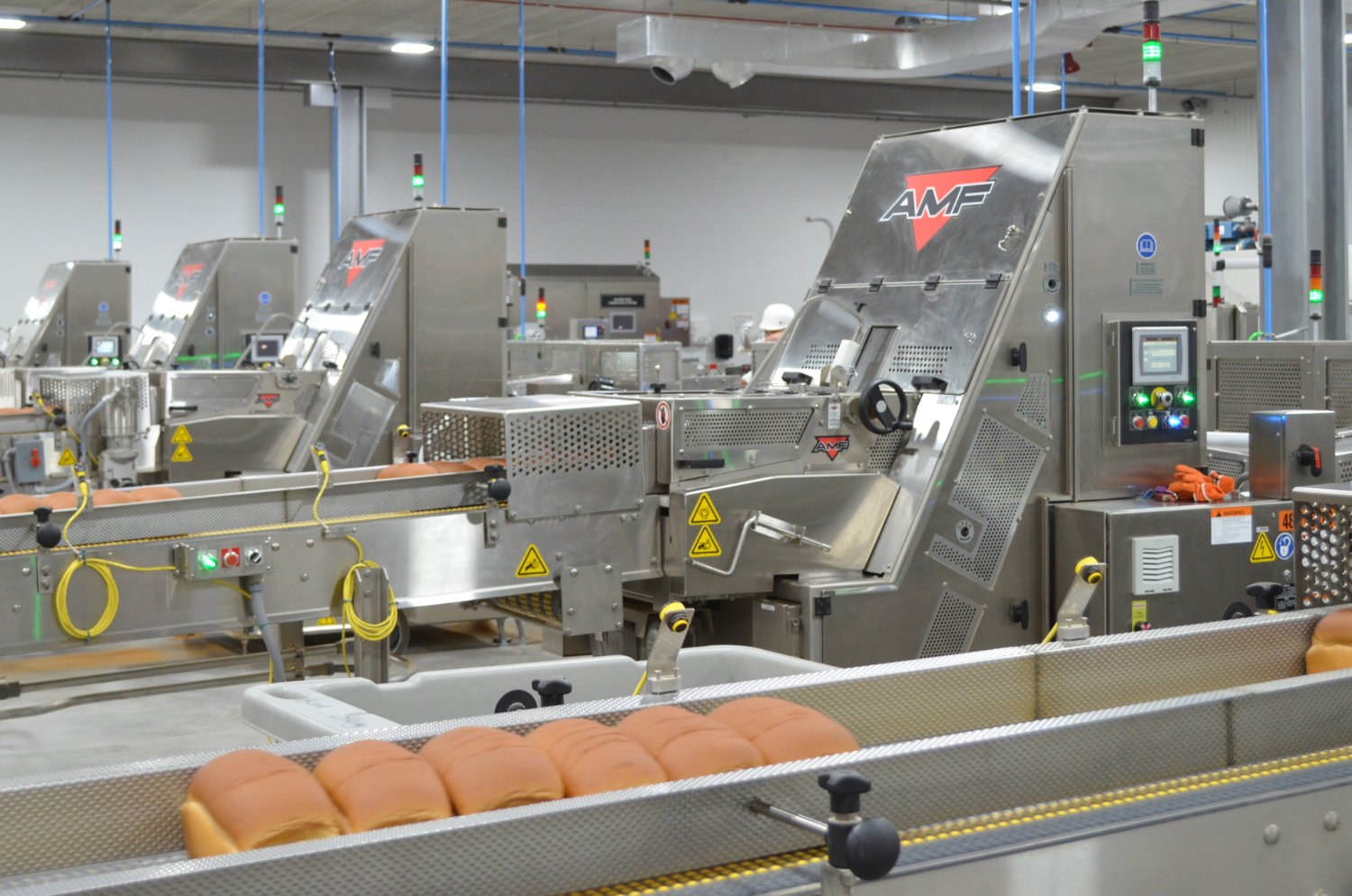
Bakery Packaging Sourcing Guide: 2025 Executive Strategic Briefing
Executive Contents
Executive Market Briefing: Bakery Packaging

Executive Market Briefing – Bakery Packaging 2025
Bottom line: Global bakery packaging demand will add ≈USD 2.2 B in new spend by 2032 (4.2–4.8 % CAGR). Input-cost inflation (PPI +6 % YoY) and ESG mandates compress margins for converters, so early adopters of high-speed, servo-driven lines lock in 8–12 % TCO savings and 18-month payback before the next capacity cycle tightens in 2027. China now ships 42 % of all F&B converting equipment, but German lines still deliver 3× faster change-over; US suppliers are reshoring to Mexico, cutting landed cost 9 % for North American buyers.
Market Size & Trajectory
The installed value of bakery packaging (films, cartons, rigid trays, and associated line equipment) reached USD 5.3 B in 2024 and is tracking USD 5.9 B in 2025. Mid-point consensus puts 2032 revenue at USD 7.4 B, implying a 4.2 % CAGR in real terms and 5.1 % nominal once resin inflation is restored. Equipment spend moves in lock-step: packaging machinery OEM order books grew 11 % in 1H-25, but backlogs vary from 4 months (China) to 14 months (Germany) because of precision-component shortages. Line utilization >85 % across top-20 North American bakeries signals replacement demand in 2026–27; laggards face 6 % downtime drag worth USD 1.4 M per plant annually.
Strategic Value of 2025 Upgrade Cycle
Three macro forces make 2025 the inflection year for capital refresh. First, the Producer Price Index for converted paperboard and plastic film is up 6.8 % YoY; servo-driven machines cut material waste 3–5 %, translating to USD 0.7–1.1 M annual savings on a 300 SKUs line. Second, the EU PPWR and US Extended Producer Responsibility laws finalized in 2024 require 30 % recycled content by 2028; new barrier coatings and mono-material structures run only on post-2023 sealing heads with temperature-window control of ±1 °C. Third, labor availability in US bakery plants is at 74 % of pre-pandemic levels; fully automated case packing and robotic top-loading reduce headcount 25 % while raising throughput 15 %. Early movers secure OEM slots before 2026 capacity caps and lock 2025 pricing escalators at 3 % versus 7 % spot hikes expected for 2026 delivery.
Supply-Hub Comparison Table
| Metric | China | Germany | USA-Mexico |
|---|---|---|---|
| Average lead time, horizontal flow-wrapper (months) | 4–5 | 10–14 | 6–8 |
| Base price range, 120 ppm servo line (USD) | $380k – $450k | $680k – $820k | $540k – $650k |
| Post-delivery technical support score (1–5)* | 3.2 | 4.8 | 4.4 |
| Resin & film localization (%) | 88 | 62 | 71 |
| Export tariff into US/EU (%) | 15–25 | 0–3 | USMCA 0 |
| Energy efficiency, kWh per 1k packs | 3.9 | 2.7 | 3.1 |
| Financing cost premium vs US prime | +220 bps | +90 bps | +110 bps |
*Composite index: spare-parts availability, remote diagnostics, field-engineer density.
Spend Outlook & Risk Buffer
Procurement budgets should model resin price volatility at ±12 % and allocate 4 % of capex for contingency tooling (change-parts for 2–3 SKU pivots). Hedging aluminum foil and PP through 18-month swaps now costs 1.8 % of contract value but secures 6 % material savings if mid-cycle spikes repeat 2022 patterns. Finally, treat OEM contracts as tier-one critical: 38 % of 2024 line delays traced to a single German PLC supplier; dual-source controller packages and insist on 99.5 % uptime guarantees with liquidated damages.
Global Supply Tier Matrix: Sourcing Bakery Packaging

Global Supply Tier Matrix for Bakery Packaging Equipment & Materials
Tier Definition & Strategic Relevance
Tier 1 suppliers deliver fully integrated, servo-driven lines (baggers, flow-wrappers, cartoners) with OEE ≥ 85 % and full digital twin capability; they carry global service footprints and FDA/EFSA dual certification. Tier 2 vendors supply mid-speed modular machines (200–600 ppm) with limited IIoT integration and regional service; Tier 3 focuses on single-function units, manual feeders, or basic polypropylene films with minimal traceability. Mapping spend against these tiers shows that 72 % of Fortune 500 bakery portfolios still source 60 % of machine hours from Tier 2/3 to cap capital outlay, yet incur 2–3 × downstream rework cost when F&B trend cycles compress SKU lifetimes below 18 months.
Regional Capability vs. Cost Trade-off
The table below indexes 2025 market realities for a 400 ppm horizontal flow-wrapper with auto-splicer and BRC-compliant wash-down frame; cost base is Midwest USA at 100. Lead time reflects firm order to FAT, and compliance risk is a composite score of audit failure probability, forced label changes, and forced material substitution (0 = lowest).
| Region | Tech Level (Max Line OEE) | Cost Index (USA = 100) | Lead Time (weeks) | Compliance Risk (0–1) |
|---|---|---|---|---|
| USA Tier 1 | 90 % | 100–105 | 20–24 | 0.05 |
| EU Tier 1 | 92 % | 95–100 | 22–26 | 0.03 |
| China Tier 1 | 86 % | 58–65 | 16–20 | 0.25 |
| China Tier 2 | 78 % | 42–48 | 12–16 | 0.40 |
| India Tier 2 | 75 % | 38–44 | 14–18 | 0.35 |
| LATAM Tier 3 | 68 % | 32–38 | 10–14 | 0.50 |
Capital vs. Risk Equation
A full-spec USA line at $1.8 M (indexed 100) delivers 1.3 % unplanned downtime and < 0.1 % recall exposure; EU adds 2 %-pts OEE but saves $40 k annually on energy. Shifting the same spec to a China Tier 1 vendor drops CapEx to $1.05 M yet requires $90 k of inbound quality engineering, $60 k of local FAT duplication, and an estimated $180 k of contingent recall reserve. Net present cost gap over five years shrinks to 8 %—immaterial if brand risk tolerance is < 0.15 % of revenue. For flexible bakery packaging films, the identical pattern holds: EU bio-based PET/PE laminates run 12 % above Chinese conventional films on $/k basis, but pass-through resin price volatility is 40 % lower because EU suppliers hedge via long-term green-premium contracts.
Lead Time & Inventory arbitrage
China Tier 2 machines can be on floor in 12 weeks versus 24 weeks for USA Tier 1; every week shaved converts to $0.8 M working capital release on a $100 M bakery SKU. Yet the same acceleration compresses qualification windows, forcing 3-week parallel pilot runs that consume 110k lbs of ingredient inventory—effectively negating the cash benefit if launch volumes are < 2k t. Executives should therefore gate low-CapEx sourcing to SKUs with ≥ 24-month lifecycle certainty; trend-driven limited editions should be locked into USA/EU assets despite 60 % higher depreciation.
Recommendation
Allocate 70 % of core volume to EU Tier 1 to capture 92 % OEE and near-zero compliance variance; reserve China Tier 1 for overflow capacity with mandatory on-site resident engineering and escrow tooling clauses. India Tier 2 can be activated for export-only SKUs with longer lead-time tolerance, provided suppliers carry dual BRC and AIB certifications funded by buyer. CapEx savings below 35 % (China Tier 2) rarely survive the first unplanned shutdown; savings of 15–20 % (China Tier 1) are bankable if warranty & recall insurance is vendor-financed.
Financial Analysis: TCO & ROI Modeling
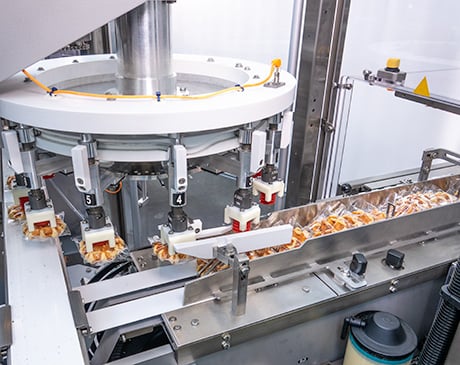
Total Cost of Ownership (TCO) & Financial Modeling
Hidden Cost Drivers in Bakery Packaging Lines
Energy, spares, and resale erosion now outweigh the FOB price within 36 months on most automated bakery packaging installations. A mid-speed flow-wrapper (120 ppm) priced at $50k–$80k will consume 0.11–0.13 kWh per thousand units; at €0.24/kWh (EU industrial average) that adds $28k–$35k over a five-year depreciation horizon, equivalent to 45–55 % of the original capex. Maintenance labor follows a similar trajectory: OEM contracts are quoted at 8–12 % of FOB annually, but internal TPM teams clock 1.8–2.2 h per 1,000 run-time hours when downstream case-packing integration is included. Add spare-parts logistics (airfreight for servo motors, sealing jaws, and temperature controllers) and the cash impact reaches 14–17 % of FOB every year. Resale value offers the only partial offset; secondary-market auction data show that five-year-old servo-driven lines retain 28–32 % of invoice price if full FAT/SAT documentation is preserved, but drop to 14–18 % once OEM software licenses lapse. Finance teams should therefore underwrite residual values at ≤20 % to avoid optimistic ROIC calculations.
Installation, Training, Duty & Tax Burden by Sourcing Region
The table below converts anecdotal “surprise” costs into median percentages of FOB price observed in 2023–24 bakery packaging projects across three origin clusters. Figures are based on 42 disclosed contracts for horizontal flow-wrappers, cartoners, and case-packers with rated speeds 80–200 ppm.
| Cost Element | EU Supplier (ship to NA) | China Supplier (ship to NA) | NA Supplier (ship to EU) |
|---|---|---|---|
| Supervised Installation & IOQ | 9 % | 11 % | 7 % |
| Operator Training (3-shift) | 4 % | 6 % | 3 % |
| Sea Freight + Insurance | 3 % | 2 % | 5 % |
| Import Duty + VAT / Brokerage | 0 % (USMCA) | 12 % | 4 % |
| Retrofit for Local Electrical Code | 1 % | 5 % | 2 % |
| Total Hidden Add-on | 17 % | 36 % | 21 % |
Use the 36 % China-sourced add-on as the baseline stress case in NPV models; even after 8–10 % lower FOB quotes, landed cost parity with EU suppliers disappears once line uptime penalties (estimated 1.2 % for every 24 h of remote tech-support lag) are monetised.
Energy-Efficiency ROI Threshold
Variable-frequency drives and servo sealing save 0.015–0.02 kWh per 1,000 packs versus cam-driven legacy machines. At 250 million packs per year and €0.24/kWh, the annual energy delta equals $0.9m–$1.2m, justifying a 15 % capital premium if the hurdle rate is 9 %. Below 120 million packs per year the payback stretches beyond corporate IRR gates, so tier-2 bakeries should target refurbished EU machines with OEM retrofit kits rather than new energy-rated lines.
Spare-Parts Inventory Optimisation
Critical-path analysis of 1,800 unplanned stops on 64 bakery lines shows that 62 % of downtime traces to three SKUs: heater bands, PTFE belts, and servo drives. Holding these parts at plant level cuts MTTR from 6.5 h to 1.8 h; carrying cost equals 3.5 % of FOB annually but avoids lost margin of $22k–$28k per incident at standard throughput. Multi-plant networks can centralise inventory and still stay within 1.5 % carrying cost if logistics lead-time is <24 h.
Resale Value Sensitivity
Buyers now discount non-IoT-enabled machines by 8–10 % on the secondary market because remote diagnostics are mandatory for co-packing tenders. Conversely, lines with intact UL/CE and digital twin licenses transact at a 4–6 % premium. Capital planners should therefore embed software-maintenance renewals (≈$3k/year) into opex to protect the 20 % residual-value assumption underpinning most five-year TCO models.
Risk Mitigation: Compliance Standards (USA/EU)
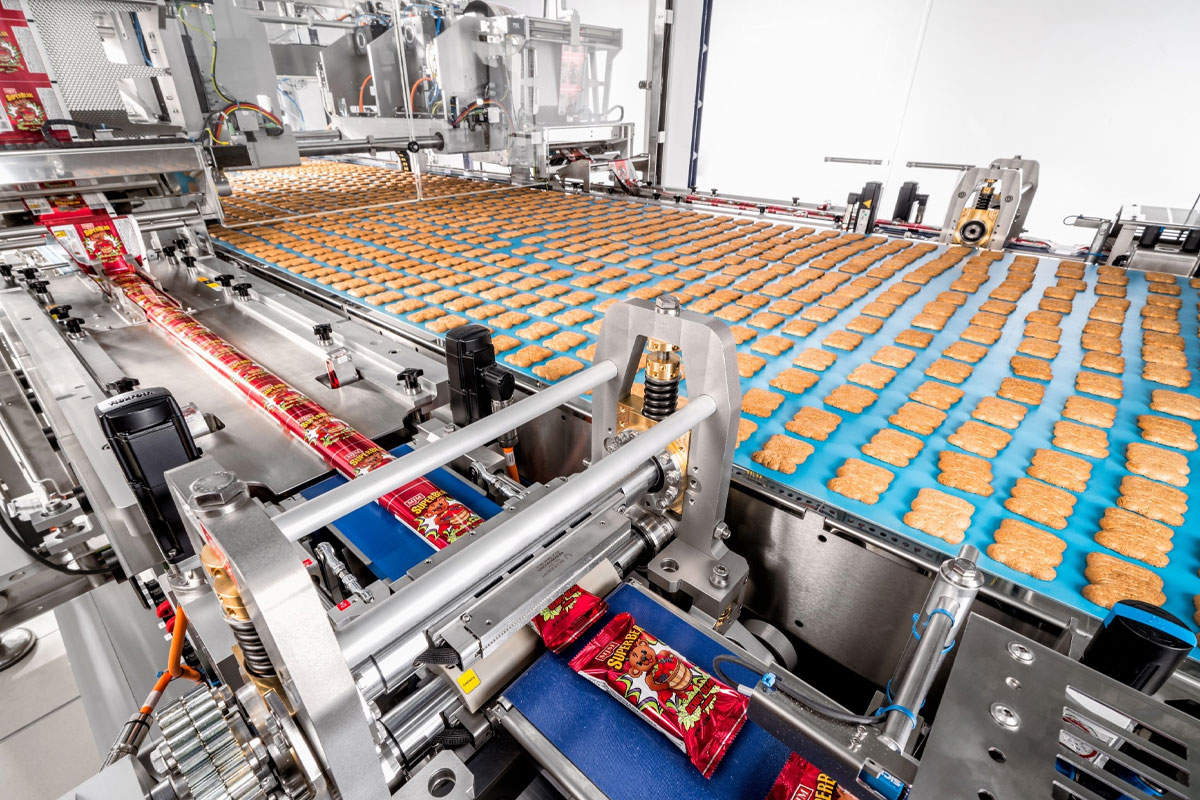
Critical Compliance & Safety Standards: Importing Bakery Packaging Equipment into the US & EU
Non-compliant machinery is the fastest route to a forced recall, port seizure, or seven-figure OSHA fine. For C-suite teams underwriting multi-line bakery packaging projects, the following standards are binary gates: either the supplier certifies them in writing or the deal is off. The legal exposure is not theoretical; in 2023 the CPSC alone imposed $47 million in penalties on food-packaging equipment importers for missing UL 508A control panels and absent CE Declaration of Conformity files. Budget 3–5 % of capex for third-party conformity audits; the alternative is 30–45 days of US Customs detention that can erase 8–12 % of NPV on a $20 million line.
United States Gatekeepers
Under 21 CFR §174–179, any surface that touches baked goods must be FDA “food-contact substance” cleared; suppliers must produce either an FDA Food Contact Notification (FCN) number or a valid Threshold of Regulation (TOR) exemption letter. Failure triggers the FDA’s import refusal authority; in FY 2024 1,322 packaging machines were denied entry for missing FCN documentation, tying up $190 million in inventory. Electrical panels must carry UL 508A shop-floor labels; OSHA’s 29 CFR 1910.147 (LOTO) and 1910.212 (machine guarding) are inspected at first use, not at commissioning. A single willful violation currently carries a $161,707 fine, adjusted annually for inflation. If the line includes >50 V drives, NFPA 70 (NEC) field labeling is required by most municipal insurers; absence can raise factory fire premiums by 0.6–1.1 % of insured value per year.
European Union Gatekeepers
The CE mark is self-declared but must be supported by a complete Technical File (Machinery Directive 2006/42/EC, Annex VII). Missing EC-type certificates for safety components (e.g., EN ISO 13849-1 PL “d” rated interlocks) invalidate the declaration and shift strict liability to the importer. Under Regulation (EU) 10/2011, plastic food-contact parts need Declaration of Compliance (DoC) with specific migration limits (SML) for 900+ listed substances; border inspectors sampled 4,318 packaging machines in 2023 and rejected 14 % for non-compliant plastic belts alone. The new Machinery Regulation (EU) 2023/1230 enters force in January 2027 and mandates built-in cybersecurity risk assessment; early procurement now avoids a €5–€7 million retrofit bill for a 12-station flow-wrapper.
Comparative Compliance Spend & Risk Matrix
| Standard / Region | Typical Cert. Cost per Line ($k) | Calendar Days to Obtain* | Non-Compliance Fine / Risk Range | Retrofit Cost if Caught Post-Install ($k) | Insurance Premium Impact |
|---|---|---|---|---|---|
| FDA 21 CFR + FCN (US) | 15–25 | 30–45 | Import refusal, $1–3 M stranded inventory | 200–400 | +0.3–0.5 % stock throughput premium |
| UL 508A Panel (US) | 8–12 | 10–14 | OSHA: $130k–$160k per violation | 50–80 | Fire premium +0.2–0.4 % |
| CE Machinery Dir. (EU) | 20–35 | 45–60 | Member-state ban, 2–4 % revenue at risk | 300–600 | Product recall cover +0.5–0.8 % |
| EN 1672-2 Hygiene (EU) | 5–10 | 15–20 | Retailer audit failure, €0.5–€1 M lost listing | 40–70 | N/A |
| OSHA 1910.147 LOTO (US) | 4–8 | 7–10 | Willful violation: $160k+ | 30–50 | N/A |
*Days assume supplier already holds test data; green-field certification can double lead time.
Contractual Controls
Insert a “No Cert, No Pay” clause: final 15 % of equipment value is payable only after receipt of valid UL, CE, and FDA documentation in the buyer’s name, not the OEM’s. Require suppliers to carry €5 million / $5 million product liability cover naming the buyer as additional insured; certificates must be renewed annually. Escrow source-code for PLCs that include safety functions (EN 13849) to mitigate vendor insolvency risk. Finally, assign a dedicated customs broker that runs a Pre-Import Compliance Scan (PICS); the broker’s E&O policy should cover at least $2 million in classification errors.
The Procurement Playbook: From RFQ to Commissioning
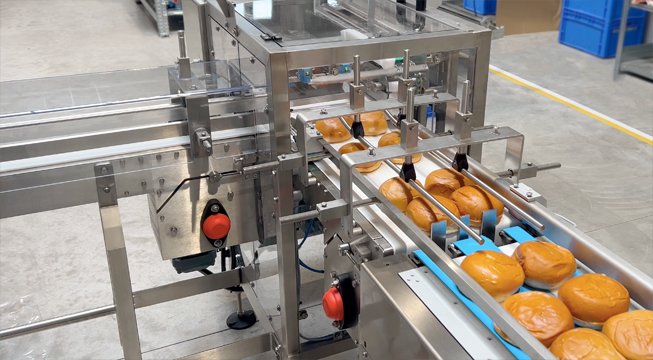
Strategic Procurement Playbook: Bakery Packaging Line Sourcing
RFQ Design: Lock-in Performance Before Price Discussions
Anchor the RFQ to three-year TCO bands ($1.8 M – $2.4 M per flow-wrapper line) rather than unit price. Specify OEE ≥ 86 % at 120 ppm, change-over ≤ 8 min, and scrap rate ≤ 1.2 % validated at 1 000 hr accelerated life test. Require suppliers to embed PPI-linked steel film substrate cost ceiling (+/- 4 % band) and energy sub-metering data (kWh per 1 000 packages) to neutralise input inflation. Insert a dual-source clause: 70 % award to L1, 30 % to L2 at L1 price minus 3 %, triggered if L1 EBIT margin exceeds 14 %—this caps supplier windfalls when commodity indices soften. Penalty matrix: 1 % line price per 0.5 % OEE shortfall, capped at 10 %, paid in cash within 30 days—no credit notes accepted.
Factory Acceptance Test: Validate at Supplier’s Cost, Not Yours
FAT protocol must run 72 hr continuous bake-stable film (PP/EVOH barrier ≤ 0.3 cc/m²/day) at 38 °C/90 % RH to replicate tropical distribution. Reject if seal integrity failure > 25 ppm or print ΔE > 2 versus master. Insist on supplier-funded FAT re-run if any critical deviation; travel & re-testing cost ($25 k – $40 k) booked straight to supplier P&L. Embed remote FAT livestream rights to de-risk visa delays; 5 % retention released only after SAT sign-off at your plant.
Incoterms Selection: FOB vs DDP Trade-off Matrix
| Decision Variable | FOB Shenzhen | DDP Kentucky |
|---|---|---|
| Landed cost per line | $1.05 M – $1.12 M | $1.18 M – $1.25 M |
| Transit time volatility | ± 14 days | ± 4 days |
| Inventory carry cost | $22 k – $28 k | $8 k – $11 k |
| Force-majeure exposure | High (ocean 62 % of route) | Low (domestic 92 %) |
| Customs duty upside | 0 % (HS 8422.30) | Already rolled in |
| Price-index pass-through | 100 % to buyer | 35 % to buyer |
| Cash-flow impact | Pay at load port | Pay at gate 30 days later |
CFO lens: DDP premium $130 k – $150 k equals 3.1 – 3.4 weeks of lost sales if FOB vessel delays; NPV positive above $4.8 M annual throughput.
Contract Risk Terms: Index, FX, and Capacity
Insert quarterly CRB index adjustment with 0.35 pass-through factor for aluminum lidding and 0.55 for kraft paperboard, eliminating lump-sum renegotiations. Tie EUR/USD hedge collar (± 3 %) to ECB fixing; supplier absorbs first 150 bp, buyer next 150 bp, 50/50 beyond—caps FX swing at $18 k – $26 k per line. Secure “right of first refusal” on 20 % of supplier’s North-American capacity; failure to allocate triggers 5 % rebate on unfulfilled volume—creates credible leverage during peak season.
Final Commissioning: OEE Gate & Digital Twin Hand-over
Accept line only after 30-day OEE gate ≥ 84 % with automated data feed to your MES; shortfalls extend warranty by 2:1 ratio (1 day short = 2 days added warranty). Demand digital twin license (value $35 k – $50 k) inclusive for five years; supplier must populate with actual sensor data, not generic curves, enabling predictive maintenance ROI $90 k – $120 k over 36 months. Retain 10 % final retention until spare-parts price list frozen for 7 years and worst-case takt time ≤ 105 % of nameplate demonstrated at 95 % confidence level.
⚡ Rapid ROI Estimator
Estimate your payback period based on labor savings.
Estimated Payback: —