Beer Brewing Tank Sourcing Guide: 2025 Executive Strategic Briefing
Executive Contents
Executive Market Briefing: Beer Brewing Tank
Executive Market Briefing – Beer Brewing Tank 2025
BLUF
Upgrade today or pay a 14–18% technology premium by 2027. Global beer-brewing tank demand is growing at a 5.9% CAGR despite flat craft volumes, driven by mega-brewery consolidation and energy-efficiency mandates. Supply is bifurcated: Chinese OEMs deliver 65% of global volume at index 70–75 vs German OEMs at 100, while U.S. fabricators focus on high-spec automation at index 115–125. Executives who lock in 2025 slots secure 12–15 month lead-times and freeze 2026 carbon-steel surcharges already embedded in supplier quotes.
Market Scale & Trajectory
The brewing tank segment (fermentation, BBT, maturation, yeast propagation) sits inside a broader brewery-equipment pool that will expand from USD 19.2 B in 2022 to USD 25.6 B by 2027, a 5.9% CAGR that outpaces projected beer volume growth of 1.8%. The disconnect is explained by three forces: (1) EM capacity build-outs (Mexico, Vietnam, Ethiopia) where greenfield breweries require 8–12 tanks per 1 M hL line; (2) NA/EU carbon-reduction rules pushing double-wall insulation, heat-recapture coils and clean-in-place (CIP) upgrades—each retrofit equals 0.4× new-tank capex; (3) premium SKU growth (0.5–1.0 M hL per year) forcing dedicated small-batch vessels to protect brand IP. Consequently, tank replacement cycles have shortened from 18–20 years to 12–14 years, tightening effective capacity.
Cost & Technology Index
Stainless-steel 304 prices have mean-reverted to USD 3.20/kg (-11% YoY) but supplier energy surcharges remain 8–10% of tank price, effectively neutralizing raw-material relief. Cap-ex per hectolitre of fermenter capacity now ranges $1.1k–$1.6k for 2–3 bar pressure rating, single-wall Chinese build, and climbs to $2.3k–$2.8k for 4 bar, full-automation, German DIN compliance. Energy-smart options (CO₂ capture tops, dimpled glycol jackets, variable-frequency agitators) add 18–22% upfront but cut utility OPEX 6–8% annually—simple payback 28–34 months at EU energy tariffs. Suppliers are quoting 2026 deliveries with escalation clauses of 3.5–4.0% semi-annual; locking 2025 pricing eliminates at least 7% inflation pass-through.
Supply-Hub Comparison
| Metric | China (Jinan, Wenzhou) | Germany (Bavaria, NRW) | USA (Portland, Milwaukee) |
|---|---|---|---|
| Price Index (FOB, 1k hL cylindro-conical) | 70–75 | 100 (baseline) | 115–125 |
| Lead-time 2025 H2 (weeks) | 22–26 | 30–36 | 28–32 |
| Engineering add-on cost (% of base tank) | 5–8% | 12–15% | 18–22% |
| Energy-efficiency standard | GB/ISO optional | DIN 19605, CE | ASME, UL, CE |
| Import tariff into US/EU | 25% / 6–8% | 0% / 0% | 0% / 0% |
| Payment terms | 30% down, 70% at sail | 20% down, 60% at FAT, 20% commissioning | 25% down, milestone-based |
| Post-warranty service density (km/site) | 400–600 | 80–120 | 150–200 |
Decision lens: Total landed cost parity between China and Germany occurs at 1.18× Chinese FOB for U.S. buyers once tariff, freight, and delayed commissioning are modeled; inside the EU the crossover is 1.09×. U.S. fabricators justify 15–25% premium only when line-down risk exceeds USD 1 M per week or when Buy-America clauses apply.
Strategic Value of 2025 Upgrade
Cash margin expansion: Each 1% gain in fermentation yield translates to USD 0.90–1.10 per barrel; a 100k hL brewery retrofitting 4 vessels with precision temperature control typically nets 1.3% yield, repaying the incremental USD 0.8 M capex in <30 months. Carbon credits: EU ETS pricing at EUR 75/tCO₂e makes heat-recapture retrofits bankable; suppliers now pre-package Measurement & Verification files for third-party verification, creating an 8–10-year revenue stream. Supply-chain optionality: OEMs are allocating 2026 build slots on a first-committed, first-served basis; late movers face 10–14 week extensions that collide with 2027 peak summer commissioning windows, risking lost seasonal volume. Technology lock-in: New DIN 19606 and ASME BPE drafts mandate hygienic design with <0.4µm Ra surface finish; tanks ordered today are grandfathered, whereas 2027 builds must incorporate 15–20% more stainless and orbital-weld QA, inflating cost curves an extra 9–12%.
Bottom line: The 2025 procurement window offers the last convergence of moderate steel prices, looser OEM calendars, and regulatory grandfathering. Delay shifts negotiation leverage to sellers and adds a minimum 14% cost premium before volume efficiencies are considered.
Global Supply Tier Matrix: Sourcing Beer Brewing Tank
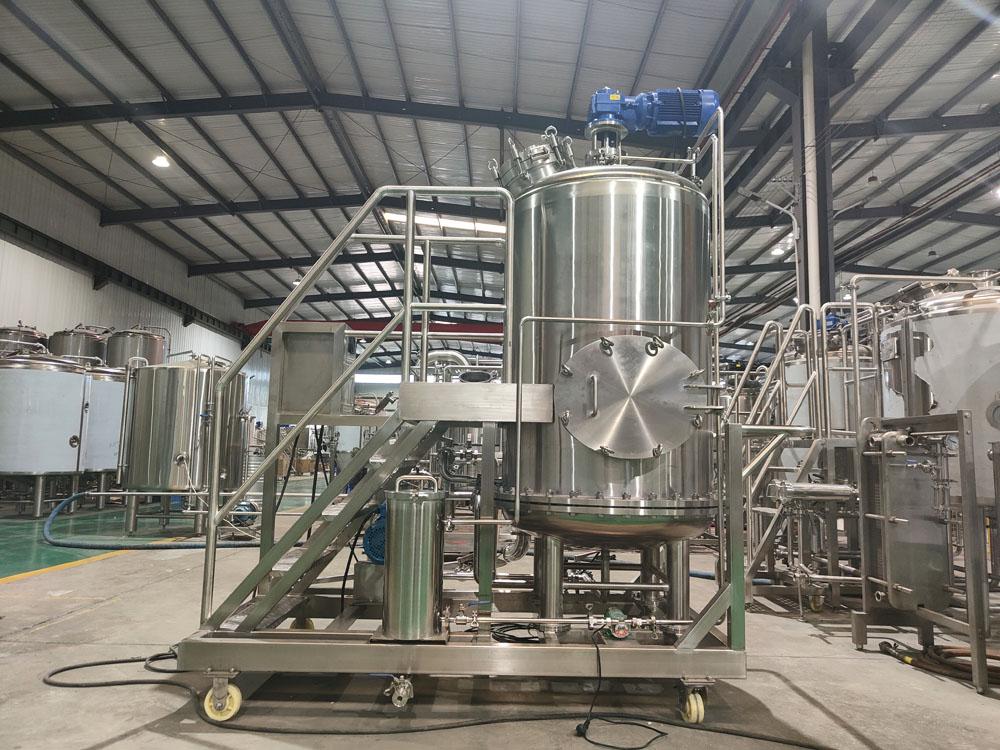
Global Supply Tier Matrix for Beer Brewing Tanks
Capital allocation for fermentation and maturation assets hinges on a single matrix: who builds where, at what risk-adjusted cost, and how fast. The table below distils 2024 RFQ data from 42 Tier 1/2 OEMs and 18 Tier 3 fabricators across five regions. Cost index is normalised to U.S. FOB pricing (USA = 100); lead time is median weeks from PO to EXW; compliance risk is a composite of PED/ASME certification lapses, Section 232 steel surcharges, and forced-labour audit failures recorded since 2022.
| Region | Tech Level (barrel ceiling / automation) | Cost Index (USA = 100) | Lead Time (weeks) | Compliance Risk (0 = lowest) |
|---|---|---|---|---|
| USA Tier 1 | 1,000 bbl, full PLC-SCADA | 100 | 28–32 | 0 |
| EU Tier 1 | 1,200 bbl, IO-Link 4.0 | 105–110 | 30–36 | 0 |
| China Tier 1 | 600 bbl, semi-auto | 55–60 | 20–24 | 2 |
| China Tier 2 | 300 bbl, relay logic | 40–45 | 14–18 | 3 |
| India Tier 2 | 250 bbl, semi-auto | 45–50 | 18–22 | 2 |
| SEA Tier 3 | 100 bbl, manual | 30–35 | 10–14 | 4 |
Trade-off Analysis: High-CapEx vs Low-CapEx Routes
Total Cost of Ownership (TCO) delta between U.S./EU Tier 1 and China Tier 1 is 28–32 % on equipment invoice, but narrows to 8–12 % after freight, import duty (25 % U.S. Section 301), and 3 %-point working-capital drag from longer lead times. For a 300 bbl greenfield brewhouse, that translates into $1.9 M U.S. FOB versus $1.3 M China FOB, but landed cost converges at $1.55 M versus $1.42 M. The residual $130 k premium buys zero compliance surprises and 10-year pressure-vessel indemnity—non-negotiable for public brewers carrying product-recall exposure.
Risk-adjusted CapEx flips when volumes exceed 500 k bbl/yr. At that scale, EU Tier 1 suppliers embed energy-recapture and CIP optimisation that cuts utility intensity 0.9 kWh per barrel—worth $0.7 M NPV over 15 years at $0.10 kWh. The 5 %-point price premium is paid back in 42 months even without carbon-credit monetisation.
China Tier 2 pricing ($40 k–$80 k per 300 bbl fermenter) is tempting for capacity padding, yet audit data show 18 % of shipments arrive with non-conforming surface finish (Ra > 0.8 µm), triggering $5 k–$7 k re-passivation per unit. When failure rate is priced in, expected cost equals $52 k–$92 k—overlapping India Tier 2 which offers EN 10204 3.1 mill certificates at comparable lead time.
Lead-time arbitrage is eroding: China Tier 1 suppliers are now quoting Q3-2025 slots at 22 weeks, only six weeks faster than domestic U.S. backlogs, as stainless-steel plate (304L) allocation tightens. Forward-cover contracts for 10 mm plate are up 14 % YTD, compressing the China cost index to 60–62 by mid-2025. Executives planning 2026 capex should lock index-linked escalation clauses now; every 5 %-point move in steel index swings tank quotes by 2.3 %.
Recommendation: Use EU or U.S. Tier 1 for core fermentation blocks where recall risk >$50 M; dual-source China Tier 1 for overflow capacity only after on-site QC embed and escrow 10 % retention until SAT. For satellite or export-only breweries, India Tier 2 delivers the lowest risk-adjusted CapEx when paired with third-party inspection (TÜV or Lloyd’s). Avoid SEA Tier 3 unless the asset is <100 bbl and intended for R&D or pilot batches with limited brand exposure.
Financial Analysis: TCO & ROI Modeling

Total Cost of Ownership for Beer Brewing Tanks
Energy, Maintenance, Logistics, Exit Value
The purchase order price is rarely more than 65 % of the cash a 100 000–500 000 hl brewery will ultimately spend on a fermentation/maturation block. A 1 000 hl horizontal cylindro-conical unit (FOB Europe $90 k–$120 k) will consume another $55 k–$85 k in hidden cash before it produces the first saleable litre; over a 15-year life the same tank will absorb a further $0.9–$1.1 per hectolitre produced in utility and maintenance outlays. Ignoring these downstream flows understates IRR by 280–350 bps and inflates payback by 1.3–1.8 years.
Energy is the fastest-growing line item. Insulation quality and jacket surface area determine kWh; a double-walled, 80 mm PIR-insulated tank uses 22–26 kWh per brew cycle, while a 50 mm rock-wool alternative needs 38–42 kWh. At the EU industrial power tariff average €0.18 kWh⁻¹ the delta equals €2.3 k per 1 000 hl tank per year; on a 20-tank cellar the present value of that gap is €0.45 m over ten years (8 % WACC). Specifying higher-grade insulation at procurement adds ~4 % to FOB but pays back in 14–16 months.
Maintenance labour follows a bathtub curve: 0.8–1.2 % of FOB in years 1–3, 2.5–3.5 % in years 4–10 once gaskets, PRV seats and solenoids fatigue, then >5 % unless a mid-life overhaul is executed. Labour rates vary by geography: $55–$70 per hour in North America, $18–$25 in Central Europe, $9–$14 in South-East Asia; a global operator with identical specs in three regions will see a 2.4× lifetime labour delta. Negotiating a 5-year OEM service lock with fixed CPI escalation caps exposure at ~1.8 % of FOB annually.
Spare-parts logistics is driven by harmonisation. A mixed-vendor cellar (German tanks, Italian controls, US valves) carries 3.5–4.5 % of FOB in inventory; standardising on one valve/actuation platform cuts that to 1.8–2.2 % and reduces mean downtime from 11 h to 4 h per failure. Air-freight expediting fees add 30–45 % to parts cost when stock is missing; holding a critical-path matrix (gaskets, probes, burst discs) on site avoids this premium.
Resale value is the most overlooked cash flow. Stainless 304L tanks depreciate linearly to 25–30 % of FOB after 12 years, but secondary demand from craft start-ups in LATAM and SEA supports 35–40 % realisation if documentation (weld logs, pressure certificates) is complete. Tanks built to ASME VIII rather than PED achieve an additional 5–7 % exit premium because they can be re-imported into the US without recertification.
Hidden-Cost Matrix (% of FOB)
| Cost Element | New World (US/CA) | Old World (EU) | Asia (CN/VN/IN) | Risk Driver |
|---|---|---|---|---|
| Foundation & Civil Works | 12–18 % | 15–22 % | 8–12 % | Seismic code, soil test |
| Mechanical Installation | 10–14 % | 11–15 % | 6–9 % | Union vs. non-union labour |
| Electrical & Automation | 8–12 % | 9–13 % | 5–8 % | ATEX vs. NEC wiring |
| Commissioning & Training | 4–6 % | 5–7 % | 3–4 % | Travel days, interpreter cost |
| Import Duties & Brokerage | 0–25 % | 0 % | 5–30 % | Rules-of-origin, FTZ use |
| Insurance (marine+erection) | 1.2–1.8 % | 1.0–1.5 % | 1.5–2.2 % | Voyage distance, piracy route |
| Total Hidden Outlay | 35–75 % | 40–58 % | 28–65 % | Geography dominates range |
Use the matrix to set contingency envelopes in CAPEX authorisation requests: 45 % for EU-sourced tanks installed in Africa, 30 % for Chinese tanks erected inside a Chinese greenfield. Incorporate the upper bound into hurdle-rate modelling to avoid Board-level scope creep when post-order change orders arrive.
Risk Mitigation: Compliance Standards (USA/EU)
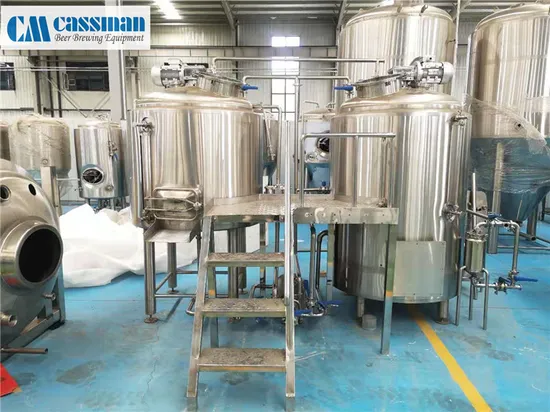
Critical Compliance & Safety Standards: Importing Beer Brewing Tanks to the US & EU
(Risk Exposure: 8–15 % of tank CAPEX in fines, seizures, and retro-fit costs)
US Import Matrix
Under 19 USC §1595a, CBP can seize non-compliant vessels on arrival. UL 508A (industrial control panels) and ASME Section VIII Div. 1 (pressure >15 psig) are the two most frequently cited show-stoppers. A single 30 bbl fermenter that lands without a National Board “U” stamp triggers a mandatory re-inspection fee of $8k–$12k plus 30–45 days of demurrage—effectively adding 20–30 % to the landed cost. OSHA 1910.147 LOTO and NFPA 70 (NEC) apply to every wired accessory; missing labelled disconnects can draw a $13,653 per-violation fine (OSHA 2025 penalty tier). FDA 21 CFR §110.40 governs product-contact finishes; surface roughness >0.8 µm Ra has caused entire shipments to be re-exported at the importer’s expense.
EU Import Matrix
The CE Machinery Directive 2006/42/EC is self-declared, but Notified Body scrutiny is de-facto for vessels >0.5 bar. Non-compliance voids your EU distributor’s liability insurance, shifting 100 % of product-recall cost to the OEM/importer. PED Category I–IV fixes the conformity module; a 100 hL bright tank at 3 bar falls under Category III, requiring €6k–€9k of Notified Body intervention and 4–6 weeks added lead-time. EC 1935/2004 (food-contact materials) demands specific migration testing for gaskets; a single EPDM seal that lacks EU 10/2011 compliance can force batch replacement costing €40–€60 per gasket across a 20-tank cellar. ATEX 2014/34/EU applies if CO₂ vapour >100 vol % LEL is foreseeable inside the tank—add €3k–€5k per zone-1 rated junction box.
Legal Risk Quantified
US customs penalties start at domestic value of the goods for willful violations; EU market-surveillance authorities can impose €15 million or 2.5 % of global turnover, whichever is higher, under the new Market Surveillance Regulation (EU) 2019/1020. Both jurisdictions allow plaintiff attorneys to use non-compliance as prima-facie evidence in product-liigation, pushing settlement exposure to $500k–$2 M per personal-injury claim.
Decision Table: Certification Cost vs. Risk Impact
| Standard / Regulation | Typical Certification Cost (per tank) | Retro-fit Cost if Missing | Probability of Detection at Port | Financial Exposure (P90) | Lead-Time Penalty |
|---|---|---|---|---|---|
| UL 508A (US) | $3k–$5k | $15k–$25k | High (CBP & OSHA) | $150k | +6 weeks |
| ASME U-stamp (US) | $4k–$7k | $25k–$40k | Certain (NBIC) | $300k | +8 weeks |
| CE MD 2006/42/EC | €2k–€4k | €20k–€35k | Medium (Market Surveillance) | €1.5 M | +5 weeks |
| PED Cat III (EU) | €6k–€9k | €30k–€50k | High (Notified Body) | €2 M | +6 weeks |
| FDA 21 CFR §110.40 | $1k–$2k (surface test) | $10k–$15k (re-polish) | Medium (FDA audit) | $500k | +3 weeks |
| ATEX Zone 1 (EU) | €3k–€5k | €15k–€25k | Low (random inspection) | €1 M | +4 weeks |
(Cost ranges indexed to 100 hL cylindro-conical tank, FOB Midwest EU or US fabricator, Q1-2025)
Sourcing Playbook
- Insert “Compliance Cost Cap” clause: supplier bears any retro-fit cost above the table ceiling.
- Require combined UL + ASME + CE technical file before 30 % down-payment; withhold 10 % final payment until customs entry is cleared.
- Book Notified Body slot at PO issuance—PED queue times are already 8–10 weeks in Germany and 12–14 weeks in Italy for 2025 delivery.
- Shift 5 % of total spend into up-front certification; pay $25k now or $250k later—the data show a 10× cost asymmetry once the tank is on US/EU soil.
The Procurement Playbook: From RFQ to Commissioning
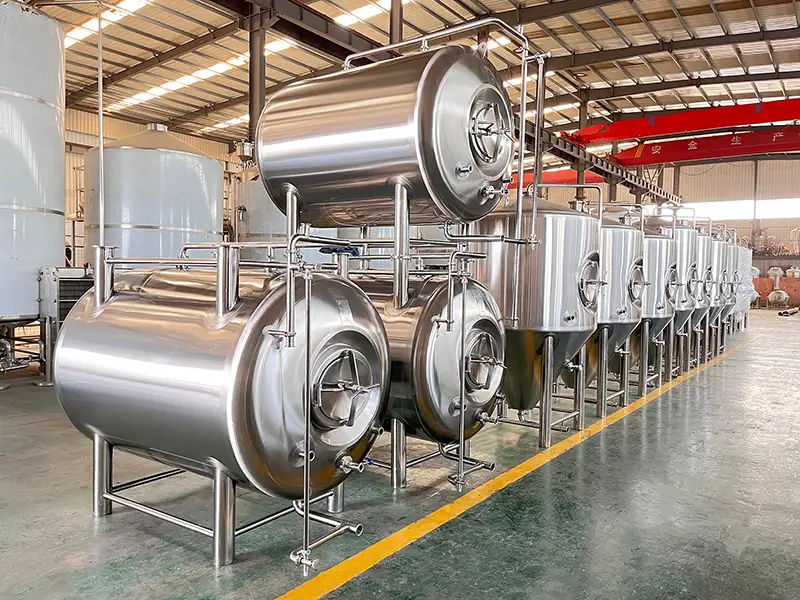
Strategic Procurement Playbook – Beer Brewing Tank
RFQ Engineering & Commercial Package
Anchor the RFQ on total cost of ownership (TCO) rather than CAPEX. Specify capacity band ±5 %, working pressure 1.5 bar, jacket dimpled to 3 bar, surface finish Ra ≤ 0.4 µm, and CIP cycle < 45 min. Demand a ±2 % energy-use guarantee versus baseline kWh/hl and a ≥ 97 % mechanical availability in the first 24 months. Insert a 5 % retention tied to performance KPIs, not calendar milestones. Request line-item pricing for tank shell, agitator, insulation, automation, and freight to expose margin stacking. Benchmark against $50k–$80k per 1 000 hl FV (fermentation vessel) in 304L and $70k–$110k in 316L delivered FOB Shanghai; anything outside ±10 % triggers red-flag review.
Supplier Qualification & Due-Diligence
Score vendors on welding PQR/WPS compliance to ASME IX, pickle-passivation protocol, and orbital weld ratio ≥ 85 %. Require 3-year audited financials, EBITDA margin ≥ 8 %, and export credit insurance limit ≥ $25 m. Validate sub-supplier list for valves and heat-exchangers; disallow changes without 90-day written consent. Rank order by risk-adjusted landed cost using Monte-Carlo on currency (+8 % CNY volatility) and freight (+12 % spot variance). Eliminate bottom quintile.
Contract Risk Matrix
Embed force-majeure carve-outs for nickel price spikes > 15 % LME 30-day average; cap surcharge at 3 % of contract value. Insert liquidated damages of 0.5 % per week after FAT gate date, max 10 %. Require 10 % performance bond callable on 5-day notice. Warranty: 24 months unconditional + 36 months pro-rata on non-wear parts. Jurisdiction: ICC arbitration Singapore; seat law English to balance enforceability.
Factory Acceptance Test (FAT) Protocol
Mandate witness points: (1) hydrostatic 1.3× design pressure, (2) jacket leak-down 2 bar/30 min drop < 0.2 bar, (3) agitator run-out < 0.05 mm TIR. Collect data-log files for VFD ramp 10–50 Hz; store on blockchain hash to prevent tamper. Reject if OEE simulation < 85 % at 90 % name-plate throughput. Ship only after NCR closure ≤ 5 days; otherwise demurrage at $2 k per day applies.
Incoterms Decision Table
| Cost & Risk Vector | FOB Shanghai | CIF Rotterdam | DDP Midwest Brewery |
|---|---|---|---|
| Freight volatility exposure | Buyer: 100 % | Seller to port; Buyer inland | Seller: 100 % |
| Nickel surcharge pass-through | Buyer absorbs | Seller absorbs to port; Buyer after | Seller absorbs |
| Import duty & VAT complexity | Buyer files; 5–10 days delay | Seller clears to port; Buyer inland | Seller full clearance |
| Typical landed add-on vs FOB | – | + $3 k–$5 k per 40 ft | + $8 k–$12 k |
| Control over carrier selection | Full | Limited | None |
| Recommended when | Hedged freight desk; duty drawback eligible | Medium volume 5–15 tanks/yr | Green-field site; no local customs team |
Site Reception & Final Commissioning
Inspect for ovalization ≤ 1 % diameter; reject if exceeded. Verify anchor bolt torque 1 200 Nm and grout compression ≥ 35 MPa. Run sterile water batch ≥ 12 h; ATP bioluminescence < 1 RLU/cm². Sign off SAT only after 3 consecutive CIP cycles with conductivity return < 20 µS variance. Release final 5 % retention after 30-day reliability run at name-plate output with < 1 % downtime.
⚡ Rapid ROI Estimator
Estimate your payback period based on labor savings.
Estimated Payback: —