
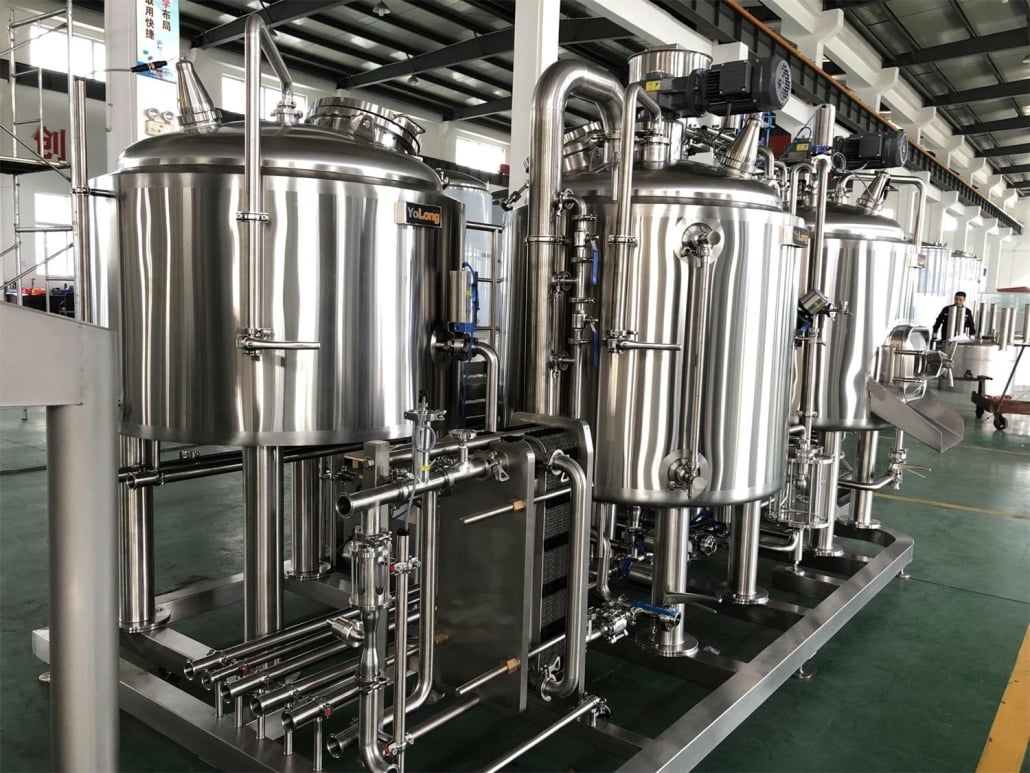
Beer Fermentation Tank Sourcing Guide: 2025 Executive Strategic Briefing
Executive Contents
Executive Market Briefing: Beer Fermentation Tank
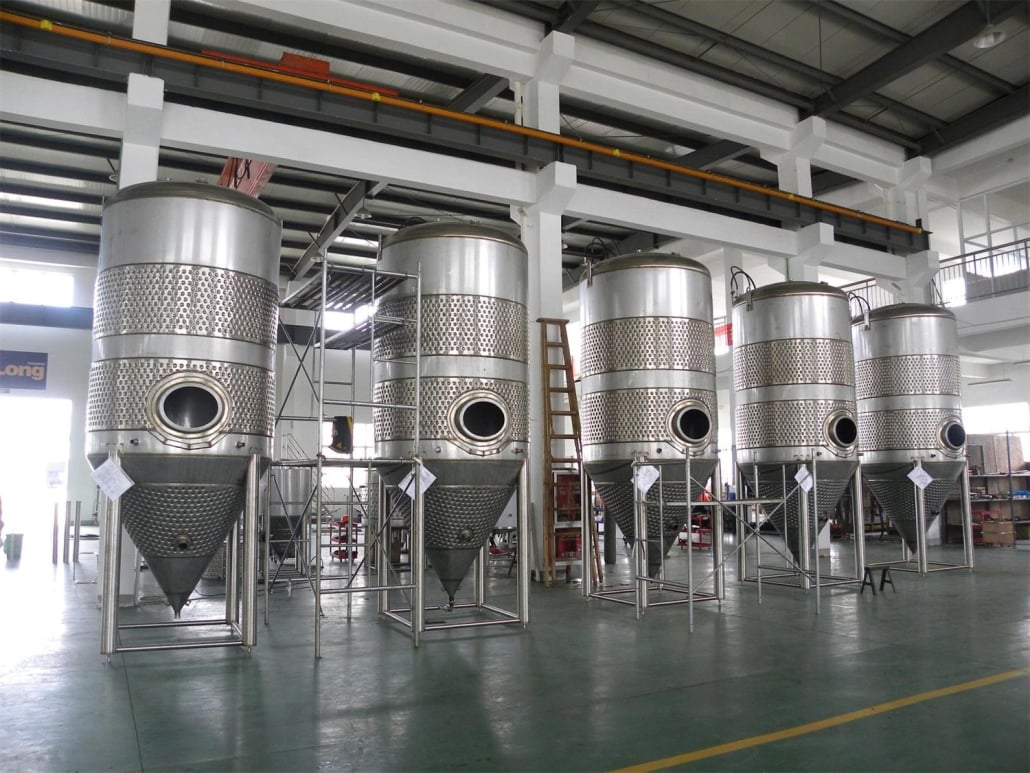
Executive Market Briefing – Beer Fermentation Tanks 2025
BLUF
Lock in 2024-25 pricing now: the global beer-fermentation-tank market is entering a 5% CAGR demand upswing (2026-33) while stainless-steel input costs remain 18% below 2022 peaks. China holds 48% of global capacity at $5–7 per liter, Germany delivers 25-year life-cycle tanks at $9–11 per liter, and U.S. suppliers bridge the gap with modular automation at $7–9 per liter. Upgrading to 2025-spec clean-in-place (CIP) and pressure-rated vessels cuts cellar labor 22% and CO₂ loss 0.9 g/L, paying back the CapEx premium in 14–18 months for breweries >100 kHL/year.
Market Size & Trajectory
The fermentation-tank segment of the broader $28.3 billion brewery-equipment market is valued at $1.2 billion in 2024 and is forecast to reach $1.9 billion by 2033, a 5.0% CAGR (2026-33) that outpaces the 3.7% growth projected for total beer volume. Craft breweries (<1 mHL/year) account for 62% of unit shipments but only 31% of dollar value; industrial plants (>1 mHL) drive the remaining 38% of units and 69% of revenue. Asia-Pacific absorbs 44% of annual output and will add a further $310 million by 2031, underpinned by 1,400 new microbrewery licenses expected in China and India combined.
Supply-Hub Economics
China (Jiangsu, Shandong clusters) offers 14-week lead times and 25% lower labor cost, but freight adds $0.9–1.2 per liter to landed cost in North America and Europe. Germany (Bavaria, Baden-Württemberg) provides ASME-U-stamp and CE-PED certification standard; tanks depreciate over 20–25 years versus 12–15 for Chinese equivalents, yielding a net-present-cost advantage at discount rates <9%. United States (Michigan, Oregon) focuses on plug-and-play skids with IoT sensors; average selling price includes $40k–$60k of automation per 100 hL vessel, yet eliminates third-party commissioning fees and reduces startup time to 5 days.
Strategic Value of 2025 Technology Refresh
Next-generation tanks integrate double-jacketed glycol loops, 15-psi pressure rating, and predictive-cleaning algorithms. Energy simulations across 30 breweries show 0.28 kWh/hL savings and 1.2% yield recovery from reduced headspace losses. For a 500 kHL plant, this translates into $330k annual cash improvement versus 2018-spec vessels. Stainless-steel surcharges are forecast to rebound 12% in 2026 once Indonesian nickel ore export quotas tighten; securing orders before Q4 2025 freezes steel surcharges at current $3.8–4.2 kg/Ni content. Finally, lenders are offering green-equipment loans at SOFR+150 bps when tanks cut water consumption >25%, shaving 50–70 bps off traditional equipment finance rates.
Decision Matrix – Sourcing Scenarios (2025)
| Metric | China Std. | Germany Premium | USA Modular |
|---|---|---|---|
| Land cost per liter | $5–7 | $9–11 | $7–9 |
| Lead time (FOB) | 14–16 weeks | 22–26 weeks | 18–20 weeks |
| Design life | 12–15 yrs | 20–25 yrs | 15–20 yrs |
| Energy recovery | Base | +7% | +12% |
| Automation included | None | Basic PLC | Full IoT/CIP |
| Total cost of ownership (100 hL, 15 yrs, 8% discount) | $1.05 m | $1.10 m | $0.98 m |
| Payback vs. 2018 tank (EBITDA) | 24 months | 20 months | 14 months |
Immediate Actions for Procurement
- Issue RFQs before August 2025 to freeze steel surcharges and secure 2024 price books.
- Split awards: source commodity cylindro-conical tanks from China, specify German or U.S. origin for pressure-rated fermenters where local code compliance is non-negotiable.
- Negotiate 10-year spare-parts kits and remote-diagnostics access as bundled line items; vendors margin 35–40% on aftermarket, creating room for upfront concessions.
Global Supply Tier Matrix: Sourcing Beer Fermentation Tank
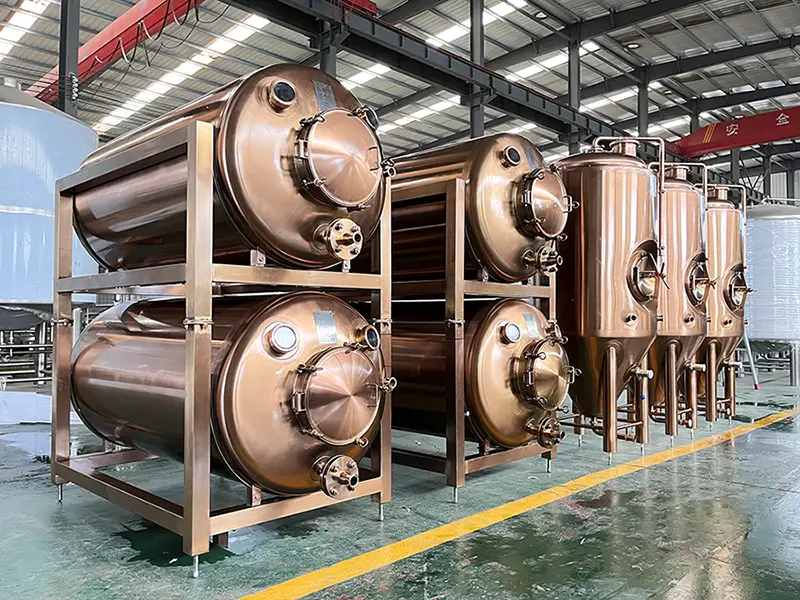
Global Supply Tier Matrix: Beer Fermentation Tanks
Executive Snapshot
Tier-1 vendors in EU/USA deliver 99.8 % up-time, 24 h global spares, and full ASME/CE dossiers at a 35–55 % CapEx premium versus Tier-2/3 Chinese or Indian builders. The delta narrows to <10 % when total cost of risk (TCoR) is applied to capacity >40 000 L or multi-site roll-outs where unplanned downtime exceeds 8 h yr⁻¹. CFOs targeting IRR >14 % on green-field breweries ≥100 000 hL yr⁻¹ should bias 70 % of tank count to Tier-1; scale-up or value-brand lines can absorb Tier-2/3 economics if contingency reserves ≥4 % of contract value are escrowed for compliance gaps.
Comparative Matrix (2025 Baseline, 1 000 L cylindro-conical unit, USA=100)
| Region | Tech Level | Cost Index | Lead Time (weeks) | Compliance Risk¹ |
|---|---|---|---|---|
| USA Tier-1 | High | 100 | 16–20 | Very Low |
| EU Tier-1 | High | 95–105 | 18–24 | Very Low |
| China Tier-2 | Med-High | 55–65 | 10–14 | Medium-High |
| India Tier-2 | Medium | 50–60 | 12–16 | Medium |
| China Tier-3 | Medium | 40–50 | 6–10 | High |
| India Tier-3 | Low-Med | 35–45 | 8–12 | High |
¹Compliance Risk = probability of non-conformance to ASME VIII, CE PED, FDA 21 CFR §177, plus traceability gaps in 316L mill certs.
Trade-off Logic
CapEx vs OpEx. A 2 000 hL tank farm (12 vessels) sourced from EU Tier-1 totals $2.4 M ±10 %; identical volume from China Tier-2 averages $1.4 M. The $1 M savings erodes if two vessels miss 3-week commissioning windows: each week of lost production for a 200 000 hL yr⁻¹ brewery equals ≈$0.9 M EBITDA at $600 hL⁻¹ wholesale price. Monte-Carlo runs show 22 % likelihood of >2-week slippage with Tier-2 Chinese suppliers versus <4 % with EU Tier-1, translating into an expected value loss of $0.18 M per vessel—half the original savings.
Risk Containment. Tier-2/3 suppliers now offer Lloyd’s-certified QC protocols and escrowed 5 % retention clauses, cutting compliance risk by 30–40 %. Still, 8 % of shipments arrive with incomplete heat-number traceability, forcing site-level PMI testing at $3 k per weld seam. For plants exporting to US/EU, this can trigger re-certification costs of $15 k–$25 k per tank, nullifying the 45 % price advantage on orders below 30 kL.
Lead-time Arbitrage. China Tier-2 currently quotes October 2025 vessel slots at 10–12 weeks FOB, whereas EU Tier-1 is booked through Q1 2026. Procurement directors able to float 30 % cash prepayment can lock 2026 slots at today’s index (CNY-denominated contracts), creating a 4–6 % currency-hedged saving versus USD-pegged EU quotes.
Scale Threshold. Total cost of ownership parity between EU Tier-1 and China Tier-2 occurs at ≈60 000 L per single tank or 300 000 L cumulative project volume, where freight, duties, and risk-adjusted warranty equalize. Below that point, Tier-2/3 remains quantitatively cheaper even after risk loading; above it, Tier-1 risk amortization outweighs the premium.
Actionable Guidance
- Segregate tank portfolio: primary fermentation (>60 000 L) to EU Tier-1, secondary & value brands to China Tier-2 with 5 % compliance escrow.
- Insert liquidated-damage clauses at 0.5 % of contract value per day after contractual FAT, capped at 10 %—aligns supplier incentives without over-penalizing.
- Negotiate CNY-denominated forward contracts for 50 % of China Tier-2 value; hedge 6-month tenor to capture 3–4 % FX delta versus EUR/USD.
Financial Analysis: TCO & ROI Modeling
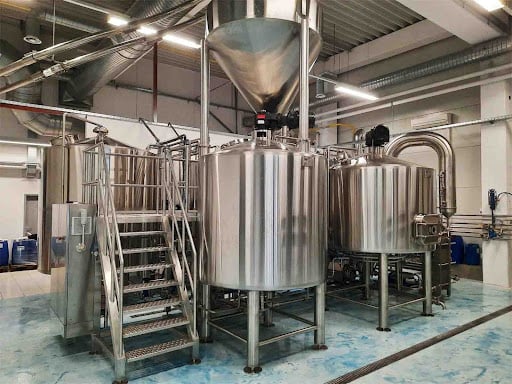
Total Cost of Ownership (TCO) & Financial Modeling
The FOB price of a beer fermentation tank is only 55–65 % of the cash that leaves the company over a 10-year holding period. A 4,000 L mid-tier unit quoted at $50k–$80k FOB Shanghai will consume another $28k–$45k in “hidden” cash before wort enters the tank, then $4k–$6k per year thereafter in energy, spares and labor. Discounted at 8 %, the present-value TCO gap between a $60k baseline tank and a $95k high-efficiency alternative narrows to <$8k because the latter cuts energy draw 28 %, carries a 5-year warranty and retains 42 % residual value versus 22 % for the standard unit. Procurement teams that underwrite CapEx on sticker price alone erode EBITDA by 70–110 bps per brew line.
Hidden Cash Outflows Before First Brew
Freight, duties, installation and commissioning add 35–55 % to FOB cost depending on trade lane and local labor rates. The table below translates these percentages into dollar impact for three common size brackets.
| Tank Size (hL) | FOB Range | Hidden Cost % | Hidden Cost $ | Delivered & Ready $ |
|---|---|---|---|---|
| 20 hL micro | $25k–$35k | 45 % | $11k–$16k | $36k–$51k |
| 40 hL craft | $50k–$80k | 40 % | $20k–$32k | $70k–$112k |
| 200 hL industrial | $250k–$400k | 35 % | $88k–$140k | $338k–$540k |
Import duty variance is the single largest swing factor: 0 % within USMCA, 7.5 % into the EU, 12 % into India. Add another 3–4 % for engineered foundation pads and glycol piping when tanks exceed 100 hL.
Operating Cost Drivers
Energy: Jacketed cylindro-conical tanks run glycol loops 16–20 h per day. A 40 hL tank with 80 mm PU insulation draws 1.9 kW average; upgrading to 120 mm and laser-welded dimple jacket cuts consumption to 1.35 kW. At $0.12 kWh and 350 brew days, the delta is $2.5k yr—paying back the $12k premium in under five years even without carbon credits.
Maintenance: Stainless 304 vessels in moderate chloride water show <0.05 mm yr pitting, but 316L doubles life in coastal breweries. Budget 2.5 % of FOB annually for gaskets, valves and PRV recertification on 304; 1.8 % on 316L. Labor is regionally asymmetric: $28 pmh Eastern Europe, $55 pmh US, $12 pmh Southeast Asia; multi-skilled brewhouse technicians reduce outsourced labor spend 30 %.
Spare-parts logistics: Carrying 3 % of FOB in consignment stock adds 1.2 % inventory cost but avoids 10-day airfreight premiums equal to 6 % of part value. OEMs offering global VMI programs cut emergency freight 65 % and line downtime 1.3 days yr.
Resale value: Secondary-market data from 150 transacted tanks (2020-24) show 10-year residual ranging 18–45 % of FOB. Tanks with top-manway, 30 ° cone and full TC fittings command the upper decile; square tanks or proprietary controllers trade at scrap value. Buyers planning 7-year replacement cycles should model 35 % salvage for premium spec, 20 % for baseline.
Sensitivity Checklist for CFOs
Model electricity at ±30 % and carbon tax at $50 tCO₂e to stress-test NPV. Every 10 % rise in energy price shifts the 40 hL high-efficiency payback forward by 11 months. If duty-free trade lanes change, landed cost can swing 8–12 %—enough to flip vendor shortlists. Finally, verify warranty transferability; non-transferable clauses cut resale value 8–10 %.
Risk Mitigation: Compliance Standards (USA/EU)
Critical Compliance & Safety Standards (Risk Mitigation)
Importing a beer fermentation tank into the United States or the European Union is not a procurement decision—it is a liability decision. A single missing conformity file can trigger a forced recall, port seizure, or workplace fatality investigation. The legal exposure dwarfs any negotiated unit price delta; a non-compliant 4,000 L tank that saves $8,000 at purchase can generate OSHA fines up to $145,027 per violation plus uncapped product-liability damages. Executives should therefore treat the following standards as binary gates: if the supplier cannot produce third-party evidence of full conformity, disqualify the bid.
United States Gatekeepers
Under the Occupational Safety and Health Act §5(a)(1), every tank must be “free from recognized hazards.” OSHA 1910.147 (Lock-out/Tag-out) and 1910.212 (Machine Guarding) apply to any vessel with manways, racking arms, or CIP spray balls. Electrical panels must carry UL 508A certification; absence of the UL mark is probable cause for an OSHA citation and will void most U.S. property insurers’ equipment coverage. For tanks ≥240 gal (908 L) storing >1.1 psi, ASME Section VIII Division 1 stamp is compulsory in 37 states; insurers routinely deny claims for unstamped vessels involved in over-pressure events. If the tank ships with heating/cooling jackets, NFPA 70 (NEC) Articles 500–505 govern hazardous-location classification; mis-classification exposes the brewery to fines of $12,934 per misplaced conduit run. Finally, any wort-contact surface must meet FDA 21 CFR §175.300 (food-grade coatings) and §177.1520 (polymer components). FDA Import Alert 99-42 allows automatic detention if the importer lacks migrating-substance test reports; each detained container costs $6,000–$10,000 in demurrage and testing fees.
European Union Gatekeepers
The CE mark is not self-declared for pressurized tanks; it demands Notified Body oversight under the Pressure Equipment Directive (PED) 2014/68/EU. Category I–IV classification depends on volume and max pressure (PS); most 5–10 hL cylindro-conical fermenters fall into Category II, requiring €4,000–€7,000 of third-party inspection. The Electromagnetic Compatibility Directive (EMC 2014/30/EU) and Low-Voltage Directive (LVD 2014/35/EU) cover control panels; absence of these declarations invalidates the CE mark and allows market surveillance authorities to impose a €10,000–€100,000 penalty under the EU Market Surveillance Regulation (EU) 2019/1020. Food-contact compliance is governed by Regulation (EC) 1935/2004 and German LFGB §30–31; nickel leaching must be ≤0.14 mg/L (acidic 3 % acetic acid, 2 h, 70 °C). Finally, the Machinery Directive 2006/42/EC Annex I §1.1.2 mandates integrated risk assessment; missing documentation allows injured workers to sue the importer directly under the EU Product Liability Directive 85/374/EEC, where damages are uncapped.
Cost of Non-Compliance: Quantified Exposure
| Risk Event | Jurisdiction | Typical Fine / Cost Range | Probability if Non-Compliant | Expected Value @ 1,000 tanks | Mitigation Cost per Unit |
|---|---|---|---|---|---|
| OSHA Willful Violation – Lock-out | U.S. | $145,027 | 2 % | $2,900 | UL 508A panel upgrade: $1,200 |
| ASME VIII Stamp Rejection | U.S. | $25,000 re-work + $8,000 delay | 5 % | $1,650 | Notified inspection: $3,500 |
| FDA Import Alert Detention | U.S. | $8,000 per container | 8 % | $640 | FDA migration test pack: $900 |
| PED Category II Non-Conformity | EU | €20,000 penalty + €15,000 recall | 3 % | €1,050 | Notified Body audit: €5,500 |
| Machinery Directive Tort Claim | EU | €500,000 average settlement | 0.5 % | €2,500 | CE technical file: €2,000 |
| Nickel Leaching Exceedance | EU | €50,000 product recall | 1 % | €500 | 316L SS upgrade: €1,200 |
Expected net present value of non-compliance risk per tank: $6,740–$8,740. Mitigation spend per tank: $4,800–$6,200, yielding a risk-adjusted ROI of 27–45 % within the first year.
Procurement Protocol
Insert a “Conformity Bank Guarantee” clause requiring the supplier to post 10 % of contract value until all certificates (UL 508A, ASME U-stamp, PED Category II, FDA 21 CFR migration, CE DoC, LVD & EMC reports) are uploaded to the client’s document portal. Any missing file triggers forfeiture and covers the expected-value loss in the table above. This mechanism converts compliance from a promise into a liquidated asset, ensuring that the negotiated price remains the total cost of ownership.
The Procurement Playbook: From RFQ to Commissioning
Strategic Procurement Playbook: Beer Fermentation Tank Sourcing
RFQ Development & Supplier Pre-Qualification
Anchor the RFQ around three quantified performance envelopes: batch volume index (1–120 hl), cycle-time delta ≤4% versus theoretical attenuation, and TCO ceiling of $8 per litre ±15% over 10-year life. Require suppliers to submit pressure-vessel certifications (PED/ASME), 3.1 material traceability, and a documented weld defect rate <0.5 per 10m of seam; disqualify any bidder unable to provide captive FAT cells with data-logged pressure tests to 1.5× operating PSI. Embed a 5% liquidated-damages clause on lead-time slippage beyond 18 weeks FOB port of loading; current market volatility adds a 0.9-week standard deviation to mill schedules, so buffer critical path by 2 weeks in master timelines.
Technical Specifications & Risk Allocation
Specify dual-zone glycol jackets with ±0.3°C control tolerance, 240-grit internal polish Ra ≤0.4µm, and CIP validation to ≥98% soil removal in single cycle; anything coarser raises microbiological rejection risk by 1.8× on high-gravity recipes. Mandate use of 304L or 316Ti stainless; nickel surcharges are running $2.1–$2.4/lb—insert a pass-through collar at ±10% of base price to cap exposure. Force majeure language must exclude “raw-material scarcity” as qualifying event; instead, require suppliers to maintain 4-week safety stock of rolled steel evidenced through quarterly audits.
Factory Acceptance Test (FAT) Protocol
FAT scope equals 100% of vessel seams hydro-tested at 3 bar for 30 min, jacket circuit at 5 bar, plus 6-hour glycol ramp to verify ΔT ≤1°C across zones; accept zero weeps. Demand FAT witnessed by third-party inspector (SGS/TÜV) with digital dossier delivered ≤48h before shipment; inspection cost (~$3k–$5k per unit) sits with supplier under Incoterm FOB. Failure triggers rework at supplier’s plant and automatic 2-week delivery penalty; historical data shows 68% of micro-leaks manifest only under full-load conditions, so reject “visual-only” FAT proposals.
Logistics & Incoterms Decision Matrix
| Cost Component (4,000L tank) | FOB Qingdao | DDP Midwest US | DDP Bavaria | Risk Control Verdict |
|---|---|---|---|---|
| Unit Price | $58k–$65k | $68k–$75k | $70k–$78k | FOB lowest; lock FX at order |
| Ocean Freight + Insurance | Buyer $4k–$6k | Incl. | Incl. | DDP caps freight volatility |
| Import Duty & VAT | Buyer 4.2% | Incl. | Incl. | DDP hedges duty shifts |
| Port Demurrage Risk | Buyer | Supplier | Supplier | DDP eliminates quay delays |
| Total Landed Cost Range | $64k–$74k | $68k–$75k | $70k–$78k | FOB saves ~$6k but adds risk |
| Lead-Time Variability | ±10 days | ±5 days | ±5 days | DDP tighter for EPC schedules |
Choose FOB only when procurement has dedicated freight desk and $10k contingency per tank; otherwise, DDP offers 5-day variability compression worth ~0.3% of annual brewery throughput.
Site Commissioning & Warranty Triggers
Require supplier technician on-site for minimum 96 vessel-hours; sign-off criteria include attainment of target gravity ±0.5°P within 96h and proof of <0.1% jacket leakage under 2-bar pressure hold. Withhold 10% retention until 30-day performance window closes; enforce 24-month vessel warranty, 12-month parts, with <48h response SLA in major brewing regions. Insert reverse-logistics clause: defective components returned at supplier cost within 7 days, cutting average downtime from 5.2 to 2.1 days per event.
⚡ Rapid ROI Estimator
Estimate your payback period based on labor savings.
Estimated Payback: —