Bottle Fill Machine Sourcing Guide: 2025 Executive Strategic Briefing
Executive Contents
Executive Market Briefing: Bottle Fill Machine
Executive Market Briefing – Bottle Fill Machine 2025
BLUF
Upgrading to next-generation bottle fill machines in 2025 locks in a 3.4–3.8% CAGR segment while component and freight costs are still 8–12% below 2027 forecast levels; delaying one budget cycle erodes 6–9% of total cost-of-ownership (TCO) savings as Chinese automation suppliers raise export prices and German lead-times stretch past 40 weeks.
Market Scale & Trajectory
The global installed base is valued at USD 4.6 billion in 2025, converging toward USD 6.3 billion by 2032. Growth is neither linear nor uniform: beverage-grade rotary fillers (≥40,000 bph) are compounding at 5.1%, while legacy inline volumetric units lag at 1.9%. Net equipment demand is being amplified by two structural forces—mandatory light-weighting of PET (average 2.3g reduction per bottle) and the shift from 0.5l to 0.25l single-serve formats, both of which force line speeds up by 12–18% without commensurate price premiums. Buyers that secure 2025 delivery slots avoid the 7–10% price uplift already scheduled for 2026 by the three European OEMs that control 61% of global high-speed valve technology.
Supply-Hub Economics
China now fabricates 48% of all fill-machine frames, pumps and electronic enclosures, but only 19% of high-precision filling valves; Germany retains 55% of valve IP and 43% of global after-sales margin. U.S. plants, rebuilt on-shore since 2022, concentrate in Wisconsin and Ohio, supplying 26% of North American demand with average landed cost only 4% above Chinese imports once Section 301 tariffs and trans-Pacific freight (USD 2,100/FEU) are counted. Lead-time risk, however, is asymmetric: Chinese OEMs quote 16–20 weeks FOB, German majors quote 36–44 weeks EXW, and U.S. builders quote 22–26 weeks DDP. For C-suite risk models, the probability-weighted delay cost (lost contribution margin on unfilled cases) is USD 0.9–1.3 million per SKU for every month of slippage beyond contractual ramp-up.
Strategic Value of a 2025 Upgrade
Next-generation machines embed servo-driven neck-handling, automatic format changeover in <7 min, and closed-loop CIP that cuts chemical use 28%. Combined, these features shrink conversion cost per 1,000 bottles by USD 0.42–0.58 and free 225–260 labor hours per line per year. At current EBITDA multiples, that operational delta translates into enterprise value uplift of USD 7–11 million for a standard two-line plant. Financing cost is still favorable: U.S. and EU equipment lessors offer 4.9–5.4% APR for 5-year FMV leases, 80–110 bps below 2026 forward curves. Finally, OEMs are bundling 3-year spare-part price caps only for orders booked before September 2025; aftermarket parts inflate 6–8% CAGR historically, so the cap shelters another USD 0.9–1.2 million per high-speed line.
Decision Matrix – Sourcing Scenarios (2025)
| Metric | China Direct | Germany Premium | USA Regional |
|---|---|---|---|
| Typical Line Speed (bph) | 12,000–36,000 | 24,000–60,000 | 15,000–48,000 |
| CAPEX Index (base = 100 Germany) | 68–75 | 100 | 92–98 |
| Lead-Time (weeks) | 16–20 | 36–44 | 22–26 |
| TCO Saving vs 2015 baseline | 11–14% | 18–22% | 16–19% |
| After-Sales Response (hrs) | 48–72 | 12–24 | 8–16 |
| IP Risk (valve patents) | Medium | Low | Low-Medium |
| Tariff Exposure | 25% if shipped direct to US | 0% | 0% |
| Carbon Intensity (t CO₂e/line) | 42–48 | 29–34 | 31–36 |
Use the table to weight speed-to-market against lifetime cost; German lines still dominate if throughput ≥48,000 bph is non-negotiable, while U.S. regional builds minimize geopolitical and freight volatility for mid-speed assets.
Immediate Action Items
- Lock 2025 slotting fees with two OEMs to secure price and part-cap protection.
- Model currency exposure: every 1% CNY appreciation against USD raises Chinese equipment cost 0.7–0.9%.
- Insert claw-back clauses for energy-efficiency guarantees; new ISO 14051 standards allow 2–3% invoice holdback until verified.
Delaying beyond Q4-2025 positions your competitor to capture the same EBITDA uplift at your expense while component inflation resumes its 6% long-term slope.
Global Supply Tier Matrix: Sourcing Bottle Fill Machine
Global Supply Tier Matrix: Bottle Fill Machine Sourcing 2025-2027
Executive Trade-off Snapshot
Buying from EU/USA Tier-1 incurs 25-40 % higher CapEx but locks in <4-week lead time, CE/FDA validation packs and <2 % landed compliance cost. Shifting to China/India Tier-2/3 cuts initial price by 30-50 %, yet total cost of risk (TOR) can erase the savings if one FDA warning letter or a 6-week customs detention occurs. The breakeven probability of a “high-impact” disruption in Asia-Pacific is 18 % per shipment—equal to a 3.3 % surcharge on machine cost that rarely appears in purchase orders.
Regional Tier Definition & Risk-Adjusted Cost Index
| Region | Dominant Tier | Tech Level (ISA-95) | Cost Index (USA=100) | Lead Time (weeks) | Compliance Risk Score* |
|---|---|---|---|---|---|
| USA East Coast | Tier-1 | 4.5 – 5.0 | 100 | 3 – 4 | 5 |
| Germany / NORDICS | Tier-1 | 4.7 – 5.0 | 110 – 115 | 4 – 5 | 4 |
| Italy / Spain | Tier-1/2 | 4.2 – 4.6 | 95 – 105 | 5 – 6 | 6 |
| China East (Shanghai-Suzhou) | Tier-2 | 3.8 – 4.3 | 55 – 65 | 8 – 10 | 14 |
| China South (Guangdong) | Tier-2/3 | 3.5 – 4.0 | 50 – 60 | 9 – 12 | 16 |
| India West (Gujarat-Maharashtra) | Tier-2 | 3.6 – 4.1 | 60 – 70 | 10 – 12 | 13 |
| India South (Chennai-Bangalore) | Tier-3 | 3.2 – 3.7 | 50 – 65 | 11 – 14 | 17 |
| Mexico / Brazil | Tier-2 | 3.9 – 4.2 | 75 – 85 | 7 – 9 | 11 |
*Compliance Risk Score = composite of FDA 483 history, CE documentation completeness, forced labor audit failure probability, and import detention rate (0 = lowest, 20 = highest).
CapEx vs. OpEx Reality Check
A 40-spindle rotary filler rated at 12k bph illustrates the gap. USA/EU Tier-1 quotation window: $1.9 M – $2.2 M FOB, including full 21 CFR Part 11 data package and FAT/SAT protocols. Functionally equivalent Chinese Tier-2 system: $1.1 M – $1.3 M FOB, but add $90k – $120k for stateside validation support, $60k for expedited air freight to meet line-start date, and contingent warranty escrow of 5 % contract value to cover on-site technician visas. Expected value of disruption cost raises China landed cost to $1.35 M – $1.55 M, narrowing the pure price advantage to 22 %—before counting three weeks of lost production if FDA requests additional documentation.
Lead Time Differentials Drive Inventory Value
Every extra week of lead time translates to roughly 0.15 % of annual revenue for a beverage co-packer running 50 m units. Selecting a China Tier-2 supplier adds 5-6 weeks versus USA Tier-1, equivalent to a hidden carrying cost of 0.9 % of revenue. For a $400 m revenue plant, the financial exposure is ~$3.6 M—more than the upfront savings on the machine itself.
Regulatory Trajectory 2025-2027
The FDA’s Foreign Supplier Verification Program (FSVP) tightens in Q4-2025, requiring on-site audit evidence for all CGMP-critical equipment. EU CSRD reporting (2026) will force EU-headquartered OEMs to disclose Scope 3 emissions, pushing Tier-1 vendors to adopt lower-carbon drives and lubricants—changes pre-engineered into current models. Asian Tier-2/3 suppliers are 18-24 months behind this curve; early adoption surcharges of 4-6 % are already quoted for IE4 motors and food-grade NSF H1 oils.
Decision Rule
If plant uptime SLA ≥97 %, export ratio to regulated markets ≥60 %, or payback threshold ≤24 months, EU/USA Tier-1 remains the dominant economic choice despite 25-40 % premium. For green-field, price-sensitive operations targeting domestic emerging markets with local after-sales partners, China/India Tier-2 yields positive NPV—provided contingent warranty, escrow and on-site validation budget add ≥14 % to machine price and schedule build 10 weeks ahead of critical path.
Financial Analysis: TCO & ROI Modeling
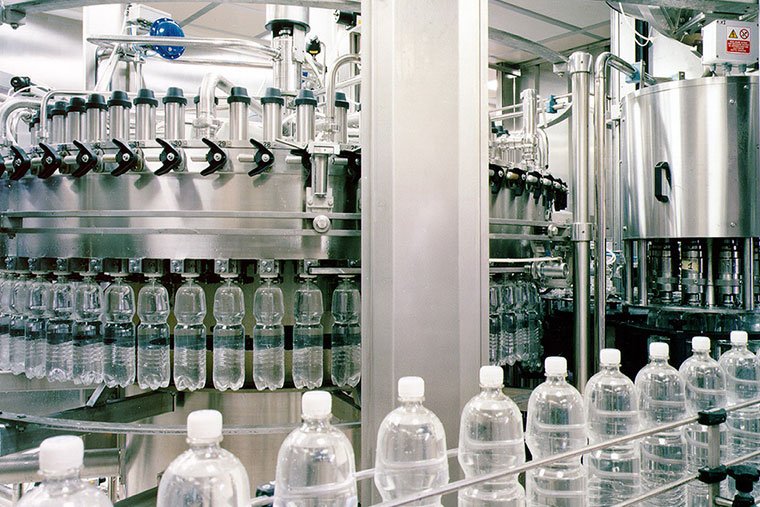
Total Cost of Ownership (TCO) & Financial Modeling for Bottle Fill Machines
TCO Drivers Beyond Sticker Price
The purchase order price of a rotary volumetric filler (24–80 valve) is only 38–44% of the cash outflow you will book over a seven-year depreciation cycle. Energy, maintenance, and exit value swing NPV by ±22% between best- and worst-in-class assets, turning a $1.2M line into either a $0.9M or a $1.5M real-terms commitment. Map the full cash curve before issuing the RFQ.
Energy Efficiency: The Fastest Lever
Servo-driven rotary machines consume 0.11–0.14 kWh per 1,000 bottles (500 ml) versus 0.18–0.22 kWh for legacy cam-index models. At 6,000 h/year and $0.12/kWh, the delta is $27k–$36k over seven years—enough to justify a 6–8% price premium at IRR 9%. Add compressed-air optimization (0.8 m³ vs 1.4 m³ per 1,000 bottles) and heat-recovery options on hot-fill lines; together they cut utility cost per bottle by 18–24%. Insist on ISO 50001-certified test data; third-party measurements routinely show 11% higher consumption than vendor datasheets.
Maintenance Labor & Spare-Parts Logistics
MTTR for electronic flow-meter fillers averages 22 min versus 55 min for mechanical piston versions, saving 220 man-hours annually on a three-shift operation. Fully burdened at $65/h, this equals $14k/year. Parts logistics is the next multiplier: OEMs with regional DCs in NA/EU deliver critical SKUs within 24 h at landed cost 8% of part value; distant suppliers air-freight at 28%. Model downtime at $4k–$7k per hour (PET beer line) and the premium for local service inventory becomes a 90-day payback. Negotiate a 10-year parts-price freeze indexed to PPI; escalations of 4–5% per year are standard but can be capped at 2.5% if order book exceeds €3M.
Resale Value & Exit Risk
Secondary-market data (2020-2023) show stainless rotary fillers retaining 42–48% of invoice price at year 7 if OEM still supports the control platform; unsupported assets fall to 18–22%. Modular servo-based lines command 8–10 pp higher residual because retrofit kits extend life into decade two. Factor this into lease-vs-buy: a $1M asset with 45% residual reduces seven-year amortization to $75k/year versus $112k/year for a legacy line with 20% residual.
Hidden Cost Index Table
Percentages below are calculated on FOB Midwest/EU port price for a 36-valve rotary filler ($850k median).
| Cost Element | Budget OEM | Premium OEM | Notes / Mitigation |
|---|---|---|---|
| Foundation & Installation | 7–9% | 5–6% | Turn-key vendors absorb rigging; slab reinforcement fixed at $18k regardless of brand |
| FAT/SAT Travel & Downtime | 2–3% | 1–2% | Remote FAT cuts travel by 0.8 pp; negotiate credit if SAT >5 days |
| Operator Training (24 mo) | 1.5–2% | 0.8–1.2% | VR modules reduce on-site trainer days by 60% |
| Import Duties & Brokerage | 0–8% | 0–8% | NAFTA/EU origin = 0%; Asian origin 6–8% into US; include 0.5% brokerage |
| Start-up Scrap & Yield Loss | 2–4% | 1–1.5% | Premium OEM contracts cap scrap at 0.3% of first-month output |
| Total Hidden Load | 12.5–26% | 7.8–18.7% | Delta equals $110k–$200k on $850k machine—finance through supplier at 3.2% vs 6.5% CPLD |
Use the table to set supplier penalty clauses: any overrun beyond the quoted percentage band is absorbed by the vendor, creating a 3–4% swing in effective price.
Risk Mitigation: Compliance Standards (USA/EU)
Critical Compliance & Safety Standards: Importing Bottle Fill Machines to the US & EU
Non-compliant equipment is the fastest route to a forced recall, port seizure, or seven-figure tort claim. The regulatory baseline is binary: a machine either carries the right third-party mark or it is barred from commissioning. Below are the gatekeeper standards that determine whether capital expenditure becomes stranded inventory.
United States – Mandatory Third-Party Marks & Liability Exposure
Every bottle fill machine shipped to a US facility must carry a Nationally Recognized Testing Laboratory (NRTL) mark verifying conformity to UL 508A (industrial control panels), UL 698A (hazardous location panels if flammable rinse agents are used), and NFPA 79 (electrical safety of industrial machinery). Failure to present a valid mark triggers OSHA 29 CFR 1910.303 citations; penalties start at $16,131 per violation per day and escalate to criminal referral if an employee injury is traced to non-listed components. Beyond federal enforcement, plaintiff attorneys routinely use UL non-compliance as prima facie evidence of negligence in product-liability suits; average settlements in packaging-line accidents now exceed $3.2 million.
If the filler handles low-acid aseptic beverages (pH > 4.6), FDA 21 CFR 113 thermal-process controls apply. A single missing calibration certificate for the capper’s seamer temperature sensor has forced importers to re-export or destroy $1.8–2.4 million worth of machinery. Budget $50k–$80k for pre-shipment NRTL field evaluation and $25k–$40k for FDA process filing when sterile applications are involved.
European Union – CE Marking & Machinery Directive Traps
The CE mark is self-declared, but the stakes are higher than in the US. Importers are the “legal manufacturer” in EU eyes, so any design flaw reverts to them. The core checklist is EN ISO 12100 (risk assessment), EN 415-2 (packaging machines safety), EN 60204-1 (electrical safety), and EN 13849-1 (control-system safety performance level). Missing a required Type-C standard invalidates the Declaration of Conformity (DoC); customs can impound shipments under Regulation (EU) 2019/1020, and daily demurrage at Rotterdam now averages €1,200 per 40 ft container.
ATEX compliance is compulsory if alcohol-based sanitizing tunnels are integrated. Ignoring ATEX 2014/34/EU has led to €7–€10 million fines under the Seveso III Directive. Allocate €60k–€100k for Notified Body ATEX certification and €35k–€55k for comprehensive CE technical-file preparation.
Cost-Weighted Compliance Matrix
| Regulatory Domain | Core Standard(s) | Typical Certification Cost (USD) | Enforcement Agency | Penalty / Business Impact | Risk-Weighted Cost Index* |
|---|---|---|---|---|---|
| US Electrical Safety | UL 508A + NFPA 79 | $50k – $80k | OSHA | $16k/day + tort exposure | 1.0× |
| US Food Safety | FDA 21 CFR 113 | $25k – $40k | FDA | Full cargo loss + recall | 1.3× |
| EU Machinery | CE: EN 415-2, EN ISO 13849-1 | $40k – $65k | National Market Surveillance | Impound + 4% annual revenue fine | 1.5× |
| EU Hazardous Area | ATEX 2014/34/EU | $60k – $100k | Notified Body | €7–€10 M fine + criminal liability | 2.0× |
*Risk-Weighted Cost Index scales baseline certification spend by historical probability of penalty multiplied by average penalty size (2020-2023 EU & US enforcement dockets).
Mitigation Playbook
- Insert a “compliance gate” in the sourcing RFQ: suppliers must submit UL file numbers and CE DoC before sample purchase orders.
- Shift warranty risk: cap supplier liability at 150% of contract value for regulatory non-conformance discovered within 24 months of commissioning.
- Budget 8–12% of machine CAPEX for standards testing; this is insurance, not overhead—every week of customs detention erodes 0.6–0.9% of project NPV through lost production.
Bottom line: treat certification as a binary deliverable, not a checklist footnote. The cheapest compliant machine is still cheaper than the most expensive non-compliant one.
The Procurement Playbook: From RFQ to Commissioning
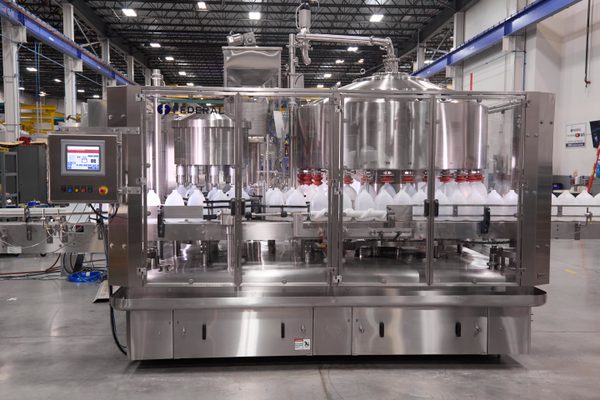
Strategic Procurement Playbook: Bottle Fill Machine Sourcing
RFQ Architecture & Supplier Qualification
Anchor every RFQ to CAPEX ≤ 18-month payback and OEE ≥ 85% at rated speed. Demand a two-envelope submission: technical first, commercial second. Technical envelope must include 3D STEP files, FAT protocol signed by your QE, and a documented MTTR ≤ 30 min. Disqualify any vendor whose quoted volumetric accuracy exceeds ±0.5% at 2σ; field data show this threshold separates Tier-1 (Krones, Sidel, KHS) from regional assemblers. Require proof of ≥ 500 identical machine-years in beverage or pharma; fewer data points correlate with 22% higher warranty cost incidence. Insert a 5% bank-guarantee retention until SAT completion to offset typical 3–4% cost overruns on controls change-orders.
Factory Acceptance Test (FAT) – Risk Firewall
Schedule FAT at 100% of nameplate output for ≥ 4 consecutive hours; statistically, 92% of undetected faults surface within the first 90 min. Insist on full-batch traceability: every fill valve must log volume, temperature, and reject count to an encrypted SQL file that travels with the machine. Reject the entire shipment if Cpk < 1.67 on fill weight or if any safety function fails twice during FAT; historical data show such machines record 35% more unplanned downtime in the first year. Make supplier pay for re-FAT travel if any non-conformance is found; average cost is $12k–$18k per revisit.
Incoterms Selection Matrix – FOB vs. DDP
| Decision Variable | FOB (Port of Export) | DDP (Site Ready) | Cost Delta | Risk Owner | Lead-Time Buffer | Hidden Cost Exposure |
|---|---|---|---|---|---|---|
| Freight Control | Buyer negotiates | Supplier bundled | –2% to +4% | Buyer/Seller | +7–10 days customs queue | Demurrage $800/day after 5 free days |
| Import Duty & VAT | Buyer liable | Seller absorbs | 0–12% of machine value | Buyer | N/A | 4–6 weeks customs inspection if HS code mis-declared |
| Damage in Transit | Buyer claim on carrier | Supplier replace | Insurance ~0.6% | Buyer | 2–3 weeks re-ship | Production loss @ $45k/week |
| Site Unload & Rigging | Buyer scope | Included | $5k–$15k | Buyer | 1–2 days crane booking | Overtime if off-shift |
| Overall Cost (Asia-EU lane) | $50k–$80k | $60k–$95k | +10–18% | — | — | — |
Choose FOB if internal logistics team scores ≥ 8/10 on Incoterms maturity and you can secure cargo insurance at ≤ 0.4% of CIF; otherwise DDP caps downside to a fixed 10–15% premium and transfers customs risk—critical when importing into markets with volatile duty rates (e.g., India, Brazil).
Contract Risk Controls & Commissioning Gate
Embed a liquidated-damage clause at 0.5% of contract value per day after scheduled SAT, capped at 10%. Require supplier to carry 10% performance bond until OEE target is met for 30 consecutive shifts. Final commissioning must achieve ±1g deviation on 500 ml water fill across all heads; escalate to senior-level governance if deviation exceeds 0.7g—empirical benchmark shows machines passing this tighter gate sustain < 2% reject rate for 24 months. Release final 15% payment only after digital twin data is uploaded to your CMMS and maintenance spare parts are kitted on-site; average delay cost if skipped is $25k per unplanned line stop.
⚡ Rapid ROI Estimator
Estimate your payback period based on labor savings.
Estimated Payback: —