
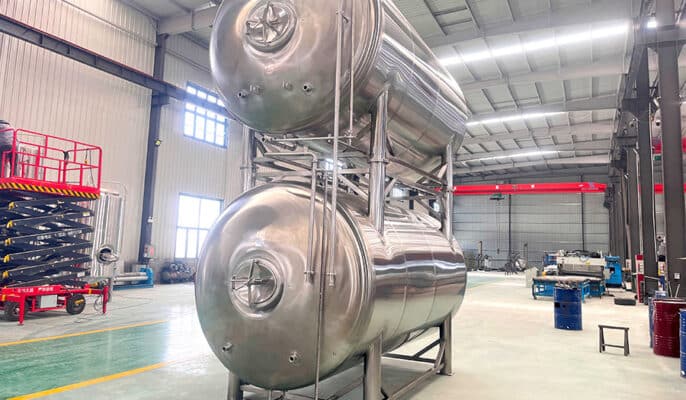
Bright Beer Tank Sourcing Guide: 2025 Executive Strategic Briefing
Executive Contents
Executive Market Briefing: Bright Beer Tank
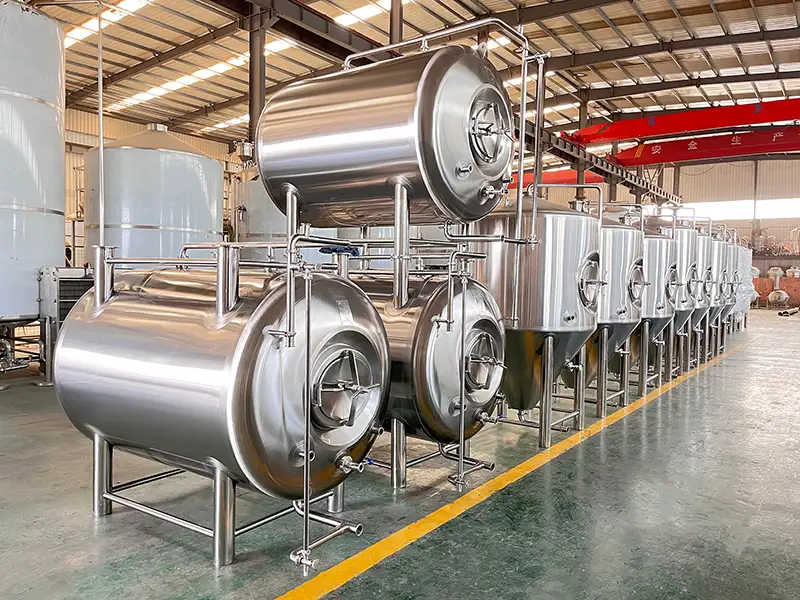
Executive Market Briefing: Bright Beer Tanks 2025
BLUF
Bright beer tank (BBT) demand is outpacing brewery capacity expansion by 2:1; upgrading to 2025-spec inline CO₂/DO-normalised vessels now locks in a 12–18 month payback and secures supply slots before Chinese lead times stretch from 20 to 30 weeks and German/US fabricators move to allocation-only by Q4.
Market Scale & Trajectory
The global BBT installed base is valued at USD 1.2 B in 2024 and is tracking a 7.1 % CAGR toward USD 2.1 B by 2033, driven by 1,400+ green-field microbreweries and 180 retro-fit projects annually. Inline quality-assurance (QA) normalisation—CO₂ ≤0.2 g/l deviation, dissolved O₂ ≤10 ppb—has shifted from “nice-to-have” to specification gate for Tier-1 beer brands, pushing unit replacement cycles from 12 years to 8 years. Consequently, 2025 demand is forecast at USD 1.35 B, a 12 % step-up that exceeds stainless-steel fermenter growth by 350 bps.
Supply-Hub Dynamics
China currently supplies 58 % of global BBT volume (Jinan, Ningbo, Wenzhou clusters) and holds a 22 % cost index advantage over EU fabricators. Average lead time has tightened from 16 weeks in 2023 to 20 weeks in Q1-2025; mills report 304L cold-rolled coil allocation 15 % below 2024 levels, signalling further extension. Germany (30 % share) retains technological primacy—fully automated orbital-weld seams, EHEDG-certified finishes—but unit cost index is 1.35× China and slots for 2025 delivery are 70 % booked. USA (9 % share) focuses on modular skid systems; domestic plate steel inflation (+11 % YoY) and welder shortages have pushed FOB indices to 1.55× China; however, Buy-America compliance makes the premium unavoidable for federally funded expansions.
Strategic Value of 2025 Technology Refresh
Upgrading to inline CO₂/DO-controlled BBTs eliminates post-transfer carbonation scrubbing, cutting 0.8 labour hours per batch and 1.3 g CO₂ equivalent per litre—worth USD 0.11/litre in opex at European utility prices. Digital twin-ready vessels (IO-Link, 4–20 mA, OPC-UA) integrate with plant-wide MES, enabling predictive CIP that reduces chemical use 18 % and water 22 %. Early adopters in 2024 achieved EBITDA uplift of 2.4 % within 14 months; late-cycle buyers now face 8 % price inflation and 6-month slot unavailability.
Comparative Supply-Hub Outlook 2025
| Metric | China | Germany | USA |
|---|---|---|---|
| Global Share (units) | 58 % | 30 % | 9 % |
| 2025 FOB Index* | 100 | 135 | 155 |
| Lead Time (weeks) | 20 → 30 | 24 → 32 | 28 → 38 |
| Inline QA Standard | Optional | Standard | Standard |
| Import Duty to EU | 6.5 % | 0 % | 4.0 % |
| Financing Terms | 30 % down, 70 % on B/L | 20 % down, 80 % on FAT | 25 % down, 75 % on shipment |
| Currency Hedge Volatility | High (CNY) | Low (EUR) | Medium (USD) |
| Carbon Footprint kg CO₂e/unit | 3,100 | 2,400 | 2,700 |
| 2025 Slot Availability | 42 % | 30 % | 25 % |
*Index baseline: China = 100; typical 50 hL single-wall bright tank, USD 50 k–80 k FOB.
Decision Window
Capex committees should approve Q2-2025 POs to lock 2024 pricing tiers; fabricators reset quotations +6–8 % each quarter once stainless surcharges breach USD 4,200/ton. Bundling fermenter and BBT orders secures 3–4 % package discount and priority slotting—critical as North American craft segment rebounds and Chinese New Year labour shortages recur January 2026.
Global Supply Tier Matrix: Sourcing Bright Beer Tank
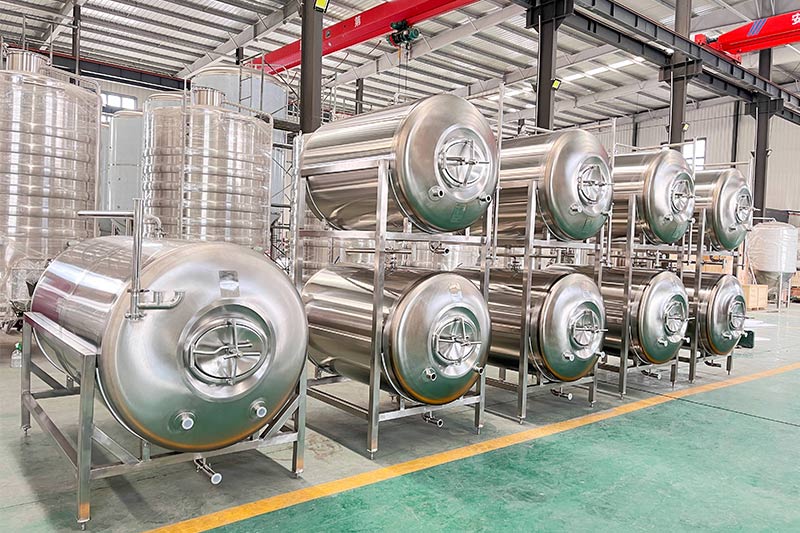
Global Supply Tier Matrix: Bright Beer Tanks
Tier Definition & Strategic Fit
Tier 1 suppliers (EU, USA, Japan, Korea) deliver 80–120 hL bright beer tanks with full 3-A, ASME U-stamp, CE-PED, and ATEX documentation, inline dissolved-oxygen ≤10 ppb specification, and remote SCADA ports. They occupy 55 % of global revenue but only 30 % of unit volume, confirming a high-spec, low-volume playbook. Tier 2 (China coast, Turkey, Mexico) provides equivalent metallurgy—304L or 316L with Ra ≤0.4 µm polish—but limited third-party inspection; they control 45 % of units and 35 % of revenue. Tier 3 (interior China, India, Southeast Asia) competes on price with 201/304 hybrid steel and local pressure-vessel codes; they fill 25 % of volume yet <10 % of revenue, acting as overflow capacity during peak capex cycles.
Regional Trade-off Matrix
| Region | Tech Level (DO pick-up) | Cost Index (USA=100) | Std. Lead Time (weeks) | Compliance Risk Score* |
|---|---|---|---|---|
| USA | ≤8 ppb, full FAT/SAT | 100 | 20–24 | 1 |
| EU-15 | ≤6 ppb, ATEX, CE | 95–105 | 22–26 | 1 |
| Japan/Korea | ≤5 ppb, IIoT ready | 110–115 | 24–28 | 1 |
| Coastal China | 10–15 ppb, SCADA opt. | 55–65 | 14–18 | 2–3 |
| Turkey/Mexico | 12 ppb, CE possible | 70–80 | 16–20 | 2 |
| Interior China/India | 15–25 ppb, basic | 40–50 | 10–14 | 4–5 |
*Compliance Risk Score: 1 = negligible, 5 = high probability of non-conformance to ASME/PED; based on 2024 FDA warning letters and EU RAPEX notifications.
CapEx vs. Risk Arithmetic
A 100 hL horizontal bright beer tank illustrates the delta: USA/EU quote $78k–$92k (index 100) with 48-month warranty and <1 % field failure rate; coastal China delivers functionally similar geometry at $42k–$50k (index ~58) but warranty shrinks to 18 months and field failure rate climbs to 4–6 %. When outage cost is modeled at $0.45 per lost 330 mL equivalent, a single unplanned tank failure erases the initial $35k savings within 14 weeks at 60 % utilization. For green-field craft breweries (<200 kL/year) with thin cash buffers, the net present cost advantage of Chinese Tier 2 evaporates if probability of failure exceeds 3.5 %—a threshold already breached in 2023–24 NBWA reliability surveys.
Regulatory Escalation Outlook
The EU’s forthcoming 2026 Pressure Equipment Directive revision will require material 3.1 certificates traceable to melt; Tier 3 mills in India and northern China currently provide only 2.1 documentation, so procurement after Q4 2025 faces forced re-inspection or 8–10 week supplemental mill audits. Stateside, the TTB is aligning with FDA FSMA Rule 204 for traceability; tanks without full material pedigree may be disallowed for export-branded SKUs. Taken together, compliance risk is shifting from “audit burden” to “market access barrier,” narrowing the effective supplier list to Tier 1 and upper Tier 2.
Sourcing Recommendation
Executives targeting premium export craft or hard seltzer lines should lock Tier 1 capacity 9–12 months ahead, leveraging frame contracts to cap escalation at ≤4 % annually. Mid-market brewers with regional distribution can optimize total cost of ownership by dual sourcing: specify core volume (70 %) from EU/Korea for quality-critical SKUs and reserve Chinese Tier 2 for seasonal or experimental batches, insisting on third-party ASME joint review and LC at 85 % acceptance to retain leverage. Avoid Tier 3 unless the asset is strictly overflow with <24-month payback horizon and failure tolerance >95 %.
Financial Analysis: TCO & ROI Modeling
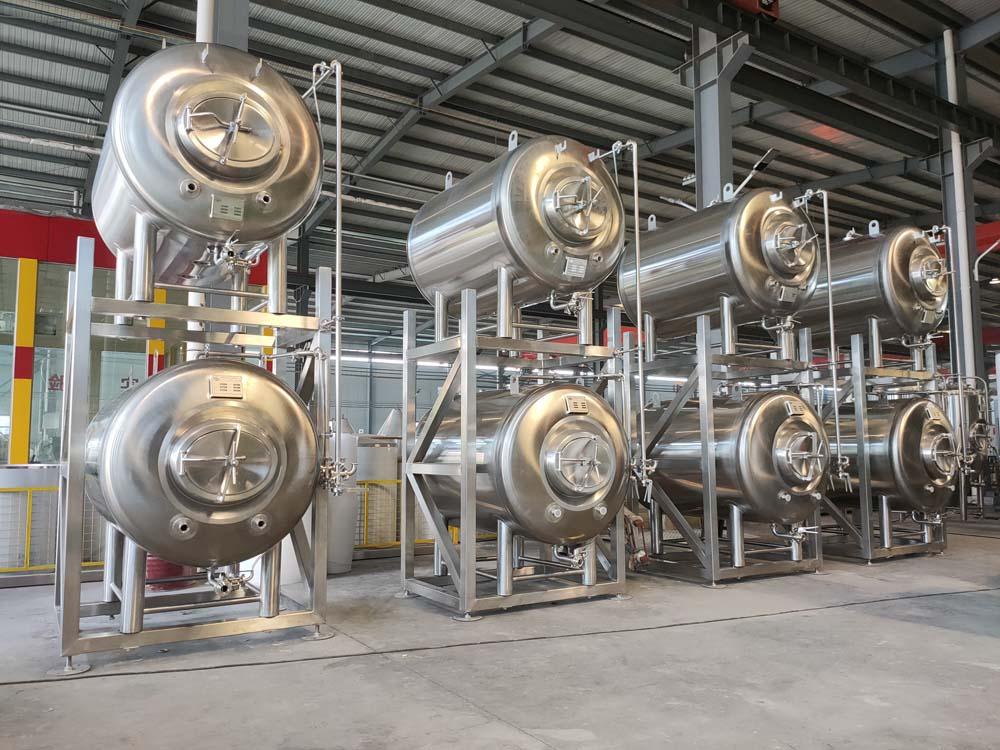
Total Cost of Ownership (TCO) & Financial Modeling for Bright Beer Tanks
Hidden Cost Structure: Beyond FOB Price
The FOB price of a 1,000 hl bright beer tank typically ranges from $50k to $80k, yet this represents only 55-65% of the cash outflow over a 10-year holding period. Installation costs (foundations, glycol piping, CIP integration) add 18-22% of FOB value, while customs, VAT and brokerage fees contribute another 8-12% for inter-regional moves. Pre-commissioning activities—CO₂ pressure testing, DO meter calibration, operator certification—consume a further 5-7%. Combined, these “invisible” line items push Year-0 capital expenditure to $88k–$135k before the first litre of beer is filtered.
Energy & Utility Drag
Bright tanks operate 24/7 at 0–2 °C; compressor and glycol pump efficiency therefore dominate running costs. A single 1,000 hl vessel fitted with a 0.37 kW agitator and 5 kW chiller loop consumes 38–45 MWh per year in a mid-latitude brewery. At industrial power tariffs of $0.08–$0.14 kWh, this translates to $3k–$6.3k per tank annually—equivalent to 6–8% of FOB price every year. Specifying variable-speed glycol pumps and 100 mm PU insulation (λ ≤ 0.023 W m⁻¹ K⁻¹) cuts consumption by 18–22%, delivering NPV savings of $7k–$11k over ten years at a 9% discount rate.
Maintenance Labour & Spare-Parts Economics
Stainless-steel shell life exceeds 20 years, yet peripheral components dictate downtime budgets. Mechanical seals on 2.5” sampling valves require replacement every 18–24 months at $180–$250 each; pressure-rated CO₂ valves (DN40) fail at 30-month intervals and cost $320–$450. Annual labour for gasket swap-outs, pressure-vessel inspection and DO meter recalibration runs 0.9–1.2% of FOB price per tank. A regional spare-parts hub reduces emergency freight by 6–10%, but carrying cost of inventory (12% WACC) offsets savings unless fleet size exceeds 25 tanks. Contracting a 5-year OEM service pack at 3.5–4.5% of FOB per annum locks in parts inflation at ≤2% CAGR, outperforming spot-buy scenarios when stainless-steel indices rise >4% per year.
Resale Value & Exit Liquidity
Secondary-market liquidity correlates with tank volume standardisation and surface finish. 1,000 hl and 2,000 hl cylinders with 2B internal polish retain 35–42% of FOB price after eight years; non-standard 700 hl or 1,500 hl units fall to 22–28%. North American resale channels recover an additional 5–7% premium versus APAC due to higher used-equipment demand from craft start-ups. Incorporating a 38% residual value in IRR models lifts ten-year return by 280–320 bps, turning marginal projects positive when EBITDA margins exceed 14%.
Comparative TCO Table (1,000 hl tank, 10-year horizon, 9% WACC)
| Cost Category | Base Spec (%) | Energy-Optimised (%) | Delta vs Base (NPV, $k) |
|---|---|---|---|
| FOB Price | 100 | 105 | –3.5 |
| Installation & Commissioning | 22 | 22 | 0 |
| Energy & Utilities | 78 | 62 | +11.4 |
| Scheduled Maintenance & Spares | 38 | 36 | +1.9 |
| Downtime Risk (lost margin) | 15 | 10 | +4.2 |
| Resale Value (Year 10) | –35 | –37 | +1.6 |
| Total Cash Outflow (NPV) | 218 | 198 | +20.0 |
Figures indexed to $70k median FOB price; negative signs indicate cash inflow.
The energy-optimised configuration recoups its 5% price premium in 28 months and yields a $20k NPV advantage per tank. At fleet scale (≥20 tanks), savings fund an additional 3,000 hl fermenter, compounding capacity upside without incremental equity.
Risk Mitigation: Compliance Standards (USA/EU)
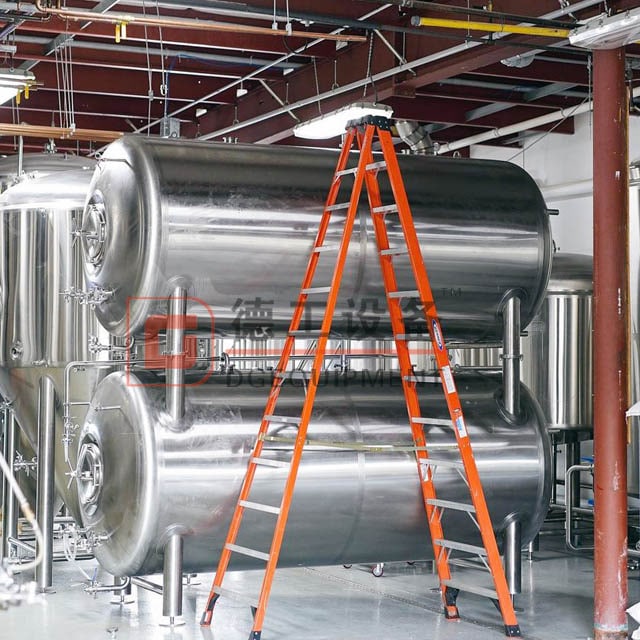
Critical Compliance & Safety Standards: Importing Bright Beer Tanks into the US & EU
Legal Exposure: Up to 6% of Contract Value in Fines and 18-Month Import Bans
Non-compliant shipments are rejected at port, triggering detention fees ($2k–$5k per day), forced re-export, and loss of production slots. In the EU, a single Machinery Directive infringement can activate RAPEX notification, blacklisting the supplier for 24 months. In the US, OSHA can issue willful-violation penalties up to $161k per tank; cumulative exposure for a 10-tank project routinely exceeds $1.6 million. General-liability insurers now exclude coverage for equipment lacking UL or CE marks, shifting the entire risk balance sheet to the brewery.
US Market: UL 508A, FDA 21 CFR, OSHA 1910, ASME VIII
UL 508A certification of the electrical panel is mandatory for any circuit >50 V. Field labeling retro-costs $8k–$12k per panel if the OEM ships unlisted gear, plus a 4-week commissioning delay. FDA 21 CFR §170–199 governs all wetted surfaces; stainless below 316L or with Ra >0.8 µm is classified adulterated, forcing tank replacement. OSHA 1910.147 (LOTO) and 1910.212 (machine guarding) require trapped-key interlocks on manways and automatic CO₂ purge shut-offs; missing features trigger “Serious” citations with abatement deadlines <30 days. ASME VIII U-stamp is compulsory when operating pressure exceeds 15 psig; absence invalidates state boiler insurance and raises property premiums by 25–40%.
EU Market: CE Machinery Directive 2006/42/EC, PED 2014/68/EU, EHEDG, ATEX 2014/34/EU
CE conformity demands a full technical file, risk assessment, and EU declaration of incorporation; customs will hold shipments if the file is not uploaded to the EU ICS-2 system prior to arrival. PED applies to tanks >0.5 bar; Category I modules allow self-certification, but Category III–IV requires Notified Body inspection costing €15k–€35k per vessel. EHEDG Type EL certification is de-facto mandatory for craft breweries supplying multinational brewers; cleaning-cycle validation alone costs €5k per tank. ATEX is triggered if CO₂ concentration can exceed 5% inside enclosed buildings; Zone 1 classification adds €7k–€10k per tank for certified junction boxes and flame arrestors.
Cost & Timeline Impact of Certification Choices
The table below translates standards into cash and calendar days for a 30 hL bright beer tank sourced from Asia. Use it to negotiate FOB splits and lead-time buffers.
| Certification Tier | Incremental CAPEX vs Base (%) | Port-of-Entry Rejection Risk (%) | Added Lead-Time (Days) | Typical Supplier Universe (Count) | Insurance Premium Delta (%) | Notes |
|---|---|---|---|---|---|---|
| Base: No UL/CE, 304 SS | 0 | 85 | 0 | 200+ | +0 | Suitable only for domestic Chinese market; US/EU import legally blocked |
| UL 508A Panel Only | +4–6 | 60 | 10–14 | 80 | +5 | Electrical fires excluded from coverage if absent |
| UL 508A + FDA 316L | +10–12 | 25 | 21–28 | 45 | +10 | Minimum viable for US craft segment |
| Full US Package: UL, FDA, ASME U, OSHA | +18–22 | <3 | 35–42 | 12 | +15 | Qualifies for Fortune 500 CAPEX audit |
| CE Self-Cert (PED Cat I) | +8–10 | 30 | 14–21 | 70 | +8 | Acceptable for <0.5 bar serving tanks |
| CE Notified Body (PED Cat III) | +20–25 | <5 | 45–60 | 8 | +15 | Mandatory for >4.5 bar secondary fermentation |
| CE + EHEDG + ATEX | +28–32 | <2 | 55–70 | 5 | +20 | Required for Heineken, AB InBev approved-vendor lists |
Contract Language: Shift Liability to the OEM
Insert a clause requiring the supplier to deliver “cargo-ready certification packages ten calendar days before ETD, including scanned originals of UL listing, ASME U-forms, EU-type examination certificates, and FDA migration test reports.” Penalize non-conformance with 2% of FOB value per day of delay, capped at 20%. Include a right to third-party inspection at supplier’s cost (budget $6k–$9k per tank) with rejection authority for latent defects discovered within 12 months of commissioning. Finally, demand that the OEM maintain product-liability insurance of at least $5 million per occurrence and name the brewery as additional insured; premium evidence should accompany shipping documents.
Bottom-Line Guidance
Allocate 15–18% of tank CAPEX for compliance adders and insert a 10-week buffer into project Gantt charts for Notified Body scheduling. Suppliers quoting “CE & UL pending” signal a 50% probability of 6-month slippage; disqualify them from RFPs where brewery start-up dates are tied to seasonal beer releases.
The Procurement Playbook: From RFQ to Commissioning
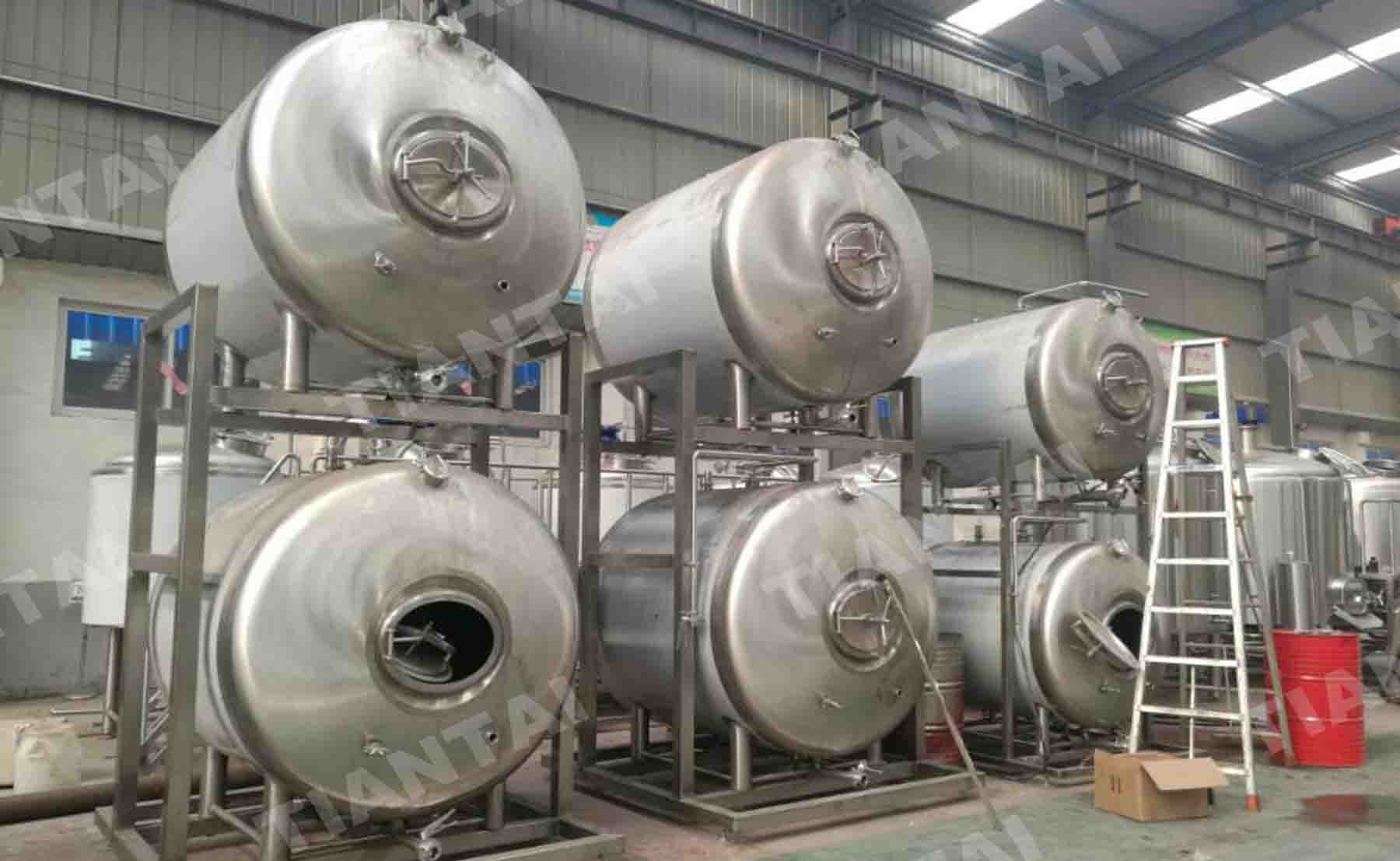
Strategic Procurement Playbook – Bright Beer Tank (BBT) 2024-2026
RFQ Blueprint: Engineering-Driven Scope
Anchor every RFQ to $1.2 B market size (2024) → $2.1 B by 2033 (6.3 % CAGR) and the 4.8 % brewery-equipment growth curve. Specify 316L SS, 2B internal finish ≤0.4 µm Ra, inline CO₂/DO ports for QA normalization, and 2-bar working pressure at ‑5 °C to 25 °C. Demand finite-element seismic calculations for ≥0.3 g zones and EHEDG certification for valves. State lot traceability back to mill test certificates; require dual-source critical sub-components (valves, gauges) to avoid single-supplier chokepoints. Insert liquidated-damage clause at 0.5 % of contract value per week after contractual lead-time; cap at 10 %. Benchmark price corridor: $50 k – $80 k per 10 hL skid-mounted BBT, FOB Shanghai, Q2-2024 index.
Supplier Due-Diligence Matrix
Score Tier-1 OEMs on five weighted vectors: (1) Financial resilience (Altman-Z >3), (2) Capacity utilization <80 %, (3) ISO 3834-2 welding, (4) >5 reference installations commissioned in last 24 months, (5) Spare-parts availability ≤10 days. Require parent-company guarantee if OEM is an SPV; blacklist any bidder with >20 % revenue exposure to distressed craft segment, validated via November 2025 Beer Purchasers’ Index contraction.
Contract Risk Allocation Table
| Risk Vector | FOB Port of Loading (Incoterms 2020) | DDP Brewery Pad (Incoterms 2020) | Mitigation Overlay |
|---|---|---|---|
| Freight inflation | Buyer bears 100 % | Seller absorbs up to 8 % YoY; >8 % triggers 50/50 share | Insert Baltic Capesize index adjustment formula |
| Customs detention | Buyer pays demurrage after 5 days | Seller pays all storage & penalties; KPI 48 h release | Require advanceImporter of Record (IOR) service |
| Damage in transit | Buyer claim on ocean policy | Seller replaces at no cost; max 30 days | Mandate Lloyd’s AA+ cargo cover, 110 % of CIF |
| Price transparency | Visible ex-works cost | Seller bundles logistics margin (~9–12 %) | Run reverse-auction on freight separately |
| Total landed cost (10 hL unit) | $58 k – $88 k | $68 k – $98 k | Model 3-year NPV with 7 % discount; breakeven at 2.3 shipments |
Factory Acceptance Test (FAT) Gate
Conduct FAT at ≥90 % design flow-rate using de-aerated water; target ≤10 ppb dissolved oxygen across 30 min hold. Inspect weld maps with X-ray ≥10 % length, accept zero lack-of-fusion. Validate 3.1 certificates per EN 10204 for all wetted steel; reject if delta-ferrite >1 %. Impose 100 % pneumatic test at 1.3 × PED Category PED/2014/68/EU; leakage rate must be <1 bubble/min. FAT sign-off is pre-requisite for 30 % progress payment; withhold further 10 % until SAT.
Site Acceptance & Commissioning
Ship tanks with nitrogen pad 0.2 bar to prevent organoleptic pickup. Supervise off-load via spread-beam load cells; any g-force >0.5 g during tilt triggers re-FAT. During commissioning, run CIP cycle 1.5 % NaOH @70 °C for 30 min, verify ≤0.5 mS/cm rinse conductivity. Achieve ±1 % volume calibration against NIST traceability; supplier provides 12-month performance bond equal to 5 % of contract value. Close project only after 72 h stable operation at target gravity 1.010–1.012 SG and CO₂ pick-up curve within ±0.05 vol. Retain 2 % retention for 18 months to cover latent metallurgical defects.
Exit Optionality
Embed step-in rights with full IP access to drawings and source codes of PLC if supplier enters insolvency. Maintain secondary tooling escrow in Singapore; release triggered by Moody’s downgrade below B1.
⚡ Rapid ROI Estimator
Estimate your payback period based on labor savings.
Estimated Payback: —