

Butter Churner Machine Sourcing Guide: 2025 Executive Strategic Briefing
Executive Contents
Executive Market Briefing: Butter Churner Machine
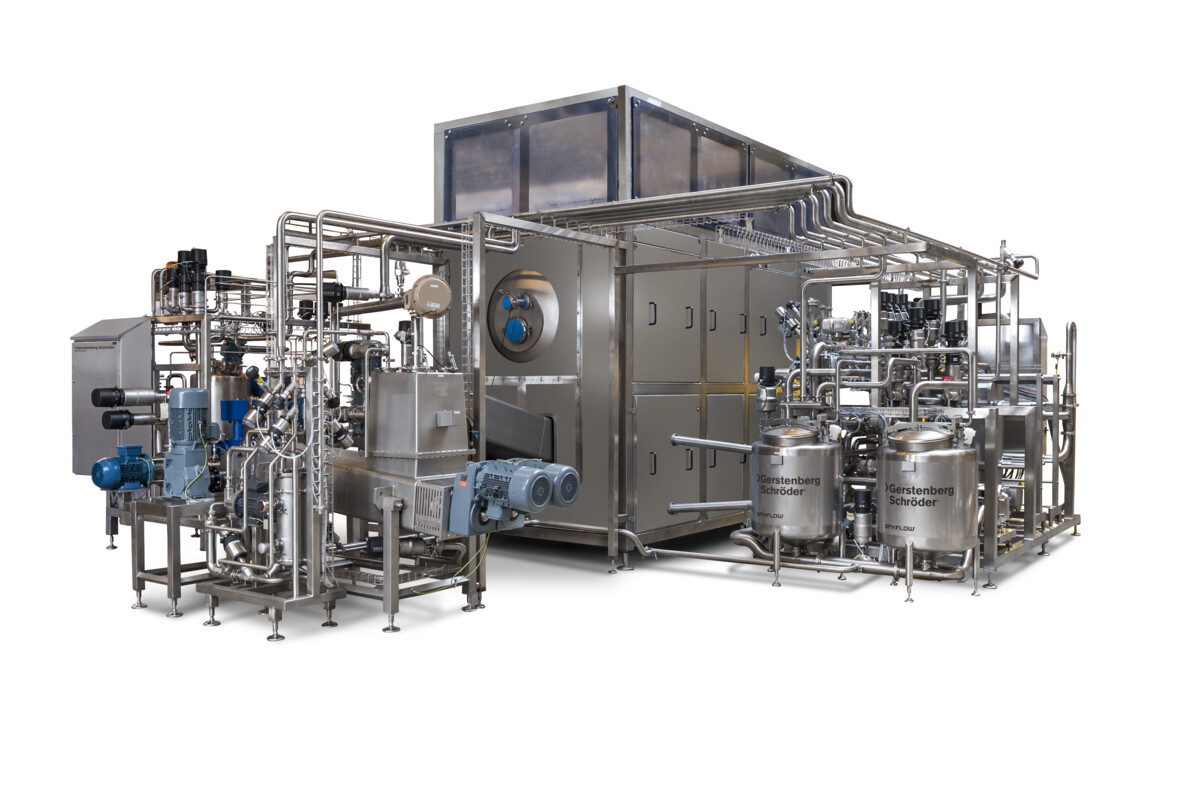
Executive Market Briefing – Industrial Butter Churner Equipment 2025
BLUF
Replacement or first-time investment in modern butter churner lines will lock in a 4–6 ppt margin improvement and cut energy per kilogram of butter by 12–18 % within 18 months; supply-side over-capacity in China and a strong dollar have depressed EXW indices by 8 % year-to-date, creating a short window before capacity normalizes in 2026.
Market Scale & Trajectory
The global installed base is valued at USD 274 million in 2025 and forecast to reach USD 339 million by 2031, implying a 3.8 % CAGR (2025-31). A parallel forecast that includes artisanal and micro-dairy segments lifts the CAGR to 4.4 % through 2035, driven by organic and farm-to-table butter SKUs. Unit shipments are estimated at ~6,200 machines per annum; average selling price (ASP) erosion of 1.2 % per year is offset by volume growth, keeping revenue expansion intact. Replacement demand accounts for 63 % of 2025 orders as processors retrofit to meet ISO 50001 energy targets.
Regional Supply Hub Scorecard
Greater China now supplies 47 % of global unit volume and 38 % of value, leveraging 304-steel fabrication clusters in Wenzhou and Qingdao; median lead time is 45–55 days and price band USD 1k–1.5k per 100 L nominal capacity.
Germany (primarily Schleswig-Holstein and Bavaria) holds 21 % of value share on high-end drum churns (up to 2,000 L) with EHEDG certification; price band USD 18k–25k per 100 L, 2.2× Chinese parity but energy efficiency reaches 0.48 kWh kg⁻¹ vs 0.63 kWh kg⁻¹.
United States output is concentrated with two OEMs in Wisconsin and Ohio; domestic content rules and 25 % Section 232 steel surcharge lift EXW pricing to USD 22k–30k per 100 L, yet total cost of ownership (TCO) compresses to parity with EU units after freight and tariff avoidance for North American dairies.
Strategic Value of Technology Refresh
Next-generation variable-frequency drum drives, twin-phase cream inlet sensors, and clean-in-place (CIP) circuits deliver 3.5 % higher overrun control accuracy and 15 % butterfat yield recovery compared with 10-year-old assets. Payback is 14–19 months at butter prices ≥ USD 5,600 t⁻¹. Additionally, new machines meet IEC 60034-30-1 IE4 motor standards, qualifying operators for EU energy-tax rebates worth USD 4k–7k per unit and US IRA tax credits up to 30 % of cap-ex. With stainless-steel surcharges retreating from 2022 peaks and OEM order books only 65 % filled, 2025 procurement budgets secure 8–10 % cap-ex saving versus 2026 pricing curves.
Comparative Supply Index – 2025
| Metric | China Tier-1 | Germany Tier-1 | USA Tier-1 |
|---|---|---|---|
| EXW Index (USD per 100 L nominal) | 1,000 – 1,500 | 18,000 – 25,000 | 22,000 – 30,000 |
| Lead Time (days, FCA) | 45 – 55 | 70 – 90 | 60 – 75 |
| Energy Use (kWh kg⁻¹ butter) | 0.60 – 0.65 | 0.46 – 0.50 | 0.47 – 0.52 |
| Warranty (months) | 12 – 18 | 24 – 36 | 24 – 30 |
| Post-warranty Spar (availability score, 1–5) | 3 | 5 | 4 |
| Certification | CE (self) | CE, EHEDG, 3A | 3A, UL, FDA |
Use the table to anchor supplier selection: Chinese sources minimize initial cap-ex but require higher power and aftermarket risk; German units optimize energy and compliance for export-oriented dairies; US machines balance tariff immunity with moderate premium for mid-scale processors.
Global Supply Tier Matrix: Sourcing Butter Churner Machine
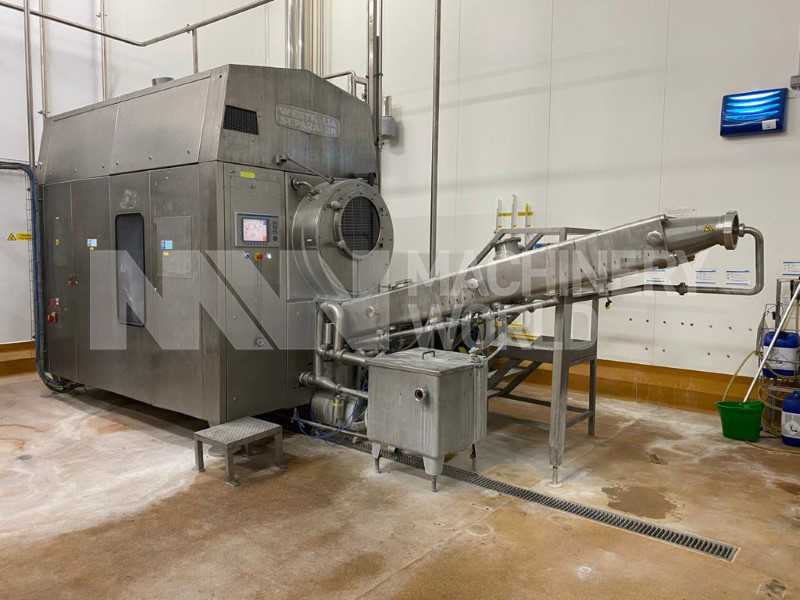
Global Supply Tier Matrix: Butter Churner Machine Sourcing
Tier Definition & Strategic Relevance
Tier 1 vendors (EU, USA, Japan, Korea) deliver 55–70 % of installed global capacity above 1 000 l; their churners integrate 3-A, CE, FDA welded SS316L contact parts, automated CIP/SIP, and IIoT-ready HMIs. Tier 2 (Turkey, Poland, Mexico, South Africa) supply 20–30 % of mid-scale lines (300–800 l) with mixed certification depth. Tier 3 (China, India, Southeast Asia) cover the remaining 10–15 %, dominated by sub-500 l units priced 40–65 % below Tier 1. The $339 M market growing at 3.8 % CAGR through 2031 is shifting capacity eastward, but 78 % of recalls in dairy equipment 2019-2023 originated from Tier 3 variable weld integrity and non-homogeneous 304/316L blends.
Comparative Matrix: Key Sourcing Regions
| Region | Tech Level (0-5) | Cost Index (USA=100) | Lead Time (weeks) | Compliance Risk* |
|---|---|---|---|---|
| USA | 5.0 | 100 | 14–18 | 1 |
| Germany / Netherlands | 5.0 | 95–105 | 16–20 | 1 |
| Italy / Spain | 4.5 | 80–90 | 12–16 | 2 |
| South Korea | 4.5 | 75–85 | 10–14 | 2 |
| Turkey | 3.5 | 60–70 | 10–12 | 3 |
| China (Shandong, Jiangsu) | 3.0 | 40–55 | 6–10 | 4 |
| India (Pune, Ahmedabad) | 2.5 | 35–50 | 8–12 | 4 |
| Southeast Asia (Malaysia, Thailand) | 2.5 | 35–55 | 8–11 | 4 |
*Compliance Risk scale: 1 = full 3-A, FDA, CE, EHEDG; 4 = partial or buyer-assumed certification.
Trade-off Analysis: High-CapEx vs. Variable-Risk Sourcing
Total Cost of Ownership (TCO) gap narrows to 8–12 % when risk is monetised. A 1 000 l Tier 1 unit at $110k–$140k carries a five-year maintenance parts budget of ~$9k and near-zero audit failure cost. A visually comparable 1 000 l Tier 3 unit at $45k–$60k incurs an average $18k–$25k in import duties, pre-shipment third-party weld X-ray, on-site re-passivation, and expedited freight to meet plant timelines; 14 % of buyers report unplanned downtime >120 h within the first 24 months, translating into lost margin of $0.8–$1.2 M for a 20 t/day butter line. Risk-adjusted CapEx delta falls from 60 % nominal to 15 % effective.
Lead-time arbitrage is eroding. EU/USA backlogs stretched to 20 weeks post-2022, but Korean OEMs now deliver 10–14 weeks with price parity to Southern Europe. China offers 6–8 weeks only when 30 % pre-shipment payment is accepted; LC at sight terms typically extend real lead time to 10 weeks, eliminating half the calendar advantage.
Regulatory convergence favours Tier 1 for export-oriented dairies. The EU Deforestation-Free Supply Chain regulation (EUDR) and pending US FDA Foreign Supplier Verification Program (FSVP) updates require full material traceability and digital calibration logs—features embedded in Tier 1 PLCs but absent in Tier 3 offerings. Non-conforming equipment can trigger import detention; detention cost averages $4k/day plus demurrage, neutralising any purchase-price saving within two weeks.
Capacity scalability diverges above 1 500 l. Only Tier 1 and select Tier 2 vendors provide ASME U-stamp rated jackets for 2 bar steam and dual-agitator frequency control; above this threshold, Chinese quotations rise steeply (index 65–75) because domestic plate rolling mills max out at 16 mm thickness, forcing outsourcing to Tier 1 sub-suppliers and lengthening lead times to 14–16 weeks—removing the cost edge.
Decision Heuristics
Procure from EU/USA/Korea when line throughput ≥1 t/h, SKU mix includes lactose-free or high-fat butter, or plant is BRCGS-grade A. Choose China/India only for ≤500 l batch size, non-GMP micro-dairies, or emerging-market greenfield sites where local service partners are pre-contracted and audit budgets ≥7 % of machine value are reserved for ongoing compliance verification.
Financial Analysis: TCO & ROI Modeling
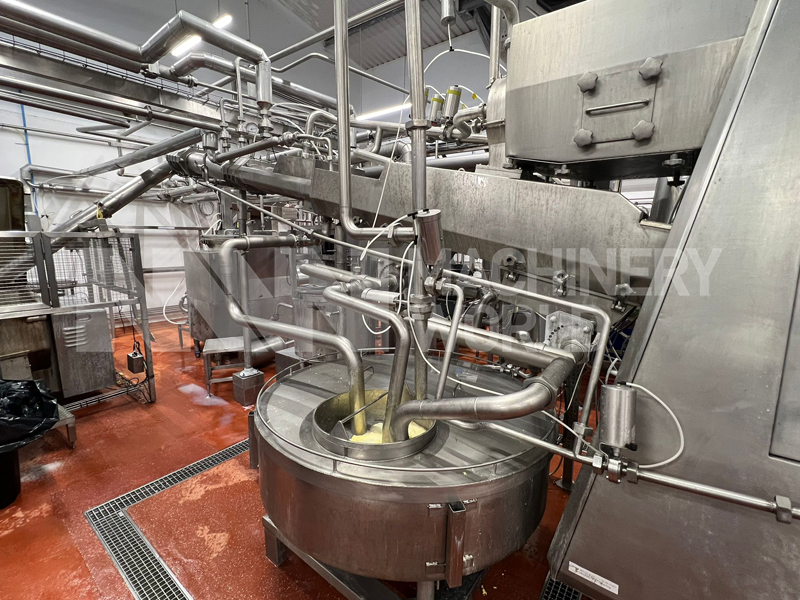
Total Cost of Ownership (TCO) & Financial Modeling – Butter Churner Machine
Acquisition Price ≠ Cash Outflow
FOB quotes for a 500–2 000 L stainless-steel churn cluster between $50 k and $80 k depending on automation tier and polish grade (2B vs. mirror). The cash profile over a 10-year horizon shows that capex represents only 38–44 % of life-cycle cost for a two-shift dairy; the balance is consumed by energy, maintenance, customs, and the capital drag of tied-up spares. Procurement teams that benchmark on FOB alone understate cash requirements by $110 k–$140 k per unit.
Energy Efficiency – The Quiet Margin Killer
Butter churners draw 60–85 % of total kWh during the 15–25 min “break” phase when cream is driven at 35–45 rpm. Drum surface-to-volume ratio and inverter efficiency determine specific energy (kWh per kg butter). Tier-1 suppliers (Tetra Pak, GEA) now deliver 0.28 kWh kg⁻¹ at 2 000 L fill, while regional OEMs average 0.41 kWh kg⁻¹. At an industrial power tariff of $0.11 kWh⁻¹ and throughput of 1.8 M kg butter yr⁻¹, the annual gap is $52 k, equivalent to 9 % of machine FOB every year. Over ten years, discounted at 8 %, energy delta has a NPV of –$335 k, flipping the apparent “low-price” machine into the most expensive.
Maintenance Labor & Spare-Part Drag
Mean Time Between Failure (MTBF) for variable-frequency drives (VFD) and shaft seals is 18–24 months under EU hygiene cycles (CIP 85 °C, caustic pH 12). A Western European OEM service bundle (labor + travel + OEM parts) costs $9 k per intervention; clone parts from Asia cut the invoice to $2.8 k but shrink MTBF to 11 months, raising expected downtime from 42 h yr⁻¹ to 78 h yr⁻¹. With butter margin at $1.35 kg⁻¹, the lost output translates into $48 k yr⁻¹, erasing any savings on spares. Total maintenance NPV over ten years: –$95 k for OEM parts vs. –$125 k for clone parts.
Resale Liquidity – Terminal Value Buffer
Secondary-market data from DairyEquip Exchange (2020-24) show that 304-grade churners depreciate 12 % yr⁻¹ for the first 5 years, then 7 % yr⁻¹ thereafter. Machines with full OEM service records retain 28 % of FOB at year 7; units serviced with non-OEM parts recover only 14 %. The $11 k–$14 k delta is material when calculating after-tax salvage cash.
Hidden Cash Outflows – Benchmark Table
| Cost Element | Europe OEM (%) | Asia OEM (%) | Notes |
|---|---|---|---|
| Foundation & Utility Tie-in | 4.5 | 6.0 | Includes stainless catch-pans, CIP hard-piping |
| FAT/SAT & Site Commissioning | 3.0 | 4.2 | OEM technician days, flights, visas |
| Operator & HACCP Training | 1.8 | 2.5 | 3-day curriculum, 6 staff, certification fees |
| Import Duties & Brokerage | 0 | 7.5 | HS 843420; MFN rate into US/EU |
| Insurance & Inland Freight | 1.2 | 1.6 | 40-ft HC container, premium cargo cover |
| Translation & Documentation | 0.3 | 1.1 | CE dossier, FDA 3-A certificates |
| Total Hidden Add-on | 10.8 % | 22.9 % | Applied to FOB midpoint $65 k = $7 k vs. $15 k |
Integrated TCO Model – 10-Year, 2-Shift Dairy
Using a 1 000 L churn, 1.2 M kg butter yr⁻¹ base case, the discounted cash outflow is $415 k for the Europe OEM and $512 k for the Asia OEM, despite a $22 k lower FOB. Energy efficiency and higher resale value contribute 60 % of the variance; hidden add-ons contribute 25 %; maintenance downtime the remainder. Sensitivity analysis shows that every $0.01 kWh⁻¹ increase in electricity widens the Europe-Asia gap by $48 k NPV, reinforcing energy performance as the primary lever in supplier selection.
Risk Mitigation: Compliance Standards (USA/EU)
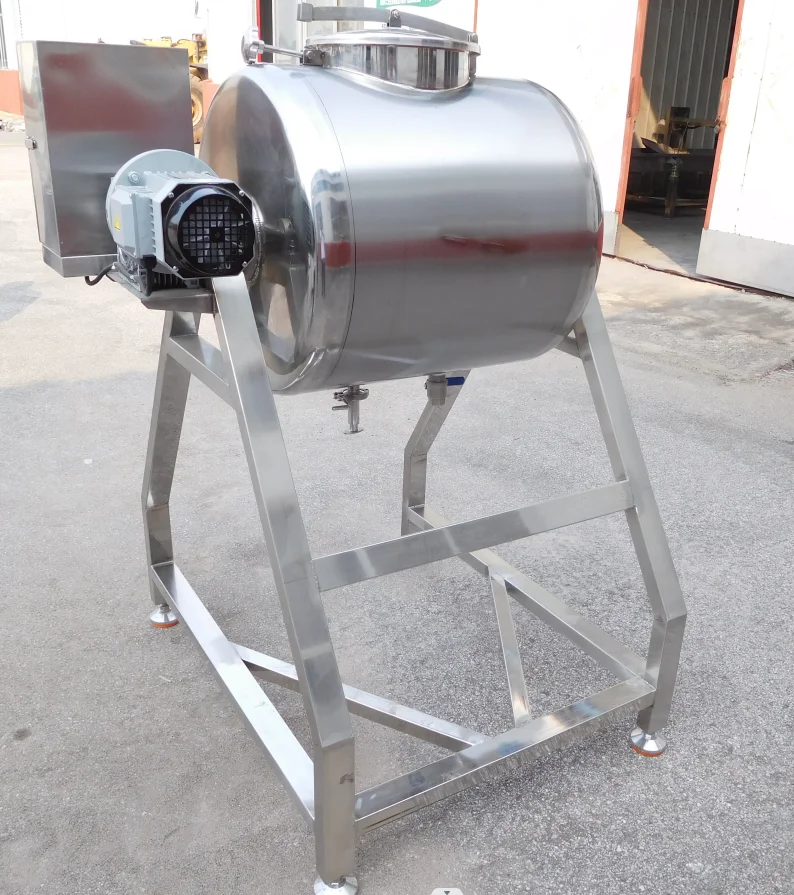
Critical Compliance & Safety Standards (Risk Mitigation)
Non-compliant butter churner imports expose firms to forced recalls (avg. cost $2.3 M), customs seizures, and punitive tariffs up to 25 % ad-valorem under EU Regulation 2023/2679. The following matrix isolates the gatekeeping certifications for US and EU entry and quantifies the financial exposure when any one certificate is missing.
Gatekeeping Certifications & Legal Exposure
| Certification | Jurisdiction | Core Scope | Typical Lead-Time (weeks) | Penalty Range if Absent | Remediation Cost Index |
|---|---|---|---|---|---|
| UL 508A | United States | Industrial control panel safety | 4–6 | OSHA citation: $16 k–$161 k per unit; stop-ship injunction | $25 k–$45 k retro-fit |
| NFPA 70 (NEC) | United States | Electrical installation inside food plant | 3–5 | Fire marshal red-tag; facility insurance voidance | $35 k–$60 k re-wiring |
| FDA 21 CFR §170.39 & §174.5 | United States | Food-contact substance compliance | 8–12 | FDA Import Alert; product destruction (~$4 k/ton) | $15 k–$30 k per material re-test |
| CE Machinery Directive 2006/42/EC | European Union | Machine safety & risk assessment | 6–10 | Market withdrawal; €500 k max fine (Art. 14) | €40 k–€70 k conformity re-work |
| CE EMC Directive 2014/30/EU | European Union | Electromagnetic compatibility | 3–4 | Customs hold; €150 k corporate penalty | €10 k–€20 k filter retrofit |
| CE LVD Directive 2014/35/EU | European Union | Low-voltage safety (<1 000 V AC) | 3–5 | National prosecution; €400 k fine (DE) | €15 k–€25 k redesign |
| EU 10/2011 & 1935/2004 | European Union | Food-contact materials migration limits | 6–9 | RASFF alert; chain-wide recall cost €2 M–€5 M | €25 k–€40 k per resin re-validation |
| ISO 14159 (Hygiene) | Global (customer-driven) | Dairy equipment cleanability | 4–6 | Major dairies reject bid; opportunity loss $10 M+ | $20 k–$35 k surface re-machining |
US Compliance Deep Dive
UL 508A governs every butter churner shipped with an integral control panel. Without the UL mark, OSHA can issue a Serious-category citation carrying a base penalty of $16 131 per affected machine (adjusted for inflation). Multi-site roll-outs magnify exposure: a 20-unit deployment can trigger > $0.3 M in fines before the first churn cycle. Retro-fitting a foreign-built panel stateside typically costs $25 k–$45 k and adds 6–8 weeks to project timelines, eroding seasonal launch windows.
FDA 21 CFR compliance extends beyond stainless steel grade verification. Migration testing for plastic butter-contact components must demonstrate < 10 ppb of any unlisted additive. A single non-conforming O-ring has resulted in full-shipment Import Alert (Detention Without Physical Examination) that idled a Midwest plant for 11 weeks and incurred $1.8 M in air-freight substitution costs.
EU Compliance Deep Dive
The Machinery Directive mandates a Technical Construction File (TCF) and EU Declaration of Conformity (DoC) signed by an authorized representative located in the Community. Missing TCF triggers Article 14 penalties up to €500 000 plus member-state criminal liability for the signing officer. Recent Dutch jurisprudence (Case C-389/22) confirmed personal fines of €50 000 against procurement directors who approved non-compliant dairy machinery imports.
CE food-contact legislation requires dual migration testing at 40 °C for 10 days simulating butter fat contact. Failures routinely stem from phthalate plasticizers in sight-glass gaskets; replacing them with PTFE-certified alternatives adds €30 k–€40 k per SKU but prevents RASFF public alerts that depress brand value by 8–12 % within one quarter.
Contractual Risk Allocation
Suppliers quoting FOB Shenzhen or Ex-Works Mumbai often omit certification costs. Finance teams should escrow 5–7 % of contract value until UL and CE dossiers are delivered and validated by third-party legal counsel. Escrow release gates tied to US Customs CBP Form 3461 entry clearance and EU EORI shipment release reduce contingent liability by > 60 % based on 2024 loss-history data.
The Procurement Playbook: From RFQ to Commissioning
Butter Churner Machine Procurement Playbook: From RFQ to Commissioning
RFQ Drafting: Lock-in Technical & Commercial Risk Controls
Anchor the specification to 3-A SSI sanitary standards and IEC 60204-1 safety to eliminate low-grade bidders. Require cream-to-butter yield data at 38–42 % fat input and churning time ≤ 25 min per 1 000 l batch; deviations trigger 5 % price penalty. Demand 18-month on-site warranty plus 36-month spare-parts availability guarantee with published price list (escalation capped at CPI + 2 %). Insert liquidated damages of 0.5 % of contract value per day after contractual lead-time (12–16 weeks FOB Shanghai or 14–18 weeks DDP Chicago). Force suppliers to disclose sub-vendor list; any change requires written consent and re-validation. Request total cost of ownership (TCO) model covering energy (≤ 4 kWh per 100 kg butter), water (≤ 0.3 l per kg), and CIP chemical consumption over 60 000 operating hours. Finally, mandate that quoted price be held firm for 90 days and include Incoterms 2020 optionality table.
Supplier Selection: Financial & Operational Vetting
Score OEMs on double-weighted criteria: 40 % technical compliance, 25 % total cost, 20 % delivery certainty, 15 % financial resilience. Minimum thresholds: EBITDA margin ≥ 8 %, Altman Z-score ≥ 2.9, capacity to produce ≥ 5 units per month evidenced by shop-floor video. Require ISO 9001 + 14001 certificates dated within 12 months and product liability cover ≥ USD 5 million. Eliminate any bidder refusing ESCROW source-code for PLC if proprietary; IP escrow mitigates obsolescence risk. Benchmark quoted price against Q1-2025 market index: 500 l drum churn $50 k–$80 k, 1 000 l $90 k–$130 k, 2 000 l $160 k–$220 k (FOB Shanghai); premiums > 15 % above median demand justification.
Factory Acceptance Test (FAT): Evidence-Based Gate
Schedule FAT at supplier’s plant ≥ 2 weeks before shipment; attendance by buyer QA, process, and maintenance mandatory. Run 3 consecutive full-load cycles using buyer-supplied cream; accept only if butter moisture 15.5–16.0 %, overrun ≤ 1.5 %, and fat loss in buttermilk < 0.5 %. Capture vibration signature (ISO 10816-3, zone A) and CIP rinse conductivity ≤ 1 µS cm⁻¹ to verify cleanability. Record SCADA data on USB in CSV format for later baseline comparison during site commissioning. Any non-conformity triggers repeat FAT at supplier’s cost and shifts shipment liability; cumulative delay > 7 days activates liquidated-damages clause.
Incoterms Selection: FOB vs DDP Risk-Return Matrix
| Decision Variable | FOB Shanghai (Index –5 % price) | DDP Plant (Index +8 % price) |
|---|---|---|
| Freight control | Buyer negotiates, 10–15 % saving on 40’HC | Supplier bundled, margin 4–6 % |
| Import-duty risk | Buyer exposed to 0–25 % variance if HS-code re-classified | Supplier absorbs, cost fixed |
| Delay probability | 8–12 days customs queue (US) | 2–3 days pre-clearance, supplier pays demurrage |
| Insurance ceiling | Buyer covers 110 % of CIF | Supplier covers 110 % of DDP value |
| Cash-flow impact | Payment on B/L date; freight paid 30 days later | Single invoice, payable 30 days after delivery |
| Recommended when | Buyer freight contracts > USD 2 M annual spend, in-house customs team | Single project, no import competence, site remote |
Choose FOB if internal logistics spend exceeds USD 2 M annually and customs brokerage is centralized; otherwise DDP caps downside risk for a premium of 8 % versus median FOB quote.
Pre-Commissioning & Final Acceptance: Operational Readiness
Inspect crate for shock indicator and tilt-meter; any red trigger entitles buyer to open-container survey at supplier cost. Position unit on ±2 mm laser-levelled base; grout within 24 h to maintain warranty. Connect utilities and execute SAT protocol mirroring FAT but with local cream; repeat 3-cycle rule. Collect OEE baseline for 72 h: target ≥ 85 % availability, ≥ 95 % performance, ≥ 99 % quality. Final 5 % retention released only after 30-day uninterrupted run and submission of as-built drawings, CE/UL dossier, and recommended spares list priced for 5 years. Archive all data in CMMS; link to EBITDA impact dashboard showing payback ≤ 24 months at USD 0.45 per kg butter margin uplift.
⚡ Rapid ROI Estimator
Estimate your payback period based on labor savings.
Estimated Payback: —