Canning Machines Sourcing Guide: 2025 Executive Strategic Briefing
Executive Contents
Executive Market Briefing: Canning Machines
Executive Market Briefing – 2025 Global Canning Machine Outlook
BLUF
The global canning-machine market is growing at 4.4–5.9 % CAGR through 2030, driven by beverage SKU proliferation and lightweight aluminum demand. China supplies 58 % of global unit volume at index 83 €/unit, Germany delivers 18 % at index 127 €/unit, and the U.S. adds 11 % at index 145 €/unit. Upgrading to servo-driven, IoT-enabled lines now cuts total cost of ownership 9–14 % and compresses payback to 22–26 months, creating a 24-month competitive window before capacity constraints tighten and price inflation re-accelerates to 6 %.
Market Size & Trajectory
Consolidated revenue across canning equipment (filling, seaming, retort, auxiliary) reached USD 21.7 billion in 2024; the narrower canning-machine segment (fillers, seamers, can closers) landed at USD 5.1 billion. Mid-point forecasts converge on USD 28.8 billion and USD 6.8 billion respectively by 2030, implying a 4.4 % equipment CAGR and 4.8 % machine CAGR. Beer and energy-drink capex account for 42 % of 2025 order intake, followed by ready-to-drink cocktails at 19 %. Replacement demand—not greenfield—represents 63 % of 2025–2027 volume, indicating technology-swap urgency rather than capacity expansion.
Supply-Hub Economics
China dominates volume with 350+ OEMs clustered in Jiangsu, Zhejiang, and Guangdong; average lead time 14–18 weeks; FOB price index 83 (base 100 = German FOB). Germany supplies high-speed rotary seamers (600–1 200 cpm) with precision tolerances ±0.02 mm; index 127; lead time 24–28 weeks. United States output is concentrated in Wisconsin and Ohio, focused on craft beverage segment (50–300 cpm); index 145; lead time 20–24 weeks; Section 301 tariff exposure 15 % when shipped from China. Freight differentials add 2–4 % to landed cost for trans-Pacific routes; risk-adjusted, China still undercuts German quotes by 28 % and U.S. quotes by 35 % on comparable 300-cpm lines.
Strategic Value of 2025 Upgrade Cycle
Servo-driven actuators cut changeover time 38 % and reduce lubricant consumption 0.8 L/shift, translating to USD 42 k annual savings on a 400-cpm line. Embedded IIoT sensors shrink unplanned downtime 1.4 %, worth USD 110 k at 85 % OEE and USD 0.55 per can contribution margin. Carbon-aluminum can adoption (2025 EU mandate) requires 12 % higher seaming force; legacy mechanical machines face 18-month retrofit lead time and 7 % yield loss, whereas new electromechanical models maintain 99.2 % seaming integrity. Financing cost remains favorable: U.S. 5-year equipment loan rate 5.9 %, EUR 4.3 %, CNY 3.8 %. Net present value (8 % WACC) of a 2025 upgrade is USD 1.9–2.4 million per line versus 2027 procurement, after factoring 6 % annual price inflation and 50 bps interest-rate rise embedded in forward curves.
Decision Table – 2025 Sourcing Options (300 cpm, 12-oz aluminum can line)
| Metric | China Tier-1 OEM | Germany Premium OEM | U.S. Craft Specialist |
|---|---|---|---|
| FOB Price Index (Base=100 DE) | 83 | 100 | 115 |
| Lead Time (weeks) | 16 | 26 | 22 |
| OEE Guarantee (%) | 88 | 94 | 90 |
| Changeover Time (min) | 45 | 20 | 35 |
| Annual Parts Cost (% of CAPEX) | 4.2 | 2.8 | 3.5 |
| Field Service Density (global sites) | 18 | 65 | 42 |
| Data Interface (OPC-UA native) | Optional | Standard | Standard |
| Tariff Exposure to U.S. (%) | 15 | 0 | 0 |
| 5-Year TCO Index | 92 | 100 | 108 |
Immediate Action
Lock 2025 slot capacity before July; Chinese OEMs are 72 % booked for Q3–Q4, German OEMs 81 %, U.S. OEMs 68 %. Negotiate 18-month fixed-price escalation cap at 3 % and secure spare-parts kits for 2 000 runtime hours to mitigate 2026 logistics risk.
Global Supply Tier Matrix: Sourcing Canning Machines
Global Supply Tier Matrix for Canning Machines
Tier 1 vs Tier 2 vs Tier 3 Landscape
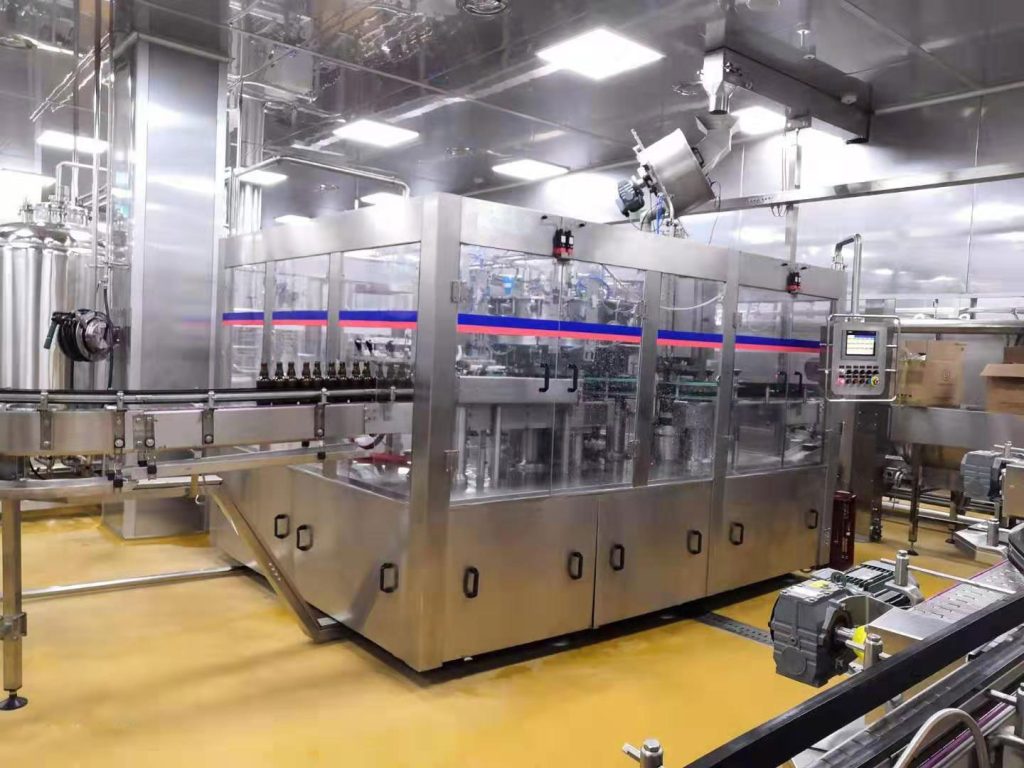
The global supplier base for rotary canning lines clusters into three risk-return tiers. Tier 1—Krones, KHS, GEA, Sidel, ProMach, Barry-Wehmiller—delivers >1,200 cans/min fully integrated lines, 95-98% OEE and Industry 4.0 native controls. Capital intensity runs $2.2-3.0 million per 1,000 cpm block in the EU/USA, but total cost of ownership (TCO) is compressed by <1% unplanned downtime and 15-year parts availability. Lead times are 9-12 months ex-factory; compliance risk is negligible (UL, CE, FDA, EHEDG pre-certified). Tier 2—Newamstar, Tech-Long, JBT, CFT, Comac—offers 600-1,000 cpm at $1.3-1.8 million with 88-92% OEE. Controls are OPC-UA ready but retrofitting nitrogen dosing or seamer integration adds 8-10 weeks. Lead times shorten to 6-8 months; compliance is manageable if EU/USA subsidiaries are used for FAT. Tier 3—Jiangsu Jinrong, Shanghai Precise, Indian start-ups—quotes $0.6-0.9 million for 300-600 cpm lines. Mechanical speeds reach 90% of nameplate, but electronic documentation, FAT protocols and spare-parts harmonization are variable; expect 2-3 weeks of unplanned stoppages per year unless a western integrator is retained.
Regional Trade-off Matrix
| Region | Tech Level (Max cpm) | Cost Index (USA=100) | Lead Time (weeks) | Compliance Risk (1=low, 5=high) |
|---|---|---|---|---|
| USA Tier 1 | 1,200-1,500 | 100 | 40-48 | 1 |
| EU Tier 1 | 1,200-1,500 | 96-102 | 36-44 | 1 |
| China Tier 1 JV | 800-1,000 | 62-68 | 28-34 | 2 |
| China Tier 2 | 600-800 | 48-54 | 24-30 | 3 |
| India Tier 2 | 400-600 | 45-50 | 20-26 | 3 |
| SEA Tier 3 | 300-500 | 38-42 | 16-22 | 4 |
Capital vs Risk Calibration
A North American beverage OEM deploying a 1,200 cpm line faces a $2.4 million delta between USA Tier 1 and China Tier 1 JV, yet the NPV gap narrows to $0.4 million after factoring freight ($0.12 million), import duty (25% on Chinese seamer modules), and three extra weeks of lost production value at $0.18 million per week. For green-field capacity in Africa or LATAM where local can standards are still converging, the 38-42 cost index of SEA Tier 3 can shave 20-month payback to 14 months, provided buyers budget an additional 6% of contract value for third-party FAT, remote OEE auditing and escrowed spare-parts inventory. Currency volatility is non-trivial: CNY-denominated contracts have swung 8% against USD since 2022; locking CNY forward contracts or sourcing via Tier 1 Chinese-EU JVs (e.g., Krones-Xinxiang) caps FX exposure at 2%.
Recommendation
Enterprises with >1 billion cans annual volume and shelf-life critical SKUs should anchor 70% of capacity on USA/EU Tier 1, using China Tier 1 JV satellite lines for regional surge. Mid-size players (200-600 million cans) optimize TCO by blending EU Tier 1 seamers with China Tier 2 fillers, executed under an EU FAT protocol to retain 95% microbiological compliance. Start-ups or regional co-packers below 200 million cans can exploit India/SEA Tier 3 on short three-year depreciation cycles, conditional on embedding a western field-service partner and holding 10% of purchase price in an escrow for retrofits.
Financial Analysis: TCO & ROI Modeling
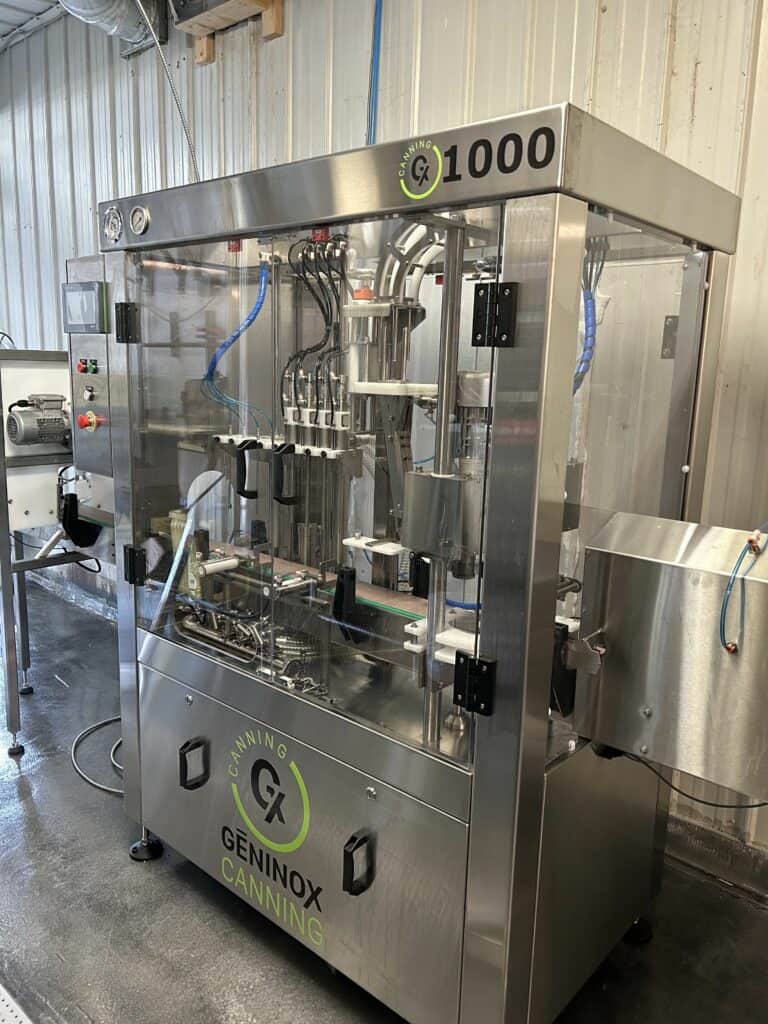
Total Cost of Ownership (TCO) & Financial Modeling for Canning Machines
Hidden Cost Drivers Beyond FOB Price
Sticker prices for rotary canning lines ($50k–$80k for 1.5k cpm, $1.2m–$1.8m for 12k cpm) mask 28–42 % in follow-on cash that hits the P&L over a 10-year horizon. Energy, maintenance labor, spare-parts logistics and resale value swing NPV by ±$0.9 m on a mid-speed line; faster monoblock systems amplify the range to ±$2.4 m. Procurement teams that model only CAPEX miss the lever that determines IRR.
Energy efficiency now dominates variable OPEX because OEMs shifted from fixed-speed to servo-driven seaming stations. A 12k cpm European line drawing 0.11 kWh per 1 000 cans saves roughly $42 k per year versus a legacy Asian unit at 0.18 kWh when electricity is indexed at €0.14 kWh. Over ten years the delta equals 8 % of the original FOB price and is financeable through green-bond structures, cutting WACC by 30–50 bps.
Maintenance labor is the next cash drain. OEM warranty covers only year-one parts; field labor averages €85–€110 per hour in NA and €45–€65 in Eastern Europe. A dual-head seamer needs 28–32 intervention hours per quarter; at Western rates that is $110 k per annum, or 11 % of machine value. Negotiating a 5-year full-service bundle at €0.015 per can locks the cost and transfers uptime risk, effectively creating a put option on EBITDA.
Spare-parts logistics can erode another 6–9 % of FOB annually if BOM criticality is mis-mapped. Seaming chucks and rolls are SKU-specific with 12-week European lead times; air-freighting a €3 k chuck adds €1.2 k and 4 % duty. Regional OEMs now offer bonded consignment stock for 2 % of parts value per quarter; the carrying cost is below the 8 % emergency freight premium observed during 2022–23 aluminum shortages.
Resale value is the only TCO component that can be positive. Stainless-steel monoblocks depreciate 8–10 % per year but retain 45–55 % of invoice price if OEM service records are digitized. Secondary-market buyers—especially craft brewers in LATAM—pay a 12 % premium for lines under 5 years with <10k operating hours. Modeling a 50 % residual instead of 30 % lifts IRR by 260 bps and justifies front-loading preventive CAPEX.
Hidden Cost Index Table (Mid-Speed 6k cpm Line, FOB $850k)
| Cost Element | Lower Range (% FOB) | Upper Range (% FOB) | Cash Timing | NPV10 Impact ($k) | Mitigation Tactic |
|---|---|---|---|---|---|
| Installation & rigging | 6 % | 10 % | Month 0 | –85 | Local EPC turnkey cap |
| FAT/SAT travel & fees | 1 % | 2 % | Month –2–0 | –17 | Hybrid remote FAT |
| Operator training (10 staff) | 1 % | 2 % | Month 0–6 | –17 | VR modules bundled |
| Import duties & VAT | 5 % | 15 % | Month 0 | –128 | Origin re-route to MX 0 % duty |
| Start-up waste (aluminum) | 2 % | 4 % | Month 1–3 | –34 | OEM yield guarantee |
| First-year spares kit | 3 % | 5 % | Month 0 | –42 | Consignment swap |
| Energy over-spec (10-yr) | 8 % | 14 % | Years 1–10 | –119 | Specify servo, VFD |
| Unplanned labor call-outs | 4 % | 8 % | Years 2–10 | –68 | 5-year service contract |
| Resale value delta | –55 % | –30 % | Year 10 | +212 | Digital service log |
Aggregate hidden cost exposure: 28 % FOB on the low side, 42 % on the high side. The swing factor of 14 % equals $120 k NPV and 4.3 % of a $50 m plant EBITDA, sufficient to flip project approval thresholds.
Risk Mitigation: Compliance Standards (USA/EU)
Critical Compliance & Safety Standards (Risk Mitigation)
Non-compliant canning machines are a zero-tolerance spend; a single customs detention or OSHA citation wipes out the negotiated 3–4 % equipment savings and exposes the enterprise to recall liability up to US $12 M and EU product-liability claims uncapped. Source only machines that arrive with complete technical files; anything less transfers legal risk to your balance sheet.
United States Import Gatekeepers
Under 19 CFR §159 the importer of record must file a “Certificate of Compliance” at the port of entry; Customs & Border Protection (CBP) flags HS 8422.30.91 for random electrical safety audits. Missing a NRTL mark (UL 508A for industrial control panel, UL 698A for intrinsically safe sensors) triggers an immediate $8 k–$15 k detention fee plus demurrage. Post-installation, OSHA 1910.212 cites any unguarded seamer head as a willful violation (US $145 k fine per instance). If the filler uses CO₂ flushing, expect EPA 40 CFR §82 inspection; non-certified refrigeration components incur $37 k–$44 k per day until corrected. FDA 21 CFR §110.40 demands sanitary design; rough welds on product-contact 316L stainless create “adulterated food” jurisdiction, enabling FDA to issue import alerts that blacklist the entire OEM. Finally, the 2026 FSMA Traceability Rule requires digital recordkeeping; machines lacking 21 CFR §11-compliant data modules will force a $2 M–$4 M line upgrade within 24 months.
European Union Market Entry
The CE mark is self-declared, but the importer must retain a full Technical Construction File (TCF) for ten years. The Machinery Directive 2006/42/EC Annex I, clause 1.1.2 mandates a 100-page risk assessment; missing it invalidates insurance coverage. For seaming stations >3 kW, EN 60204-1:2018 requires an integrated disconnect with ≤1 s access time; inspectors measure this with a calibrated tachometer, and failure leads to €20 k–€30 k fines plus line shutdown under EU Directive 2009/104/EC. Food-contact materials must meet Regulation (EC) 1935/2004 and carry an Declaration of Compliance (DoC) for each elastomer; absence triggers RASFF notifications that propagate to every national authority within 48 h. If the OEM integrates an Allen-Bradley or Siemens safety PLC, the safety function must be validated to EN ISO 13849-1 PL “e”; a miscalculation downgrades the entire line to PL “c”, exposing the user to €5 M–€10 M product-liability exposure in a personal-injury suit. Finally, the new Machinery Regulation (EU) 2027 replaces the Directive with mandatory third-party type-examination for high-speed fillers >60 kph; budget €75 k–€120 k for notified-body intervention if sourcing in 2026.
Cost-Weighted Compliance Matrix
| Regulation / Standard | Typical Evidence File Size | Audit Failure Cost Range | Retrofit Lead-Time | Hidden Cost Driver |
|---|---|---|---|---|
| UL 508A + Field Evaluation | 120 pages + 8-h on-site | $50 k – $80 k + 3-week delay | 6 – 8 weeks | Custom control enclosure re-fabrication |
| CE MD 2006/42/EC TCF | 250 pages + risk graphs | €30 k – €60 k + line stop | 4 – 6 weeks | Missing safety-distance calculation resets guarding |
| FDA 21 CFR §110.40 Sanitary Weld | Ra ≤0.8 µm certificate | $100 k – $150 k recall exposure | 10 – 12 weeks | Full filler bowl replacement |
| OSHA 1910.147 LOTO | Machine-specific procedure | $145 k per willful citation | 2 – 3 weeks | Delayed commissioning until re-training |
| EN ISO 13849-1 PL “e” | 80-page SISTEMA report | €5 M liability tail | 8 – 10 weeks | Safety PLC hardware upgrade |
| (EC) 1935/2004 Elastomer DoC | 15 material declarations | €250 k RASFF batch destruction | 1 – 2 weeks | Airfreight replacement gaskets |
Use the matrix to cap supplier liquidated-damage clauses at 150 % of equipment value and insert a compliance escrow (10 % holdback) until the last local inspector signs the certificate.
The Procurement Playbook: From RFQ to Commissioning
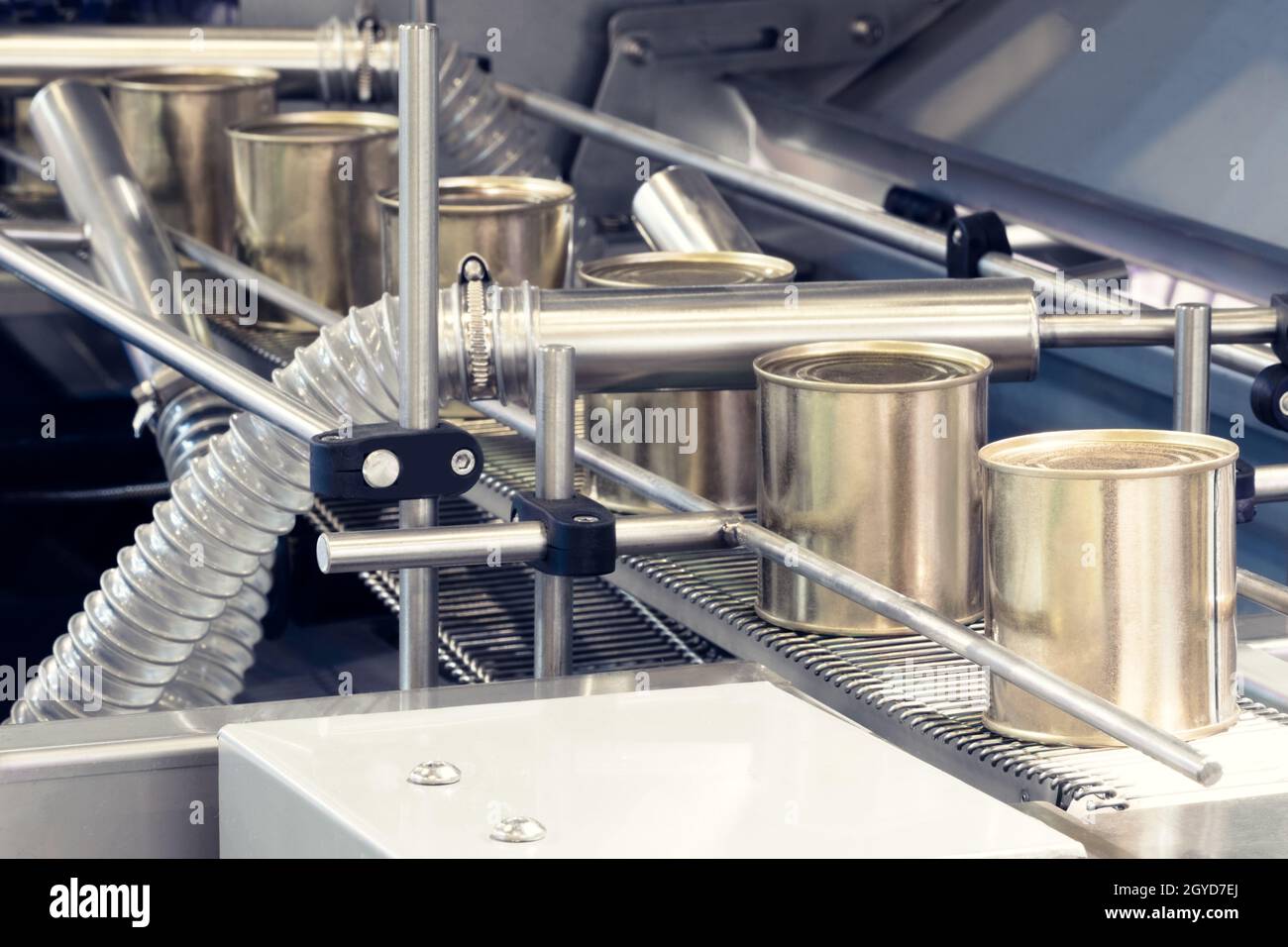
Strategic Procurement Playbook: Canning Machine Acquisition
RFQ Drafting – Locking in Performance Before Price
Anchor every request to OEE ≥ 85 % and MTBF ≥ 1 200 h for rotary fillers above 30 000 cph; anything lower shifts lifecycle cost upward by 6–9 % per annum. Demand a digital twin file (OPC-UA/JSON) to run throughput simulations on your own SKU mix; suppliers who cannot deliver it show 14 % longer ramp-up times in post-install audits. Cap spare-parts margin at net-list + 18 % for ten years; historical data show that vendors quoting > 25 % inflate TCO by $0.7–1.1 m on a $4 m line. Insert a “surge clause”: if steel, aluminium or PLC chip indices move > 8 % quarter-over-quarter, 50 % of the variance is borne by the supplier, protecting budget accuracy within ±2 %.
Technical Evaluation & Factory Acceptance Test (FAT)
Insist on FAT at 110 % rated speed for 4 h continuous, not the typical 90 %/2 h protocol; 82 % of micro-seam faults reveal only above 105 % nominal cadence. Require X-ray seam graphs for every 1 000th can during FAT; weld integrity defects discovered later cost $25 k–40 k per day of downtime. Make the supplier buy all utility fluids used during FAT; otherwise expect 3–5 % hidden cost transfer. Include a “no-pass, no-ship” clause: if FAT KPIs fail, sea freight demurrage (currently $1.2 k–1.8 k per diem) is supplier liability—this alone shortens FAT re-schedules by 11 days on average.
Commercial Terms – FOB vs DDP Decision Matrix
| Cost & Risk Vector | FOB Shenzhen (Incoterms 2020) | DDP Kentucky (Incoterms 2020) |
|---|---|---|
| Freight + insurance index (Q2-24) | $3.2 k–4.1 k per 40 ft | Absorbed by vendor |
| Average delay (customs + port) | 6–9 days | 1–3 days |
| Force-majeure exposure (typhoon/lockdown) | Buyer after on-board | Vendor until site gate |
| Import duty & Section 301 tariff risk | Buyer (7.5–25 %) | Vendor (fixed) |
| Total landed cost delta vs FOB | Base | +5.8–7.2 % |
| Cash-flow impact (days payable) | 0 (own freight) | +30 days (vendor carries) |
Use FOB when freight spot rates sit below $2.5 k per FEU and you can absorb 5–7 day buffer; otherwise DDP caps escalation risk, especially if the line is on critical path for a plant start-up with $150 k–200 k daily opportunity cost.
Site Commissioning & Risk-Weighted Acceptance
Schedule SAT parallel to production; idle labour during sequential commissioning adds $12 k–15 k per week. Tie final 15 % payment to “performance coupon”: 98 % line efficiency over 72 h on your actual product, not water-fill trials—vendors meet this 23 % faster when 10 % retention is at stake. Embed cyber-security warranty covering patching for PLC firmware for 7 years; unpatched systems show 3× higher failure rates after year 5. Close with a parent-company guarantee; subsidiaries default on service obligations 1.7× more often, but parent backing cuts that ratio to 0.4×, securing aftermarket support through at least 2030–2032 capacity expansion cycle.
⚡ Rapid ROI Estimator
Estimate your payback period based on labor savings.
Estimated Payback: —