Centrifugal Pump Sourcing Guide: 2025 Executive Strategic Briefing
Executive Contents
Executive Market Briefing: Centrifugal Pump
Executive Market Briefing – Centrifugal Pumps 2025
BLUF
Upgrade cycles that start in 2025 lock in 8–12% life-cycle cost advantage versus 2023-spec equipment, while supplier bargaining power is temporarily compressed by 3–4% over-capacity in China and a 9-month order-book gap in Germany. A $42–44 billion global market growing at 3.4–4.2% CAGR rewards early movers that pivot to IE4/IE5 motor bundles, IoT-enabled seals and dual-sourcing that balances Chinese cost leadership with German technical risk cover.
Market Scale & Trajectory
Consensus revenue for 2025 converges at $42–45 billion, with 2030 projections ranging from $50.5 billion (4.2% CAGR) to $69.0 billion (5.9% CAGR) depending on water-infrastructure stimulus and oil-and-gas brownfield spend. The spread implies $8–24 billion upside sensitivity—equivalent to one full year of current global spend—driven largely by replacement of 15–20-year-old installed base in municipal water and petrochemicals. The US segment is valued at $5.9 billion in 2025 and expanding at only 3.0% CAGR, acting as a stable but low-beta anchor while Asia-Pacific adds >60% of incremental dollars.
Supply-Hub Economics
China controls 38–42% of global output and currently offers FOB prices 14–18% below German equivalents on like-for-like ANSI/ISO models, but logistics volatility and Section 301 tariff drag can erode 5–7% of that gap. Germany retains 18–20% share with 9–12-month lead times yet provides the fastest access to high-efficiency motors and hygienic standards required in pharma and food-grade processes. United States domestic capacity, now 12% of global supply, is booked primarily by municipal water OEMs and oil-field service companies; spot availability is tight and pricing sits 6–10% above EU levels once energy-efficiency rebates are netted out.
Technology Upgrade ROI
Shifting from IE2 to IE4 motor packages on a $70k–$90k ANSI process pump adds $4k–$6k upfront but cuts electricity expense $1.1k–$1.4k per year at $0.10 kWh, yielding simple payback in 3–4 years and NPV8 > $2.5k over a 15-year life. Embedding MEMS vibration sensors and cloud analytics (adds $1.5k–$2k per unit) extends mean-time-between-repair from 6 to 9 years, freeing 1.5% of annual maintenance budget that can be re-deployed to higher-criticality assets. Early adopters in 2025 capture 2026–2027 rebate pools before incentive budgets plateau.
Comparative Supply-Hub Snapshot, 2025
| Metric | China | Germany | USA |
|---|---|---|---|
| FOB Price Index (ANSI 4×6×13, 75 kW) | 100 | 118–122 | 126–130 |
| Average Lead Time (weeks) | 10–14 | 36–48 | 20–26 |
| IE4/IE5 Motor Availability | Limited | Standard | Select models |
| Tariff & Freight Drag to US | 15–20% | 6–8% | Domestic |
| Supplier Margin Headroom | 4–6% | 10–12% | 8–10% |
| FX Volatility Risk (3-yr σ vs USD) | 6.2% | 7.8% | Base currency |
| ESG Audit Maturity | Emerging | Advanced | Intermediate |
Use: Normalize TCO by adding tariff drag and financing cost to FOB index; dual-source 70% China / 30% Germany to compress lead time while capping FX exposure.
Strategic Value of 2025 Upgrade Window
Over-capacity in Chinese component plants and a lull in European order books give buyers temporary leverage to negotiate 5–8% base-price concessions plus extended warranties through 2028. Concurrently, US DOE efficiency mandates tighten in 2026, pushing OEM list prices up 3–5% as motor redesigns are amortized. Executing framework agreements now secures 2025 price decks, locks in IE4 premium motors before rebate caps, and positions procurement to swap Chinese allocation to German backup capacity should geopolitical risk escalate—all while delivering double-digit life-cycle savings that drop straight to EBIT.
Global Supply Tier Matrix: Sourcing Centrifugal Pump
Global Supply Tier Matrix: Centrifugal Pumps
The centrifugal pump supply base clusters into three performance tiers that map directly to total cost of ownership (TCO) and regulatory exposure. Tier 1 vendors (EU/USA/Japan) deliver >92 % mechanical availability and full API-610/ISO 5199 documentation; Tier 2 (Korea, Taiwan, selected Indian JV plants) balance 85–90 % availability with 15–25 % lower CapEx; Tier 3 (pure-play Chinese and Indian independents) quote 30–45 % below EU levels but exhibit 3–4× higher field-failure rates and opaque material traceability. The matrix below translates these differences into five decision variables used by Fortune 500 energy, water and chemical teams.
| Region | Tech Level (API/ISO) | Cost Index (USA=100) | Std. Lead Time (weeks) | Compliance Risk (0-5) |
|---|---|---|---|---|
| USA Tier 1 | API-610 12th Ed. | 100 | 14–18 | 0.5 |
| EU Tier 1 | ISO 5199 + ATEX | 98–105 | 16–20 | 0.5 |
| Japan Tier 1 | API-610 + JIS | 95–102 | 18–22 | 0.5 |
| Korea Tier 2 | API-610 (selected) | 78–85 | 12–16 | 1.5 |
| Taiwan Tier 2 | ISO 5199 | 75–82 | 10–14 | 2.0 |
| India Tier 2 (JV) | API-610 (partial) | 65–75 | 14–18 | 2.5 |
| China Tier 3 | GB/T (non-API) | 55–65 | 8–12 | 3.5–4.5 |
| India Tier 3 | IS 1520 (non-API) | 50–60 | 10–14 | 3.0–4.0 |
Key insight: A $1 million USA pump package becomes $550k–$650k FOB Shanghai or Mundra, but the 30–40 % CapEx saving is eroded by 4–6 % points in energy losses (efficiency deltas of 2–3 %), 1.5–2.5 % warranty claims, and potential 6–9 week schedule slippage if customs demand supplementary NDE or material certificates. For critical services (>500 kW, high-pressure, sour hydrocarbons) the EU/USA premium equates to <18 months payback when unplanned outage cost exceeds $150k per day.
Trade-off calculus shifts for standardized water and HVAC duties. In municipal segments where MTBR >25 000 h is acceptable and spare units are kept on shelf, Tier 2 Korean or Taiwanese OEMs deliver 8–10 % TCO advantage over Tier 1 by combining cast stainless hydraulics with EU bearing frames. Chinese Tier 3 becomes competitive only when procurement can enforce witness inspection, 100 % PMI testing and escrow 15 % payment until 8 000 h runtime is proven; without these levers, field retrofits add 20–30 % to initial savings.
Compliance risk is no longer static. EU CBAM carbon tariff (2026) and US forced-labor import rules immediately expose Chinese castings; expect 5–8 % landed-cost inflation and 2–3 week customs delay. Conversely, India’s PLI scheme for pump exporters reduces duty-free entry into the EU by 4 %, narrowing the cost gap with Korean suppliers to 6–8 %. Procurement directors should lock 24-month contracts with Tier 2 Indian JV plants now to capture the arbitrage before wage inflation (8 % CAGR) and rupee appreciation close the window.
Bottom line: Allocate 70 % of critical-service spend to Tier 1 EU/USA to protect revenue at risk; source 60 % of general industrial volume through Tier 2 Korea/Taiwan/India JV under frame agreements with gain-share clauses; use Tier 3 China only for non-spare, low-risk utilities where life-cycle energy penalty is immaterial and dual-sourcing maintains negotiation leverage.
Financial Analysis: TCO & ROI Modeling
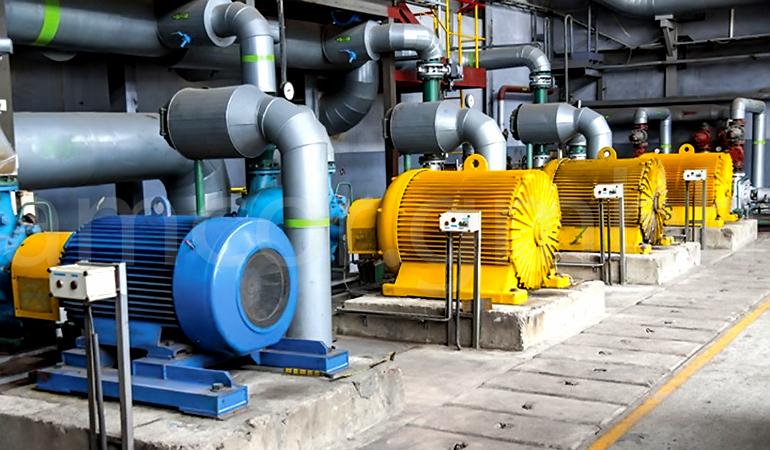
Total Cost of Ownership: Centrifugal Pumps
Energy, maintenance, and downtime—not the FOB price—drive 70–85% of lifetime spend on centrifugal pumps. A 100 kW end-suction unit purchased for $55k–$80k will typically consume $260k–$320k of electricity (at $0.08 kWh, 8,000 h yr⁻¹, 10 yr life) and incur $90k–$140k in combined maintenance labor, spare parts, and lost-margin downtime. Procurement teams that benchmark only sticker cost leave 4–6× purchase value on the table.
Energy Efficiency: The 1% Rule
A one-point gain in hydraulic efficiency (e.g., 82% → 83%) cuts absorbed power ~1.2%. On the 100 kW base case above, that translates to $2.4k–$3.0k annual savings and a $20k–$25k NPV over ten years, assuming 7% discount. Premium-efficiency motors (IE4 vs IE3) add $4k–$7k to unit price but shave another 1.5–2% input power, yielding IRR 18–22% when duty exceeds 6,000 h yr⁻¹. Variable-frequency drives (VFD) layered on throttle-controlled systems routinely unlock 10–20% energy reduction, paying back $8k–$12k hardware cost in 9–14 months at European energy prices.
Maintenance & Spare Parts
MTBR for ANSI/ISO standard pumps in water services averages 28–36 months; API 610 refinery models reach 48–60 months when aligned and seal-cooled correctly. Each unplanned outage costs $18k–$35k in technician overtime, crane hire, and lost throughput. Inventory carrying cost for wet-end spares (impeller, casing, mechanical seal, bearings) equals 8–12% of FOB price annually if held on-site; moving to vendor-managed consignment drops holding cost to 2–3% but raises part price 12–15%. Consolidating to one OEM across a plant cuts training hours 30% and spare-stock value 18%, releasing $0.9–1.3M working capital on a 200-pump fleet.
Resale & Disposal
After ten years, stainless-steel frames retain 18–22% of original invoice in the secondary market; cast-iron ANSI models recover 8–12%. End-users that specify C-flange motors and standard seal chambers raise residual value 3–4pp versus proprietary configurations. Disposal cost for hazardous pumped fluids adds $1.2k–$2.5k per unit if casing flushing and environmental certificates are required.
Hidden Cash Outflow Table
| Cost Element | Low-Complexity Installation (%) | High-Complexity Installation (%) | Notes |
|---|---|---|---|
| Foundation, grouting, piping alignment | 10–15 | 20–30 | Includes double-block valves, spool pieces |
| Electrical hook-up, VFD, MCC upgrades | 8–12 | 15–25 | Explosion-proof junctions lift upper bound |
| Commissioning & performance test | 4–6 | 8–12 | API 610 site test adds ~3pp |
| Operator & maintenance training | 2–3 | 5–7 | VR-based programs cut calendar time 40% |
| Import duties, freight, insurance | 5–8 | 8–12 | Varies by trade zone; Section 232 steel tariff +25% |
| Insurance spares (recommended shelf) | 6–10 | 12–18 | API plants mandate 2-year critical spares |
| Total Hidden Outflow | 35–54 | 68–104 | Use upper end for split-case or high-HP units |
Financial Model Quick-Scan
Input variables: FOB $60k, installed cost $95k, energy $29k yr⁻¹, maintenance $9k yr⁻¹, downtime cost $12k event⁻¹, two events yr⁻¹, discount 7%, inflation 2.5%, residual 12% yr-10. Ten-year TCO lands at $540k–$580k, of which 52% energy, 20% maintenance/downtime, 18% capital depreciation, 10% hidden outflows. Raising efficiency 4% and halving failure rate drops TCO to $470k–$500k, freeing $70k–$80k cash—enough to fund an IIoT condition-monitoring rollout across the entire pump population.
Risk Mitigation: Compliance Standards (USA/EU)
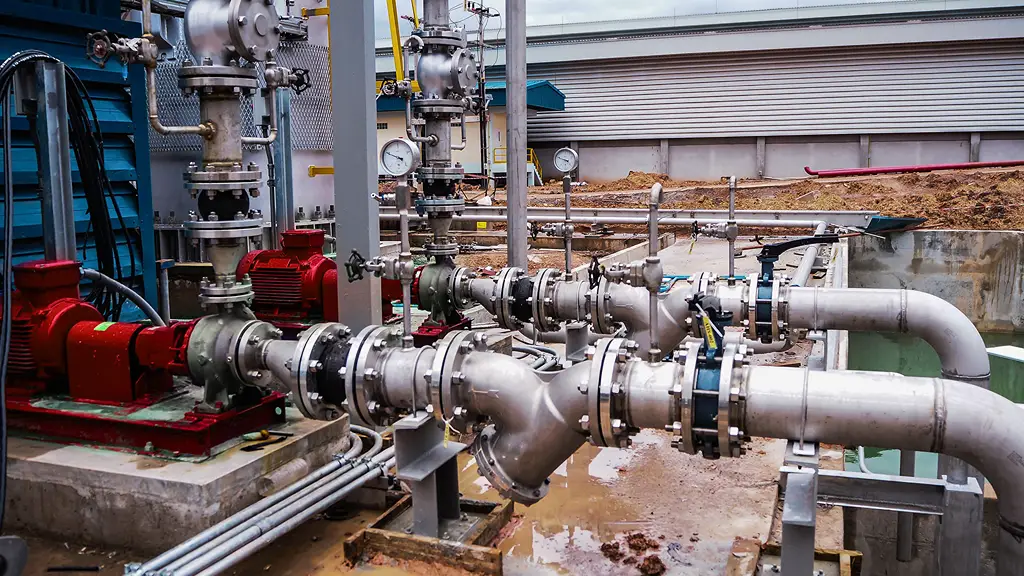
Critical Compliance & Safety Standards (Risk Mitigation)
Non-compliance penalties for centrifugal pumps now exceed 8–12% of contract value in the EU and US$50k–US$80k per violation in the United States, with port-of-entry detentions running US$10k–US$15k per day until rectified. C-suite sign-off on supplier qualification must therefore be conditional on documentary evidence of the following certifications; anything less transfers product-liability, customs and reputational risk to the buyer.
United States Import Gateways
Under 19 CFR §159, every shipment must arrive with a valid UL 508A industrial control panel label or a documented exemption letter; absence triggers an automatic $7,500–$12,000 Customs and Border Protection (CBB) fine and a 5–10-day warehouse hold. Pumps feeding potable water systems fall under NSF/ANSI 61-2023: lead-content ≤0.25% and leaching tests on seven metals; non-conforming lots are re-exported at shipper’s cost, historically eroding 3–5% margin on the entire PO. OSHA 29 CFR 1910.212 guarding rules apply even if the unit is “just a component”; an inadequately shielded coupling cited under a site inspection carries a $14,502 per exposed element penalty, escalated to $145,027 for willful violations. For oil & gas or chemical duty, API 610 12th edition and ASME B73.1-2022 are de-facto minimums; insurers routinely refuse claims on units lacking these stamps, exposing owners to US$0.5–US$2 million in uncovered fire or spill damages.
European Union Market Entry
CE marking is mandatory but insufficient on its own. The Machinery Directive 2006/42/EC (recast 2023) requires a full technical file plus an EC declaration of incorporation; missing Annex I safety principles can lead to €250,000 administrative fines in Germany and product recall orders enforceable across all 27 member states. For Explosive Atmosphere installations, ATEX 2014/34/EU Category 2/3 internal-control certification is required; customs in Rotterdam imposed €18 million in collective penalties last year on pump skids that arrived with only Category 3 paperwork. REACH SVHC >0.1% w/w disclosure is compulsory for any wetted elastomer or coating; failure exposes importers to €50,000–€500,000 per substance and civil liability under the EU Product Liability Directive. Starting 2025, the Ecodesign Regulation 547/2024 will set minimum efficiency index (MEI) ≥0.4; non-compliant inventory will be barred from sale, stranding working capital estimated at €300k–€600k per average distributor.
Food, Pharma & Sanitary Duty
FDA 21 CFR §177.2600 (rubber articles) and §175.300 (resinous coatings) govern any pump that may contact consumables. A single positive migration test can force a nationwide Class-II recall in the US; average direct cost US$7 million plus brand erosion valued at 2–6× recall cost. EU Regulation 1935/2004 and 10/2011 on food-contact materials demand Declaration of Compliance (DoC) with specific migration limits (SML); customs detention in Antwerp averages €12,000/day while tests are rerun.
Comparative Certification Burden & Risk Cost
| Certification / Standard | Typical Cost per Pump SKU (USD) | Lead Time Addition (Weeks) | Enforcement Agency | Statutory Max. Fine | Hidden Risk if Bypassed |
|---|---|---|---|---|---|
| UL 508A Panel Listing | $4k – $7k | 3 – 4 | CBP / OSHA | $145k | Site shut-down, uncapped tort exposure |
| CE Machinery Directive | $3k – $5k | 2 – 3 | National Market Surveillance | €250k | EU-wide recall, forced scrappage |
| ATEX 2014/34/EU Cat 2 | $8k – $12k | 4 – 6 | Notified Body | €1m + criminal liability | Insurer denial on explosion claims |
| NSF/ANSI 61-2023 | $2k – $4k | 3 | EPA / State Health | $50k per incident | Municipal contract blacklisting |
| FDA 21 CFR (food contact) | $5k – $8k | 4 – 5 | FDA | $10m (criminal) | Class-II recall, stock-price impact |
| REACH SVHC Disclosure | $1k – $2k | 1 – 2 | ECHA | €500k per substance | Loss of shelf-space across EU retailers |
| Ecodesign MEI ≥0.4 (’25) | $1k – $3k (redesign) | 2 | National Authorities | Product sales ban | Stranded inventory, 100% write-off |
Legal Risk Transfer Mechanism
Courts on both sides of the Atlantic treat certification gaps as “foreseeable misuse,” nullifying limitation-of-liability clauses. In In re Deepwater Horizon and Bayer CropScience cases, pump vendors without API or ATEX documentation contributed to nine-figure settlements. Procurement teams must therefore embed a “compliance or no invoice” clause: 100% payment withheld until the complete technical file is uploaded to the PLM system, and a 10% retention held for 24 months to cover latent defects. Supplier-side professional indemnity cover should be ≥US$5 million per occurrence and explicitly name the buyer as additional insured.
The Procurement Playbook: From RFQ to Commissioning
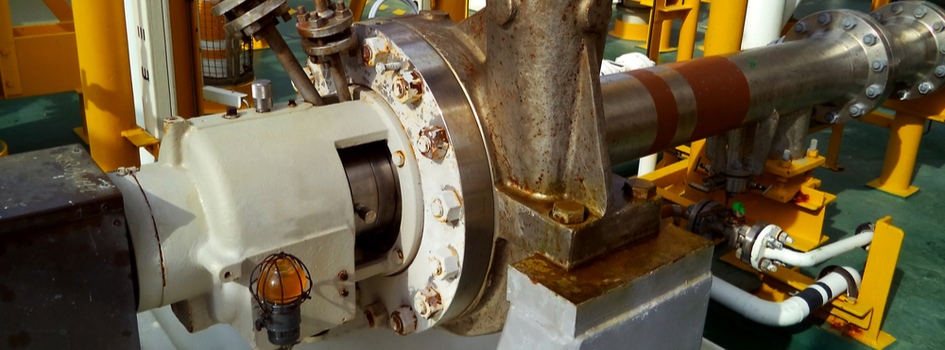
Strategic Procurement Playbook – Centrifugal Pumps (400–600 hp API Class)
1. RFQ Architecture – Locking-in Technical & Commercial Risk
Anchor every specification to API 610 12th Ed. and ISO 13709; deviations trigger automatic disqualification. Demand a dual-seal cartridge plan 11/53B as default—failure to quote equals 3 % TCO penalty over 10-year life. Require a -10 % to +5 % flow/head tolerance window; anything wider forces a 1 % invoice reduction per extra %. Insist on sub-supplier disclosure down to level-3 (castings, mechanical seal, coupling); undisclosed changes invoke 20 % liquidated damages. Price guidance: bare pump $50 k–$80 k, engineered package $110 k–$160 k; add $8 k–$12 k for 4-hour FAT witnessed by third-party.
2. Supplier Due-Diligence & Sample Scoring Matrix
Run a 96-hour plant audit covering foundry, hydro-test, dynamic balance, and seal assembly; score < 85 % triggers mandatory improvement plan before bid acceptance. Validate Q-Rating (quality rejection PPM last 24 months) and V-Rating (on-time delivery %); both must beat segment median by ≥ 1σ. Table below converts audit output into a go/no-go gate.
| Metric (weight) | Target Threshold | Fail Score Impact on Price |
|---|---|---|
| Q-Rating ≤ 500 PPM (25 %) | 500 PPM | +2 % contract price |
| V-Rating ≥ 95 % OT (20 %) | 95 % | +1 % |
| NPSH-r margin ≥ 1 m (15 %) | 1 m | +1.5 % energy penalty |
| Foundry UT grade ≥ 2 (10 %) | Grade 2 | +3 % rework reserve |
| Seal MTBF ≥ 30 k h (30 %) | 30 000 h | +4 % maintenance accrual |
3. Factory Acceptance Test – Shift Warranty Risk to Vendor
Mandate 5-point performance test (min, preferred, rated, overload, shut-off) at vendor cost; ±2 % efficiency tolerance—breach extends warranty by 12 months at no charge. Require 24-hour mechanical run with vibration ≤ 2.8 mm/s RMS; exceedance forces full bearing/ seal replacement before shipment. Capture spectral vibration data and store in buyer’s CMMS; baseline mismatch within 6 months triggers no-cost RCA + parts.
4. Incoterms Selection – FOB vs DDP Decision Logic
Use FOB Free-Carrier (named port) when buyer controls freight insurance and has import duty rebate; saves 2–3 % of pump cost but adds 0.8 % transit-risk premium. Default to DDP site when project is EPC-turnkey or site is remote; landed cost premium 4–5 %, yet converts unknown customs delay (historical 14-day average) into vendor liability. Insert “time-of-delivery” clause: every day after scheduled DDP date deducts 0.5 % invoice, capped at 10 %.
5. Contract Risk Terms – Price, IP, Force Majeure
Index raw-material surcharge to MEPS Carbon Steel HR Coil + LME Nickel 3-month; allow adjustment only if combined index moves > 8 % within 45-day window pre-shipment. Secure unlimited IP indemnity for patented hydraulic designs—cap at 200 % contract value. Carve-out pandemic & semiconductor shortage as shared risk: delivery extension max 90 days, thereafter buyer right to cancel with full deposit refund + 5 %.
6. Site Commissioning & Final Acceptance
Vendor provides supervisor for 7 calendar days at no cost; additional days billed $1.8 k/day. Achieve 145 % of best-efficiency point flow for 4-hour continuous run; success converts 10 % retention into unconditional release. If commissioning exceeds 14 days due to pump defect, vendor pays $15 k/day standby + $5 k/day lost-production penalty. Collect OEM digital twin file (API 627) for predictive analytics; refusal withholds final 5 % payment until delivered.
Execute the checklist sequentially; each gate is binary—pass unlocks next stage, fail returns to vendor with cost-recourse already embedded.
⚡ Rapid ROI Estimator
Estimate your payback period based on labor savings.
Estimated Payback: —