
Centrifugal Pump And Submersible Pump Sourcing Guide: 2025 Executive Strategic Briefing
Executive Contents
Executive Market Briefing: Centrifugal Pump And Submersible Pump
Executive Market Briefing – Centrifugal & Submersible Pumps 2025
BLUF
Global centrifugal and submersible pump spend will rise from USD 41 Bn in 2025 to USD 56 Bn by 2032 (5.2% CAGR). 68% of 2025 demand is centrifugal, 22% submersible. China supplies 42% of global unit volume at –18% landed-cost advantage versus Germany/US, but reliability-adjusted total cost of ownership (TCO) narrows the gap to <4%. Upgrading to IE4/IE5 motor packages and IoT-enabled predictive maintenance now locks in 8–12% energy savings and 3–4 pp margin expansion before 2027 efficiency mandates tighten supply and add 6–9% price inflation.
Market Size & Trajectory
The addressable market for centrifugal and submersible pumps sits inside an USD 89 Bn global pump universe expanding at 4.7% CAGR through 2033. Centrifugal hardware alone will move from USD 41.2 Bn (2025) to USD 55.7 Bn (2032); submersible variants, embedded mainly in water & wastewater and mining segments, add another USD 12–14 Bn and outgrow the average at 6.1% CAGR driven by dewatering demand in lithium and copper expansions. Industrial end-use dominates: water infrastructure (31%), oil & gas (19%), chemicals (14%), power (12%). North America grows slowest at 2.7% CAGR but posts the highest aftermarket profitability; Asia-Pacific adds 55% of incremental dollar volume.
Supply-Hub Economics 2025
| Metric | China | Germany | USA |
|---|---|---|---|
| Share of global unit output | 42% | 11% | 9% |
| FOB price index (base 100 = Germany) | 82 | 100 | 105 |
| Average lead time, weeks | 10–14 | 16–20 | 14–18 |
| Reliability (MTBF, hours) | 18,000 | 28,000 | 26,000 |
| Energy-efficiency rating band | IE3 standard, IE4 optional | IE4 standard | IE4 standard |
| TCO premium vs. China, 10 yr NPV | — | +4% | +6% |
| Carbon intensity, kg CO₂e per pump | 2.4 | 1.3 | 1.5 |
| FX exposure to USD, 12-mo σ | 8% | 12% | — |
China retains a 18% landed-cost edge on commodity ANSI/ISO pumps, but German and US factories offset the gap through 30–40% longer seal & bearing life, lower unplanned downtime, and tighter QA required for API-610 and hygienic applications. Procurement teams sourcing >500 units should dual-source: 70% China for price baseline, 30% Germany/US for risk buffer; submersible slurry pumps above 300 kW should be single-sourced from Germany/US to avoid China’s current 17% export rebate uncertainty.
Strategic Value of Technology Refresh 2025–2027
Energy accounts for 78–85% of lifetime pump cost; upgrading to IE4 motors and VFD-ready packages cuts kWh by 8–12% and qualifies buyers for US §179D and EU CEEP tax credits worth USD 15–30 per kW saved. Lead times for IE4 motors are already stretching to 24 weeks and will extend past 30 weeks once the EU Ecodesign 2027 rule and US DOE 2026 standards take effect. Early adopters secure allocation and freeze pricing at 2025 baselines (USD 50k–80k per 100 kW pump set) before manufacturers implement 6–9% list-price increases to cover copper and rare-earth magnet inflation. Embedded sensor packages add USD 1,200–1,800 per unit yet enable condition-based maintenance that extends MTBR by 15–20%, translating into USD 0.9–1.3 Mn savings per 100-pump fleet over five years.
Action for C-Suite
Approve capital earmark now for IE4/IE5 + IoT retrofit in 2026 maintenance budgets; negotiate 18-month price locks with preferred suppliers before August 2025 order windows close.
Global Supply Tier Matrix: Sourcing Centrifugal Pump And Submersible Pump
Global Supply Tier Matrix – Centrifugal & Submersible Pumps
(CapEx vs. Risk Lens for C-Suite Sourcing)
Tier Definition & Strategic Use
Tier 1 suppliers deliver full-scope packages (hydraulics, motors, IoT controls, global service) and carry balance-sheet strength to warranty 5-year LCC claims. Tier 2 focus on cast/ machined components or bare-shaft pumps; they offer 15-30 % savings but require buyer assembly and QA oversight. Tier 3 are component or foundry sources—lowest piece price, highest integration cost and compliance exposure. Map spend so that Tier 1 covers critical, high-downtime assets (>95 % uptime SLA) while Tier 2/3 feed standard water or auxiliary circuits where MTTR < 4 h is acceptable.
Regional Trade-off in One Glance
The table below converts 2025 FOB quotations into a normalized Cost Index (USA = 100) and layers median ex-works lead time, technology content, and regulatory risk score (0 = negligible, 5 = severe). Use it to calibrate Total Cost of Ownership (TCO) models; every 10 index points equals ~USD 350 k on a USD 3.5 million multi-pump package.
| Region | Tech Level | Cost Index | Lead Time (weeks) | Compliance Risk |
|---|---|---|---|---|
| USA | Tier 1 | 100 | 14–18 | 0.5 |
| EU | Tier 1 | 108 | 16–20 | 0.5 |
| Japan | Tier 1 | 112 | 18–22 | 1.0 |
| South Korea | Tier 1 | 95 | 14–16 | 1.0 |
| China | Tier 1 | 78 | 10–14 | 2.5 |
| China | Tier 2 | 65 | 8–12 | 3.0 |
| India | Tier 1 | 72 | 12–16 | 2.0 |
| India | Tier 2 | 55 | 8–10 | 2.5 |
| Southeast Asia | Tier 2 | 60 | 10–14 | 3.0 |
| Eastern Europe | Tier 2 | 70 | 10–12 | 2.0 |
CapEx vs. Risk Calibration
A USA-EU dual-source strategy locks in Energy Related Products (ErP) 2025 and UL 674 submersible standards out-of-the-box, cutting qualification spend by USD 120–180 k per SKU. Expect 5–7 % annual price escalation tied to nickel, copper, and energy inflation; hedge with 24-month index-based contracts. China Tier 1 (e.g., Shanghai Kaiquan, CNP) delivers 22 % upfront savings, but add 4 % for on-site FAT travel, 3 % for import duty/demurrage, and 1.5 % for carbon-border adjustment (EU CBAM phased roll-in). Net landed discount shrinks to 12–14 %, worthwhile only if internal QA can validate casting X-rays and secondary balancing per ISO 21940-11. India’s Kirloskar, WPIL, and Shakti offer 28 % lower ex-works cost versus USA, yet monsoon logistics and frequent Foundry Cluster power outages extend true lead time by 3–4 weeks; buffer inventory cost offsets ~6 % of savings. South Korea acts as a “mid-risk, mid-cost” bridge: suppliers such as Ebara Korea or KSB Tech roll API 610 pumps at 5 % below U.S. pricing with 6-week shorter delivery than EU, plus KORUS FTA duty-free entry into North America.
Decision Heuristic
High-criticality (refinery, power, large desal): restrict to USA/EU Tier 1, accept 8–10 % CapEx premium for <1 % unplanned outage exposure. Mid-criticality (municipal water, building HVAC): dual-source South Korea + China Tier 1; negotiate 10-year parts supply agreement indexed to PPI. Low-criticality (dewatering, irrigation): single-source India Tier 2, embed third-party inspection (Lloyd’s/SGS) and retain 5 % retention until 2 000 field hours logged.
Financial Analysis: TCO & ROI Modeling
Total Cost of Ownership (TCO) & Financial Modeling
Centrifugal & Submersible Pumps
Energy Efficiency: 60–70 % of 10-Year TCO
A 75 kW end-suction centrifugal unit running 6 000 h/yr at 0.08 USD/kWh consumes ~USD 36 k electricity annually. A 3-point efficiency delta (e.g., 82 % vs 79 %) translates into USD 1.1 k–1.3 k yearly swing; over a 15-year design life the present-value gap reaches USD 9 k–11 k at 8 % WACC. High-efficiency submersible borehole pumps with permanent-magnet motors now command a 12–15 % CAPEX premium but cut kWh/ML by 7–9 %, yielding simple payback in 18–26 months under EU or California power tariffs. Model the cash-flow with regional escalation (2.4 % CAGR to 2032) and carbon-price pass-through (USD 30–50 t/CO₂) to capture an additional USD 0.3–0.5 k/yr liability for every efficiency point lost.
Maintenance & Spare-Parts Logistics
MTBR for ANSI centrifugal pumps in light chemical duty averages 24–28 months; each unplanned event costs USD 8 k–12 k in overtime labor, lost throughput and emergency freight. Dual-sourcing mechanical seals from US and ASEAN suppliers adds 1.5 % to parts spend but halves emergency freight cost and cuts lead-time from 12 days to 4 days, worth USD 0.9 k per avoided day of downtime. Submersible units require seal-kit change-out every 9 000–11 000 operating hours; a regional consignment stock (3 % inventory carrying cost) lowers TCO by 0.4–0.6 % versus spot buying. Add 0.2 % of CAPEX per year for condition-monitoring sensors; VFD-driven pumps show 12 % longer seal life, justifying sensor spend in NPV terms.
Resale & End-of-Life Value
Stainless-steel frame centrifugal pumps retain 28–32 % of original FOB after 8 years when maintained to OEM standards; cast-iron submersibles 15–18 %. Specifying IEC/NEMA premium motors and keeping vibration <2.8 mm/s raises resale multiple by 1.2–1.4×. Include a USD 1.5 k–2 k decommissioning and environmental disposal reserve; stainless assets often recover this cost through scrap value (USD 1.1–1.3 kg in 2025).
Hidden Cost Table – Indexed to FOB Price (USD 50 k–80 k Base Range)
| Cost Element | ANSI Centrifugal | Submersible (Wet-Pit) | Notes for Sourcing Levers |
|---|---|---|---|
| Foundation & Grout | 4–6 % | 1–2 % | Centrifugal needs inertia block; submersible suspended |
| Piping & Valves (DN100-DN200) | 10–14 % | 3–5 % | Use long-radius elbows to cut friction 6–8 % |
| Electrical Hook-Up (VFD, MCC) | 8–12 % | 12–16 % | Submersible requires submersible cable @ USD 12–15/m |
| Commissioning & Training | 2–3 % | 3–4 % | OEM training credits negotiable above USD 0.5 M lot |
| Import Duties & Brokerage | 0–8 % | 0–8 % | ASEAN origin 0 % into US; China origin 7.5 % + 25 % S301 |
| Spare-Parts Starter Kit | 3–5 % | 5–7 % | Negotiate 10 % discount for 3-year kit bundled in CAPEX |
| Insurance & Freight (CIF) | 2–4 % | 3–5 % | Submersible weight 1.4× due to sealed motor |
| Performance Test Witness | 1–2 % | 2–3 % | Hydraulic Institute std; add 0.5 % for string test |
| Total Hidden / Up-Front | 30–46 % | 29–44 % | Midpoint 38 %; use 40 % contingency in board capex memos |
Financial Model Checklist for CFO Review
Discount cash flows at 8–10 % real; treat energy, carbon and downtime as stochastic variables with ±20 % range. Sensitivity shows every 1 % efficiency gain adds USD 450–700 NPV per kW installed. Lock FX exposure if sourcing EUR or JPY pumps for USD-denominated projects; 3-year forward cover costs 1.1–1.4 % of contract value but protects margin against 10 % currency swing. Finally, insert a 2 % residual-value floor in IRR calculations; stainless assets routinely outperform this threshold in secondary markets.
Risk Mitigation: Compliance Standards (USA/EU)
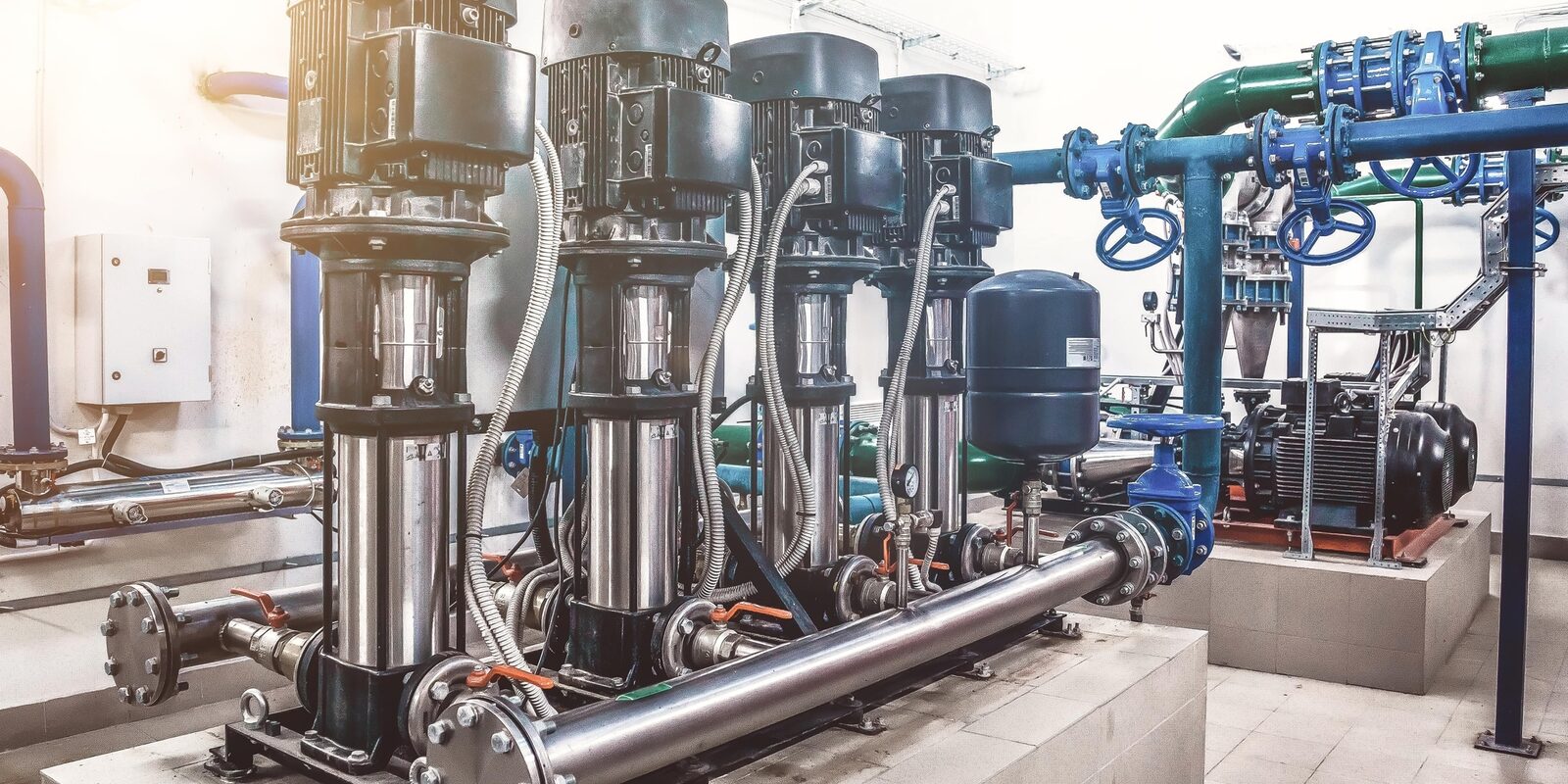
Critical Compliance & Safety Standards (Risk Mitigation)
Centrifugal and submersible pumps imported into the United States or the European Union must carry verifiable third-party certifications; a single missing mark can trigger port-of-entry seizure, forced re-export, or a mandated recall that erodes 4–7% of annual revenue in fines and lost sales. The legal exposure is asymmetric: OSHA can levy $161k per violation per site for missing UL 508A control panels, while the EU Machinery Directive allows member states to impose product-wide bans and criminal liability under the 2023 Market Surveillance Regulation. Executives should therefore treat certification budgets—typically $50k–$80k per pump family—as insurance against eight-figure downside risk rather than as negotiable procurement cost.
United States Non-Negotiables
Under 29 CFR 1910.303 and 30 CFR 250, any centrifugal or submersible pump that incorporates electrical controls must carry a UL 508A panel label; without it, OSHA can issue an immediate “Serious” citation that escalates to $161k if willful intent is demonstrated. Submersible models sold for potable water must additionally meet NSF/ANSI 61 for leachable lead and 372 for lead-free content; EPA enforcement under the Safe Drinking Water Act has risen 38% since 2022, with average settlements of $1.2m. For food, dairy, or pharmaceutical duty, FDA 21 CFR §177.1520 and §174.5 require wetted polymers to be listed substances; Customs routinely detains shipments lacking a valid FDA Master File cross-reference, incurring demurrage of $2k–$4k per day. Finally, ANSI/HI 9.6.6 vibration limits are de-facto tort-law standards; plaintiffs’ attorneys cite deviations as prima-facie evidence of design defect, driving settlements above $5m in industrial injury cases.
European Union Gatekeepers
The CE mark is self-declaratory but must be supported by a Machinery Directive 2006/42/EC Technical File, including EN 809 (safety of pumps) and EN 60204-1 (electrical safety). Missing Annex VII risk assessment documentation exposes directors to personal fines up to €500k and one-year imprisonment under the EU Product Liability Directive. For potable-water contact, Directive 98/83/EC and Regulation 10/2011 require WRAS or KTW certification of elastomers; German authorities alone initiated 214 pump seizures in 2023 for non-compliant seals. ATEX 2014/34/EU is mandatory when pumps operate in Zone 1 or 2 hazardous areas; the UK Health & Safety Executive’s 2024 average fine for missing ATEX certification reached £1.4m. Energy-related Products Directive 2009/125/EC now applies to clean-water centrifugal units 0.12–1 kW; non-compliance blocks market access across 27 member states and forfeits any green-finance subsidies tied to ESG procurement mandates.
Certification Cost vs. Enforcement Exposure
| Certification Scope | Typical Cost Range (USD) | Enforcement Agency | Statutory Max Fine per SKU | Indirect Cost (downtime, recall, brand erosion) | Time to Remediate if Cited |
|---|---|---|---|---|---|
| UL 508A panel listing | $8k–$12k | OSHA | $161k | $0.5m–$2m | 6–9 months |
| NSF/ANSI 61 + 372 (potable) | $15k–$25k | EPA | $1.2m | $3m–$5m | 9–12 months |
| FDA 21 CFR polymeric contact | $10k–$18k | FDA / CBP | $0.5m | $2m–$4m | 4–6 months |
| CE Machinery Directive + EN 809 | $12k–$20k | National Market Surveillance | €500k + criminal | €5m–€10m | 12–18 months |
| ATEX 2014/34/EU (Zone 1) | $20k–$35k | HSE / TÜV | Unlimited (criminal) | €10m–€20m | 18–24 months |
| ErP 2009/125/EC (≤1 kW clean water) | $5k–$10k | EC / National Energy Agency | €0.3m | €1m–€2m | 3–6 months |
The table shows that certification spend is 0.1–0.3% of the landed cost of a $1m pump skid, whereas enforcement exposure can reach 10× revenue. Procurement teams should lock certification requirements into supplier master agreements with liquidated-damage clauses equal to the midpoint of the indirect-cost range; this transfers risk while giving finance a quantifiable contingency reserve.
The Procurement Playbook: From RFQ to Commissioning
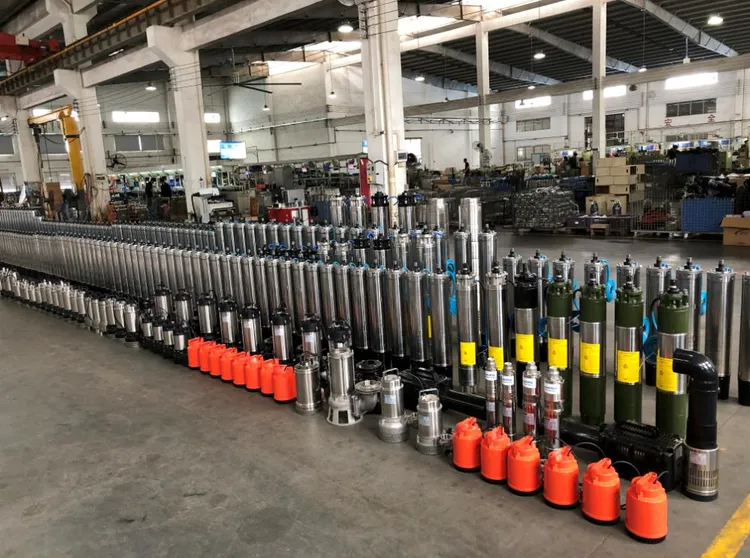
Strategic Procurement Playbook – Centrifugal & Submersible Pumps (400–600 words)
RFQ Design: Lock-in Performance Before Price
Anchor every RFQ to total life-cycle cost (TLC) rather than unit price; 70 % of pump failures trace to mis-sized hydraulics, not component quality. Require each bidder to submit a normalized TLC model (CAPEX + 15-year energy + scheduled spares). Mandate ISO 9906 Grade 2B efficiency tolerance and API 610 12th edition bearing-life minimum of 25 000 h L10; deviations trigger automatic technical disqualification. Embed a liquidation damage clause of 0.5 % of contract value per 1 % efficiency shortfall—quantified at site grid CO₂ price ($90–120/t) to convert energy loss into hard currency. Request a digital twin file (Ansys CFX or equivalent) to enable third-party verification; withhold 5 % of contract value until model correlation is within ±3 % of FAT readings.
Pre-Qualification & Supply-Base Triage
Limit the competitive field to OEMs that control at least 60 % of their critical casting and machining capacity in-house; this insulates against foundry volatility that added 8–11 % to casting surcharges in 2023. Score vendors on a risk-adjusted cost index (RACI) where geopolitical exposure (foundry location, dual-use export controls) carries a 25 % weight. Require evidence of ≥98.5 % on-time FAT over the last 20 orders; drop suppliers below this threshold regardless of price advantage. For submersible sets, insist on captive stainless-steel melt source (ASTM A743 CF3M or higher) to avoid 2025 nickel price swing risk now forecast at ±22 %.
Factory Acceptance Test: Shift Risk Upstream
Specify a 3-point performance test (best-efficiency point, 90 % and 110 % of BEP flow) witnessed by third-party inspector (TPIA) from ASME B73.1-qualified firms. Impose zero tolerance for vibration above 2.8 mm/s RMS per ISO 10816-7; any rework restarts the entire FAT clock and triggers supplier-paid delay penalties of 1 % of contract value per calendar day. Digital FAT is acceptable only if OEM supplies encrypted data log (.tdms format) with SHA-256 hash to prevent post-test edits; 5 % of contract value is retained until field performance matches FAT within ±2 % head and ±3 % power—measurable during first 200 operating hours.
Incoterms Selection: Total Landed Cost Matrix
| Cost Component | FOB Shenzhen (Index 100) | DDP Houston (Index 112) | DDP Rotterdam (Index 108) |
|---|---|---|---|
| Pump Skid Price | 100 | 100 | 100 |
| Ocean Freight | 12 | 0 | 0 |
| Marine Insurance (0.35 %) | 0.35 | 0 | 0 |
| Import Duty (US 2.5 %, EU 1.7 %) | 2.5 | included | included |
| Harbor THC & Customs Broker | 3.2 | included | included |
| Inland Haulage (500 mi) | 0 | 8 | 6 |
| Total Landed Cost Index | 117.1 | 112 | 108 |
| Risk Transfer Point | Ship rail | Jobsite | Jobsite |
| Delay Exposure (days) | 18–24 | 0 | 0 |
Conclusion: DDP Rotterdam yields the lowest landed-cost index (108) for European projects; FOB becomes economical only when buyer controls logistics contracts priced below $1 100/FEU—unlikely through 2026. Insert a “no-diversion” clause prohibiting supplier from routing through higher-risk ports (Red Sea, Suez) unless buyer pre-approves; each diversion adds 9–12 days and roughly $0.8k–1.2k/day in demurrage.
Site Commissioning & Warranty Triggers
Structure two-stage commissioning: (1) mechanical completion—flange-to-flange integrity, alignment within 50 µm/m; (2) performance verification—72 h continuous run capturing flow, kW, vibration, bearing temperature every 5 s via IIoT gateway. Retain 10 % contract value until both stages are signed off; release 5 % after 4 000 h of documented operation with MTBF ≥ 8 760 h. Require OEM to post performance bond equal to 15 % of contract value, callable if site efficiency falls >3 % below FAT curve at any point within the 36-month warranty.
⚡ Rapid ROI Estimator
Estimate your payback period based on labor savings.
Estimated Payback: —