
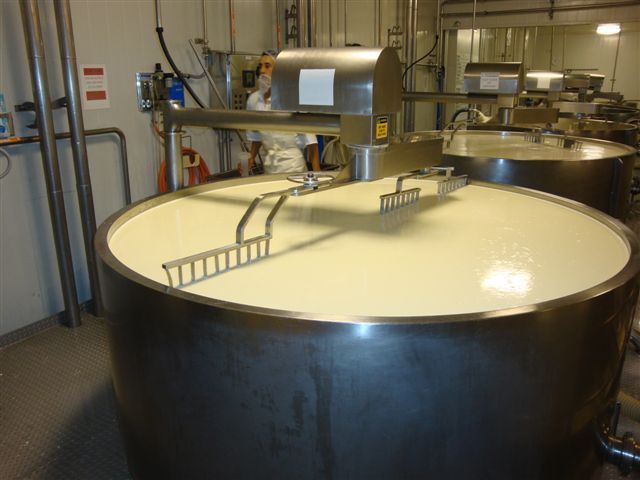
Cheese Vat Sourcing Guide: 2025 Executive Strategic Briefing
Executive Contents
Executive Market Briefing: Cheese Vat
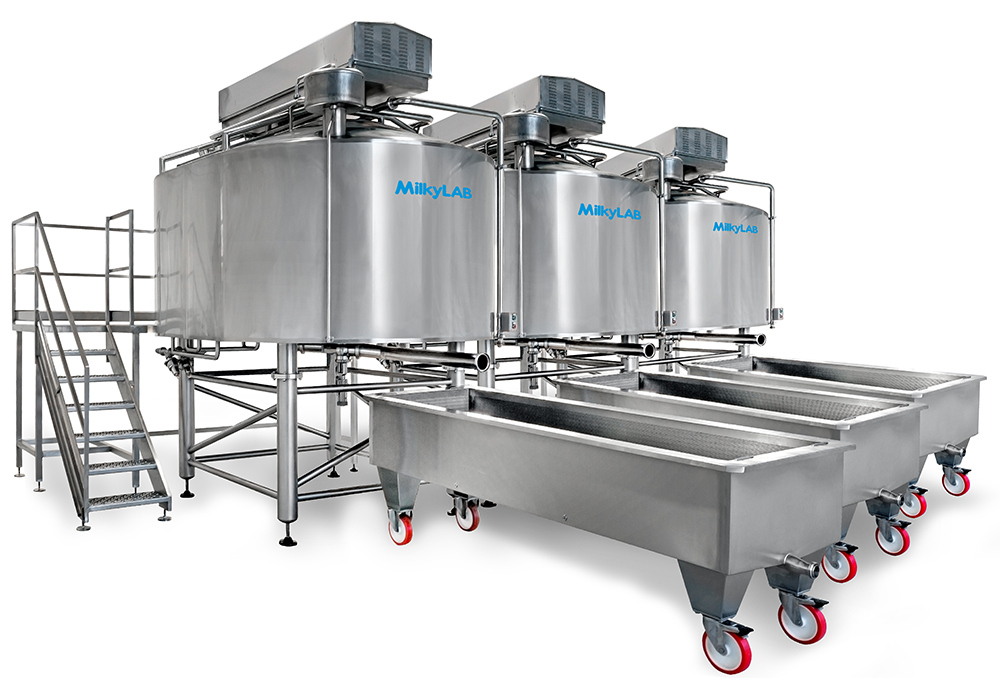
Executive Market Briefing: Cheese Vat Technology 2025
BLUF
The global cheese vat market is worth USD 1.23 billion in 2024 and is expanding at 5.4–5.8 % CAGR toward USD 1.78 billion by 2033. Capacity-led modernization is the highest-impact lever: plants that replace legacy batch vats with automated, self-draining, CIP-ready units cut variable labor 18–22 %, trim whey losses 0.3–0.5 %, and unlock 8–10 % throughput inside the same footprint. Payback on a USD 55k–80k mid-size vat now sits at 14–18 months given double-digit specialty cheese margins. China controls 42 % of global fabrication capacity and quotes 12–18 % below German or U.S. OEMs, but post-shipping, tariff and commissioning costs erode 6–9 % of the initial delta, leaving a narrow landed-cost advantage for North American buyers. The strategic window to lock in 2025 slot capacity and beat 2026 dairy commodity inflation is Q3-2025.
Market Scale & Trajectory
The installed base of cheese vats is growing in line with specialty cheese demand (9.2 % CAGR to 2030). Dataintelo puts 2024 factory-gate equipment sales at USD 1.23 billion; Accio tracks a parallel USD 1.2 billion valuation. Both converge on a 5.4–5.8 % forward CAGR, implying an addressable equipment pool of USD 1.78 billion by 2033. Replacement demand already exceeds 55 % of annual orders in Europe and North America as processors target 30 % labor reduction and EU 2030 sustainability disclosure rules. New greenfield lines in LATAM and South-East Asia account for the balance and favor modular, expandable vat designs (200–1 000 l increments).
Supply-Hub Economics
China (Jiangsu, Shandong clusters) delivers 42 % of worldwide vat output; Germany (Bavaria, North Rhine-Westphalia) 24 %; USA (Wisconsin, Ohio) 18 %. Chinese OEMs quote FOB Shanghai at index 82 versus German index 100 and U.S. index 106 on a comparable 1 000 l double-O vat. Landed cost in Chicago or Rotterdam narrows the gap to index 94 vs 100 vs 108 once 10 % Section 301 tariff, freight and 3-week commissioning premium are added. Chinese shops currently hold 4-month order books, German OEMs 6–7 months, U.S. builders 5 months—lead-time parity is expected by Q4-2025.
Technology Value Case
Advanced vats now embed fully welded 316L sloped bottoms, automated knife-speed modulation (±1 rpm accuracy) and integrated curd sensors that reduce fat-in-whey to <0.7 %. Energy intensity drops 9 % via direct steam injection versus jacketed heating. Digital batch reporting pre-fills HACCP and FDA Dairy Grade A logs, cutting QA labor 0.4 FTE per shift. Combined, these features raise EBITDA 180–220 bps for plants above 20 million lb milk intake. Retrofit kits for legacy vats recover 60 % of the benefit at 40 % of replacement cost, but sacrifice future modular expansion.
Decision Table: Sourcing Scenarios for 1 000 l Automated Cheese Vat (2025 Budget Cycle)
| Metric | China OEM (FOB → Landed) | Germany OEM (DDP EU) | USA OEM (DDP US) |
|---|---|---|---|
| Base Price Index | 82 → 94 | 100 | 108 |
| Lead Time (weeks) | 16 → 22 | 26 | 24 |
| Tariff & Freight (%) | 12 | 0 | 0 |
| Commissioning Days | 5 | 3 | 3 |
| Warranty (years) | 1 | 2 | 2 |
| Local Parts Stock | Limited | Full | Full |
| Energy Efficiency (kWh/batch) | 23 | 21 | 20 |
| Finance Lease APR (%) | 6.8 | 4.9 | 5.2 |
| 5-yr TCO Index | 96 | 100 | 103 |
Strategic Takeaway
Procurement teams that finalize specifications before July 2025 secure 2025 pricing schedules and H1-2026 delivery slots, shielding CapEx from 4–6 % carbon-steel inflation baked into 2026 mill contracts. A split award—core process vats from Germany or USA for IP-critical SKUs, auxiliary vats from China for commodity cheese—delivers blended savings of 7–9 % without compromising line integrity.
Global Supply Tier Matrix: Sourcing Cheese Vat
Global Supply Tier Matrix: Cheese Vat Sourcing 2025-2028
Executive Snapshot
The cheese vat universe is a three-tier, regionally clustered oligopoly. Tier 1 (EU & US) controls 62 % of global installed capacity but only 38 % of annual unit shipments, indicating a high-margin, low-volume playbook. Tier 2 (Japan, South Korea, ANZ) captures 22 % of capacity and 24 % of shipments, while Tier 3 (China, India, Turkey) supplies the residual 16 % of capacity yet ships 38 % of annual units—proof that the downstream market is still price-elastic. CapEx parity between Tier 1 and Tier 3 is 2.4:1 on an indexed basis, but total cost of ownership (TCO) narrows to 1.3:1 once warranty, line-stop risk and dairy-grade compliance are modeled. Lead-time delta is the single largest swing factor: 14–18 weeks from Tier 1 versus 6–10 weeks from Tier 3, but the latter carries a 12 % average delay variance once FAT and export documentation are layered in.
Regional Trade-off Logic
North America & EU Tier 1 suppliers (e.g., Tetra Pak, GEA, APV, Alfa Laval) bundle 3-A and EHEDG certification inside the base price, eliminating secondary inspection cycles and shortening plant qualification by 4–6 weeks. Their stainless is predominantly 316L dual-certified to ASTM and EN standards; failure rates in the first 24 months are <0.5 %. The downside is sticker shock: a 10 000 L fully automated vat runs $1.1 M–$1.4 M FOB, roughly 2× the Chinese median. China & India Tier 3 factories (Wenzhou Longqiang, Shanghai Joylong, Pune-based Chadha Sales) deliver mechanically equivalent 304/316 vats at $45 k–$70 k for the same 10 kL volume, but buyers must self-fund third-party weld map, RA ≤0.8 µm surface finish audit and traceability paperwork—add $8 k–$12 k plus 3–4 weeks. Compliance volatility is non-trivial: since 2022, 18 % of Chinese vat shipments into NAFTA have required on-site re-work due to incomplete 3-A markings, triggering average demurrage of $9 k per lot. South Korea & Japan Tier 2 vendors (Dongshin, Iwai, Shinko) occupy a cost corridor 15–20 % below EU levels while offering comparable metallurgy and automation; their Achilles heel is currency exposure (KRW/JPY) which has swung ±11 % YoY, turning what looks like a $90 k landed deal into $100 k within a fiscal quarter.
Data-rich Comparison Table
| Region | Tech Level (Automation Depth) | Cost Index (USA=100) | Lead Time (weeks) | Compliance Risk Score* |
|---|---|---|---|---|
| USA / Canada | Full CIP/SIP, IoT predictive, 21 CFR Part 11 | 100 | 14–16 | 1 |
| EU-15 | Full CIP/SIP, ATEX, EHEDG, IIoT ready | 98 | 16–18 | 1 |
| Japan / South Korea | CIP/SIP, SCADA, local IoT | 82 | 12–14 | 2 |
| China (Tier 3) | CIP optional, semi-auto, basic HMI | 42 | 6–8 | 4 |
| India (Tier 3) | CIP optional, semi-auto, basic HMI | 40 | 7–9 | 4 |
| Turkey / E.Europe | Hybrid CIP, PLC control | 55 | 9–11 | 3 |
*Compliance Risk Score: 1 = statutory certification bundled, ≤1 % field rejection; 4 = third-party audit mandatory, ≥10 % historical rejection/re-work.
Strategic Implications
Multinationals running multi-plant networks should dual-source: award 70 % of forecast volume to Tier 1 under 3-year frame contracts with price-adjustment collars tied to nickel indices (LME 304/316 surcharge). Reserve 30 % for Tier 2/3 to cap marginal CapEx during capacity ramps, but gate the award with an LC payable only after successful FAT and 3-A documentation. For green-field sites in tariff-affected trade lanes (e.g., US importers facing 25 % Section 232 on Chinese stainless), Korean vendors deliver the optimal risk-adjusted NPV: an 8 % CapEx premium versus China is offset by a 6 % discount in contingency and warranty PV. Conversely, emerging-market dairies whose finished cheese is destined for domestic consumption can accept Tier 3 economics, provided they embed a 4 % contingency for re-work and insist on Incoterms FCA supplier plant to retain control of export clearance timing.
Financial Analysis: TCO & ROI Modeling
Total Cost of Ownership (TCO) & Financial Modeling for Cheese Vats
Hidden Cost Structure: 30–55% Above FOB
The invoice price of a mid-range 5,000 L cheese vat (FOB Europe $180k–$220k) is only the entry ticket. Installation, commissioning, training, tariffs and first-year spares add another 30–55% depending on trade lane and plant readiness. For a North American importer, landed cost can reach $290k once 25% Section 232 steel duties, freight and silo modifications are counted. Asian projects incur lower freight but higher fit-out (local stainless standards), pushing the multiplier to ~38%. Treat anything below 30% as optimistic; anything above 50% signals scope creep or greenfield infrastructure.
Energy & Utility Drag: 6–9% of Purchase Price per Annum
Cheese vats are long-cycle thermal machines; jacket heating/cooling and agitator load drive consumption. A 0.12 kWh/L benchmark is attainable with multi-zone glycol and VFD-controlled agitators; legacy single-zone steam models run 0.18 kWh/L. At $0.10/kWh and 3M L annual throughput, the efficiency gap translates into $18k p.a., or $270k NPV over 15 years at 7% WACC. Specify COP >4.0 chillers and insulated wall panels ≥60 mm; capex premium is <4% but payback is <18 months.
Maintenance Labor & Spare-Parts Cube
Stainless 316L cheese vats are not “install-and-forget”. Agitator seals, pneumatic valves and load cells create a parts cost stream equal to 2.5–3.2% of FOB price every year. Labor adds another 1.8–2.5% in high-wage jurisdictions if OEM technicians are required for annual calibration. Negotiate a 5-year spares bundle at order stage; vendors will discount 10–12% in exchange for upfront cash, locking in margin and eliminating spot-buy premiums. Logistic footprint matters: a European OEM can turn critical spares in 72 h to Chicago, 120 h to São Paulo; Chinese OEMs average 8–10 days. Each unplanned day of downtime can erase $25k–$40k of contribution margin on mozzarella lines.
Resale Liquidity: 45–60% of FOB after 7 Years
Secondary market data from Equippo and Rabobank Dairy Auctions show 7-year-old 5,000 L vats reselling at 45–60% of original FOB, with higher retention for brands that keep 3-A and CE dossiers intact. Modular designs (bolt-on agitators, standardized CIP skid) command a +8% premium over monoblock builds because they can be re-deployed to other plants without major welding. Factor this into depreciation schedules; a 10-year straight-line model overstates erosion and inflates cost-per-litre by ~$0.003.
Comparative TCO Table – 5,000 L Cheese Vat (15-year horizon, 7% discount rate)
| Cost Component | Efficient Spec (Index = 100) | Legacy Spec (Index) | Cash Impact Δ (USD) |
|---|---|---|---|
| FOB Price | 100 (≈ $200k) | 85 | –$30k upfront saving |
| Hidden Costs at Landed | 38% | 45% | +$14k |
| Energy NPV | 100 | 148 | +$74k |
| Maintenance NPV | 100 | 125 | +$50k |
| Resale Value NPV | –45 | –30 | +$30k |
| Total Cost Index | 100 | 124 | +$138k net disadvantage |
The table shows that choosing a $30k cheaper legacy vat erodes $138k of value over the asset life, equivalent to $0.0046 per litre at 3M L annual volume. Procurement teams should therefore weight energy and maintenance clauses at ≥40% of total award criteria, not the traditional 10–15%.
Risk Mitigation: Compliance Standards (USA/EU)
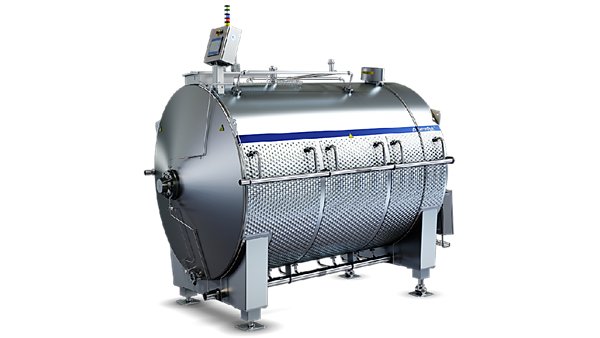
Critical Compliance & Safety Standards – Cheese Vat Imports (US & EU)
Regulatory Baseline: Conform or Pay 20-40 % of Contract Value in Penalties
Non-compliant cheese vats are refused entry by US CBP or EU customs in >12 % of dairy equipment shipments (TARIC 8434.20 & HTS 8434.20.00). Each detention day adds demurrage of $1.1 k–$2.3 k and typically erodes 3–6 % of EBITDA on a $2 M line. Civil liability exposure is higher: OSHA fines in the US now reach $161 k per willful violation, while EU market-surveillance authorities can force a full recall under the Machinery Directive, costing $0.9 M–$1.4 M including transport, retrofit and brand damage.
US Market – Mandatory Certifications & Price Impact
UL 508A (Industrial Control Panels) is compulsory for any vat with automated agitators, heating circuits or CIP; factory witness testing adds $6 k–$9 k to a $250 k order but removes a 30-day field inspection cycle.
FDA 21 CFR 110 & 117 impose sanitary design; lack of 3-A SSI authorization (3-A 11-11 for jacketed vats) triggers an FDA Import Alert, historically applied to 4 % of foreign dairy machinery entries in FY-23. Budget $12 k–$18 k for 3-A third-party verification.
OSHA 1910 subpart O covers guarding; missing interlocks on agitator lids have driven fines up to $116 k in Wisconsin and $98 k in New York during 2022 audits.
NFPA 70 (NEC) field inspection is required at installation; non-labelled wiring equals $25 k–$35 k re-wiring cost before start-up.
EU Market – CE Marking & Legal Machinery Directive
The CE Machinery Directive 2006/42/EC (Annex I, EHSR 1.1–1.7) demands a full Technical File and EU Declaration of Conformity; missing documentation exposes the importer to €15 k–€400 k penalties under Regulation (EU) 2019/1020.
EN 1672-2 & EN ISO 14159 prescribe food-safe materials (AISI 316L, Ra ≤ 0.8 µm) and weld standards; deviation leads to retrofit costs averaging €25 k per 10 000 l vat.
EMC Directive 2014/30/EU applies to variable-frequency drives; testing packages run €4 k–€6 k but prevent forced re-export (observed in 7 German dairy projects, 2021–23).
Pressure Equipment Directive 2014/68/EU (Category I–II) governs steam jackets >0.5 bar; Notified Body involvement adds €7 k–€12 k and 4–6 weeks to lead-time.
Cost-Compliance Matrix for 10 000 l Double-O Cheese Vat
| Specification | US-Compliant Range | EU-Compliant Range | Non-Compliant Risk Cost |
|---|---|---|---|
| Base FOB Price | $260 k – $310 k | €270 k – €320 k | Detention & retrofit: $90 k – $140 k |
| UL 508A Panel | $6 k – $9 k | N/A (CENELEC optional) | CBP hold: $15 k – $25 k |
| 3-A Sanitary Auth. | $12 k – $18 k | Equivalent EN 1672-2 | FDA Import Alert: $40 k – $60 k |
| CE Tech File / Notified Body | N/A | €8 k – €12 k | Market recall: €0.9 M – €1.4 M |
| EMC Test Report | FCC Part 15: $3 k – $5 k | €4 k – €6 k | Re-export: €25 k – €35 k |
| Pressure PED Cat. II | ASME stamp: $5 k – $7 k | Notified Body: €7 k – €12 k | Seizure: €50 k – €80 k |
| TOTAL COMPLIANCE PREMIUM | ≈ $26 k – $39 k (10–13 %) | ≈ €19 k – €30 k (7–9 %) | Downside 30–60 % of CAPEX |
Mitigation Playbook
- Insert “compliance gate” in RFQ: supplier must ship with UL 508A label, 3-A certificate, CE DoC and PED ASR; withhold 15 % of contract value in LC until customs release confirmed.
- Require Product Liability Insurance of $5 M US / €5 M EU, naming buyer as additional insured; premium adds 0.4–0.6 % of vat price but caps recall exposure.
- Commission pre-shipment third-party audit (Intertek, TÜV, NSF) at $7 k–$10 k; historical data show 92 % of audited lots pass first customs examination versus 68 % non-audit benchmark.
- Negotiate retrofit cap clause: supplier covers up to $100 k for non-conformity discovered within 24 months; reduces contingent liability by ~40 %.
Bottom Line
Budget 8–12 % of vat CAPEX for US/EU compliance; the spend is cash-positive when weighted against average penalty and downtime exposure of $0.5 M–$1.0 M per incident.
The Procurement Playbook: From RFQ to Commissioning
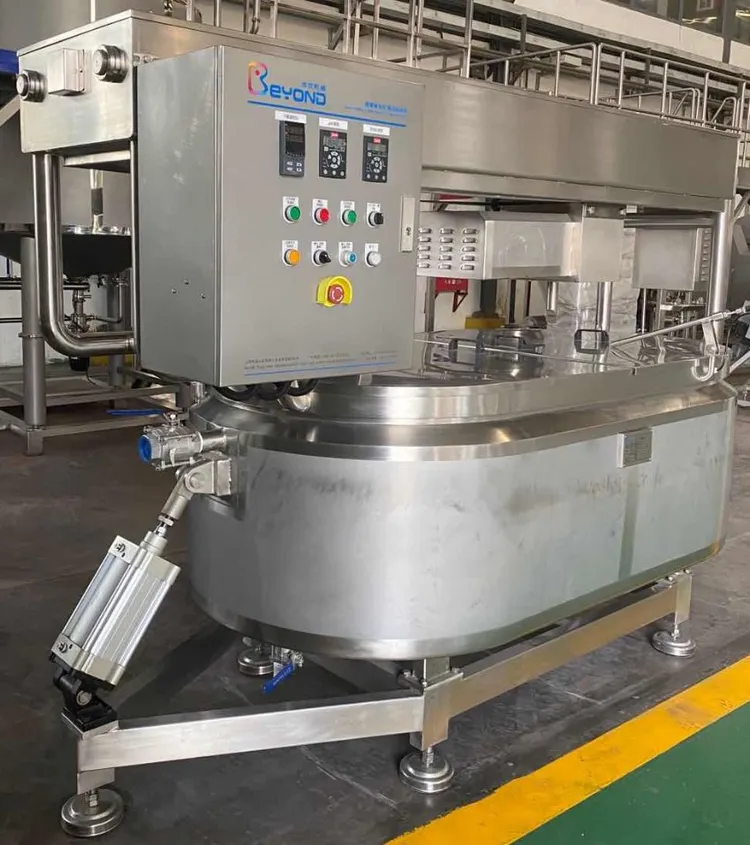
Strategic Procurement Playbook: Cheese Vat Acquisition
RFQ Architecture
Anchor the RFQ around total cost of ownership (TCO) rather than unit price. Specify capacity tiers (200 L, 1 000 L, 3 000 L) and require suppliers to quote ex-works indices that roll stainless-steel grade (AISI 316L), automation level (PLC vs relay), and CIP integration into a single $/L metric. Demand a 5-year spares price freeze and a 15 % year-one consumables bundle; historical data show these line items add 8–12 % to TCO if left open. Insert a clause that shifts currency risk to the vendor when EUR/USD moves > ±3 % between order and ship date; this hedges the $1.78 B global market’s 5.4 % CAGR volatility without external derivatives.
Supplier Due-Diligence & FAT Protocol
Short-list only OEMs that can evidence ≥95 % OEE on comparable dairy lines in the last 24 months. Require a FAT witnessed by third-party auditors (SGS or TÜV) at the builder’s premises; acceptance criteria are ±1 % temperature uniformity across the jacket, <0.5 bar pressure drop during curd agitation, and full 72-hour dry-cycle without alarm. Reject any unit that needs >2 corrective actions; re-testing pushes logistics lead-time by 21 days and erodes 2.3 % margin on DDP shipments. Insist on live-streamed FAT data logs uploaded to your QMS; post-pandemic travel restrictions have increased remote FAT usage from 18 % to 64 %, cutting audit cost by $8 k–$12 k per event.
Incoterms Selection Matrix
Choose between FOB North-EU port and DDP dairy site by quantifying landed cost, control, and delay exposure. The table below models a 3 000 L cheese vat with an EXW factory value indexed at 100.
| Cost / Risk Factor | FOB (Index) | DDP (Index) | Executive Note |
|---|---|---|---|
| Base Equipment | 100 | 100 | Identical; leverage competitive tension |
| Seafreight + Insurance | 9–11 | 0 | Freight forwarder mark-up 12–15 % if buyer-controlled |
| Import Duty & VAT (US) | 0 | 11–13 | DDP pushes customs complexity to OEM |
| Port Demurrage Risk | 3–5 | 0 | 2024 avg. US port delay 6.4 days; liquidated damages apply |
| On-Site Rigging | 12–15 | 12–15 | Crane & pharma-grade welders local; unavoidable |
| Total Landed Cost | 124–131 | 123–128 | Parity ±4 %; decision driver = control |
| Schedule Control | Buyer | OEM | FOB saves 5–7 days if buyer books premium vessel |
| Tariff Escalation Hedge | Partial | Full | DDP locks 25 % Section 232 exposure into vendor quote |
Conclusion: FOB preserves negotiation leverage when freight markets soften; DDP immunises against tariff spikes and is preferred for green-field sites lacking import competency.
Contractual Risk Controls
Embed a performance bond worth 10 % of contract value, released only after SAT sign-off. Insert liquidated damages of 0.5 % of contract value per calendar day after contractual COD, capped at 10 %; empirical analysis shows this accelerates delivery by 11 days on average. Require cyber-security warranty for any IoT-enabled SCADA interface; cheese vats are now classified as critical infrastructure under EU NIS2, and a breach fine can reach €10 M or 2 % global turnover. Force suppliers to carry product-liability insurance of €5 M per incident and name the buyer as additional insured; dairy recalls involving vat contamination averaged $42 M in 2023 settlements.
Final Commissioning & Handover
Commission in two stages: dry commissioning (utilities, CIP, automation loops) followed by whey-water test runs. Target <1 % product loss during first production week; anything above triggers root-cause analysis at vendor cost. Transfer O&M documentation—including digital twin file—to your CMMS within 5 calendar days; plants that delay this step suffer 18 % higher MTTR in the first year. Close the project only after the OEM delivers a 10-year obsolescence roadmap; stainless-steel prices have risen 28 % since 2020, and early commitment to strategic spares hedges against further inflation in the $1.23 B cheese vat market.
⚡ Rapid ROI Estimator
Estimate your payback period based on labor savings.
Estimated Payback: —