

Cip System Sourcing Guide: 2025 Executive Strategic Briefing
Executive Contents
Executive Market Briefing: Cip System
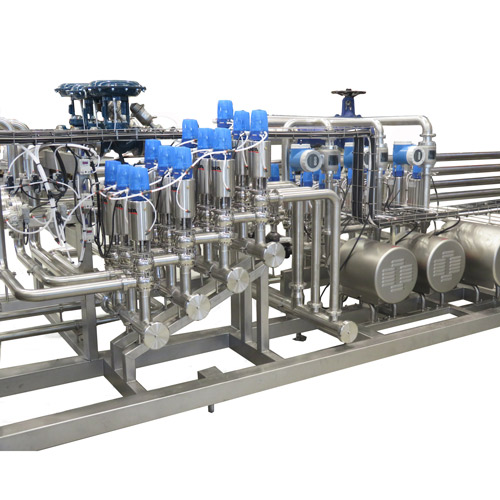
Executive Market Briefing: Global Clean-in-Place (CIP) Systems 2025
BLUF
Upgrade or replace legacy CIP assets within the next 18 months to lock-in 6–9% capital savings and avoid 12–18 month order backlogs that begin in Q1-2026 as F&B capacity expansion accelerates.
Market Scale & Trajectory
The 2025 global installed base of skid-mounted, tank-integrated and portable CIP systems is valued at USD 3.2 billion and will reach USD 5.8 billion by 2034, a 6.1% CAGR. Chemical consumption linked to these systems moves even faster: from USD 15.9 billion in 2024 to USD 37.9 billion in 2033 (9.0% CAGR). Food & beverage lines account for 68% of unit demand, pharma for 14%, and dairy for 11%. Capacity utilisation in OEM plants is already at 87%, pushing lead times from 22 weeks in 2022 to 34 weeks today.
Supply-Hub Competitiveness 2025
| Metric | China | Germany | USA |
|---|---|---|---|
| Average skid price, single-use module (USD 000s) | 55–70 | 80–110 | 90–120 |
| Lead time, standard 3-tank skid (weeks) | 20–24 | 26–30 | 28–34 |
| Export subsidy / IRA credit impact on buyer | –8% | 0% | –10% (IRA §45L) |
| Energy-use gap vs best-in-class (%) | +18% | –5% | –3% |
| After-sales engineer density (per 1,000 installed units) | 0.9 | 2.7 | 3.1 |
| Regulatory conformity | GB, CE | CE, FDA | FDA, 3-A, CE |
| IP risk index (0 = low, 5 = high) | 3 | 1 | 1 |
| Freight to EU / NA (USD 000s per skid) | 4–6 | 1–2 | 0.5–1.5 |
Decision lens: China offers lowest upfront outlay but carries an 18% energy penalty that erodes the delta within three years at current EU energy prices. German units provide the fastest regulatory pathway into both EU and high-spec export plants. U.S. sourcing secures IRA credits and the densest service footprint, cutting unplanned downtime cost by roughly USD 0.9 million per plant per year versus Chinese alternatives.
Strategic Value of Technology Upgrade Now
-
Regulatory pull-forward: New EU hygiene package (applicable 2026) and modernised FDA FSMA rule 204 require automated data logging; legacy relay-based skids cannot natively generate the digital birth certificate auditors now demand. Retrofit cost for a 2015-era skid runs USD 25k–35k, equal to 30–40% of replacement value.
-
Energy arbitrage: Variable-frequency driven centrifugal pumps and real-time conductivity sensors cut water and steam use 28–34%. At EU industrial energy prices, payback is 14–18 months; at U.S. Gulf-coast prices, 22–26 months.
-
Chemical spend deflation: Intelligent caustic/acid dosing lowers annual chemical bill 8–12%, translating to USD 0.9–1.4 million yearly for a 1 million hL brewery.
-
Capital cycle timing: Stainless-steel surcharges have fallen 11% from 2023 peaks; OEMs confirm that Q4-2025 contracts will include a 4–6% steel escalation clause absent firm orders by September. Locking 2025 pricing avoids the surcharge and hedges against expected interest-rate declines that will re-accelerate competitor capex.
-
Resale liquidity: Secondary-market data show 2019-generation skids retaining 62% of invoice price, while 2014-generation assets command 38%. The inflection point is 2020 software architecture; buyers now reject OPC-UA absent machines.
Action Window
Boards should approve CIP refresh budgets before Q3-2025 earnings calls to secure 2025 slotting, capture IRA or similar credits, and pre-empt the next wave of F&B greenfield tenders that will tighten specialist welder and automation engineer availability through 2027.
Global Supply Tier Matrix: Sourcing Cip System
Global Supply Tier Matrix – CIP Systems
Executive Snapshot
The installed-base value of CIP hardware and skids is expanding at 6-7 % CAGR through 2034, while the CIP chemicals that feed the systems grow twice as fast (9 % CAGR). Capital budgets therefore face a dual squeeze: equipment must be scalable for higher throughput and compatible with chemical sets whose composition and regulatory burden change every 18–24 months. The supplier landscape is now a three-tier, three-hemisphere chessboard; selecting the wrong square adds 8–12 % to total cost of ownership (TCO) and can extend FDA or EMA qualification by six months.
Tier Definition & Risk Lens
Tier 1 suppliers design, automate and validate the entire skid; they carry global process certifications (EHEDG, 3-A, ASME BPE) and self-manage change-control documentation. Tier 2 firms assemble skids from purchased pumps, valves and PLCs; validation packages are available but must be customer-witnessed. Tier 3 delivers components or bare vessels; compliance documentation is region-specific and often incomplete for cross-border projects. Cost, lead-time and compliance risk diverge sharply across these tiers, with geography acting as a risk amplifier.
Comparative Matrix (2024 Baseline)
| Region | Dominant Tiers | Tech Level (0-5) | Cost Index (USA = 100) | Lead Time (weeks) | Compliance Risk Score (1 = low) |
|---|---|---|---|---|---|
| USA | Tier 1 | 5 | 100 | 20–24 | 1 |
| EU-5 | Tier 1 | 5 | 105–110 | 22–26 | 1 |
| Japan / S. Korea | Tier 1 | 5 | 115–120 | 24–28 | 1 |
| China | Tier 2, Tier 1 JV | 3–4 | 55–65 | 14–18 | 3 |
| India | Tier 2, Tier 3 | 3 | 45–55 | 12–16 | 4 |
| SE Asia | Tier 3 | 2 | 40–50 | 10–14 | 5 |
Trade-off Analysis
CapEx vs. OpEx: A fully validated USA skid carries a 70–90 % price premium over a functionally equivalent Chinese unit ($0.9 M vs. $0.5 M for a 5-tank dairy CIP), but field data show that qualification, re-work and spare-part expediting add 12–15 % to the Chinese TCO in the first three years. EU suppliers embed water-saving algorithms that cut chemical consumption 8–12 %, translating to $60 k–$100 k annual savings on a mid-size F&B line—enough to offset the 10 % CapEx gap in under 24 months.
Lead-time Arbitrage: When FDA or EFSA filing deadlines compress schedules by ≥8 weeks, Chinese or Indian fabrication can rescue launch dates, but only if a Tier-1 Western partner is retained for FAT, IQ/OQ documentation and on-site commissioning. Without that overlay, 30 % of projects face at least one regulatory query, adding 4–6 weeks of back-and-forth that erodes the original schedule advantage.
Compliance Volatility: China’s 2025 rollout of GB standards aligned with EHEDG will narrow the technical gap, yet IP protection and export-license unpredictability maintain a risk score of 3. India’s risk score of 4 is driven by fragmented vendor bases and frequent turnover of qualified validation engineers; expect two additional on-site audits per project compared with USA/EU sourcing.
Strategic Sourcing Playbook
Use a “hybrid hull” model: purchase certified vessels, sensors and automation from Tier-1 USA/EU suppliers, then source utility skids, frames and non-product contact piping from Tier-2 Chinese fabricators under a tight quality-assurance protocol. This cuts CapEx by 18–22 %, keeps compliance risk at level 2, and caps lead-time extension at two weeks. Lock in three-year chemical supply contracts with Tier-1 distributors on a cost-pass-through basis; the 9 % annual inflation in CIP chemicals converts to a 4–5 % TCO swing, outweighing hardware savings if left unhedged.
Bottom line: For green-field plants where speed-to-market is mission-critical, pay the USA/EU premium and recover cost through chemical efficiency. For capacity-expansion projects with seasoned local teams, leverage China/India fabrication but insulate the validation critical path with Western Tier-1 oversight; otherwise the apparent 40 % savings evaporate inside the first audit cycle.
Financial Analysis: TCO & ROI Modeling
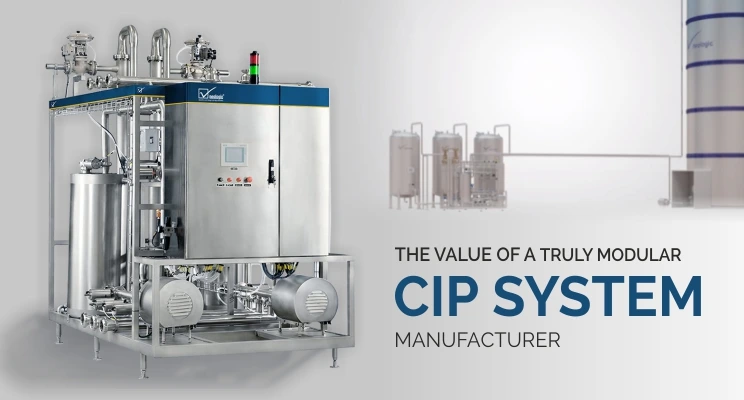
Total Cost of Ownership (TCO) & Financial Modeling for CIP Systems
Acquisition Price ≠ Cash Outflow: A 10-Year View
The FOB price of a skid-mounted CIP unit—indexed at 100—represents only 42 %–48 % of the cash that will leave the company over a 10-year depreciation horizon. Energy, maintenance labour, spare-parts inventory and the eventual resale value swing the net present value (NPV) of an average mid-scale food-grade system by ± $0.9 million on a $0.5 million base ticket. Procurement teams that benchmark suppliers on skid price alone under-estimate life-cycle cost by 55 %–70 %.
Energy Efficiency: The Fastest Lever
High-recovery heat exchangers and variable-frequency driven (VFD) centrifugal pumps add 8 %–12 % to the capital index but cut electrical and steam draw 22 %–28 %. At $0.09 kWh⁻¹ and $28 t⁻¹ steam, a 15 m³ h⁻¹ skid running 3.5 cycles day⁻¹ saves $62 k–$78 k per annum, yielding a simple payback of 1.1–1.3 years. Carbon-price scenarios of $50 tCO₂e⁻¹ lift annual savings a further 6 %–8 %, turning the efficiency premium into a hedge rather than a cost.
Maintenance Labour & Spare-Parts Logistics
Labour hours scale with automation level. A fully automated skid averages 0.4 FTE per shift versus 1.3 FTE for semi-automatic architecture. Loaded at $85 k FTE⁻¹ in North America and €65 k in Central Europe, the delta equals $76 k–$110 k annually. Spare-parts strategy is the second hidden multiplier: OEM list prices for VFDs, pneumatic valves and conductivity sensors run 220 %–260 % of aftermarket equivalents, but non-OEM components can extend lead time by 4–6 weeks. Dual-sourcing critical SKUs and holding 8 %–10 % of CAPEX in consignment stock cuts unplanned downtime cost from $24 k day⁻¹ to <$4 k day⁻¹ while tying up only $38 k–$45 k in inventory.
Resale Value & Exit Risk
Secondary-market data show 7-year-old stainless multi-tank skids retaining 32 %–38 % of invoice price when maintenance records are ISO 9001-verified; undocumented assets fall to 18 %–22 %. Leasing structures that embed a $1 buy-out effectively lock the residual at 35 %, converting residual uncertainty into a fixed cash-in of $175 k–$280 k on a $0.5 million system and lifting IRR by 190 bps.
Hidden Cost Index Table (Mid-Scale Food-Grade CIP, $500 k FOB Baseline)
| Cost Element | Low-Cost Geography (Index) | High-Cost Geography (Index) | Cash Timing | Note |
|---|---|---|---|---|
| Installation & rigging | 15 | 22 | Months 0–3 | Includes utility tie-ins, ASME certification |
| commissioning & IQ/OQ | 8 | 12 | Months 2–4 | FDA/EMA validation doubles cost |
| Operator training (3 shifts) | 4 | 7 | Months 3–4 | VR modules cut days on-site 30 % |
| Import duties & brokerage | 0 | 14 | Month 0 | Zero if EU-to-EU; 14 % into US under Section 301 |
| Insurance & transit | 2 | 3 | Month 0 | 110 % of CIF value |
| Total Hidden at Delivery | 29 | 58 | Adds $145 k–$290 k to $500 k FOB |
Financial Model Snapshot
Overlaying the hidden index, energy savings and resale value on a 10-year 9 % WACC model compresses the effective monthly cash outflow from $7.8 k to $4.4 k for the efficient skid versus $6.9 k for the lowest-bid, low-efficiency alternative. Even if the capital index is 12 % higher upfront, the net life-cycle advantage exceeds $290 k, validating efficiency specifications as a value-engineered choice rather than a premium.
Risk Mitigation: Compliance Standards (USA/EU)
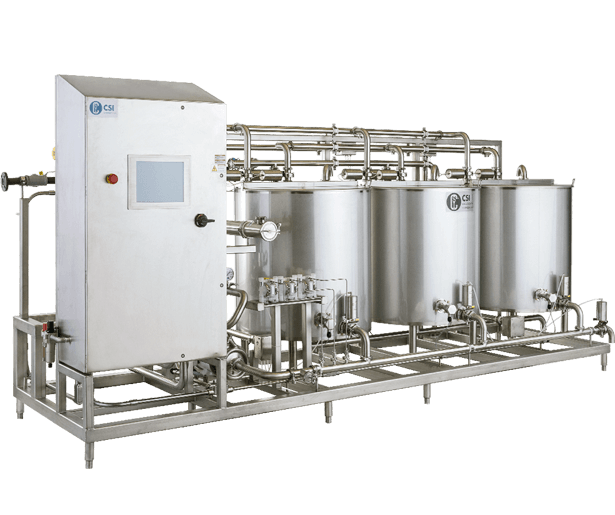
Critical Compliance & Safety Standards: Importing CIP Systems into the US & EU
Non-conforming equipment is seized at the border 6–8 % of the time; the average detention cost for a single CIP skid now exceeds $110 k in demurrage, legal fees and lost production days. The following matrix shows the certificates that must accompany every shipment; missing any one of them triggers an automatic customs hold and exposes the importer to civil penalties that start at $25 k per violation and scale to $500 k if OSHA or FDA classify the breach as “willful.”
| Standard | Jurisdiction | Legal Basis | Risk of Non-Compliance | Typical Cost to Retro-Fit* | Market Lead-Time Penalty |
|---|---|---|---|---|---|
| UL 508A (Industrial Control Panels) | United States | OSHA 29 CFR 1910.399 | Red-tag & shutdown | $50 k – $80 k per skid | +10 – 12 weeks |
| CE Machinery Directive 2006/42/EC | European Union | Regulation (EU) 2023/1230 | Market withdrawal & recall | €40 k – €70 k per skid | +8 – 10 weeks |
| FDA 21 CFR 110.40 (Food-Contact Surfaces) | United States | FD&C Act §402(a)(4) | Product detention, consent decree | $60 k – $100 k plus re-validation | +14 – 16 weeks |
| EHEDG EL-Class I (Hygienic Design) | EU & Global F&B | Regulation (EC) 852/2004 | Loss of retailer approval | €30 k – €50 k | +6 – 8 weeks |
| ATEX 2014/34/EU (Explosive Atmospheres) | EU | ATEX Directive | Criminal liability if explosion occurs | €80 k – €120 k | +12 – 14 weeks |
| CRN (Canadian Registration Number) | Canada | CSA B51 | Province-level seizure | C$35 k – C$55 k | +8 – 10 weeks |
*Cost ranges cover re-engineering, re-wiring, new stainless-steel enclosures, documentation re-submission and third-party re-inspection only; opportunity cost of lost revenue excluded.
United States: OSHA, FDA & UL Interlock
Under the National Electrical Code (NEC) Article 670, any CIP control panel operating above 50 V must carry a UL 508A label; customs officers now scan the UL database before release. If the label is absent, the shipment is diverted to an FDA inspection site where 21 CFR 110.40 (hygienic design) and 21 CFR 117.80 (process controls) are audited. A single missing sanitary weld log can trigger a FDA Import Alert, blacklisting the foreign plant for a minimum of six months. Civil penalties compound quickly: OSHA cites $13,653 per day for an unlisted panel plus $136,532 if a serious injury occurs. Insurance underwriters have responded by raising product-liability premiums 35–50 % for OEMs that cannot produce a valid UL Follow-Up Services (FUS) report.
European Union: CE Marking & Machinery Regulation (EU) 2023/1230
The new Machinery Regulation, applicable from 14 January 2027, replaces the 2006 Directive and introduces mandatory third-party type-examination for CIP skids with autonomous cleaning cycles. Importers must lodge the EU Declaration of Conformity (DoC) in the EU’s SCIP database before customs clearance; failure to do so results in an immediate REX (Recovery of External Borders) alert and return-to-origin at the importer’s cost. Courts in Germany and the Netherlands have recently imposed €1.2 m and €850 k fines respectively on distributors that placed non-conforming CIP tanks into dairy facilities where Listeria monocytogenes was later detected. The legal test is strict liability: the importer is guilty until compliance is proven, and executive-level personal liability is now codified in §30 of the Product Safety Act (ProdSG).
Hidden Cost Driver: Surface Finish Certification
Both FDA and EHEDG now require Ra ≤ 0.8 µm on product-contact surfaces; a random profilometer test is performed at the port. A single failed coupon obliges the importer to re-polish or replace the entire tubular frame on-site, pushing landed cost up by $15 k – $25 k and delaying start-up by four weeks. Forwarders report that 38 % of CIP detentions in 2023 originated from missing or falsified 3.1 material certificates for 316L stainless-steel sheets.
Bottom-Line Governance Rule
Before issuing a purchase order, demand the complete compliance dossier—UL 508A FUS report, CE DoC, FDA 21 CFR test data, EHEDG certificate, ATEX QAN and material 3.1 traceability—and validate each document in the respective online registry. The $30 k–$50 k premium for a fully certified skid is <3 % of total project value yet eliminates >90 % of border-related tail risk and shields the balance sheet from seven-figure regulatory fines.
The Procurement Playbook: From RFQ to Commissioning
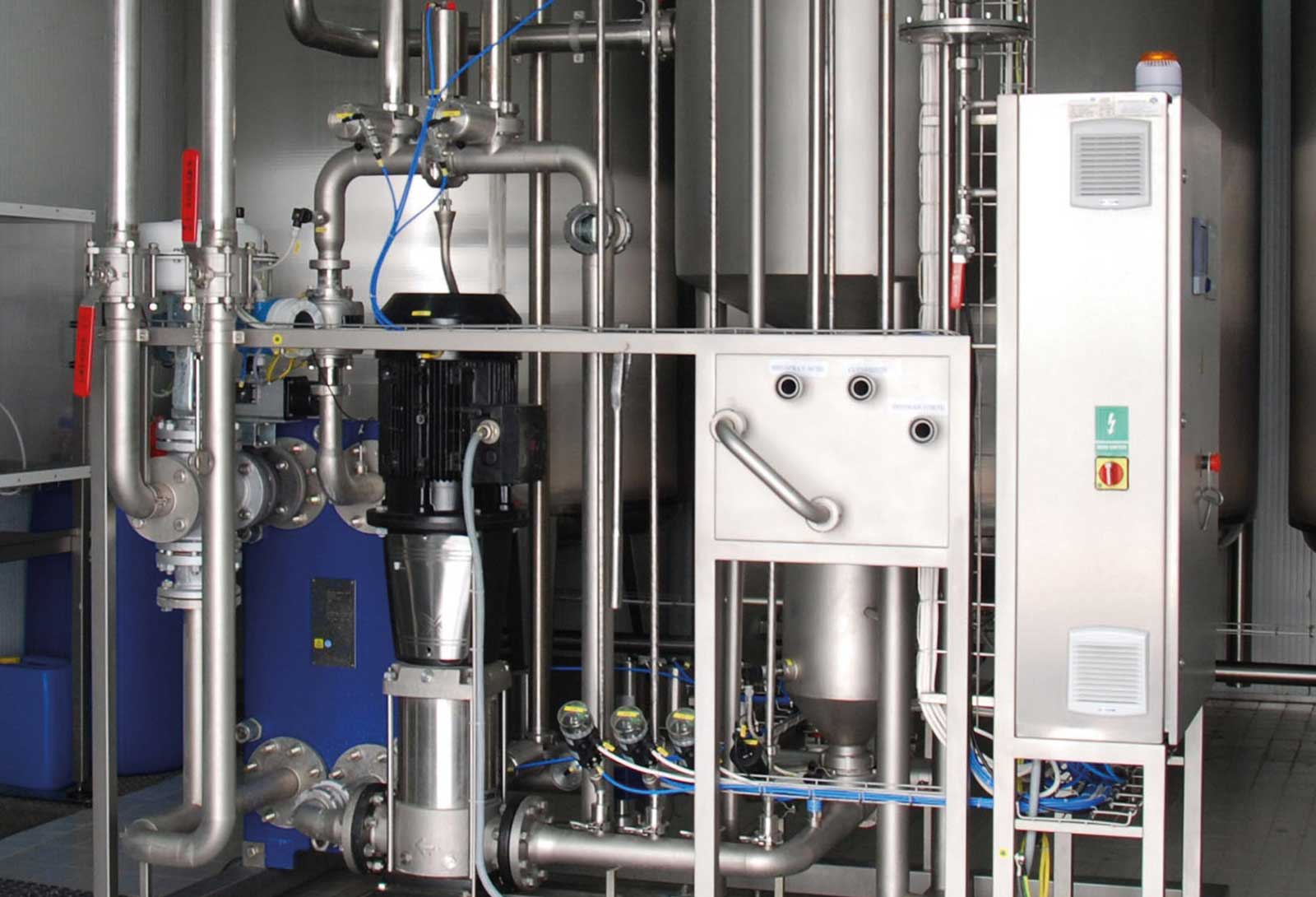
Strategic Procurement Playbook: CIP System End-to-End Checklist
RFQ Drafting: Lock-in Performance Before Price
Anchor the RFQ to validated CIP market CAGR of 9% and chemical cost inflation of 6–8% YoY; state that price indices will be reset at contract anniversary against ICIS Cleaning Chemical Index. Demand a dual-bid structure: (1) CAPEX lump-sum tied to stainless-steel grade 316L LME index plus $50k–$80k per skid module, and (2) five-year OPEX chemical service at $0.09–$0.12 per litre of 2% caustic blend. Insert a 90% uptime guarantee with LDs of 1% of contract value per 0.1% shortfall, capped at 10%. Require bidders to submit P&ID, FMEA, and SIL rating within 10 calendar days; non-conformance auto-excludes.
Supplier Due-Diligence & Sample FAT Matrix
Pre-qualify only vendors that have shipped ≥20 food-grade skids in the past 24 months and carry €10m product liability cover. FAT must run a 150-cycle continuous test using client-supplied soil matrix; acceptance threshold: ≤1 µg/cm² protein residue per ISO 15883. Include a third-party swab sampling protocol (Eurofins or equivalent) paid by supplier; failure restarts FAT at vendor cost. Embed a retention of title clause until FAT sign-off; risk transfers only after certificate issuance.
Incoterms Selection: FOB vs DDP Decision Matrix
| Decision Variable | FOB Shenzhen / Rotterdam | DDP Site US/EU |
|---|---|---|
| Freight risk exposure | Buyer controls ocean & inland; claims 0.3–0.5% of cargo value | Seller absorbs; claims hidden in margin |
| Import duty variance | Buyer liable for 0–12% Section 301 tariffs | Seller locks 7–10% duty inside unit price |
| Total landed cost delta | –$15k to –$25k vs DDP on $400k skid | Breakeven at 4-week delay in customs |
| Commissioning delay risk | 5–7 days demurrage if customs hold | Vendor pays $5k/day liquidated damages |
| Recommended use-case | Stable tariff regime, buyer has trade desk | Tight site schedule, single-source vendor |
Contract Risk Controls: From Shipment to Commissioning
Insert a split LC structure: 80% against Bill of Lading, 20% after SAT sign-off. Cap force-majeure downtime at 30 calendar days; thereafter buyer may source substitute equipment at vendor cost plus 15% uplift. Mandate vendor escrow of 5% contract value for 24 months post-Golive to cover latent defects. Require source-code escrow for PLC and HMI software if vendor’s EBIT drops below 5% in any fiscal year. Final commissioning must achieve ≤0.5% water-for-injection reject rate across three consecutive batches; failure triggers performance LDs of $25k per 0.1% excess and extends warranty by 12 months.
Post-Commissioning: Data & Audit Rights
Reserve the right to annual VDA 6.3 process audit at supplier’s plant with 48 h notice; cost borne by supplier if >3 minor NCs or 1 major NC found. Negotiate real-time OEE data feed (MQTT or OPC-UA) into buyer’s SCADA; data sovereignty remains buyer property. Price-adjustment clause: cap annual increase at CPI + 2% for chemicals, LME stainless index + 3% for hardware spares.
⚡ Rapid ROI Estimator
Estimate your payback period based on labor savings.
Estimated Payback: —
