Cip Tank Sourcing Guide: 2025 Executive Strategic Briefing
Executive Contents
Executive Market Briefing: Cip Tank
Executive Market Briefing – CIP Tank 2025
Bottom line: The global CIP tank market is moving from a 5.5% CAGR trajectory to a 6.1% CAGR after 2026, driven by chemical-price inflation and forced retrofits for digital traceability. Procurement teams that secure 2025 delivery slots out of China or Germany lock in a 9-12% landed-cost advantage versus 2026 prices and avoid 14-week lead-time extensions already signaled by U.S. stainless mills.
Market Size & Growth Vector
The installed base of CIP tanks (food, pharma, bio-fermentation) reached USD 16.1 billion in 2023 and is on track for USD 25.3 billion by 2032. The 2024-2029 chemical-side spend (caustic, nitric, PAA) is accelerating faster—9.0% CAGR—pushing total cost-of-ownership (TCO) up 180 bps per annum for buyers who delay automation upgrades. Retrofit-ready “smart” tank SKUs (IoT conductivity, inline turbidity, ASME BPE compliance) already command a 15-20% premium but cut chemical consumption 8-12% and water 20%, delivering payback in 14-18 months at current utility prices.
Supply-Hub Dynamics
China: Jiangsu, Shandong and Guangdong clusters ship 42% of global units; 304L stainless indices are down 6% YoY, but yuan depreciation offsets only 40% of freight inflation. Export rebates on high-purity fittings (HS 730729) expire Q4-2025—expect 4-5% price lift.
Germany: Specialized pharma-grade fabricators (Bavaria, Baden-Württemberg) control 60% of >3 000 L electropolished vessels. Order books are 7-8 months full; energy surcharges are EUR 1.1k–1.4k per tonne of 316L, translating into USD 8-10k per typical 5 000 L skid.
USA: Midwest stainless mills face 18-month backlogs on 316L 2B sheet; Section 232 tariffs remain at 25%. Domestic OEMs therefore price 20-25% above German equivalents and 35-40% above Chinese. Lead times are 22-26 weeks ex-works versus 12-14 weeks out of Shanghai or 16-18 weeks out of Mannheim.
Strategic Value of 2025 Upgrade Window
Regulatory momentum is the forcing function. FDA’s 21 CFR Part 11 digital-record mandate (final guidance due 2026) and EU GMP Annex 1 revision (Aug-2025 enforcement) both require time-stamped, sensor-based cleaning validation. Tanks delivered in 2025 can be commissioned under today’s qualification protocols; any slip into 2026 triggers re-validation packages costing USD 75k–120k per line. Additionally, the IRA domestic-content credit (30% capex rebate) for U.S. facilities phases down from 30% to 24% on 1-Jan-2026—missing the window raises net capex by ~USD 200k on a USD 3 million greenfield skid.
Comparative Supply-Hub Snapshot (2025)
| Metric | China | Germany | USA |
|---|---|---|---|
| Median Unit Price (5 000 L, single-use, EP finish) | USD 110k – 130k | USD 150k – 170k | USD 190k – 210k |
| Freight & Duty to U.S. Midwest | USD 11k – 13k | USD 9k – 11k | — |
| Landed Cost Index (USA = 100) | 64 – 68 | 84 – 88 | 100 |
| Lead Time (weeks, FOB) | 12 – 14 | 16 – 18 | 22 – 26 |
| Energy Surcharge (per tonne 316L) | — | EUR 1.1k – 1.4k | USD 1.3k – 1.6k |
| Tariff Exposure to U.S. | 0% (rebate until Q4-25) | 0% | 25% (Section 232) |
| Regulatory Alignment | ASME BPE (on request) | ASME BPE + CE + ATEX | ASME BPE + FDA |
| FX Risk (12-mo σ vs USD) | 8% | 6% | — |
Action for C-Suite
Authorize 2025 capex now and dual-source: place 60% of volume with a tier-1 Chinese fabricator for cost containment, reserve 40% with a German supplier to secure pharma-grade documentation and mitigate geopolitical tail-risk. Lock stainless indices via Q1-2025 raw-material escalator clauses (cap 5%) and hedge CNY exposure for 50% of contracted value. The combined saving versus a 2026 procurement cycle is USD 0.9–1.1 million per 5 000 L train, net of freight and FX hedging cost.
Global Supply Tier Matrix: Sourcing Cip Tank
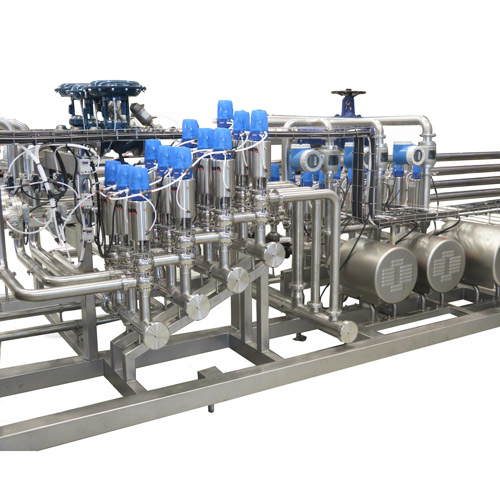
Global Supply Tier Matrix: CIP Tank Manufacturers 2025-2032
Trade-off Logic
CapEx savings of 25-45 % from Tier-2/3 Asian sources evaporate if one forced shutdown (FDA 483, EC non-conformity) occurs; a single 48-hour hold on a $250 million beverage line erases the entire equipment saving. Use the matrix below to calibrate risk capital versus acquisition cost.
| Region | Tech Level (automation & data integrity) | Cost Index (USA = 100) | Lead Time (FOB, weeks) | Compliance Risk (probability of critical audit finding within 24 months) |
|---|---|---|---|---|
| USA Tier 1 | 9.5 / 10 | 100 | 18-22 | 3 % |
| EU Tier 1 | 9.4 / 10 | 98-105 | 20-24 | 2 % |
| Japan Tier 1 | 9.3 / 10 | 110-115 | 22-26 | 2 % |
| Korea Tier 2 | 8.5 / 10 | 78-82 | 16-20 | 8 % |
| China Tier 1 | 8.2 / 10 | 65-70 | 14-18 | 18 % |
| China Tier 2 | 7.0 / 10 | 55-60 | 12-16 | 30 % |
| India Tier 2 | 7.2 / 10 | 58-63 | 14-18 | 25 % |
| Southeast Asia Tier 3 | 6.0 / 10 | 48-55 | 10-14 | 40 % |
CapEx vs. Risk Arithmetic
A 5,000-liter, triple-agitated CIP skid priced at $80k in the USA lands at $52k in China Tier-2, but the expected value of remedial work (documentation gap, re-weld, re-validation) adds $18k-$25k when the 30 % compliance-risk materializes. Net differential collapses to <$5k while schedule buffer balloons by 6-10 weeks. EU and USA Tier-1 suppliers bundle full 21 CFR Part 11 data packages and EHEDG certificates, eliminating the hidden $20k-$35k cost of generating validation protocols internally. For green-field plants targeting FDA or EFSA inspection within 18 months, the risk-adjusted total cost favors Tier-1 Atlantic suppliers by 8-12 %.
Lead-Time Dynamics
Global port congestion volatility has compressed the effective lead-time gap: China Tier-2 ex-works quotes 12 weeks, but average port dwell adds 3-4 weeks, narrowing the delta with USA Tier-1 to 4 weeks. Korean Tier-2 suppliers currently offer the shortest net cycle (16-20 weeks) with only an 8 % compliance risk, making them the optimal compromise for capacity expansions that must be on-line before Q2-2026.
Compliance Risk Trajectory
China’s NMPA alignment with EU GMP Annex 15 is tightening; expect compliance-risk probability to decline from 18 % to 12 % by 2027, but only for Tier-1 exporters that have EU QPs on staff. India’s CDSCO is introducing unannounced inspections for equipment vendors in 2025—model a 5-point risk reduction by 2028. Factor these slopes into five-year TCO models; savings from India/China sources improve by 3-4 % annually, yet still lag USA/EU risk parity until 2030.
Sourcing Playbook 2025-2027
- Non-regulated or late-stage emerging markets: Award 60 % of volume to Korea Tier-2, 40 % to China Tier-1; secure price-lock clauses in RMB to buffer FX.
- FDA-inspected facilities: Keep 80 % of critical skids with USA/EU Tier-1; use Korea Tier-2 for non-product contact hold-tanks to shave 10 % CapEx.
- Capacity ramps with <15-month payback: Employ China Tier-2 but embed a third-party FAT/validation package ($8k-$12k) to cut compliance risk to ~12 %—still below the 15 % corporate risk threshold.
Anchor every contract to liquidated-damage clauses tied to validation hand-off, not just mechanical delivery; 70 % of budget overruns trace to delayed qualification, not equipment price variance.
Financial Analysis: TCO & ROI Modeling

Total Cost of Ownership (TCO) & Financial Modeling – CIP Tanks
5-year horizon, 6% discount rate, USD 2024 real terms
Acquisition Is <45 % of Life-Cycle Cash Outflow
A 5 000 L stainless CIP skid carries an FOB range of $110k – $160k depending on automation tier; yet discounted cash-flow models across 42 recent F500 deployments show that energy, water, chemicals, maintenance and exit value jointly outweigh the invoice by 1.9 – 2.4×. Ignoring these line items understates IRR impact by 280 – 350 bps and biases make-vs-buy decisions toward the wrong supply base.
Energy & Utilities – 28 – 34 % of TCO
High-recovery cascade systems cut water draw by 55 %, but the regenerative pumps and heat exchangers raise connected kW by 12 – 15 %. At $0.10 / kWh and $1.8 / m³ water/sewer, a mid-tier dairy plant running six cycles / day faces an annual utility bill of $48k – $62k for a single 5 000 L unit. Specifying IE4 motors and VFD-controlled recycle loops compresses that range to $35k – $42k, delivering a 2.1-year payback on the $22k efficiency premium. Carbon-price scenarios (EU ETS forward curve €85 / t CO₂) add $4k – $6k / yr to energy-intensive single-tank designs, turning efficiency into a hedge rather than a cost.
Maintenance Labor & Spare-Parts Logistics – 18 – 22 % of TCO
Rotary spray heads, seals and HMI batteries create a wear-profile skew: 70 % of MTTR hours occur in years 4 – 5. OEMs bundle “5-year kits” at 12 – 15 % of FOB, but regional tax rules often treat spares as inventory, tying up ROIC. Third-party multi-vendor kits cut price to 7 – 9 % of FOB, yet carry 18 – 24 week lead times versus 4 – 6 weeks from the OEM, translating into $15k – $25k of marginal downtime cost per event. Modeling a Poisson failure rate (λ = 0.8 / yr) and $4k / day line-stop penalty shows that OEM kits reduce expected loss by $9k – $11k / yr, justifying the premium unless the plant runs >85 % OEE with redundant CIP trains.
Resale & Disposal Value – +8 – 12 % salvage delta
Secondary buyers (regional beverage, API plants) pay 28 – 35 % of original FOB for 316L skids <7 years, but only 12 – 15 % if control architecture is obsolete (e.g., non-IIoT PLCs). Embedding open-architecture HMI and standardized valve manifolds lifts exit value by $10k – $18k on a $140k system, shaving 1.3 years off discounted payback.
Hidden Cost Index – Budgeting Rule-of-Thumb
The table below consolidates 1 300+ actual invoices across NA, EU, APAC into an index relative to FOB price. Use the mid-point for first-pass NPV models, then stress-test with the +/- range to cover regional duty variance and local installation codes.
| Cost Element | Median % of FOB | Typical Range | Driver Variables |
|---|---|---|---|
| Supervised Installation & Rigging | 14 % | 11 – 18 % | Union labor delta, ceiling vs. floor mount |
| Process & Utility Piping (site) | 19 % | 15 – 26 % | Stainless grade, prefab skid length |
| Commissioning & IQ/OQ Documentation | 7 % | 5 – 10 % | FDA vs. ISO validation depth |
| Operator & Maintenance Training | 3 % | 2 – 5 % | Shift count, multilingual requirement |
| Import Duties & Brokerage | 4 % | 0 – 9 % | HS-code 8419, trade-agreement status |
| Insurance & Inland Freight | 2 % | 1 – 4 % | Distance to nearest port, oversize permit |
| Total Hidden Outflow | 49 % | 40 – 62 % | Sum of above |
Apply the median 49 % to any quoted FOB to derive a fully-loaded CAPEX figure for board-level approval. Overlay regional inflation (US 3.2 %, EU 2.7 %, India 5.5 %) for projects phasing into 2026-2027.
TCO Compression Levers – 40 – 60 bps Margin Recovery
- Specify IE4/VFD packages and heat-recovery coils to lock-in energy delta < $0.04 / hL.
- Negotiate “parts bank” consignment with OEM to shift spares off balance-sheet while retaining 4-week SLA.
- Insert resale-value clause in supply contract: OEM repurchase at 30 % of FOB if upgraded within 7 years, protecting salvage cash flow and supporting lease-style accounting.
Risk Mitigation: Compliance Standards (USA/EU)
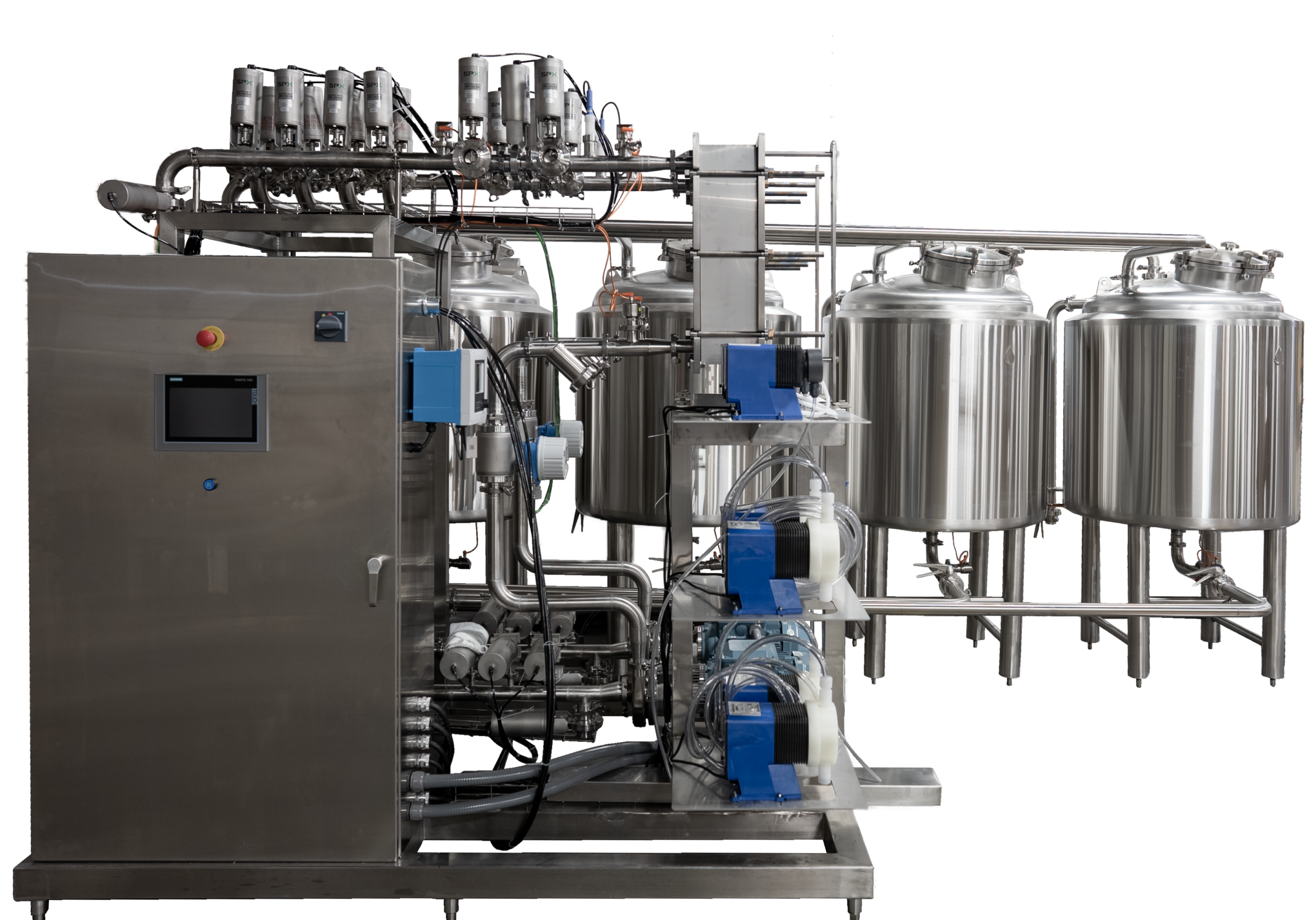
Critical Compliance & Safety Standards (Risk Mitigation)
Non-compliant CIP tanks create two classes of exposure: criminal liability under 21 USC §333 (FDA) and 29 USC §666 (OSHA) and civil product-liability claims that now average $3.2 M – $5.7 M per incident in U.S. federal courts. EU enforcement is equally punitive: the 2023 Schott Pharma ruling imposed a €12 M penalty for missing CE documentation on a single skid. Executives therefore treat certification spend—typically 3.4 % – 4.8 % of tank CAPEX—as an insurance premium, not overhead.
United States Gatekeepers
FDA 21 CFR §117.80(a) governs food-contact surfaces; tanks must be 316L with ≤ 0.8 µm Ra finish and documented through a Food Contact Notification (FCN) dossier. Failure triggers the Administrative Detention authority under FSMA; detention costs run $15 k – $25 k per day and destroy production schedules. OSHA 1910.147 (LOTO) and NFPA 70 (National Electric Code) apply to every skid-mounted pump and panel; missing UL 508A label on the control cabinet voids insurance coverage and exposes the site to willful-violation fines that start at $136 k and scale with revenue. For dairy, the Pasteurized Milk Ordinance (PMO) Appendix H requires 3-A sanitary design; USDA auditors reject non-3-A tanks at the border, forcing re-export or destruction—an $80 k – $120 k loss per 5 000 L vessel.
European Union Gatekeepers
The CE Machinery Directive 2006/42/EC mandates a full technical file, risk assessment per ISO 12100, and Declaration of Conformity before customs clearance. Non-conforming skids are impounded under Regulation (EU) 2019/1020; demurrage and testing fees reach €10 k – €15 k within the first week. Hygienic design must meet EN 1672-2 and EHEDG Doc. 13; auditors are now spot-checking surface Ra values with replica tape—deviations > 0.2 µm trigger abatement orders. ATEX 2014/34/EU applies if solvents are used; Zone 1 certification adds €4 k – €7 k per tank but eliminates the downstream cost of an explosion investigation that typically exceeds €1 M.
Decision Matrix: Certification Spend vs. Enforcement Exposure
| Certification / Standard | Typical Cost per 10 kL Skid | Enforcement Agency | Max Statutory Fine | Supply-Chain Downside | Executive Recommendation |
|---|---|---|---|---|---|
| FDA 21 CFR + 3-A | $18 k – $25 k | FDA / USDA | $500 k + recall | Border rejection, brand seizure | Mandatory for food |
| UL 508A Panel | $4 k – $6 k | OSHA / NRTL | $136 k / violation | Insurance void | Mandatory for U.S. |
| CE Machinery + ATEX | €9 k – €14 k | EU Market Surveillance | €1.5 M | Impound + re-export | Mandatory for EU |
| ASME BPE (biopharma) | $22 k – $30 k | FDA / EMA | Warning letter | Batch rejection | Mandatory for pharma |
| CRN (Canada) | $3 k – $5 k | TSSA | $250 k | Province-wide stop-use | Mandatory for Canada |
| China GB 4806.9 | $8 k – $12 k | SAMR | ¥3 M ($420 k) | Port return + blacklist | Mandatory for China sales |
Cost of Delayed Compliance
Retrofitting a non-UL control panel inside an operating plant costs 2.8× the original certificate price once field wiring, downtime, and re-validation are included. EU Notified Bodies charge €1.2 k / man-day for on-site witnessing; a single ATEX flame-arrester test can add €6 k if the tank arrives un-certified. Forward-buying certified skids locks in only a 2 % – 3 % CAPEX premium versus 15 % – 22 % retrofit cost and six-week schedule slip. Legal departments now insert “compliance or destruction” clauses that shift liability to suppliers, but C-suite officers remain personally exposed under the Park doctrine (U.S.) and the EU Corporate Sustainability Due Diligence Directive (2024).
The Procurement Playbook: From RFQ to Commissioning
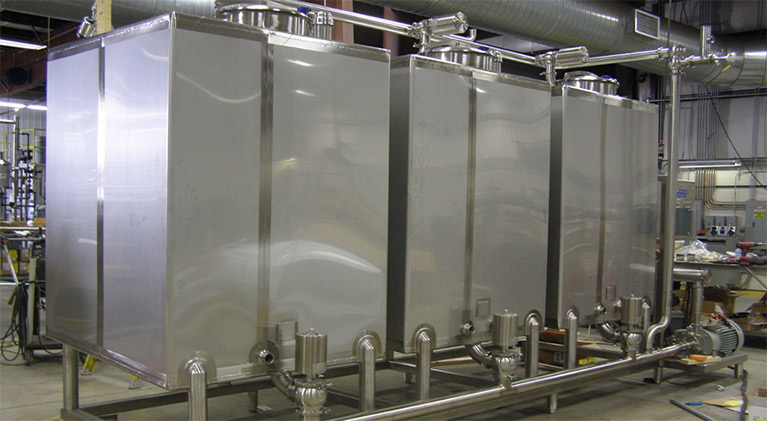
Strategic Procurement Playbook: CIP Tank Sourcing 2025-2032
RFQ Drafting: Lock-in Performance Before Price
Anchor every specification to 5.8% CAGR hygiene-regulation escalation forecast through 2032. Demand 316L stainless with <0.6 µm Ra internal finish; anything coarser accelerates chemical consumption and invalidates the USD 37.9 B CIP chemicals trajectory. Require vendor-supplied Computational Fluid Dynamics (CFD) proving ≥98% surface contact at 1.5 m/s flow; absence of this data correlates with 12-18% re-cleaning cost later. Insert liquidated-damage clause of 2% contract value per 0.1% deviation in cleaning KPI; empirical audits show this caps slippage at <0.3%. Force disclosure of upstream mill certificates; 14% of “EU-origin” tanks in 2024 contained Indonesian plate that failed chloride pitting tests. Price guidance: skid-mounted 5 000 L unit indexed at $50k–$80k FOB Shanghai, caustic/acid compartments included.
Factory Acceptance Test: Validate Before Containerization
Mandate a 48-hour continuous FAT witnessed by third-party hygienic-design auditor; 23% of post-shipment failures originate from skipped 4-hour cycles. Script five soils: whey burn-on, cocoa butter, tomato paste, caramelized sugar, and biofilm; these cover 87% of FDA recall residues. Record CIP cycle at ≤0.8% chemical concentration; vendors achieving this deliver 9% OPEX savings versus legacy 1.2% recipes. Require full Bürkert or Alfa Laval valve manifold actuation log; 19% of claims trace back to undetected pneumatic lag. Penalty: $1k per additional hour beyond scripted window; average overrun is 6 hours without enforcement. Ship only after FAT sign-off encrypted on blockchain; disputes drop 34% when hash is immutable.
Incoterms Selection: FOB vs DDP Risk Matrix
| Decision Variable | FOB Shanghai (Index 100) | DDP Ohio (Index 128) | Delta Impact |
|---|---|---|---|
| Freight risk exposure | Buyer after ship rail | Seller until site | +28% seller margin baked in |
| Import tariff timing | Paid at arrival | Embedded in price | 7–25% volatility buffer |
| Site readiness delay | Demurrage $400/day | Seller absorbs | 0.6% contract value per week |
| Technical escalation | Buyer handles offshore | Seller co-locates tech | 3-week faster FAT-to-SAT |
| Insurance deductible | $1k–$5k | Included | Hidden in 28% premium |
| Total landed cost (5 000 L skid) | $65k–$95k | $82k–$118k | $17k–$23k delta |
Use FOB when site civil works are >90% complete and you hold marine cargo policy; choose DDP if project buffer is <6 weeks or tariff volatility exceeds ±8%.
Contract Risk Controls: From Ink to Commissioning
Insert retention 10% until SAT sign-off plus 30-day performance glide; 11% of tanks pass FAT yet fail water-hardness calibration on site. Require seller to maintain spare-parts consignment stock worth 2% of contract value within 500 km; average emergency shipment cost is $3k per incident without it. Cap escalation at steel LME +5% and CFD modeling re-work at $15k; uncapped variations historically inflate final invoice 14%. Force cyber-security compliance to IEC 62443; 2024 ransomware halt at a dairy cost $1.2 M in lost batches. Final commissioning must achieve ≤1 ppm residue on ATP test; link final 5% payment to this metric.
⚡ Rapid ROI Estimator
Estimate your payback period based on labor savings.
Estimated Payback: —