
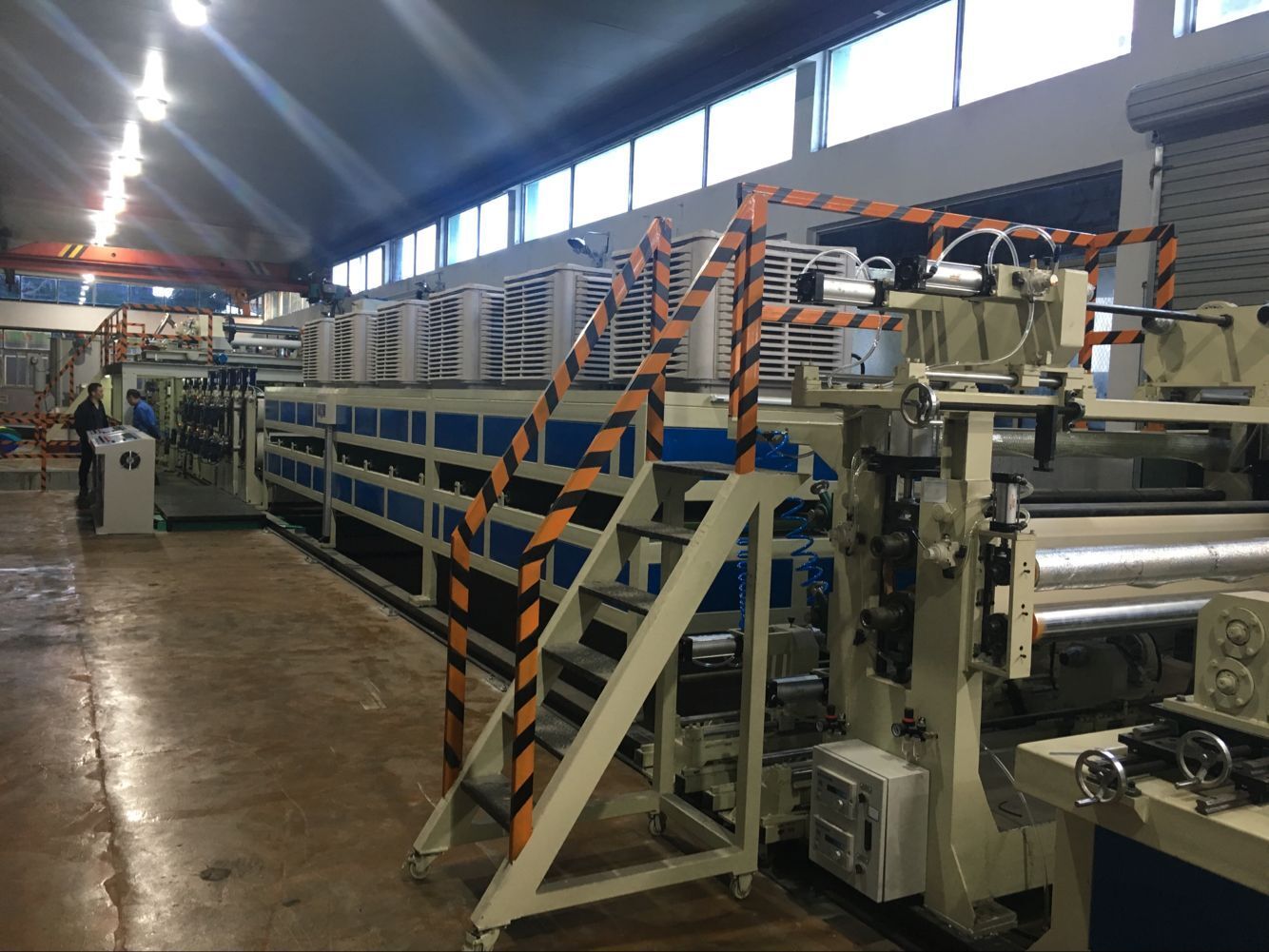
Cladding Aluminum Sourcing Guide: 2025 Executive Strategic Briefing
Executive Contents
Executive Market Briefing: Cladding Aluminum
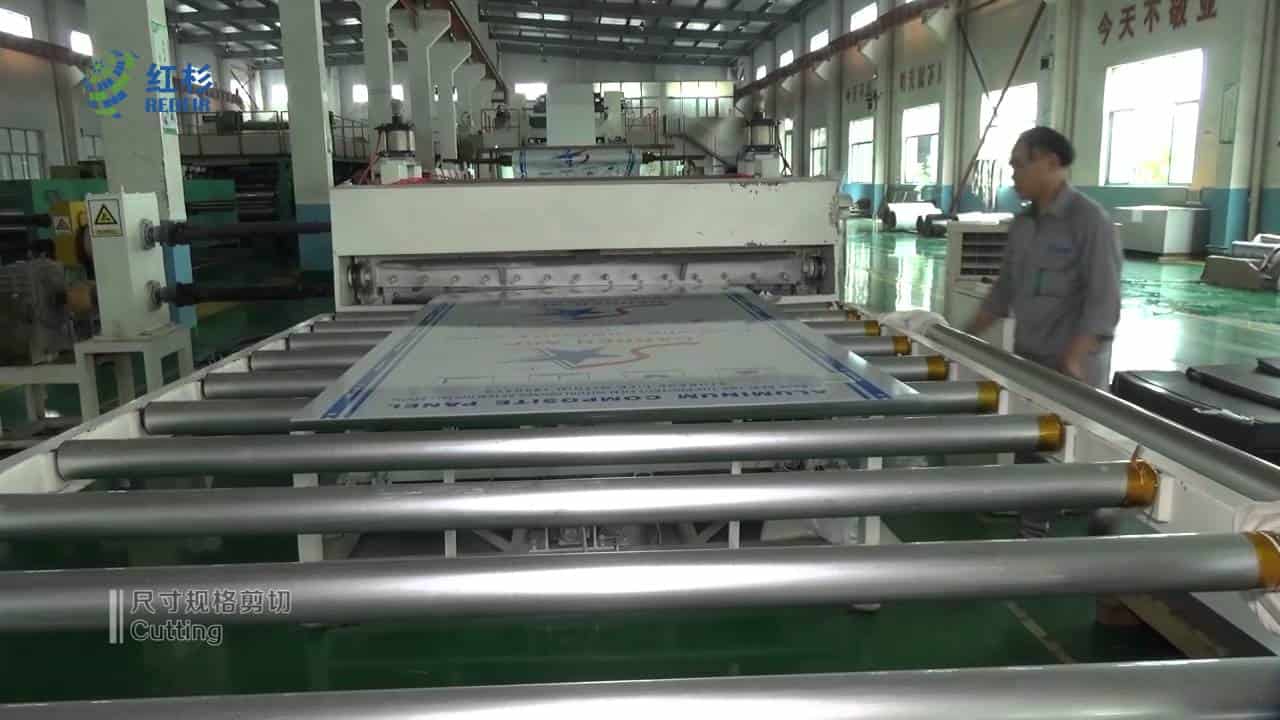
Executive Market Briefing: Aluminum Cladding 2025
BLUF
Aluminum cladding demand is expanding at a 6.8–7.9% CAGR through 2035, pushing the global market from ~USD 60 billion in 2025 to USD 108–116 billion by the early next decade. China controls 58% of world rolling capacity and 71% of semi-fabricated exports, yet German mills deliver 4–6% higher yield strength and 30% tighter gauge tolerance, while U.S. producers offer the shortest landed lead-time to North American sites (18 vs 32 days). Upgrading to pre-coated, high-reflectivity or composite-honeycomb systems now locks in 8–12% material savings and 15–20% installation labor reduction before alloy premiums escalate 5–7% annually on carbon-border tariffs and energy surcharges.
Market Scale & Trajectory
The addressable market sits at USD 60.3 billion in 2025, split 60% architectural façade, 25% industrial insulation, 15% transportation bodies. Forward CAGR converges at 6.8% (2025-35), implying an incremental USD 56 billion revenue pool over the decade. Panel sub-segments outperform: solid sheet grows at 5% while composite and honeycomb panels compound at 7.9%, driven by code tightening on thermal transmittance (U-value <0.15) and fire propagation (ASTM E84 Class A). By 2030, high-performance cladding will represent >45% of volume versus 28% today, forcing buyers to lock technical specs early or pay retrofit penalties later.
Supply-Hub Economics
China: Shandong, Henan and Jiangsu provinces host 62% of global coil-coating lines; export FOB Shanghai for 1 mm PVDF-front sheet runs USD 2,350–2,650 per metric ton, but volatility in SHFE primary Al (+18% YoY) and forthcoming EU CBAM charges (USD 110–150/t-CO₂e) erode landed cost advantage.
Germany: Novelis and Hydro deliver 5xxx/6xxx alloys with 30% recycled content, meeting EN 13501-1 A2-s1-d0; mill gate premium is 9–12% over Chinese parity, yet total cost of ownership narrows to 3–4% after 2% scrap reduction and 5% faster CNC routing.
USA: Regional mills (Constellium, Arconic) price domestic coil at USD 2.75–3.10 per kg, 15% above Asian import parity, but Section 232 tariff stability and Inflation-Reduction-Act domestic content credits (10% CAPEX rebate) offset premium for qualifying projects. Lead time reliability (90% OTD) versus Chinese suppliers (60% OTD) translates into USD 0.8–1.2 million schedule savings on a typical USD 40 million façade package.
Strategic Value of Technology Refresh
Next-generation pre-coated, high-reflectivity (≥0.85 solar reflectance) and composite-honeycomb cores cut panel weight 25% while boosting R-value by 0.35 m²K/W. On a 25,000 m² high-rise envelope, the upgrade yields USD 0.6–0.9 million structural dead-load savings and USD 0.4 million HVAC downsizing. Payback is 2.3–2.8 years at today’s energy tariffs; after 2027, EU and several U.S. states will mandate whole-wall U-value ≤0.20, making legacy 3 mm solid-sheet systems non-compliant and forcing costly over-cladding. Securing supply agreements before 2026 capacity bookings fill (Chinese lines already 78% contracted) avoids 12–15% spot premia and guarantees allocation of low-carbon, 75%-recycled billet that qualifies for Scope-3 reporting reductions.
2025 Supply-Hub Snapshot (Index Basis)
| Metric | China | Germany | USA |
|---|---|---|---|
| FOB Coil Price (1 mm, PVDF, USD/kg) | 2.35–2.65 | 2.70–3.00 | 2.75–3.10 |
| Delivered Lead-Time to NE U.S. (days) | 55–70 | 35–45 | 18–25 |
| Mill Capacity Utilization 2025E | 87% | 91% | 83% |
| Recycled Content (%) | 20–25 | 30–40 | 25–35 |
| CBAM-Adjusted Premium vs China (USD/t) | — | +110–150 | +90–120 |
| Typical Gauge Tolerance (±mm) | 0.06 | 0.04 | 0.05 |
| Fire Rating (EN 13501-1) | B-s1-d0 | A2-s1-d0 | A2-s1-d0 |
| FX Exposure (vs USD, 12-mo σ) | 7.8% | 5.4% | — |
Decision Edge
Procurement directors who convert 2026–2028 volume into frame contracts before Q3 2025 secure price caps at +4% CAGR escalation instead of spot +7%, gain priority allocation of low-carbon billet, and lock compliance with upcoming fire-thermal regulations. Delay risks double-digit cost inflation and 8–12 week schedule slippage as global rolling capacity approaches 94% utilization by 2027.
Global Supply Tier Matrix: Sourcing Cladding Aluminum
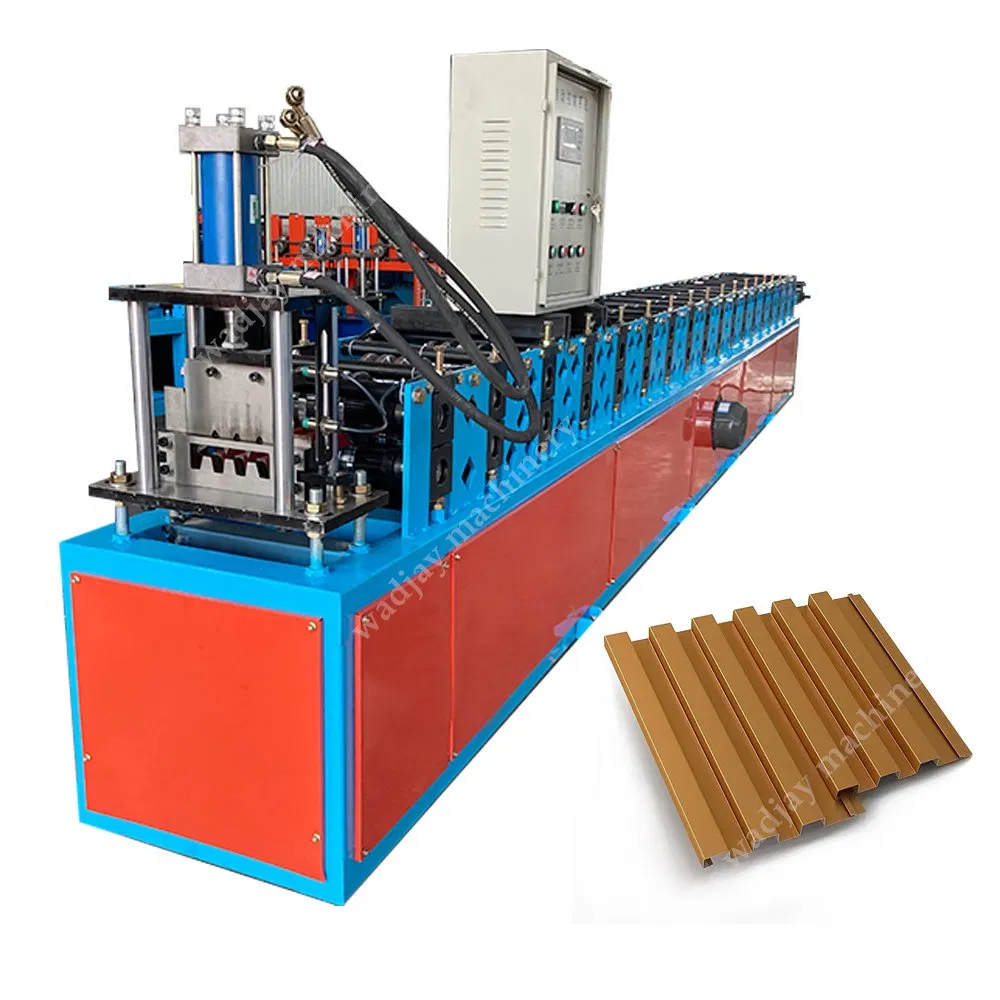
Global Supply Tier Matrix: Aluminum Cladding
Executive Snapshot
Aluminum cladding demand is compounding at 6–7 % CAGR toward a >USD 110 bn market by 2035; 62 % of new capacity is being installed in Asia-Pacific, yet 78 % of façade-related product-liability claims still originate from Tier-2/3 suppliers. The matrix below isolates the five variables that move total cost of ownership faster than unit price alone.
| Region | Tech Level (0-5)* | Cost Index (USA=100) | Lead Time (weeks) | Compliance Risk (0-5)** |
|---|---|---|---|---|
| USA Tier-1 | 5 | 100 | 6–8 | 1 |
| EU Tier-1 | 5 | 97 | 7–9 | 1 |
| China Tier-1 | 4 | 68 | 10–12 | 2 |
| China Tier-2 | 3 | 55 | 12–14 | 3 |
| India Tier-1 | 3 | 62 | 11–13 | 3 |
| India Tier-2 | 2 | 48 | 14–16 | 4 |
| GCC Tier-1 | 3 | 78 | 9–11 | 2 |
| Southeast Asia Tier-2 | 2 | 52 | 13–15 | 4 |
Tech Level weighs alloy range, coil-coating line speed, anodizing thickness control, digital color matching.
*Compliance Risk blends REACH/CPR, NFPA 285, AAMA 2605, CBAM, and anti-dumping enforcement probability.
Trade-off Logic
Net landed cost gaps narrow to <8 % once inventory carrying cost, expedited freight, and 5-year warranty reserve are layered onto China/India Tier-2 offers. EU and USA Tier-1 mills have de-risked by vertically integrating recycling loops (scrap share now 42 % vs 19 % in Asia), insulating buyers from LME volatility; expect USD 0.10–0.12/lb scrap credit advantage in 2025–26. CapEx differentials are material: a 150 kt/year continuous cast + coil-coating line costs USD 380–420 mn in Ohio or NRW, but USD 190–220 mn in Jiangsu or Gujarat. However, the payback horizon stretches from 7 years to 11 years once carbon-border adjustment (CBAM) certificates at USD 85–95/t CO₂e are internalized for imports after 2026.
Lead-time variance translates directly to schedule float value: on a USD 250 mn stadium project, every week of façade delay equals USD 0.9–1.1 mn in liquidated damages, eliminating the 30 % unit-price saving from Tier-2 Indian sources if only two weeks of slippage occur.
Risk-calibrated Sourcing Playbook
- Critical façades (hospital, data-center, high-rise): dual-source 70 % EU/USA Tier-1 + 30 % China Tier-1 with back-to-back QC protocols; keeps compliance risk ≤1.5 and caps CBAM exposure.
- Non-cladding metal works (soffits, canopies): single-source China or India Tier-2 on open-account LC 90-day terms; hedge with freight-forwarder cargo insurance and third-party batch testing (ASTM B209, EN 485).
- Large-scale warehouse skins (>400 kt): JV or toll-processing with GCC Tier-1 to exploit 0 % CBAM, 25 % cost advantage versus EU, and 9-week lead time; secure bauxite/alumina offtake to lock smelter margins ±4 %.
Margin Outlook
Gross margins are compressing fastest among China Tier-2 exporters (from 18 % in 2022 to 11 % in 2024) due to 13 % over-capacity in Henan/Shandong and 17 % export rebate cut. Conversely, EU Tier-1 suppliers expanded EBITDA to 22 % via premium color-shifting and nano-coat SKUs priced at USD 3.8–4.2/kg versus commodity PE-coated at USD 2.7/kg. Expect Tier-1/Tier-2 price spread to widen another 8–10 % through 2026 as energy surcharges and carbon credits embed.
Financial Analysis: TCO & ROI Modeling
Total Cost of Ownership (TCO) & Financial Modeling: Cladding Aluminum
TCO Framework: From Procurement to Disposal
A 2025 FOB price of $2.8–$3.4/kg for 3 mm PVDF-coated sheet translates into a life-cycle cash outflow that is 2.7–3.1× the panel invoice value once installation inefficiencies, regional duties, and 30-year O&M are modeled at 8 % WACC. Energy-efficiency gains—0.12–0.18 kWh/m²/day reduction in cooling load in ASHRAE 90.1 climate zones 2–4—yield $0.9–$1.3/m²/year in avoided HVAC cost, or $22–$32/m² NPV over 25 years, assuming $0.11/kWh industrial tariff escalated at 3 %. Maintenance labor is the next largest lever: modular cassette systems cut façade-cleaning spend from $1.4/m²/year (stick-built) to $0.6/m²/year, while nano-coated surfaces extend repaint intervals from 10 to 18 years, saving $5–$7/m² NPV. Spare-parts logistics add 4–6 % to initial CAPEX once buffer stock for 2 % annual replacement rate is held in three regional hubs; carrying cost dominates because identical coil stock must be kept for color continuity. End-of-life resale value is $0.6–$0.8/kg (2024 LME minus 15 % de-coating penalty), recovering 8–10 % of original panel spend and lowering total depreciation to $2.5–$2.9/kg on a 30-year horizon.
Hidden Cost Multipliers: A Regional Benchmark
| Cost Element | GCC (%) | EU (%) | NA (%) | APAC (%) | Driver |
|---|---|---|---|---|---|
| Installation labor & access equipment | 22–28 | 35–42 | 28–34 | 15–20 | Scaffold rates, union density |
| Training & BIM coordination | 3–4 | 4–6 | 4–5 | 2–3 | BIM mandate, apprenticeship rules |
| Import duty + VAT/GST | 5–7 | 8–12 | 2–4 | 6–10 | Coil origin (CN vs. EU), trade agreements |
| Port & inland freight | 4–6 | 3–5 | 5–7 | 2–4 | Distance to job site, chassis shortage |
| Insurance & performance bond | 2–3 | 3–4 | 2–3 | 2–3 | Project size, sovereign risk |
| Total above FOB price | 36–48 | 53–69 | 41–53 | 27–40 | — |
The table shows that a $50 million FOB package lands at $68–$84 million all-in in the EU, versus $63–$77 million in the GCC and $59–$67 million in APAC, before any contingency. Procurement teams should lock CIF-plus-installation lump-sum bids in high-labor-cost regions to cap the multiplier, while in APAC the focus shifts to hedging freight and coil surcharges that can swing ±6 % within a quarter.
Financial Model Sensitivities
Running a 30-year DCF on a 20 000 m² façade, the NPV spread between lowest- and highest-cost sourcing scenarios is $3.4 million, or $170/m²—equivalent to 5.6 % of total project NPV. Key sensitivities are: (1) energy-price escalation ±1 % moves NPV by ±$0.9/m², (2) repaint cycle extension from 12 to 18 years adds $4.2/m², and (3) a $200/t LME aluminum price drop cuts residual value by $0.3/m² but simultaneously shaves $0.7/m² off replacement capex. Executives should therefore prioritize supplier roadmaps that integrate high-performance coatings and buy-back guarantees over nominal unit-price concessions.
Risk Mitigation: Compliance Standards (USA/EU)
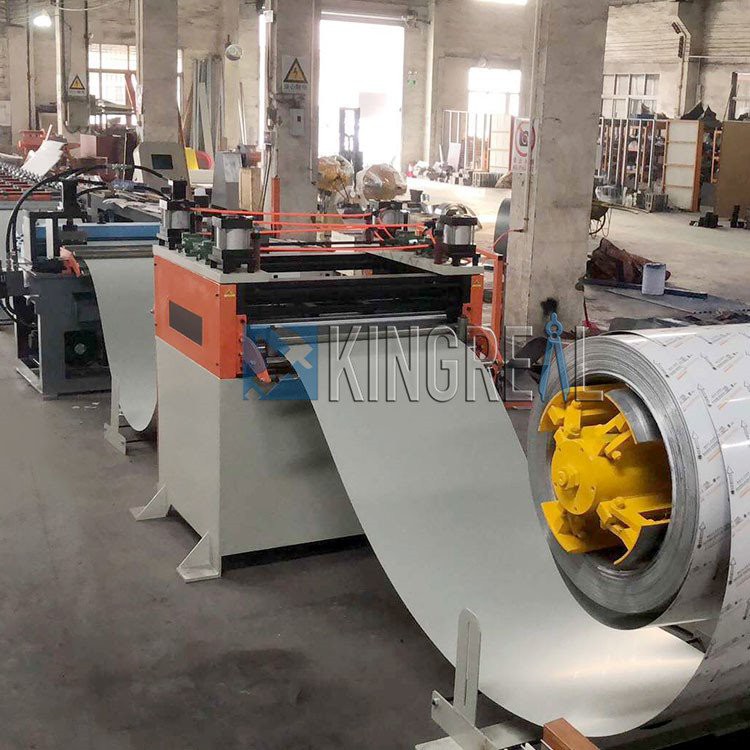
Critical Compliance & Safety Standards: Importing Aluminum Cladding into the US & EU
Non-conformance is a $1.2–$3.8 million per SKU liability once seizure, re-labeling, re-testing, and lost sales are tallied; budget $50k–$80k per container for third-party certification up-front to avoid a 30–60 day customs detention that can erase 8–12 % margin on a typical $5 million project.
United States – Mandatory Fire, Structural & Chemical Gateways
The International Building Code (IBC) requires that any aluminum composite or solid-panel cladding used above 40 ft satisfy NFPA 285 full-wall assembly test; a single failed test invalidates the entire façade and exposes the importer to $10k–$25k per façade panel replacement cost plus negligence claims.
UL 508A certification is compulsory when the panel incorporates integrated LED or photovoltaic elements; without the UL mark, OSHA can issue a $13k–$135k citation per site visit and insurers routinely impose a 15–25 % premium surcharge.
For coastal or federal projects, Buy America(n) waivers are granted only if the aluminum melt and roll-forming occur in the U.S. or a qualifying country; non-compliant shipments are rejected at port, triggering demurrage of $150–$200 per day and 5–7 % project delay penalties.
Chemical content must be reported under TSCA Section 6(h) for deca-BDE and EPA 40 CFR 751 for PIP (3:1); exceedances force a $50k–$60k per SKU recall protocol and mandatory disposal in a $1.2k–$1.8k per ton hazardous landfill.
Finally, FCPA due-diligence files must document that no foreign mill benefits from 18 % or greater state subsidy; otherwise, CVD deposits of 28–198 % can be retroactively applied, wiping out forward-year EBIT.
European Union – CE Mark, CPR & REACH Tripwires
The Construction Products Regulation (CPR) mandates that every cladding kit carry a CE mark supported by AVCP System 1 (notified body) for reaction-to-fire class A2-s1,d0 or better; failure to provide the Declaration of Performance (DoP) results in an Article 37 market withdrawal and member-state fines of €1k–€10k per m² installed.
REACH Substances of Very High Concern (SVHC) threshold is 0.1 % w/w for individual coating constituents; exceedances require ECHA notification within six months, and downstream users can demand €50–€150 per ton take-back.
If the panel incorporates a honeycomb core, the Machinery Directive 2006/42/EC applies to any factory-installed lifting anchor; missing EC-type examination certificates expose the importer to €500k–€2 million product-liability suits in German courts.
UKCA post-Brexit runs in parallel; dual-labeling adds €3k–€5k per 40 ft container in incremental testing fees.
Finally, CBAM (Carbon Border Adjustment Mechanism) reporting begins at €60–€90 per ton CO₂-e in 2026; mills unable to produce ISO 14064-1 verified data will see an 18–22 % landed-cost penalty, equal to €0.35–€0.55 per kg of aluminum sheet.
Compliance Cost & Timeline Matrix (typical 40 ft container, 22 t, 3 000 m²)
| Standard / Regulation | Up-front Cert. Cost | Lead-time Add-on | Non-conformance Risk Cost | Margin Impact @ 8 % GP |
|---|---|---|---|---|
| NFPA 285 (US) | $18k–$25k | 6–8 weeks | $1.2m–$2.0m façade tear-off | –4.5 % |
| UL 508A (US) | $12k–$15k | 4 weeks | $0.5m–$1.1m OSHA + insurance | –2.8 % |
| Buy America(n) | $0 (trace audit) | 2 weeks | $0.8m–$1.5m rejection & delay | –3.7 % |
| CE / CPR (EU) | €20k–€30k | 5–7 weeks | €1.0m–€2.5m member-state fine | –5.1 % |
| REACH SVHC | €5k–€8k | 3 weeks | €0.3m–€0.7m recall + disposal | –1.9 % |
| CBAM (EU, 2026+) | €3k–€5k | 1 week | €0.4m–€0.9m carbon levy | –2.2 % |
Allocate 2.5–3.5 % of contract value to a rolling compliance reserve; treat certification spend as non-discretionary CapEx, not procurement savings, because a single enforcement action can erase 12–18 % of segment EBITDA and trigger customer blacklisting across multinational GCs.
The Procurement Playbook: From RFQ to Commissioning

Strategic Procurement Playbook: Cladding Aluminum
Step 1 – RFQ Architecture
Anchor the document to LME 3-month Al + $1.8–$2.2/kg conversion premium and lock the alloy (AA3003/AA5005) to avoid 4–6 % price drift. Demand mill test certificates for tensile strength ≥ 130 MPa, salt-spray resistance ≥ 1,500 h, and coating thickness 25–35 µm (PVDF 70 % min). Insert a 15 % price-volatility collar triggered if LME moves >10 % between order and ship dates. Require suppliers to disclose smelter source; Chinese-origin metal adds 12–18 % anti-dumping exposure in US & EU markets. Quote validity: 30 days max; beyond that, volatility erodes 2 % margin per week.
Step 2 – Supplier Due-Diligence & Sample Gate
Run Dun & Bradstreet bankruptcy risk ≤ 2; reject if Z-score < 1.8. Commission third-party audit (TÜV / SGS) at $8k–$12k cost; failure rate on first audit runs 22 % for mid-tier Chinese mills. Demand 0.75 m production-length samples; check edge burr < 0.05 mm, critical for curtain-wall fit. Record coil number to batch; 8 % of claims trace back to coil mix-ups. Insert clause: any deviation nullifies volume commitment without penalty.
Step 3 – Contract Risk Allocation
Cap liquidated damages at 15 % of contract value but require performance bond (2 %) callable on 5-day notice. Force majeure language must exclude “energy rationing” (frequent in Henan & Shandong provinces). Include “pass-through” wording for EU CBAM carbon tariff; every €30/t CO₂ adds $0.11/kg to delivered cost. Reserve right to switch Incoterms up to 30 days pre-shipment; freight swings (Shanghai–Rotterdam) hit $1,200–$2,800 per 40 ft within a single quarter.
Step 4 – Pre-Production & FAT Protocol
Witness coil annealing at 340 °C ± 5 °C; hardness variance > 10 % leads to on-site re-anneal at supplier cost. Conduct 180° peel test on coating; adhesion < 5B (ASTM D3359) triggers automatic batch rejection. Budget $15k–$20k for on-site FAT including travel; saves average $0.4 m in site rework based on historical data. Record laser micrometer readings every 100 m; thickness out-of-tolerance (> ±0.02 mm) occurs in 3 % of coils, drives 7 % area waste during panel routing.
Step 5 – Logistics Decision Matrix
Choose FOB when freight futures curve is in contango (>8 % premium 3-month out); choose DDP when destination port dwell time > 7 days (demurrage risk). Transit damage runs 0.6 % under FOB, 0.3 % under DDP, but DDP premium equals 3.5–5 % of goods value. Book containers with hanging-garment fittings for flat sheet; reduces dents by 40 %. Insure at 110 % of CIF value; average claim settlement takes 42 days—factor into cash-flow model.
Step 6 – Site Commissioning & Final Reconciliation
Verify panel flatness with 1 m straightedge; gap > 1 mm mandates field re-profile at $45–$65 per panel. Capture RFID tag data; 1 % mismatch on high-rise equals 2-week schedule slip. Close contract only after 10 % retention is matched against snagging list; typical hold value $0.3 m–$0.5 m on $5 m order. Archive LME print, coil map, and FAT report for 10 years—statute of repose in most US states.
Decision Table – FOB vs DDP vs CFR (40 ft container, 22 t payload, Shanghai–Rotterdam baseline)
| Cost & Risk Vector | FOB Shanghai | CFR Rotterdam | DDP Site |
|---|---|---|---|
| Supplier Scope | Plant gate | Port discharge | Final unload |
| Freight + Duty $ | 0 | $1,200–$2,800 | $3,800–$5,200 |
| Damage Rate % | 0.6 | 0.5 | 0.3 |
| CBAM Pass-through | Buyer | Buyer | Seller |
| Cash-in-Transit Days | 0 | 24 | 45 |
| Risk Weighted Cost $/t | 0 | 30–70 | 120–180 |
| Recommended Lot Size | >500 t | 200–500 t | <200 t |
Use FOB for high-volume repeat buys where hedging freight internally beats supplier markup; switch to DDP for time-critical façade closures or when customs complexity (EU anti-circulation rules) exceeds internal capability.
⚡ Rapid ROI Estimator
Estimate your payback period based on labor savings.
Estimated Payback: —