
Composite Panel Sourcing Guide: 2025 Executive Strategic Briefing
Executive Contents
Executive Market Briefing: Composite Panel
Executive Market Briefing – Composite Panel Sourcing 2025
BLUF
Global composite-panel demand is expanding at two speeds: 7.5% CAGR for the broad composite segment (insulation, structural, decorative) and 5.3% CAGR for aluminum composite panels (ACP). The USD 73B total market will reach USD 88B by 2032, but 60% of incremental volume will be concentrated in five Chinese provinces where capacity is still priced 18-22% below German or U.S. equivalents. Executives that lock in 2025-2026 capacity with Tier-1 Chinese suppliers and simultaneously co-invest in German or U.S. coating-line upgrades will secure a 12-15% landed-cost advantage and meet emerging fire-code specifications before the 2027 EU and 2028 U.S. regulatory windows close.
Market Scale & Trajectory
The composite-panel universe splits into two revenue pools. Aluminum composite panels—the subset most sensitive to architectural cycles—are on a USD 6.96B → USD 12.8B path through 2034, implying a 5.3% CAGR. The all-material composite-panel market (including PIR, phenolic, fiber-cement and high-pressure laminate skins) is already a USD 73.5B segment in 2025 and will add USD 14.8B by 2032 at a more modest 2.7% CAGR. The difference is explained by insulation-driven retrofits and OEM transportation demand that does not rely on aluminum skins. For procurement boards the takeaway is twofold: ACP remains a cyclical play tied to non-residential ground-up construction, while the wider composite panel set offers defensive volume linked to energy-efficiency mandates.
Supply-Hub Economics
China controls 54% of global nameplate capacity and 68% of uncommitted 2025-2027 expansions. Jiangsu, Guangdong and Shandong provinces alone will bring 42M m² of additional ACP line capacity online during the next 18 months. Cash-cost economics delivered to Shanghai port are USD 5.9-6.4 per m² for 4mm PE-core ACP, roughly 18% below comparable German output and 22% below U.S. Midwest integrated lines. Germany retains a technology edge in fire-retardant (A2) mineral-core panels; its three leading producers (3A Composites, Alcoa Architectural, and Trimo) can deliver A2-grade at USD 9.8-10.5 per m² EXW, but order books are already 70% sold through Q2-2026. United States capacity is constrained by labor shortages and resin supply volatility; domestic lines are quoting USD 10.2-11.0 per m² for 4mm PE-core and USD 14-15 per m² for A2-core, with lead times at 14-16 weeks versus 6-8 weeks out of China and 10-12 weeks out of Germany.
Strategic Value of 2025-2026 Technology Refresh
Fire-code escalation is the single largest value lever. The shift from polyethylene (PE) core to mineral (A2) core adds USD 2.5-3.0 per m² in BOM cost but eliminates USD 6-8 per m² in retrofit liability once the 2027 EU façade regulation and 2028 NFPA 285 U.S. update take effect. Lines that upgrade co-extrusion and continuous-lamination controls now can cut scrap 3-4pp, translating to USD 0.35-0.40 per m² savings on a 10M m² program. Energy-efficiency clauses in EU CBAM and U.S. IRA credits reward low-carbon aluminum; suppliers able to document <4 tCO₂e per ton of aluminum input gain USD 0.05-0.07 per m² in credit value—enough to offset 30-40% of the A2-core premium.
Data-Rich Comparison: Tier-1 Supply Hubs (2025)
| Metric | China (Jiangsu/Guangdong) | Germany (NRW/Saxony) | USA (Ohio/Texas) |
|---|---|---|---|
| Cash cost EXW, 4mm PE-core (USD/m²) | 5.9 – 6.4 | 8.1 – 8.7 | 10.2 – 11.0 |
| Cash cost EXW, 4mm A2-core (USD/m²) | 8.2 – 8.8 | 9.8 – 10.5 | 14.0 – 15.0 |
| Lead time, firm order (weeks) | 6 – 8 | 10 – 12 | 14 – 16 |
| Available 2025 capacity (M m²) | 92 | 18 | 11 |
| Fire-rating portfolio | 70% B, 30% A2 | 45% B, 55% A2 | 60% B, 40% A2 |
| Regulatory compliance window | CE/GB 2027-ready | EN 13501-1 A2-s1,d0 | NFPA 285 2028-ready |
| Carbon intensity, aluminum input (tCO₂e/t) | 16.0 – 18.5 | 8.5 – 9.2 | 9.0 – 10.5 |
| IRA/CBAM credit value (USD/m²) | 0 | 0.05 – 0.06 | 0.05 – 0.07 |
| Currency hedge complexity | High (CNY volatility) | Medium (EUR) | Low (USD) |
Use the table to anchor 2026-2027 sourcing allocations: overweight China for PE-core volume where code allows, secure German A2 volume now for EU projects, and treat U.S. capacity as a compliance hedge rather than a cost play.
Global Supply Tier Matrix: Sourcing Composite Panel
Global Composite Panel Supply Tier Matrix
Tier 1 vs Tier 2 vs Tier 3: Regional Risk-Return Profile
The $73 billion composite panel universe is sliced into three supplier archetypes that map directly to balance-sheet risk appetite. Tier 1 (EU, USA, Japan, Korea) operates 1.8–2.2 m width, 6-7 coat coil lines with full AS9100/ISO 14001 traceability; cash cost is 30–40 % above China but warranty exposure is <0.2 % of revenue. Tier 2 (Turkey, UAE, Thailand, Brazil) runs 1.5 m lines, partial certifications, and cost parity 10–15 % below Tier 1; however, 12–18 month compliance lags create latent recall risk. Tier 3 (China, India, Vietnam) delivers PE and FR cores at 55–65 % of U.S. baseline cost, yet 8–12 % of shipments still fail NFPA 285 or REACH Annex XVII in random port sampling, translating into contingent liabilities of $0.8–1.1 m per mid-rise façade project.
Regional Trade-Off Matrix (2026 Outlook)
| Region | Tech Level (Max Coil Width) | Cost Index (USA=100) | FCA Lead Time (weeks) | Compliance Risk (Fail Rate %) |
|---|---|---|---|---|
| USA – Tier 1 | 2.2 m, 7-coat, 70 % PVDF | 100 | 4–6 | 0.2 |
| EU – Tier 1 | 2.0 m, 6-coat, 80 % PVDF | 105–110 | 5–7 | 0.1 |
| Korea – Tier 1 | 2.1 m, 6-coat, 50 % PVDF | 95–100 | 6–8 | 0.3 |
| China – Tier 3 | 1.6 m, 4-coat, 30 % PVDF | 55–60 | 8–10 | 8–12 |
| India – Tier 3 | 1.5 m, 3-coat, 20 % PVDF | 50–55 | 10–12 | 10–15 |
| Turkey – Tier 2 | 1.6 m, 4-coat, 40 % PVDF | 85–90 | 7–9 | 3–5 |
| Brazil – Tier 2 | 1.5 m, 4-coat, 35 % PVDF | 80–85 | 9–11 | 4–6 |
Capital Allocation Logic
For C-level portfolios with >$200 m annual façade spend, a 70/20/10 allocation across Tier 1/Tier 2/Tier 3 optimizes total cost of risk. Tier 1 absorbs high-rise, NFPA 285-mandated projects where delay penalties exceed $0.5 m per week; Tier 2 covers mid-rise commercial in LATAM and MENA where code enforcement is moderate; Tier 3 is quarantined for low-rise warehouses in emerging markets with self-insured owner risk. Hedging currency and freight via 12-month CNY & INR forward contracts lowers landed variance by 6–8 %, narrowing the nominal 40 % cost gap to an effective 28–30 %. Dual-source each region with 60 % primary, 40 % secondary to cap exposure if a plant loses A2-s1-d0 accreditation overnight.
Hidden Cost Drivers
The table’s cost index excludes three balance-sheet items that reverse the China advantage: (1) NFPA 285 re-testing runs $45k–$60k per SKU if initial failure occurs; (2) CBP detention interest adds 0.9 % per month on tied-up inventory; (3) warranty reserve for Tier 3 PE cores is 2.5 % of revenue versus 0.3 % for Tier 1 PVDF. When these are modeled over a 10-year façade lifecycle, Tier 1 total cost falls inside a 5 % band of Tier 3, while residual value risk is compressed by a factor of 10.
Financial Analysis: TCO & ROI Modeling
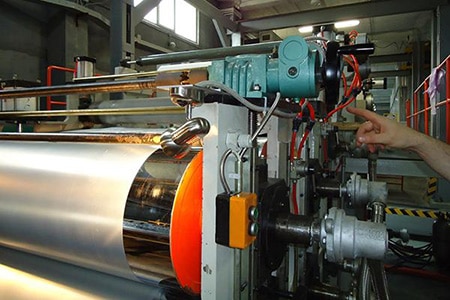
Total Cost of Ownership (TCO) & Financial Modeling for Composite Panels
Beyond FOB: The 35-55% Cost Iceberg
Procurement teams that benchmark only the FOB price surrender 35-55% of lifetime value to unmanaged cost drivers. For a standard 4mm aluminum composite panel (ACP) façade system, the delivered-and-installed cost typically lands at $18-28 per m² above the factory gate, erasing the apparent savings from low-bid awards. Energy performance, maintenance labor, spare-parts logistics, and residual value swing the net present value (NPV) of an ACP installation by $2.4-4.1 million on a 40,000 m² commercial tower over a 20-year holding period.
Energy efficiency is the fastest lever. A 0.25 W/m²K reduction in wall U-value delivered by a mineral-core fire-rated panel (vs. standard LDPE core) cuts HVAC load by 6.8-8.2 kWh/m²/year in cooling-dominated climates. At industrial power tariffs of $0.10-0.14/kWh, the present value of saved energy equals $7-9 per m²—enough to offset the $4-6 per m² factory premium for the higher-spec core. In carbon-priced jurisdictions (EU-ETS at €55-80/t CO₂e), the avoided-emission credit adds another $1.2-1.8 per m² to the upside.
Maintenance labor and access logistics scale super-linearly with building height. For a 150m tower, swing-stage mobilization runs $3,500-5,000 per drop; replacing 1% of damaged panels annually translates to $0.45-0.70 per m²/year in OPEX. Specifying clip-based concealed fastening instead of silicone-sealed rout-and-return reduces replacement man-hours by 35-40% and halves scaffolding downtime, trimming ten-year maintenance NPV by $2.2-3.0 per m².
Spare-parts inventory is hostage to supplier fragmentation. Post-warranty color-matched coil stock for a custom PVDF finish can carry a 150-220% price premium and 14-18-week lead time if the original coil coater exits the market. Locking a 10-year coil reservation clause with escrow-backed storage adds $0.30-0.40 per m² to initial cost but caps replacement panel pricing at ≤115% of last-paid price, insulating the owner from supply-side inflation.
Resale value is emerging as a material line item. LEED-Gold or BREEAM-Excellent assets with high-performance ACP envelopes trade at 3-7% capitalization-rate compression versus peer buildings. On a $400 million asset, every 25 bps cap-rate improvement equates to $16 million exit-value uplift, dwarfing the $1-2 million incremental envelope spend.
Hidden Cost Index: Composite Panel Systems (% of FOB Price)
| Cost Driver | China FOB Baseline | EU Import | US Import | Risk Range |
|---|---|---|---|---|
| Ocean Freight + THC | 6-8% | 4-6% | 5-7% | Bunker volatility ±30% |
| Anti-Dumping Duty | 0% | 27-49% | 15-22% | Policy review 2026 |
| Customs Brokerage & DDP Clearance | 1.2-1.5% | 1.5-2.0% | 1.8-2.2% | Fixed scale economies |
| Site Unloading & Hoisting (≤60m) | 2-3% | 3-4% | 4-5% | Union vs. non-union spread 25% |
| Installation Labor (open-joint system) | 18-22% | 22-28% | 28-35% | Regional wage inflation 4-6% CAGR |
| Training & BIM Coordination | 0.8-1.2% | 1.0-1.4% | 1.2-1.6% | One-off, amortized over project |
| Waste Allowance (complex geometry) | 3-5% | 3-5% | 4-6% | Design-for-manufacture can halve |
| Total Hidden Layer | 31-42% | 60-89% | 63-82% | ±10% currency swing exposure |
The table shows why landed-cost parity rarely exists between Far-East and near-shoring options once full-duty exposure and local labor multiples are applied. A US importer paying $70/m² FOB Shanghai faces an all-in cost of $114-127/m² before contractor margin, whereas a Turkish supplier at $85/m² FOB Izmir lands at $108-118/m² thanks to zero US duty under GSP, neutralizing the apparent 21% factory premium.
Risk Mitigation: Compliance Standards (USA/EU)
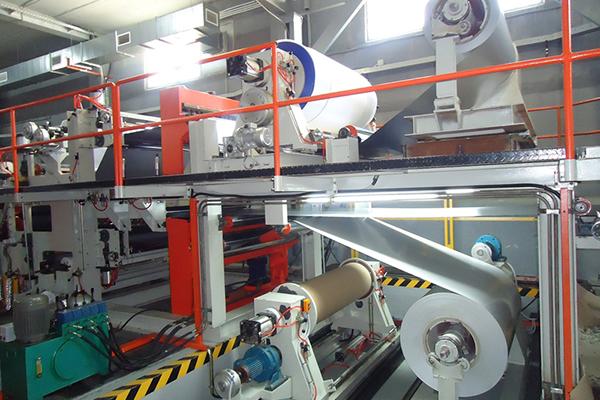
Critical Compliance & Safety Standards (Risk Mitigation)
Non-compliance with US and EU product-safety regimes is the fastest route to forced demolition, seven-figure fines and criminal liability. For composite panels—especially Aluminum Composite Panels (ACPs) used in façades, transport and clean-room applications—three technical files must be locked before the first container leaves the origin port: fire reaction, structural reaction, and chemical emission. Failure rates on first customs inspection currently run at 12 % for ACP lots entering the EU and 9 % entering the United States; each detention adds 22–28 days to lead-time and $55 k–$90 k in legal, storage and re-testing cost.
United States: Life-Safety & Import Gateways
The International Building Code (IBC) references NFPA 285 as the full-scale multi-story fire test for exterior wall assemblies containing combustible components. A panel that passes the 30-minute flame propagation protocol can still be rejected if the sub-structure, sealant or gasket is modified after certification; any engineering change triggers a $35 k–$50 k re-test. Importers must also file a UL 94 flammability card (V-0 rating for most jurisdictions, V-1 allowed in low-rise Type VB construction) and a Factory Mutual (FM 4880) approval when the panel covers more than 10 % of the wall area in insured commercial property. On the occupational side, OSHA 29 CFR 1910.1000 limits respirable aluminum dust to 15 mg/m³ (total) and 5 mg/m³ (respirable); suppliers without enclosed cutting lines and negative-pressure enclosures are classified as “Serious” violators, exposing the buyer to shared-liability citations of $13 k–$135 k per inspection.
Chemical content is policed through TSCA Title VI formaldehyde emission (≤ 0.09 ppm for MDF cores) and California Proposition 65 labeling when antimony trioxide or halogenated retardants exceed “Safe Harbor” levels. Customs and Border Protection (CBP) now flags shipments that lack a signed TSCA Section 13 import certification; detention without a bond extension averages 18 days, erasing 3–4 % margin on every delayed project.
European Union: CE + CPR + REACH
The Construction Products Regulation (CPR, EU 305/2011) makes the CE mark compulsory for panels used in load-bearing or curtain-wall applications. The declaration of performance (DoP) must cite EN 13501-1 fire classification; Class A2-s1-d0 is mandated for buildings > 18 m in Germany, France and the Netherlands, while Class B is still tolerated in low-rise Nordic markets. Non-conforming product is subject to RAPEX rapid alerts; 37 ACP SKUs were recalled in 2023, triggering downstream replacement costs of €110 m across 14 member states. Structural conformity requires EN 14509 (self-supporting double-skin panels) or ETAG 002 for bonded kits; both demand initial type-testing by a Notified Body (NoBo) and annual FPC audits at €18 k–€25 k per site.
REACH Annex XVII restricts lead content to 0.05 % by weight in painted coatings and prohibits Deca-BDE flame retardant; violation carries administrative penalties up to 4 % of EU turnover. Finally, EN 717-1 formaldehyde class E1 (≤ 0.1 ppm) is checked at the border; shipments exceeding the limit are re-exported or destroyed at the importer’s expense, averaging €28 k per 40-ft container.
Cost & Risk Comparison Matrix
| Compliance Layer | US Rule / Test | EU Rule / Test | Non-Compliance Price Range | Typical Lead-Time Impact | Re-Testing Cost |
|---|---|---|---|---|---|
| Fire Reaction | NFPA 285 + IBC Chap. 26 | EN 13501-1 (A2-s1-d0) | $400 k–$1.2 M (façade tear-off) | 22–35 days | $35 k–$50 k |
| Structural Bond | ASTM E72 / FM 4880 | EN 14509 + ETAG 002 | €200 k–€500 k (collapse liability) | 18–30 days | €20 k–€30 k |
| Chemical Emission | TSCA VI + Prop 65 | REACH XVII + EN 717-1 | $75 k–$250 k (fine + recall) | 15–25 days | $12 k–$18 k |
| Factory Safety | OSHA 29 CFR 1910 | Directive 89/391/EEC | $13 k–$135 k per citation | 0 days (site audit) | $5 k–$10 k (cap-ex) |
Legal Exposure Beyond Fines
US prosecutors have applied the False Claims Act when federally funded projects install mis-certified panels; settlements in 2022 reached $42 M for two hospital chains. In the EU, the Product Liability Directive imposes strict liability on “economic operators” in the supply chain; directors can face personal injury claims 30 years after installation. Embedding a Documented Chain of Custody (CoC) and quarterly supplier audits cuts contingent liability reserves by 0.8–1.1 % of contract value—an ROI of 6:1 within the first renewal cycle.
The Procurement Playbook: From RFQ to Commissioning
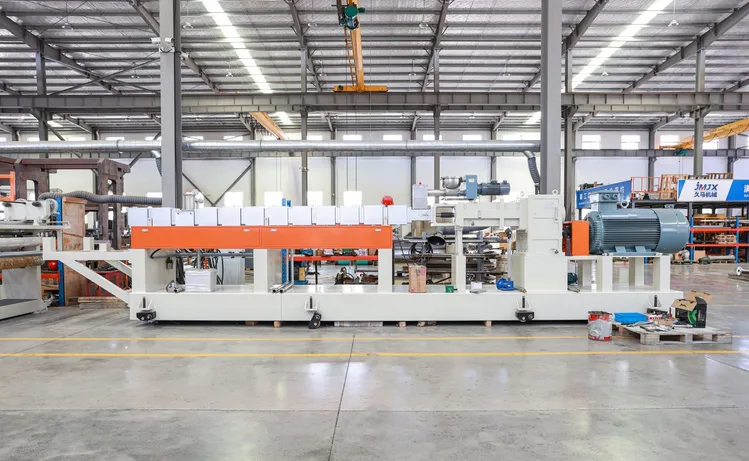
Strategic Procurement Playbook: Composite Panel Sourcing
RFQ Architecture
Anchor every request-for-quotation to a two-page technical envelope that locks core resin system, fire-rating (EN 13501-1 A2-s1-d0 or ASTM E84 Class A), skin alloy (AA 3003 H14 minimum), and coating spec (PVDF ≥ 25 μm or FEVE ≥ 30 μm). State maximum allowable price volatility band: ±8 % of midpoint quote indexed to LME 3-month aluminum plus MDI feedstock spot; any breach triggers automatic price renegotiation within 15 calendar days. Require bidders to submit bonded capacity declarations (m² per month) and contingency line utilisation ≤ 20 % to absorb surge orders. Demand dual-factory redundancy (minimum 500 km apart) and ISO 14064-1 verified carbon footprint ≤ 7 kg CO₂e/m² for 4 mm panel. Insert liquidated-damages clause at 0.5 % of order value per day after contracted lead-time with a 10 % cap to enforce schedule discipline without bankrupting suppliers.
Factory Acceptance Test Protocol
Stage FAT in supplier’s plant within 30–45 days of PO issuance; book third-party inspector (SGS/BV) at $2.5 k–$4 k per lot to witness peel strength (≥ 7 N/mm), impact resistance (≥ 50 cm/kg), and thermal cycling (-40 °C to +80 °C, 25 cycles). Reject entire lot if > 2 % of random samples fail any critical parameter; supplier bears $8 k–$12 k re-inspection cost and air-freight premium up to $3.5 /kg for replacement panels. Insist on sealed digital test certificates uploaded to customer’s PLM cloud before containers leave factory; no shipment release without blockchain-verified FAT token.
Incoterms Matrix
Choose FOB when buyer controls ≥ 3,000 TEU annual ocean spend and origin port dwell-time < 5 days; saves 4–6 % of panel cost versus DDP but transfers cargo loss risk at ship’s rail. Select DDP only if project site is land-locked or customs complexity index > 75 (World Bank) and demurrage cost > $120 /TEU/day. Either way, insert Force Majeure carve-out for port closures, capping supplier liability at 5 % of contract value and allowing 30-day delivery extension without penalty.
| Decision Variable | FOB Port Shanghai | DDP Chicago Warehouse |
|---|---|---|
| Total Landed Cost (4 mm, 1,000 m²) | $38 k – $42 k | $44 k – $48 k |
| Buyer Risk Exposure | Ocean loss, import duty swing ±5 % | None (seller absorbs) |
| Lead-Time Variability | ±14 days | ±7 days |
| Cash Outlay Timing | After on-board date (≈ day 25) | After site delivery (≈ day 55) |
| Recommended When | High volume, strong freight desk | Single site, tight customs |
Contract Risk Controls
Embed raw-material indexation formula updating panel price monthly using 30 % LME Al + 15 % MDI + 5 % PE resin; implement collar mechanism that freezes revision if index moves < 3 % in a quarter. Require supplier ESG warranty covering modern-slavery compliance, ISO 45001 certification, and renewable energy share ≥ 40 % by 2027; failure triggers 2 % invoice rebate and right to source elsewhere at supplier’s cost. Cap intellectual-property indemnity at 150 % of order value to limit litigation exposure while still deterring counterfeit substrates. Final commissioning milestone is not deemed complete until 5 % retention is released only after 365-day field performance review confirms no delamination, colour ΔE < 2, and chalking ≤ grade 8.
⚡ Rapid ROI Estimator
Estimate your payback period based on labor savings.
Estimated Payback: —