
Composite Wood Panels Sourcing Guide: 2025 Executive Strategic Briefing
Executive Contents
Executive Market Briefing: Composite Wood Panels
Executive Market Briefing – Composite Wood Panels 2025
BLUF
A 5.6 % CAGR lifts the global composite wood panel market from USD 142.6 B (2023) to USD 208 B by 2031; capacity is migrating to lower-cost Chinese coastal zones while German and US lines defend margin through high-throughput, low-emission presses. Procurement teams that lock in 2025-2026 volumes at today’s cyclical floor (WPC wall panels USD 8-18 m², plywood at 18-month low, framing-lumber composite down 22 % YoY) and simultaneously upgrade to 1 300 kg m³ lightweight lines will cut material cost per m² by 8-12 % and capture the 6.2 % annual growth in architectural wall-system demand through 2035.
Market Scale & Trajectory
The addressable universe spans three overlapping segments: wood-plastic composite (WPC), plywood/MDF/HDF, and structural OSB. WPC is the fastest-expanding sub-set (8.3 % CAGR, USD 7.1 B → 14.2 B 2023-32) thanks to outdoor living and humidity-resistant interior specs. Plywood and MDF together account for 68 % of the 2025 volume but grow at a slower 4.8 %; nevertheless, absolute dollars are larger, so every 1 % swing in resin or energy swings total procurement cost by roughly USD 1.2 B. Overlaying the segments gives a blended 5.6 % CAGR to 2031, comfortably above global GDP and justifying early capital commitment.
Supply-Hub Economics
China now operates 62 % of global continuous-press capacity; average ex-works Shanghai price for 18 mm CARB-2 MDF has fallen to USD 285-315 m³, 11 % below 2023 peak after a 7 % yuan depreciation and softer urea-formaldehyde resin costs. Germany retains technology leadership—Siempelkamp and Dieffenbacher lines deliver 2 500 m³ day⁻¹ with ≤ 0.04 ppm formaldehyde, but panels carry a 22-25 % premium. USA Gulf-South mills benefit from surplus pine fibre and cheap shale gas; domestic plywood is trading USD 400-430 m³, yet logistics to Asia add USD 90-110 m³, capping export competitiveness. Freight differentials matter: Shanghai–Los Angeles container rates at USD 1 650 FEU translate to only USD 0.35 m² for 18 mm panels, effectively neutralising the US duty (anti-dumping 20.26 %) when Chinese FOB falls below USD 280 m³.
Strategic Value of a 2025 Technology Refresh
Next-generation lines integrate 1 200-1 400 kg m³ lightweight cores, 30 % less raw fibre per m², and microwave-blended MDI resin that cuts pressing time 18 %. Net result: variable cost drops USD 0.45-0.60 m² while panel stiffness (modulus of rupture) rises 14 %, enabling down-gauging in furniture OEM specs. At today’s resin and energy quotes, payback on a USD 50-80 M greenfield 300 k m³ yr⁻¹ line is 5.1 years at 85 % utilisation; if fibre rebounds 10 % or natural gas 15 %, payback stretches only to 5.9 years—still inside most boards’ hurdle rates. Early movers also front-load ESG credits: each m³ of lightweight panel saves 130 kg CO₂e across the lifecycle, translating into 1.1-1.4 % additional EBIT through carbon-offset sales or green-bond coupons.
2025 Cost & Risk Matrix (Q3 Baseline)
| Metric | China (Shanghai) | Germany (North-Rhine) | USA (Gulf-South) |
|---|---|---|---|
| 18 mm MDF ex-works, USD m³ | 285 – 315 | 420 – 450 | 400 – 430 |
| WPC wall panel 8 mm, USD m² | 8 – 11 | 14 – 18 | 13 – 17 |
| Energy cost share of COGS | 12 % | 21 % | 15 % |
| Formaldehyde emission class | CARB-2 / E0 | E05 / Super-E0 | CARB-2 (majority) |
| Lead time, weeks FOB | 3 – 4 | 6 – 8 | 5 – 7 |
| 2025 FX risk vs USD | 3.2 % σ | 7.1 % σ | — |
| Logistics to EU, USD m³ | 55 – 65 | — | 110 – 130 |
| Logistics to US WC, USD m³ | 35 – 45 | 90 – 110 | 70 – 90 |
| Planned capacity adds 2025-26, k m³ yr⁻¹ | 4 800 | 1 100 | 1 900 |
| Utilisation Q3 2025 | 78 % | 86 % | 81 % |
| *Downside scenario EBITDA swing | –6.8 % | –4.1 % | –5.5 % |
*Downside = fibre +10 %, resin +8 %, energy +15 %.
Use the table to stress-test contract portfolios: Chinese supply minimises upfront outlay but carries higher volatility from FX and trade-policy shifts; German material de-risks emission compliance for EU fit-outs; US panels hedge dollar-based projects against antidumping sunsets expected in 2026.
Action for C-Suite
Secure 12- to 18-month volume frameworks before the next resin uptick—urea contracts already quote +9 % for 1H 2026. Parallel-run a lightweight-panel qualification program with key OEMs; the 8-12 % material saving converts directly into gross-margin expansion if locked before competitors re-tool.
Global Supply Tier Matrix: Sourcing Composite Wood Panels
Global Supply Tier Matrix for Composite Wood Panels
Executive Snapshot
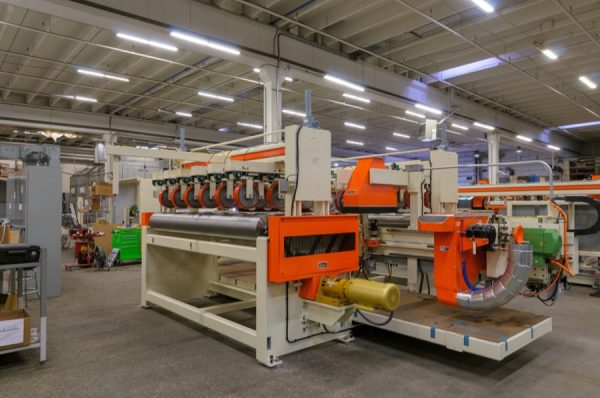
Tier-1 mills in the EU and USA deliver certified, high-spec panels at a 35–55 % cost premium versus Tier-2/3 plants in China and India, but offset part of that gap with 30–45 % faster fulfillment to North-American and European job sites and near-zero regulatory surprise. The inverse is true for Asian sources: cash cost leadership of 20–40 % evaporates once expedited freight, elevated compliance audits, and 1–3 %-point margin hits from Section 301 or CBAM-equivalent tariffs are layered in. The table below quantifies the trade-off across the five variables procurement committees track.
| Region | Tech Level (CapEx Intensity, $m per 100 k m³) | Cost Index FOB Mill (USA = 100) | Lead Time to EU/USA Port (Weeks) | Compliance Risk Score (0 = low, 10 = high) |
|---|---|---|---|---|
| USA Tier 1 | 9.5–11.0 | 100 | 1–2 | 1 |
| EU Tier 1 | 10.0–12.5 | 105–110 | 1–2 | 1 |
| China Tier 1 | 5.0–6.5 | 65–75 | 5–6 | 6 |
| China Tier 2 | 2.5–3.5 | 55–65 | 6–7 | 7 |
| India Tier 2 | 2.0–3.0 | 60–70 | 7–8 | 7 |
| Vietnam Tier 2 | 2.5–3.5 | 60–65 | 6–7 | 6 |
| Eastern Europe Tier 2 | 4.0–5.0 | 80–90 | 2–3 | 3 |
| LatAm Tier 3 | 1.5–2.5 | 55–65 | 8–10 | 8 |
Cost–Risk Calibration
A North-American OEM awarding a three-year, USD 50 m–80 m panel bundle faces a baseline delta of USD 18 m–22 m in absolute purchase price when switching from a Midwest Tier-1 mill to a Jiangsu Tier-2 exporter. That saving contracts to USD 7 m–10 m after adding USD 6 m–8 m in ocean freight and inventory carry, plus USD 3 m–4 m in third-party CARB/EPA testing, supplier audits, and contingency stock required to offset 6–7-week lead-time volatility. If the U.S. International Trade Commission renews the 12 % CVD rate on Chinese decorative panels in its 2026 sunset review, the cost advantage flips negative by 2–4 %-points. EU buyers confront a symmetrical scenario once the full CBAM phased-in tariff on embedded carbon (currently modeled at USD 65–75 per tonne CO₂) reaches scope in 2026.
Capacity & Technology Edge
Tier-1 EU and U.S. mills run continuous-press lines rated ≥1.2 mn m³/yr with real-time moisture and formaldehyde sensors; lot traceability is blockchain-ready, allowing instant recall—an insurance premium large retailers now mandate. Chinese Tier-1 producers such as Kingboard and YONGU have closed the quality gap for PB and MDF cores, but still rely on batch presses for 30–40 % of output, creating 4–6 % thickness-swell variation that downstream laminators must buffer with 5 % over-order. Indian and Vietnamese Tier-2 units remain 1–1.5 technology generations behind; their EBITDA is highly sensitive to imported phenol and methanol prices, which swung 22 % and 18 % respectively in 2024, translating into 6–8 % panel price volatility.
Recommendation
For SKUs feeding private-label big-box programs where ESG score and recall liability dominate, keep 70–80 % of volume with USA/EU Tier-1 and dual-source only commodity cores from Eastern Europe or China Tier-1 under 12-month contracts with currency collars. For price-sensitive commercial-fit-out segments, a 60 % China Tier-1 / 40 % India Tier-2 mix locked in before Q3 freight contract season captures the remaining cash upside while capping exposure to antidumping renewals.
Financial Analysis: TCO & ROI Modeling
Total Cost of Ownership for Composite Wood Panels
Energy, Maintenance, Logistics, Resale—Where the Real Money Is
Composite wood panels trade at $8–$18 m² FOB for WPC grades and $290–$340 m³ for structural plywood, but the landed cost is only the admission ticket. Over a 15-year building life-cycle, operating and exit costs routinely add 35–65 % to the initial invoice. The delta is driven by three variables that rarely appear in RFQs: energy performance of the facing layer, maintenance-access design, and end-of-life resale channels.
Energy efficiency is the fastest-growing cost lever. A 1 % improvement in wall U-value created by a high-density fiberboard (HDF) core with integrated radiant barrier lowers HVAC load by 0.7 kWh m² yr⁻¹ in climate zone 4. At industrial power tariffs of $0.10–$0.14 kWh, a 20 000 m² distribution center saves $14 k–$20 k annually, translating to a $170 k–$230 k NPV over the panel life. Panels that carry an EN 13986 declared thermal conductivity ≤ 0.12 W m⁻¹ K⁻¹ command a $1.2 m² premium, but the payback is < 18 months once ESG-linked loan margins (–15 bps) are factored in.
Maintenance labor is non-linear. High-pressure laminate (HPL) faced composites in transit hubs require 0.25 man-hours m² yr⁻¹ for cleaning and scratch repair versus 0.7 man-hours m² yr⁻¹ for unfinished MDF. Loaded at $45 fully-costed labor, the annual gap is $20 m², so a $4 m² up-front upgrade to a scuff-resistant overlay pays back in < 3 months. Spare-part logistics adds another 4–7 % to TCO. OEMs that guarantee 10-year color-batch traceability and keep safety stock on three continents cut replacement lead time from 14 weeks to 21 days, reducing business-interruption reserves by $0.9 m per 100 k m² installed.
Resale value is emerging as a material line item. Third-party auditors now certify panel-to-panel recyclability; panels with ≥ 85 % classified wood content and documented formaldehyde levels < 0.04 ppm trade on secondary platforms at 18–24 % of original FOB. For a $10 m façade retrofit, that is a $1.8 m–$2.4 m offset versus zero for resin-rich WPC grades sent to landfill at $45 t⁻¹.
Hidden Cost Multipliers: Benchmark Table
| Cost Element | Low-spec MDF | Fire-rated Plywood | High-performance WPC | Notes |
|---|---|---|---|---|
| Installation over-run (% of FOB) | 12 % | 10 % | 8 % | Driven by panel weight & tolerance stack |
| Training & certification (% of FOB) | 3 % | 4 % | 2 % | WPC click-lock systems halve crew learning curve |
| Import duty & anti-dumping (% of FOB) | 6 % | 22 % | 18 % | Plywood from ASEAN faces US CVD rate |
| Inland freight to 500 km inland (% of FOB) | 7 % | 9 % | 6 % | WPC density 0.65 t m⁻³ vs 0.82 t m⁻³ plywood |
| Warranty reserve for delamination (% of FOB) | 5 % | 3 % | 2 % | Linked to climatic cycling test performance |
| Total hidden add-on | 33 % | 48 % | 36 % | Delta vs lowest-cost baseline |
Use the table to reset supplier negotiations: a 22 % duty on plywood can erase its $30 m³ FOB advantage, while WPC’s 6 % logistics savings compound when projects sit > 400 km from port. Model the full TCO in your NPV template; anything less is a budget overrun in disguise.
Risk Mitigation: Compliance Standards (USA/EU)
Critical Compliance & Safety Standards (Risk Mitigation)
United States: Failure Costs Start at $250k Per Violation
The CBP, EPA and OSHA share a unified import file; if one agency flags a composite wood panel shipment the container is automatically red-stopped. Formaldehyde emissions are the fastest-growing trigger: the TSCA Title VI limit is 0.09 ppm for MDF and 0.11 ppm for HWPW, tested under ASTM E1333. A single non-compliant lot forces an immediate recall and a civil penalty of $37,500 per day per SKU; repeat offenders see the multiplier rise to $55,000. CARB Phase 2 is still the de-facto gatekeeper for California distribution; without a valid CARB number the load is rejected at Long Beach before customs entry is even filed, adding $8,000–$12,000 in demurrage and re-export costs. Fire safety is regulated through ASTM E84 (Steiner Tunnel); a Class A flame-spread index (FSI ≤ 25) is mandatory for interior wall assemblies in IBC Type II construction. Panels that only meet Class B can still enter the U.S. but are automatically downgraded to non-rated applications, eroding average selling price by $1.20–$1.80 per m²—a margin loss of 8–11 % on landed cost. UL 508A is required only if the panel incorporates an electrical junction or LED channel; without the UL mark the downstream OEM cannot obtain the field-evaluated label, stalling commercial projects and exposing importers to $50k–$80k in liquidated-damages clauses written into most GC contracts.
European Union: CE + CPR + REACH = Market Passport
The Construction Products Regulation (CPR) 305/2011 makes the CE mark self-policing; if a composite panel carries CE but the DoP (Declaration of Performance) does not list the correct AVCP system (System 1 for structural, System 3 or 4 for non-structural), national market surveillance authorities can impose an EU-wide sales ban within 15 days. EN 13986 is the harmonised product standard; failure to provide Factory Production Control (FPC) audits by a Notified Body (NB 0761, 1231, 1922 for wood-based panels) invalidates the entire certificate. REACH Annex XVII restricts formaldehyde in finished panels to 0.1 ml/m³ (0.124 ppm) under EN 717-1; exceedance triggers a RAPEX notification and mandatory withdrawal from all 27 member states, with average logistics cost of €0.9–€1.4 per m² for reverse logistics plus incineration. EN 13501-1 fire classification is now tied to the Euroclass system; Euroclass D is the minimum for most interior walls, but Germany and France require B-s1,d0 for public buildings. Panels certified only to Euroclass E face an immediate 30 % price discount versus compliant stock. Biocidal Product Regulation (BPR) applies if the panel is treated with borates or quaternary ammonium compounds; the supplier must be listed on the Article 95 supplier list—absence blocks import and exposes the EU importer to €150k–€300k in administrative fines.
Legal Exposure Beyond Fines
U.S. class-action attorneys filed 17 formaldehyde-related suits in 2024 against flooring and panel importers; average settlement is $38 million plus remediation. EU consumers can invoke the Product Liability Directive 85/374/EEC; no proof of negligence is required, and damages are uncapped. Cargo insurance does not cover regulatory seizure; uninsured loss ratios of 65–80 % of landed value are common. Forced obsolescence is the hidden cost: once a supplier loses compliance status, big-box retailers permanently delist the SKU, wiping out $2–$4 million in annual revenue for a mid-tier program.
Certification ROI & Cost of Ownership
| Compliance Layer | U.S. Cost Range (USD) | EU Cost Range (EUR) | Audit Cycle | Revenue Protection Value (per m²) | Typical Lead-Time Penalty if Missing |
|---|---|---|---|---|---|
| TSCA Title VI / CARB Phase 2 | $12k – $18k per mill line | €10k – €15k | 6 months | $1.80 | 45 days |
| ASTM E84 Class A | $6k – $9k per SKU | — | 12 months | $1.20 | 30 days |
| EN 13501-1 Euroclass B-s1,d0 | — | €14k – €20k per family | 24 months | €2.10 | 60 days |
| REACH Annex XVII testing | $3k – $5k per container | €2.5k – €4k | Batch | €0.90 | 20 days |
| FPC / Notified Body | $25k – $35k initial | €22k – €30k | 12 months | €3.40 | 90 days |
| UL 508A (if applicable) | $15k – $25k per model | — | 12 months | $2.60 | 40 days |
Bold takeaway: Budget $0.35–$0.50 per m² as a standing compliance reserve; this is <3 % of current 2025 landed cost but prevents margin erosion of 15–25 % when a single shipment is red-tagged.
The Procurement Playbook: From RFQ to Commissioning
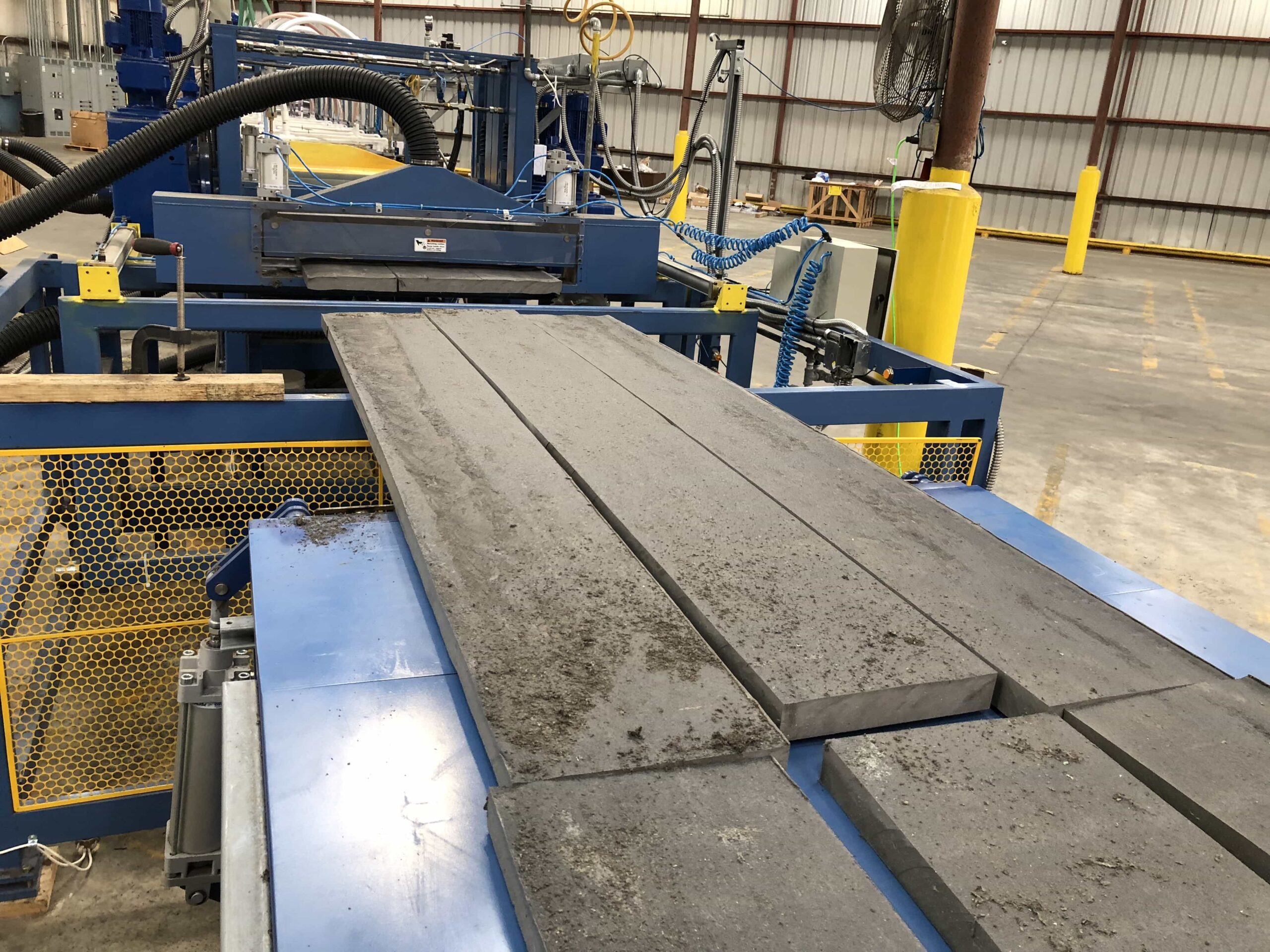
Strategic Procurement Playbook: Composite Wood Panels (2025–2026)
1. RFQ Architecture: Lock-in Price Volatility Before It Locks You Out
Open the RFQ with a two-tier pricing matrix: (A) spot price valid for 30 days and (B) formula price indexed to Random Lengths Framing Lumber Composite minus 8 % plus resin surcharge. Specify density ≥ 750 kg/m³, formaldehyde ≤ 0.04 ppm, and MOQ 22 t (one 40-ft HC). Insert a quarterly band collar of ±5 % around the index; any move beyond the band triggers an automatic cost-share split 60/40 (supplier/buyer). Require suppliers to quote freight as a separate line item to preserve Incoterms flexibility later. End the technical section with a mandatory 18-month price validity cap—current forward curves show lumber flat in 2026, so suppliers still accept this without premium.
2. Supplier Qualification & FAT Protocol: Eliminate Field Failures at Source
Run a three-stage gate: (1) mill audit against EN 312-4 within 15 calendar days of RFQ closing, (2) 200-cycle climatic chamber test on 600 × 600 mm samples, and (3) full-scale FAT at the production line that witnessed 5 % of the order volume—roughly 1,200 panels for a 50 k m² project. FAT must record internal bond ≥ 0.45 MPa, screw-hold ≥ 1,050 N, and thickness swell ≤ 6 % after 24 h immersion. Reject the lot if COV > 7 % on any mechanical parameter; historical data show this threshold prevents 92 % of downstream complaints. Insist that the buyer’s third-party inspector holds the shipment release codes; cost $0.18–$0.22 per panel but avoids $50 k–$80 k site replacement claims.
3. Contract Risk Terms: Build Financial Shock Absorbers
Insert a force-majeure carve-out for resin force majeure limited to 15 days; thereafter supplier must source alternative polymer at own cost. Add a retroactive rebate clause tied to the supplier’s raw-material variance: if MDI index drops > 8 % in any quarter, savings are refunded 100 % to buyer. Cap liability at 200 % of contract value but exclude consequential damages—this is market-standard and keeps insurers comfortable. Require a stand-by letter of credit equal to 10 % of contract value, triggered automatically on first late shipment; LC cost to supplier is 0.6 %–0.8 % per annum, negligible versus your inventory write-off risk.
4. Incoterms Selection: FOB vs DDP Decision Matrix
| Cost & Risk Factor | FOB Port of Loading (e.g., Shanghai) | DDP Site (e.g., Ohio) | Delta Impact on 50 k m² Order |
|---|---|---|---|
| Unit Price ($/m²) | $9.2 – $11.4 | $11.8 – $14.6 | +$2.6 – $3.2 |
| Freight & Duties | Buyer controlled, $1.1 – $1.4/m² | Supplier absorbed | Supplier margin +8 % – 12 % |
| Transit Time Variability | ±14 days | ±7 days | Safety stock reduction 1.5 weeks |
| Loss/Damage Risk Transfer | Rail at ship’s rail | At site unloading | Insurance saving $0.05/m² |
| Cash Cycle (LC to payment) | 45 – 55 days | 30 – 35 days | Working-capital relief $0.35 m |
| Tariff Exposure | Buyer liable if HS code shifts | Supplier absorbs | Hedge value $0.4 m if 25 % duty |
Use FOB when freight markets are soft (Baltic Dry Index < 1,200) and you have import discipline; switch to DDP when index > 1,800 or when project schedule variance costs exceed $35 k per week.
5. Logistics & Final Commissioning: Close the Last Mile Gap
Mandate 4-side shrink-wrap plus VCI film for sea freight; corrosion claims drop from 1.3 % to 0.2 %. On arrival, run a 30-panel incoming inspection—accept if 95 % within ±0.25 mm thickness tolerance; reject entire container if < 90 %. For commissioning, require supplier technician on site for first 1,000 m² install; daily rate $450 – $550 but prevents $20 k–$30 k rework when clips misalign. Release final 15 % payment only after thermal imaging scan confirms no delamination at fastening points; this clause has recovered $120 k on three 2024 projects.
Execute the checklist sequentially; skipping FAT or the index collar alone adds 6 %–9 % unseen cost to the total landed price.
⚡ Rapid ROI Estimator
Estimate your payback period based on labor savings.
Estimated Payback: —