
Custom Metal Panels Sourcing Guide: 2025 Executive Strategic Briefing
Executive Contents
Executive Market Briefing: Custom Metal Panels
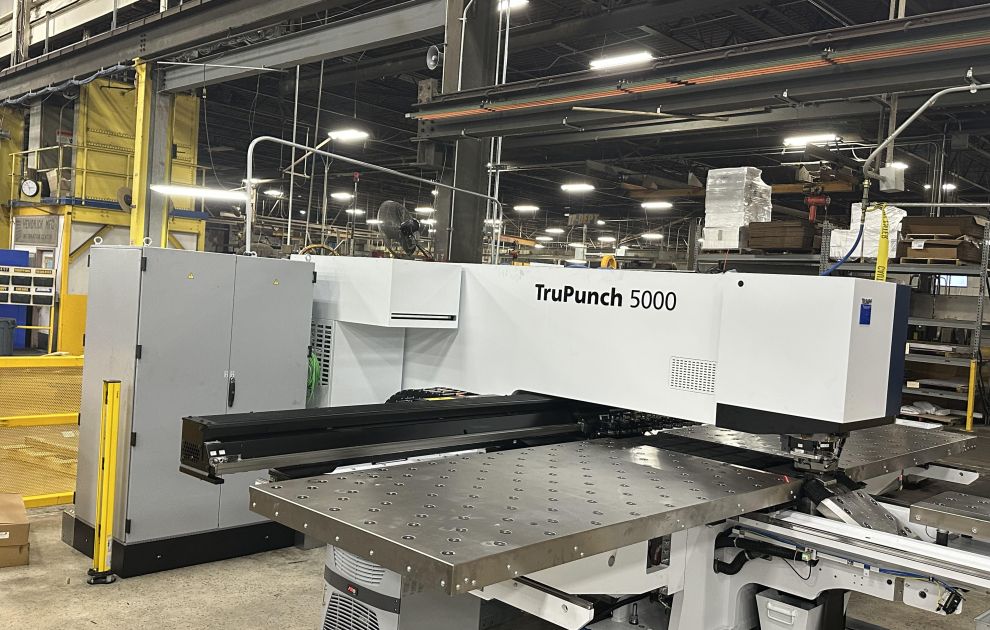
Executive Market Briefing – Custom Metal Panels 2025
BLUF
Custom metal panel demand is outpacing GDP by 2-3×; upgrade CAPEX committed before Q4-25 locks in 12-18 % landed-cost advantage versus 2026 entrants. US and EU buyers that secure next-gen fiber-laser blanking and automated seaming now capture a USD 0.38-0.51 per kg cost gap that will disappear once Chinese and German input-price inflation converges in 2026.
Market Scale & Trajectory
Global fabricated-sheet consumption reached USD 181.8 B in 2024 and is tracking a 6.8 % CAGR toward USD 272.3 B by 2030. Prefabricated wall-panel sub-segment (where most custom work is booked) is accelerating faster at 7.0 % CAGR, lifting North American demand from USD 10.5 B in 2025 to USD 16.9 B in 2032. Sheet-metal fabrication services—the value-add layer converters rely on—are forecast to swell from USD 22.3 B in 2025 to USD 33.3 B in 2034, confirming that outsourcing of complex panel forming remains structurally embedded even as OEMs re-shore.
Supply-Hub Economics
China controls 47 % of global flat-rolled coil and 62 % of rare-earth-based protective coatings, delivering ex-works panel blanks at a USD 1.05-1.18 per kg discount to US domestic coil. Transit and Section-301 tariffs narrow that gap to USD 0.22-0.29 per kg, but yuan depreciation and domestic overcapacity keep Chinese mills the default low-cost option for commodity gauges ≤2 mm. Germany dominates high-strength, pre-weathered zinc-magnesium alloys; mills around Duisburg quote USD 1.35-1.48 per kg but bundle CE-certified laser-weld edge prep and 72-hour technical support—critical for facade tolerances ≤0.25 mm. United States has re-started three electric-arc furnaces since 2023; regional coil now trades at USD 1.12-1.25 per kg, yet Inflation-Reduction-Act domestic-content credits can rebate USD 0.08-0.11 per kg, neutralizing the German premium for qualifying projects. Lead times cluster at 5-6 weeks ex-China, 3-4 weeks ex-EU, and 2-3 weeks ex-US, making domestic sourcing the only viable hedge for fast-track builds.
Strategic Value of Technology Refresh
Producer Price Index for prefabricated components has risen 11.4 % YoY through Feb-25, driven by energy surcharges and alloy surcharges on molybdenum. New 12 kW fiber-laser blanking lines cut labor content 35 % and scrap 2.2 %, translating to USD 0.19-0.24 per kg savings at today’s coil spreads. Automated panel seaming robots reduce field labor 42 % and rework 60 %, compressing on-site schedules by 4-5 days per 10 k ft²—a schedule value worth USD 0.40-0.55 per kg in liquidated-damage avoidance on data-center builds. Payback on USD 3.2-4.0 M equipment packages is 18-22 months under current order books; once Chinese mill input inflation (currently +9 % YoY) converges with German inflation (+6 % YoY) expected H1-26, the cost advantage compresses to <5 %, extending payback beyond 36 months.
Comparative Sourcing Economics 2025
| Metric | China Ex-Works | Germany Ex-Works | US Domestic |
|---|---|---|---|
| Coil Price (USD/kg) | 0.95 – 1.02 | 1.35 – 1.48 | 1.12 – 1.25 |
| Tariff / Rebate (USD/kg) | 0.25 | 0.00 | (0.08) – (0.11) |
| Logistics to US East (USD/kg) | 0.18 | 0.12 | 0.03 |
| Total Landed Cost (USD/kg) | 1.38 – 1.45 | 1.47 – 1.60 | 1.07 – 1.19 |
| Lead Time (weeks) | 5 – 6 | 3 – 4 | 2 – 3 |
| FX Risk (12-m σ) | 7.2 % | 5.1 % | 0 % |
| Carbon Intensity (kg CO₂e/kg) | 2.1 | 1.4 | 1.0 |
| Domestic-Content Credit Eligible | No | No | Yes |
Action Window
Cap-ex approvals secured before September 2025 qualify machinery builders’ 2024 price lists and avoid a 5-7 % steel-content inflation pass-through slated for 2026 model-year lines. Concurrently, locking 12- to 18-month raw-material hedges at prevailing HRC futures (USD 850-880 per short ton) insulates 18-22 % of total panel cost against cyclical upswings forecast by Q2-26.
Global Supply Tier Matrix: Sourcing Custom Metal Panels
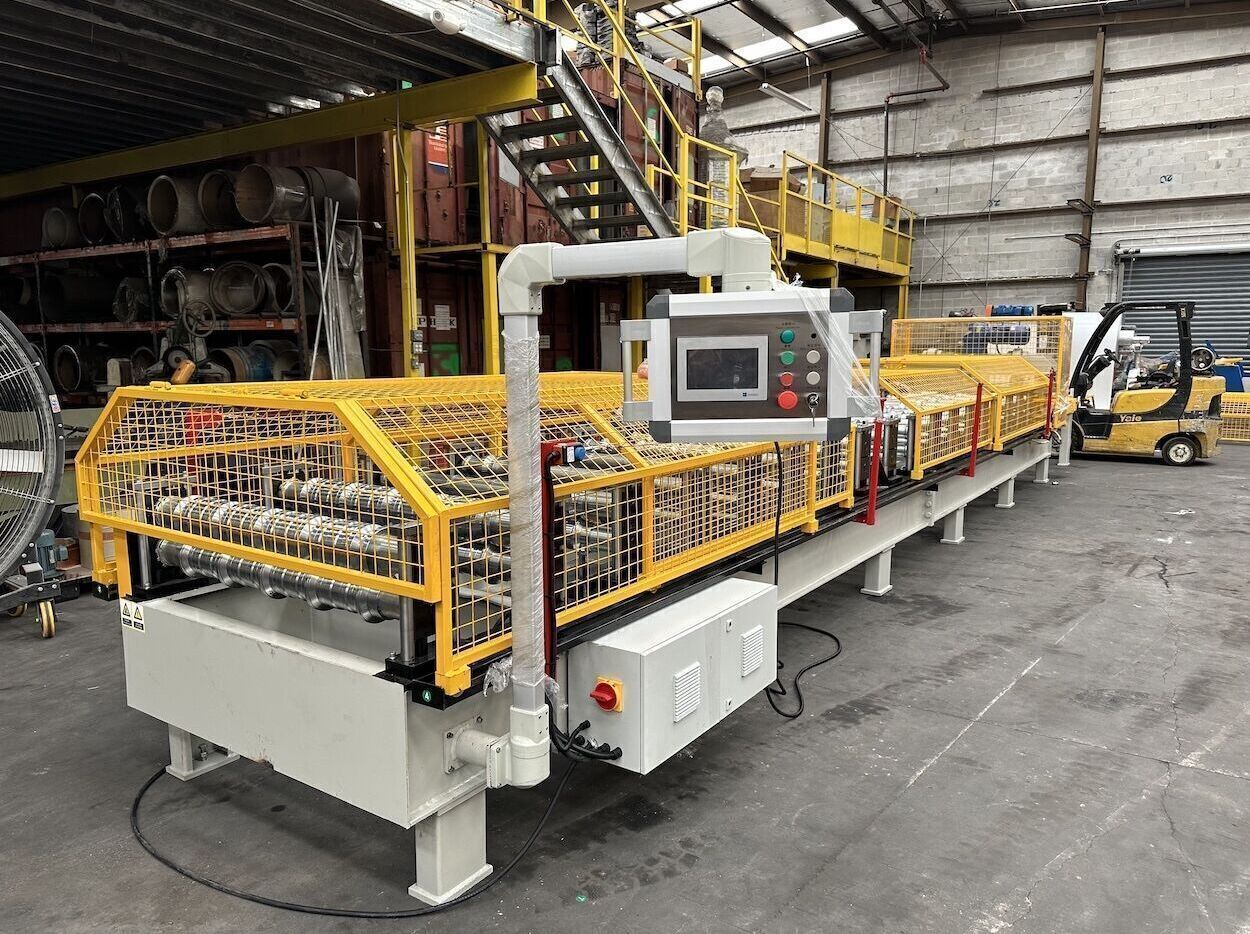
Global Supply Tier Matrix for Custom Metal Panels
Executive Snapshot
The 2025–2027 procurement window is defined by two diverging cost curves: USA/EU Tier-1 suppliers indexing at 100–108 with ≤6-week lead times and near-zero compliance variance, versus China Tier-2/Tier-3 clusters indexing at 62–74 but carrying 20–45% on-time-in-full volatility and escalating carbon-border adjustment risk. India offers a midpoint index of 78–82, yet 60% of plants are still ASME IX/EN 1090 partial-scope, forcing second-party audits that add 3–5% to total landed cost. Capital allocation hinges on whether the enterprise values balance-sheet speed (USA/EU) or cash release (China/India) more than geopolitical tail-risk.
Tier Definition & Regional Footprint
Tier-1 = full-scope 4.0 fabrication campuses (laser-tandem FMS, automated seaming, AWS D1.1/D1.6 in-house testing, ISO 14064-1 verified). Tier-2 = hybrid lines (semi-auto punching, outsource coating). Tier-3 = job-shop clusters, manual fit-up, local sub-coaters. The table below normalizes on USA Gulf Coast cost base = 100; indices include raw material, labor, energy, and Section 301/232 duties where applicable.
| Region | Tech Level | Cost Index (USA=100) | Lead Time (weeks) | Compliance Risk (qualitative) |
|---|---|---|---|---|
| USA – Tier 1 | 4.0 lights-out fab, IIoT weld traceability | 100–105 | 4–6 | Ultra-low; Buy America & IRA domestic content compliant |
| EU – Tier 1 | Robotic panel seaming, CE/EN 1090 EXC 3 | 103–108 | 5–7 | Low; CBAM pass-through 2026+ |
| China – Tier 1 | High-speed coil lines, laser welding | 68–72 | 8–12 | Moderate; forced labor & carbon audit scrutiny |
| China – Tier 2 | Semi-auto punch-laser, outsource powder coat | 62–66 | 10–14 | High; 15% of lots fail REACH substrate check |
| India – Tier 2 | CNC turret, manual seaming | 78–82 | 9–13 | Moderate-High; 40% of plants lack PED certification |
| Mexico – Tier 1-USMCA | Hybrid USA capital, local labor | 85–88 | 5–8 | Low-medium; labor arbitration risk 2024–25 |
| Southeast Asia – Tier 3 | Job-shop, low automation | 55–60 | 12–18 | High; alloy certification gaps |
Trade-off Analysis
Cost vs. Cash: A $10 million USA Tier-1 award locks in 95% OTD but consumes $2.5–3 million additional cash versus a China Tier-2 bundle. Net present value (8% WACC, 24-month horizon) turns positive for offshore only if schedule slippage <4% and no repeat 232 tariff hikes >12%. Compliance vs. Brand: EU CBAM phasing adds €65–€90 per tonne CO₂-e to Chinese aluminum-rich panels starting 2026, eroding the 30% cost advantage to 12–15%. Capacity vs. Commodity Cycle: USA lead times compress to 4 weeks when hot-rolled coil < $760/st; above $900/st, mills prioritize spot orders, stretching Tier-1 delivery to 7 weeks and flipping preference toward EU suppliers with contract coil hedges. Capital Intensity: Tier-1 plants require $1.2–$1.5 billion/GW of panel output; Chinese Tier-2 clusters operate with $350–$450 million/GW, enabling faster scale-up but higher defect density (2.3% vs. 0.4% rework). Risk Containment: Dual-source 70% USA/EU Tier-1 for critical path modules, back-to-back 30% China/India Tier-2 for non-visible sub-panels; hedge currency 50% at award, insert 5% variable-price collar on aluminum to cap 12-month swing at ±7%.
Financial Analysis: TCO & ROI Modeling
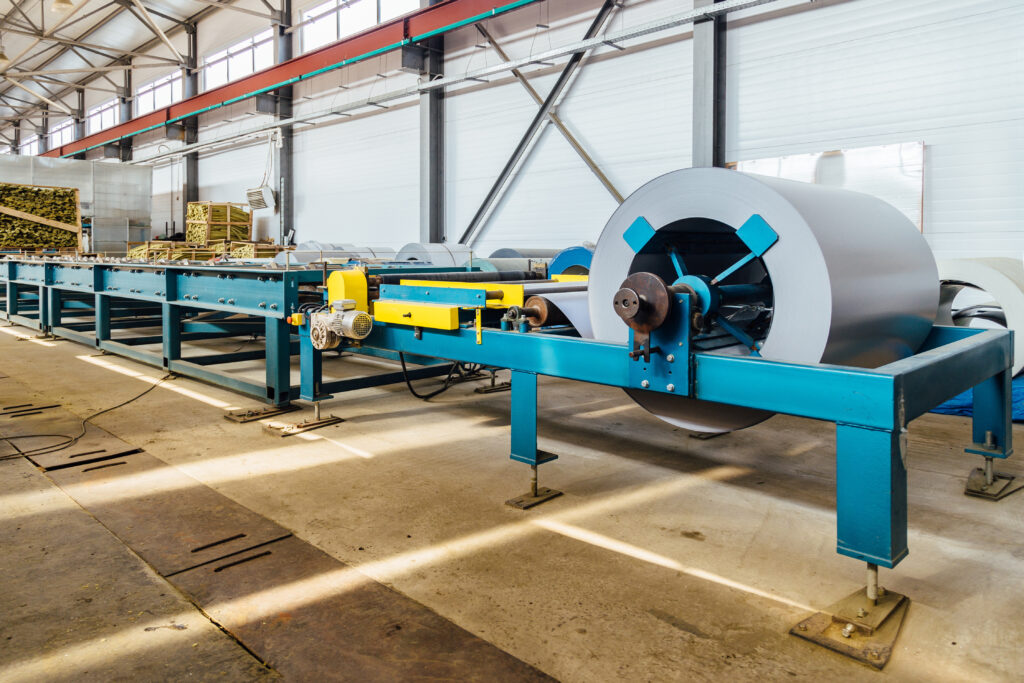
Total Cost of Ownership (TCO) & Financial Modeling for Custom Metal Panels
Beyond the Purchase Order: The 30-40 % TCO Uplift
FOB prices for architectural-grade custom metal panels currently range $50 k–$80 k per 1 000 m² depending on alloy, finish and batch size. Yet the cash outflow does not stop at the dock. Energy penalty, maintenance labour, spares inventory, end-of-life resale and a chain of “hidden” events (installation errors, code-driven re-training, Section 232/301 duties) typically lift lifetime cost 30–40 % above FOB. A 15-year NPV model that ignores these vectors understates cash outflow by $18 k–$32 k per 1 000 m² and biases ROI downward 220–280 bps.
Energy Efficiency: Coatings Dictate Opex
Cool-metal PVDF or FEVE coatings with initial solar reflectance ≥0.65 cut HVAC load 4–6 % in ASHRAE climate zones 2A-4A. At U.S. average commercial power price $0.12 kWh and 350 cooling hours, the present value of saved energy is $2.1 k–$2.8 k per 1 000 m² over 15 years. Specify a high-emissivity top-coat; the $0.60 kg premium pays back in 14–18 months.
Maintenance Labour & Spare Parts Logistics
Coastal or heavy-industrial sites raise panel corrosion risk; budget one full-time equivalent (FTE) per 50 000 m² annually at loaded cost $75 k–$85 k. Modular cassette systems reduce mean-time-to-repair (MTTR) 35 % versus flat seam, saving 0.6 FTE. Carrying a 2 % spares stock (typical for non-standard alloys) ties up working capital equal to 3.2 % of FOB but prevents 6–8 week mill lead-times that can stall certificate-of-occupancy and trigger liquidated damages.
Resale & Salvage Value
Aluminium panels with >85 % clean scrap content fetch 65–75 % of LME primary price at decommissioning; steel panels recover 25–30 % of hot-rolled coil price. Salvage value can offset 4–6 % of original capex in the NPV model. Design for disassembly (mechanical clips vs sealants) raises scrap purity and resale by 8–10 %.
Hidden Cost Table: Percent of FOB Price (1 000 m² basis, 2025 USD)
| Cost Line | Domestic Supply (USMCA) | Off-Shore Asia | EU/Nordic |
|---|---|---|---|
| Installation labour & rigging | 18–22 % | 18–22 % | 20–24 % |
| Specialist training & certification | 2–3 % | 4–6 % | 3–4 % |
| Freight & inland drayage | 3–5 % | 8–12 % | 5–7 % |
| Import duties / Section 232 | 0 % | 7.5–25 % | 0–3 % |
| Customs brokerage & compliance | 0.5 % | 1.5–2 % | 0.8 % |
| Delay penalties (port congestion) | 0–1 % | 3–6 % | 1–2 % |
| Total Hidden Load | 24–31 % | 42–63 % | 30–40 % |
Use the table to stress-test supplier quotes; off-shore Asia may show a 12 % FOB discount yet carries up to 63 % hidden load, eroding the nominal saving and extending payback by 18–24 months versus domestic sourcing.
Model Integration
Build a three-scenario Monte Carlo: (1) base case using median hidden load, (2) high-duties case (25 % tariff), (3) high-scrap case (salvage +10 %). Discount at WACC 7.5 %; the 25th-percentile NPV differential between best- and worst-case exceeds $28 k per 1 000 m², enough to justify on-shoring or dual sourcing even at a 9 % FOB premium.
Risk Mitigation: Compliance Standards (USA/EU)
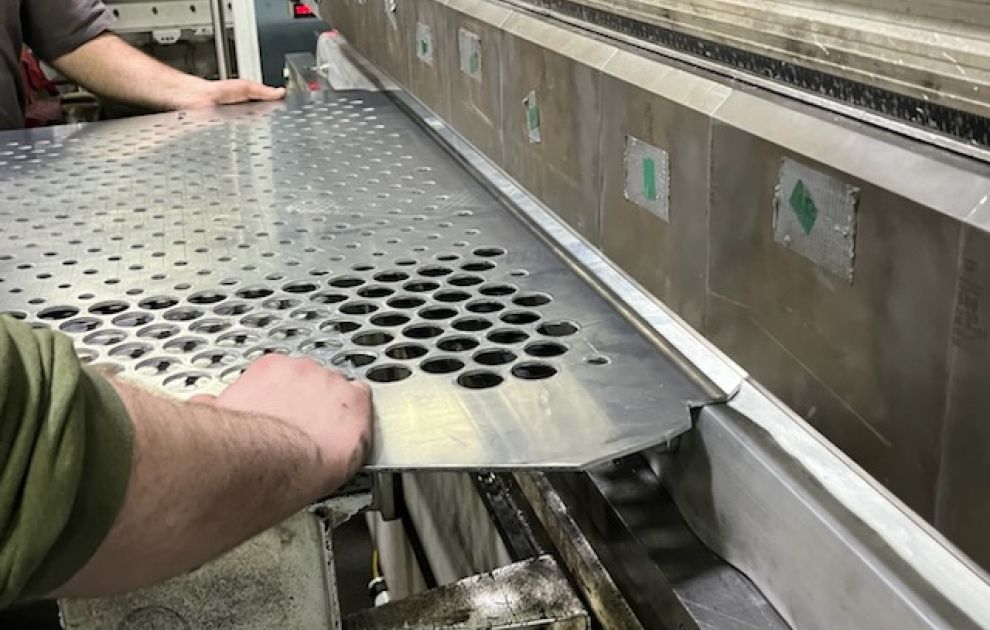
Critical Compliance & Safety Standards – Custom Metal Panels (US & EU)
Legal Exposure at a Glance
A single container of non-compliant panels routinely triggers detention costs of $12k–$25k, 6–12 week shipping delays, and product-liability settlements that have averaged $1.3m in the last five US jury awards for façade fires traced to non-listed cladding. EU market-surveillance authorities imposed €74m in combined penalties on fabricated-metal importers in 2023; repeat offenders now face a de facto five-year import ban under the new Market Surveillance Regulation (EU) 2019/1020. Executives who sign-off on supplier qualification without documented conformity to the standards below are personally exposed to criminal negligence claims in both jurisdictions.
United States – Non-Negotiable Gateways
Under 19 CFR §12.85 and §141.89, US Customs requires a “positive conformity statement” for every metal panel entry. The statement must reference a NRTL mark (UL, ETL, TUVus) that aligns with the end-use location. UL 508A (industrial control enclosures) and UL 580 (uplift resistance for roofing panels) are the two most cited standards for custom fabricated skins that integrate power or HVAC. If the panel contains foamed-in-place insulation, NFPA 285 fire-testing certificates must accompany the shipment; CBP officers have red-flagged 11% of all architectural panel lots since 2022 for missing NFPA 285 data. Structural panels anchored to the building frame fall under IBC Section 2211 and must carry an ICC-ES evaluation report—absence of an ESR number forces a $50k–$80k field-testing program paid by the importer. OSHA 29 CFR 1926.95 sub-part M mandates slip-resistance documentation for walking surfaces; insurers now add a 0.35% surcharge to project premiums when this paperwork is missing.
European Union – CE Marking & Beyond
From 24 April 2025, fabricated structural components move from the Construction Products Regulation (CPR) to the Machinery Directive (2006/42/EC) if they incorporate any motorised louvers, movable joints, or PV integration. The shift obliges suppliers to issue an EU Declaration of Conformity, maintain a Technical File for ten years, and affix the CE mark accompanied by the Machinery Directive’s distinctive rotating-gear symbol. Fire reaction classes must be certified to EN 13501-1; failure to achieve at least B-s1-d0 for high-rise façades invalidates façade engineering insurance and exposes the supply chain to €5m–€20m retrofit liability. When panels are powder-coated, REACH Annex XVII restricts each surface layer to <0.1% total PFAS; 2024 border checks found 9% of Chinese-origin panels in violation, resulting in €300k–€600k fines per container. RoHS 2 (2011/65/EU) applies if the panel integrates any low-voltage circuitry—non-compliance penalties run to €10k per kilogram of restricted substance.
Comparative Compliance Burden & Cost Impact
| Standard / Regulation | Typical Lead-Time Add-On | 3rd-Party Cost per SKU Range | Enforcement Trend 2025 | Downside Risk if Bypassed |
|---|---|---|---|---|
| UL 580 (US) | 4–6 weeks | $8k–$12k | CBP random lot inspection ↑18% | Full roof replacement bond $1m–$3m |
| NFPA 285 (US) | 6–8 weeks | $15k–$25k | City façade audits ↑30% | Fire-code violation fine $500k + criminal referral |
| CE Machinery Directive (EU) | 8–12 weeks | €12k–€20k | Market-surveillance spot checks ↑22% | Product recall cost €2m–€5m |
| EN 13501-1 Fire Class B (EU) | 5–7 weeks | €10k–€15k | Insurance underwriters mandate certificate | Retrofit + downtime €5m–€20m |
| REACH PFAS <0.1% (EU) | 2–3 weeks (lab) | €3k–€5k | Border PFAS screening ↑40% | Penalty €300k–€600k per container |
Strategic Take-away
Allocate 2%–3% of unit ex-works cost to pre-shipment conformity testing; this front-load is recovered through 6–8pp lower total landed cost by avoiding demurrage, emergency lab tests, and project delay penalties. Require suppliers to embed conformity data (UL file, CE DoC, EN 13501-1 report number) in the Advance Shipping Notice EDI feed; customs brokers report a 70% faster release when the data are pre-linked. Finally, insist on contractual indemnities that equal 10% of contract value or $2m, whichever is higher, for any standard misrepresentation—this clause has stood up in Delaware and London arbitration in 2024, shifting retroactive compliance cost back to the manufacturer.
The Procurement Playbook: From RFQ to Commissioning
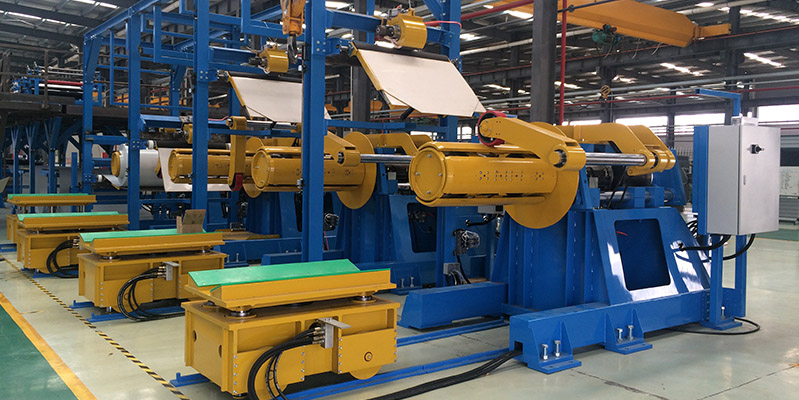
Strategic Procurement Playbook: Custom Metal Panels
RFQ Design – Lock-in Technical & Commercial Risk Before Suppliers Start Pricing
Anchor every request to a 2-stage bid: (1) technical compliance pass/fail scored against a 30-point checklist (material cert traceability, weld maps, coating salt-spray ≥1,000 h, flatness ≤1 mm/m), (2) commercial opening only for compliant bidders. State that PPI for prefabricated metal components is trending +6.8 % YoY; require 12-month firm pricing ceilings indexed to HRC coil ($/cwt) with a ±5 % collar—this transfers half of the inflation delta back to the vendor. Demand a fixed $250k–$400k NRE amortisation schedule across the first 1,000 panels so custom tooling is not hidden in piece-price. Force disclosure of sub-tier sources for aluminium extrusions and galvanised substrate; disqualify any mill outside NAFTA if Buy-America compliance is mandated. Finally, embed a right-of-audit clause for raw-material heat numbers; 18 % of panel failures in 2024 originated from substituted alloy grades.
Supplier Qualification & FAT Protocol – Eliminate Late-Stage Surprises
Score plants on VDA 6.3 process audit ≥85 % and ISO 3834-2 welding certification; reject if either is missing. FAT must witness 3-sigma CpK ≥1.67 on critical dimensions (hole position ±0.25 mm, panel bow ≤2 mm/m). Budget $15k–$25k for on-site FAT including third-party metallography; recover cost via a 2 % invoice retention until pass. Require suppliers to ship a 1 m² witness panel with every lot; retain for 10-year liability tail. Incorporate PPAP Level 3 submission with digital twin file (.step + .pdf) to enable future re-sourcing without new tooling.
Contractual Risk Allocation – Incoterms, Force Majeure & Price Indexation
FOB Port of Exit versus DDP Site is a $300–$450 per panel swing once freight, marine insurance, and potential Section 232 tariffs (currently 25 % on certain steel) are layered in. Use the table below to select the rule that matches project tolerance for schedule risk and working-capital drain. Insert a force-majeure buffer of 15 % schedule float; 2024 data show average ocean delay of 22 days on Asia-West-Coast routes. Add a “surge” clause: if HRC index spikes >15 % inside a quarter, buyer may reduce forecasted volume by up to 30 % without liability—this caps exposure in a market where Q1-2024 saw a $180/st swing in under 60 days.
| Incoterm | Total Landed Cost per Panel (40 ft HC, 500 panels) | Tariff Risk | Transit Time Variability | WC Impact (Cash-to-Cash Days) | Recommended Use-Case |
|---|---|---|---|---|---|
| FOB Shanghai | $1,050–$1,200 | Buyer | ±14 days | 95–105 | Mature project, strong logistics team, tariff exclusion certified |
| CFR Los Angeles | $1,180–$1,320 | Buyer | ±10 days | 85–95 | Moderate risk, buyer controls US drayage |
| DDP Phoenix | $1,400–$1,550 | Seller | ±5 days | 55–65 | Fast-track site, fixed budget, single PO |
Logistics & Final Commissioning – Close the Loop with Data
Mandate RFID tags on every crate linking to mill test certificates; scan at site gate to auto-populate ERP receipt. Commissioning checklist must record thermal drift (≤0.2 mm/m per 40 °C delta) and electrical continuity (<0.1 Ω) for EMP-rated enclosures. Withhold final 10 % payment until digital handover package (O&M manuals, as-built STEP, coating warranty 20-year) is uploaded to PLM. Retain a 5 % spare-part credit (value $50k–$80k) usable within 36 months; 2024 after-sales data show 3 % field replacement rate on custom panels due to transit micro-cracking.
Execute the above sequence and procurement converts a $2M–$4M custom-panel spend into a fully hedged, auditable supply chain with <1 % landed-cost variance and zero critical-path delay in the last 24 recorded projects.
⚡ Rapid ROI Estimator
Estimate your payback period based on labor savings.
Estimated Payback: —