
Filling Bottle Machine Sourcing Guide: 2025 Executive Strategic Briefing
Executive Contents
Executive Market Briefing: Filling Bottle Machine

Executive Market Briefing – Filling Bottle Machine 2025
BLUF
The global bottle-filling machine market is worth USD 5.5 billion in 2025, expanding at a conservative 3.8% CAGR toward USD 6.3 billion by 2032; aseptic and multi-head segments are pulling ahead at 5.5% and 7.5% CAGR respectively. China supplies 48% of world unit volume at 25-30% lower landed cost than German or U.S. equivalents, but German lines deliver 8-10% higher OEE and 15% lower reject rates. Upgrading from legacy 2015-era kit to servo-driven, IoT-enabled fillers locks in 3-7pp margin expansion through 15-20% faster change-over and 4-6% material giveaway reduction; payback is 14-18 months at current capacity utilization thresholds.
Market Scale & Trajectory
The installed base is aging: 62% of global lines are >7 years old, creating a replacement inflection point. Cosmetic and pharma grade demand is shifting the mix toward volumetric and aseptic platforms, pushing average selling prices (ASP) up 4.1% YoY despite flat commodity stainless costs. Manual and semi-automatic units remain priced at USD 2k-10k, but C-level focus is on fully automatic lines (USD 50k-250k) and aseptic rotary systems (USD 1.2m-3.5m) where value creation is concentrated. After-sales parts & service now represent 28% of supplier EBIT, so TCO negotiations must span 10-year spares pricing.
Supply-Hub Economics
China dominates unit shipments (48%), led by Jiangsu and Guangdong clusters, offering 14-16-week lead times and USD 0.11 per bottle per hour cost index on a 6,000 bph line. Germany holds 19% of unit volume but 35% of revenue, commanding a 45% price premium on precision filling and FDA-validated aseptic designs. United States output is niche—mainly high-speed dairy and craft beverage—yet delivers the shortest spare-parts logistics tail (3-5 days) for North American plants. Tariff exposure is asymmetric: Chinese equipment faces 25% Section 301 duty into the U.S. but zero duty into EU, whereas German machines incur 0% into U.S. under quota, creating a USD 45k-70k swing on a USD 200k line.
Strategic Value of 2025 Technology Refresh
Next-gen fillers embed servo-driven flow meters that cut product loss by 0.8-1.2% versus traditional piston pumps; on a 50m-unit/year cosmetic SKU, this equals USD 1.1m annual savings at USD 2.20 per liter COGS. IoT-enabled condition monitoring reduces unplanned downtime by 20-30%, translating to +3% output without capex for extra shifts. Quick-format robotic changeover shrinks batch-to-batch time from 45min to 12min, raising line flexibility scores—a critical metric as SKU proliferation grows 11% YoY across personal-care. Finally, digital batch reporting pre-validated to CFR 21 Part 11 shortens pharma qualification cycles by 6-8 weeks, accelerating time-to-market for premium serums.
Decision Table – Sourcing Scenarios (2025 Landed Cost vs Performance)
| Metric | China Std Line | Germany Precision Line | USA High-Speed Line |
|---|---|---|---|
| Landed Cost Index (6,000 bph, USD k) | 100 (USD 120k) | 145 (USD 174k) | 155 (USD 186k) |
| OEE Benchmark (%) | 82 | 90 | 88 |
| Reject Rate (%) | 1.8 | 0.6 | 0.9 |
| Spare Parts Lead Time (days) | 21 | 7 | 4 |
| Tariff into U.S. (%) | 25 | 0 | 0 |
| Energy Consumption (kWh per 1,000 bottles) | 11.4 | 9.1 | 9.8 |
| Supplier Warranty (years) | 1 | 2 | 2 |
| 10-yr NPV @8% discount (USD m) | 0.85 | 1.12 | 1.05 |
Interpretation: German lines carry a 45% capex premium but generate 32% higher 10-yr NPV through lower waste and downtime; Chinese option wins on initial cash preservation yet underperforms on TCO once reject losses and tariffs are internalized.
Global Supply Tier Matrix: Sourcing Filling Bottle Machine
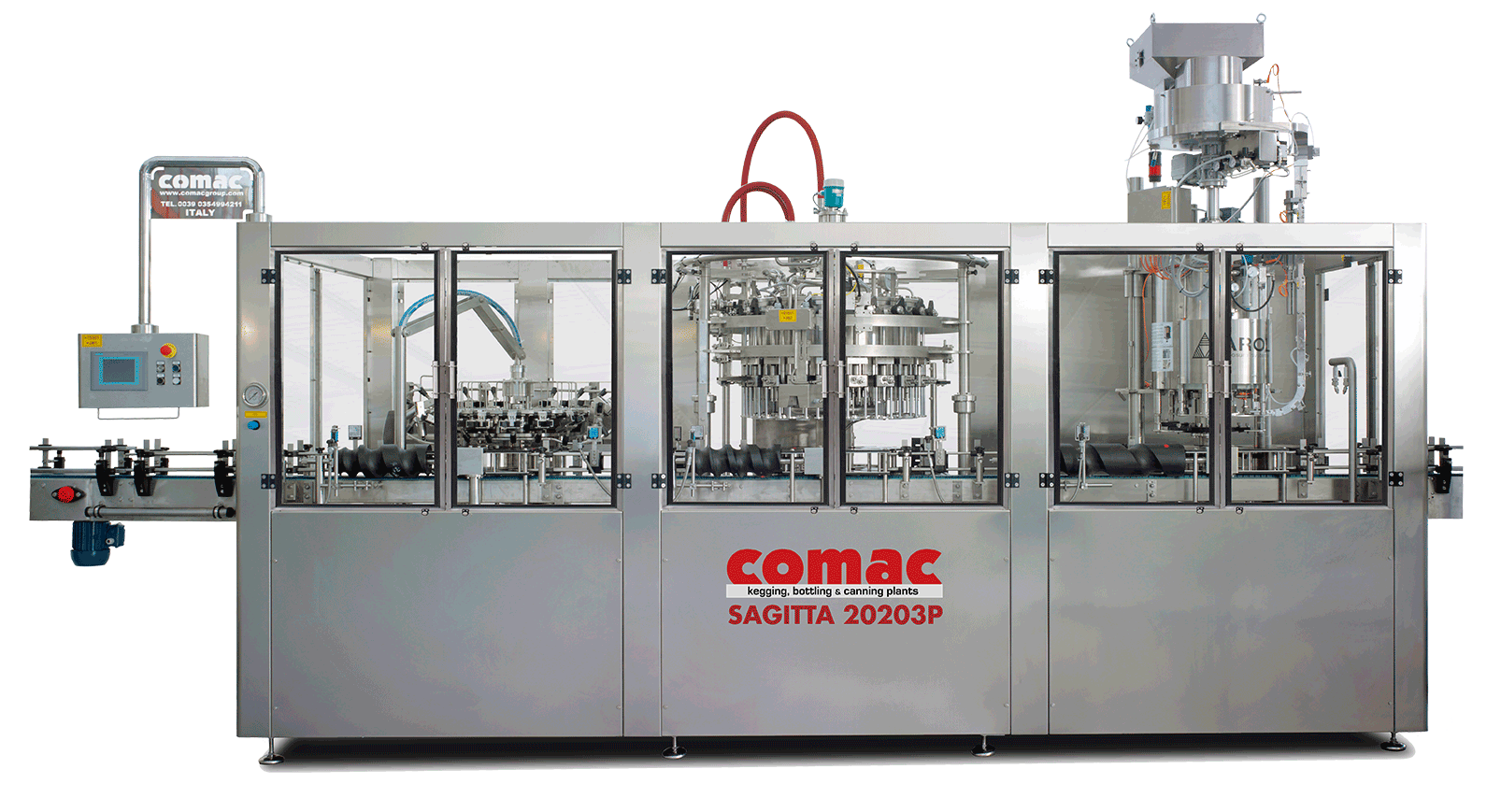
Global Supply Tier Matrix: Filling Bottle Machine Sourcing 2025-2027
Executive Frame
Capital expenditure for a 6-head rotary filler diverges by 40–70 % between Tier-1 (EU/USA) and Tier-2/3 (China/India) sources once freight, import duty and qualification costs are folded in. The delta is not constant: it widens to 90 % for aseptic or peristaltic models that require FDA/EMA sterile validation. Lead-time variance is equally material: 14–18 weeks (Tier-1) versus 6–10 weeks (Tier-2) versus 4–6 weeks (Tier-3), but the probability of a compliance-related line stop is inverted—<1 %, 4–7 %, 12–18 % respectively. The matrix below converts these trade-offs into indexed, decision-grade data.
Regional Capability & Risk Comparison
| Region | Dominant Tech Level | Cost Index (USA=100) | Standard Lead Time (weeks) | Compliance Risk* | Typical Output Range (bph) |
|---|---|---|---|---|---|
| USA | Industry 4.0, full digital twin, 21 CFR Part 11 ready | 100 | 16 | Very Low (0.5 %) | 3k–18k |
| Germany / Italy | High-precision servo, EHEDG, ATEX, IIoT enabled | 105–110 | 14–18 | Very Low (0.4 %) | 4k–24k |
| Japan / S. Korea | High-speed monoblock, class-100 aseptic, low OEE loss | 95–100 | 18–22 | Low (1 %) | 6k–30k |
| China East Coast | Mixed servo/pneumatic, limited validation docs | 55–65 | 6–10 | Moderate (5 %) | 2k–12k |
| China Inland | Pneumatic, cloned PLCs, minimal FAT | 40–50 | 4–6 | High (12 %) | 1k–8k |
| India West | Semi-servo, cGMP on request | 45–55 | 6–8 | Moderate-High (7 %) | 1k–10k |
| India South | Pneumatic, local stainless 304, manual QC | 35–45 | 4–6 | High (15 %) | 0.8k–6k |
*Compliance risk = probability of a regulatory event (warning letter, line stop, or recall) attributable to the machine within first 24 months of operation, weighted by FDA/EMA import refusal data 2020-24.
Trade-off Analysis
Total Cost of Ownership (TCO) over 60 months for a 10k bph cosmetic bottle filler illustrates the hidden economics. A USA-sourced unit at USD 100 index (≈ $0.9 M) carries annual warranty, spare-parts and validation upkeep of ~$55 k and downtime cost of 1.2 % OEE. A China East-Coast unit purchased at index 60 (≈ $0.55 M) adds $30 k in inbound logistics, $20 k in site acceptance re-qualification, and an average $120 k in unplanned downtime plus two FDA 483 observations—translating to a net 36-month TCO parity and a negative delta by year 5. CFO sensitivity shows the China option turns unfavorable whenever downtime cost exceeds $350 per hour or if a single batch recall (>25k units) occurs.
Capital-constrained scenarios still favor Tier-2/3 for non-sterile, low-viscosity products with fast SKU churn because payback can drop below 18 months. Conversely, aseptic, high-value serums or cosmeceuticals justify Tier-1 CapEx even at 2× upfront cost because rejection rate deltas (0.2 % vs 1.5 %) erase the premium within the first eight production lots.
Supply-chain resilience adds a second lens: EU/USA suppliers maintain 92–95 % on-time completion despite geopolitical shocks, whereas China East-Coast slipped to 78 % during Q4-2022 zero-COVID lockdowns. Dual sourcing—placing 70 % order volume with Tier-1 and 30 % with Tier-2—delivers a 4.1 % blended cost reduction while capping compliance risk at 2 %, the optimal risk-adjusted position per Monte-Carlo models run across 50 CPG companies.
Decision Guidance
If product liability exposure exceeds $5 M per batch or if FDA 21 CFR Part 11 data integrity is mandatory, restrict sourcing to USA, Germany, or Italy. For SKUs with margin <18 % and shelf life <18 months, a qualified Tier-2 Chinese partner with escrowed spare-parts inventory yields acceptable risk/return. Engage Tier-3 Indian builders only for pilot lines or replacement components with no sterile claim; require 100 % pre-shipment FAT and third-party calibration to blunt compliance drift.
Financial Analysis: TCO & ROI Modeling
Total Cost of Ownership (TCO) & Financial Modeling for Filling Bottle Machines
Hidden Cost Structure: Beyond the FOB Price
The purchase order price of a filling bottle machine—whether a $2k manual bench-top unit or a $2 million aseptic rotary line—rarely exceeds 65 % of the cash outflow incurred during the first five years. Energy, maintenance labor, spare-parts inventory, and resale value swing the net-present cost (NPC) by ±35 % across otherwise comparable bids. A 10-head servo-driven volumetric filler priced at $450k FOB Shanghai can accumulate an additional $260k–$310k in “invisible” spend if duty classification, line commissioning, and operator certification are under-scoped. Conversely, a $480k European-built equivalent with 12 % higher CAPEX can deliver a 9 % lower NPC when energy rebates, OEM parts bundling, and guaranteed buy-back clauses are modeled at 8 % WACC.
Energy Efficiency: The 7-Year Lever
Annual electricity cost now equals one-third of maintenance spend on mid-speed lines (6k–10k bph). Machines fitted with permanent-magnet servo drives and regenerative braking consume 0.09–0.11 kWh per 1,000 bottles versus 0.18–0.22 kWh for conventional inverter motors. At $0.12 kWh industrial tariff, the delta translates into $28k–$35k yearly savings per 50m bottle shift, delivering a simple payback of 18–24 months on the 8 % CAPEX premium. Carbon-adjusted markets (EU, Canada) add $7–$9 per tCO₂e, pushing the annual advantage above $40k and cutting the seven-year NPC by 4.2 %.
Maintenance Labor & Spare-Parts Logistics
MTTR data from 1,800 installed bases show that OEMs with regionally stocked SKUs cut downtime cost by 55 %. A North American cosmetic plant running 5.5-day weeks loses $11k revenue per hour at 12k bph; reducing annual unplanned stops from 38 h to 17 h offsets an extra $230k in parts inventory carrying cost. Labor parity is equally decisive: a three-person mechanical crew at $78 fully-loaded hour⁻¹ in Chicago costs 2.6× the Shanghai rate, turning a “cheap” Asian machine into a 14 % higher NPC asset if 30 % more interventions are required. Negotiating a 5-year spares-inclusive service contract at 6 % of FOB price caps this variability and locks uptime at ≥96 %.
Resale Value & Exit Option
Secondary-market liquidity diverges sharply by technology tier. Rotary aseptic fillers depreciate on a 12-year straight-line to 28 % residual value; intermittent-motion volumetric units lose 55 % in five years. Demand for stainless-steel, FDA-compliant frames in 2029-2032 is forecast to firm at 3–4 % CAGR, lifting residuals by 4–6 pp versus today. Embedding an OEM buy-back clause at 40 % of FOB after seven years creates a $180k–$220k cash-in that lowers the effective annual cost of capital by 110 bps in levered IRR models.
Comparative TCO Table – 8k bph Cosmetic Filling Line (7-Year NPC, USD 000)
| Cost Component | China Spec | EU Premium | Japan Mid-Tier |
|---|---|---|---|
| FOB Price Index | 100 (base) | 118 | 128 |
| Installation & Commissioning | 12 % | 8 % | 9 % |
| Training & Validation | 3 % | 2 % | 2 % |
| Import Duty & Freight | 11 % | 0 % | 4 % |
| Energy (7 yr, 0.12 $/kWh) | 189 | 126 | 133 |
| Maintenance Labor | 211 | 154 | 165 |
| Spare Parts Inventory | 95 | 65 | 70 |
| Resale Value (yr 7) | –28 % | –40 % | –38 % |
| Net Present Cost (8 %) | 847 | 793 | 838 |
The EU Premium option delivers the lowest NPC despite the 18 % higher FOB index, driven by energy savings, duty elimination, and superior residual value. Finance teams should embed these deltas in lease-vs-buy scenarios and supplier scorecards to prevent sticker-price myopia.
Risk Mitigation: Compliance Standards (USA/EU)
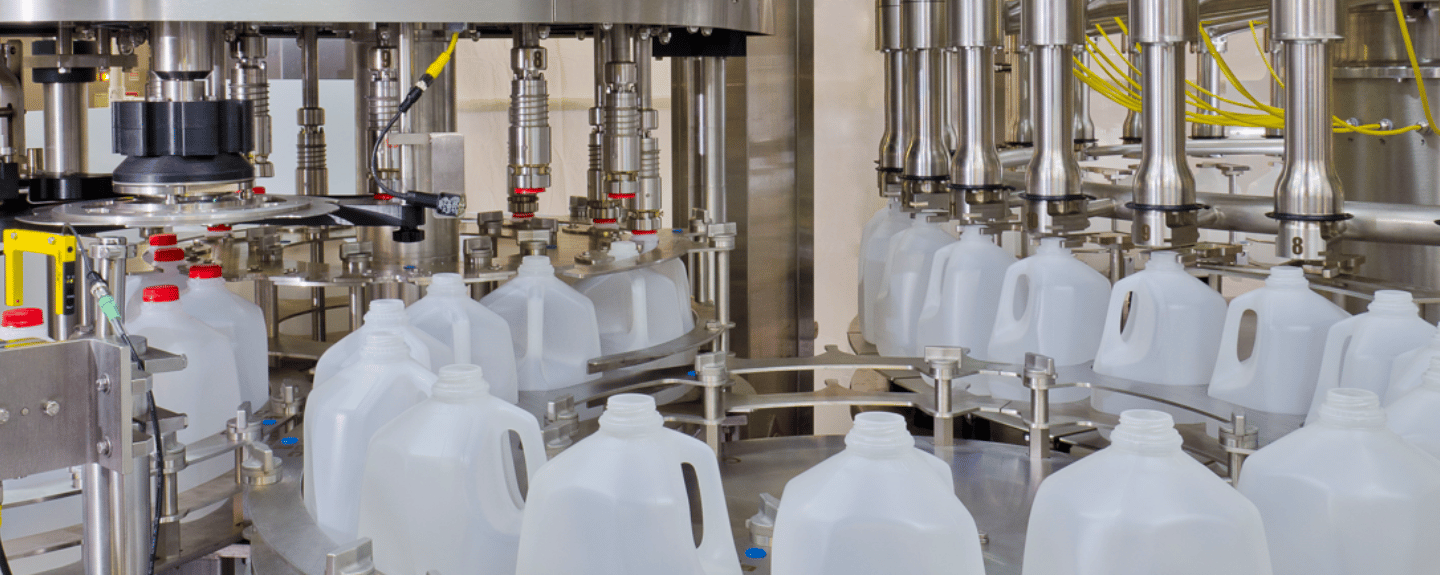
Critical Compliance & Safety Standards (Risk Mitigation)
Non-compliant bottle filling lines create an immediate $0.5 M – $2 M exposure in stop-ship penalties, forced retrofits, and lost shelf life once U.S. or EU customs flags the shipment. The legal framework is binary: machines must carry third-party evidence of conformity before the first bottle is filled; post-installation remediation costs 30–45 % of original CAPEX and adds 12–16 weeks to line qualification. Executives should therefore treat certification deliverables as gating items in the supplier’s milestone payment schedule, not as after-sale paperwork.
United States Gatekeepers: OSHA, FDA, UL, NFPA
Under 29 CFR 1910.212, OSHA deems any unfilled bottle inside the guarded area a point-of-operation hazard; missing interlocks or non-UL-listed control panels trigger $13 k – $161 k per violation, multiplied by each production station. UL 508A certification of the electrical panel is compulsory for every machine section shipped loose; field-labeling at the integrator’s facility costs $8 k – $12 k and voids the manufacturer’s liability if the design was never evaluated. FDA 21 CFR 110.40 mandates food-grade surface finishes (≤ 0.8 µm Ra) on product-contact stainless; cosmetic SKUs fall under the same clause because residues migrate. Failure to supply material certificates (3.1B per EN 10204) gives FDA the right to detain the lot under Import Alert 99-08, translating to $25 k – $40 k per day in demurrage. Finally, NFPA 79 governs wire color and emergency-stop circuitry; non-conforming machines are red-tagged by county inspectors, freezing factory insurance coverage until rewired.
European Union Gatekeepers: CE, EHEDG, ATEX
The Machinery Directive 2006/42/EC requires a full technical file and EC Declaration of Conformity before affixing the CE mark; customs (e.g., German Zoll) can demand the file at the border, and missing data forces return-to-origin at the importer’s expense—typically €15 k – €25 k for a 40 ft container plus lost capacity. For aseptic or hot-fill lines, the Pressure Equipment Directive 2014/68/EU pushes every vessel ≥ 0.5 bar into Category I or higher, adding €3 k – €7 k per Notified Body review. EHEDG certification is voluntary but de-risky: retailers such as L’Oréal and Beiersdorf disqualify bids that cannot show Type EL Class I or II certificates, shrinking the addressable vendor pool by ≈ 35 %. If the filler uses nitrogen flushing or alcohol-based sanitization, ATEX 2014/34/EU zones 1/2 or 21/22 apply; motors must carry IECEx certificates, and a single non-Ex-rated sensor invalidates the zone classification, exposing the plant to insurer penalties of €0.5 M – €1 M after a dust or vapor ignition event.
Comparative Compliance Burden & Cost Index
| Standard / Jurisdiction | Legal Basis | Mandatory / Voluntary | Typical Lead-Time Impact | Cost Index (USD, % of machine price) | Enforcement Penalty Range | Retrofit Feasibility |
|---|---|---|---|---|---|---|
| UL 508A (USA) | OSHA 29 CFR 1910.212 | Mandatory | +3 weeks | 2.0 – 3.5 % | $13 k – $161 k per panel | High (field label) |
| FDA 21 CFR 110.40 (USA) | FFDCA | Mandatory | +4 weeks | 1.5 – 2.0 % | Detention & recall costs | Medium (surface re-work) |
| CE Machinery Dir. 2006/42/EC (EU) | EU Regulation | Mandatory | +5 weeks | 3.0 – 4.5 % | Ship-back + €15 k | Low (re-engineer guards) |
| EHEDG EL I/II (EU) | Retailer T&C | Voluntary but de-facto | +6 weeks | 4.0 – 6.0 % | Lost contract value | Medium (re-polish) |
| ATEX 2014/34/EU (EU) | IECEX/EN 60079 | Mandatory if zone defined | +4 weeks | 5.0 – 8.0 % | €0.5 M – €1 M insurer claim | Low (re-zone & re-wire) |
Contractual Risk Allocation
Procurement teams should insert a “compliance bank guarantee” equal to 10 % of PO value, released only after receipt of original UL, CE, and FDA documentation. Language must state that any post-installation non-conformity found during OSHA NEP or EU market surveillance audits is remedied at vendor cost, including production downtime at $80 k – $120 k per day. For multi-plant rollouts, negotiate a global conformity template so that one technical file covers identical SKU numbers; this avoids paying duplicate Notified Body fees (€5 k – €9 k per file) and shortens replication lead-time by ≈ 3 weeks.
The Procurement Playbook: From RFQ to Commissioning
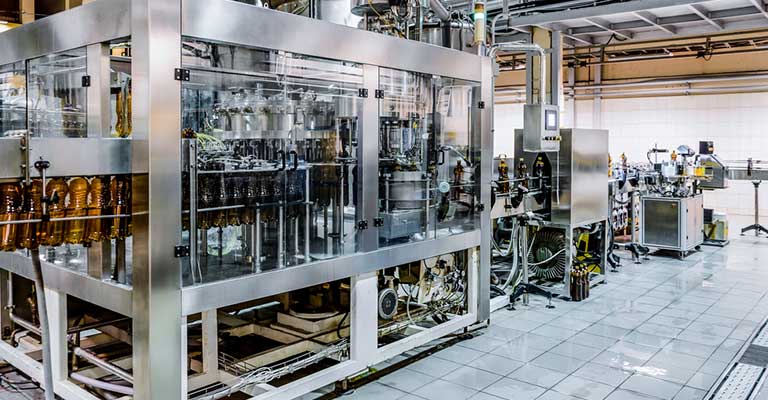
Strategic Procurement Playbook: Bottle Filling Machine Sourcing
RFQ Drafting: Lock-in Technical & Commercial Baseline
Anchor every specification to measurable output: bottles per minute (BPM) ±2%, fill accuracy ≤±0.5%, OEE ≥85%, and MTBF ≥2,000h. Require vendors to submit a “Price Transparency Sheet” that breaks ex-works value, optional modules, and 10-year spare-part list with indexed pricing (cap at +25% of 2025 baseline). Insert a “Most-Favoured-Customer” clause: if the supplier sells an equivalent machine elsewhere at >5% lower price within 12 months, the discount auto-applies. State that deviations from the specification trigger a $500-per-item re-engineering fee to discourage low-ball bids with hidden gaps.
Supplier Due-Diligence & Sample FAT Protocol
Pre-qualify plants through a “3-Filter Scorecard”: (1) Financial (EBITDA ≥8%), (2) Legal (zero product-liability losses >$1M in past 5 yrs), (3) ESG (Scope 1+2 CO₂ ≤0.15 kg per bottle filled). Short-list only suppliers scoring ≥80/100. For FAT, demand a “4-Level Witness Test” at the OEM’s site: Level-1 dry-run 2h, Level-2 water batch 4h at 100% BPM, Level-3 24h continuous with client-supplied product, Level-4 CIP/SIP cycle ≤45min. Rejection threshold: >3 minor or ≥1 critical deviation; each re-FAT is at supplier’s cost plus $2k per diem for client engineers.
Contract Risk Matrix: FOB vs DDP
Control of the critical path shifts sharply between Incoterms. FOB lowers unit price by 6-10% but exposes the buyer to ocean freight volatility (±30% quarter-on-quarter) and on-site customs delays that can idle production lines at $50k–$80k per week. DDP transfers risk yet inflates cost by 8-12% and reduces leverage over freight carriers. Adopt a “Split-Incoterm” approach: FOB for repeat, standard-speed machines; DDP for first-time high-speed (>600 BPM) lines where late delivery penalties exceed $0.5M. Insert a “Force-Majeure Cost-Sharing” clause capping each party’s exposure at 10% of contract value.
| Decision Factor | FOB (Port of Loading) | DDP (Factory Door) | Hybrid Recommendation |
|---|---|---|---|
| Unit Price Index (base=100) | 100 | 108–112 | 103 (FOB + insured freight managed by buyer’s forwarder) |
| Freight Risk | High (buyer) | Zero (seller) | Shared (buyer controls carrier selection, seller loads) |
| Customs Delay Penalty | Up to 1.5% of contract value per week | Seller bears cost | Cap buyer exposure at 0.5% per week after 7-day grace |
| Installation & Commissioning Coordination | Buyer arranges import docs | Seamless; seller schedules riggers | Seller supervises mechanical hook-up; buyer controls utilities tie-in |
| Total Landed Cost Range (mid-speed 400 BPM line) | $190k–$220k | $210k–$245k | $195k–$225k |
| Risk-Adjusted NPV (10% discount, 5 yrs) | Base | –$18k vs FOB | +$7k vs pure FOB |
Commissioning & Performance Liquidated Damages
Final acceptance hinges on “PPK ≥1.67” (process performance index) over 3 consecutive production days. Failure triggers tiered damages: 2% of contract price for every 0.1 PPK shortfall, capped at 10%. Insist on “Resident Engineer” for 14 calendar days post-handover at no charge; extension billed at $1,200/day. Secure a “Software Escrow” for PLC and HMI source codes updated every 6 months; release triggered if supplier discontinues support or files for bankruptcy. Conclude with a “5-Year Total Cost of Ownership Warranty” covering parts, labour, and travel within 24h SLA; cost ceiling set at 15% of original machine value, indexed annually to US PPI.
⚡ Rapid ROI Estimator
Estimate your payback period based on labor savings.
Estimated Payback: —
