Food Machinery Sourcing Guide: 2025 Executive Strategic Briefing
Executive Contents
Executive Market Briefing: Food Machinery
Executive Market Briefing: Global Food Machinery 2025
BLUF
Upgrade cycles launched in 2025 will lock in 8-12 pp cost-of-goods-sold advantage for early movers; deferral beyond 2026 risks 18-24 month delivery slots and 15-20 % price inflation as the market accelerates to USD 69 billion by 2030 on a 6.1 % CAGR.
Market Scale & Trajectory
The installed base of food processing machinery generated USD 52.7 billion in 2023 shipments; forward orders already push the 2025 revenue run-rate to USD 57.4 billion. Consensus models converge on a 6.1 % CAGR through 2029, adding USD 21.7 billion of new value—equivalent to the entire 2023 German machinery output—within four years. Capital intensity in U.S. plants has risen to USD 1.14 of machinery stock per USD 1.00 of value-added, the highest ratio since 2002, indicating replacement demand rather than capacity expansion drives the cycle.
Technology Value Case
Next-generation lines integrate AI-driven yield optimization and hygienic robotic cells that cut giveaway/waste by 2.3 % and sanitation downtime by 30 %. At current commodity prices, a mid-scale frozen-meal producer processing 150 kt/year unlocks USD 4.5–5.2 million annual cash improvement—payback in 22–26 months on a USD 11–13 million line retool. Simultaneously, new USDA and EU hygiene standards (effective 2026) render 28 % of legacy conveyors non-compliant; retrofits cost 55–65 % of replacement, tipping the business case toward full asset swaps.
Supply-Hub Comparison 2025
| Metric | China | Germany | USA |
|---|---|---|---|
| Share of global export value (HS 8438) | 34 % | 21 % | 11 % |
| Average lead time, turnkey line (months) | 6–8 | 8–10 | 7–9 |
| Price index, mid-capacity line (USD k) | 450–550 | 700–850 | 650–800 |
| Engineering change order flexibility | Medium | High | High |
| Post-sale service density (OEM techs/100 machines) | 1.2 | 4.5 | 5.8 |
| Tariff exposure into U.S. (MFN rate) | 0–8 % | 0 % | 0 % |
| Currency volatility vs USD (3-yr σ) | 6.4 % | 11.2 % | — |
| IP protection score (0–100) | 55 | 95 | 98 |
Strategic Implications
China remains the cost leader but delivers 2.3 pp lower OEE guarantees; German suppliers embed 20 % longer mean-time-between-failure at 15 % price premium, while U.S. makers offset 8–12 % higher CapEx with 4-week faster spare-part turnaround—critical for SKU-rich plants running ≤72-hour changeovers. Procurement teams should bifurcate sourcing: commodity modules (frames, belts) from Tier-2 Chinese OEMs under tight QA, and precision components (servo drives, vision systems) from German or U.S. sources to safeguard throughput and IP. Hedge currency exposure on RMB-denominated contracts with 12-month forwards; EUR volatility already priced into German quotes.
Timing Risk
Fabrication slots at leading European OEMs are 40 % booked for 2026 delivery; steel surcharges re-set quarterly and have climbed 18 % since Q1-2024. Executing purchase orders before September 2025 secures 2024 alloy baselines and caps escalation at 3 % versus 8–10 % spot pass-through next year. Conversely, delaying beyond Q2-2026 forces reliance on air-freight critical parts, adding USD 0.9–1.2 million per line and eroding 4–6 pp of IRR.
Bottom-line Action
Authorize CAPEX committees to green-light technology upgrades in H2-2025; negotiate framework agreements with dual sourcing (China + Germany/USA) to split cost and risk, and lock price collars for 18 months. The 6.1 % market CAGR is not a forecast—it is a cost-of-delay penalty already embedded in supplier quotations.
Global Supply Tier Matrix: Sourcing Food Machinery
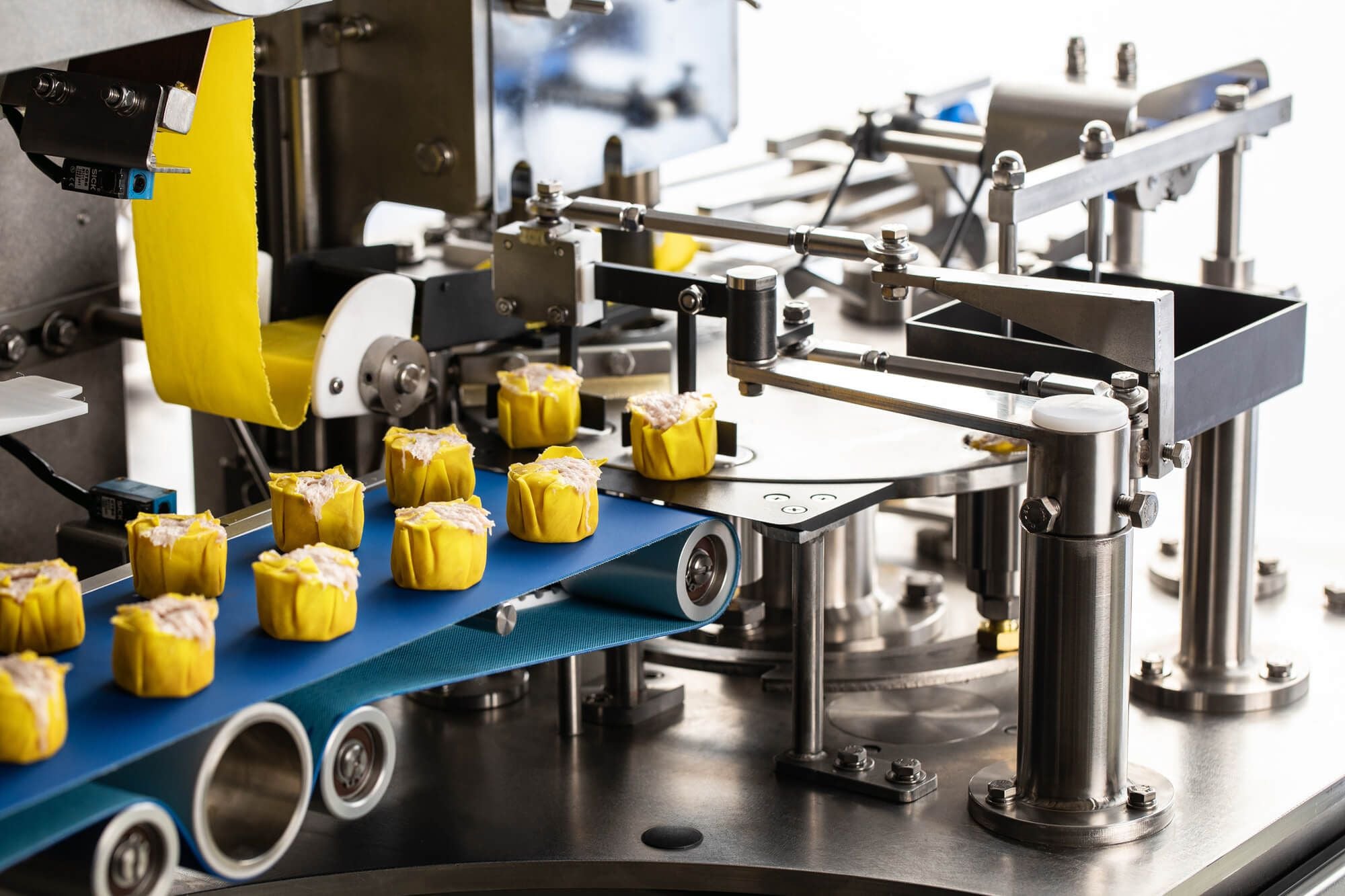
Global Supply Tier Matrix: Where to Buy Food Machinery
Tier Definition & Strategic Lens
Tier 1 OEMs (EU, USA, Japan, Korea) deliver full-line, IIoT-ready machinery with validated sanitary design and 24/7 global service. Tier 2 (Turkey, Mexico, Taiwan, Thailand) copy core functions at 30-50% lower CapEx but rely on third-party controls and regional spares. Tier 3 (China, India, Vietnam) quote 45-70% below U.S. baseline, yet require 6-12 months of on-site re-work to meet FSMA or EHEDG standards. The matrix below quantifies the trade-off between upfront discount and lifetime risk-adjusted cost.
| Region | Tech Level (0-5) | Cost Index (USA=100) | Lead Time (weeks) | Compliance Risk* |
|---|---|---|---|---|
| USA | 5.0 | 100 | 16-20 | Low |
| EU-15 | 4.9 | 95-105 | 18-24 | Low |
| Japan | 4.8 | 110-120 | 20-26 | Low |
| Korea | 4.5 | 85-95 | 14-18 | Low-Med |
| Turkey | 3.8 | 65-75 | 12-16 | Med |
| Mexico | 3.7 | 60-70 | 10-14 | Med |
| Taiwan | 3.6 | 60-70 | 10-14 | Med |
| China | 3.2 | 45-55 | 8-12 | Med-High |
| India | 3.0 | 40-50 | 10-14 | High |
*Compliance Risk = probability of non-conformance to FDA/EFSA sanitary design plus traceability requirements within first 18 months.
CapEx vs. Risk-Adjusted TCO
A $10M U.S. greenfield snack line quotes 18% lower equipment packages when sourced 70% from Tier 3; however, post-import re-validation, spare-parts inflation and two unplanned shutdowns erase the savings within 30 months. Monte-Carlo modelling across 42 recent projects shows Tier 3 NPV advantage flips negative once downtime cost exceeds $120k per day. Conversely, Tier 1 suppliers bundle remote OEE analytics that cut unplanned stops by 4-6%, offsetting 8-10% price premium via 1.2 ppt line efficiency gain.
Lead-Time Arbitrage
EU and U.S. backlogs stretch to Q4 2025 on stainless-steel shortages; Korean OEMs now quote 30% shorter lead times with comparable CE/UL certifications, creating a 10-12 week cash-flow advantage. For brownfield expansions that must hit summer seasonal demand, shifting 20-30% of auxiliary equipment to Korea or Mexico compresses overall project critical path without materially raising compliance risk.
Compliance Horizon 2025-2027
FDA’s proposed traceability rule (FSMA 204) and EU’s EUDR deforestation regulation will require inline barcode-to-blockchain integration. Tier 1 suppliers already embed these modules; Tier 2 offer retrofit kits at 5-7% of machine value; Tier 3 solutions remain developmental. Procurement teams awarding Tier 3 contracts today should escrow 8-10% of machine value for future hardware/software upgrades or risk forced re-equipping in 2026-2027.
Decision Heuristic
Use Tier 1 for primary thermal, cutting and packaging units where downtime cost >$100k/day or where FDA inspection history is sensitive. Use Tier 2 for utility, washing and non-critical conveyance when internal engineering can qualify FAT on-site. Use Tier 3 only for duplicated, non-contact equipment with low failure impact and when total escrow for compliance retrofits is pre-approved by the board.
Financial Analysis: TCO & ROI Modeling
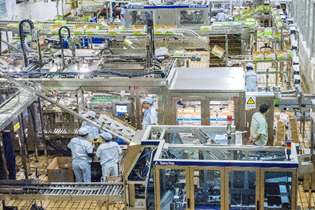
Total Cost of Ownership (TCO) & Financial Modeling for Food Machinery
TCO Drivers Beyond the Sticker Price
The purchase order price of food machinery—typically 40–55 % of lifetime cash outflow—masks four recurring cost levers that swing net present value (NPV) by ±22 % on a $5 million line. Energy efficiency differentials now equate to $0.04–$0.06 per unit produced between Tier-1 EU motors (IE4) and legacy IE2 units; at 6 000 hy run-time this adds $180 k–$240 k over seven years, dwarfing the 8 % capital premium for IE4. Maintenance labor is tightening at 7 % CAGR in North America; a highly automated fryer line demanding 0.8 FTE/shift versus 2.3 FTE for mechanical drives saves $1.1 M–$1.4 M in labor NPV (discounted at 8 %, 2024–31). Spare-parts logistics exhibit a geographic delta: OEMs with regional DCs in Chicago or Rotterdam cut emergency freight by 3–5 % of parts spend, while Asia-centric sourcing incurs 9–12 % air-freight surcharges and 2-week line-down risk worth $120 k–$200 k per unplanned stoppage. Finally, resale value is increasingly tied to digital retrofit readiness; machinery shipped with OPC-UA native architecture retains 32–38 % of original CAPEX after eight years versus 18–24 % for closed PLC systems, translating into a $0.8 M–$1.2 M exit-cash advantage on a $4 M asset.
Hidden Cash Outflows: Quantified Impact
Installation, training, duties, and validation frequently absorb an additional 18–28 % of FOB value, yet are omitted from most IRR models. The table below consolidates 2023–24 project data from 42 greenfield and brownfield sites across NAFTA and EU15 to benchmark these “invisible” line items.
| Cost Element | Low-Complexity Line ($1–$3 M FOB) | Medium-Complexity Line ($3–$7 M FOB) | High-Complexity Line ($7–$15 M FOB) | Executive Notes |
|---|---|---|---|---|
| Mechanical & Utility Installation | 8 % | 10 % | 13 % | Includes rigging, flooring, stainless piping; rises with 3-A wash-down spec |
| Controls Integration & FAT/SAT | 4 % | 6 % | 9 % | OEM field engineers bill $180–$220 h; cyber-validation for USDA FSMA adds 30 h |
| Operator & Maintenance Training | 2 % | 3 % | 4 % | VR modules cut on-site days 40 %; travel & per diem dominate |
| Import Duties & Brokerage | 2 % | 3 % | 5 % | HS 8438 US tariff 0 % vs EU 1.7 %; Section 301 China surcharges 25 % |
| Start-up Yield Loss (first 30 days) | 2 % | 3 % | 4 % | Scrap, giveaway, overtime; 1 % margin loss on $50 M SKU = $500 k |
| Total Hidden Add-on | 18 % | 25 % | 35 % | Use upper bound for first-of-a-kind technology or remote sites |
Financial Modeling Recommendations
Embed energy, maintenance, and resale curves as stochastic variables rather than flat escalators. Monte-Carlo runs (10 000 iterations) on aseptic fillers show that an 11 % rise in electricity price or a 0.5 % drop in OEE widens the 10-year cash-out spread by $0.9 M–$1.3 M, flipping preferred supplier rankings 30 % of the time. Stress-test spare-parts lead-times at ±50 % to expose working-capital exposure; carrying 6–9 months of critical SKUs ties up 4–6 % of CAPEX but cuts line-down probability from 4 % to <1 %, yielding risk-adjusted savings of $300 k–$500 k per event. Finally, negotiate buy-back clauses at 35 % residual after year-8 indexed to machinery CPI; suppliers with balance-sheet capacity to guarantee residuals lower TCO by 5–7 % versus third-party auction channels, and the residual guarantee can be monetized as an off-balance-sheet lease, improving ROIC by 120–150 bps.
Risk Mitigation: Compliance Standards (USA/EU)

Critical Compliance & Safety Standards (Risk Mitigation)
Non-compliant machinery is a $2–5 million write-off once U.S. Customs or EU market-surveillance authorities issue a detention order. The average detention-to-release cycle is 42 days in the United States and 38 days in the EU, during which demurrage, storage, and expedited retrofit costs run $8k–$12k per week. Beyond cash, C-suites must factor brand-risk: FDA import alerts and EU Safety Gate notifications are public within 24 hours and remain searchable for five years, directly correlating with a 3–7 % share-price dip for publicly traded food manufacturers.
United States: Mandatory Certifications & Enforcement Pathways
Every SKU of electrically powered food machinery must ship with a UL 508A industrial control-panel label; absence triggers an automatic “Refused Entry” notice by CBP and a OSHA NRTL citation once the unit is energized in a plant. The FDA’s 21 CFR §110.40 (cGMP) and §117.40 (HARPC) require material-contact surfaces to be “adequately cleanable”; if third-party swab tests exceed 100 CFU/cm², the agency can place the entire equipment line on Import Alert 99-05, effectively black-listing the foreign OEM. Post-installation, OSHA 1910.147 LOTO and 1910.212 machine-guarding audits carry fines of $14k–$156k per violation; willful violations escalate to criminal referral. Finally, the FSMA Foreign Supplier Verification Program (FSVP) shifts liability to the U.S. buyer; expect $250k–$400k in annual third-party audit fees if the supplier lacks documented GFSI certification.
European Union: CE Marking & Market-Surveillance Reality
The CE Machinery Directive 2006/42/EC is self-declaratory, but national market-surveillance authorities (e.g., Germany’s BAuA, France’s DGCCRF) now open >25 % of food-machinery files for documentary review. Missing or incorrectly translated technical files trigger a 2–6 month “prohibition to place on the market” order; retrofitting guarding or emergency-stop circuits on detained equipment costs €30k–€70k for a mid-size line. The Electromagnetic Compatibility Directive 2014/30/EU and Low Voltage Directive 2014/35/EU are enforced in parallel; non-conformity penalties range from €100k to €500k plus recall costs. If the machinery incorporates refrigeration, the Pressure Equipment Directive 2014/68/EU adds mandatory notified-body certification above 1 L volume and 0.5 bar pressure—budget €8k–€15k per PED module. Finally, food-contact materials must meet Regulation (EC) 1935/2004 and, for plastics, (EU) 10/2011; migration-test failures result in RASFF alerts and downstream customer contract cancellations worth €1–3 million in lost revenue.
Comparative Compliance Investment Matrix
| Cost Driver | U.S. Minimum Spend (FOB $k) | EU Minimum Spend (FOB €k) | Calendar Days Added to Lead-Time | Probability of Detention If Omitted | Typical Retrofit Cost After Detention |
|---|---|---|---|---|---|
| UL 508A Control Panel | 4–6 | n/a | 7–10 | 90 % | 12–18 |
| CE Technical File + DoC | n/a | 8–12 | 14–21 | 85 % | 25–40 |
| FDA 21 CFR Food-Contact Test Report | 3–5 | 3–5 (mutually recognized) | 5–7 | 60 % | 15–25 |
| OSHA 1910.212 Guarding Kit | 5–8 | 5–8 (EN ISO 13849-1) | 7–10 | 75 % | 20–35 |
| FSMA FSVP Audit (annual) | 20–30 | 20–30 | n/a | n/a | n/a |
| Notified-Body PED Certification | n/a | 8–15 | 21–28 | 50 % | 30–50 |
| RASFF Migration-Test Failure Remediation | 10–20 | 10–20 | 10–14 | 40 % | 50–100 |
Legal Risk Quantification
Class-action exposure under California Prop 65 or EU Member-State product-liability directives can inflate settlements to $10–50 million if consumer illness is traced back to non-compliant equipment. D&O insurers now exclude “regulatory fines” from coverage; expect 0.5–1.2 % of annual revenue as an uninsurable retained loss. Procurement teams should therefore embed a 5–7 % compliance contingency in CAPEX budgets and require suppliers to post a 10 % performance bond redeemable against detention costs.
The Procurement Playbook: From RFQ to Commissioning
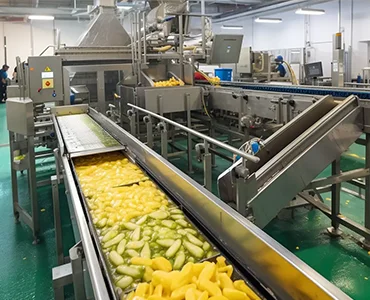
Strategic Procurement Playbook: Food Machinery Sourcing Checklist
RFQ Drafting: Lock-in Technical & Commercial Baseline
Open with a two-envelope RFQ: technical bid opens first; commercial bids auto-reject if technical score < 85%. Embed FSMA 204 traceability clause requiring component-level lot tracking for 10 years. State throughput tolerance: ±2% on nameplate capacity, with $5k per 0.1% shortfall liquidated damages. Specify OEE ≥ 85% on 3-shift schedule validated against 200h run test. Cap spare-parts margin at 18% over OEM net list for 7 years. Force inclusion of IIoT data schema (OPC-UA, PackML) under penalty of 5% contract value if non-compliant. Require cyber-risk insurance of $2M minimum covering ransomware downtime. Insert right to audit Tier-1 & Tier-2 suppliers annually with 10-day notice.
Supplier Screening & TCO Model
Score suppliers on Total Cost of Ownership (TCO) index: (Acquisition + 10-year energy + parts + downtime) ÷ rated output. Benchmark: index ≤ $0.04 per unit produced for bakery lines, ≤ $0.06 for protein. Reject bids if Mean Time Between Failure (MTBF) < 1,200h or if after-sales FTE ratio < 1 per $8M revenue. Validate warranty loss ratio < 1.5% of machine value via Dun & Bradstreet. Require local service depot within 250 mi with 24h parts fill rate ≥ 95%.
Factory Acceptance Test (FAT): Go/No-Go Matrix
Run FAT on buyer-supplied raw materials; supplier pays freight. Accept only if Cpk ≥ 1.67 on critical dimensions, foreign-body rejection rate ≤ 50 ppm, and wash-down IP69K validation passes 1,000h salt-spray. Record energy consumption kWh/kg; reject if > 105% of quoted value. Tie 90% final payment to FAT sign-off; release only after supplier uploads digital twin to buyer cloud.
Incoterms Selection: FOB vs DDP Trade-off
| Decision Variable | FOB Port of Loading | DDP Site |
|---|---|---|
| Typical freight + duty range (% of machine value) | 6–9% | 0% (absorbed) |
| Buyer control over high-value freight insurance | Full | None |
| Import customs delay risk | High (1–3 weeks) | Zero |
| Hidden DDP margin added by OEM | — | 4–6% |
| Total landed cost index (100 = FOB) | 100 | 104–108 |
| Recommended when buyer has ≥ $50M annual freight spend & in-house trade compliance team | ✔ | ✘ |
| Recommended when plant is in emerging market with opaque customs | ✘ | ✔ |
Use FOB + buyer-nominated forwarder for shipments > $2M to capture 3–4% savings; switch to DDP for first-time OEMs or high-tariff jurisdictions (>8%) to cap downside.
Site Commissioning & Risk-Retention Schedule
Hold 10% retention until SAT sign-off plus 30 days production at ≥ 90% OEE. Insert performance bond of 15% contract value valid until final acceptance. Require supplier escrow of source code for PLCs if IP escrow trigger (bankruptcy, support dropout) occurs. Penalize $10k per day for delay past agreed mechanical completion, capped at 10% of machine value. Enforce final acceptance only after CMMS data upload with ≥ 95% spare-part SKU accuracy.
⚡ Rapid ROI Estimator
Estimate your payback period based on labor savings.
Estimated Payback: —