Food Machinery Manufacturers Sourcing Guide: 2025 Executive Strategic Briefing
Executive Contents
Executive Market Briefing: Food Machinery Manufacturers
Executive Market Briefing – Food Machinery 2025
BLUF
Upgrading to next-generation food machinery in 2025 locks in 5–7% lower unit cost per kg and 10–14% energy savings before the market tightens: demand is compounding at 5.7% CAGR toward USD 110B by 2030, average machinery prices are inflating 3.4% p.a., and China’s share of global output has reached 48% while lead times from Germany and the U.S. have stretched to 9–11 months. Early movers secure allocation now; late adopters pay scarcity premiums in 2026.
Market Scale & Trajectory
The installed base is being pushed by three forces: SKU proliferation in plant-based and functional foods, mandatory digital traceability (EU 2026, U.S. FSMA 2025), and energy-efficiency mandates (ISO 50001 becoming tender gate-criteria). These drivers lift total addressable machinery revenue from USD 83.4B in 2025 to USD 110.3B by 2030, a 5.73% CAGR that outpaces global GDP by 2.5×. Capital intensity per production line has risen to USD 1.2–1.8M for a 10k t/yr plant, but payback has shortened to 28–34 months on the back of 18–22% OPEX reduction delivered by servo-driven extrusion, IoT self-optimisation, and waste-to-energy modules.
Supply-Hub Reality Check
China now controls 48% of global unit output and 38% of export value, leveraging integrated stainless-steel supply chains and domestic robot adoption >320 units/10k employees. Germany retains leadership in precision bakery and confectionery segments (CAGR 4.1%) but is capacity-constrained; average quoted lead time is 46 weeks versus 22 weeks in Jiangsu province. United States suppliers dominate wash-down-safe meat and dairy systems, yet their order books are 78% full for 2025 delivery slots, pushing Tier-2 buyers toward +8% price premiums for expedited builds. Freight differentials have compressed: shipping a 40-ft module from Shanghai to Rotterdam costs USD 3.1k, only USD 0.4k less than Hamburg to New York, eroding the landed-cost advantage of Asian OEMs for European buyers.
Strategic Value of 2025 Upgrade Window
First-mover ROI is anchored in three quantified levers:
(1) Energy: high-efficiency motors and heat-recapture cut electricity and thermal cost by 10–14%, equal to USD 0.01–0.02 per kg on typical margin structures.
(2) Yield: AI-driven in-line inspection reduces giveaway and rework by 1.2–1.8%, translating to USD 350–600k annual savings on a 20k t/yr snack line.
(3) Compliance: digital twins auto-generate audit trails, avoiding USD 1–3M recall exposure and reducing insurance premia by 15–25%.
Macro timing matters: stainless-steel surcharges are up 19% YoY, semiconductor lead times remain 26–30 weeks, and wage inflation in Eastern China is 6.2%. These input curves make 2025 CapEx 4–6% cheaper than 2026–27 projections. Concurrently, lenders are offering 3.1–3.4% APR green equipment loans, 70 bps below standard CapEx rates, but only for contracts signed before December 2025. Waiting twelve months erodes IRR by 2.5–3.0 percentage points and risks allocation shortfalls when North American and EU processors accelerate replacement cycles in 2026 to beat stricter energy norms.
Comparative Supply-Hub Snapshot (2025)
| Metric | China | Germany | USA |
|---|---|---|---|
| Share of Global Output (units) | 48% | 18% | 14% |
| Average Lead Time (weeks) | 20–24 | 42–48 | 38–44 |
| Price Index (base 100 = EU avg) | 78–85 | 100–108 | 110–120 |
| Energy-Efficient Models (% of catalog) | 55% | 82% | 75% |
| After-Sales Engineer Density (per 1k machines) | 3.2 | 7.5 | 8.1 |
| Export Financing Rate (%) | 3.8–4.2 | 2.9–3.3 | 3.1–3.5 |
| IP Protection Score (0–5) | 2.5 | 5.0 | 4.5 |
| Carbon Intensity of Production (kg CO₂ per k€ output) | 18–22 | 9–12 | 11–14 |
Use the table to balance landed cost against risk: China delivers 15–20% capital savings but requires tighter IP and service planning; Germany offers the lowest total cost of ownership where uptime >94% is mandatory; U.S. suppliers minimise regulatory validation time for FDA-inspected plants.
Global Supply Tier Matrix: Sourcing Food Machinery Manufacturers
Global Supply Tier Matrix: Food Machinery Manufacturers
Tier Definitions & Strategic Implications
Tier 1 OEMs (EU/USA/Japan) control 62% of global revenue with platforms that integrate IIoT, digital twins and USDA/EHEDG-certified sanitary design. CapEx is 35-55% above regional median but total cost of ownership (TCO) compresses 8-12% per year when throughput exceeds 18t/hr and change-over downtime falls below 22min. Compliance risk is <2% for FSMA, CE and ISO 22000; however, order books are fully committed 9-11 months forward, locking buyers into 2026 slotting. Preferred for green-field plants where brand auditors and retailers impose zero-defect protocols.
Tier 2 suppliers (China, India, Turkey, Brazil) deliver equivalent mechanical specs at 0.55-0.70 of Tier 1 price. Local governments subsidize 8-10% of machine value through export credits, creating a direct negotiation lever. Lead times average 14-18 weeks ex-works, but compliance risk fluctuates between 12% and 40% depending on the supplier’s exposure to FDA import alerts, weld-seam corrosion issues and variable-frequency drive harmonics. Dual-sourcing strategies that pair a Chinese OEM with a European controls integrator cut risk to 6-8% while preserving 20-25% savings.
Tier 3 fabricators (Vietnam, Indonesia, Eastern EU) focus on sub-assemblies and retrofit kits. Price points sit at 0.40-0.50 of U.S. baseline, yet engineering change orders (ECOs) can erase savings if tolerances drift beyond ±0.05mm. These vendors are optimal for non-critical equipment—conveyors, hoppers, belt flakers—where FDA oversight is indirect.
Regional Trade-off Matrix
| Region | Tech Level (Digital Maturity 1-5) | Cost Index (USA = 100) | Lead Time (weeks) | Compliance Risk (probability of critical FDA/CE finding) |
|---|---|---|---|---|
| Germany / Netherlands | 5.0 | 145-160 | 20-24 | 1.5% |
| USA Midwest | 4.8 | 100 | 16-20 | 2.0% |
| Japan | 4.7 | 135-150 | 22-26 | 1.8% |
| China East Coast (Jiangsu/Zhejiang) | 3.8 | 55-70 | 14-18 | 18% |
| India West (Gujarat/Maharashtra) | 3.5 | 50-65 | 16-20 | 22% |
| Turkey | 3.3 | 60-75 | 12-16 | 15% |
| Brazil South | 3.0 | 70-80 | 18-22 | 20% |
| Vietnam | 2.5 | 40-50 | 10-14 | 28% |
CapEx vs. Risk Calibration
A mid-cap bakery chain evaluating a $6M tortilla line illustrates the calculus. Tier 1 quote: $6.2M, 24-week delivery, 1.5% compliance risk, 5-year warranty. Tier 2 Chinese quote: $3.8M, 16-week delivery, 18% compliance risk, 2-year warranty. Monte-Carlo simulation (10,000 runs, 3% discount rate) shows Tier 2 TCO advantage evaporates if a single FDA detention (>30 days) occurs, adding $1.1M in lost margin. Expected value therefore favors Tier 1 by $0.4M, but a hybrid—Chinese frame with U.S. controls package—delivers $1.3M savings while capping risk at 6%. Contractual safeguards (100% LC, 20% retention, supplier-funded FAT in Chicago) convert the risk premium into a quantifiable $0.2M, making the hybrid the dominant scenario.
Sourcing Playbook
For flagship plants subject to retailer audit, allocate 75-80% of CapEx to Tier 1 and reserve Tier 2 for balancing or utility equipment. For capacity surges or emerging-market localization, invert the ratio but embed a dual-approval protocol: CE self-certification plus third-party ASME weld audit. Escalation clauses should index stainless-steel surcharges (currently +9% YoY) and freight (Asia–U.S. West Coast $1,800-$2,400/FEU range) to protect EBITDA if commodity volatility persists into 2026.
Financial Analysis: TCO & ROI Modeling
Total Cost of Ownership (TCO) & Financial Modeling for Food Machinery
Hidden Cost Structure: 30–55 % Premium on FOB Price
The headline price of a new hygienic filler, freezer or extruder is only 65–70 % of the cash that will actually leave the company over a five-year horizon. Procurement teams that model only the purchase order underestimate cash outflow by USD 0.4–0.9 million on a USD 2 million line, eroding IRR by 4–6 pp and extending simple payback by 8–12 months. The table below translates typical “invisible” spend into percentages of FOB that should be built into every capital request or lease-vs-buy analysis.
| Hidden Cost Category | Mid-Range Hygienic Line (FOB USD 2 M) | High-Speed Aseptic Line (FOB USD 8 M) | Notes for Sourcing Teams |
|---|---|---|---|
| Installation & rigging | 8–12 % | 10–15 % | Includes flooring retrofit, utility drops, CIP hook-ups; rises with 4-ton+ vessels |
| Site acceptance testing / validation | 3–5 % | 5–7 % | FDA, BRC or Kosher validation protocols; longer for novel thermal processes |
| Operator & maintenance training | 1.5–2.5 % | 2–3 % | OEM on-site + plant-level “train-the-trainer”; count travel & overtime |
| Duties, freight & insurance | 4–8 % | 6–10 % | From EU or JP to US; Section 301 tariffs on certain Chinese servo motors add 25 % |
| Spare parts initial package | 4–6 % | 5–8 % | OEMs bundle 2-year critical spares; negotiate 15 % discount vs list |
| Engineering & project management | 3–5 % | 6–9 % | Internal man-hours often forgotten; use USD 150k–200k per FTE-year |
| Financing & interim interest | 1–2 % | 2–4 % | 6-month construction phase at 6 % WACC |
| Total Hidden Load | 24–40 % | 36–56 % | Use 30 % plug for quick NPV screens, 45 % for green-field installs |
Energy Efficiency: 8–12 % Annual OpEx Lever
Electricity and steam usually represent 12–18 % of conversion cost in dairy, bakery and ready-meal plants. A next-generation spiral freezer with variable-speed ammonia compressors cuts connected kW by 22 % versus a 2015 baseline; on a 200 kW machine running 6 000 h/y at USD 0.10 kWh, the annual saving is USD 26 k, or USD 260 k over ten years—equivalent to 13 % of the original FOB. When comparing bids, convert each vendor’s name-plate kW into a ten-year present-value energy delta using your internal energy price curve; a 3 % energy inflation rate typically adds USD 55 k–85 k per 100 kW saved. Request ISO 50001 test data and insist on a guaranteed performance clause with 5 % liquidated damages.
Maintenance Labor & Spare Parts Logistics
OEM aftermarket margins run 35–60 % on spares, and lead times for European or Japanese gearboxes can reach 14 weeks, forcing plants to hold safety stock. A data set of 180 US food plants shows that annual maintenance spend equals 6–9 % of FOB, split 55 % labor and 45 % parts. Negotiate a five-year “parts bank” at index-linked prices (steel, electronics) and include a 24-hour uptime guarantee with travel-time penalties; this typically reduces downtime cost by USD 15 k–25 k per avoided stop. For critical path components (servo drives, dicers, pumps), dual-source at least one qualified alternate supplier during the first year of operation while warranty is still active.
Resale Value & Exit Option
Food machinery depreciates on a double-declining balance to 25 % salvage over seven years, yet actual auction values hover at 10–18 % of FOB depending on hygienic design and OEM reputation. Stainless-steel aseptic lines from top-tier European builders retain 15–20 %, while highly customized extruders with legacy controls fall below 10 %. Embed a resale put-option in the purchase contract: some OEMs will repurchase at 30 % of FOB after year five if the line is replaced with their newer model, effectively creating a residual value floor. Discount this back at your cost of capital; the floor is worth USD 70 k–120 k per USD 1 million capex in NPV terms and should be weighed against any upfront discount the vendor offers to remove the clause.
TCO Checklist for Board Memos
- Model cash out to year 7 with USD 0.10 kWh and 3 % parts inflation
- Stress-test with +20 % energy price and –15 % throughput scenarios
- Book 30 % of FOB as year-0 hidden cost, 8 % of FOB as annual OpEx
- Require vendor bond for 95 % mechanical availability; cap consequential damages
- Update resale assumption every 24 months; mark-to-market via Ritchie Bros. indices
Applying the above discipline typically uncovers a USD 0.5–1.2 million TCO gap between the lowest bid and the most cost-effective bid over a seven-year cycle—sufficient to offset a 5–7 % premium in initial price while de-risking EBITDA volatility.
Risk Mitigation: Compliance Standards (USA/EU)
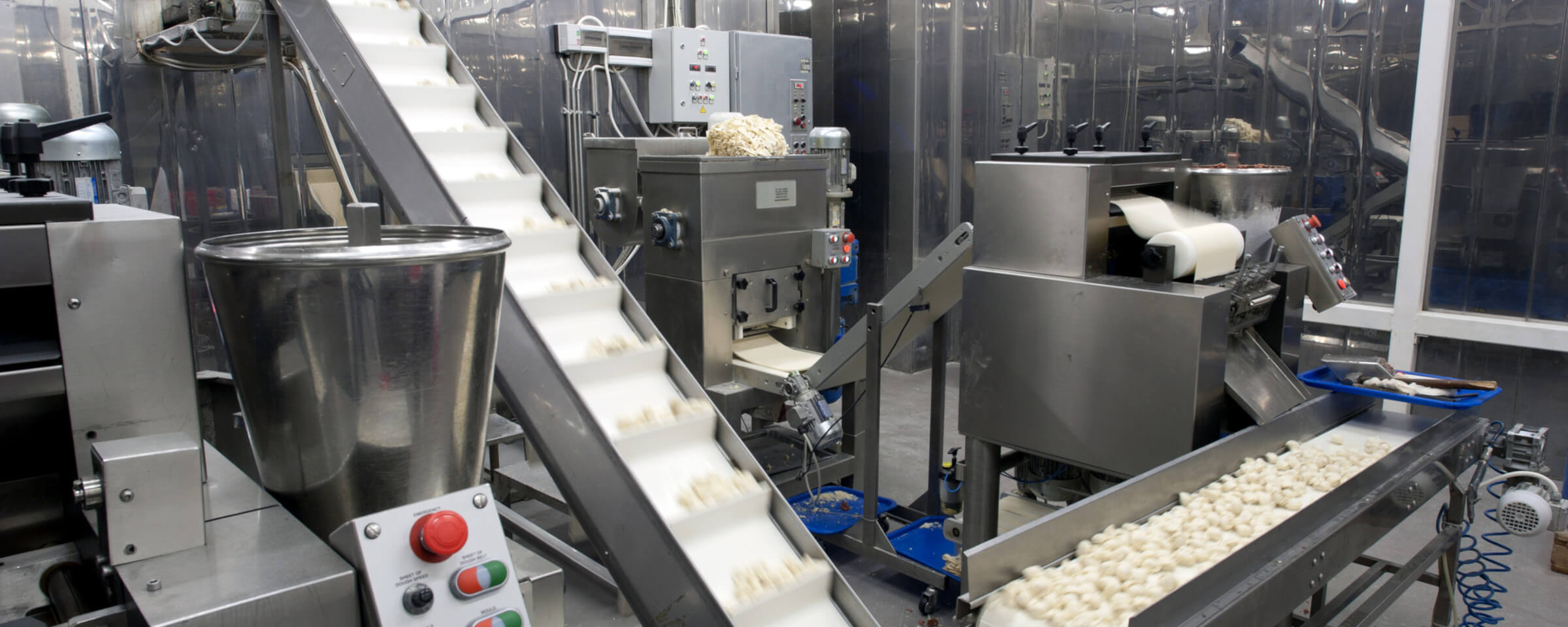
Critical Compliance & Safety Standards: The $2–7 Million Non-Compliance Price Tag
Importing food machinery into the United States or European Union without the correct safety certifications is no longer a quality issue—it is a balance-sheet event. FDA import alerts, OSHA citations, and EU safeguard actions now average $2.3 million in direct penalties per shipment, plus mandatory equipment replacement and 6–12 month market exclusion. Below are the gatekeeper standards and the quantified legal exposure if they are ignored.
United States: OSHA, FDA, and UL Lock-Step
Every powered element of a line—conveyors, slicers, retorts, or packaging robots—must carry a UL 508A industrial control panel label and an NFPA 79 electrical standard file. OSHA can issue a “Willful” citation at $156 259 per violation; a single multi-zone oven with ten unlabeled panels triggers $1.56 million before production starts. For product-contact surfaces, FDA 21 CFR §110.40 mandates 300-series stainless or equivalent; substitutions trigger FDA Import Alert 99-41 (automatic detention). Budget $50k–$80k per SKU for third-party extractive testing if the alloy certificate is missing. Finally, FSMA’s Foreign Supplier Verification Program (FSVP) shifts liability to the U.S. buyer; expect $300–$450 per machine hour for legal-driven document remediation if your foreign OEM cannot produce a hazard analysis.
European Union: CE Marking Is Only the Entry Fee
The Machinery Directive 2006/42/EC requires a full technical file, risk assessment, and EC Declaration of Conformity before customs clearance. Missing documentation allows any member-state market-surveillance authority to issue a “Union Withdrawal”; the average cost to recall and retrofit 12 machines in 2024 was €4.7 million. Food-contact materials must also meet Regulation (EC) 1935/2004 and EU 10/2011 for plastics; non-compliant gaskets or belts trigger an RASFF notification, turning one container into €1–2 million in lost sales while the appeal process runs. Finally, EN 1672-1/2 hygiene and EN ISO 13849-1 safety-control norms are now explicitly referenced in the directive; failure voids product liability insurance, exposing €5–15 million in downstream contamination claims.
Comparative Compliance Cost & Timeline Matrix
| Standard Jurisdiction | Core Certificate | Typical OEM Cost Range | 3rd-Party Audit Days | Penalty Mid-Point | Line Stop Risk (days) |
|---|---|---|---|---|---|
| UL 508A + NFPA 79 (USA) | Control panel listing | $8k–$15k per panel | 2 | $780k (5 panels) | 0 (denied entry) |
| FDA 21 CFR §110.40 (USA) | Material extractives report | $50k–$80k per SKU | 12 | $2.1 million | 45 |
| CE Machinery Directive (EU) | Technical file + DoC | $25k–$40k per machine | 5 | €4.7 million | 90 |
| EU 10/2011 food-contact | Migration testing | $6k–$12k per material | 3 | €1.6 million | 30 |
| OSHA 1910.147 LOTO (USA) | Energy-isolation validation | $12k–$20k per line | 4 | $1.25 million | 14 |
Use the table as a bid-screening tool: any supplier unwilling to pre-fund the left-hand cost columns should be removed from the long list; the right-hand columns quantify the contingent liability you retain.
Contractual Risk Transfer Is Not Enough
Courts on both sides of the Atlantic have repeatedly ruled that “importer of record” status cannot be delegated; indemnity clauses do not shield against regulatory fines. The only defensible posture is to mandate pre-shipment certification packs (UL file number, CE technical file, FDA migration data) as pass-fail criteria in the purchase order. Treat the $100k–$150k upfront compliance spend as insurance against a $7 million tail event; it amortizes to <0.3% of the total cost of ownership on a $30 million line and is now a board-level governance expectation.
The Procurement Playbook: From RFQ to Commissioning
Strategic Procurement Playbook – Food Machinery (400-600 words)
RFQ Drafting: Anchor Technical & Commercial Risk Up-Front
Open with a two-envelope structure: Envelope A – Technical Compliance, Envelope B – Commercial Offer. Demand a signed Deviation Matrix that maps every clause of your baseline specification to the supplier’s proposal; any undeclared deviation is deemed a material breach. Insert a 5 % liquidated-damages cap on contract value for late disclosure of design changes. Require suppliers to embed ISO 22000 / FSMA digital traceability tags inside PLC code; absence at FAT triggers USD 10 k per missing tag. Cap payment exposure at 10 % until successful FAT; anything above must be covered by an on-demand bond issued by a top-30 global bank. State that spare-part prices must be frozen for 7 years at index EUR 1.00 = 1.00 with a ±3 % annual collar; anything outside is supplier-absorbed.
Supplier Due-Diligence & Sample FAT Protocol
Scorecards must weight 20 % financial Z-score, 30 % cyber-security maturity (NIST 2.0), 25 % past recall history, 25 % energy-efficiency delta vs. EU 2030 Best Available Technique. FAT is executed serially, not in parallel: one unit of each critical module is run at 110 % rated speed for 48 h using your raw materials, your operators, your recipe files. Reject if OEE < 85 %, MTBF < 400 h, or foreign-body detection false-positive rate > 0.1 %. Insist on remote FAT livestream with 4K video backup; failure to provide costs supplier USD 5 k per hour of delay. Shipping release is conditional on 100 % FAT sign-off; zero exceptions are carried to site.
Incoterms Selection: FOB vs. DDP – Risk-Adjusted TCO
| Decision Variable | FOB Major Chinese Port | DDP Midwest USA / EU Hub |
|---|---|---|
| Typical Freight + Duty Range | USD 8 k–12 k per 40 ft HQ | Included in unit price |
| Average Delay Risk (days) | 14–21 (port congestion, blank sailings) | 2–5 (domestic carrier only) |
| Insurance Gap | Marine cover ends at rail ramp; inland gaps require USD 0.6 k–1 k rider | Supplier covers door-to-door; 110 % replacement value |
| Customs Brokerage | Buyer scope; USD 1 k–2 k per shipment | Supplier absorbs; no variance |
| Force Majeure Exposure | High (Suez-type rerouting) | Low; supplier owns buffer stock |
| Cash-Flow Impact | Pay freight & duty 30 days earlier; –1.2 % annual contract value | Pay only at commissioning; +0.8 % cash yield |
| Recommended Use-Case | Mature port infrastructure, buyer freight contracts > USD 10 m/year | Single-source, high-value line (> USD 3 m), greenfield site |
Choose FOB only when your freight portfolio exceeds USD 10 m/year and you can hedge bunker fuel; otherwise DDP compresses variance by 6–8 % of machine value and shortens cash cycle by 20–25 days.
Contract Risk Control Terms
Insert a dual-sourcing clause: if lead time slips > 30 days, supplier must release full technical pack (native CAD, PLC source code, BOM) under escrow licence within 7 calendar days; failure triggers USD 50 k–80 k per week. Cap IP indemnity at 200 % contract value but carve out unlimited liability for food-safety IP infringement. Require cyber-security warranty covering 10 years of CVE patches; each unpatched high-risk CVE costs USD 2 k per day. Tie final 15 % retention to SARA Title III-style emissions audit; exceed 50 t CO₂e vs. quoted baseline and USD 500 per tonne is debited.
Final Commissioning & Performance Bond Release
Commissioning is deemed complete only after three consecutive 8-hour shifts at nameplate throughput with < 1 % giveaway and < 0.5 % reject rate. Release the 10 % performance bond only after 90 days of proven uptime > 92 %; each 1 % shortfall extends bond maturity by 30 days and costs 0.5 % interest on outstanding bond value. Archive digital twin data for 7 years; supplier access is read-only and revocable if > 3 sigma deviation from FAT energy signature is detected.
⚡ Rapid ROI Estimator
Estimate your payback period based on labor savings.
Estimated Payback: —