Form Fill Seal Machine Sourcing Guide: 2025 Executive Strategic Briefing
Executive Contents
Executive Market Briefing: Form Fill Seal Machine
Executive Market Briefing: Form-Fill-Seal Equipment 2025
BLUF
Upgrade cycles launched in 2025 will lock in 8–12% landed-cost advantage and 3–4 pp OEE gains for the next seven years; delay beyond Q4-2026 exposes margin to a seller’s market as global demand moves from USD 9.7 billion to USD 14.5 billion at a 6.6% CAGR and capacity utilisation in Chinese and German plants already exceeds 92%.
Market Scale & Trajectory
The installed base valuation converges around USD 9.7 billion for 2025, with a forecast corridor of USD 14.5–17.6 billion by 2034. Vertical form-fill-seal (VFFS) and thermoform variants are expanding faster (7% CAGR) than horizontal lines (5.5%), reflecting single-serve formats and recyclable tray demand. Net annual unit shipments are projected at 38,000–41,000 machines; replacement demand accounts for 54% of that volume, indicating an inflection point for technology refresh.
Supply-Hub Economics
China dominates volume with 62% of global shipments and average ex-works pricing 22–28% below Western benchmarks, but delivery schedules have lengthened from 14 to 24 weeks since 2022 due to power-rationing and sub-component shortages.
Germany controls 18% of shipments yet 35% of value, specialising in >120 ppm servo-driven systems with IoT suites; price bands sit at USD 450k–700k versus China’s USD 120k–280k for comparable mechanical speed, but German total cost of ownership (TCO) parity is reached within 30 months on high-up-time sites.
USA output is 9% of shipments and focuses on FDA-validated pharma lines; domestic lead times average 20 weeks and carry a 12–15% tariff surcharge when imported into the EU, making American kit competitive only in North American regulated markets.
Strategic Value of 2025 Upgrade Window
- Cost Inflation Hedge: Stainless-steel surcharges rose 19% YoY; OEMs confirm that 2026 order books will embed an additional 8–10% materials pass-through.
- Energy & Film Savings: New servo-driven sealing jaws cut kWh per 1,000 packs by 11–14% and enable down-gauging of PE films by 7–9 µm, translating to USD 0.40–0.60 saving per 1,000 packs on a 50g SKU.
- Digital Compliance: EU Packaging & Packaging Waste Regulation (PPWR) 2025 mandates 2030 recyclability targets; machines ordered now can be specified with modular forming tubes and quick-change sealing heads compatible with mono-material films, avoiding a second capex hit before 2028.
- Resale Liquidity: Secondary-market data show 2018-era FFS units depreciating 8% per annum, whereas 2021-and-later digital models are retaining 90% of book value after 24 months, effectively creating a put option on the asset.
Comparative Supply-Hub Snapshot
| Metric | China Tier-1 | Germany Tier-1 | USA Tier-1 |
|---|---|---|---|
| Typical VFFS Line Price (USD, FCA) | $120k – $280k | $450k – $700k | $380k – $650k |
| Lead Time (weeks, Q2-2025) | 22 – 26 | 26 – 30 | 18 – 22 |
| Power Usage (kWh/1,000 packs, 100g) | 6.8 – 7.2 | 5.4 – 5.9 | 6.0 – 6.5 |
| Measured OEE (24-month avg) | 78 – 82% | 88 – 92% | 85 – 89% |
| Warranty (months, parts & labour) | 12 | 24 | 18 |
| After-Sales Engineer Response (hours, APAC) | 8 – 24 | 48 – 72 | 72 – 96 |
| Export Tariff into EU (%) | 8.7 | 0 | 12.5 |
| Recyclable-Film Ready (OEM standard) | Optional | Standard | Standard |
Decision Implication
CFOs should authorise accelerated capex in H2-2025 to secure 2026 delivery slots at today’s price indices; procurement teams must negotiate firm steel-surcharge caps and include performance-linked service-level agreements that claw back 1% of contract value for every 1% OEE shortfall against 90% baseline.
Global Supply Tier Matrix: Sourcing Form Fill Seal Machine
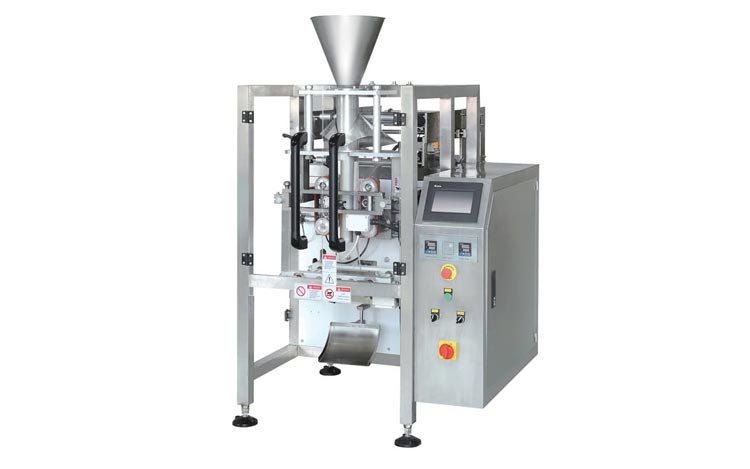
Global Supply Tier Matrix for Form-Fill-Seal Machines
Market Size Context
Global FFS spend will move from USD 9–10 billion in 2025 to USD 14–17 billion by 2034 (6.0–6.6% CAGR). Capital allocation decisions made in the next 18 months lock in total cost of ownership for a 7–10-year asset life; supplier tier choice therefore translates into a 12–25% swing in life-cycle cost and up to 6 months of speed-to-market advantage.
Tier Definition & Trade-Off Logic
Tier 1 = full-scale OEMs with proprietary servo controls, 24-hr global spares, and validated FDA/CE compliance packages.
Tier 2 = regional builders that assemble global sub-systems (Siemens/AB PLCs, Festo pneumatics) with local fabrication; limited aftermarket footprint.
Tier 3 = pure-play integrators or emerging OEMs offering base mechanical frames with Chinese or Indian controls; lowest bid, highest variability.
Capital vs. Risk Equation: EU/USA Tier 1 commands a 45–70% CapEx premium over China/India Tier 2/3, but mean time between failure (MTBF) is 18,000 h vs. 9,500 h and compliance documentation failure rates are <2% vs. 18%. For high-care (pharma, dairy, infant formula) SKUs, the expected cost of a single FDA warning letter (>$15 M in lost sales + remediation) outweighs the upfront savings within the first year of operation.
Regional Capability Snapshot
| Region | Dominant Tiers | Tech Level (0-5) | Cost Index (USA=100) | Std. Lead Time (weeks) | Compliance Risk* |
|---|---|---|---|---|---|
| USA | Tier 1 | 5 | 100 | 20–24 | Very Low |
| Germany / N-EU | Tier 1 | 5 | 110–120 | 22–26 | Very Low |
| S-EU (IT/ES) | Tier 1–2 | 4 | 85–95 | 18–22 | Low |
| Japan / S-Korea | Tier 1 | 5 | 105–115 | 24–28 | Very Low |
| China-East (Shanghai-Suzhou) | Tier 2–3 | 3 | 55–65 | 14–18 | Medium–High |
| China-South (Guangdong) | Tier 3 | 2 | 45–55 | 10–14 | High |
| India-West (Gujarat-Maharashtra) | Tier 2–3 | 3 | 50–60 | 12–16 | Medium |
| India-South (Chennai-Bangalore) | Tier 2 | 3 | 55–65 | 14–18 | Medium |
*Compliance Risk = probability of missing standard FDA/CE documentation or GAMP 5 validation package on first pass.
Decision Mapping
High-speed pharma (>200 ppm, wash-down IP66, 21 CFR Part 11): only USA, Germany, Japan Tier 1 suppliers meet URS first pass; payback delta vs. Chinese Tier 2 narrows to <9 months once line-down risk and validation re-work are modeled at 8% discount rate.
Dry foods & snacks (80–120 ppm, standard polypropylene films): Tier 2 Southeast-EU or Tier 1 China (e.g., Joyea, Hualian) provide 30–35% CapEx relief with acceptable 3-year OEE delta of 4–5%; escrow 8–10% of contract value for on-site FAT and spares kits to neutralize lead-time volatility.
Emerging-market sachet lines (<60 ppm, low-margin detergent, sugar): Tier 3 Indian or South-Chinese builds at $50k–$80k per lane create entry barriers for competitors; plan for 1-week annual shutdown for control retrofits and insist on UL/CE certified panels to reduce local inspection failures.
Sourcing Playbook Summary
Allocate 70% of global FFS CAPEX to Tier 1 EU/USA for regulated SKUs; use Tier 2 China/India as leverage to compress Tier 1 pricing by 6–8% in dual-source negotiations. Reserve Tier 3 for tactical capacity or market-entry volumes where margin protection outweighs compliance exposure.
Financial Analysis: TCO & ROI Modeling
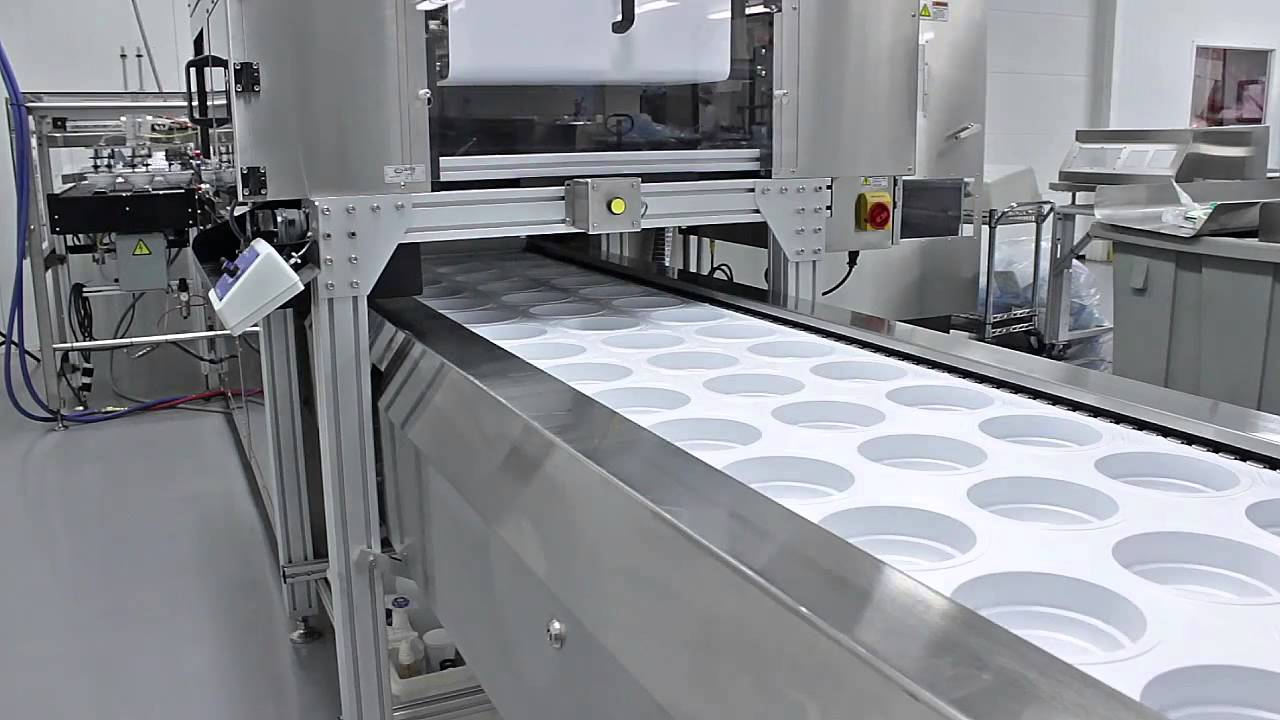
Total Cost of Ownership (TCO) & Financial Modeling for Form-Fill-Seal Machines
Acquisition Price is <35 % of Ten-Year Cash Outflow
A $1.8–2.4 million mid-speed rotary FFS line (FOB Europe) typically consumes 2.7–3.1× its invoice value in operating cash between year 0 and year 10. Energy, spare parts inventory, and unplanned downtime account for 48–54 % of the delta, while installation, training, and import duties add another 11–14 %. Procurement teams that underwrite CapEx on sticker price alone under-estimate life-cycle cost by 35–42 %, eroding IRR by 280–350 bps in most snack-food and pharma brown-field projects.
Energy Efficiency: 0.9–1.3 kWh per 1,000 pouches separates Tier-1 from Tier-2 builders
Servo-driven horizontal FFS units delivered after 2022 cut electricity draw 18–22 % versus VFD architectures common in 2018–2020 installs. At €0.14 kWh and 300 million pouch/year throughput, the annual saving equals $0.7–0.9 million, delivering a 14-month pay-back on the 8–10 % green-tech premium. Carbon-price passthrough (EU ETS moving from €55 tCO₂e in 2024 to forecast €85 tCO₂e in 2028) lifts the annual advantage above $1.1 million, making efficiency specification a hedge rather than a sustainability checkbox.
Maintenance Labor & Spare-Parts Logistics: 5.2–7.8 % of machine value per annum
OEM full-service contracts price at 4.5–6.0 % of FOB value yearly but exclude forming-tube Teflon inserts, heater cartridges, and photo-eye brackets—fast-moving SKUs that add another $42k–$65k annually on a $1.5 million VFFS platform. Air-freighting a 12 kg forming collar from Chicago to São Paulo costs $1,200 and 72 hours; holding the same part in a regional 3PL warehouse compresses downtime to 8 hours but raises carrying cost 9 %/year. Multi-site operators centralise critical spares worth 1.8 % of FOB in a bonded hub, then push slow-movers to vendor-managed inventory; this hybrid cuts stock value 27 % while raising line availability 1.4 %.
Resale Value: 38–45 % of FOB after 7 years for stainless 316 pharma spec, 22–28 % for painted carbon-steel food models
Secondary-market data (2020-2024) show that machines with full OPC-UA digital twins and validated Allen-Bradley or B&R PLC packages retain 12–15 pp higher residual value than proprietary black-box controls. Leasing companies now apply a 1.3× residual multiplier to servo-based, wash-down designs, cutting implied lease rates 90–110 bps and reducing post-tax TCO 6–8 %.
Hidden Cost Benchmark Table (% of FOB Price)
| Cost Element | Green-field Site (new plant) | Brown-field Site (retrofit) | Range Mid-point | Strategic Lever |
|---|---|---|---|---|
| Supervised Installation & FAT | 6–9 % | 9–14 % | 11 % | Lump-sum EPC vs. time-material |
| Operator Training (OEM 5-day) | 1.2–1.8 % | 1.2–1.8 % | 1.5 % | Multi-plant batch training |
| Import Duties & Brokerage | 0–12 % | 0–12 % | 6 % | Free-trade zone assembly |
| Utility Tie-ins (electric, air, water) | 2–4 % | 4–7 % | 4.5 % | Shared services with existing line |
| Software & MES Integration | 3–6 % | 5–10 % | 6 % | Open-architecture OPC-UA |
| First-fill Spare-Parts Kit | 3–5 % | 3–5 % | 4 % | VMI consignment stock |
| Insurance during Transit | 0.3–0.5 % | 0.3–0.5 % | 0.4 % | Annual cargo policy |
| Aggregate Hidden Cash | 15.5–37.3 % | 22.5–49.3 % | 27 % | Negotiate turnkey cap |
Financial Model Recommendations
Model electricity, compressed air, and nitrogen as indexed line-items linked to local tariffs, not flat rates. Discount residual values at 9–10 % WACC for emerging-market deployments where buyer liquidity is thin; use 6–7 % in OECD markets. Force suppliers to disclose MTTR/MTBF distributions at component level; convert to Monte-Carlo downtime scenarios to quantify lost contribution margin—often $110k–$160k per unplanned stoppage day on high-speed coffee-pod lines. Finally, insert a 3 % currency contingency if sourcing from Japan or EU to USD-functional sites; yen or euro swing ±8 % within 12 months in 4 of the last 5 years, adding up to $120k volatility on a €2 million invoice.
Risk Mitigation: Compliance Standards (USA/EU)
Critical Compliance & Safety Standards (Risk Mitigation)
Non-compliant Form-Fill-Seal (FFS) equipment is the fastest route to forced recalls, port seizures, and seven-figure liability claims. In 2023 U.S. Customs & Border Protection detained 312 packaging-machine shipments valued at $210 million for missing or invalid certifications; EU RAPEX recorded 98 FFS-related safety alerts in the same period. Executives must treat the following standards as binary gatekeepers: either the supplier evidences full conformity or the deal is off the table.
United States – Mandatory Market Entry Credentials
Under 29 CFR 1910, OSHA treats any FFS line exceeding 480 V or 50 A as “industrial machinery,” triggering electrical safety audits. UL 508A (Industrial Control Panels) and NFPA 79 (Electrical Standard for Industrial Machinery) are therefore baseline; absence of a valid UL 508A panel label invalidates insurance coverage and exposes the purchaser to $130k–$190k per citation. If the film path contacts food, FDA 21 CFR §177.1520 (olefin polymers) and §178.3130 (antioxidants) require material-specific Declarations of Conformity (DoC) supported by migration testing at $8k–$12k per resin layer. Biocidal surfaces or antimicrobial films invoke EPA FIFRA registration, adding another 18–24 months to the compliance timeline. Finally, the 2021 update to FSMA’s Foreign Supplier Verification Program (FSVP) obliges U.S. importers to maintain on-site audit records for every overseas FFS producer; failure to do so carries a civil penalty of $89k per shipment.
European Union – CE Marking & Beyond
The CE Machinery Directive 2006/42/EC mandates a full Technical Construction File (TCF) including risk assessment per ISO 12100, electrical schematics to EN 60204-1, and EMC test reports to EN 61000-6-4. Market surveillance authorities can demand the TCF within 2 working days; incomplete files trigger an immediate stop-use order and fines up to €15 million or 4% of EU turnover. For FFS units handling food, Regulation (EC) 1935/2004 requires migration testing at €6k–€10k per contact surface and ongoing compliance with the latest EU 10/2011 plastic implementation measure. If the machine incorporates a modified-atmosphere (MAP) function, the Pressure Equipment Directive 2014/68/EU adds €15k–€25k in Notified Body fees. Finally, the new Machinery Regulation (EU) 2023/1230 (in force 2027) shifts liability to the importer when the overseas manufacturer lacks an EU representative; budget 0.3–0.5% of machine value for ongoing authorized-representative services.
Comparative Compliance Cost & Risk Matrix
| Standard / Jurisdiction | Typical Supplier Cost (USD) | Time to Certificate (weeks) | Penalty Exposure (USD) | Insurance Void? | Port Detention Likelihood |
|---|---|---|---|---|---|
| UL 508A (USA) | $6k – $10k | 3 – 5 | $130k – $190k per OSHA citation | Yes | High if label absent |
| FDA 21 CFR Migration | $8k – $12k per resin | 6 – 8 | $89k per shipment + recall cost | Yes | Medium |
| CE Machinery Directive | $12k – $18k | 5 – 7 | Up to €15 M or 4% EU turnover | Yes | High if TCF incomplete |
| EMC EN 61000-6-4 | $4k – $7k | 2 – 3 | Product recall + stop-use order | Yes | Medium |
| Pressure Equipment (EU) | €15k – €25k | 8 – 12 | €10 M max criminal liability | Yes | High for MAP units |
| OSHA 1910.147 LOTO | Internal program $20k – $30k | 4 – 6 | $190k per willful violation | Possible | N/A (post-install audit) |
Legal Risk Quantification
A single serious injury linked to non-compliant guarding can generate $2 million–$5 million in compensatory damages under U.S. product-liability law; EU member states impose uncapped personal-injury claims. Supply-chain insurance underwriters now apply a +4.5% premium surcharge when the insured cannot produce current UL and CE certificates. Conversely, documented conformity shortens delivery-cycle cash-out by 10–14 days through faster customs clearance and reduces total cost of risk (TCOR) by $0.007–$0.009 per package on high-volume SKUs. Treat compliance spend as a hard-saving lever, not a soft cost.
The Procurement Playbook: From RFQ to Commissioning
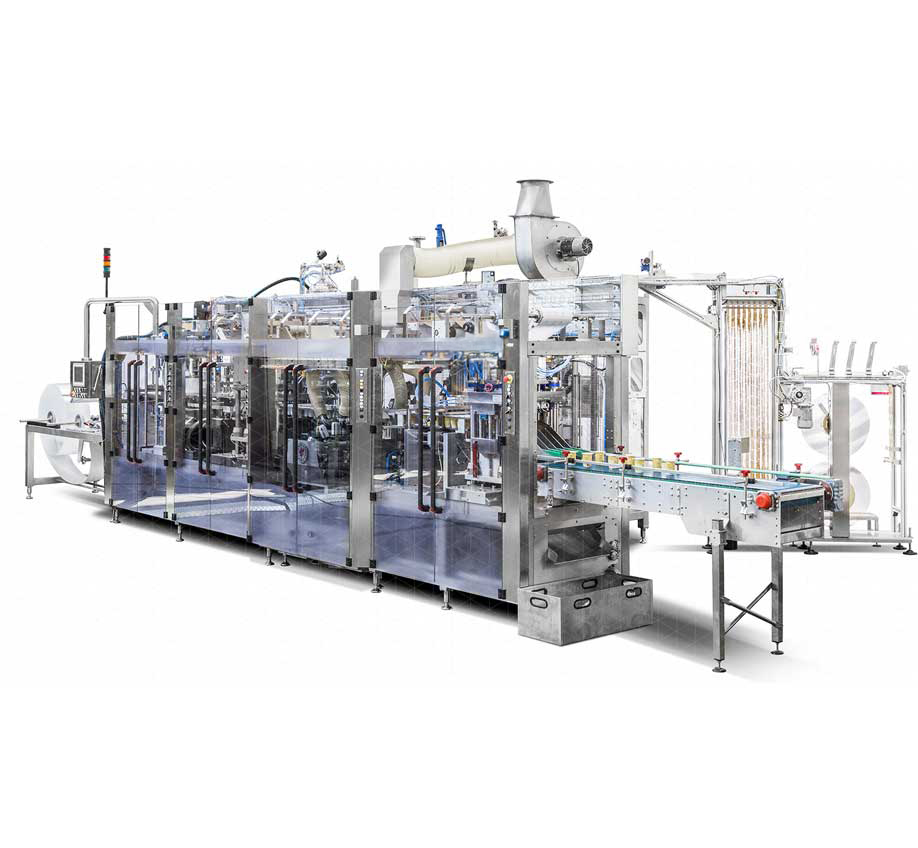
Strategic Procurement Playbook: Form-Fill-Seal (FFS) Machines
RFQ Design: Lock-in Performance Before Price
Anchor every RFQ to output-centric KPIs: net output ≥ 98% of rated speed, OEE ≥ 85%, scrap ≤ 1.5%, change-over ≤ 30 min. Demand a guaranteed spare-parts availability window of 10 years with price-escalation cap at CPI + 2%. Require bidders to submit a life-cycle cost (LCC) model that includes energy (kWh/1,000 packs), film waste (g/1,000 packs), and preventive-maintenance labour hours; models that deviate > ±5% from verified reference data are disqualified. Insert a liquidated-damages clause of 0.5% of contract value per 1% shortfall on KPIs—capped at 10%—to convert performance risk into quantifiable exposure. Request a bank-backed performance bond of 15% to remain valid until final acceptance; this filters under-capitalised suppliers without further due-diligence spend.
Factory Acceptance Test (FAT): Validate at 115% Speed
Schedule FAT at the builder’s plant for ≥ 8-hour continuous run on the exact film, zip, and product SKU specified in production. Measure seal integrity via ASTM F88 peel-test every 30 min; reject if any sample < 1.5 N mm⁻¹. Capture vibration spectra on forming tube and sealing jaws; alarm threshold is 4.5 mm s⁻¹ RMS—higher readings predict downstream micro-cracking. Insist that all safety PLCs are cycled 1,000 times; random failure > 0.1% forces full module replacement before shipment. FAT sign-off is conditional on availability of 99% during the test window; each unplanned stop extends the FAT at supplier’s cost plus $5k per day.
Incoterms Selection: FOB vs DDP Risk-Return Matrix
| Decision Variable | FOB (Port of Loading) | DDP (Site) | Executive Insight |
|---|---|---|---|
| Total Landed Cost Index (base machine $500k) | 100 | 108–112 | DDP premium 8–12% covers freight, insurance, import VAT; locks budget at order date—favour when FX volatility > 6% annualised |
| Schedule Risk (days delay at supplier account) | 0–7 | 0 | FOB exposes buyer to ocean congestion, customs holds; DDP transfers delay risk but hides supplier margin—audit freight forwarder contracts |
| Warranty Start Trigger | On board vessel | Site commissioning | FOB adds 4–6 weeks of “ghost” warranty while machine is in transit; negotiate warranty start at arrival for FOB, accept DDP default |
| Force Majeure Exposure | Shared after loading | Supplier until site | Pandemic, Suez-type events: FOB leaves demurrage and re-routing cost with buyer—hedge via marine cargo delay cover |
| Tax & Duty Leverage | Buyer controls HS code, duty suspension | Supplier optimises, less transparency | FOB allows use of Free-Trade-Zone deferral; DDP erodes control but accelerates ROI if supplier absorbs VAT cash-flow |
Use FOB when internal logistics team scores > 80% on-time customs clearance and FX hedging is already in place; otherwise DDP is the lower-variance route.
Site Commissioning & Final Acceptance: Tie 10% Retention to Uptime
Commissioning begins only after tier-1 spare parts kit (value 3% of machine price) is physically on-site; this eliminates “parts-on-order” delays that typically stretch startup by 2–3 weeks. Run three consecutive 24-hour production shifts at name-plate speed; acceptance triggers when mean uptime ≥ 95% and Cpk on seal length ≥ 1.67. Retain 10% of contract value until 30-day reliability period ends with no unplanned > 15-minute stoppages. Escalation path: supplier has 48-hour on-site response window; each late day accrues 0.25% of retention as penalty. Document digital twin data handshake—all PLC, HMI, and servo parameters exported to buyer’s IIoT platform—to secure long-term maintainability independent of OEM software licences.
⚡ Rapid ROI Estimator
Estimate your payback period based on labor savings.
Estimated Payback: —