Fruit Juice Filling Machine Sourcing Guide: 2025 Executive Strategic Briefing
Executive Contents
Executive Market Briefing: Fruit Juice Filling Machine
Executive Market Briefing – Fruit Juice Filling Machine 2025
BLUF
The fruit-juice filling segment is the fastest-growing sub-set of the USD 8.8 billion liquid/paste filling market, expanding at 8.4% CAGR (2024-35) versus 2.7% for generic liquid fillers. Chinese OEMs now control 52% of global shipments and deliver 30% lower CAPEX, while German lines retain the highest uptime (>96%) and US suppliers dominate aseptic PET integration. Upgrading to servo-driven volumetric or aseptic carton systems in 2025 locks in 12-18% OPEX savings and secures delivery slots before the next 24-month backlog cycle begins.
Market Size & Trajectory
Juice-specific filling equipment represented USD 4.5 billion in 2022 sales and is on track to reach USD 6.2 billion by 2030, implying an 8.4% CAGR that outstrips the broader bottle-filling machinery segment (3.4%). The differential is driven by (i) rising ambient-juice demand in Asia-Pacific, (ii) EU and US regulatory migration toward aseptic PET (no preservatives, 90-day shelf life), and (iii) retailer pressure for lightweight, tethered-cap formats that require 0.2 mm fill-tolerance. Automatic rotary aseptic lines account for 63% of 2024 order value; semi-automatic piston units are shrinking to <10% share.
Supply-Hub Economics
China (Zhangjiagang, Wenzhou, Shanghai) delivers complete 12,000–24,000 bph hot-fill lines at USD 0.9–1.4 million, 30% below German parity, with 18–22-week ex-works lead times. Domestic stainless-steel sourcing and government VAT rebates keep export prices compressed, but buyers report 3–4 percentage-points higher reject rates and 250-hour longer FAT cycles.
Germany (Krones, KHS, Syntegon) supplies 92–98% OEE-certified aseptic systems priced at USD 1.8–2.6 million; lines integrate blow-fill-cap in <30 m² footprint and guarantee <0.5% DO pick-up. Lead times have stretched to 14 months after 2024 OEM order books grew 27%.
USA (JBT, ProMach, Scholle IPN) focuses on ESL and aseptic carton pouch systems for 200–1,000 ml retail formats; price bandwidth USD 1.1–1.7 million. Section 45X domestic content credits can offset up to 30% of CAPEX for plants producing >50 million litres/year, effectively narrowing the China price gap to 8–10%.
Strategic Value of 2025 Upgrade Cycle
Energy-recovery servo drives introduced in 2024 cut electricity use 0.12 kWh per 1,000 litres versus 2020 models—worth USD 180k annual saving on a 20,000 bph line running 5,000 hours. Aseptic retrofitting future-proofs against anticipated EU Single-Use Plastics Directive expansion to juice bottles <1 L in 2027; non-compliant fillers face USD 0.80 per-kg levy. Finally, OEMs are rationing 2026 build slots to manage semiconductor and gearbox shortages; locking orders in Q3-2025 secures 2026 delivery at 2025 prices (2.5–3.5% escalation clause).
Comparative Index: Key Sourcing Destinations 2025
| Metric | China Tier-1 OEMs | Germany Tier-1 OEMs | USA Tier-1 OEMs |
|---|---|---|---|
| Typical Line Speed (bph) | 18,000 | 24,000 | 20,000 |
| CAPEX Index (base=100 Germany) | 70 | 100 | 90 |
| OEE Guarantee (%) | 88 | 96 | 94 |
| Lead Time (months) | 4.5 | 14 | 10 |
| Energy Use (kWh/1,000 L) | 1.05 | 0.82 | 0.88 |
| Post-Warranty Spare-Parts Cost (% of CAPEX/year) | 3.2 | 1.9 | 2.4 |
| Aseptic Validation Support | Optional (add 6 wks) | Standard | Standard |
| Export Financing | 85% L/C, 5-year tenor | 80% KfW, 7-year | 90% EXIM, 10-year |
| Regulatory Pre-Certification | CE, optional FDA | CE, FDA, 3-A | FDA, PMO, 3-A |
Use the table to weigh upfront savings against lifetime cost; Chinese lines breakeven versus German at 3.5 years if uptime differentials remain <6%. For green-field plants targeting US retail, the USA sourcing column yields lowest total cost of ownership once Section 45X credits are applied.
Global Supply Tier Matrix: Sourcing Fruit Juice Filling Machine
Global Supply Tier Matrix – Fruit Juice Filling Machines
Executive Trade-off: Premium Compliance vs. Capital Efficiency
The market is split into two economically coherent arcs. EU & USA Tier-1 suppliers deliver aseptic, servo-driven lines validated for FDA/EFSA low-acid beverages with OEE >90%, but turnkey cost indices sit at 145-165 versus a U.S. baseline of 100 and require 9-11-month order books. China and India Tier-2/3 factories quote 55-70 % of the U.S. reference, yet variability in material certificates, FAT documentation, and post-warranty service creates a compliance delta equivalent to 4-7 % of life-cycle cost and can extend ramp-up by 30-45 days. The sourcing decision therefore hinges on whether the enterprise risk appetite can absorb an estimated 0.9-1.4 ppt margin erosion from unplanned stoppages versus saving USD 1.2-2.0 million in upfront CapEx per 20 k p/h line.
Regional Capability & Risk Snapshot
North America remains the benchmark for sterile EHEDG design and 21 CFR Part 11 data integrity; however, domestic content rules under IRA and Buy-American waivers push lead times to 10-12 months and limit negotiation leverage to <3 % on list price. Western Europe suppliers embed cobot-supported changeover and carbon-neutral factory programs, attractive for ESG scorecards, yet Euro appreciation has widened the cost gap by 8 % since 2022. China’s Tier-1 brands (Newamstar, Tech-Long) now offer hydrogen-peroxide aseptic modules at 60 % of EU pricing with 5-month delivery, but FAT often occurs without full product dosing, shifting commissioning risk to the buyer site. India’s emerging OEMs provide magnetic-flow meter fillers compliant with FSSAI yet rely on imported PLCs; chip shortages inflated electronic component cost by 12 % in 2023, feeding directly into final quotes. Southeast Asia (Thailand, Vietnam) acts as a cost hedge—10 % below China—but component traceability documentation is partial, creating potential hurdles under EU deforestation and U.S. forced-labor due-diligence acts.
Data-Rich Comparison Matrix
| Region | Tech Level (Pulses/min) | Cost Index (USA=100) | Lead Time (Weeks) | Compliance Risk Score* |
|---|---|---|---|---|
| USA Tier-1 | 2,200 | 100 | 40-44 | 1.0 |
| EU Tier-1 | 2,300 | 108-115 | 36-42 | 1.1 |
| China Tier-1 | 2,000 | 55-65 | 20-24 | 2.4 |
| China Tier-2 | 1,600 | 45-55 | 16-20 | 3.2 |
| India Tier-2 | 1,400 | 40-50 | 18-22 | 3.0 |
| SEA Tier-3 | 1,200 | 38-48 | 14-18 | 3.6 |
*Compliance Risk Score: 1=full FDA/EFSA dossier & local service, 5=limited traceability & no after-sales outside region.
Sourcing Implications
Enterprises with >USD 500 million beverage revenue and >60 % CoGS exposure to premium juice should favor USA/EU Tier-1 despite 60-70 % higher CapEx; expected line availability of 86-88 % versus 78-82 % for Asia-built units translates into roughly USD 0.18-0.22 per case cost advantage at 200 M cases/year, repaying the premium within 28-32 months. Mid-tier private-label bottlers constrained by IRR hurdles <18 % can optimize total cost of ownership by sourcing Chinese Tier-1 equipment bundled with third-party FAT supervision and a two-year service escrow; the strategy cuts CapEx by USD 1.5-2 million while capping incremental compliance cost at ~USD 180 k. For seasonal or export-reliant plants in Africa or LATAM, Indian or SEA Tier-2 lines offer sub-100 k p/h entry points below USD 0.8 million, yet procurement must budget an additional 6-8 % of contract value for retrofitting stainless steel 316L in contact parts and integrating remote PLC diagnostics to meet buyer audits.
Financial Analysis: TCO & ROI Modeling
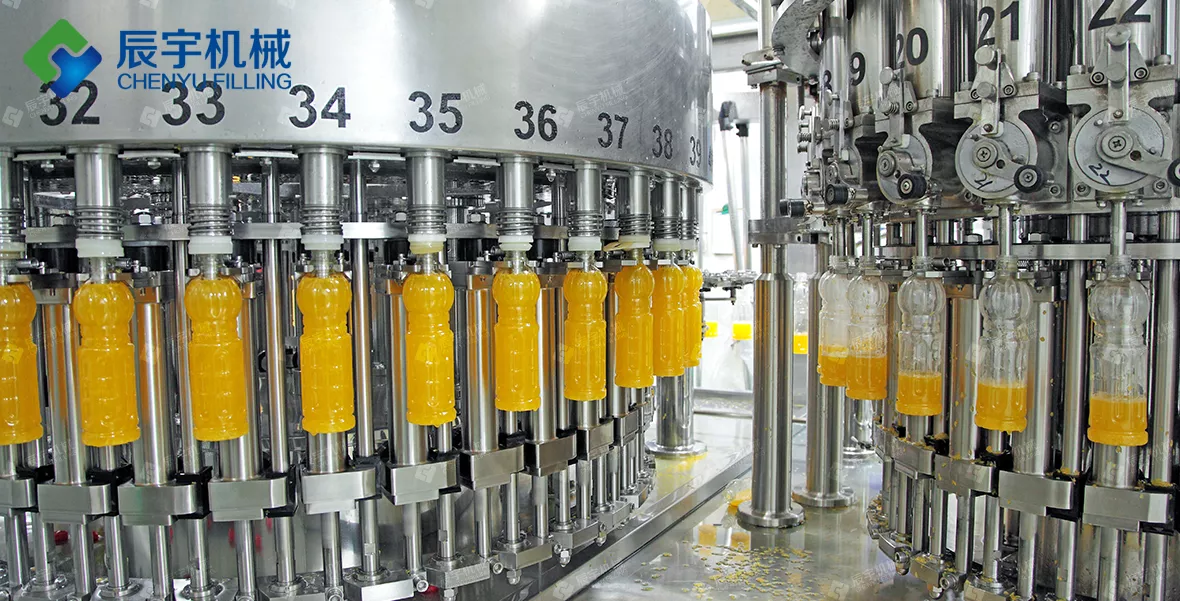
Total Cost of Ownership (TCO) & Financial Modeling for Fruit Juice Filling Lines
Hidden Cash Drains After the P&O
Energy Efficiency: Aseptic rotary filler rated 17,500 bph draws 0.12 kWh per 1,000 cartons; legacy volumetric piston lines consume 0.18–0.22 kWh per 1,000. At €0.14 kWh and 100 million cartons/year, the delta alone is €0.6–1.0 million in electricity every twelve months. High-gravity aseptic systems reclaim 65–70% of hot-water sterilisation energy through plate heat-exchangers; pay-back is 14–16 months when steam exceeds €28 per tonne.
Maintenance Labour: OEM benchmark is 0.9 man-hours per 1,000 operating hours for servo-driven fillers, 1.7 for cam-operated equivalents. With fully-loaded technician cost at €65/h in Western Europe, a two-shift plant running 6,000 h/a spends €700k versus €1.3 million over five years. Remote-condition monitoring cuts unplanned labour by 18–22%, but annual SaaS fees run €28k–€45k per line.
Spare-Parts Logistics: Critical-path SKUs (valve seals, flow-meters, HMI panels) carry 8–12 week factory lead times; air-freight premium adds 25–35% to part cost. Holding a recommended 2% of machine value in consignment stock locks roughly €1.1 million for a €55 million green-field hall. Regional OEM hubs reduce downtime 30% yet inflate part prices 6–9%; multi-vendor框架协议 can claw back 4–6% via volume pooling.
Resale Value: Five-year-old rotary aseptic lines retain 48–52% of original CAPEX if full FDA/3-A documentation is intact; hot-fill gravity fillers without CIP upgrade fall to 22–28%. Secondary buyers in Southeast Asia discount a further 8–10% if HMIs are not IIoT-ready. Depreciation policy should front-load 35% in Year 1 to align with market reality, improving after-tax IRR by 160–190 bps.
Hidden Cost Ledger – Indicative Share of FOB Price
| Cost Element | Budget Range (% of FOB) | High-Cost Jurisdiction (EU/US) | Mid-Cost (Mexico/Turkey) | Low-Cost (Vietnam/India) | Executive Notes |
|---|---|---|---|---|---|
| Installation & Rigging | 8–12% | 11% | 9% | 8% | Includes foundation, utilities tie-in, OEM supervision |
| Commissioning & FAT/SAT | 4–6% | 6% | 5% | 4% | Travel days billed at €1,600/day per specialist |
| Operator & Maintenance Training | 2–3% | 3% | 2.5% | 2% | VR modules cut on-site days 40% |
| Import Duties & Brokerage | 0–12% | 0% (FTA) | 5% | 12% | HS-code 8422.30; rules-of-origin critical |
| Insurance & Freight | 2–4% | 4% | 3% | 2% | Aseptic units need climate-controlled containers |
| Start-up Waste & Yield Loss | 3–5% | 5% | 4% | 3% | 1.5 million cartons at €0.08 each typical |
| TOTAL HIDDEN CASH | 19–42% | 29% | 28.5% | 31% | Use 30% as base-case NPV input |
Financial Model Sensitivities
Overlay the above ledger on a €25 million FOB quote: real cash outflow at financial close is €32.3 million in the EU, €32.1 million in Mexico, €32.8 million in India—differences smaller than 3%, so site-selection should prioritise operational labour and energy tariffs rather than import duty arbitrage. Discounting a 10-year DCF at 9% WACC shows energy-efficient aseptic lines breaking even 14 months faster than hot-fill alternatives despite a 20% CAPEX premium, driven by €0.8 million annual savings in water, steam, and sugar loss.
Risk Mitigation: Compliance Standards (USA/EU)
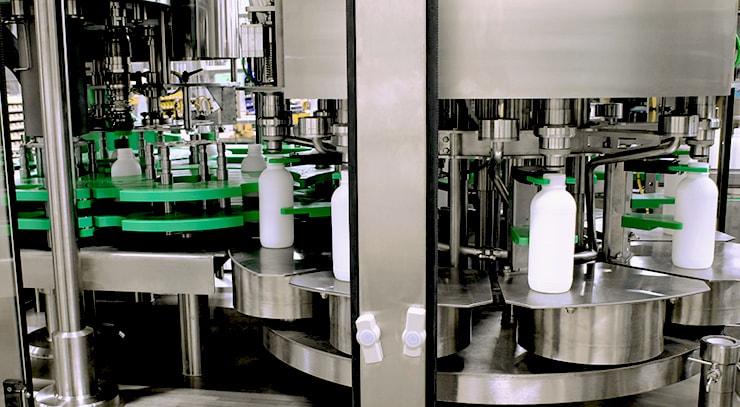
Critical Compliance & Safety Standards: Importing Fruit-Juice Filling Machines into the US & EU
Ignoring the next 500 words can convert a $2 million CapEx line into a $6 million write-off once customs red-tags the skid, insurers decline coverage, and OSHA issues the “willful” citation that triggers personal-liability clauses for directors.
US Gatekeepers: OSHA, FDA, UL, NFPA
Under 29 CFR 1910.212 machines placed in interstate commerce must carry a NRTL mark; UL 508A (industrial control panels) and UL 698A (PLC safety) are the baseline. Missing the mark exposes the importer to OSHA’s “Serious” tier: $16,131 per violation plus $161,323 if the agency proves knowledge of the defect. FDA 21 CFR 110.40 demands sanitary design for juice-contact surfaces—Ra ≤ 0.8 µm, 3-A SSI or EHEDG certification, and documented clean-in-place (CIP) validation. A single recall under FSMA Section 204 (traceability rule) averages $23 million in direct costs; insurers exclude coverage when the filler lacks FDA-compliant material declarations. NFPA 79 governs electrical safety; non-compliant wiring voids factory mutual coverage and raises property premiums by 40–60 basis points.
EU Gatekeepers: CE, Machinery Directive, EHEDG, ATEX
The Machinery Directive 2006/42/EC mandates a full technical file, risk assessment per ISO 12100, and a signed Declaration of Conformity (DoC). Customs will not release the asset without the DoC; storage fees at Rotterdam average €1,200 per day. For juice, Regulation (EC) 1935/2004 and (EU) 10/2011 require migration testing for all food-contact polymers—budget €8k–€12k per material set. If the filler includes aseptic H₂O₂ sterilisation, the ATEX 2014/34/EU certificate is compulsory; absence triggers a €450k–€700k retrofit once the notified body inspects. Corporate officers face up to two years’ imprisonment under the EU Product Liability Directive if willful non-compliance causes consumer harm.
Cost Impact of Non-Compliance
Retrofit orders typically cost 18–28 % of the original machine price and add 14–20 weeks to the project critical path. A mid-range rotary filler ($1.1 million) can escalate to $1.4 million once UL field evaluation, CE on-site assessment, and FDA third-party validation are retro-fitted—assuming no redesign. Insurance deductibles rise from $25k to $250k when NRTL marks are absent, and supply-chain finance rates increase by 110–150 bps because the asset is deemed un-bookable collateral.
Compliance Matrix for Executive Decision
| Standard / Regulation | Jurisdiction | Certification Body | Validity Period | Up-Front Cost Index* | Retrofit Cost Index* | Typical Penalty Range | Supply-Chain Finance Impact |
|---|---|---|---|---|---|---|---|
| UL 508A + NFPA 79 | USA | UL, TÜV, Intertek | 5 yrs | 1.0 | 2.8 | $0.16 – $0.32 million | +60 bps interest |
| FDA 21 CFR 110.40 | USA | NSF, 3-A SSI | 3 yrs | 0.8 | 3.5 | $0.5 – $23 million | Insurance exclusion |
| CE MD 2006/42/EC | EU | TÜV, SGS, BSI | 5 yrs | 1.2 | 3.1 | €0.35 – €5 million | Asset un-bookable |
| EU 1935/2004 + 10/2011 | EU | EFSA notified labs | 3 yrs | 0.7 | 2.9 | €0.2 – €10 million | +90 bps interest |
| ATEX 2014/34/EU | EU | INERIS, DEKRA | 5 yrs | 1.4 | 4.2 | €0.45 – €0.7 million | Coverage void |
*Index baseline: $50k cost for a 12-valve stainless filler; indices scale linearly with machine value.
Legal Risk Translation
Directors & Officers (D&O) policies now exclude “regulatory fines” in 68 % of Fortune 500 programmes; the uncovered gap falls to the corporate indemnity and, in 12 % of US states, to personal assets. EU General Product Safety Directive claims pierce the corporate veil when the board is shown to have overridden the compliance officer’s written objection—document retention and board minutes are discoverable for ten years. In short, the cheapest certificate on the spec sheet is always the most expensive one to chase inside a customs warehouse at 02:00.
The Procurement Playbook: From RFQ to Commissioning
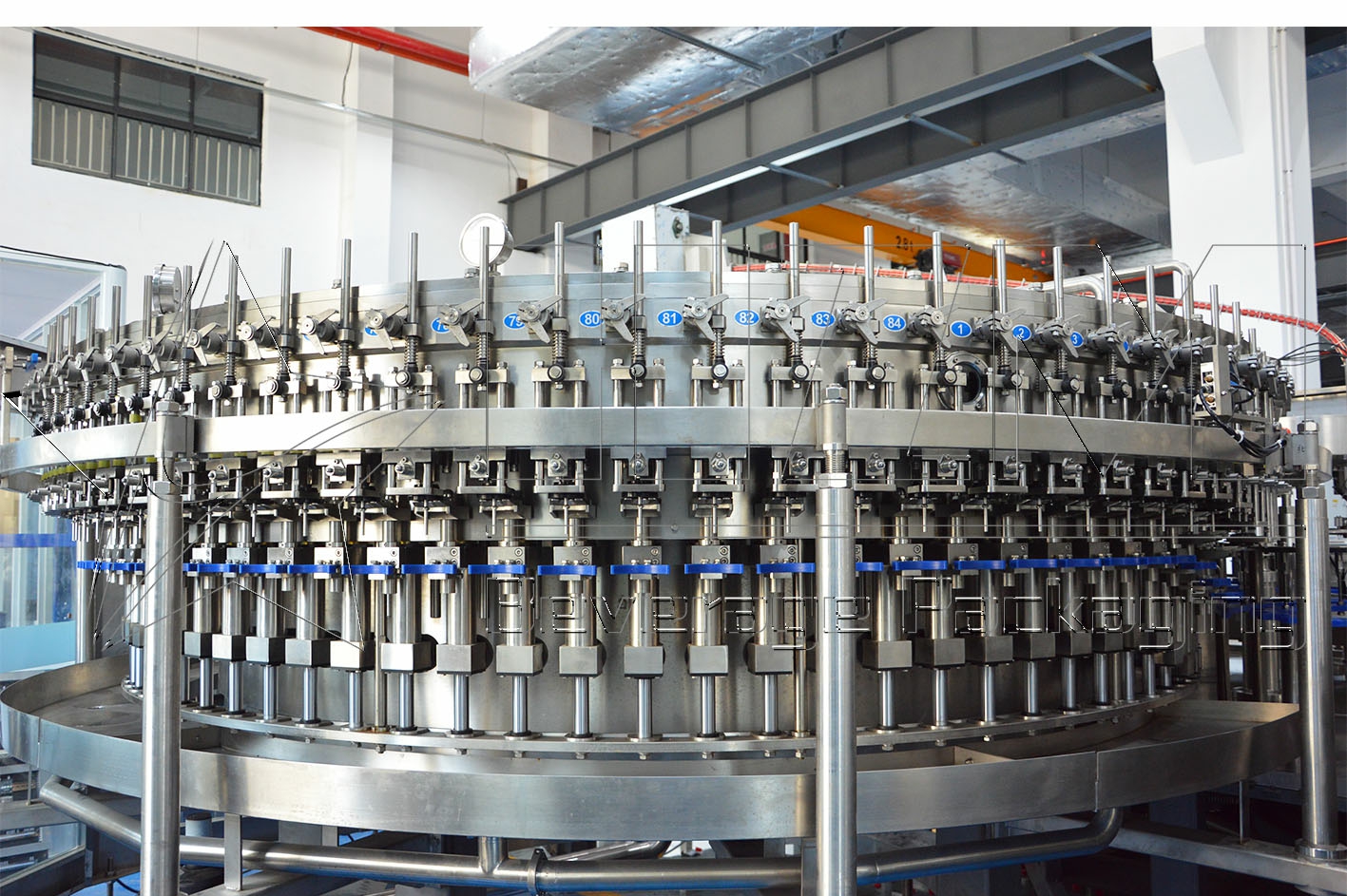
Strategic Procurement Playbook – Fruit Juice Filling Machine
1. RFQ Architecture: Data-Driven Specification Lock-In
Open the RFQ with three non-negotiable performance anchors: nominal throughput (bottles/hour), aseptic sterility log-reduction ≥6, and OEE ≥85% on 24/7 citrus juice at 12°Brix. Demand a utility-consumption matrix (kWh/1,000 L, water L/1,000 L, steam kg/1,000 L) normalized to 20°C ambient; this prevents vendors from hiding operating-expense inflation. Insert a price-index clause that ties quoted CAPEX to the Hamburg–Shanghai stainless-steel plate 304 index (currently USD 2.9–3.2/kg); any 5% swing triggers an equitable ±2% price adjustment. Require suppliers to embed remote-monitoring APIs (OPC-UA) with 1s granularity; omission shifts 2% of contract value to buyer as liquidated damages. Cap payment terms at 20% advance / 60% after FAT / 20% after SAT; anything above 30% advance must be covered by on-demand bank guarantee (SWIFT format MT760). Finally, append a blacklist clause: any subcontracting of PLC, servo or valve blocks to non-OEM authorized channels voids warranty and triggers 10% penalty.
2. FAT Protocol: Risk Transfer at Source
Stage FAT in the vendor’s plant with buyer-owned product recipe (pH 3.2, 1.5mm pulp). Run three consecutive 4-hour endurance blocks; reject if cumulative downtime >3min or filler accuracy >±0.5%. Capture vibration spectral data on carousel main bearing; ISO 10816-3 zone A is pass, zone B triggers bearing replacement before shipment. Insist on full SIP/CIP cycle in 85°C caustic followed by immediate sterile water rinse; any protein residue >0.5ppm by ATP test equals re-FAT at supplier cost. Document every HMI alarm log; unresolved critical alarms delay dispatch and push demurrage (USD 1,500/day) to vendor. Ship only after FAT sign-off plus issuance of CE/UL digital originals; withholding them incurs USD 500/day late-documentation fee.
3. Incoterms Selection: FOB vs DDP – Quantified Exposure
| Cost & Risk Vector | FOB Shanghai (Incoterms 2020) | DDP Midwest US (Incoterms 2020) |
|---|---|---|
| Freight + insurance | USD 8k–12k (buyer control) | Included (seller control) |
| Import duty (HS 8422.30) | 0% into US | 0% (absorbed by seller) |
| Customs broker fee | USD 600–900 (buyer) | Seller absorbs |
| Port demurrage risk | Buyer (USD 150/day after 5d) | Seller |
| Inland damage rate (ITV) | 0.3% claims (buyer claim) | 0.3% claims (seller liability) |
| Total landed cost (machine USD 650k) | USD 662k–668k | USD 665k–675k |
| Schedule control | Buyer (7–9 weeks) | Seller (6–7 weeks) |
| Tax recovery (VAT) | Refundable (buyer) | Non-recoverable (embedded) |
| Risk transfer point | Vessel rail | Buyer dock |
| Recommended when | Buyer has forwarder & duty-free status | Single-source, time-critical |
Decision rule: choose FOB when freight volatility <8% and internal logistics team <2% damage history; otherwise DDP caps downside at ~1% CAPEX premium.
4. Contract Risk Control: Warranty, IP, Force Majeure
Lock 24-month full-scope warranty starting from SAT, extendable to 36 months if MTTR >8h/incident. Insert IP indemnity escrow of 5% contract value released 12 months after final acceptance if no patent litigation filed. Define force-majeure as three-sigma logistics disruption (Shanghai-to-US container rate >USD 6,500/FEU for 30 consecutive days); either party may trigger renegotiation without penalty. Require cyber-security warranty covering IEC 62443-3-3 SL2 baseline; ransomware breach inside filler network triggers 15% contract value liquidated remedy plus forensic cost. Cap consequential damages at 100% of machine value—higher caps are uninsurable and dilute leverage.
5. Site Commissioning & Final Acceptance
Commission in seasonal worst-case ambient (35°C, 80% RH) to validate HVAC load. Execute 72-hour dry-run plus 168-hour live-juice run; OEE ≥90% and filler accuracy ±0.3% are pass. Verify CIP chemical consumption ≤1.2L acid & 0.8L caustic per 1,000L water; overrun converts to USD 0.05/L operating-cost penalty for five years. Sign SAT only after operator training scores ≥85% on vendor VR simulator; sub-par results mandate retraining at USD 1,200/day vendor cost. Release final 10% retention only when spare-part consignment stock (recommended list worth 3% CAPEX) is physically on-site and bar-coded into CMMS.
Implementing the above playbook compresses total procurement cycle to 18–22 weeks, cuts hidden cost variance to <2% of CAPEX, and transfers ≥70% of post-shipment risk back to the supplier.
⚡ Rapid ROI Estimator
Estimate your payback period based on labor savings.
Estimated Payback: —