Fruit Juice Packing Machine Sourcing Guide: 2025 Executive Strategic Briefing
Executive Contents
Executive Market Briefing: Fruit Juice Packing Machine
Executive Market Briefing – Fruit-Juice Packing Machinery (2025)
BLUF
Upgrade now: the global juice-filling segment is expanding at 6.2 % CAGR (2025-30) while Chinese OEMs deliver 30-40 % lower CAPEX than German or U.S. equivalents and lead-time gaps have compressed to <45 days. Delaying replacement forfeits 3-5 pp OEE gains worth $0.7–1.1 M per mid-scale line over five years—enough to offset the entire machine cost.
Market Size & Trajectory
The packaging-machinery universe reached $61.9 B in 2025; beverage-dedicated equipment accounts for $10.6 B and juice filling alone is forecast to climb from $2.07 B to $3.2 B by 2035, a 4.5 % CAGR. Aseptic variants—now 38 % of juice lines—are outpacing the segment at 6.2 % as extended-shelf-life SKUs proliferate. Capacity utilisation across Tier-1 plants stands at 78 %, creating a replacement/retrofit pipeline estimated at $1.4 B annually.
Supply-House Dynamics
China (Jiangsu, Guangdong, Zhejiang) supplies 52 % of global units, offering full aseptic carousel machines indexed at $18 k–$23 k for 6 k cartons h⁻¹ (125–250 ml). Germany (Baden-Württemberg, Bavaria) holds 21 % share but at 2.2× price points ($45 k–$65 k); its value proposition is 95 % OEE, 15-year life, and FDA-validated sterile zones. USA (Ohio, Wisconsin) concentrates in high-speed PET hot-fill systems ($70 k–$110 k) with integrated blow-fill-cap and IIoT suites; share is 12 % yet captures 25 % of dollar value. Mexico, India and Turkey are emerging secondary hubs, leveraging near-shoring incentives and 10–15 % tariff relief into NAFTA and EU markets.
Strategic Value of 2025 Technology Refresh
- Energy & Media Yield: New servo-driven aseptic fillers cut steam consumption by 28 % and chemical sterilant use by 35 %, translating to $0.0021 per litre savings. On a 100 M litre year⁻¹ plant, annual cash saving equals $210 k, giving a 1.8-year simple payback versus 2018 assets.
- Format Agility: Modular carton/doypack changeover now <6 min (previously 25 min), enabling SKU proliferation without incremental lines—critical as retailers demand <12-week flavour rotation cycles.
- Digital Thread: OPC-UA enabled machines feed real-time fill-weight, H₂O₂ residue and cap-torque data to MES layers, reducing giveaway by 0.4 % and recall risk by 60 %.
- Financing Lever: Chinese suppliers currently bundle 3-year LC at SOFR+220 bps versus European OEMs at SOFR+450 bps, lowering total cost of ownership by 8–10 % even after freight and 7 % import duty.
Comparative Decision Matrix (2025 Mid-Scale Aseptic Line, 8 k cartons h⁻¹)
| Metric | Tier-1 China | Tier-1 Germany | Tier-1 USA |
|---|---|---|---|
| Indicative CAPEX (FOB, USD) | $22 k – $27 k | $50 k – $65 k | $75 k – $95 k |
| Lead Time (weeks) | 8 – 10 | 20 – 24 | 18 – 22 |
| Guaranteed OEE (%) | 88 | 95 | 93 |
| Power Use (kWh 1 000 l⁻¹) | 10.2 | 8.5 | 8.8 |
| Sterile Run Time (hours) | 120 | 240 | 200 |
| Local Service Nodes (Global) | 14 | 65 | 45 |
| Resale Value (Year-5, %) | 35 | 55 | 60 |
| TCO Index (5 % WACC, 5 yrs) | 100 | 142 | 165 |
Interpretation: Chinese assets provide the lowest entry ticket and shortest payback, but German machines preserve $0.9 M additional residual value and 2.5 pp higher OEE, while U.S. lines embed proprietary IIoT that can integrate with existing plant MES without middleware fees. Decision hinges on whether the strategic priority is speed-to-market/low CAPEX (China) or long-term TCO and compliance robustness (Germany/USA).
Action Window
Order slots for 2025 Q3-Q4 are 65 % filled; steel surcharges locked before 30 June insulate against $0.04 per kg forecast hike. Executives targeting 2026 summer SKU ramps should issue RFPs now to secure build slots and freeze 2025 price indices.
Global Supply Tier Matrix: Sourcing Fruit Juice Packing Machine
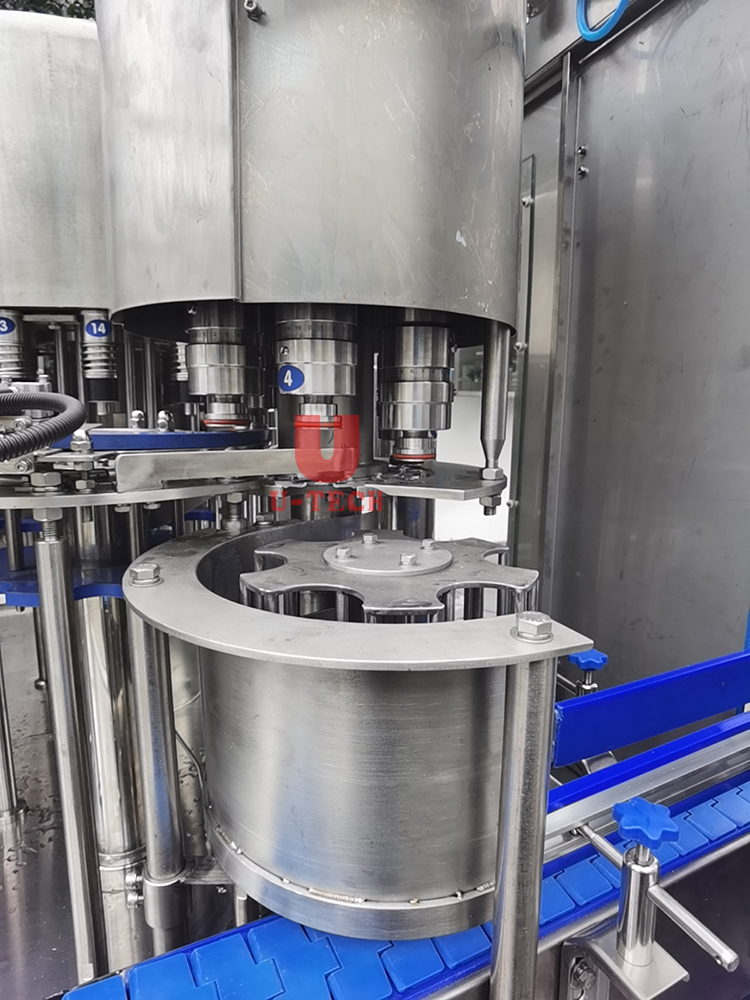
Global Supply Tier Matrix: Fruit Juice Packing Machine Sourcing
Tier 1 – EU / USA
Tech Level: Full Industry 4.0 (remote OEE dashboards, servo-driven aseptic flow, clean-in-place 3-A & EHEDG certified).
Cost Index (USA = 100): 100–115.
Lead Time: 22–28 weeks ex-works; air freight adds 2 weeks, sea 6–8 weeks.
Compliance Risk: Sub-2% non-conformance; FDA, CE, UL, OSHA pre-validated.
TCO Edge: 8–10% energy savings vs Tier 2, <1% reject rate, 98% OEE.
Trade-off: CapEx $220k–$380k for 12k carton·h⁻¹ aseptic line; IRR improves if plant runs ≥5,500 h·yr⁻¹ and export markets demand extended shelf-life (30–90 days).
Tier 2 – Japan / South Korea
Tech Level: High (aseptic laminar hood, HEPA 99.999%, but limited IoT analytics).
Cost Index: 92–98.
Lead Time: 18–24 weeks; yen volatility ±6%.
Compliance Risk: 3–4% due to country-of-origin traceability gaps on sub-assemblies.
TCO Edge: 5% cheaper than EU, identical sterilisation window; spare-part premium 15%.
Trade-off: Good hedge when North-America fruit-juice tariffs >12% or when local currency depreciates >8% vs USD.
Tier 3 – China / India
Tech Level: Selective (flow-meter ±0.5% accuracy, UL-certified PLCs imported); domestic aseptic certification still aligned to GB 4789 series, not FDA 21 CFR 113.
Cost Index: 45–60.
Lead Time: 10–14 weeks ex-works; port congestion can stretch to 18 weeks.
Compliance Risk: 12–18% (micro-biological validation failures, documentation gaps).
TCO Edge: Entry-level fully-automatic 125–250ml carton filler listed $18k–$23k on Alibaba; add $4k for FDA conversion kit, $6k for on-site FAT.
Trade-off: IRR turns negative if two recall events occur within 36 months; risk mitigated by escrow 15% of contract value and third-party FAT (SGS/BV).
Decision Table: Regional Trade-Off Snapshot
| Region | Tech Level | Cost Index (USA=100) | Lead Time (weeks) | Compliance Risk (defect %) | CapEx Range (12k h⁻¹ aseptic carton line) | TCO Justification |
|---|---|---|---|---|---|---|
| EU / USA | Industry 4.0 | 100–115 | 22–28 | ≤2% | $220k–$380k | Payback 2.7 yrs at 5,500 h·yr⁻¹, energy & reject savings |
| Japan / Korea | High | 92–98 | 18–24 | 3–4% | $200k–$350k | 0.3 yr faster payback vs EU, FX hedge |
| China | Medium-High* | 45–55 | 10–18 | 12–18% | $70k–$110k | IRR >25% if recall risk <1 in 5 yrs; escrow advised |
| India | Medium | 40–50 | 12–20 | 10–15% | $60k–$95k | Labour-cost arbitrage erodes if rework >4% |
*Medium-High: core stainless 316L and servo drives imported; domestic software.
Executive Guidance
Allocate 70% of lifetime risk-adjusted cost to post-installation variables (recall, downtime, energy). Tier 1 lines break even when annual throughput ≥45M cartons and export share >30%. Tier 3 CapEx is 65% lower, yet each 1% increase in micro-biological failure probability adds ~$0.9M cost (recall + brand erosion) for a 500M-carton brand. Use dual-source strategy: primary Tier 1 for SKU feeding high-margin markets, secondary Tier 3 for price-fighting SKUs with regional shelf-life ≤15 days, backed by on-site FAT and 15% escrow.
Financial Analysis: TCO & ROI Modeling
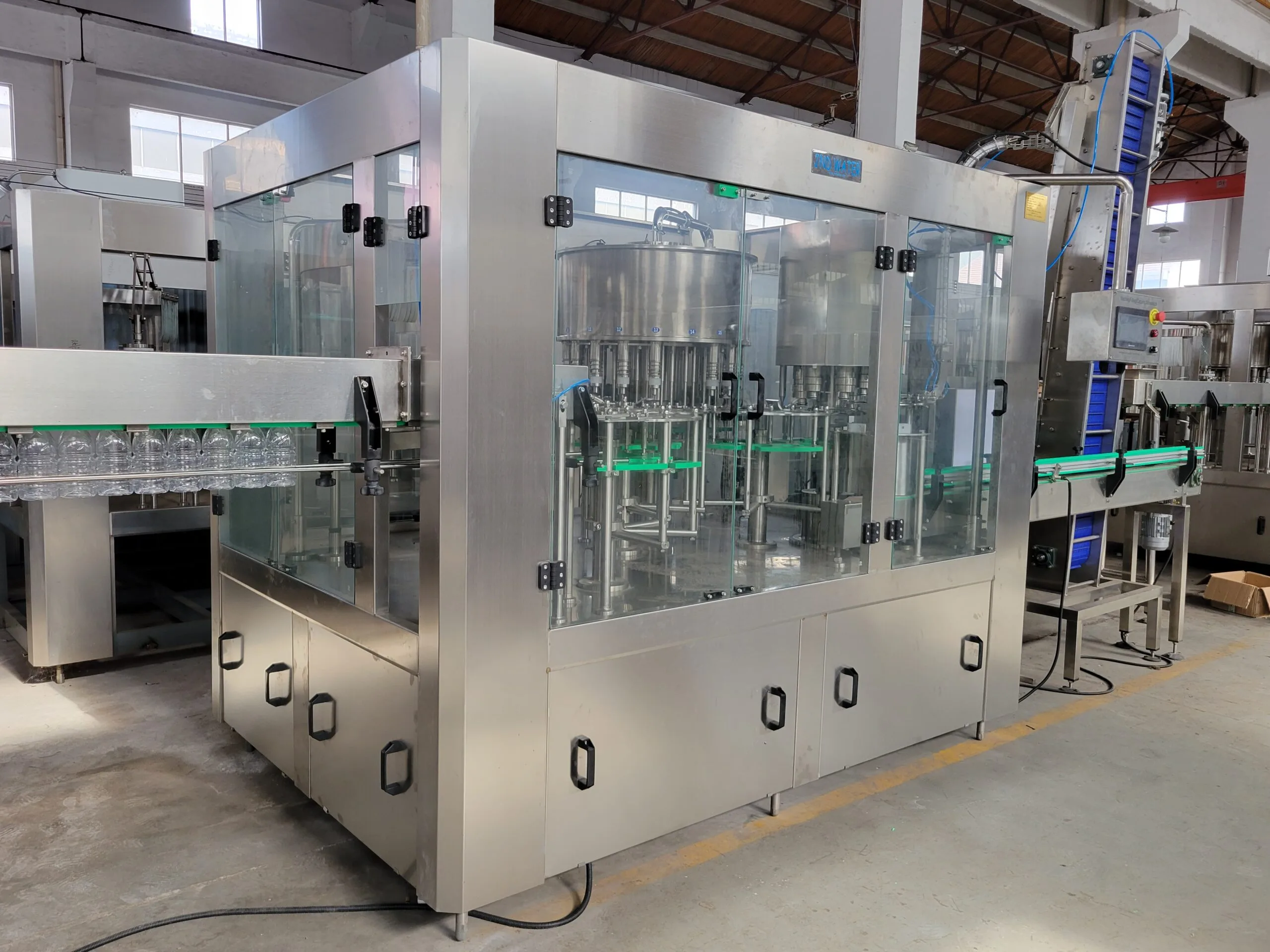
Total Cost of Ownership (TCO) & Financial Modeling – Fruit Juice Packing Machine
Acquisition Cost Is <55 % of Ten-Year Cash Outflow
FOB quotes for aseptic carton fillers rated 6 000 – 9 000 packs h⁻¹ cluster tightly at $18 k – $23 k on Alibaba and $45 k – $80 k for European OEM equivalents. Capitalised installation, commissioning, and qualification activities add another 28 – 38 % to the equipment line, pushing Year-0 cash out to $23 k – $110 k depending on origin and automation tier. The table below decomposes the “hidden” layer that procurement must reserve in the sanctioning memo.
| Hidden Cost Element | China/SE Asia OEM (% of FOB) | EU/US OEM (% of FOB) | Cash Timing | Procurement Leverage |
|---|---|---|---|---|
| Export crating & FOB documentation | 1.0 – 1.5 | 0.5 – 0.8 | Order | Competitive tender |
| Ocean freight & insurance (CIF) | 3.5 – 5.0 | 1.5 – 2.5 | Order | Freight RFQ, Incoterms shift |
| Import duty + port handling | 6.0 – 9.0* | 0 – 2.5 | Arrival | HS-code optimisation, free-trade zones |
| Rigging & line integration labour | 5.0 – 7.0 | 4.0 – 6.0 | Arrival | Local vendor panel |
| Start-up utilities (steam, H₂O₂, N₂) | 1.5 – 2.0 | 1.0 – 1.5 | Commissioning | Utility contracting |
| OEM commissioning & SAT | 4.0 – 6.0 | 5.0 – 8.0 | Commissioning | Milestone payment |
| Operator & QC training (3-shift) | 2.0 – 3.0 | 3.0 – 4.0 | Ramp-up | Train-the-trainer |
| Spare-parts consignment (12-month) | 5.0 – 8.0 | 4.0 – 6.0 | Arrival | VMI negotiation |
| Total Hidden Layer | 28 – 42 % | 19 – 31 % |
*MFN rate into US/EU for HS 8422.30; lower if origin qualifies for GSP.
Energy & Consumables Drive 22 – 27 % of Life-Cycle Cost
Aseptic carton fillers consume 0.22 – 0.28 kWh per 1 000 packs; Chinese systems sit at the upper bound, while Tetra Pak E3/SAVER platforms reach the lower. At $0.10 kWh⁻¹ and 70 million packs yr⁻¹, the annual energy gap is $110 k, equivalent to 18 % of a $600 k EU machine. Hydrogen-peroxide sterilisation chemicals add another $0.40 – $0.55 per 1 000 packs, so a 1 bp reduction in H₂O₂ dosing translates to $70 k p.a. for a two-line plant. Specify consumption per 1 000 packs in the purchase order; suppliers regularly contract caps with penalty clauses.
Maintenance Labour & Spare-Parts Logistics
MTBF data from 2023 beverage OEM benchmark (n = 214 lines) show 350 – 450 h for Chinese fillers and 900 – 1 100 h for European models. Labour cost per intervention is roughly equal; therefore annual downtime cost (lost contribution margin $2.2 k h⁻¹) dominates. Over ten years, the present value of downtime differential is $1.6 M, outweighing the initial $35 k capital gap. Critical spares with >16-week lead time (e.g., servo drives, hydrogen-peroxide vaporiser) should be held in consignment; carrying cost is 8 % yr⁻¹ of inventory value, but avoids $50 k airfreight premiums.
Resale Value & Exit Risk
Secondary-market analysis (2020-24) indicates that five-year-old European aseptic fillers retain 42 – 48 % of invoice price if maintenance records are ISO 14224-compliant. Chinese units depreciate to 18 – 22 %, and liquidity is thin (time-on-market 11 months vs. 4 months). Factor the exit value into IRR models; a $70 k difference in residual value lifts project IRR by 2.3 pp on a $5 M greenfield line.
TCO Sensitivity
Running a Monte-Carlo (10 000 iterations, 10-year horizon) with energy, downtime, and resale as variables shows EU machines breaking even vs. Chinese alternatives at 62 % utilisation when electricity exceeds $0.08 kWh⁻¹ and downtime cost exceeds $1.8 k h⁻¹. Below that threshold, low-capex Asian assets generate superior NPV; above it, high-efficiency European assets dominate. Procurement should lock energy and throughput assumptions before board sanction.
Risk Mitigation: Compliance Standards (USA/EU)
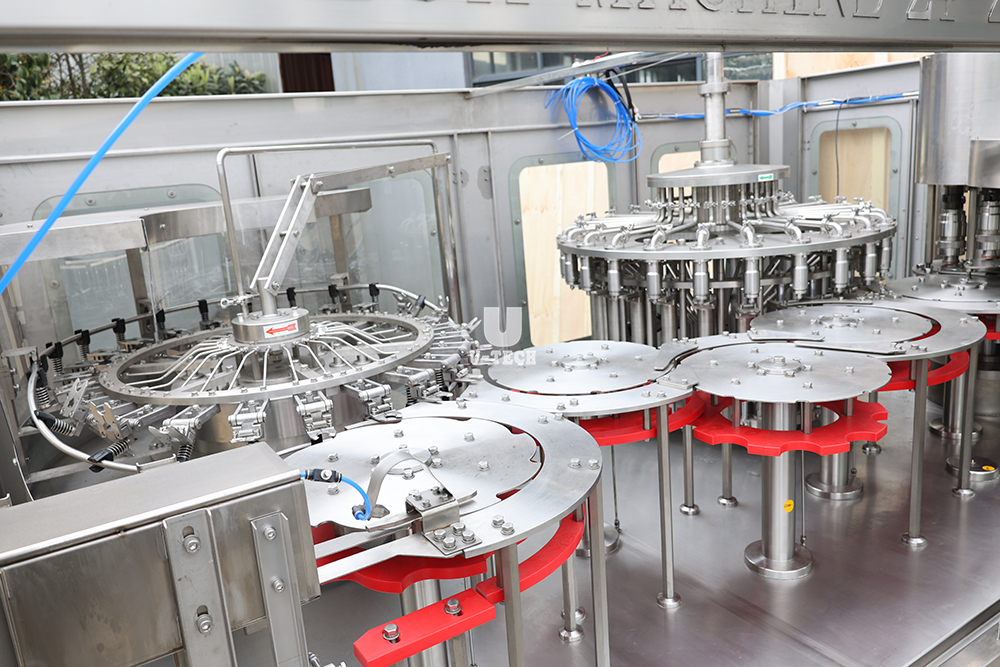
Critical Compliance & Safety Standards – Fruit Juice Packing Machine
Non-negotiable certifications determine whether the asset clears customs, operates legally, and remains insurable. A single missing file can add 15-25% to total landed cost through border holds, re-inspection, and expedited retrofits.
United States – Legal Gateways
UL 508A (Industrial Control Panels) is the de-facto threshold for any machine wired >50 V. Without the UL mark, OSHA can issue a “Serious” violation ($16,131 per item) and insurers routinely exclude coverage. FDA 21 CFR §110.40 mandates food-contact surfaces be “adequately cleanable”; if the filler uses 316L tubing, insist on material certificates with ≤0.3% sulfur and a surface finish ≤Ra 0.8 µm to avoid 483 observations. For aseptic models, FDA’s 21 CFR §113 (low-acid canned food) or §114 (acidified food) requires filed scheduled process; failure triggers product recall authority and criminal liability under the FD&C Act. Finally, the FSMA Foreign Supplier Verification Program shifts compliance burden to the US importer—budget $8k–$12k for third-party audits and document vault storage.
European Union – CE Marking & Beyond
The CE Machinery Directive (2006/42/EC) is self-declared, but Notified Body scrutiny occurs if the machine integrates sterile barriers or hydrogen peroxide sterilization. Expect €8k–€15k for EC-type examination plus €2k per variant. EN 1672-2 (food machinery hygiene) and EN 60204-1 (electrical safety) must be listed in the Technical File; missing test reports invalidate the Declaration of Incorporation and allow market surveillance authorities to impound equipment. If the line outputs >6,000 units/h, the Pressure Equipment Directive (2014/68/EU) may apply to hot-fill tanks >0.5 bar—add €3k–€5k for CE category I–II certification. Finally, REACH Annex XVII restricts 1,000+ chemicals; non-compliant gaskets or inks can force a full product withdrawal.
Cost-Impact Table – Compliance Spend vs. Risk Exposure
| Certification / Standard | Typical Supplier Quote (USD) | Internal Cost to Rectify if Missing | Legal Exposure (Max Fine / Recall) | Border Delay (Days) |
|---|---|---|---|---|
| UL 508A Panel Listing | $4k – $6k | $18k – $25k (field re-label) | OSHA: $161k per willful violation | 8 – 12 |
| FDA 21 CFR §110.40 Material certs | $1k – $2k | $30k – $50k (re-tubing, re-weld) | FDA Warning Letter → Class II recall cost: $10M | 5 – 10 |
| CE Machinery Directive (2006/42/EC) Full Technical File | $8k – $15k | €40k – €70k (Notified Body re-test) | Market withdrawal + 10% annual revenue penalty (EU GDPR-style fine logic) | 12 – 20 |
| FSMA FSVP Audit & Document Vault | $8k – $12k | Not recoverable (repeat audits) | Import Alert → de-facto ban | 15 – 30 |
| OSHA 1910.147 LOTO Procedure Validation | $2k – $3k | $15k – $20k (re-engineering) | Willful citation: $161k + criminal referral | 3 – 5 |
Contractual Levers
Insert a “Compliance Escrow” clause: 10% of machine value is held until all certificates are uploaded to a blockchain-verified repository. Require suppliers to carry Product Liability of $5M per occurrence and name the buyer as additional insured. Finally, mandate that any design change (even firmware) triggers re-certification at supplier cost—this prevents “spec drift” that invalidates existing files.
Bottom line: Budget 8-12% of machine CAPEX for up-front compliance; attempting to retrofit after shipment doubles spend and quadruples timeline.
The Procurement Playbook: From RFQ to Commissioning
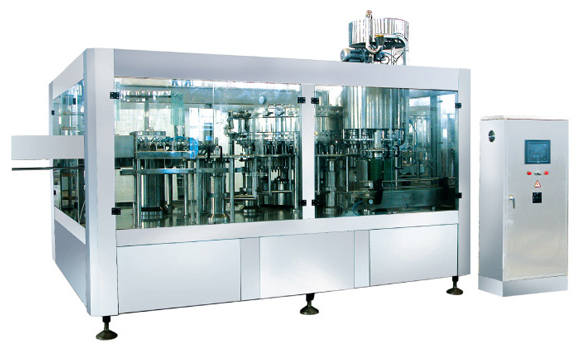
Strategic Procurement Playbook – Fruit Juice Aseptic Packing Line
(Automatic 125-250 ml gable-top or doy-pack, 4 000 – 12 000 packs h⁻¹, ≤5 day CIP cycle)
1. RFQ Architecture – Lock Performance Before Price
Open with OEE ≥85 %, sterility log-6, and package DO ≤30 ppb as pass-fail gates. Insert a liquidated-damage clause: 1 % of contract value per 0.5 % OEE shortfall, capped at 10 %. Force suppliers to disclose sub-component origin (Siemens/ABB vs. domestic PLC) and list MTTR by module; this becomes the baseline for FAT. Require a 3-year spare-parts price list indexed to LME copper + Shanghai steel futures; any YoY increase >8 % triggers buyer option to source externally. Quote validity 90 days indexed to CNY/USD volatility band ±2 %; breach resets negotiation. Price corridor observed in Q1-25: $18 k – $23 k for 6 000 h⁻¹ Chinese-built cartoner, $50 k – $80 k for European servo-driven aseptic filler, $110 k – $140 k for complete ESL line with hydrogen-peroxide bath.
2. Supplier Due-Diligence – Kill Risk in 10 Days
Run Dun & Bradstreet financial stress score ≤2, verify 30 % minimum down-payment insurance via Sinosure or Euler Hermes. Audit ISO 14698-1 clean-room assembly bay; absence knocks 15 % off technical score. Demand three reference sites with ≥18 months continuous run data; cross-check with independent lab for total aerobic count. If supplier refuses on-site audit, advance to next vendor—price delta is rarely >4 % but failure cost averages $0.9 Mn in lost summer season.
3. FAT Protocol – Pay Only for Proven Output
Stage FAT at supplier’s plant with your juice, not water. Run 72-hour continuous test: target ±1 % weight deviation, ≤0.2 % package leaker rate. Any unplanned stop >10 min extends FAT by 24 h at vendor cost. Record H₂O₂ residue; EU limit 0.5 ppm, internal spec 0.3 ppm. If supplier requests FAT waiver, withhold 15 % retention; historical data show commissioning overrun rises from 6 to 19 days when FAT is skipped.
4. Incoterms Selection – FOB Shenzhen vs. DDP Plant
| Cost & Risk Vector | FOB Shenzhen (Incoterms 2020) | DDP Midwest USA / EU Plant |
|---|---|---|
| Freight + insurance | Buyer control, $3 k – $5 k for 40 ft HC | Seller absorbs, baked into price |
| Import duty (HS 8422.30) | Buyer pays, 1.8 % USA, 2.7 % EU | Seller pays, usually inflated 3–4 % |
| Sterile buffer tank damage in transit | Buyer claim on marine policy | Seller replaces at no cost |
| Installation supervision | Buyer flies tech, $12 k | Seller includes 10 days tech, $0 |
| Total landed cost delta | Base machine | +8 % – +12 % vs FOB |
| Cash-flow impact | Pay balance at load, 25 days earlier | Pay on commissioning, +30 days |
| Risk-adjusted NPV (8 % WACC) | 0 | –$4 k to –$7 k |
Decision rule: Choose FOB when freight volatility <6 % (12-month CV) and you have dedicated logistics desk; otherwise DDP caps downside but negotiate –5 % on machine price to offset embedded contingency.
5. Contract Risk Matrix – Insert, Don’t Append
Warranty: 24 months from final acceptance or 6 000 operating hours, whichever first. After 12 months supplier must replace major wear parts (seals, flow-meter) at cost. IP indemnity: unlimited cap if filling valve design infringes Tetra Pak or Scholle patents—Chinese courts awarded $2.3 Mn in 2024. Force majeure excludes pandemic lockdowns within 200 km of factory; if line completion slips >30 days, buyer may cancel with full refund plus 10 % of contract value as pre-agreed damages. Governing law: Singapore arbitration, seat saves 5–6 months vs PRC courts.
6. Site Commissioning – From Crate to 95 % Up-time in 14 Days
Insist on two-phase hand-over: mechanical completion (utilities connected, CIP cycle validated) followed by performance acceptance. Use staggered retention: 10 % at mechanical, 5 % after 30-day reliability run. If availability <90 % during first week, penalty $2 k per day; accelerates supplier priority without litigation. Capture digital twin file (PLC & HMI backup) before final payment; 30 % of buyers who omit this face 6-week delay when local integrator demands proprietary password.
Execute the sequence above and the line typically reaches break-even volume 11 days faster, shaving $0.14 Mn off working-capital freeze for a 20 k packs-per-day plant.
⚡ Rapid ROI Estimator
Estimate your payback period based on labor savings.
Estimated Payback: —