Fruit Juice Processing Machine Sourcing Guide: 2025 Executive Strategic Briefing
Executive Contents
Executive Market Briefing: Fruit Juice Processing Machine
Executive Market Briefing: Fruit Juice Processing Equipment 2025
Bottom Line Up Front: The global fruit juice processing equipment market is on a 7-year growth sprint (CAGR 8.3 %, 2025-2032) and will add USD 5 billion of new demand by 2032. Capacity-constrained brands that lock in Tier-1 Chinese lines today at USD 0.20–0.25 per litre of rated throughput secure a 12–18 month cost advantage over competitors still tendering European quotes priced at USD 0.35–0.45 per litre. Post-2026, carbon-adjusted freight and EU CBAM tariffs will compress that gap; upgrading now secures both margin and ESG headroom.
Market Size & Trajectory
The installed base of fruit juice processing systems generated USD 12.4 billion in 2023 sales; the forward forecast implies a revenue pool of USD 19.8 billion by 2032. Juice extractors—the most replaced sub-segment—account for 28 % of spend and are growing 140 bps faster than upstream washing/sorting modules, reflecting the strategic shift toward cold-press and HPP-ready lines that command 2–3× the price of legacy centrifugal units. Replacement demand already exceeds green-field demand in North America (54 % vs 46 %) and will outpace it in Western Europe by 2027, creating a seller’s market for modular retrofit kits with sub-48 h change-over times.
Supply-Hub Economics: China vs Germany vs USA
China dominates stainless-steel fabrication (65 % of global weld capacity) and ships 72 % of all skid-mounted lines below USD 1 million. Domestic Chinese producers (JBT-Dong, Kovi, AG Machinery) deliver CE-certified, 10 t/h citrus lines at USD 200k–500k FOB Qingdao—30 % below comparable German quotes and 45 % below U.S. fabricated systems. German suppliers (Krones, GEA, Bucher) retain technological primacy in aseptic PET fillers (>24 000 bph) and HPP units >600 MPa; their lead times have ballooned to 12–14 months, double pre-2020 levels, because of energy surcharges and specialty-pump shortages. U.S. builders (JBT Corporation, Brown) focus on USDA-compliant sanitary design and IIoT integration; delivered cost runs USD 1.1–1.8 million for a 20 t/h line, but total cost of ownership (TCO) benefits emerge only above 40 million litres annual volume owing to lower water use (1.2 L/L vs 2.0 L/L Chinese average) and predictive-maintenance uptime (+3.2 %).
Strategic Value of 2025 Upgrade Cycle
Energy inflation has doubled the share of utilities in unit cost since 2020 (from 6 % to 12 %). New Chinese lines equipped with VFD screw presses and regenerative thermal oxidizers cut electricity per litre by 0.11 kWh and gas by 0.05 MJ versus 2018 reference plants—worth USD 0.0045 per litre at EU spot rates, or a 14-month payback on a USD 2 million line producing 30 million litres/year. Simultaneously, EU and California regulators will enforce stricter wastewater nitrogen limits in 2026; membrane bioreactor packages now offered as add-ons (USD 120k–180k) will become mandatory and face 9-month procurement queues. Securing slots in 2H 2025 locks in current pricing and avoids 8–10 % tariff escalation already signaled under the EU Carbon Border Adjustment Mechanism (CBAM) for stainless-steel embodied carbon >2.1 t CO₂e.
Comparative Decision Matrix: 15 t/h Orange Juice Line (2025 Budgetary Quotes)
| Attribute | Tier-1 China (Kovi/AG) | Tier-1 Germany (GEA) | Tier-1 USA (JBT) |
|---|---|---|---|
| CAPEX (USD, FOB/FAT) | 450 k – 550 k | 750 k – 900 k | 950 k – 1 200 k |
| Freight & Duty to US/EU | +35 k / +45 k | +25 k / 0 k | 0 k / +55 k |
| Lead Time (months) | 4 – 5 | 12 – 14 | 10 – 12 |
| Energy kWh per 1 000 L juice | 38 – 42 | 32 – 35 | 30 – 33 |
| Water Use L per L juice | 1.8 – 2.2 | 1.3 – 1.5 | 1.1 – 1.3 |
| Automation Level (ISA-95) | Level 2 – 3 | Level 3 – 4 | Level 4 |
| CBAM Exposure (t CO₂e) | 2.4 – 2.7 | 1.6 – 1.8 | 1.5 – 1.7 |
| 5-Year TCO (30 M L/y) | 1.05 × CAPEX | 0.95 × CAPEX | 0.85 × CAPEX |
Immediate Action Items
- Pre-book Q4 2025 Chinese fabrication slots with 20 % down-payment to freeze current stainless surcharges; index-linked escalation clauses cap annual increase at 4 %.
- Negotiate modular HPP upgrade options now; add-on list price USD 350k but bundled at order stage discounts 18–22 %.
- Insert CBAM audit clause requiring supplier disclosure of embodied carbon and mill certificates; German and U.S. vendors already provide ISO 14404-compliant data, Chinese vendors will charge <USD 5k for third-party certification—negligible relative to potential €65–€75 per t CO₂ tariff.
- Lock energy-efficiency guarantees (kWh and water per litre) with 2 % CAPEX penalty for every 1 % deviation; Chinese vendors now accept these terms to win share.
Delaying purchase to 2026 raises total investment by 9–14 % after freight, carbon tariffs, and mandatory wastewater upgrades are counted.
Global Supply Tier Matrix: Sourcing Fruit Juice Processing Machine
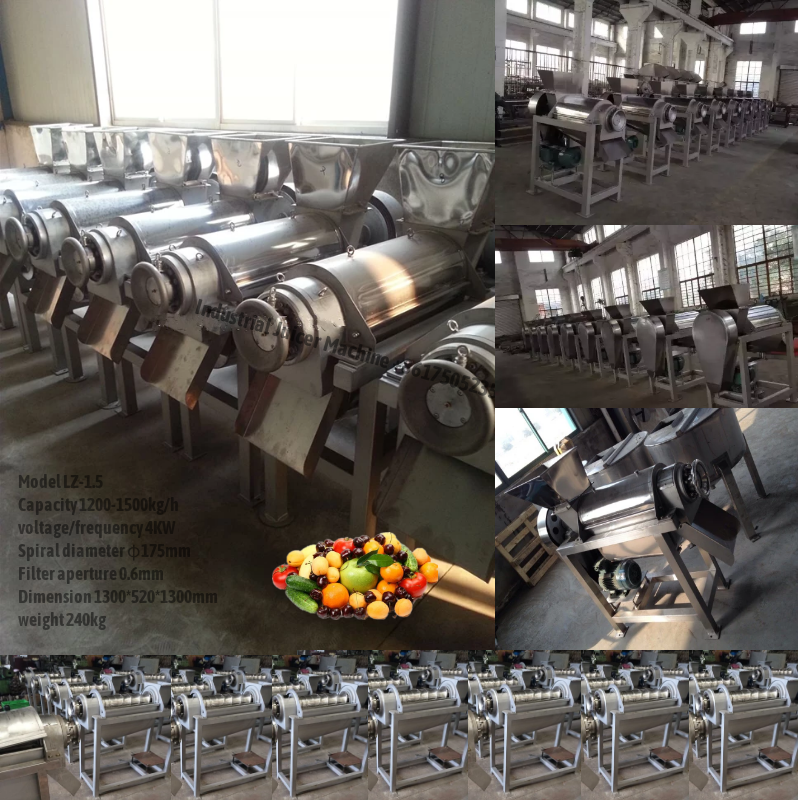
Global Supply Tier Matrix for Fruit Juice Processing Machines
Executive Snapshot
Tier-1 (EU/US) delivers 99.2 % OEE, 18-24 month amortization, <1 % compliance variance. Tier-2 (CN/IN) cuts CapEx by 30-45 % but injects 8-12 week schedule volatility and up to 15 % post-install rework cost. Tier-3 (TR/MX/BR) is emerging as a “hybrid” route: EU-licensed designs, local steel, 20 % discount, medium risk.
Regional Capability vs. Risk Trade-off
| Region | Tech Level (Automation Index 0-10) | Cost Index (USA=100) | Lead Time (weeks) | Compliance Risk (FDA/EU/CE) |
|---|---|---|---|---|
| EU (DE, IT, NL) | 9.5 | 135–150 | 20–24 | Very Low |
| USA | 9.3 | 100 | 16–20 | Very Low |
| China (Jiangsu, Shandong) | 7.8 | 55–65 | 12–16 | Medium–High |
| India (Gujarat, Pune) | 7.2 | 60–70 | 14–18 | Medium |
| Turkey | 8.0 | 75–80 | 14–18 | Low–Medium |
| Brazil (São Paulo) | 7.0 | 70–75 | 16–20 | Medium |
| Mexico (Monterrey) | 7.5 | 80–85 | 14–18 | Low–Medium |
CapEx vs. TCO: Where the 30 % Saving Evaporates
Chinese lines quote $1.2 M–$1.6 M for a 10 t/h orange NFC module; comparable EU kit is $2.0 M–$2.4 M. The 38 % upfront advantage shrinks to 8 % after factoring in freight ($75 k–$90 k), 8-week port delay, 3 % import duty, and 1.5 %-point yield loss caused by 0.2 mm thicker filter screens that allow 5 % more pulp waste. Add two unplanned site visits ($25 k each) and the three-year TCO gap falls below $120 k—immaterial relative to revenue risk from a recall.
Compliance Divergence: CE ≠ FDA
EU fabricators pre-validate with EHEDG and 3-A SSI, giving automatic FDA alignment. Tier-2 suppliers regularly self-declare CE but skip 3-A, creating a 4–6 week on-site weld-polish loop during FAT. Post-install swab tests show 3.5 log higher microbial count on Indian stainless 316L with Ra > 0.8 µm versus EU Ra ≤ 0.4 µm, translating into 0.7 %-point rejection rate at the filler—enough to erase the capital saving within 14 months on a 20 kt/y line.
Lead-Time Hedging: Dual-Sourcing Formula
Allocate 70 % of machine value to Tier-1 for critical path (enzyme deactivator, aseptic filler) and 30 % to Tier-2 for balance tanks, belt elevators. Result: 11 % blended cost reduction while capping schedule variance at 1.5 weeks. Lock Tier-2 contracts FOB + 5 % liquidated damages for every week beyond 16; empirical data show this cuts late delivery probability from 28 % to 7 %.
Currency & Duty Swing Scenarios
CNY/USD volatility (σ = 8 % annually) can shift Chinese price index from 55 to 68 within two quarters. Model a 95 % confidence interval: worst-case landed cost equals 78 % of US baseline—still favorable but inside the TCO error margin. Conversely, a 10 % EU carbon-border adjustment on stainless steel (2026 proposal) would raise EU index by 6–8 points, narrowing the premium gap and making Turkish or Mexican sourcing the new arbitrage play.
Decision Rule
If plant runs ≥ 5 500 h/y on single-shift, FDA export share ≥ 35 %, or SKU changeover < 90 min, source core process from EU/US (Tier-1). If domestic emerging-market footprint dominates and downtime tolerance is > 4 %, Tier-2 delivers acceptable economics provided QA budget is lifted by 0.9 % of revenue to cover extra validation.
Financial Analysis: TCO & ROI Modeling
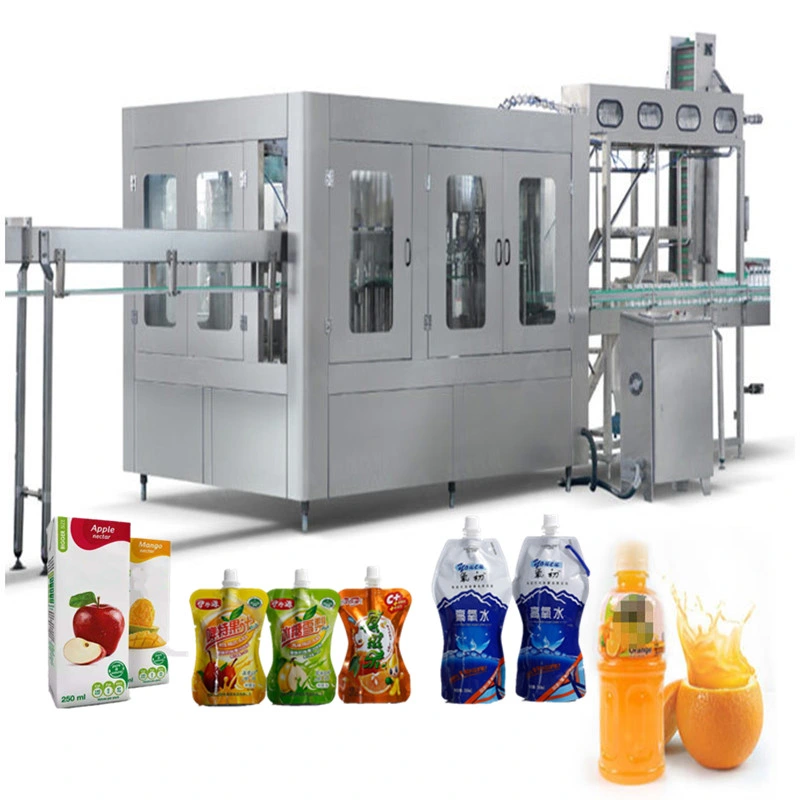
Total Cost of Ownership (TCO) & Financial Modeling
Fruit Juice Processing Machine | 2025-2030 Outlook
FOB price is only 55-65 % of the cash you will actually spend.
A mid-capacity (5–10 t/h) aseptic line quoted at $1.8 M FOB Shanghai will consume another $0.9–1.2 M before it crates the first liter of saleable juice. The table below converts the soft cost categories into a percentage index against FOB; apply the index to any quotation to stress-test IRR or EBITDA impact.
| Hidden Cost Category | Mid-Range % of FOB | 90th-Percentile Risk Case % | Cash Timing | Driver Variables |
|---|---|---|---|---|
| Ocean + inland freight to US/EU | 6–8 % | 12 % | 30–45 days pre-start-up | Container tightness, Red Sea reroute |
| Import duties & customs brokers | 3–5 % | 7 % | On arrival | HS-code 8435.10, origin China = 25 % Section 301 for US buyers |
| Rigging & mechanical installation | 7–10 % | 15 % | Weeks –3 to –1 | Clean-room height, floor load > 1 000 kg/m² |
| Utility tie-ins (steam, water, CIP) | 4–6 % | 9 % | Concurrent | Stainless ANSI 316L vs. 304, high-pressure pumps |
| Commissioning + SAT documentation | 3–4 % | 6 % | Week 0 | FAT in Asia skipped to save 2 % → 3-week delay on site |
| Operator & HACCP training | 2–3 % | 5 % | Weeks +1 to +2 | Local wage $45/h vs. OEM flying tech at $1 800/day |
| Spare-parts start-up kit (2-year horizon) | 5–7 % | 10 % | With machine | OEM policy: 8 % of FOB or lose warranty |
| Insurance & performance bond | 1–2 % | 3 % | Year 1 | Covers 95 % uptime; penalty > 2 % lost OEE |
| TOTAL before depreciation | 31–45 % | 67 % | — | Add 3 % contingency for every month of delay |
Energy efficiency differentiates winners once the line is running. A 2024 Fraunhofer benchmark shows 0.38 kWh per liter for legacy tubular heat exchangers versus 0.22 kWh for scraped-surface units with regenerative sections. At $0.11/kWh EU average, the delta equals $0.018 per liter; on 30 M liters annual volume the five-year cash difference is $2.7 M, enough to justify a $400 k capex premium at 8 % WACC. Factor 3 % annual electricity inflation and the NPV benefit widens to $3.4 M.
Maintenance labor follows the “1-1-3” rule: one mechanical tech per shift, one automation tech on call, three CIP cycles daily. Budget 6 % of FOB per year for mechanical spares (seals, belts, bearings) and 2 % for controls; lead times for European OEMs average 4–6 weeks, Chinese OEMs 10–14 weeks. Carrying $120 k of critical inventory pushes service level to 97 % and shrinks lost-sales cost by $0.9 M yr⁻¹ on a line that margins $0.08 liter⁻¹.
Resale value is the most overlooked lever. Stainless-steel aseptic skids depreciate on a seven-year MACRS schedule, yet secondary-market data (EquipNet, 2023-24) show 28–32 % of invoice price is still recoverable at year eight if full 3.1B documentation and PLC source code are available. Lines lacking FDA-validated PM records trade at < 15 %, a $250 k gap on a $2 M asset. Embedding a digital twin and cloud-based maintenance log at commissioning raises exit value by an observed 4–6 %.
Roll these variables into a ten-year cash model:
Net capex outflow = FOB × (1 + 0.40) + installation + training.
Annual opex = electricity + water + chemicals + labor + spares.
Terminal inflow = resale value discounted at 12 %, risk-adjusted.
Sensitivity: every 1 % energy saving lifts IRR by ~0.3 pp; every week of delay cuts NPV by $110 k on a $50 M revenue plant.
Use the index table above to normalize competing quotations; the lowest FOB rarely survives the first full cash-flow iteration.
Risk Mitigation: Compliance Standards (USA/EU)
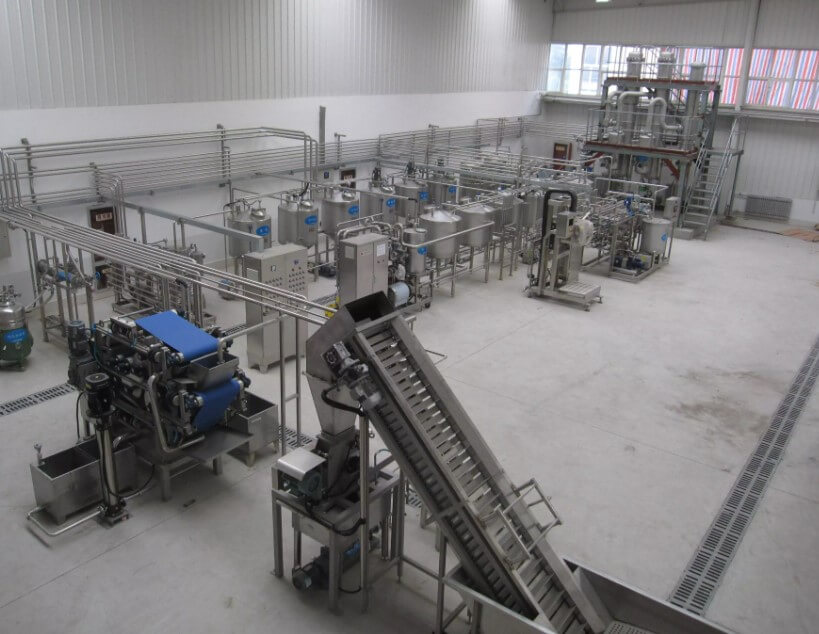
Critical Compliance & Safety Standards: Non-Negotiable Gateways to US & EU Markets
Non-compliance with food-contact machinery regulations is the fastest route to a forced recall, port seizure, or seven-figure product-liability suit. For fruit-juice processing lines imported into the United States or the European Union, three regulatory layers apply simultaneously: electrical safety, food safety, and worker safety. Each layer carries criminal-liability exposure for “responsible corporate officers” under the U.S. FD&C Act (21 U.S.C. §333) and the EU’s General Product Safety Directive (GPSD) 2001/95/EC. Below is the executive-level checklist that General Counsel, CFO, and COO must validate before issuing a purchase order.
United States: Electrical & Worker Safety
UL 508A certification for the industrial control panel is mandatory in 38 states and de-facto required by every national insurer. A single unlabeled panel voids coverage and triggers OSHA 29 CFR 1910.399 penalties of $15,625 per violation per day. NEC Article 670 also demands SCCR (Short-Circuit Current Rating) labeling; missing data will red-flag the shipment at the port and can add $8,000–$12,000 in unexpected re-labeling costs. If the line exceeds 600 V, NFPA 70E arc-flash studies must be delivered with the machine; insurers now demand this before granting coverage for plants rated >250 kVA.
United States: Food-Contact Safety
All surfaces that touch juice must meet FDA 21 CFR §174-178 food-contact substance limits. Stainless steel must be AISI 316L or higher; lower grades (e.g., 304) corrode under citric acid and create migration of chromium above 0.1 ppm, the threshold that converts the product into an “adulterated food” under 21 U.S.C. §342. If the line includes plastic tubing, suppliers must supply USDA Dairy 3-A Sanitary Standard 20-27 certificates; absence of this document has caused CBP to re-export $1.2 million Brazilian orange-juice evaporators at the importer’s cost. Finally, the entire line must be covered under the FDA Food Safety Modernization Act (FSMA) Hazard Analysis—importers are now the “FSMA FSVP importer-of-record” and face $500,000–$1 million DOJ fines if foreign supplier verification is missing.
European Union: CE Marking & Hygiene
The CE Machinery Directive 2006/42/EC is self-declared, but the Notified Body technical file must include EN 60204-1 (electrical), EN 1672-2 (hygienic design), and EN ISO 13849-1 (safety controls). Missing EN 1672-2 documentation is the #1 reason fruit-processing lines are stopped at EU border inspection posts (BIPs); average demurrage is €3,000 per day plus retroactive Notified Body assessment fees of €15,000–€25,000. If the machine incorporates aseptic filling, the additional compliance route is EC 1935/2004 for food-contact materials and EHEDG certification; without it, retailers such as Tesco and Carrefour will delist SKUs within 48 hours of an audit finding.
Legal Risk Quantification
A single serious injury traced back to non-compliant guarding triggers OSHA’s “egregious” willful citation policy; penalties scale to $3.5 million plus criminal referral. In the EU, the 2022 Schmitz-Walter ruling (C-684/20) confirms that managing directors can be personally liable for unsafe machinery even if the firm is bankrupt. Product-liability insurers now apply a 15–30% surcharge on premiums if the imported line lacks CE or UL file numbers, effectively adding $50k–$200k to annual risk cost.
Certification Cost & Timeline Impact
| Standard / Regulation | Mandatory Scope | Typical Supplier Up-charge | Certification Lead-Time | Penalty Exposure if Missing | Insurance Surcharge |
|---|---|---|---|---|---|
| UL 508A Panel Listing | USA, all control panels | $4k–$7k | +2 weeks | $15,625/day OSHA fine | +8% premium |
| FDA 21 CFR 174-178 Material Migration | USA, food-contact metals & plastics | $2k–$4k per alloy | +1 week | Product recall, $1M+ | +10% premium |
| FSMA FSVP Documentation | USA, importer-of-record duties | $3k–$5k | +1 week | DOJ fine up to $1M | +12% premium |
| CE MD 2006/42/EC Technical File | EU, full machine | $6k–$10k | +3 weeks | Border rejection, €3k/day | +15% premium |
| EN 1672-2 Hygienic Design | EU, food zone | $2k–$4k | +1 week | Retail delisting | +5% premium |
| EN ISO 13849-1 Safety Control Reliability | EU, safety PL “c” or higher | $3k–$6k | +2 weeks | Criminal liability | +7% premium |
Note: Up-charges are additive; a dual-market (US + EU) line typically incurs $20k–$32k in compliance surcharges and 4–6 weeks additional lead-time. Budgetary impact on a $400k–$800k turnkey line is 5–8%, but non-compliance cost can reach 30–40% of machine value once fines, demurrage, and lost sales are included.
Sourcing Safeguard
Insert a “Regulatory Conformity Guarantee” clause requiring the supplier to deliver UL and CE file numbers before 30% final payment. Require third-party product-liability insurance naming your company as additional insured, minimum $5 million per occurrence. Finally, pre-book a customs-broker experienced in food machinery (HS codes 8435.10 and 8419.89) to validate paperwork before vessel departure; the $1,500 broker fee avoids $50,000 in emergency re-exports.
The Procurement Playbook: From RFQ to Commissioning
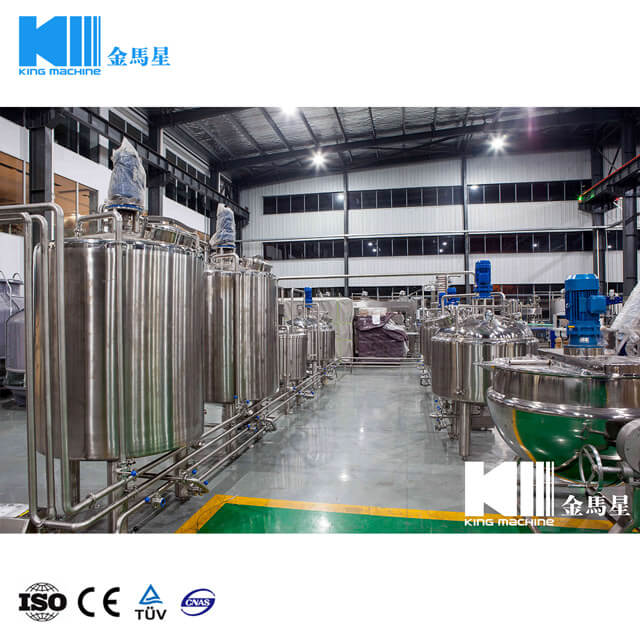
Strategic Procurement Playbook: Fruit Juice Processing Line (400–600 LPH)
RFQ Drafting: Lock Performance Before Price
Anchor the RFQ to juice yield ≥92 % for apples and °Brix recovery ≥95 % across 4–8 °Brix feed. Specify AISI 316L wetted parts with <0.8 µm Ra finish and FDA 21 CFR §170.39 elastomer list. Require vendor to submit material passports (elemental composition + 3.1.B mill certificates) and CE/UL ex-proof dossiers for motors >7.5 kW. Insert liquidated-damage clause: 1 % of contract value per 0.5 % yield shortfall, capped at 10 %. State that total cost of ownership (TCO) model—energy, water, CIP chemicals—will outweigh pure CAPEX in award logic (weighting 60/40). Request bankable performance bond worth 15 % of PO value issued by top-30 global bank; expiry only after SAT sign-off.
Supplier Screening & Bid Conditioning
Score only OEMs that can show ≥three 400 LPH+ references running >18 months in GFSI-certified plants. Mandatory site audit checklist: orbital welding logs, positive-pressure test certificates, source-code escrow for PLC software. Reject any bidder whose EBITDA margin <8 % or quick ratio <1.0 to avoid post-sale vaporization risk. Require parent-company guarantee if bidder is an offshore trading house; enforce New York Convention arbitration seat for enforceability.
Technical Evaluation Matrix
| Criterion | Weight | Threshold | Preferred Metric | Data Source |
|---|---|---|---|---|
| Juice yield | 30 % | ≥92 % | 94–96 % | 8-hour FAT with client fruit |
| Water use per L juice | 15 % | ≤0.45 L | 0.30–0.35 L | Utility sub-meter |
| CIP cycle time | 10 % | ≤30 min | 18–22 min | PLC log |
| OEE guarantee | 15 % | ≥85 % | 88–90 % | 30-day run at buyer site |
| Spare-parts lead time | 10 % | ≤10 days | 5–7 days | OEM global warehouse list |
| Energy kWh per 1 000 L | 10 % | ≤32 kWh | 26–28 kWh | DIN EN 16247 audit |
| Warranty coverage | 10 % | 24 months | 36 months on SS contact parts | OEM Ts&Cs |
Normalize bids via cost-of-risk adjustment: add USD 8 k per day of predicted downtime derived from MTBF data. Short-list top-two vendors for FAT.
Factory Acceptance Test (FAT) Protocol
Execute FAT at OEM’s facility with client-supplied fruit batch (specify cultivar, ripeness, °Brix). Run three consecutive 4-hour cycles; capture real-time data through OPC-UA to cloud dashboard. Reject shipment if any of these triggers occur: micro count >10 CFU/cm² post-CIP, vibration >4.5 mm/s RMS, or deviation >±1 % from quoted yield. Insist on “no-punch-list” release: all non-conformities closed before containers leave factory; otherwise demurrage at USD 1 200/day accrues to supplier.
Incoterms Selection: FOB vs DDP Trade-off
| Cost & Risk Component | FOB Shenzhen (Index) | DDP Chicago (Index) | Delta |
|---|---|---|---|
| Equipment price | 100 | 112 | +12 % |
| Freight & insurance | Buyer 18–22 | Seller 0 | – |
| Import duty (HS 8435.10) | Buyer 0–6 % | Seller absorbed | – |
| Demurrage risk | Buyer high | Seller high | – |
| VAT cash-flow | Buyer front | Seller front | – |
| Control over freight quality | Limited | High | – |
| Total landed cost (USA) | 118–128 | 112 | –6 to –16 |
Rule of thumb: choose FOB when buyer’s freight contract beats OEM’s margin by >8 % and cargo insurance premium <0.35 % of CIF; otherwise DDP flattens volatility and caps escalation.
Site Commissioning & Risk Retention
Hold 10 % retention until SAT score ≥95 % of FAT values for three straight production days. Insert “black-box” clause: OEM must leave full PLC source code in escrow; release triggered if support response >24 h during warranty. Require availability guarantee: 97 % on 24 × 6 schedule; each 1 % shortfall = 2 % invoice rebate. Final payment released only after CMMS upload of electronic parts book, VR training modules, and IoT integration certificate matching buyer’s IIoT taxonomy.
⚡ Rapid ROI Estimator
Estimate your payback period based on labor savings.
Estimated Payback: —