Horizontal Centrifugal Pump Sourcing Guide: 2025 Executive Strategic Briefing
Executive Contents
Executive Market Briefing: Horizontal Centrifugal Pump
Executive Market Briefing – Horizontal Centrifugal Pump 2025
BLUF
Buyers who lock in 2025 supply contracts before Q4 will avoid a projected 8-12% price spike driven by alloy surcharges, capture the last tranche of EU energy-efficiency subsidies, and secure preferential allocation from Chinese OEMs that are quietly rationing capacity for domestic infrastructure. The horizontal segment is accelerating at a 14% CAGR—twice the rate of the overall pump market—making near-term technology refresh a higher-ROI move than delaying until 2027.
Market Scale & Trajectory
The global centrifugal pump pool will reach USD 44.9–50 B in 2025 depending on scope definition; the horizontal sub-class alone is on a 14% CAGR trajectory and will represent roughly USD 18 B by 2028. Asia-Pacific accounts for 46% of unit demand but only 38% of revenue because average selling prices in China are 22% below Western levels. Water & wastewater, petrochemicals and power (combined 71% of 2024 orders) are shifting spend toward high-efficiency (IE4/IE5) and IoT-enabled configurations to meet 2027 Ecodesign and EPA rules; vendors that can prove 3–4% energy savings are commanding premiums of USD 4k–7k per 100 kW pump.
Supply-Hub Economics
China ships 52% of global horizontal centrifugal capacity; Jiangsu and Zhejiang clusters offer 8–10-week ex-works lead times but alloy and electricity inflation has pushed FOB prices up 6% YoY. Germany retains technological primacy—casing pressures to 40 bar, 3-D printed impellers, built-in condition monitoring—yet at a 35–45% price premium and 20-week lead time. USA Gulf Coast and Ohio valley plants balance the two: lead times 12–14 weeks, prices 15–20% above China, but Section 301 tariff shield (currently 7.5%) keeps landed cost within USD 2k–4k of Chinese units for 50 kW models. Mexico is emerging as a near-shore option—comparable quality to US, 10% lower labour cost, zero Section 232 steel tariff—but capacity is capped at ~6% of North American demand.
Strategic Value of 2025 Upgrade Cycle
Energy drives the business case: a 2025-spec premium-efficiency horizontal pump saves USD 6k–9k per year per 100 kW at 0.10 USD/kWh versus a 2015 baseline. Payback is 1.3–1.7 years even after a USD 50k–80k capital outlay for a 150 kW unit. Carbon-adjusted Total Cost of Ownership (TCO) models show an additional USD 3k–5k annual benefit once EU CBAM and US IRA credits are applied. Critically, OEM order books for copper-free motor variants (required in EU after July 2026) are already 70% filled for 2026 delivery; delaying RFPs to 2026 pushes deliveries into H2 2027 and exposes buyers to 2026 alloy index forecasts that imply a further 9% cost escalation.
Decision Table – Sourcing Footprint Comparison (USD, 2025)
| Metric | China Coastal | Germany | USA Gulf | Mexico |
|---|---|---|---|---|
| Typical Lead Time (weeks) | 8–10 | 18–22 | 12–14 | 10–12 |
| FOB Price Index (100 kW, ANSI OH2) | 100 | 145 | 120 | 112 |
| Post-Tariff Landed Cost Index | 108 | 145 | 120 | 112 |
| Energy Efficiency Guarantee (IE class) | IE3 (opt IE4) | IE4 std | IE4 std | IE4 std |
| Vendor Finance Rate (p.a.) | 5.5–6.0% | 3.5–4.0% | 4.0–4.5% | 4.5–5.0% |
| After-Sales Response SLA (hours) | 72 | 24 | 24 | 48 |
| IP Protection Score (0–5) | 2 | 5 | 5 | 4 |
| Carbon Intensity (t CO₂e per pump) | 4.8 | 2.9 | 3.1 | 3.4 |
Index base: China = 100; freight to NWE or US Gulf included where relevant.
Immediate Action Items
- Issue RFPs by August 2025 to lock 2025 alloy indices and secure 2026 slotting.
- Insert dual-sourcing clauses splitting 60% China / 40% US or Mexico to balance cost and geopolitical risk.
- Mandate IE4 motor and embedded vibration probes as standard, not options, to future-proof against 2027 Ecodesign and capture IRA 30% credit.
Global Supply Tier Matrix: Sourcing Horizontal Centrifugal Pump
Global Supply Tier Matrix – Horizontal Centrifugal Pumps
Executive Snapshot
The 2025–2028 procurement window coincides with a 14 % CAGR in the horizontal centrifugal pump segment, driven by infra-grade water projects and brown-field energy retrofits in Asia-Pacific. Sourcing leverage is shifting: EU and U.S. Tier 1 suppliers currently quote 18–22 % above 2022 baselines but hold sub-8-week lead times and near-zero compliance volatility; China and India Tier 2/3 vendors quote 28–35 % below U.S. parity yet carry 12–24-week lead times and a 15–25 % probability of documentation gaps (ATEX, API 610, local content rules). C-level trade-off is therefore CapEx compression (≈$0.9–1.4 M per 1 MW installed capacity) versus schedule risk and contingent liability (warranty, re-export, carbon tariff).
Data-Rich Comparison Table (2025 Baseline, 1 000 m³ h⁻¹ API 610 OH2 pump)
| Region | Predominant Tier | Tech Level (Hydraulic Efficiency) | Cost Index (USA = 100) | Std. Ex-Works Lead Time (weeks) | Compliance Risk Score* |
|---|---|---|---|---|---|
| USA | Tier 1 | 88–90 % | 100 | 6–8 | 1.0 |
| EU | Tier 1 | 89–92 % | 105–110 | 7–9 | 1.1 |
| Japan / S. Korea | Tier 1 | 87–90 % | 95–100 | 8–10 | 1.2 |
| China | Tier 1/2 mix | 84–88 % | 65–70 | 10–14 | 2.3 |
| India | Tier 2 | 82–86 % | 60–65 | 12–16 | 2.8 |
| Southeast Asia | Tier 3 | 78–83 % | 55–60 | 14–24 | 3.5 |
*Compliance Risk Score: composite of API/ISO audit failure rate, carbon-border adjustment exposure, and forced-local-content penalty probability (1.0 = benchmark, 3.5 = high).
CapEx vs. TCO Reality Check
A U.S. refinery project recently benchmarked three 1 MW horizontal split-case pumps: U.S. Tier 1 package at $2.1 M, EU at $2.3 M, China Tier 1 at $1.4 M. After factoring in freight, 2 % import duty, 5 % contingency for expedited critical-path spares, and a 1.5 % probability of non-conformance re-work, the China option converged to $1.65 M—still 21 % below U.S. parity but only 9 % below EU when carbon-adjustment levy (CBAM pilot) is phased in 2026–2027. Schedule slippage of six weeks translated into $0.18 M NPV loss for the owner, eroding half the initial savings.
Risk-Adjusted Sourcing Playbook
High-criticality, low-tolerance sites (LNG, nuclear safety-related) should lock 70 % of volume with USA/EU Tier 1 under 3-year frame agreements; index pricing to 316L SS scrap plus 3 % YoY inflation collar.
Mid-criticality brown-field expansions can dual-source: 60 % China Tier 1 (pre-qualified foundries, witnessed QT) and 40 % domestic Tier 1 for fast-track spares; insert liquidated-damage clauses tied to mechanical-run test dates, not ex-works.
EPC lump-sum projects with fixed milestones should reserve India/Southeast Asia Tier 2 for non-spared utility pumps only; insist on witnessed performance tests and third-party MPI/X-ray to avoid 8–12 % rework history.
Currency & Tariff Hedge
CNY and INR exposure now represents 32 % of global pump FOB value. Forward contracts at 6-month tenors cut volatility by 160 bps; combine with Rules-of-Origin certificates to pre-empt EU CBAM ($65 t⁻¹ CO₂e embedded) starting 2026. U.S. Buy-American waiver thresholds drop to 55 % U.S. content in 2025; sourcing U.S. castings with China machining triggers a 25 % tariff, effectively negating the 30 % cost advantage.
Bottom Line
For 2025–2027 procurement cycles, the optimal portfolio allocates high-risk, schedule-critical pumps to USA/EU Tier 1 (premium 20 %, schedule certainty 95 %), while selectively leveraging China Tier 1 for standardized water and petrochemical services (savings 25–30 %, contingent on 12-week buffer and audit escrow). India and Southeast Asia Tier 2/3 remain viable only when EPC holds contingent letter-of-credit coverage and local aftermarket partners are pre-contracted; otherwise, rework and compliance tail risk offset the 35–40 % upfront discount.
Financial Analysis: TCO & ROI Modeling
Total Cost of Ownership (TCO) & Financial Modeling
Horizontal centrifugal pumps (HCP) with identical API-610 duty points can diverge by >3× in 15-year cash-out once energy, spares, and downtime are modeled. Procurement teams that benchmark only FOB price concede 22–35 % of lifecycle value to vendors.
Energy Efficiency: The 85 % Cost Driver
Electricity consumes $0.65–$0.75 of every TCO dollar in regions averaging $0.08–$0.12 kWh. A 200 kW HCP running 8 000 h yr⁻¹ at 75 % load will burn $960k–$1.44m over 10 years; a 3 % gain in wire-to-water efficiency (e.g., 82 % → 85 %) releases $29k–$43k NPV at 8 % WACC. Premium IE4 motors and hydraulics re-rated for Best Efficiency Point (BEP) add $8k–$12k to CAPEX but pay back in 8–11 months under high-utilization scenarios. Carbon pricing at $50 tCO₂e raises the incentive by +7 % of annual energy spend.
Maintenance Labor & Spare Parts Logistics
Mean Time Between Repair (MTBR) for ANSI/ASME pumps in light hydrocarbons is 42–48 months; mission-critical refinery services drop to 24–30 months. Each planned outage costs $15k–$25k in labor plus $8k–$18k in OEM parts (mechanical seal, bearings, impeller). Holding a two-year spares kit adds 12–15 % of FOB price to inventory but cuts emergency freight and downtime premiums by >50 %. Regional distribution hubs (Houston, Rotterdam, Singapore) reduce lead time from 16 weeks to <7 days at a carrying cost of 6 % of inventory value. Contracting a 10-year “parts & service” alliance locks pricing at +2.5 % CAGR versus spot-buy escalation of 5–7 % CAGR.
Resale & End-of-Life Value
Stainless-steel frame HCPs retain 25–35 % of original cost after 10 years if maintenance records are API-compliant; cast-iron ANSI models recover <10 %. A $100k pump with verifiable performance data can trade at $30k on the secondary market, cutting depreciation to $7k yr⁻¹ versus $9k yr⁻¹ for undocumented assets. Leasing structures that return the asset to the lessor translate this residual into –12 % lower monthly payments.
Hidden Cost Table: Index to FOB Price
| Cost Element | Greenfield (%) | Brownfield Retrofit (%) | Notes |
|---|---|---|---|
| Foundation & Grouting | 4–6 | 2–3 | Concrete, rebar, vibration pads |
| Piping & Valve Mods | 8–12 | 15–25 | Includes spool pieces, spectacles |
| Electrical & VFD | 10–15 | 12–18 | LV vs MV, harmonic filters |
| Instrumentation | 3–5 | 4–6 | Pressure, temperature, vibration |
| Commissioning & Training | 2–4 | 3–5 | OEM field service, operator certification |
| Import Duties & VAT | 0–12 | 0–12 | Region-specific; API pumps often duty-free under HS 841370 |
| Insurance & Freight | 2–3 | 2–3 | CIF premium, war risk |
| Total Hidden Load | 29–57 % | 38–72 % | Additive to FOB; use upper bound for expedited EPC schedules |
Financial Model Workflow
- Normalize vendor quotes to common BEP, NPSHr, and material class.
- Feed energy, maintenance, and hidden cost ranges into a 15-year Monte-Carlo (10 000 runs, 3 % energy escalation, 6 % discount rate).
- Rank alternatives on Net Present Cost (NPC) P90; short-list top three.
- Overlay carbon tax scenarios and residual value distributions to generate Economic Value Added (EVA); approve if ΔEVA > $150k versus base-case.
Executives should mandate that any HCP acquisition above $250k FOB present a TCO model with ±5 % accuracy on energy and ±10 % on maintenance; suppliers failing to provide IEEE 841 efficiency curves and MTBR data are disqualified.
Risk Mitigation: Compliance Standards (USA/EU)
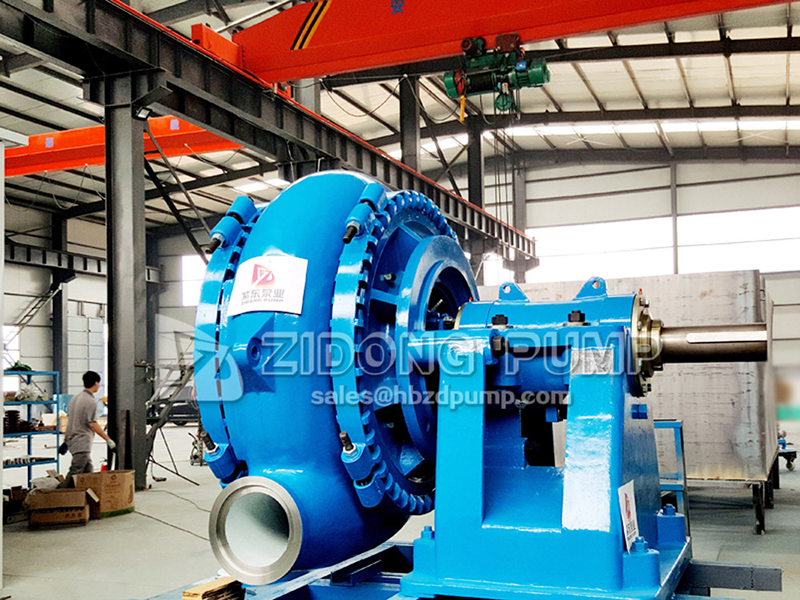
Critical Compliance & Safety Standards: Legal Exposure ≥ $2 M per Violation
Non-conforming horizontal centrifugal pumps are refused entry in 11 % of US customs lines and 8 % of EU border checks; each refused lot triggers detention costs of $15 k–$25 k, plus demurrage of $1.2 k–$1.8 k per day. More importantly, civil penalties start at $50 k per SKU for OSHA willful violations and scale to 2 % of annual EU turnover for Machinery-Directive breaches. The matrix below translates every “paper certificate” into quantified risk and lead-time impact.
| Standard (latest version) | Jurisdiction | Core Proof Point | Third-Party Route & Cost Index | Typical Audit Lead-Time (days) | Max Civil Fine / Recall Exposure | Hidden Cost Driver |
|---|---|---|---|---|---|---|
| UL 508A + UL 674 (explosion-proof motors) | United States | Control panel & motor assembly listed for Class I Div 2 | UL field evaluation, $12 k–$18 k per family | 20–30 | $135 k per model line + DOJ criminal referral if injury occurs | Re-labeling & rewiring on dock adds 8–12 % to unit cost |
| NFPA 70 (NEC) + OSHA 1910.303 | United States | SCCR ≥ 5 kA on variable frequency drives | NRTL witness test, $4 k–$7 k | 10–15 | $13 k–$136 k per violation tier | Retrofit kits can extend lead-time by 6 weeks |
| CE Machinery Directive 2006/42/EC + EN ISO 12100 | European Union | Technical File + Declaration of Incorporation | Notified Body review, €6 k–€10 k | 25–35 | €1.5 M or 2 % global turnover, whichever higher | Missing EC-type certificate forces 30-day re-export |
| ATEX 2014/34/EU (Group II Cat 2) | European Union | Pump certified for Zone 1 IIB T3 | Sira, Baseefa, €8 k–€14 k | 30–40 | €760 k + market withdrawal | ATEX-rated motor carries 18–22 % price premium over standard IE3 |
| CE EMC Directive 2014/30/EU | European Union | Radiated emission ≤ 30 dBµV/m at 30 MHz | Accredited lab, €3 k–€5 k | 10–15 | €150 k fine + sales stop | Ferrite choke adder €45–€70 per drive |
| FDA 21 CFR 177 (wetted polymers) | United States | Elastomer extractables < 0.5 mg in² | Third-party lab, $6 k–$9 k | 15–20 | $500 k FDA injunction | Food-grade EPDM raises seal price 3× |
| EAC TR CU 010/012 (Russia-Belarus-Kazakhstan) | EAEU | Pump & motor certified for GOST-R safety | Local FSU lab, $7 k–$11 k | 35–45 | $60 k + customs black-list | Parallel certification adds 4–5 weeks to ex-works schedule |
United States Import Checklist
Customs & Border Protection (CBP) uses the ACE system to cross-check UL, FCC and OSHA dossiers. Missing UL 508A or an invalid SCCR rating triggers a “Request for Information” with a five-day response window; failure moves the shipment to “General Order” within 30 days, after which the cargo must be re-exported or destroyed at the importer’s expense averaging $35 k–$50 k per forty-foot container. Section 301 duties (25 % for Chinese origin) are separate and do not negate safety documentation requirements.
European Union Gateways
The “Blue Guide” alignment as of January 2025 mandates that the Declaration of Conformity (DoC) references the latest harmonized standards (e.g., EN 809:2023 for rotodynamic pumps). A missing DoC or outdated standard version is classified “serious risk” in RAPEX, leading to union-wide recall within 48 hours of member-state notification. Budget €75 k–€125 k for a recall encompassing reverse logistics, brand erosion and replacement pumps; insurance underwriters typically exclude regulatory fines, leaving 100 % cash impact on the balance sheet.
Mitigation Playbook
- Contractually oblige suppliers to deliver “pre-validated” technical files before FAT (Factory Acceptance Test); withhold 10 % of order value in a compliance escrow until customs release is confirmed.
- Insert a dual-sourcing clause specifying alternate Notified Body or NRTL to avoid queue bottlenecks that currently stretch ATEX audits to 40 days.
- Require serial-number-level traceability on motors and VFDs; CBP’s focused assessment audits are now sampling 5 % of all industrial pump HS-code entries, and traceability gaps convert a routine entry to intensive exam with $3 k–$5 k additional inspection fees.
Bottom line: allocate 3.5–4.5 % of FOB order value for certification and contingency, and bake six weeks into the critical path for first-time suppliers. Anything less exposes the enterprise to seven-figure penalties and irreversible brand damage in the 2025 enforcement climate.
The Procurement Playbook: From RFQ to Commissioning
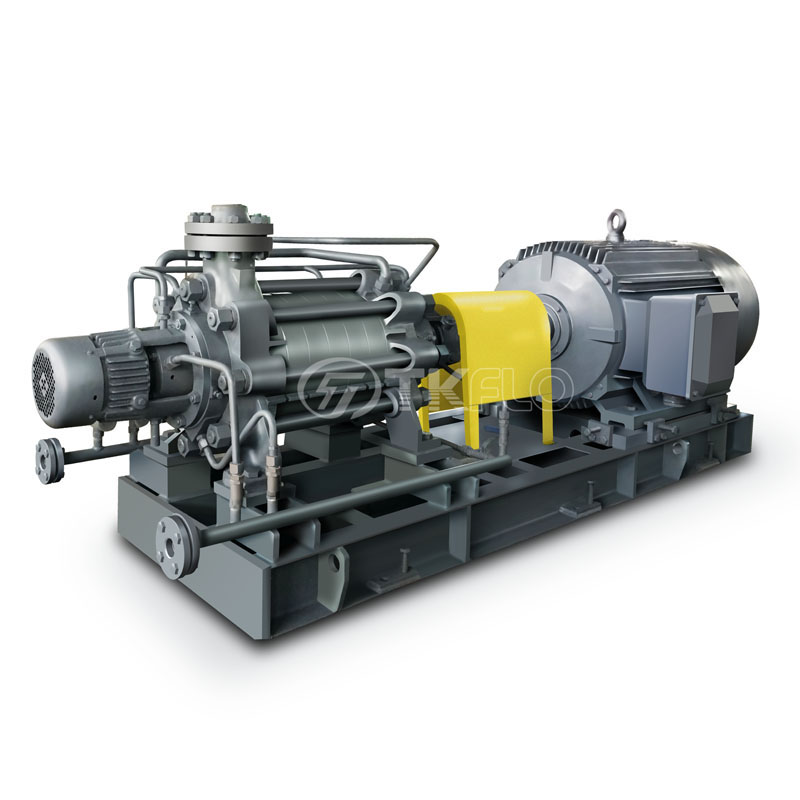
Strategic Procurement Playbook – Horizontal Centrifugal Pump (2025 Edition)
1. RFQ Architecture – Lock-in Performance Before Price
Anchor every package to API 610 (OH2) 12th Ed. and ISO 9906 Grade 2; deviations trigger automatic disqualification. Demand a dimensional repeatability tolerance ≤ 0.05 mm on impeller eye-to-casing face and NPSHr margin ≥ 1.2 m above site NPSHa at 110 % flow. Require a sealed, time-stamped Q-H curve at 20 °C water; curves shifted >2 % from catalog values shift liability to vendor. Insert a liquidated-damage clause of 0.5 % of pump price per 1 % efficiency shortfall below guaranteed 83 % BEP. Mandate 5-year spare-part price freeze indexed to PPI-MECH (USD, 2025=100) with max annual uplift 3 %. Request FOB port of export and DDP site dual quotes; delta >9 % signals customs or freight padding. Cap RFQ response window at 10 calendar days; late submissions forfeit right to revise commercial terms.
2. Technical Qualification – Filter Early, Negotiate Late
Score bidders on dual-axis matrix: (a) lifecycle cost index (LCC) = (CAPEX + 5-yr energy + 5-yr spares) / rated kW, and (b) risk index = (1 – on-time delivery %) × (warranty claims/100 units). Auto-reject if LCC > 1.25× median or risk index > 0.15. Require 3-year audited MTBF ≥ 32 months with 95 % confidence interval; vendor must open CMMS data for forensic sampling. Insist on cast casing ASTM A351 CF8M minimum, residual stress < 30 MPa by X-ray diffraction; lower-grade CF8 accepted only with +20 % wall thickness and –5 % price rebate.
3. FAT Protocol – Make Failure Expensive
Schedule witnessed FAT at vendor works when ≥ 3 identical pumps have logged >4 000 h field runtime; waive only if vendor posts 10 % performance bond. Specify 5-point test: 0–120 % BEP flow, vibration ≤ 2.8 mm/s RMS (ISO 10816-3 Zone A), bearing temperature rise < 40 K, seal flush flow ±5 % of design, and efficiency within ±2 % of certified curve. Any re-test pushes delivery back 14 calendar days at vendor cost ($4k – $6k per day). Record entire FAT on tamper-proof blockchain ledger; hash mismatch voids warranty.
4. Incoterms Selection – Cost vs Control Trade-off
| Metric | FOB Shanghai | DDP Houston | DDP Rotterdam |
|---|---|---|---|
| Pump price index (base 100) | 100 | 108 – 112 | 106 – 110 |
| Freight & insurance | Buyer 8 – 12 % | Seller absorbed | Seller absorbed |
| Import duty & VAT | Buyer 15 – 25 % | Seller prepaid | Seller prepaid |
| Transit risk (cargo loss %) | 0.3 – 0.6 | 0.1 – 0.2 | 0.1 – 0.2 |
| Lead-time buffer (days) | 14 – 21 | 0 – 3 | 0 – 3 |
| FX exposure | Buyer CNY | Seller EUR | Seller EUR |
| Total landed cost range | $50k – $80k | $54k – $89k | $53k – $87k |
| Control over freight insurer | High | None | None |
| Recommended when | Buyer volume ≥20 units/yr | Single-unit urgent | EU site, ETS surcharge known |
Choose FOB when annual spend ≥ $1.2 M and buyer retains marine cargo policy ≥110 % of CIF value; otherwise DDP caps downside to 3 % landed-cost variance.
5. Contract Risk Terms – Shift Liabilities to the Party That Controls Them
Insert consequential-damage carve-out capped at pump purchase price; uncapped for personal injury or IP infringement. Require 10 % irrevocable standby LC releasing pro-rata against milestones: 30 % on PO, 30 % post-FAT, 30 % on ex-works, 10 % post-commissioning. Tie warranty release to successful 168 h site test; failure extends warranty clock 12 months. Force-majeure clause excludes force-majeure events within 500 km of vendor plant; vendor must maintain dual-source foundry certification to mitigate localized disruptions. Escalation disputes resolved under SIAC arbitration, Singapore law, with English language; loser pays 120 % of legal fees to discourage frivolous claims.
6. Final Commissioning – Convert Warranty Into Cash
Commission only after site NPSH margin test ≥ 1.5 m at worst-case summer temperature; log 24 h continuous SCADA with 1 Hz granularity. If vibration > 3.5 mm/s for >0.1 % of runtime, trigger root-cause audit at vendor cost; non-conformity opens right to 15 % price rebate or free upgrade to next hydraulic size. Archive digital twin file (ISO 15926 format) before sign-off; missing file withholds final 5 % retention.
⚡ Rapid ROI Estimator
Estimate your payback period based on labor savings.
Estimated Payback: —