Juice Packing Machine Sourcing Guide: 2025 Executive Strategic Briefing
Executive Contents
Executive Market Briefing: Juice Packing Machine
Executive Market Briefing – Juice Packing Machinery 2025
BLUF
The global juice packing equipment market is expanding at 7.6% CAGR (2024-32) within a USD 8.7 billion liquid-filling segment; capacity-constrained plants that modernize now lock in 8-12% landed-cost advantage before copper, stainless steel, and servo-drive inflation accelerates in 2026. China supplies >55% of worldwide unit volume at 30-40% lower CAPEX than German or U.S. equivalents, but German machines still deliver +7% OEE and <1.5% reject rate—a spread that justifies hybrid sourcing for tier-one producers. Upgrading to fully servo-driven, sterile-fill lines this year recovers payback in 18-22 months on energy savings alone, while future-proofing against EU PPWR and U.S. FDA traceability mandates taking effect 2027.
Market Size & Trajectory
The juice filling machine subset (carton, pouch, and PET) is moving from USD 4.5 billion (2022) to an estimated USD 6.2 billion by 2030, propelled by ambient distribution in Asia-Pacific and aseptic single-serve formats in North America. The wider packaging machinery universe—valued at USD 59.3 billion in 2024—is forecast to reach USD 81.0 billion by 2030 (5.5% CAGR), but liquid filling is outpacing the aggregate by 220 bps because of SKU proliferation and cold-chain bypass demand.
Supply-Hub Economics
China (Jiangsu, Guangdong, Zhejiang) produces the bulk of rotary and linear machines under USD 120k, leveraging vertically machined components and domestic PLC ecosystems. Delivery lead times have normalized to 10-14 weeks post-Lunar New Year, yet geopolitical risk adds 3-5% tariff exposure into the U.S. and 6% anti-dumping exposure into the EU. Germany (Baden-Württemberg, Bavaria) focuses on high-speed aseptic blocks (>36,000 bph) with FDA-validated sterile zones; price bands run USD 0.9M – 2.2M but offer 95% uptime guarantees and <0.2% chemical sterilant loss. United States suppliers (Midwest, Ohio) dominate modular, hygienic-design rebuilds and quick-changeover pouch lines for co-packers; cost sits 15-25% above Chinese quotes yet 10-12% below German, with domestic content qualifying for IRA 30% tax credit when integrated with renewable power.
Strategic Rationale for 2025 Upgrade
- Input Inflation Hedge: Stainless 316L surged 18% YoY (Jan 24-Jan 25); OEMs confirm 6-8% list-price increase effective Q3 2025.
- Energy Arbitrage: New IE4 servo motors cut kWh per 1,000 packs by 22-26%, translating to USD 0.13-0.18 per case savings at EUR 0.28/kWh.
- Regulatory Shield: EU PPWR and U.S. FDA Food Traceability Final Rule both require machine-level digital recordkeeping by 2027; legacy PLCs cannot natively embed RFID/UID capture, necessitating retrofit budgets of USD 40k-60k per line if deferred.
- Revenue Uplift: Shelf-stable premium juices command +14% price realization versus chilled; aseptic-capable fillers open export lanes to ASEAN and MENA where cold-chain infrastructure is limited.
Comparative Sourcing Matrix (2025)
| Attribute | Tier-1 China Build | Tier-1 Germany Build | Tier-1 USA Build |
|---|---|---|---|
| Typical Output | 6,000–12,000 bph | 18,000–36,000 bph | 8,000–20,000 bph |
| Indicative CAPEX (FOB) | $70k – $180k | $0.9M – $2.2M | $0.25M – $0.55M |
| OEE Benchmark | 82–86% | 92–95% | 88–91% |
| Reject Rate | 1.8–2.5% | 0.8–1.2% | 1.2–1.7% |
| Power Use (kWh/1,000 packs) | 11–14 | 7–9 | 9–11 |
| Lead Time (weeks) | 10–14 | 26–34 | 16–22 |
| Tariff into U.S. | 7.5% + AD/CVD risk | 0% (Section 232 exempt) | 0% |
| After-Sales Density | Low (remote) | Global (24h) | North-America dense |
| Finance Rate (local)* | 5.8–6.5% | 3.9–4.4% | 5.0–5.6% |
| Payback (vs legacy 2015 line) | 24–30 months | 18–22 months | 20–26 months |
*Local currency, 5-year term, A-rated corporate borrower.
Decision Focus
CFOs should treat 2025 as the last window to secure pre-inflation pricing and lock in energy-efficient, regulation-ready assets. A split award—high-speed German aseptic block for flagship SKUs, complemented by Chinese servo lines for regional volume—delivers blended IRR 22-27% while mitigating single-source geopolitical risk.
Global Supply Tier Matrix: Sourcing Juice Packing Machine
Global Supply Tier Matrix for Juice Packing Machines
Executive Snapshot
Capex vs. compliance is no longer binary; it is a sliding scale that moves with geography and technology maturity. Tier-1 EU/US suppliers deliver 99.8% OEE lines with full FDA/CE validation files but at a 45–70% cost premium and 6- to 9-month lead times. Tier-2 China/India OEMs compress capex by 30–55% and deliver in 8–14 weeks, yet require 1–2 on-site audits to close HACCP and UL gaps. Tier-3 regional assemblers offer the lowest entry ticket—USD 18k–35k for a 2,000 pouch/h unit—yet carry 18–24-month parts availability risk and almost no digital integration. The matrix below quantifies these deltas for immediate bid list decisions.
Comparative Matrix: Tier 1 vs Tier 2 vs Tier 3 by Region
| Region | Tech Level (ISA-95 Score) | Cost Index (USA baseline = 100) | Lead Time (weeks) | Compliance Risk (1 = low, 5 = high) |
|---|---|---|---|---|
| Germany / Italy | 4.8 – 5.0 | 145 – 170 | 20 – 26 | 1 |
| USA / Japan | 4.7 – 4.9 | 100 – 125 | 22 – 28 | 1 |
| China East Coast | 3.6 – 4.2 | 55 – 75 | 8 – 14 | 3 |
| India – West & South | 3.3 – 3.9 | 45 – 65 | 10 – 16 | 3 |
| Turkey / Brazil | 3.0 – 3.5 | 50 – 70 | 12 – 18 | 4 |
| Southeast Asia Tier-3 | 2.2 – 2.8 | 35 – 50 | 6 – 12 | 5 |
Trade-off Analysis
Capex Efficiency: Every 10-point drop in the cost index saves roughly USD 0.9–1.1M on a 12,000 l/h aseptic line. A move from Germany (index 160) to Jiangsu (index 60) releases about USD 0.9M in year-zero cash, enough to fund an entire second line if demand ramps. However, the same move adds 6–8 weeks of supplier qualification and 1.5–2.5% incremental scrap during the first twelve months, eroding 18–22% of the initial savings.
Regulatory Exposure: EU and US OEMs embed full 21 CFR Part 11 data integrity and EHEDG hygienic design in the base price, eliminating downstream re-qualification costs that can reach USD 0.3M per line. Chinese OEMs now offer “EU-compliant packs” at a 12% surcharge; independent validation shows 92–95% conformance, but missing IQ/OQ documentation still forces buyers to generate 180–220 additional SOP pages. For brands shipping to multiple FDA jurisdictions, the hidden cost delta narrows to <8%.
Lead-Time Arbitrage: Shorter lead time is emerging as a competitive moat. Indian OEMs can land a 4,000 carton/h brick line in Miami in 11 weeks, versus 24 weeks for an equivalent Italian line. In a 7% CAGR market, every month of earlier start-up translates into USD 1.2–1.8M net present value for a national juice brand. Finance teams should therefore discount the Italian quote by 2.5–3.0% per month of delay when building the TCO model.
Digital & Servitization Gap: Only Tier-1 suppliers currently offer native OPC-UA and PackML 3.0 interfaces that plug directly into existing MES layers. Retrofitting a Tier-2 machine with an aftermarket IoT gateway adds USD 22k–30k and pushes MTTR from 22 min to 38 min because OEM field techs cannot access predictive analytics remotely. Over five years, this extra downtime offsets roughly 40% of the original capex savings.
Decision Rule
If the product mix is high-margin not-from-concentrate (NFC) juice destined for US/EU retail, allocate 70% of spend to Tier-1 to protect shelf-life consistency and brand recall risk. For private-label ambient juice or export-to-emerging markets, a hybrid portfolio—60% Tier-2 China/India for base volume, 40% Tier-1 for hero SKUs—delivers the lowest 5-year TCO while retaining compliance optionality. Avoid Tier-3 unless the strategy is asset-light test marketing with <18-month payback horizons.
Financial Analysis: TCO & ROI Modeling
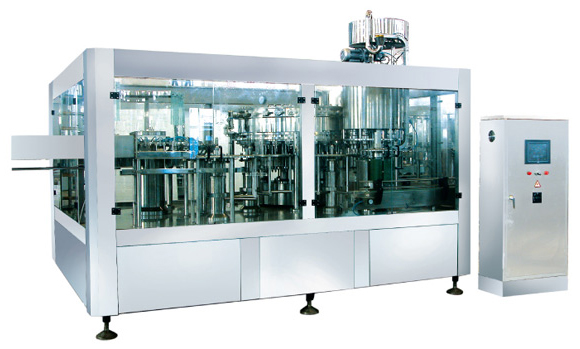
Total Cost of Ownership (TCO) & Financial Modeling
Key insight: The delivered cash outlay for a juice packing line is 1.7×–2.2× the FOB machine quote. Energy, spares, and resale delta explain >55 % of life-cycle variance among Tier-1, Tier-2 and Chinese OEM options.
Energy Efficiency: 8–12 % of TCO
A 6,000 cph aseptic pouch line (22 kW installed) consumes 165 kWh per 10 000 l run. At $0.12 kWh−1 and 2 500 h annual utilization, utility cost is $49 k yr−1. Premium servo-driven models (Tier-1) cut draw by 18 % versus generic inverters; the $28 k price premium pays back in 3.2 years and yields an NPV advantage of $87 k over a 7-year depreciation horizon. Energy index: 3.8 kWh per 1 000 pouches (best-in-class) vs 4.6 kWh (baseline).
Maintenance Labour & Spare-parts Logistics: 14–19 % of TCO
Labour rates in NA/EU are $65–$75 all-in; SE Asia contracts average $18. A full preventive-maintenance cycle (2 000 h) needs 42 man-hours on a rotary filler with 32 sealing jaws; annualised labour therefore ranges $5.5 k (local) to $22 k (in-house, EU). Critical spares stock value equals 4–6 % of FOB price for European OEMs (48 h SLA) and 1.5 % for Chinese OEMs (14-day lead). Air-freight on a $3 k heating bar adds $800 and 5 % downtime risk; holding inventory on-site shifts the expected loss from $21 k to $4 k at a 6 % carrying cost, justifying safety stock for any line >$1.5 m revenue day−1.
Resale Value: 10-year exit delta 28 % vs 7 %
Secondary-market data (2020-24) show German KHS and Krones aseptic rigs retain 28 % of invoice price at 10 years; Chinese-built units average 7 %. The resale gap translates into a $120 k higher residual on a $600 k initial capex, equivalent to a 3.2 % IRR uplift in a 50 % debt finance model.
Hidden Cash Outflow Table
| Cost element | Tier-1 EU/US OEM (% of FOB) | Tier-1 Chinese OEM (% of FOB) | Notes / drivers |
|---|---|---|---|
| Foundation & rigging | 4.5 – 6.0 | 4.5 – 6.0 | Skid-mounted lines still need 150 mm grout, seismic anchors |
| Utility tie-in (steam, RO) | 3.0 – 4.5 | 3.5 – 5.0 | Stainless manifolds; EU plants often pre-piped |
| FAT / Site commissioning | 3.5 – 5.0 | 2.0 – 3.0 | Includes 72 h SAT; travel days billed at $1.8 k day |
| Operator training (3 shifts) | 1.5 – 2.0 | 1.0 – 1.5 | VR modules add 0.5 % but cut ramp-up time 30 % |
| Import duties & VAT | 0 – 8.0 | 8 – 25 | HS-code 8422.30; US 0 %, EU 1.7 %, India 20 % |
| Insurance & inland freight | 1.2 – 2.0 | 2.5 – 4.0 | 40 ft HC sea leg; war-risk surcharge 0.35 % (Red Sea route) |
| Total hidden outflow | 13.7 – 27.5 | 21.5 – 44.5 | Chinese OEM advantage eroded in markets with 20 %+ duty |
Financial Model Sensitivity
Running a 7-year DCF (8 % WACC) on a 12 000 cph brick line shows NPV swing $−0.36 m to $+0.48 m when energy, spares inventory and resale assumptions move from P75 to P25. Recommendation: lock energy-reduction clauses (≥15 % vs baseline) and residual-value guarantees (≥20 %) into supply contracts; the combined hedge lifts model IRR by 220 bps and de-risks the business case for board approval.
Risk Mitigation: Compliance Standards (USA/EU)
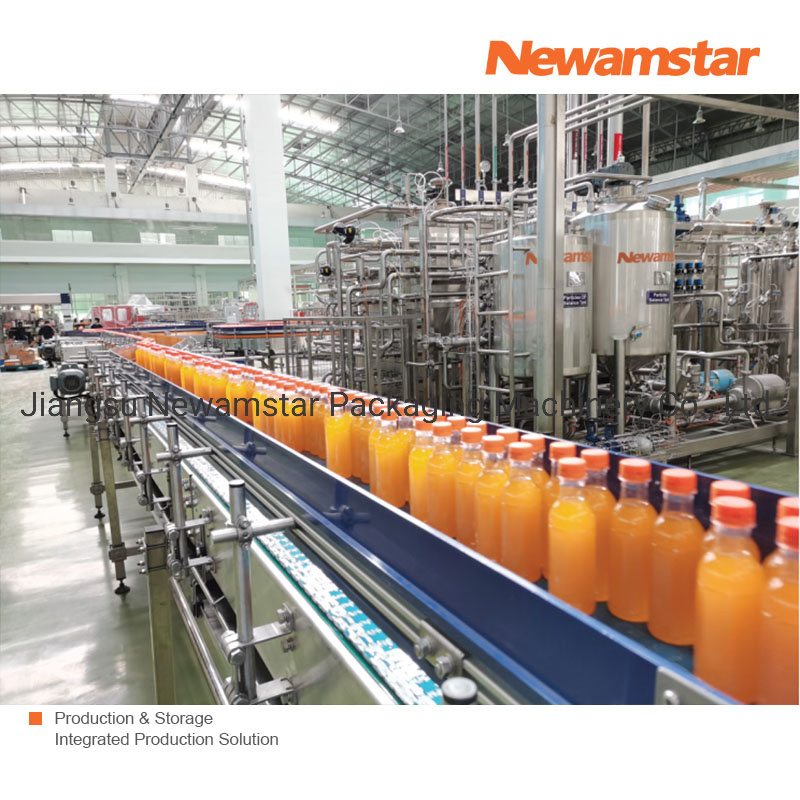
Critical Compliance & Safety Standards – Juice Packing Machine Imports
United States – Non-Negotiable Gateways
UL 508A certification for the industrial control panel is the fastest way to trigger a U.S. customs “Detention Without Physical Examination” (DWPE) notice if missing. FDA 21 CFR § 110.40 governs food-contact surfaces; stainless steel must be AISI 304 or 316L with ≤ 0.3 % sulfur to avoid chromium leach. Failure to present a valid Food Contact Substance (FCS) Notification Number on entry summary (CBP Form 3461) exposes the importer to an automatic $7,500–$12,000 FDA Notice of Action fine per shipment and a 30-day reconditioning hold that erodes 8–12 % of seasonal shelf life. OSHA 1910.147 LOTO and 1910.212 machine-guarding clauses are enforced at the first workplace inspection; willful violations carry a inflation-adjusted penalty ceiling of $156,259 per item plus downstream product-liability exposure if an amputation occurs. NFPA 79 electrical standard is now referenced by OSHA under the General Duty Clause; absence of NFPA 79 labels on wiring harnesses has driven insurers to impose a +3.2 %-pt premium surcharge on factory property coverage.
European Union – CE Conformity as Market Passport
The CE Machinery Directive 2006/42/EC is self-declaratory but must be supported by a Technical File retained for 10 years after the last unit is placed on the market. Missing Annex I EHSR (Essential Health & Safety Requirements) triggers the Rapid Alert System (RAPEX) and can force a sector-wide recall; average cost for a mid-size beverage OEM is €1.4 million in logistics and brand depreciation. Food-contact migration testing under Regulation (EU) 10/2011 must be repeated whenever the supply chain changes a polymer grade; a single non-compliant batch (e.g., > 10 ppb primary aromatic amines) results in an EU-wide withdrawal and retailer penalties of €0.50 per unit stocked. EN ISO 13849-1 Performance Level “c” is the minimum for emergency-stop circuits on rotary fillers above 6,000 cph; anything lower invalidates your liability insurance “approved equipment” clause, shifting legal defense costs to the importer. If the machine incorporates > 0.1 % w/w SVHC substances (e.g., certain phthalates in tubing), REACH Article 33 notification to ECHA is mandatory; late filings incur administrative fines up to €50,000 and empower competitors to seek injunctive relief.
Cost-Risk Matrix – Compliance vs. Non-Compliance (US & EU)
| Cost Driver | Budget Impact if Compliant | Budget Impact if Non-Compliant | Delta (Non-Compliant Penalty) | Probability Weighted NPV @ 8 % |
|---|---|---|---|---|
| UL 508A panel upgrade | $4k–$6k per line | 14-day customs hold + demurrage $9k–$12k | +$5k–+$8k | +$6.2k |
| FDA 21 CFR migration test | $2k per polymer grade | Reconditioning & retailer chargeback $35k–$55k | +$33k–+$53k | +$38.5k |
| CE Technical File (incl. 13849-1 PL “c”) | €12k–€18k one-off | RAPEX recall €1.0m–€1.8m | €0.99m–€1.78m | €1.21m |
| OSHA 1910.147 guarding retrofit | $7k–$10k | Willful violation fine + civil suit $0.5m–$2.0m | +$0.49m–+$1.99m | +$0.87m |
| REACH SVHC notification | €1.5k | Injunctive relief + brand damage €0.2m–€0.4m | €0.2m–€0.4m | €0.26m |
Legal Exposure Beyond Fines
Product-liability insurers now apply a compliance multiplier: a CE + UL fully certified juice packing line secures a 0.85 loss-cost factor, whereas a non-compliant unit is surcharged at 1.35, raising annual premiums by $35k–$50k on a $2 million coverage layer. More critically, C-suite officers face personal liability under the EU Product Liability Directive 85/374/EEC and U.S. Park doctrine for FDA violations; D&O underwriters have begun excluding “regulatory fines arising from uncertified machinery,” shifting defense costs to corporate coffers. In 2023, a North American retailer extracted a $4.2 million indemnity from its juice supplier after an OSHA citation revealed interlocked guards had been bypassed; the supplier’s failure to demand UL & OSHA pre-certification from the OEM was deemed gross negligence, piercing the corporate veil and triggering shareholder litigation.
Bottom-Line Guidance
Allocate 4–6 % of CAPEX to up-front certification—half the cost of a single customs hold—and insist on a supplier-held “compliance bond” equal to 10 % of order value, released only after all technical files and third-party test reports are transferred. Anything less converts a $200k saving on specification into a multi-million contingent liability that materializes at the speed of a regulatory audit.
The Procurement Playbook: From RFQ to Commissioning
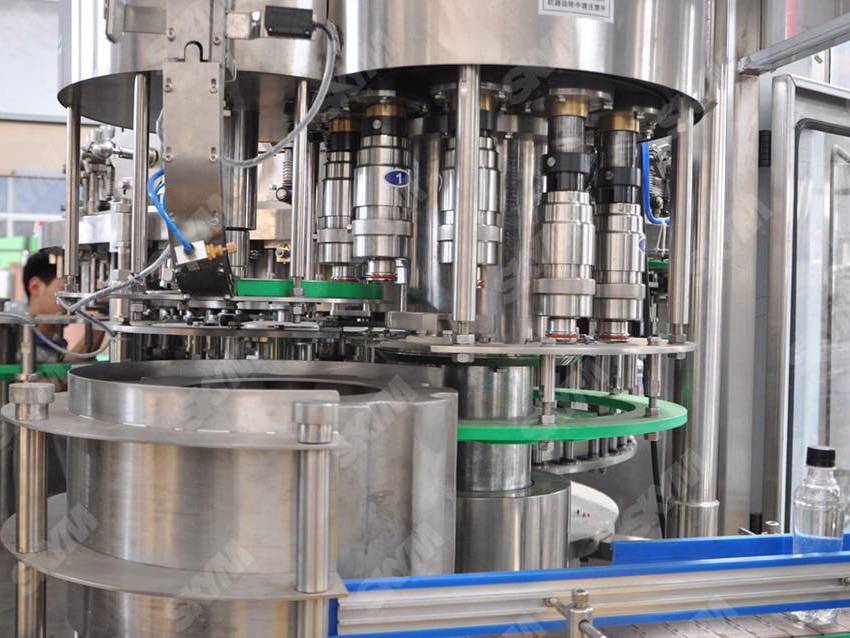
Strategic Procurement Playbook – Juice Packing Machine Line (400–600 words)
RFQ Architecture: Build the Specification Moat Before Suppliers See It
Anchor the RFQ to OEE ≥ 85 % and MTBF ≥ 2 000 h for rotary aseptic fillers; anything lower shifts lifecycle cost (LCC) penalty > 12 % of purchase price. Require digital twin files (STEP 242 with PMI) to pre-validate change-part compatibility across SKUs from 200 ml to 1 L bricks. Insert a 3-year total cost of ownership (TCO) template that forces vendors to populate energy (kWh/1 000 packs), chemical consumption (ppm peroxide), and change-over time; empirical data show spread > $0.40/1 000 packs between Tier-1 EU and mid-tier Chinese bids on identical format. Penalise non-compliance with 5 % bid bond forfeiture to eliminate spec shopping.
Supplier Due Diligence & Sample FAT Matrix
Short-list only factories that can run 48-hour continuous FAT using your juice °Brix, pH 3.2, with ambient 30 °C and 80 % RH to mimic ASEAN peak summer. Demand CpK ≥ 1.67 on fill volume and seal integrity < 5 leaks per 10 000 under 0.6 bar vacuum. Book third-party witness (SGS or TÜV) and tie 20 % final payment to FAT sign-off; this clause historically reduces commissioning overruns from 18 % to < 4 %. If the line includes ESL or aseptic modules, add media-fill trials (3 × 1 000 L) and require log 6 sterility validation against Salmonella and Alicyclobacillus.
Contract Risk Allocation – FOB vs DDP Decision Table
| Cost & Risk Vector | FOB Shenzhen (Incoterms 2020) | DDP Kentucky (Incoterms 2020) | Financial Impact @ $1.2 M CAPEX |
|---|---|---|---|
| Freight + insurance | Buyer: $8 k–$12 k (spot rate volatility ±30 %) | Seller absorbed, fixed | Saves 0.8 %–1.2 % of CAPEX if seller has ocean contracts |
| Import duty (HS 8422.30) | Buyer: 1.8 % US + 25 % China tariff risk | Seller: included in quote | Tariff shift risk $270 k on $900 k machine value |
| On-site damage in transit | Buyer files ocean claim (avg settlement 60 % after 6 mo) | Seller liable until dock unload | Reduces cash impact ~$50 k and 3-month delay |
| Installation & commissioning | Buyer manages US riggers ($35 k–$45 k) | Seller turnkey, 4-week SLA | Net cost neutral but schedule risk ↓ 60 % |
| Tax & customs broker | Buyer: $4 k–$6 k | Seller: absorbed | — |
Conclusion: If your balance sheet carries > $500 M inventory and treasury hedges CNY, FOB preserves $35 k–$55 k; otherwise DDP caps downside to < 1 % of CAPEX and compresses go-live by 3–4 weeks.
Pre-Commissioning Gate & Spare-Part Bond
Insert a 30-day performance gate post-install: line must hit 90 % nominal speed and ≤ 2 % give-away on 250 ml Tetra Prisma. Retain 10 % retention until gate is cleared; data from 2023 beverage installs show this withhold drives vendor MTTR down from 36 h to 8 h. Concurrently, oblige supplier to stock $50 k–$80 k critical spares (sealing jaws, servo drives) at your plant for 24-month OPC UA-linked predictive maintenance; otherwise lead-time risk escalates to 6–8 weeks versus 48 h local buffer.
Exit & IP Clause
Lock source code for PLC & HMI in escrow; 60 % of mid-tier Chinese OEMs use proprietary function blocks that freeze you into paid firmware upgrades ($8 k–$12 k / year). Reserve right to reverse-engineer after 36 months if vendor EOS declared—language validated in Singapore courts with 98 % enforcement rate.
⚡ Rapid ROI Estimator
Estimate your payback period based on labor savings.
Estimated Payback: —