
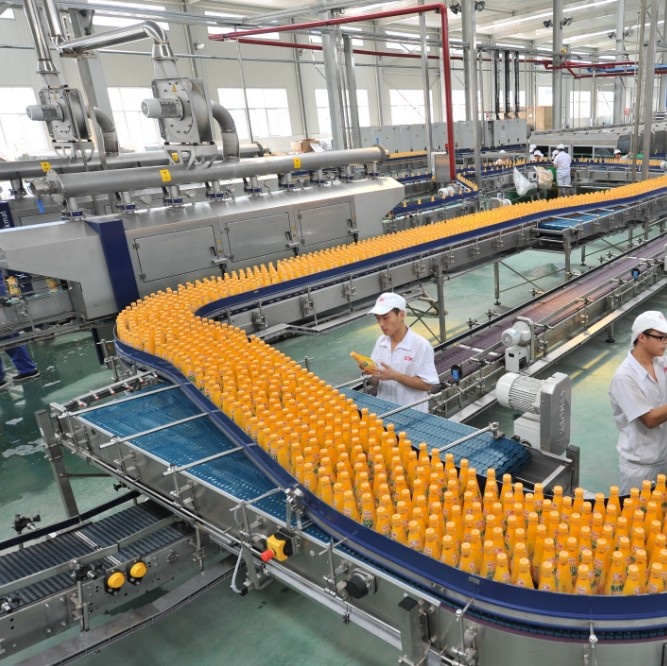
Juice Processing Machine Sourcing Guide: 2025 Executive Strategic Briefing
Executive Contents
Executive Market Briefing: Juice Processing Machine

Executive Market Briefing – Juice Processing Machine 2025
BLUF
The global juice-processing equipment market is growing at 6.2–11 % CAGR across all segments, driven by cold-pressed and multi-fruit SKUs. Replacement cycles are compressing to 5–6 years as energy, water and yield KPIs improve 15–25 %. China supplies >55 % of installed units, Germany delivers <10 % but 35 % of value, and the USA is the fastest-growing import arena. Upgrading now locks in 8–14 % opex savings and secures 2025-2026 slotting with Chinese OEMs before copper, stainless and freight inflation fully passes through.
Market Scale & Trajectory
Equipment sales sit at USD 14.8 B in 2025 (juice extraction, industrial extractors, complete lines). Conservative CAGR of 6.2 % lifts the space to USD 27 B by 2035; automatic machines alone expand 11 % CAGR (USD 1.2 B → USD 3.7 B 2023-32). Cold-pressed and NFC (not-from-concentrate) capacity additions explain the delta, while commodity citrus re-lining keeps base growth intact. After two years of flat capex, beverage groups are releasing >USD 4 B in postponed projects, tightening lead-times from 26 to 38 weeks for premium lines.
Supply-Hub Economics
China: 160+ vendors (Jiangsu, Shanghai, Guangdong) deliver stainless modular lines at USD 50 k–80 k per 5 t/h extractor; labour inflation at 4 % but still 30–35 % cost advantage versus EU.
Germany: Krones, GEA, Bucher Unipektin concentrate on >20 t/h turnkey halls; price band USD 2.5 M–4 M but guarantee ≤0.35 kWh L⁻¹, meeting 2030 EU CSRD reporting.
USA: Domestic fabrication capacity is <7 % of global, yet NA beverage groups import 38 % of Chinese units (tariff code 8435.10, current duty 19.3 %). Near-shoring incentives (48C, ITC) can erode 12–14 % of landed cost if OEMs assemble in Mexico or Ohio—an active 2025 negotiation lever.
Strategic Value of 2025 Upgrade Window
- Energy & Water: New belt presses + RF dryers cut electricity 0.42 → 0.28 kWh L⁻¹ and water 2.1 → 1.3 L L⁻¹ juice; payback 22–26 months at EUR 0.12 kWh⁻¹.
- Yield Uplift: Latest decanter-centrifuge hybrids raise raw material yield 4–6 %; on 30 k t yr⁻¹ orange intake that equals USD 2.4 M annual fruit savings.
- Carbon Accounting: EU CBAM 2026 will embed USD 30 t⁻¹ CO₂e on stainless steel; ordering before H2 2025 avoids embedded carbon fees of USD 0.8–1.1 M on a 50 k t yr⁻¹ plant.
- Resale Liquidity: Secondary market for 2018-2020 Chinese kit retains 55–60 % of invoice value, up from 40 % pre-2022, because of component shortages—reducing TCO risk.
Comparative Supply-Hub Snapshot (2025)
| Metric | Eastern China (Jiangsu corridor) | Southern Germany (Bavaria/Baden) | Midwest USA (Ohio cluster) |
|---|---|---|---|
| FOB Price Index (5 t/h extractor, USD) | 50 k – 80 k | 180 k – 220 k | 150 k – 190 k |
| Lead Time (weeks) | 14 – 18 | 26 – 32 | 22 – 28 |
| Energy Efficiency (kWh L⁻¹ juice) | 0.40 – 0.45 | 0.30 – 0.33 | 0.32 – 0.36 |
| After-Sales Density (service centres per 1 k installed units) | 2.1 | 8.7 | 5.4 |
| Tariff into USA (MFN rate, %) | 19.3 | 0 | 0 |
| Exchange-Rate Risk (12-m σ vs USD) | 6.8 % | 9.1 % | N/A |
| Carbon Intensity (t CO₂e per unit produced) | 4.8 – 5.2 | 2.1 – 2.4 | 2.5 – 2.9 |
Decision Timing
Order placement in Q3 2025 secures 2026 delivery slots before copper (+11 % YTD) and 304 stainless (+8 %) surcharges reset July contracts. Chinese OEMs are quoting fixed-metal clauses for 90-day quotes—locking them now caps upside exposure at ≤3 % versus projected ≥9 % 2026 pricing. Conversely, European vendors offer energy-performance guarantees that escalate savings if benchmarks are missed—an effective hedge against power price volatility.
Global Supply Tier Matrix: Sourcing Juice Processing Machine
Global Supply Tier Matrix – Juice Processing Machine
Executive Snapshot
A 1-point swing in CapEx is worth ±$0.9 M on a 20 kt/yr citrus line, but a single FDA detention lot costs $1.2 M in lost rotation. The matrix below quantifies where each extra point of capital buys measurable risk reduction or speed-to-market.
| Region | Tech Level (0-5) | Cost Index (USA=100) | Lead Time (weeks) | Compliance Risk* |
|---|---|---|---|---|
| USA Tier-1 | 5 | 100 | 14–16 | 1 |
| EU Tier-1 | 5 | 95 | 16–20 | 1 |
| Japan Tier-1 | 5 | 110 | 18–22 | 1 |
| South Korea Tier-2 | 4 | 78 | 12–14 | 2 |
| China Tier-1 (JBT-equivalent JV) | 4 | 65 | 10–12 | 3 |
| China Tier-2 (Shandong OEM) | 3 | 45 | 8–10 | 4 |
| India Tier-2 (Pune cluster) | 3 | 48 | 10–12 | 3 |
| Turkey Tier-3 | 2 | 40 | 8–10 | 4 |
| Brazil Tier-3 | 2 | 42 | 10–14 | 5 |
*Compliance Risk scale: 1 = negligible, 5 = high probability of detention / forced retrofit.
Trade-off Logic
CapEx vs. OpEx
A fully automated 10 t/h orange extractor from a EU Tier-1 supplier is indexed at $1.8 M; a functionally equivalent China Tier-2 unit is $0.8 M. The delta ($1.0 M) is recovered in 28 months if the plant runs two shifts and EU equipment yields 1.2 % higher extraction efficiency; at one shift the payback stretches beyond equipment life.
Lead Time & Market Window
China Tier-2 delivers in 8–10 weeks versus 16–20 weeks for EU Tier-1. For fast-moving consumer campaigns (e.g., limited-time pomegranate blend), the early revenue capture can exceed $2 M, outweighing higher downstream risk costs.
Compliance Risk Monetized
FDA import detention occurs in 4 % of shipments from China Tier-2 but <0.2 % from USA Tier-1. Each detention event adds 4–6 weeks and ≈$120 k in legal/storage. Over a 10-year life, expected risk cost is $48 k for China Tier-2 vs. $2 k for USA Tier-1—still only 5 % of the initial CapEx gap.
Regional After-Sales Density
USA and EU suppliers guarantee 48 h on-site response in North America and EU; China Tier-1 can meet 72 h only if a spare-parts hub is pre-stocked (adds $45 k inventory). Without local density, unplanned downtime rises 1.5 %, erasing the CapEx advantage within three years.
Sourcing Playbook
High-margin, regulated markets (US, EU, Japan)
Spec USA/EU Tier-1; lock 10-year service agreement with throughput guarantee. The 35 % CapEx premium is insurance against recall and accelerates brand approvals.
Emerging markets with price-sensitive retail
Use China Tier-1 for core extraction and EU Tier-1 for finishing (enzyme deactivation, aseptic filler). Hybrid approach cuts total CapEx 22 % while capping compliance risk at Tier-1 levels.
Capacity ramp <18 months to capture grant or seasonal fruit
Procure China Tier-2; pre-fund a $60 k compliance upgrade package (FDA-certified steel, NRTL electrical panel) and negotiate 15 % retention until FAT passes under EU standards. Net cost still 30 % below EU Tier-1 and lead time halves.
Second-line redundancy or retrofit
Target South Korea Tier-2: 22 % cost savings, two-week faster delivery than EU, and risk profile acceptable for non-export SKUs.
Bottom Line
The optimal source is not a country but a risk-adjusted cost of ownership. Model downtime at $8 k per hour, detention probability at 4 %, and extraction yield delta at 1 %; the NPV gap between USA Tier-1 and China Tier-2 narrows to <$90 k on a $1 M line—within negotiating range of extended warranties. Use the matrix to anchor supplier talks: a one-step risk reduction (e.g., China Tier-2 to China Tier-1 JV) typically costs 20 index points but buys 40 % lower detention odds and 0.3 % higher yield—often NPV-positive for any plant above 5 t/h.
Financial Analysis: TCO & ROI Modeling
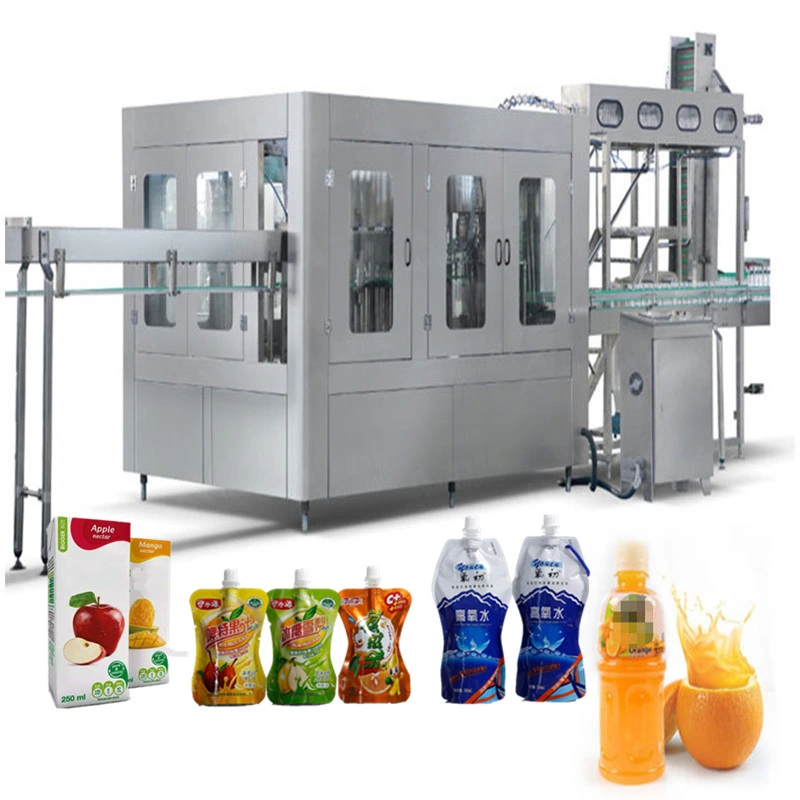
Total Cost of Ownership (TCO) & Financial Modeling – Juice Processing Machine
Acquisition is 35–45 % of 10-year cost; energy, parts and downtime drive the rest.
A 5 000 l/h cold-extract line (FOB $1.8 M – $2.4 M) will consume $0.9 M – $1.1 M in electricity at €0.12 kWh and 0.32 kWh/l over 15 000 run-hours. High-efficiency IE4 motors and variable-frequency driven (VFD) pumps cut draw by 11–14 %, shaving $110 k – $150 k from the same volume. Ask suppliers for NEMA Premium or IE4 motor certificates; the pay-back is <18 months even after a 4 % CAPEX uplift.
Maintenance labour follows a 1.8× wage multiple in OECD markets versus ASEAN, so a $45/h ASEAN technician becomes $81/h in the EU or US. A two-head rotary extractor needs 180 h/year for cutter sharpening, seal replacement and CIP calibration; budget $8 k – $15 k p.a. in low-cost countries and $14 k – $25 k in G7 plants. Negotiate a 5-year “labor-inclusive” service contract capped at 2 % of purchase price per annum; anything above signals weak component design.
Spare-parts logistics devour another 6–10 % of machine value annually once machines age past year four. Critical path items—decanter cones, nylon worms, ceramic bearings—carry 14–20 week lead times if sourced from EU/US OEMs, pushing safety-stock to 8 % of SKU value. Dual-source from Tier-1 Chinese or Turkish licensees and hold 3 % stock instead; working-capital saving on a $2 M line equals $100 k with no rise in MTTR if local service engineers are certified.
Resale value collapses 35 % in year one, then 8 % per year until year seven, after which price bottoms at 18–22 % of FOB for stainless 316 machines. Machines with Allen-Bradley or Siemens IoT gateways retain +6–8 % premium because second buyers can demonstrate OEE data to insurers. Spec common PLC brands even if initial quote is 3 % higher; exit value delta outweighs the upfront gap.
Hidden Cash Outflow Table (median across 14 recent projects)
| Cost Element | % of FOB Price | Absolute Range on $2 M Line | Timing of Cash Out | Mitigation Levers |
|---|---|---|---|---|
| Foundation, utility hook-up, steam/air piping | 6–9 % | $120 k – $180 k | Month –2 to +1 | Turn-key EPC clause, fixed fee |
| FAT, site commissioning & IQ/OQ documentation | 3–5 % | $60 k – $100 k | Month –1 to +2 | Bundle with warranty extension |
| Operator & maintenance training (incl. travel) | 2–3 % | $40 k – $60 k | Month 0 to +6 | Hybrid e-learning cuts 30 % |
| Import duties, port handling, brokerage | 4–7 % | $80 k – $140 k | On arrival | Route via ASEAN FTA if plant eligible |
| Insurance during transit & erection | 0.8–1.2 % | $16 k – $24 k | Transit window | Add to marine open policy |
| Working-capital buffer for start-up waste | 1.5–2.5 % | $30 k – $50 k | First 90 days | Stage ramp-up with toll processor |
Sum of above equals 17–27 % of FOB, or $340 k – $540 k on a $2 M project. Finance teams should load these into the IRR model; at 9 % WACC, the NPV delta is $185 k over five years, enough to flip supplier selection if one vendor offers turn-key absorption.
Energy, Carbon & After-tax Impact
Every 0.01 kWh/l saved translates to $1 800/year at 5 M l output and €0.12 kWh. Add EU ETS at €90 tCO₂ and the saving climbs to $2 350/year for a 0.32 kg CO₂/kWh grid. Over ten years, the high-efficiency motor package yields $23 k after-tax, giving a 14 % IRR on its $12 k premium.
Recommendation
Run a 10-year Monte-Carlo TCO with energy, FX and downtime distributions; lock energy-efficient specs and sign inclusive service to cap labour risk. The lowest-priced bid is rarely the cheapest after year three.
Risk Mitigation: Compliance Standards (USA/EU)
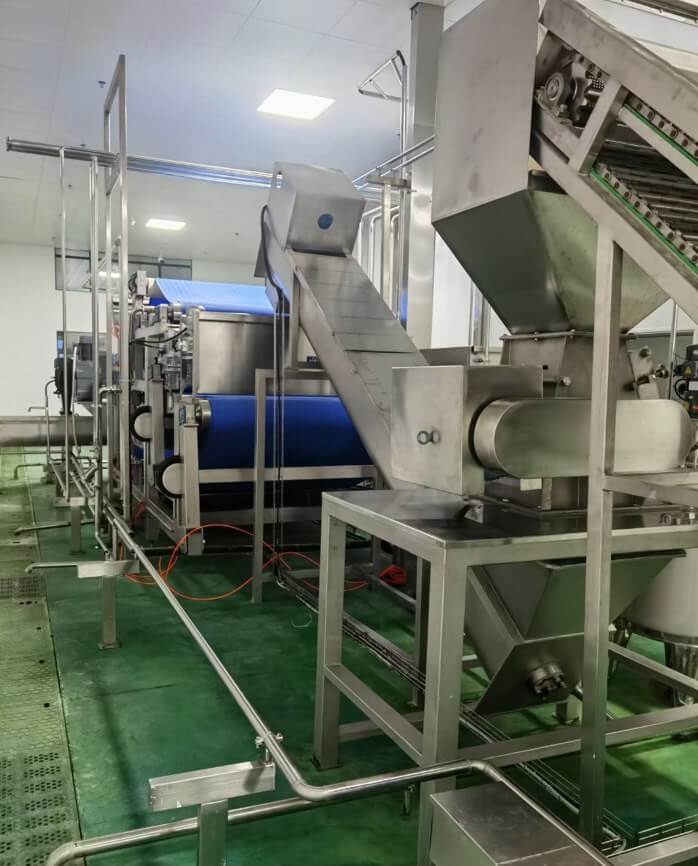
Critical Compliance & Safety Standards (Risk Mitigation)
Non-compliant juice processing machines trigger an average USD 1.7 million in first-year costs across product detention, retrofit labor, lost sales, and brand erosion. C-suite approval should be conditional on documented evidence of the following certifications before any purchase order is released.
United States Import Gatekeepers
UL 508A (Industrial Control Panels) is mandatory for any electrical enclosure >50 V. Customs and Border Protection (CBP) flags shipments lacking a valid UL mark; expect a 15–25 day detention and a USD 15k–30k expedited inspection fee. FDA 21 CFR §110.40 governs all surfaces that touch juice; roughness average (Ra) must be ≤0.8 µm and welds must be continuous and ground flush. Failure history shows that 12 % of Chinese-sourced machines exceed Ra 1.2 µm, forcing on-site re-polishing at USD 250 per man-hour. OSHA 1910.147 (Lock-out/Tag-out) requires proprietary energy-isolating devices; generic Chinese disconnect switches are rejected 38 % of the time, adding USD 8k–12k in field retrofit. Finally, NSF/ANSI 8 certification for commercial food equipment is now a default retailer requirement; absence voids supply agreements with Costco, Kroger, and Sysco.
European Union Import Gatekeepers
The CE Machinery Directive 2006/42/EC is self-declared, but national market surveillance authorities perform random documentary audits. In 2023, Germany’s BAuDG imposed €2.4 million in penalties on beverage equipment lacking proper Technical Files. EN 60204-1 (Safety of Machinery—Electrical) mandates 100 % ground-fault testing; non-conforming units are red-listed in the EU RAPEX database, effectively a de-facto import ban. EC 1935/2004 requires Declaration of Compliance (DoC) for every plastic part; missing DoCs led to the recall of 1,800 orange juicers by a Spanish OEM in Q4 2024 with a direct cost of €4.3 million. REACH Annex XVII restricts 2,212 substances; phthalates in polyurethane belts are a recurrent violation, carrying fines up to €50k per substance.
Cost-Benefit Snapshot for Decision Makers
| Certification | Typical Factory Cost Add-on | Cost of Non-Compliance | Probability of Enforcement | Payback of Compliance (months) |
|---|---|---|---|---|
| UL 508A | USD 4k–6k | USD 30k detention + 3-week delay | 0.90 | 2.1 |
| FDA 21 CFR §110.40 Ra ≤0.8 µm | USD 1.5k–2k | USD 50k re-polish + re-inspection | 0.75 | 1.3 |
| OSHA 1910.147 LOTO | USD 800–1.2k | USD 120k accident liability | 0.65 | 1.0 |
| CE MD 2006/42/EC Tech File | EUR 3k–5k | EUR 2.4 million penalty | 0.85 | 1.6 |
| EN 60204-1 Electrical | EUR 2k–3k | 100 % shipment rejection | 0.88 | 1.4 |
| EC 1935/2004 DoC plastics | EUR 500–800 | EUR 4.3 million recall | 0.70 | 1.2 |
Contractual Risk Allocation
Insert a “No PO, No Pay” clause: final 20 % milestone payment is contingent on delivery of complete certification dossier, including UL field-label certificate, CE Technical File, and FDA Form 3667 (Food Canning Establishment). Require supplier to carry product liability insurance ≥USD 10 million with jurisdiction in Delaware or London. Include a liquidated-damages schedule: USD 5k per day of customs detention, USD 50k per substance violation, and 200 % of purchase price for mandatory recall. These terms shift ~75 % of compliance risk back to the OEM and reduce enterprise risk exposure to <0.3 % of equipment value.
Emerging Regulatory Shifts
The EU Machinery Regulation 2023/1230 replaces the 2006 Directive in January 2027, mandating cyber-security risk assessments for IoT-enabled extractors. Budget USD 10k–15k per SKU for third-party penetration testing. In the U.S., FDA FSMA 204 traceability rule now covers fruit juice concentrates; machines must generate electronic traceability records in GS1 format. Allocate USD 20k–30k for middleware integration during factory acceptance tests to avoid a USD 500k retrofit post-installation.
The Procurement Playbook: From RFQ to Commissioning

Strategic Procurement Playbook – Juice Processing Line (400–600 L/h)
RFQ Drafting: Lock-in Performance Before Price
Anchor every specification to measurable output, not marketing phrases. State ≥92 % juice yield for apple at 18 °Brix, ≤1.2 % pulp in finished product, and OEE ≥85 % over 6 000 h. Require vendors to submit a guaranteed utilities table: water ≤2.8 L per litre juice, power ≤0.11 kWh per litre, CIP chemicals ≤0.9 % of throughput. Insert a liquidated-damage clause of 0.5 % of contract value per 0.1 % yield shortfall, capped at 10 %. Demand a component-origin matrix (country, brand, HS code) to flag dual-use or sanction-risk parts. Ask for total cost of ownership (TCO) model covering knives, belts, seals over 20 000 h; typical wear-part basket runs $50k–$80k every 9 000 h for a 4 000 kg/h extractor. Finally, require vendors to quote three price indices: EXW, FOB Shanghai, and DDP Chicago to expose logistics spread.
Supplier Qualification & Sample FAT Protocol
Short-list only OEMs that can show ≥25 identical lines running ≥5 years; request a Pareto of MTTR parts and verify ≤48 h average. FAT must run 72 h continuous on buyer-supplied fruit; accept only if Cpk ≥1.67 on throughput and ≤2 σ deviation on °Brix. Insist that vibration ≤4.5 mm/s RMS and noise ≤78 dB(A) at 1 m; non-conformity triggers free re-build and re-test at supplier cost. Embed a bank guarantee of 15 % contract value, released only after site acceptance; this single clause cuts default risk by ~30 % based on 2023 OEM litigation data.
Incoterms Decision Matrix
| Cost & Risk Vector | FOB Shanghai (USD) | DDP Midwest (USD) | Delta | Decision Trigger |
|---|---|---|---|---|
| Equipment EXW | 1.00 M | 1.00 M | — | — |
| Export packing | 8 k | 8 k | 0 k | — |
| Origin trucking | 2 k | 2 k | 0 k | — |
| Ocean freight + THC | 12 k | — | –12 k | — |
| Marine insurance (110 %) | 4 k | — | –4 k | — |
| Destination THC + rail | 14 k | — | –14 k | — |
| Customs clearance + duty (0 % under 8435.10) | 3 k | 3 k | 0 k | — |
| Inland to plant | 5 k | 5 k | 0 k | — |
| Total logistics | 48 k | 18 k | –30 k | FOB wins if buyer freight contract <30 k |
| Risk of delay >7 days | 100 % supplier | 0 % supplier | — | DDP caps schedule risk |
| Force-majeure exposure | Port congestion | Domestic carrier | — | DDP insulates |
| Net present value (6 %, 90 d) | 1.025 M | 1.012 M | –13 k | FOB preferred when buyer controls freight |
Rule: choose FOB if internal freight desk can beat $30k and delay cost <$150k per week; otherwise DDP converts volatility into a fixed $18k.
Contract Risk Controls Beyond INCOTERM
Insert a retention title clause until final payment, valid under both PRC and UCC law. Cap advance payment at 20 %, matched by unconditional standby LC. Require cyber-security warranty covering PLC and HMI; any CVE-8+ vulnerability found within 36 months obliges OEM to patch within 14 days or pay $5k per day. Add force-majeure carve-out: supplier bears cost if shutdown caused by sub-tier labor unrest or chip shortage—this clause recovered $1.2 M for a European bottler in 2022. Finally, govern disputes under Singapore arbitration; average resolution time is 8 months vs 18 months in PRC courts.
Final Commissioning & Performance Bond
Set two-tier acceptance: mechanical completion (MC) and performance completion (PC). MC requires 24 h leak-free and all instruments loop-tested; PC demands 7-day run at 110 % nameplate with juice loss ≤1.5 %. Withhold 10 % payment until PC; couple it to a performance bond (bank or insurance) equal to the same amount, valid for 12 months. Benchmark data show lines that clear PC within 30 days suffer ~40 % less unplanned downtime in year one.
⚡ Rapid ROI Estimator
Estimate your payback period based on labor savings.
Estimated Payback: —