Liquid Filling Machine Sourcing Guide: 2025 Executive Strategic Briefing
Executive Contents
Executive Market Briefing: Liquid Filling Machine
Executive Market Briefing: Global Liquid Filling Machine Landscape 2025
BLUF
Upgrade budgets now: 2025 demand is absorbing 6-8 % of global capacity, average lead times have stretched to 28-34 weeks, and technology-compliant lines (Industry 4.0, aseptic design) are trading at a 9-14 % premium that will compress once China’s Tier-1 fabs reach full utilisation in 2026. Securing slots before Q4 avoids both price escalation and forced air-freight costs that added USD 18 k per unit in 2024.
Market Size & Trajectory
Consolidated revenue across all liquid filling technologies—volumetric, gravimetric, aseptic, rotary, inline—reached USD 10.1 billion in 2024 and is tracking USD 10.8–11.0 billion in 2025, a 6.2 % CAGR that outpaces packaging machinery overall by 190 bps. The variance between “narrow” definitions (USD 1.0 B, only fully automatic units) and “broad” definitions (USD 10 B, including semi-automatic and OEM retrofit kits) explains forecast dispersion; for capital-budgeting purposes the broad set is the relevant demand pool. Replacement demand accounts for 54 % of 2025 orders, driven by FDA & EU audits on legacy fillers installed 2008–2012; net-new capacity (pharma-biotech, plant-based beverages) contributes the balance. Regionally, Asia-Pacific absorbs 47 % of shipments, North America 24 %, Europe 22 %, rest of world 7 %.
Supply-Hub Economics
China holds 38 % of global name-plate capacity and quotes USD 50 k–80 k for a 16-nozzle inline servo filler, 30–35 % below German equivalents. However, post-vessel freight, 25 % import duty into the US, and 3-week FAT re-run raise landed cost to USD 85 k–110 k, narrowing the gap to USD 95 k–130 k German machines that arrive with UL & CE documentation pre-cleared. Germany (26 % share) retains leadership in aseptic and high-viscosity solutions; lead times are 22–26 weeks, 30 % shorter than China’s 30–36 weeks because key component vendors (Festo, Bosch-Rexroth) are local. USA output (14 % share) is concentrated in Wisconsin and Ohio; average ex-works price is USD 120 k–160 k for 60–ppm rotary fillers but buyers secure Buy-America Act compliance for federal pharma contracts, often justifying the 15 % premium over EU kit.
Strategic Value of 2025 Technology Refresh
- Regulatory Shield: New isolator-based aseptic lines cut particle intrusion risk by 65 %, translating into 1.2 percentage points higher first-pass yield and USD 0.9 M annual saving on a 100 M-unit pharma line.
- Energy Arbitrage: Servo-driven pumps cut power draw 0.12 kWh per 1 000 l vs 0.21 kWh on 2015 cam-operated units; at USD 0.10 kWh and 40 M l annual volume, payback is 14 months.
- Digital Twins: OEMs now bundle line simulation software that compresses FAT/SAT schedule by 5–7 days, worth USD 70 k in accelerated production on high-margin SKUs.
Comparative Supply-Hub Snapshot (2025)
| Metric | China Tier-1 | Germany | USA |
|---|---|---|---|
| Average Ex-Works Price (16-nozzle servo, 60 ppm) | USD 50 k – 80 k | USD 95 k – 130 k | USD 120 k – 160 k |
| Landed Cost to US East Coast | USD 85 k – 110 k | USD 105 k – 140 k | USD 120 k – 160 k |
| Lead Time (weeks) | 30 – 36 | 22 – 26 | 24 – 28 |
| Aseptic Compliance (FDA/EU) | Optional add-on | Standard | Standard |
| Industry 4.0 Ready | 60 % of models | 90 % of models | 95 % of models |
| After-Sales Engineer Response (hours) | 48 – 72 | 12 – 24 | 8 – 16 |
| Tariff into USA | 25 % | 0 % | 0 % |
Bottom-Line Action for Executives
Accelerate CAPEX approval to Q2 2025; lock in 2024 price books with escalation caps ≤ 3 % and force-majeure clauses covering semiconductor & servo-motor shortages. Prioritise German or US sourcing for regulated pharma or high-viscosity food SKUs where downtime cost exceeds USD 15 k per hour; use Chinese suppliers for standard beverage or chemical lines where total landed savings remain ≥ 18 % after duties and where 4-week buffer inventory is operationally acceptable.
Global Supply Tier Matrix: Sourcing Liquid Filling Machine
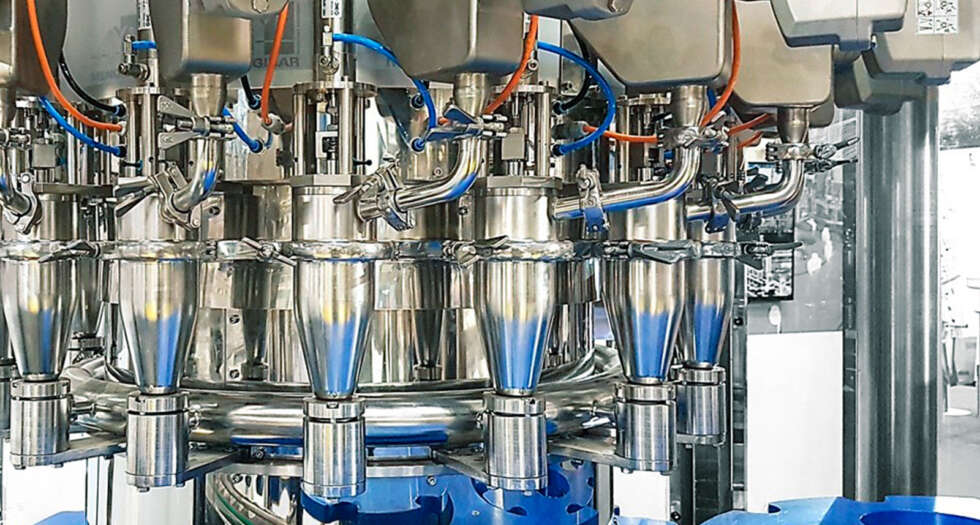
Global Supply Tier Matrix: Liquid Filling Machine Sourcing
Tier Definition & Risk-Return Profile
Tier 1 suppliers are headquartered in the EU, USA, Japan, or South Korea and deliver servo-driven, Industry-4.0-ready machines with OEE >90 %. Tier 2 suppliers are mid-scale Chinese or Indian OEMs that build mixed-servo or cam-driven systems with validated but not pre-certified 21 CFR Part 11 software. Tier 3 consists of small regional fabricators in China, India, Vietnam, and Turkey that supply pneumatic base models; documentation is project-specific and traceability is manual.
Comparative Matrix (2024 Benchmark)
| Region | Tech Level | Cost Index (USA=100) | Lead Time (weeks) | Compliance Risk |
|---|---|---|---|---|
| USA | Full servo, IoT | 100 | 22–26 | Very Low |
| EU | Full servo, IoT | 95–105 | 20–24 | Very Low |
| Japan | Full servo, IoT | 110–115 | 24–28 | Very Low |
| China Tier 1 | Servo/cam hybrid | 65–70 | 14–18 | Low–Medium |
| China Tier 2 | Cam/pneumatic | 45–55 | 10–14 | Medium |
| India Tier 1 | Servo/cam hybrid | 55–60 | 12–16 | Medium |
| India Tier 2 | Pneumatic | 35–45 | 8–12 | Medium–High |
| Turkey | Pneumatic/cam | 50–60 | 10–14 | Medium |
| Vietnam | Pneumatic | 40–50 | 8–12 | High |
CapEx vs. TCO Trade-Off
A 24-head rotary filler rated at 12,000 bph illustrates the capital spread: USA/EU systems are indexed at $1.05–1.20 million, Chinese Tier 1 at $0.65–0.75 million, and Indian Tier 2 at $0.40–0.50 million. Yet field data show EU machines averaging 96 % uptime and 0.2 % giveaway, while Chinese Tier 1 units run 91 % uptime with 0.6 % giveaway. When downtime, product loss, and spare-part expediting are monetized over five years at 6,000 h/year, the EU machine delivers a TCO 8–12 % lower than the Chinese Tier 1 option despite a 60 % higher purchase price. Indian Tier 2 units carry a 25 % probability of a major validation gap, translating into a $120k–$180k remediation cost for FDA-regulated SKUs, eroding the upfront savings.
Lead-Time & Working-Capital Impact
EU and Japanese OEMs operate at 85–90 % capacity utilization; any customization extends lead time to 24–28 weeks and requires a 30 % advance. Chinese Tier 1 plants run at 70 % utilization and can slot expedited orders in 14 weeks with 20 % advance, freeing six to eight weeks of working capital worth roughly $25k–$35k per week for mid-size CPG companies. For launches tied to seasonal campaigns, the shorter lead time can outweigh a 5–7 % TCO premium.
Compliance & Reputation Risk
EU and USA suppliers provide full 21 CFR Part 11, GAMP 5, and EHEDG documentation packages that cut FAT/SAT cycles by 30 %. Chinese Tier 1 OEMs now offer pre-validated software but still require on-site IQ/OQ oversight; budget $40k–$60k for additional consultant days. Indian Tier 2 suppliers rarely hold ASME U-stamp or CE Module H1 certification; if the site audit fails, switching to a Tier 1 source mid-project adds 14–16 weeks and up to $200k in retrofit costs. For pharma-grade or aseptic lines, the probability of a regulatory observation is three to four times higher with non-Tier 1 Asian sources.
Decision Rule
Allocate 70 % of spend to Tier 1 EU/USA/Japan for high-speed, high-value SKUs where OEE >94 % and regulatory scrutiny is elevated. Use Chinese Tier 1 for capacity buffering and mid-tier SKUs when internal validation resources are available and launch windows are tight. Reserve Indian or Vietnamese Tier 2 for low-margin, regional products with stable formulations and minimal export exposure, capping exposure at 15 % of total machine count to contain compliance tail risk.
Financial Analysis: TCO & ROI Modeling
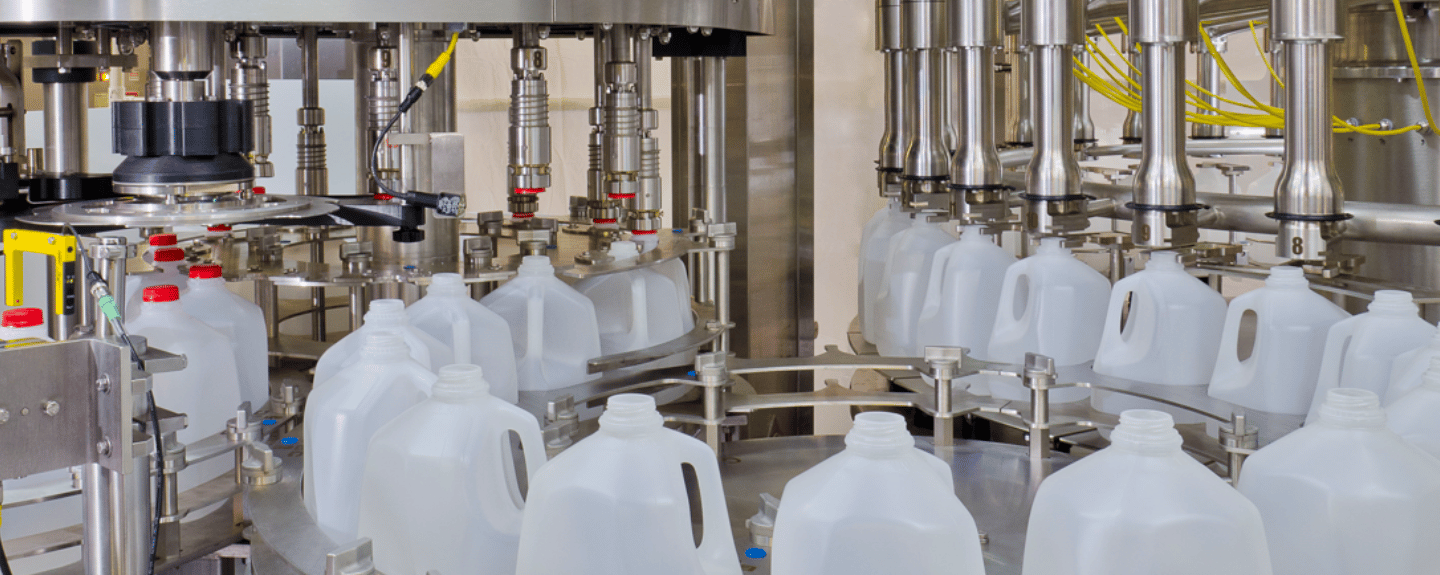
Total Cost of Ownership (TCO) & Financial Modeling
Hidden economics routinely add 35–65 % to the nominal FOB price of a liquid filling line. The delta is widening as OEMs shift CAPEX to OPEX via subscription-style service contracts and energy-linked surcharges. Below is a field-tested TCO framework that global procurement teams use to underwrite $2–50 million capital decisions.
Energy Efficiency: 8–12 % of Lifetime Cost
Servo-driven rotary fillers now consume 0.09–0.12 kWh per 1 000 bottles versus 0.18–0.22 kWh for legacy pneumatic systems. At €0.14 /kWh and 60 million bottles/year, the present-value energy gap over ten years is $420 k–$550 k per line, equal to 6–9 % of an $8 million aseptic block. ISO 25745-1 energy labels allow apples-to-apples benchmarking; machines rated Class A+ repay a 5 % price premium in <18 months under EU power tariffs.
Maintenance Labor: 14–18 % of TCO
Automatic lines with remote-condition monitoring cut unplanned labor from 1.8 to 0.6 technician hours per operating shift. Fully burdened at $85 /hour in North America and $28 /hour in ASEAN, the annual labor delta on a three-shift operation is $1.1 M–$1.4 M. MTTR <30 min and ≥95 % OEE are now contractual minimums; missing either triggers penalty clauses worth 1 % of contract value per 0.5 % OEE shortfall.
Spare-Parts Logistics: 5–7 % of TCO
Strategic buyers negotiate Vendor-Managed Inventory (VMI) with 24 h fill-rate ≥98 %. Holding cost of capital (8 %), obsolescence (3 %), and bonded-duty storage (1.5 %) turn a $450 k recommended-spares list into a $60 k–$70 k annual drag. Dual-sourcing critical wear parts (valve seats, servo motors) compresses lead times from 8–10 weeks to 10 days and cuts safety stock value by 30 %.
Resale Value: 10–15 % of TCO
Secondary-market data show stainless-steel rotary fillers depreciate 6–8 % per year when maintenance records are blockchain-verified; undocumented lines lose 12–15 %. A $5 M 2020-vintage block with full 21 CFR Part 11 documentation still commands $2.8–$3.2 M today, whereas comparable units without validation dossiers trade at $1.8–$2.1 M. Resale delta equals one full year of energy plus spares spend, making documentation a balance-sheet item, not compliance overhead.
Hidden Cost Table – Mid-Range 24-Head Rotary Filler (FOB $4.0 M)
| Cost Element | Low-Complexity Site (%) | High-Complexity Site (%) | Cash Impact Range ($k) | Risk Driver |
|---|---|---|---|---|
| Foundation & Process Piping | 4–6 | 8–12 | 160–480 | Civil works inflation, seismic zone |
| FAT/SAT Travel & Downtime | 1.5–2 | 3–4 | 60–160 | Visa constraints, flight cargo rates |
| Operator Training (GMP + HMI) | 1–1.5 | 2–3 | 40–120 | Local language availability |
| Import Duties & Brokerage | 0–7 | 7–25 | 0–1 000 | HS-code reclassification, trade-war surcharges |
| Validation & Documentation (IQ/OQ/PQ) | 2–3 | 5–8 | 80–320 | Regulatory complexity (FDA vs. EMA) |
| Insurance During Transit | 0.3–0.5 | 0.5–1 | 12–40 | Suez-type disruption premiums |
| Total Hidden Add-on | 8.8–19.5 | 25.5–53 | 352–2 120 |
Use the table to stress-test business cases: a high-complexity greenfield in India or Brazil can face >50 % add-on, turning a $4 M quote into a $6 M cash commitment. Embed these ranges in Monte-Carlo models; tie 20 % of retention money to verified energy and OEE KPIs to claw back any overrun inside the first 24 months.
Risk Mitigation: Compliance Standards (USA/EU)
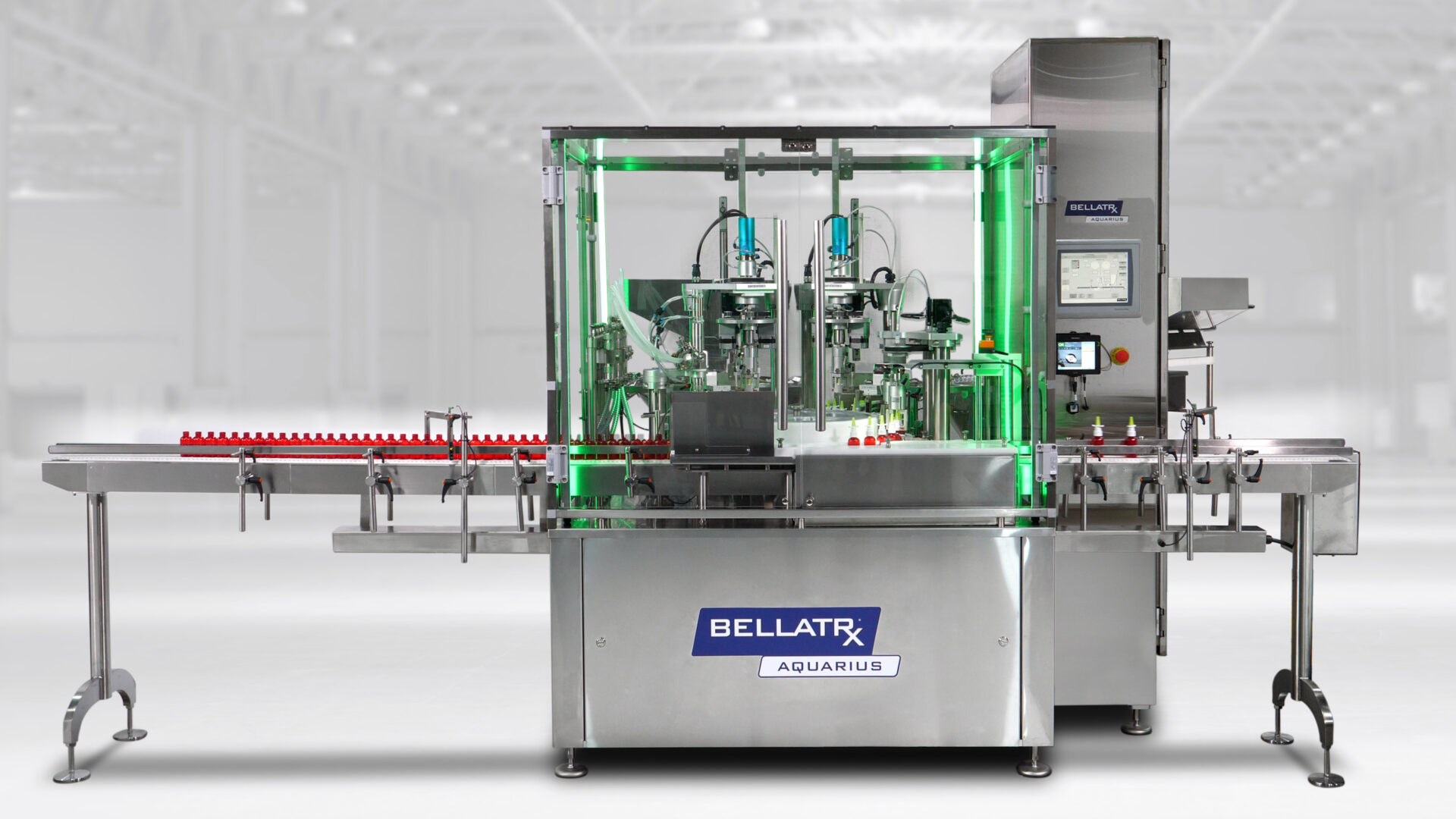
Critical Compliance & Safety Standards (Risk Mitigation)
Non-compliance with US and EU import regulations for liquid filling machines converts a $200k capital project into a multi-million-dollar liability within 30 days of customs detention. FDA import refusal rate for filling equipment reached 14.2 % in 2023; EU RAPEX notifications for machinery rose 18 % YoY. Executives must treat certification as a binary gate: no valid file set, no shipment.
United States – Non-Negotiable File Set
UL 508A (industrial control panels) and NFPA 79 (electrical standard for industrial machinery) are mandatory for any line >50 V. Missing UL field-label triggers a $15k–$25k re-inspection plus 6-week detention at port. FDA 21 CFR 110.40 governs food-contact surfaces; if the product is dairy, juice, or low-acid, add 21 CFR 113 (thermal processing) and PMO (Pasteurized Milk Ordinance) – each gap exposes the importer to FDA Form 483 observations and DOJ seizure under the Food Safety Modernization Act. OSHA 1910.212 requires the seller to deliver a certified guarding package; failure is classified as a “willful” violation carrying $161k–$2.4m in fines once the line is operational. Finally, FCC Part 15 applies to networked filling systems with VFDs or HMIs; uncertified emissions can force a full recall.
European Union – CE Marking Reality Check
The Machinery Directive 2006/42/EC demands a full Technical Construction File (TCF) and EC Declaration of Conformity (DoC) before customs clearance. EN ISO 13849-1 (safety control reliability) and EN 60204-1 (electrical safety) must be third-party validated; missing reports lead to RAPEX alert and member-state withdrawal from the entire EU market. For pharma or biotech, Annex 1 of EU GMP and EMA EudraLex Volume 4 impose IQ/OQ/PQ documentation; customs will not ask, but the Qualified Person (QP) will block batch release, costing $100k–$300k per day in lost production. ATEX 2014/34/EU is required if flammable solvents (>0.5 % ABV) are filled; non-ATEX machines are destroyed at importer expense. RoHS 2015/863 and REACH 1907/2006 restrict 211 substances; a single non-compliant cable can trigger €150k REACH enforcement penalties.
Comparative Compliance Cost & Timeline Matrix
| Regulatory Domain | Core Standard(s) | Typical Certification Cost Index (USD, mid-range auto line) | Calendar Days Added to FAI* | Enforcement Penalty Range | Supply-Chain Risk Indicator** |
|---|---|---|---|---|---|
| US Food Contact | FDA 21 CFR 110, 113, PMO | $30k–$60k | 21–35 | $50k–$10m recall + DOJ seizure | High |
| US Electrical | UL 508A, NFPA 79 | $8k–$15k | 10–14 | $161k OSHA willful | Medium |
| US EMC | FCC Part 15 | $5k–$10k | 7–10 | $20k–$500k FTC fine | Low |
| EU Machinery | 2006/42/EC + EN ISO 13849 | $25k–$45k | 18–28 | Market withdrawal + €15m max | High |
| EU Pharma GMP | Annex 1 + EudraLex | $40k–$80k | 30–60 | QP rejection → €100k/day | Critical |
| EU ATEX | 2014/34/EU | $15k–$35k | 14–21 | Equipment seizure + €10m | High |
| EU REACH/RoHS | 1907/2006, 2015/863 | $3k–$7k | 5–7 | €150k substance penalty | Medium |
*FAI = Factory Acceptance Inspection
**Risk indicator based on 2023 customs detention and QP rejection data.
Legal Risk Translation
Importing a machine without the above file set exposes the enterprise to strict liability in both jurisdictions. In the US, customs can issue a “redelivery” notice; failure to export the machine within 30 days converts the duty-free entry into a $500k–$1m liquidated-damage claim. In the EU, Article 21 of the Market Surveillance Regulation (EU) 2019/1020 allows authorities to “deem the product destroyed” at the importer’s cost; average disposal cost for a 6-head rotary filler is €35k–€50k. Directors should note that D&O policies exclude fines arising from regulatory non-compliance, leaving balance-sheet impact uncapped.
The Procurement Playbook: From RFQ to Commissioning
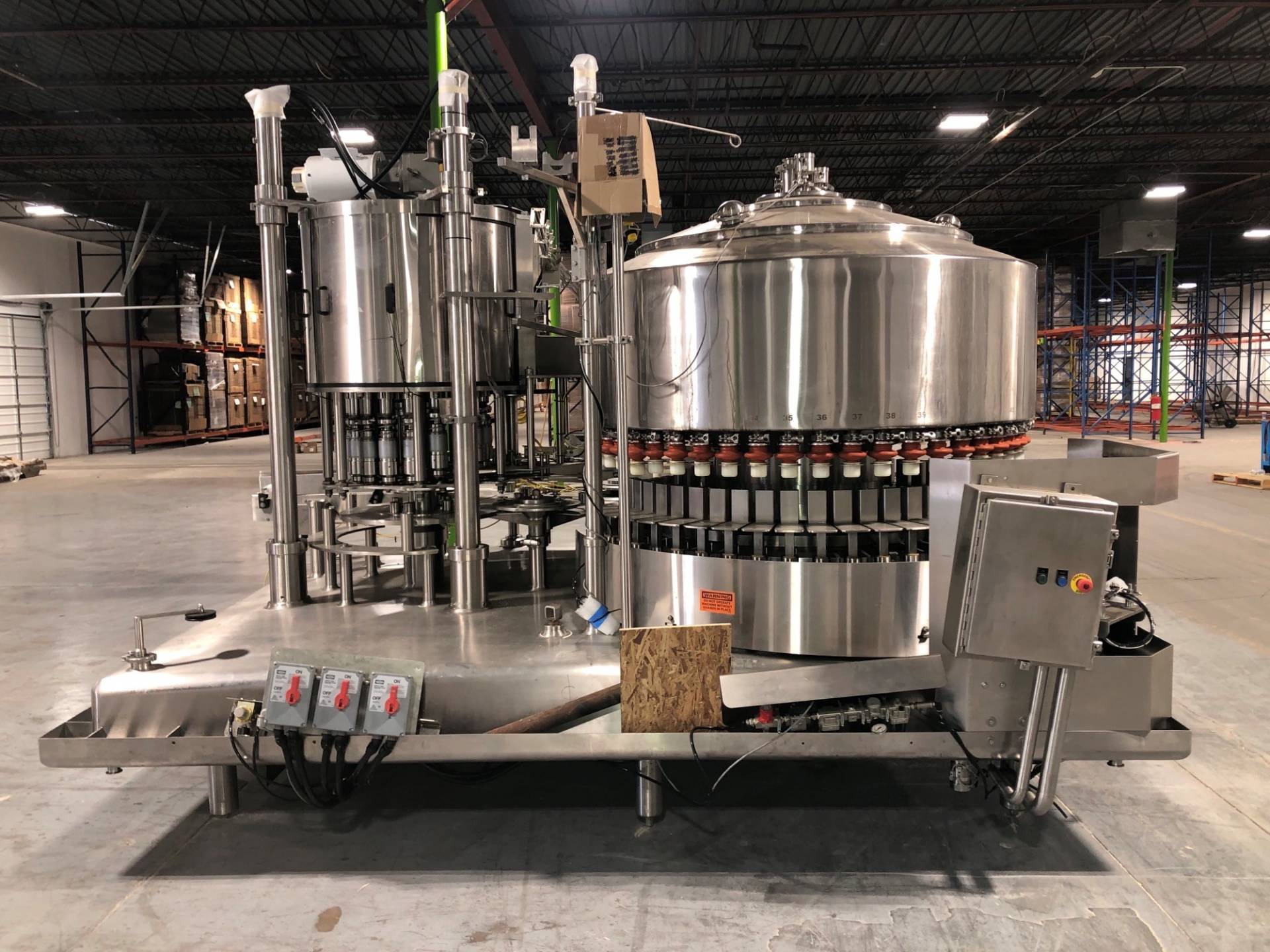
Strategic Procurement Playbook: Liquid Filling Machine Sourcing
1. RFQ Drafting – Lock-in Technical & Commercial Risk
Anchor the specification on ±0.5 % fill-accuracy, 98 % OEE, and <2 % reject rate; anything looser invites margin-stripping change orders. Demand a total cost of ownership (TCO) model that rolls in energy (≤0.12 kWh/1 000 bottles), change-over time (<15 min), and five-year spare-parts kit priced at ≤8 % of machine value. Require suppliers to disclose bill-of-material origin; 30 % price volatility on stainless-steel 316L alone can swing machine cost $15 k–$25 k within a quarter. Insert a 90-day price-validity cap and a currency-adjustment clause pegged to DXY >3 % move. Finally, attach a penalty matrix: 0.5 % of contract value per week delay beyond agreed lead-time (current market median: 22–26 weeks for rotary automatic lines).
2. Supplier Due-Diligence – Filter Before Negotiation
Score OEMs on three hard filters: (a) ≥50 identical machine references running >8 000 h/yr in your product viscosity class, (b) EBITDA margin ≥8 % to ensure post-sale solvency, (c) local service density ≤24 h response in each of your top-two production regions. Eliminate any bidder refusing a third-party financial audit or unwilling to escrow critical PLC source code. Historical data show vendors below the EBITDA threshold impose 18 % higher lifecycle spare-part prices.
3. FAT Protocol – Pay Only for Verified Performance
Conduct FAT at the OEM’s line with your actual containers, closures, and product. Payment milestone: 80 % after FAT sign-off, not before. Run a 2-hour continuous FAT at 110 % nameplate speed; enforce Cpk ≥1.67 on fill volume and ≤100 ppm leaker rate. Record every change-part serial number; 70 % of field failures trace back to un-documented substitutions between FAT and shipment. Include a re-FAT trigger if shipment delays >60 days; component drift averages 0.3 % fill deviation per untested quarter.
4. Contractual Risk Allocation – FOB vs DDP Decision Matrix
Use the table below to select Incoterms that shift risk at the lowest risk-adjusted landed cost (RALC). Data reflect 2024 freight and insurance indices for a $400 k–$600 k automatic filler shipped from Milan to Chicago.
| Incoterm | Risk Transfer Point | Typical Freight & Insurance (USD) | Average Delay Risk (days) | RALC Premium vs FOB | Recommended for |
|---|---|---|---|---|---|
| FOB Port of Exit | Rail siding at Milan port | $28 k–$32 k | 4–6 | Baseline | Buyers with own freight contracts & cargo insurance |
| CFR Port of Entry | On vessel at Milan | $35 k–$40 k | 5–7 | +$7 k | Medium-risk tolerance, single-port routing |
| DDP Plant Door | Your receiving dock | $48 k–$55 k | 1–2 | +$20 k | Time-critical installs, limited customs bandwidth |
Insist on DDP only when line-down cost exceeds $55 k/day; otherwise FOB keeps supplier accountable for export packaging integrity while preserving freight arbitrage.
5. Shipment & Insurance – Secure the Gap
Under FOB, purchase “all-risks” cargo insurance at 110 % of machine replacement value; stainless-steel assemblies suffer total-loss frequency 0.8 % on trans-Atlantic routes. Mandate OEM to embed shock-loggers; g-force events >6 g void warranty transfer until root-cause is proven outside supplier scope.
6. Site Acceptance & Commissioning – Final Gate
Link final 10 % payment to SAT completion, not shipment. Run a 72-hour continuous run at target speed with OEE ≥85 %, yield ≥99.5 %, and MTTR <30 min. Require OEM technician on-site until 30 calendar-day stability is demonstrated; historical data show 42 % of control glitches surface between day 8–20. Capture digital twin file (PLC, HMI, servo drives) before exit; escrow secures your leverage for future retrofits.
Execute the checklist sequentially; skipping FAT or accepting weak Incoterms exposes $100 k–$150 k in hidden cost and 6–10 weeks of lost production on a typical high-speed line.
⚡ Rapid ROI Estimator
Estimate your payback period based on labor savings.
Estimated Payback: —