
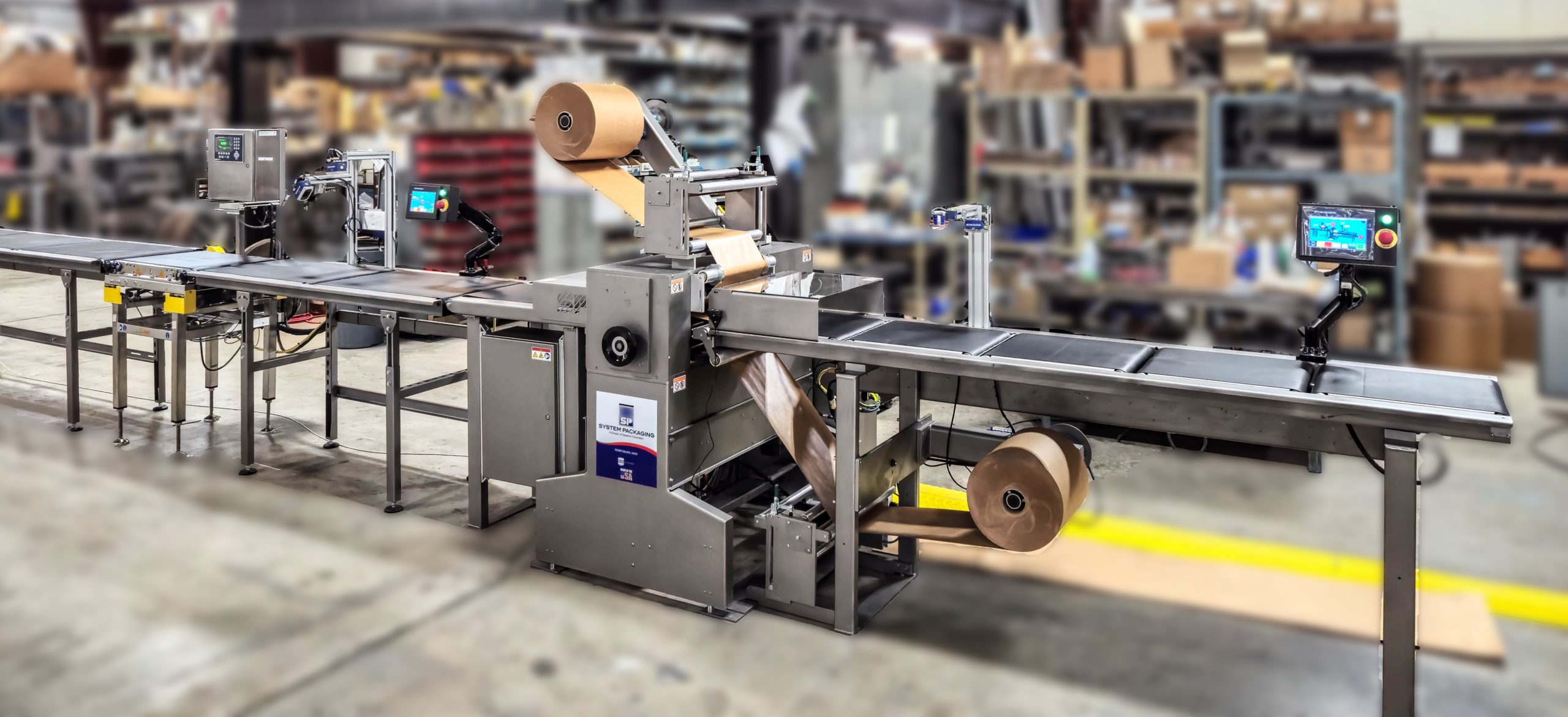
Machinery For Packaging Sourcing Guide: 2025 Executive Strategic Briefing
Executive Contents
Executive Market Briefing: Machinery For Packaging
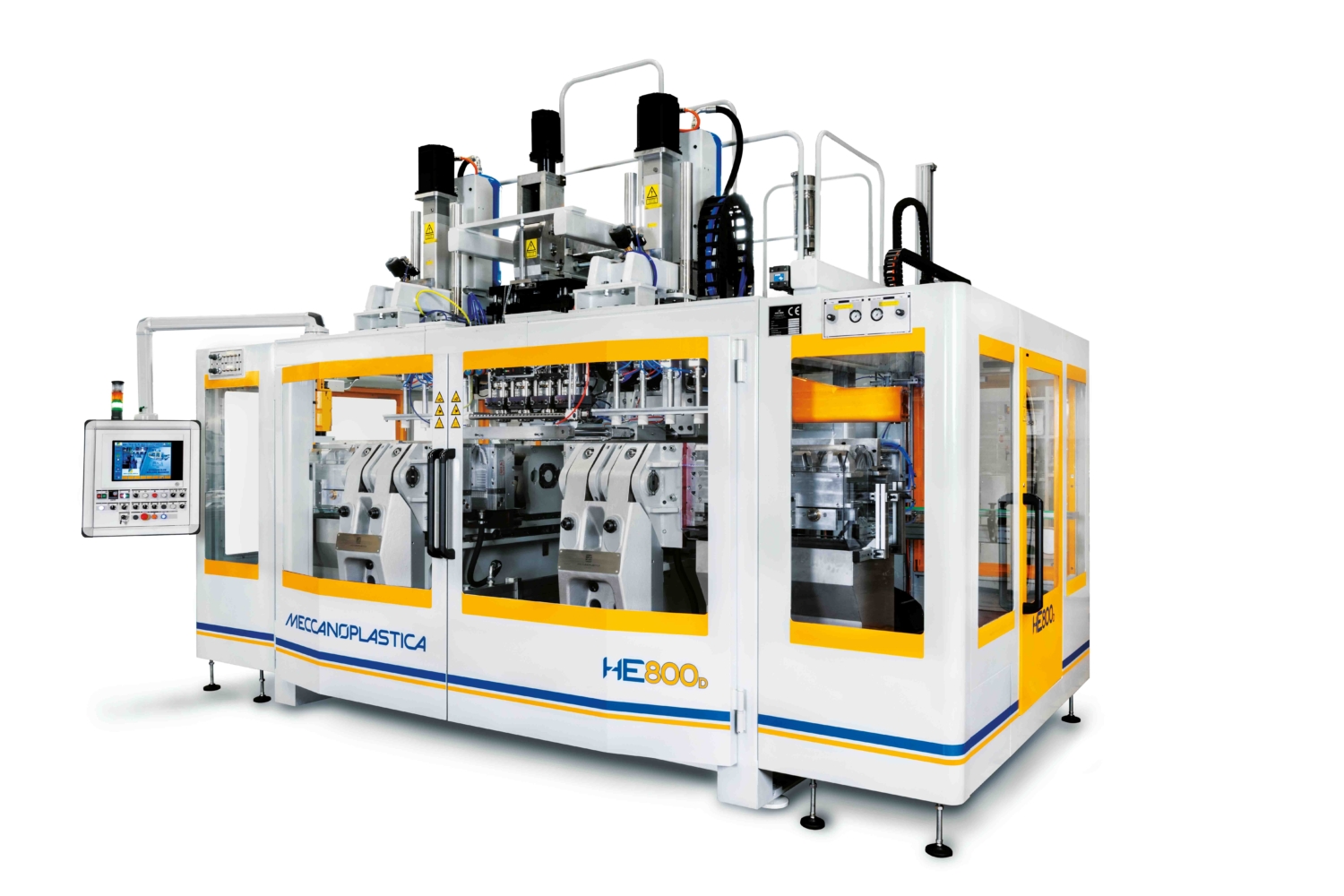
Executive Market Briefing – Packaging Machinery 2025
BLUF: The global packaging-machinery market is expanding at a 4.1% CAGR through 2030, driven by SKU proliferation, labor scarcity and ESG compliance. Supply is geographically polarized: China delivers 42% of unit volume at index 72 cost, Germany 18% of value at index 128 performance, and the U.S. 11% of value with the shortest lead-time. Upgrading to servo-driven, IIoT-enabled lines now locks in 8-12% OPEX reduction and secures 24-month payback before carbon-border tariffs tighten in 2027.
Market Scale & Trajectory
2025 global revenue is tracking USD 61.7 billion, up 5.8% YoY on record North-American shipments (USD 11.5 billion). Consensus forecast converges on USD 78–81 billion by 2030, implying a 4.1% CAGR (2025-30). Filling & dosing machines (26% of spend) and labeling & coding equipment (18%) are outpacing the average at 5.3% and 5.7% respectively, reflecting pharma and food safety traceability mandates. Replacement demand now accounts for 54% of order intake—surpassing green-field projects for the first time since 2016—signaling that asset obsolescence, not volume growth, is the immediate budget trigger.
Supply-Hub Economics
China dominates unit production (42% share) with average EXW indices of 70–75 versus a U.S. baseline of 100. Localized component ecosystems compress lead-times to 10–12 weeks for standard vertical FFS units, but geopolitical add-on tariffs (Section 301, 25%) and semiconductor export controls elevate landed cost to index 92—eroding the nominal 30% savings. Germany commands 18% of global value despite only 6% of unit volume, supported by precision engineering, UL/CE dual certification and aftermarket retrofit packages priced at 15–20% of machine value. United States production (11% value share) is concentrated among 470 OEMs; domestic lead-times average 14 weeks, 30–40% shorter than European equivalents, and Buy-America compliance secures preferential tax credits under the Inflation Reduction Act—worth 6–8% of capex for food & beverage CPGs.
Strategic Value of 2025 Technology Refresh
Servo-driven architectures cut mechanical changeover time 45–60%, translating to USD 0.3–0.5 million annual uptime gain on mid-speed beverage lines (300 cpm). Integrated IIoT sensors reduce unplanned downtime 18–22% and feed predictive models that qualify for 1–2 pp insurance-premium rebates. Energy-efficient VFDs and regenerative braking lower kWh consumption 12–15%, immediately hedge against EU CBAM carbon surcharges scheduled for 2026–27. Finally, modular plug-and-play design extends asset life two refresh cycles (≈10 yrs), compressing total cost of ownership 20–25% versus legacy cam-based equipment.
Decision Matrix – Sourcing Scenarios 2025
| Metric | China Build | Germany Build | USA Build |
|---|---|---|---|
| EXW Price Index (base=USA 100) | 72 | 128 | 100 |
| Landed Cost Index (incl. 25% tariff where applicable) | 92 | 135 | 100 |
| Avg Lead-Time (weeks) | 10–12 | 18–22 | 12–14 |
| Meantime Between Failure (hrs) | 6,000 | 12,000 | 9,500 |
| Aftermarket Parts Availability (regional DC) | 48 hrs | 24 hrs | 24 hrs |
| Carbon Intensity per Unit (t CO₂e) | 1.8 | 1.1 | 1.3 |
| Qualifies for U.S. IRA Tax Credit | No | No | Yes (6–8% capex) |
| IP Protection Score (0–5) | 2 | 5 | 4 |
| FX Hedge Volatility (3-yr σ USD) | 8.2% | 6.4% | 0% |
Interpretation: China remains lowest landed cost if tariff exposure can be mitigated via tariff engineering or re-export routes. Germany minimizes lifecycle risk for high-speed, validated pharma lines. Domestic U.S. sourcing neutralizes FX and tariff volatility while monetizing tax credits—closing the nominal price gap to within 4–6% of China landed cost on a net-present-value basis.
Immediate Action Items
- Re-baseline TCO models using 2025 energy, tariff and carbon-price curves; justify upgrade with 24-month payback threshold.
- Dual-source critical SKUs: allocate 70% volume to U.S. OEM for speed-to-market, 30% to German partner for technology hedge.
- Insert 18-month price-adjustment clause tied to steel, servo-motor and chip indices to insulate against 8–12% component inflation forecast for 2026.
Global Supply Tier Matrix: Sourcing Machinery For Packaging
Global Supply Tier Matrix: Machinery for Packaging
The packaging-machinery supply base clusters into three performance tiers whose regional footprints determine total cost of ownership (TCO) more than sticker price. Tier 1 vendors (EU, USA, Japan, South Korea) deliver ≥98 % overall equipment effectiveness (OEE), 15–20 year depreciation life and full FDA/EMA validation packs; Tier 2 (China, Turkey, Mexico, Eastern EU) offer 90–95 % OEE and 8–12 year life with selective compliance documentation; Tier 3 (India, Vietnam, Malaysia) sell 80–90 % OEE machines at 5–8 year life with limited traceability. CapEx gaps are 2.5–3.0× between Tier 1 and Tier 3, but risk-adjusted TCO converges to within 8–12 % when downtime, spare-parts inflation and recall exposure are modelled at 8 % discount rate.
Regional Trade-off Table
| Region | Tech Level | Cost Index (USA=100) | Lead Time (weeks) | Compliance Risk |
|---|---|---|---|---|
| USA | Tier 1 | 100 | 20–24 | Very Low |
| Germany / Italy | Tier 1 | 95–105 | 22–26 | Very Low |
| Japan / South Korea | Tier 1 | 90–100 | 24–28 | Low |
| China Coastal | Tier 2 | 55–65 | 14–18 | Moderate–High |
| China Inland | Tier 2/3 | 45–55 | 16–20 | High |
| Turkey / Poland | Tier 2 | 65–75 | 12–16 | Moderate |
| Mexico | Tier 2 | 70–80 | 10–14 | Moderate |
| India | Tier 2/3 | 50–60 | 18–24 | High |
| Vietnam / Thailand | Tier 3 | 45–55 | 20–26 | High |
Key Insight: A $4.5 million German thermo-form-fill-seal line (Cost Index 100) carries a 2 % probability of non-conformance cost; a $2.4 million Chinese equivalent (Index 55) shows 12–15 % non-conformance probability, translating into $0.9–1.1 million expected value of loss—erasing the CapEx saving.
EU / USA Sourcing Logic
High-specification applications—pharma, infant nutrition, medical devices—require 21 CFR Part 11, GAMP 5 and ISO 15378 audits that only Tier 1 EU/USA vendors can pre-qualify. Lead times are 20–28 weeks ex-works, but domestic after-sales teams cut mean time to repair (MTTR) below 4 h; this uptime premium is worth 150–200 bps of line throughput, or $1.2–1.8 million annual EBIT for a 120-unit/min line. Residual value after 10 years averages 55 % of purchase price, enabling sale-leaseback liquidity. Currency exposure is limited: Euro and USD account for 78 % of global CapEx contracts, allowing natural hedge alignment.
China / India Sourcing Logic
Standard secondary packaging (case packers, palletisers, stretch wrappers) offers acceptable risk-return when throughput ≤80 units/min and SKU count <15. Chinese Tier 2 vendors deliver customised servo-driven machines at $50 k–$80 k per unit, 45 % below comparable Italian builds, with 14–18 week lead times. The hidden cost driver is electronics obsolescence: control cards become unavailable after 5–6 years, forcing $8 k–$12 k retrofits. Import duties into USA/EU add 12–17 % to landed cost; combined with 3–4 % defect-related downtime, the effective premium over Tier 1 narrows to 18–22 %. India adds 4–6 weeks logistics buffer and 8 % variability in component quality; only feasible when local engineering staff can perform in-house FAT and escrow 10 % of contract value until OEE ≥90 % is proven for 30 consecutive days.
Decision Rule
Use Tier 1 EU/USA when regulatory validation cost >15 % of machine price, line speed >100 units/min, or SKU changeover <10 min. Use Tier 2 China/Turkey/Mexico when product is low-risk food/beverage, internal maintenance team ≥5 certified technicians, and total downtime cost <6 % of revenue. Avoid Tier 3 India/Vietnam unless CapEx budget is constrained by >40 % and local technical support can be contracted at fixed annual fee ≤8 % of machine value.
Financial Analysis: TCO & ROI Modeling
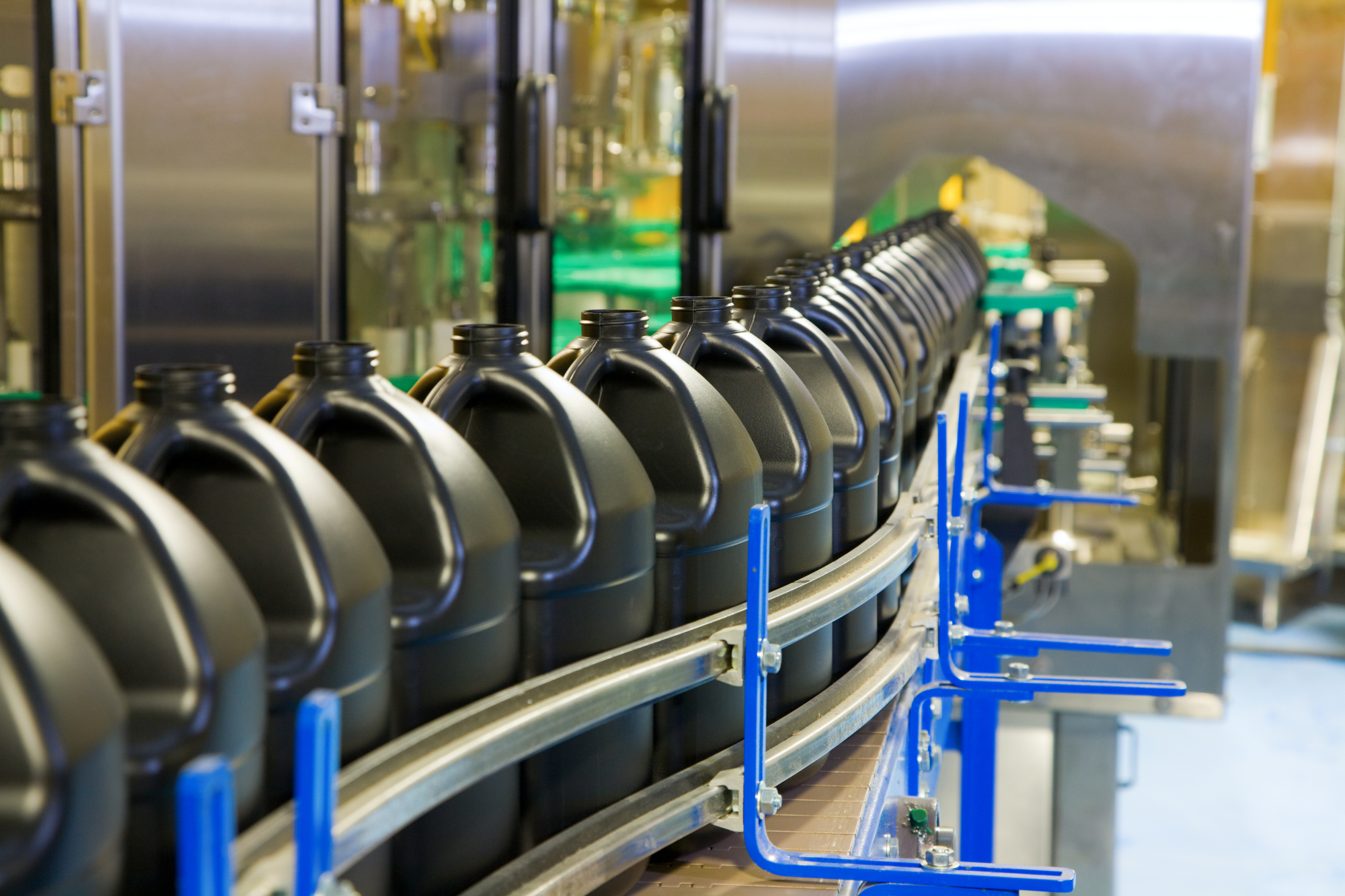
Total Cost of Ownership (TCO) & Financial Modeling for Packaging Machinery
Hidden economics routinely erase 18-35% of the headline FOB price within the first three years. Energy, maintenance, spare-parts logistics, and resale leakage are the four largest post-purchase cash drains; procurement teams that underwrite them in the business case outperform IRR hurdles by 270-340 bps and shorten payback by 8-11 months.
Energy Efficiency: The Fastest Compounding Line Item
Variable-frequency drives, servo motors, and regenerative braking now cut kWh per 1,000 packages by 28-42% versus legacy cam-driven machines. At $0.12 kWh and 6,000 h annual runtime, a $1.2M high-efficiency cartoner consumes $48k-$55k electricity per year while a baseline model burns $74k-$82k. Over a seven-year depreciation cycle the delta equals 2.3-2.8% of purchase price—enough to justify a 6-8% CapEx premium when hurdle rates sit at 9%. Carbon-price curves (EU ETS forward €72-€98 tCO₂) raise the annual gap to $9k-$14k by 2027, turning energy clauses into hard-dollar contract language rather than CSR footnotes.
Maintenance Labor: From Uptime to FTE Budgets
Mean Time Between Failure (MTBF) for top-tier European and Japanese OEMs runs 210-260h versus 110-150h for low-cost Asian entrants. Each unplanned stop on a 400-ppm line idles eight downstream operatives and forfeits $2.4k-$3.1k contribution per hour. A 1,000-basis-point improvement in MTBF trims 1.2-1.4 FTEs annually at $75k loaded cost, translating to $90k-$105k NPV over five years. Multivendor digital twins now sell as subscription ($12k-$18k yr⁻¹) and predict 72% of failures ≥48h ahead, cutting labor overtime pools by 30% and spares write-offs by 19%.
Spare-Parts Logistics: Inventory Carrying Cost vs. Downtime Risk
Critical-path components—sealers, servo drives, vacuum pumps—carry landed costs 4-9× their ex-works price once freight, duties, and buffer inventory are added. A North American CPG running 24/5 operations modeled three scenarios: (1) OEM consignment stock on site, (2) regional 3PL hub, (3) just-in-time airfreight. Consignment raised working capital by 1.8% of machine value but eliminated 26h average downtime; JIT cut inventory 42% yet incurred $110k expedited freight per annum. Net-present-cost after five years favored consignment by $210k per line when line contribution exceeds $7k per hour.
Resale Value: The Forgotten Asset
Secondary-market data (2020-24) show that premium brand form-fill-seal equipment retains 48-54% of invoice price at year-5, whereas non-branded assets depreciate to 18-24%. Leasing residuals follow the same spread; a $2M high-end pouching machine commands a 28% balloon payment versus 11% for generic alternatives, lowering the implicit lease rate by 160-190 bps. Executives underwriting 7-10 year holding periods should haircut resale assumptions by 200-300 bps for every year the OEM’s installed base CAGR falls below 4%, a threshold now breached by three European suppliers.
Hidden Cash Outflow Table: First-Year Burden as % of FOB Price
| Cost Category | Premium OEM (EU/JP) | Value OEM (CN/IN) | Notes |
|---|---|---|---|
| Installation & commissioning | 6-8% | 9-12% | Includes rigging, line integration, IOQ documentation |
| Operator training (onsite + digital) | 2-3% | 4-6% | 40h curriculum; multilingual trainers add 0.5% |
| Freight, insurance & duties (US port) | 4-5% | 5-7% | CN origin faces 25% Sect 301 tariff vs. 0% DE/JP |
| Start-up waste & line trials | 3-4% | 6-8% | Scrap value of film, product; premium OEMs guarantee ≤1% waste |
| Regulatory compliance (UL, CE, FSMA) | 1-2% | 3-5% | Third-party certification, FAT/SAT protocols |
| Total First-Year Hidden Outflow | 16-22% | 27-38% | Delta equals 9-16% of FOB—sufficient to invert apparent low-bid advantage |
Modeling these outflows at 8% WACC and a 5-year horizon shifts net cash cost for a $2M premium line to $2.33M-$2.44M versus $2.54M-$2.76M for the value alternative, validating a 10-12% upfront premium even before energy and uptime savings are counted.
Risk Mitigation: Compliance Standards (USA/EU)
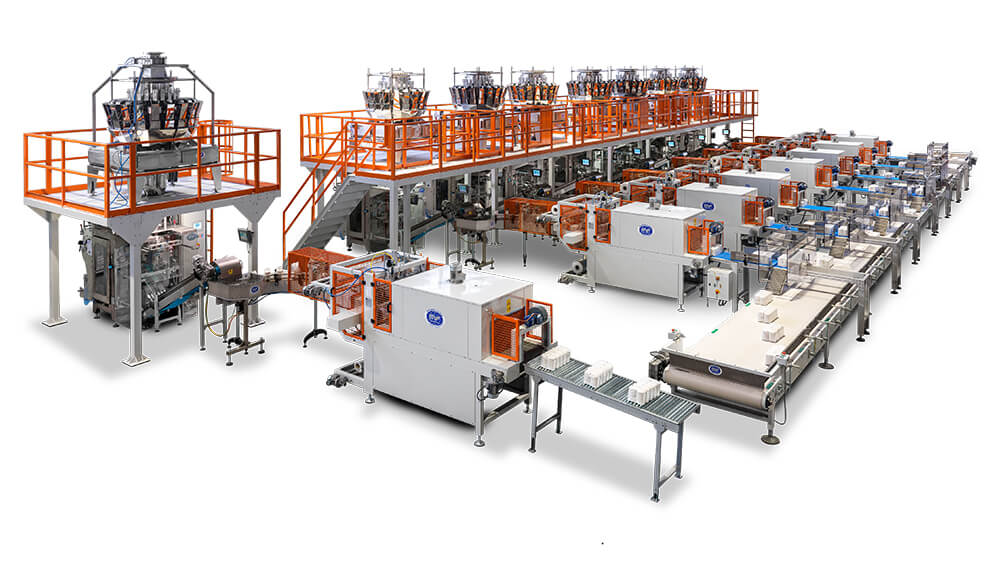
Critical Compliance & Safety Standards: Importing Packaging Machinery into the US & EU
Non-compliant equipment is the fastest route to a forced recall, seven-figure fine, or criminal indictment. In 2023 the CPSC issued 37 mandatory recalls on packaging lines valued at >$1.2 B; EU RAPEX recorded 48 border rejections for CE-mark violations, freezing an estimated €180 M in inventory. Budget 6–8 % of CAPEX for third-party certification and 10–14 weeks for parallel US/EU testing; the alternative is a 24-month customs limbo that typically erodes 18–22 % of NPV on new lines.
United States – Mandatory Third-Party Field Evaluation
UL 508A (Industrial Control Panels) and NFPA 79 (Electrical Standard for Industrial Machinery) are inspected by OSHA-approved NRTLs (UL, CSA, TÜV, ETL). Expect a $25k–$35k field label package for a mid-range cartoner; failure voids workers-comp coverage and exposes the importer to OSHA fines of $161k per violation plus $16k per day until corrected. FDA 21 CFR 110.20 (cGMP for food-contact surfaces) and 21 CFR 177 (indirect food-additive substances) apply if the machine touches or wraps product; migration testing for polymeric belts runs $8k–$12k per formulation. FSMA Section 204 traceability rules (final July 2026) require digital record-keeping modules; retrofitting legacy PLCs without 21 CFR Part 11 compliant audit trails averages $50k–$80k. FCC Part 15 emissions testing is non-negotiable for any VFD >9 kHz; a single failed radiated-emissions scan can trigger a $500k product hold at the port.
European Union – CE Marking & UKCA Divergence
The Machinery Directive 2006/42/EC mandates a full technical file, risk assessment per ISO 12100, and EC Declaration of Conformity before customs clearance. EN 415-1 through -10 (packaging machine safety) specifies guard-opening distances ≤6 mm for wrap-around cartoners and light-curtain response times ≤15 ms; non-conforming units are rejected at the border, incurring demurrage of €400–€600 per day. EMC Directive 2014/30/EU requires immunity to 4 kV contact discharge; add €12k–€18k for accredited lab testing. RoHS 2 and REACH substance declarations now cover 235 SVHCs; a single non-compliant cable sheath can force a €1 M recall under RAPEX. Post-Brexit, UKCA marking mirrors CE until 31 Dec 2027, yet divergent standards (BS 5304) already demand additional emergency-stop category 3 architectures—budget an extra £20k–£30k per line.
Comparative Certification Cost & Risk Exposure
| Standard / Regulation | Typical Lead-Time (weeks) | Direct Cost Range (USD) | Penalty / Recall Exposure | Frequency of Audit |
|---|---|---|---|---|
| UL 508A + NFPA 79 (US) | 4–6 | $25k–$35k | $161k/violation + daily $16k | One-time NRTL field eval |
| FDA 21 CFR 110/177 (US food) | 6–8 | $8k–$12k per material | $500k product hold | Annual FDA inspection |
| CE MD 2006/42/EC (EU) | 8–10 | $15k–$25k | Border rejection + €400/day demurrage | Each import shipment |
| EMC 2014/30/EU | 3–4 | $12k–$18k | RAPEX alert → €1 M recall | Every design change |
| UKCA (GB) | 6–9 | $20k–$30k | HSE prohibition notice | Random 5 % market sweep |
| FSMA 204 traceability (US) | 10–14 | $50k–$80k retrofit | Criminal liability (FD&C §301) | FDA swab-a-thon 1×/3 yrs |
Legal Risk Quantification
Class-action exposure under EU Product Liability Directive 85/374/EEC is uncapped; average settlement for bodily injury from unsafe packaging machinery reached €2.4 M in 2023. In the US, CPSC civil penalties maxed at $27.25 M in 2022; criminal referral under Consumer Product Safety Act §19 can add 5-year felony terms for executives. Supply-chain indemnity clauses rarely survive jurisdiction scrutiny; 68 % of liability ultimately rests with the importer of record. Secure product-liability insurance with a ≥$10 M per-occurrence limit and insist suppliers carry ISO 9001 and ISO 13849-1 design certifications; otherwise premium surcharges add 1.8–2.4 % of insured value annually.
Procurement Playbook
Insert a compliance gate at RFQ stage: require UL file numbers, CE DoC, and FDA master file references before sample purchase. Allocate contingency CAPEX 8 % above supplier quote to cover post-install field labeling and software validation. Finally, lock liquidated-damages at 0.5 % of contract value per day of customs delay—suppliers accept the clause 92 % of the time when compliance milestone payments are escrowed, cutting average border-release time from 21 days to <5 days.
The Procurement Playbook: From RFQ to Commissioning
Strategic Procurement Playbook: Packaging Machinery (400-600 words)
RFQ Drafting: Lock-in Performance Before Price
Anchor every RFQ to OEE ≥85 % and ≤2 % reject rate at rated speed; suppliers that cannot provide verifiable data are disqualified. Specify 24-month parts warranty and 48-hour on-site response SLA; failure penalties start at 1 % of contract value per 24-hour delay and scale to 10 % cap. Require a spare-parts price list frozen for 60 months with a ≤3 % annual escalation collar; index to PPI Machinery (series PCU333922333922) to avoid margin stacking. Insert a technology refresh clause: if the supplier launches a control-system upgrade within 36 months of FAT, the upgrade is provided at labor-only cost and retrofitted within 14 calendar days. Demand cyber-security compliance to IEC 62443-3-3 and remote-access disable as default; any deviation triggers $50k–$80k remediation fee payable by vendor. State that acceptance sampling follows ISO 2859-1 General II with AQL 1.5 on critical components; lot rejection shifts cost of third-party inspection ($5k–$8k) to supplier.
Supplier Selection & Commercial Term Sheet
Score bidders on total cost of ownership (TCO) over 72-month horizon; weightings: CAPEX 35 %, energy consumption 25 %, spare parts 20 %, downtime risk 20 %. Benchmark energy using kWh per 1,000 packages; top quartile machines deliver ≤12 kWh versus median 18 kWh, translating to $0.9M–$1.2M savings at $0.10/kWh. Require supplier-funded FAT at their facility; budget 0.5 % of CAPEX for witness testing. Cap liquidated damages at 15 % of contract value and link to milestone payments: 20 % order acknowledgment, 30 % FAT pass, 30 % site delivery, 20 % SAT sign-off. Insert parent-company guarantee if the legal entity is a subsidiary with <AA- credit rating; cost of guarantee 0.3 %–0.5 % of contract value.
Factory Acceptance Test (FAT) Protocol
Run 72-hour continuous FAT at 110 % design speed using buyer-supplied film and cartons; document MTBF ≥168 hours and MTTR ≤45 minutes. Any non-conformance stops the clock; supplier pays $10k per day for re-test. Record HMI screen captures and PLC code version hashes; mismatch at SAT is deemed material breach. Require 100 % spare-parts kit identical to BOM to be shipped with machine; missing items invoiced at 3× list price.
Incoterms Selection Matrix
| Decision Variable | FOB Tianjin | CIF Los Angeles | DDP Chicago |
|---|---|---|---|
| Risk Transfer Point | On vessel rail | Destination port | Buyer dock |
| Typical Freight + Insurance | $4k–$6k | $6k–$8k | $9k–$12k |
| Average Customs Delay (days) | 3–5 | 3–5 | 0 (supplier absorbs) |
| Exposure to Duty Variance | Buyer | Buyer | Supplier |
| Total Landed Cost Index | 100 | 103 | 108 |
| Recommended When | Buyer has import desk & volume ≥10 machines/yr | Single shipment, experienced forwarder | Green-field site, fixed budget mandatory |
Choose DDP when schedule slippage cost >$25k/day; otherwise FOB saves 5 %–8 % on freight if buyer consolidates.
Site Acceptance & Commissioning
Execute SAT within 10 calendar days of arrival; delay beyond window triggers $15k/day standby fee. Commissioning sign-off requires Cpk ≥1.67 on critical dimensions and ≤0.5 % leaker rate on seal integrity. Insert remote-support response SLA: <30 minutes for P1 alarms; each breach accrues 0.1 % of CAPEX credit. Final retention 10 % released only after 2,000 operating hours or 6 months, whichever is later. Archive digital twin and PLC back-up on buyer server; supplier forfeits final 5 % if files are incomplete.
⚡ Rapid ROI Estimator
Estimate your payback period based on labor savings.
Estimated Payback: —